Final round of inaugural "AI x Cybersecurity Challenge" held today
The final round of the inaugural "AI x Cybersecurity Challenge", jointly organised by the Digital Policy Office (DPO), the Chinese Academy of Cyberspace Studies, the Hong Kong Cybersecurity Professional Association, and China Mobile Hong Kong Company Limited, was held at Cyberport today (August 23). The event aims to explore practical applications of AI in cybersecurity defence and foster cross-regional technical exchange and collaboration.
In his opening remarks, the Secretary for Innovation, Technology and Industry, Professor Sun Dong, said that AI is reshaping every aspect of people's life at a breathtaking speed. He noted that although innovation may at times bring new threats, these same technologies can also spur defensive capabilities. As such, the Government champions an "AI versus AI" strategy, leveraging AI to forge the strongest shields to effectively manage risks associated with the use of AI.
Professor Sun added that the Government is continuously strengthening related policies, guidelines and ethical frameworks, as well as conducting regularly cyber-attack-and-defence drills to better prepare for cybersecurity readiness. Through multipronged efforts, the Government hopes to guide society to apply AI responsibly, foster a healthy ecosystem, and strengthen city-wide resilience in face of cyberattacks.
The inaugural "AI x Cybersecurity Challenge" received an overwhelming response, attracting a total of 290 teams from local, the Chinese Mainland and overseas. The competition comprises preliminary and final rounds. The preliminary round was held in July in an online problem-solving challenge format, where 40 top-tier teams secured their spots in today's four-hour onsite final. The teams had to use their AI algorithm and automated tools to identify vulnerabilities in a simulated environment to compete for the championship. In addition, technical experts were also invited to introduce to the delegated observers the design and setup of the competition platform, as well as to share their practical application experience, thereby fostering deeper professional and technical exchanges.
The DPO will continue to enhance Hong Kong's cybersecurity standards and raise public awareness of cybersecurity through diversified activities and training initiatives. In the coming weeks, the DPO will collaborate with industry partners to organise a series of activities and lead a delegation to attend forums at the China Cybersecurity Week on the Mainland, deepening collaboration in areas such as information sharing, technical exchange, and talent cultivation. Furthermore, the DPO will continue to spearhead the organisation of the third Hong Kong Cybersecurity Attack and Defence Drill to further fortify Hong Kong's cyber defence capabilities and resilience, laying a secure and reliable digital foundation for the city's development into an international innovation and technology hub.
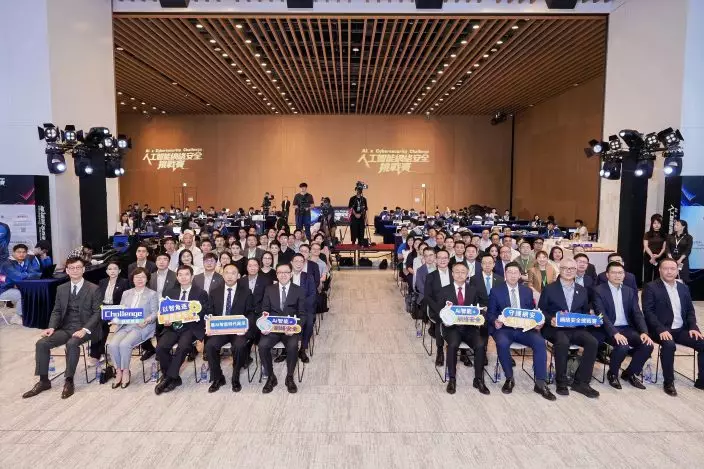
The final round of the inaugural "AI x Cybersecurity Challenge" was held today (August 23). Photo shows the Secretary for Innovation, Technology and Industry, Professor Sun Dong (first row, fifth left); the Director-general of the general office of the Liaison Office of the Central People's Government in the Hong Kong Special Administrative Region, Mr Li Shuguang (first row, fifth right); the Director-General of the Chinese Academy of Cyberspace Studies, Mr Wang Jiang (first row, fourth left); the Acting Commissioner for Digital Policy, Mr Daniel Cheung (first row, fourth right); the Deputy Director of the Cyberspace Administration of Guangdong Province, Mr Wang Minwei (first row, third left); the President of the Hong Kong Cybersecurity Professional Association, Dr Rocky Cheng (first row, third right); the Director and the Chief Executive Officer of China Mobile Hong Kong Company Limited, Ms Shi Xiaoping (first row, second left) and other guests. Source: HKSAR Government Press Releases

The final round of the inaugural "AI x Cybersecurity Challenge" was held today (August 23). Photo shows the Secretary for Innovation, Technology and Industry, Professor Sun Dong (fourth right); the Director-general of the general office of the Liaison Office of the Central People's Government in the Hong Kong Special Administrative Region, Mr Li Shuguang (third left); the Director-General of the Chinese Academy of Cyberspace Studies, Mr Wang Jiang (third right); the Acting Commissioner for Digital Policy, Mr Daniel Cheung (second left); the Deputy Director of the Cyberspace Administration of Guangdong Province, Mr Wang Minwei (second right); the President of the Hong Kong Cybersecurity Professional Association, Dr Rocky Cheng (first left); the Director and the Chief Executive Officer of China Mobile Hong Kong Company Limited, Ms Shi Xiaoping (first right), officiating at the opening ceremony. Source: HKSAR Government Press Releases
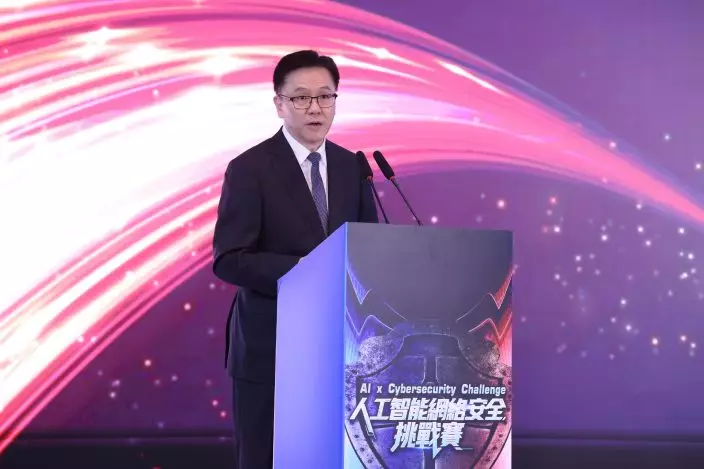
The Secretary for Innovation, Technology and Industry, Professor Sun Dong, addresses the Opening Ceremony of AI x Cybersecurity Challenge Final Round today (August 23). Source: HKSAR Government Press Releases
CCIDA and FDC lead industries to participate in Busan International Film Festival and Asian Contents & Film Market in Korea to showcase Hong Kong's new creative momentum
The Cultural and Creative Industries Development Agency (CCIDA) under the Culture, Sports and Tourism Bureau and the Hong Kong Film Development Council (FDC) led Hong Kong's film and creative industriesto participate in the 31st Busan International Film Festival (BIFF) and the Asian Contents & Film Market (ACFM) in Korea, promoting the unique appeal and new momentum of Hong Kong's creative industries to the international market, fostering cultural exchanges and expanding diverse global business opportunities.
Sponsored by CCIDA and co-organised by the BIFF and the Asian Film Awards Academy, the "Hong Kong Night" networking reception was held on October 9 (Busan time) and brought together over 750 representatives from the global creative and film communities. The occasion enabled emerging Hong Kong filmmakers and original content intellectual property (IP) rights holders to forge stronger connections with their international counterparts. Speaking at the event, the Commissioner for Cultural and Creative Industries, Miss Drew Lai remarked that CCIDA is dedicated to boosting film productions and grooming talents for various segments of the film industry through various funding schemes under the Film Development Fund (FDF), in addition, CCIDA will set up a dedicated Support Unit for Non-local Film Productions, offering seamless facilitation for overseas crews filming in Hong Kong.
Local filmmakers and their works supported by the FDF also shone at this year's festival. The film "Dead End", a winning project of the Higher Education Institution Group of the 7th First Feature Film Initiative, was selected for the "Vision - Asia" competition section and held its world premiere on October 10 (Busan time). The screening drew over 200 attendees. Director Isabella Lam, alongside actors Maggie Shiu, Hedwig Tam and Lokman Yeung, attended the premiere and engaged with audiences during the post-screening interactive session, receiving an enthusiastic response that reflected the international appeal of Hong Kong films.
Throughout the BIFF, CCIDA representatives also met with various cultural and creative institutions and film festival organisers, including Korea Manhwa Contents Agency, Korean Film Council and Busan Asian Film School, to explore future collaboration and development opportunities.
On the business development front, CCIDA, the FDC and the Hong Kong Trade Development Council set up the Hong Kong Pavilion, building a platform for co-operation to facilitate exchanges among creative talents and explore collaboration opportunities. This year, CCIDA, for the first time, sponsored emerging local original content IP rights holders to participate in the ACFM's "Busan Story Market" to promote IP transactions, financing and cross-sector content development. Sponsored projects included the comic "Disposable Dolly" and animations –– "Tai Lung Fung – Full Throttle Kitchen", "Cirkillation" and "Blacky The Metal Arm Cat". In addition, CCIDA also sponsored the participation of four Hong Kong producers, Trevor Choi, Lau Kok-rui, Kelvin Shum and Whitney Yiu, in the ACFM's "Producer Hub". Emerging filmmaker So Chak-long, whose project was selected for the ACFM's "Asian Project Market", was also sponsored to take part in project pitching activities.
CCIDA will continue to support the development of Hong Kong's film and creative industries and, as outlined in the Chief Executive's 2026 Policy Address, conduct a comprehensive review of the FDF with a view to attracting more private investment and ensuring the sustainable development of the industry.
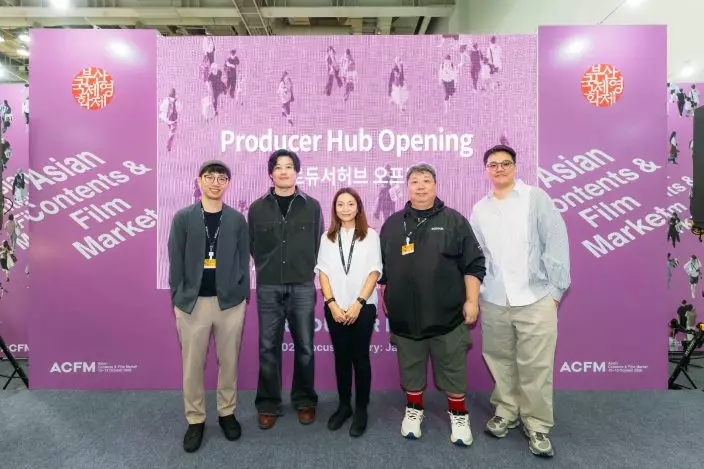
The Cultural and Creative Industries Development Agency under the Culture, Sports and Tourism Bureau and the Hong Kong Film Development Council led the industry delegation to participate in the 31st Busan International Film Festival and and the Asian Contents & Film Market (ACFM) and sponsored Hong Kong producers to participate in ACFM's "Producer Hub". Source: HKSAR Government Press Releases
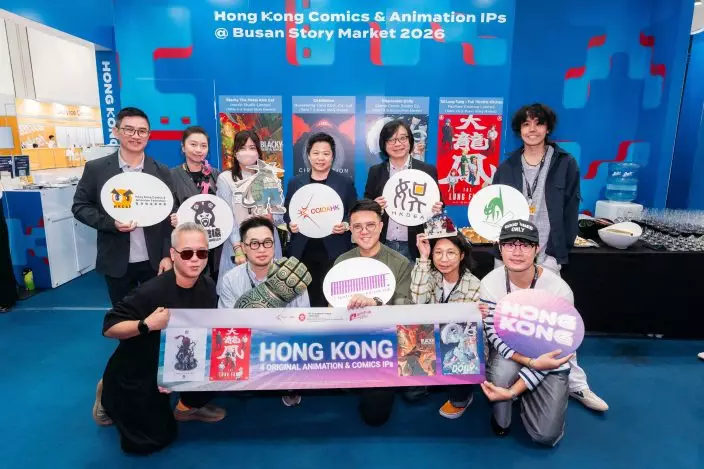
The Cultural and Creative Industries Development Agency (CCIDA) under the Culture, Sports and Tourism Bureau and the Hong Kong Film Development Council led Hong Kong's film and creative industries to participate in the 31st Busan International Film Festival and the Asian Contents & Film Market (ACFM) in Korea. CCIDA sponsored emerging local original content IP rights holders to participate in ACFM's "Busan Story Market" to promote IP transactions, financing and cross-sector content development. Source: HKSAR Government Press Releases
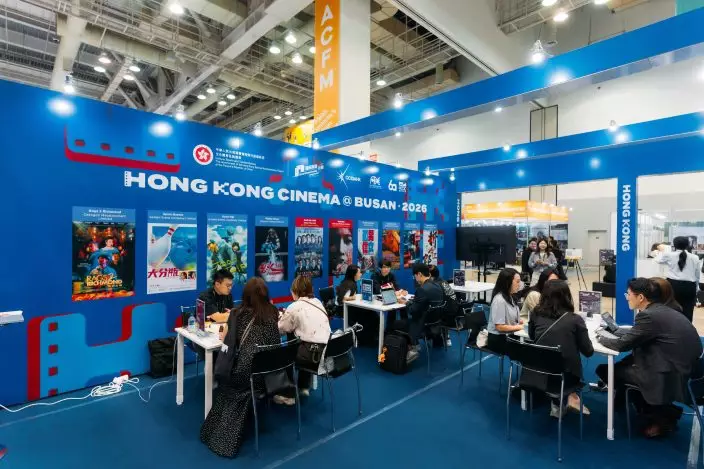
The Cultural and Creative Industries Development Agency under the Culture, Sports and Tourism Bureau and the Hong Kong Film Development Council led the industry delegation to participate in the 31st Busan International Film Festival and and the Asian Contents & Film Market and set up the Hong Kong Pavilion, where business meetings were held with industry counterparts around the world. Source: HKSAR Government Press Releases
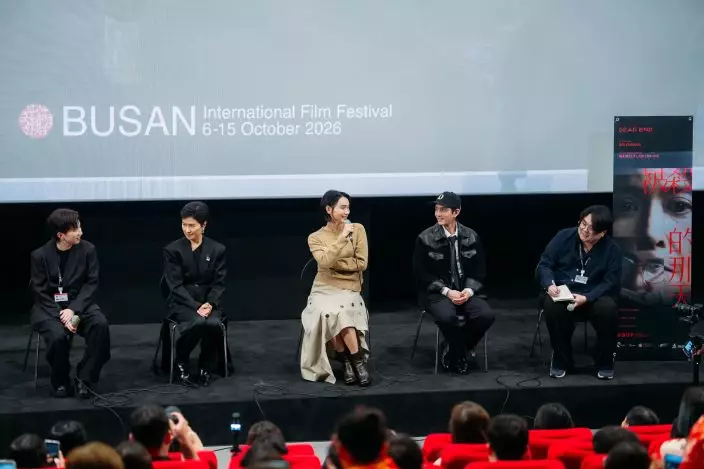
The Cultural and Creative Industries Development Agency under the Culture, Sports and Tourism Bureau and the Hong Kong Film Development Council led the industry delegation to participate in the 31st Busan International Film Festival and and the Asian Contents & Film Market, during which the film “Dead End”, funded by the Film Development Fund, held its world premiere at the BIFF on October 10 (Busan time). Photo shows the director and actors of the film in the post-screening interactive session. Source: HKSAR Government Press Releases
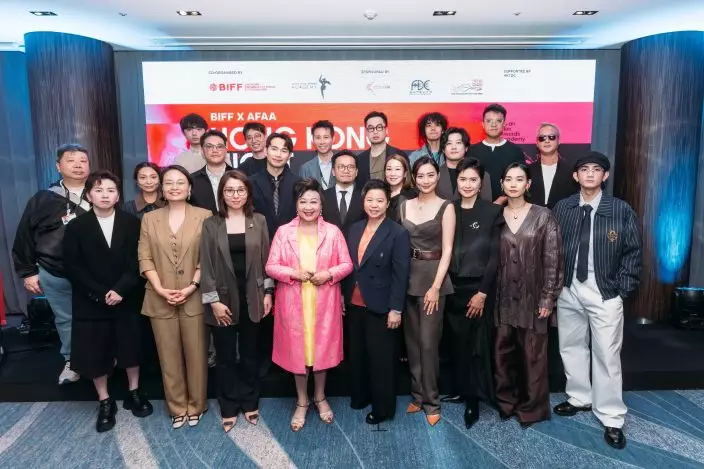
The Cultural and Creative Industries Development Agency under the Culture, Sports and Tourism Bureau and the Hong Kong Film Development Council led Hong Kong's film and creative industries to participate in the 31st Busan International Film Festival and and the Asian Contents & Film Market in Korea. Photo shows the Commissioner for Cultural and Creative Industries, Miss Drew Lai (front row, fifth right) and representatives of Hong Kong's film and creative sectors attending the "Hong Kong Night" networking reception. Source: HKSAR Government Press Releases
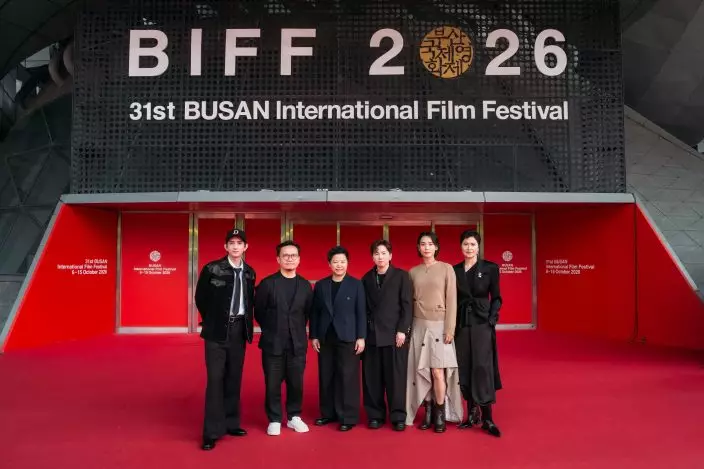
The film "Dead End", a winning project of the Higher Education Institution Group of the 7th First Feature Film Initiative supported by the Film Development Fund was selected for the "Vision - Asia" competition section and held its world premiere on October 10 (Busan time). Photo shows representatives of the Cultural and Creative Industries Development Agency and the Hong Kong Film Development Council, director and actors of the related film. Source: HKSAR Government Press Releases
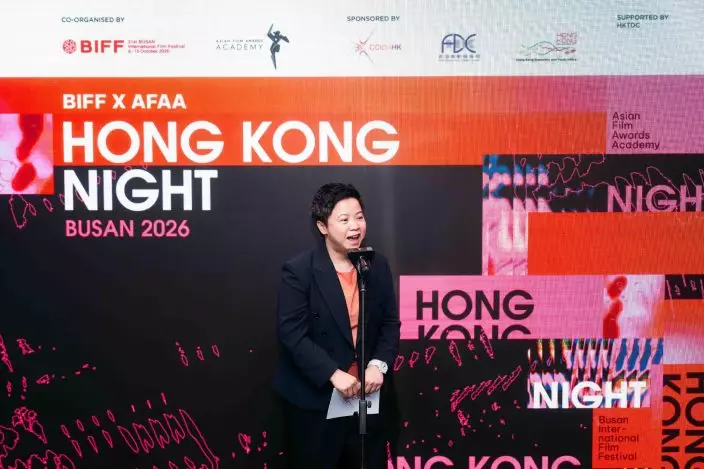
The Cultural and Creative Industries Development Agency under the Culture, Sports and Tourism Bureau and the Hong Kong Film Development Council led Hong Kong's film and creative industries to participate in the 31st Busan International Film Festival and the Asian Contents & Film Market in Korea. Photo shows the Commissioner for Cultural and Creative Industries, Miss Drew Lai, speaking at the "Hong Kong Night" networking reception on October 9 (Busan time). Source: HKSAR Government Press Releases