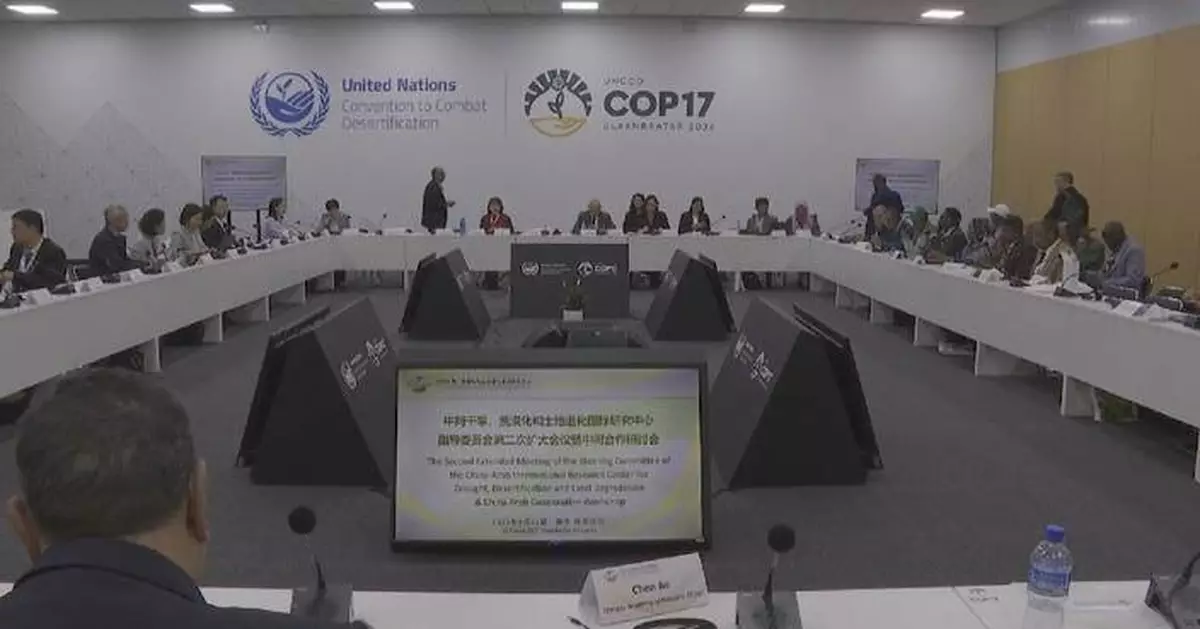
China and Arab countries will deepen practical cooperation in combating drought, desertification and land degradation in the coming five years, according to an action plan released on Saturday in Ulaanbaatar, Mongolia.
The plan was released at a meeting of the Steering Committee of the China-Arab International Research Center for Drought, Desertification and Land Degradation and the China-Arab Cooperation Workshop, which were held on the sidelines of the 17th session of the Conference of the Parties (COP17) to the United Nations Convention to Combat Desertification (UNCCD).
Drought, desertification and land degradation are pressing ecological challenges shared by China and Arab nations. The action plan outlines concrete initiatives for the next five years, leveraging platforms such as the China-Arab Center and partnership networks to deepen cooperation in key areas including desertification control, degraded land management, and sandstorm monitoring and early warning.
The 17th session of the COP17 to the UNCCD officially commenced on Monday in Ulaanbaatar under the theme "Restoring Land, Restoring Hope." Delegates from UNCCD's 197 Parties, along with representatives from UN bodies, international organizations, civil society groups, research institutions and enterprises, gathered to discuss issues including restoration of degraded land, sustainable land management, drought resilience, and grassland protection and restoration.
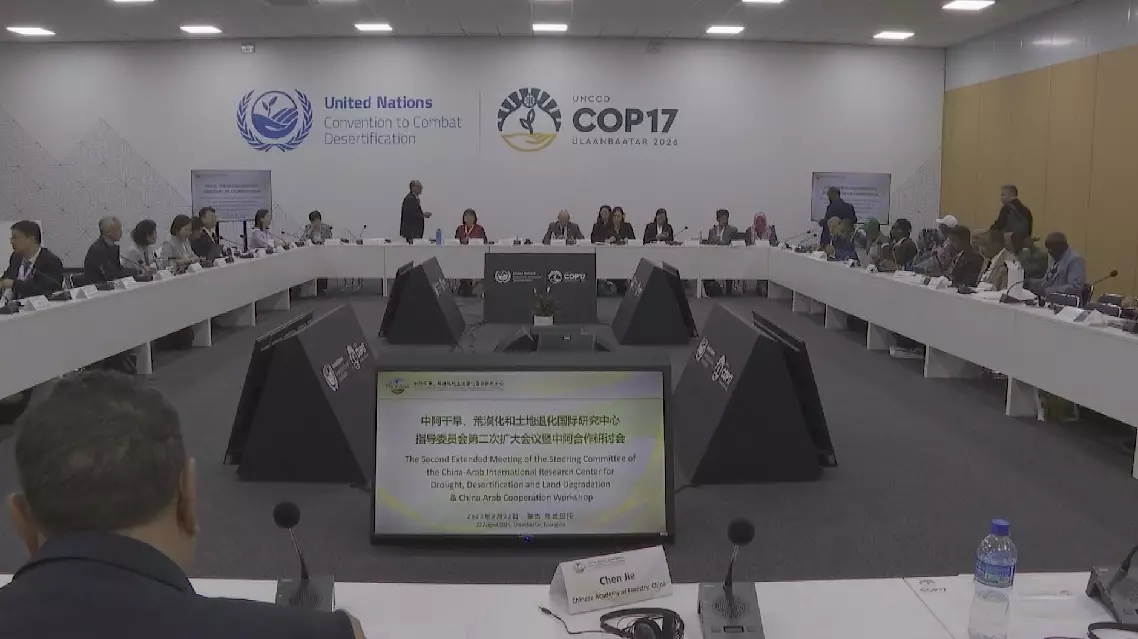
China, Arab countries release plan for desertification control at UNCCD COP17 in Mongolia
European bond markets have come under significant strain after long-term U.S. Treasury yields recently surged to nearly 20-year highs.
Although recent interventions by the U.S. Treasury Department temporarily eased selling pressure on American debt, European sovereign bond markets remain broadly under pressure.
On Friday, the yield on the 30-year U.S. Treasury bond climbed to 5.273 percent. Earlier in the week, the yield briefly touched 5.34 percent, marking its highest level since 2007.
Yields on major European government bonds have risen in tandem. As of Friday, the yield on Germany's 10-year government bond hovered around 3.25 percent, approaching a 15-year high. France's 10-year yield broke through 4.13 percent, reaching its highest point since 2008, while Italy's 10-year yield climbed to 4.08 percent.
Market analysts warn that volatility in the U.S. bond market will continue to weigh on European countries. UK-based asset manager Aberdeen Investments noted that the U.S. Treasury Department's recent buyback of government debt sent a clear signal of its willingness to cap long-term borrowing costs. However, the firm pointed out that this strategy has not extended to the UK or other European countries, indicating that European bonds will continue to weaken in the future.
Guy Miller, chief market strategist at Zurich Insurance Group, stressed that the trajectory of U.S. Treasury yields is crucial not only for the bond market, but also for other financial assets in Europe. He warned that any further upward breakthroughs could severely undermine market confidence.
The surge in U.S. Treasury yields has already begun to alter European investors' asset allocation strategies. Denmark's Saxo Bank said that U.S. Treasury yields remain a primary cross-market risk, with elevated yields and lingering inflation concerns continuing to pressure European technology and financial stocks.
Meanwhile, ING Group, a Dutch multinational lender, noted that European asset managers have inadequately hedged the currency risks associated with their U.S. assets, suggesting that severe volatility in the U.S. Treasury market could further amplify the risks faced by European investors.
Looking ahead, Mark Dowding, chief investment officer for fixed income at Canada's BlueBay Asset Management, warned that if U.S. economic growth slows and concerns over the sustainability of U.S. government debt intensify, European financial markets could face a much sharper adjustment.

European bond markets strain after U.S. Treasury yields surge to 20-year high