Skip to Content Facebook Feature Image

Low water levels put pressure on Europe's inland transport, energy supply

China

China

China

Low water levels put pressure on Europe's inland transport, energy supply

2026-08-23 16:42 Last Updated At:17:47

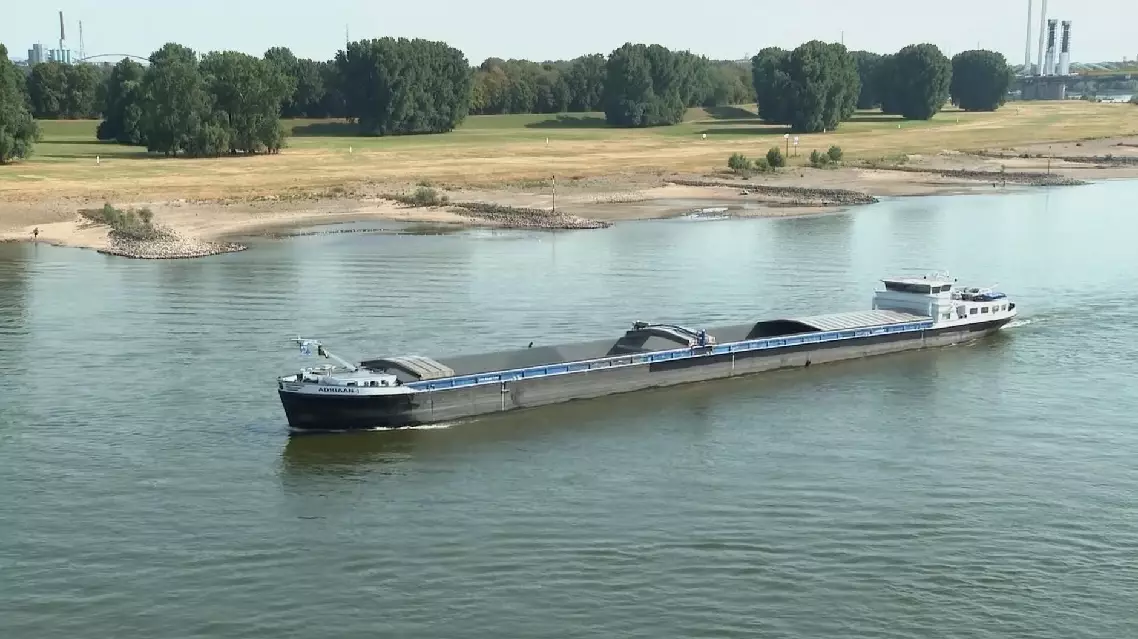
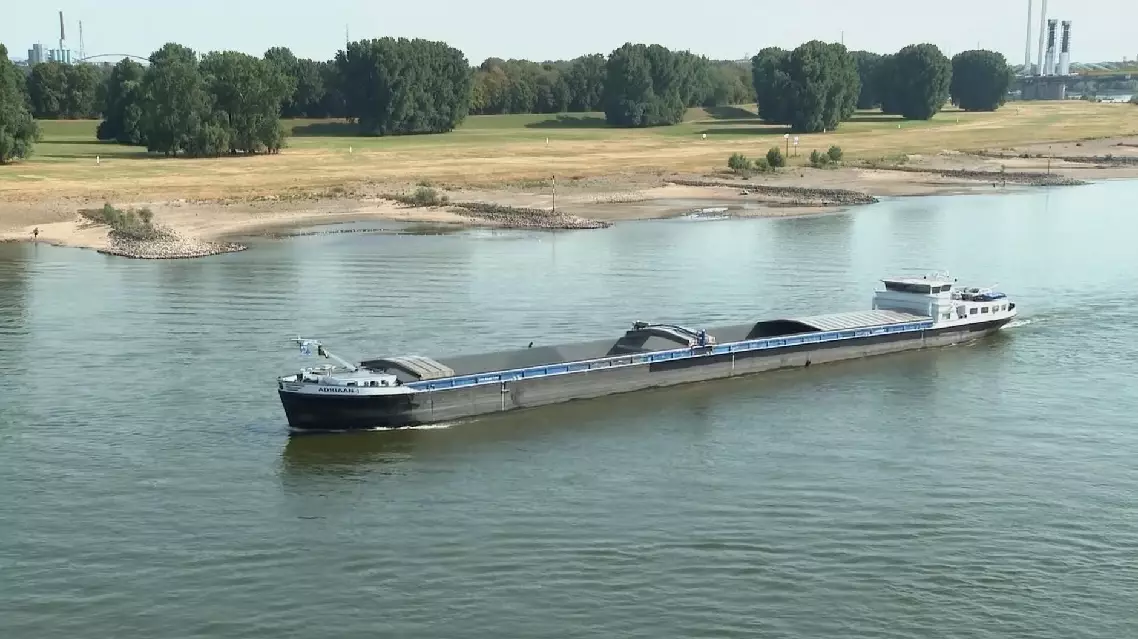
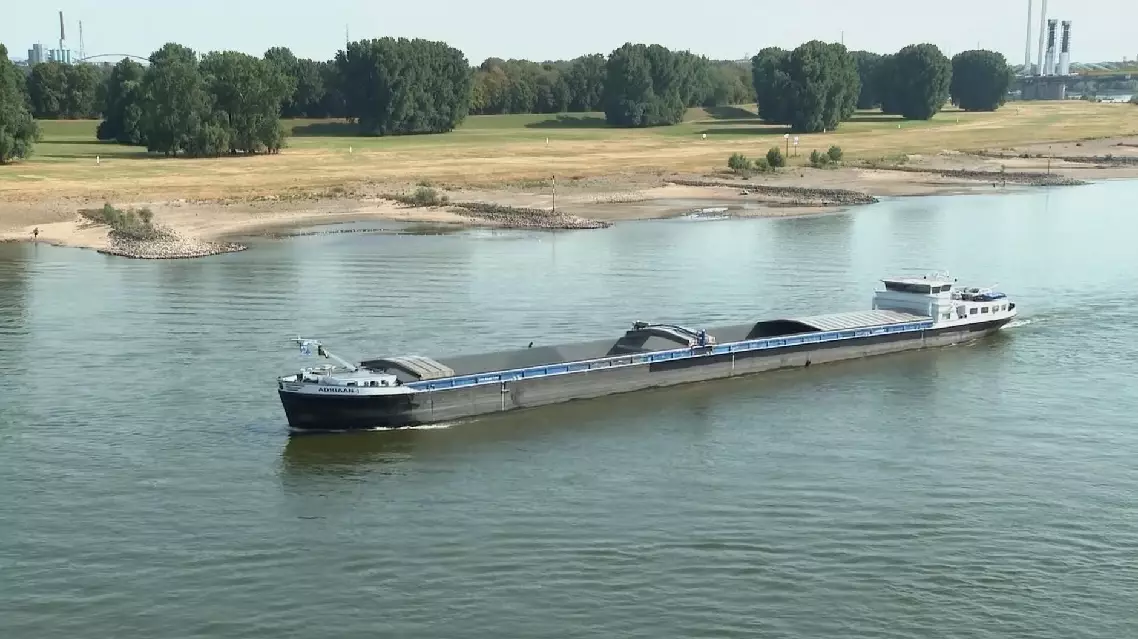
Prolonged heat and widespread drought have pushed the Rhine and Danube rivers to extremely low water levels, putting pressure on Europe's inland transport and energy supply.

Water levels in the middle reaches of the Rhine River have dropped to their lowest level on record, according to Germany's Waterways and Shipping Administration.

As the water level falls, the available channel depth for cargo ships shrinks, forcing ships to significantly reduce their cargo and raising transportation costs in turn.

On Thursday, the country's central bank, the Deutsche Bundesbank, warned that the low water levels are increasing transportation costs and slowing freight movement, weighing on industrial output and exports.

The persistently low water levels on the Danube are also severely restricting upstream transport, leaving vast stockpiles of coal and other commodities piled up at the Port of Constanta, Romania.

Constanta is a major gateway between the Black Sea and Europe's inland waterway network, making it a crucial transit point for coal shipments bound for Serbia.

Roughly 900 kilometers upstream, Serbia's Nikola Tesla Thermal Power Plant (TENT) in Obrenovac, central Serbia, depends in part on coal transported along the Danube from Constanta. But receding water levels are making the supply route increasingly difficult to navigate.

TENT is Serbia's largest power-generation complex and produces roughly half of the country's electricity.

Barges and tankers at TENT are operating at only 30 percent to 40 percent of normal capacity because of the low Danube levels, according to Serbian Mining and Energy Minister Dubravka Djedovic Handanovic.
Low water levels put pressure on Europe's inland transport, energy supply
Low water levels put pressure on Europe's inland transport, energy supply
Low water levels put pressure on Europe's inland transport, energy supply

Low water levels put pressure on Europe's inland transport, energy supply

Chinese robotics firms have made significant breakthroughs in the development and manufacturing of core components, as highlighted at the 2026 World Robot Conference (WRC), which wrapped up on Sunday in Beijing.

The 2026 World Robot Conference, which ran from Wednesday to Sunday, drew more than 300 exhibitors from 26 countries, with over 3,000 products on display, including more than 300 debuts.

One of the highlights of this year's WRC was the considerable presence of dexterous-hand sensor makers, joint module suppliers and chip manufacturers. These component suppliers, once supporters behind finished robots, have now also taken center stage in their own niche sectors -- a sign that China's robotics industry is maturing into a more sophisticated ecosystem.

"Now regarding the market demand for embodied AI, expectations for joint module intelligence and sensory capabilities are growing higher and higher. We will integrate more sensors into the joint modules to make them much smarter," said Weng Jinxian, an exhibitor.

Many robots on display have been rapidly moving past exhibition displays and stepping into real-world operational roles. A company showcased three- and five-fingered robotic hands tailored for logistics sorting, pharmacies, and industrial manufacturing. Exhibitors pointed out that the vast majority of parts for these hands are now domestically produced, significantly lowering production costs and boosting safety and reliability.

"We don't just view it [the robotic hand] as a single piece of hardware. We hope the hand comes with 'brain' capabilities, treating the software ecosystem as a very important part of our product. This includes planning, decision-making, control, and other AI algorithms to accelerate its rapid deployment across thousands of industries," said Wang Peng, another exhibitor.

Beyond commercial applications, the maturation of these core components is enabling robots to build the "hard skills" needed to adapt to extreme environments, including firefighting, mine surveying, and power grid inspections.

Driving these robots as to continuously challenge environmental limits are homegrown core components that have steadily achieved independent breakthroughs.

"When we first started making power grid robots, parts like motors and drivers still had to be imported. Now, the core components of these new models are entirely homegrown and fully self-controlled," Guo Rui, an exhibitor.

Core component breakthroughs take center stage at World Robot Conference

Core component breakthroughs take center stage at World Robot Conference

Recommended Articles