Skip to Content Facebook Feature Image

Carney warned about economic coercion. Now Trump is testing the Canadian prime minister

News

Carney warned about economic coercion. Now Trump is testing the Canadian prime minister
News

News

Carney warned about economic coercion. Now Trump is testing the Canadian prime minister

2026-08-23 22:36 Last Updated At:23:20

TORONTO (AP) — Mark Carney drew international attention as Canada’s prime minister by warning that middle powers must resist economic coercion by more powerful countries. Now President Donald Trump is putting that warning to the test with sweeping new tariffs that could show how much economic pain Canada can absorb.

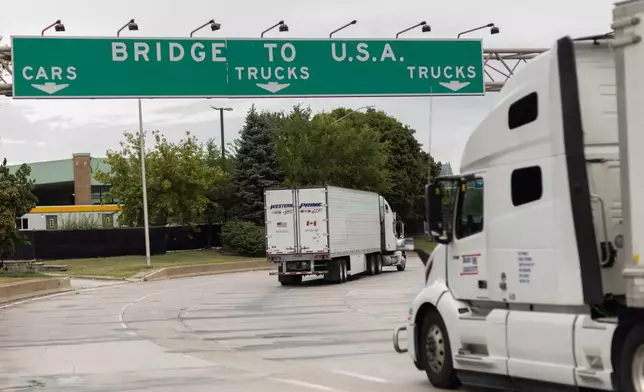
Tensions escalated late Friday when Canada walked away from negotiations after Carney concluded the United States was demanding too much in exchange for tariff relief. The U.S. imposed 50% duties Saturday on about $20 billion worth of Canadian goods, and Carney announced dollar-for-dollar retaliation beginning Sept. 8.

More Images
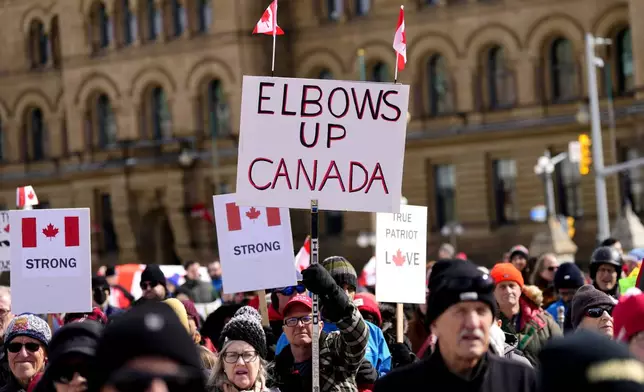
FILE - People rally in response to U.S. President Donald Trump's threats to Canadian sovereignty on Parliament Hill in Ottawa, March 9, 2025. (Justin Tang/The Canadian Press via AP File)
FILE - People rally in response to U.S. President Donald Trump's threats to Canadian sovereignty on Parliament Hill in Ottawa, March 9, 2025. (Justin Tang/The Canadian Press via AP File)

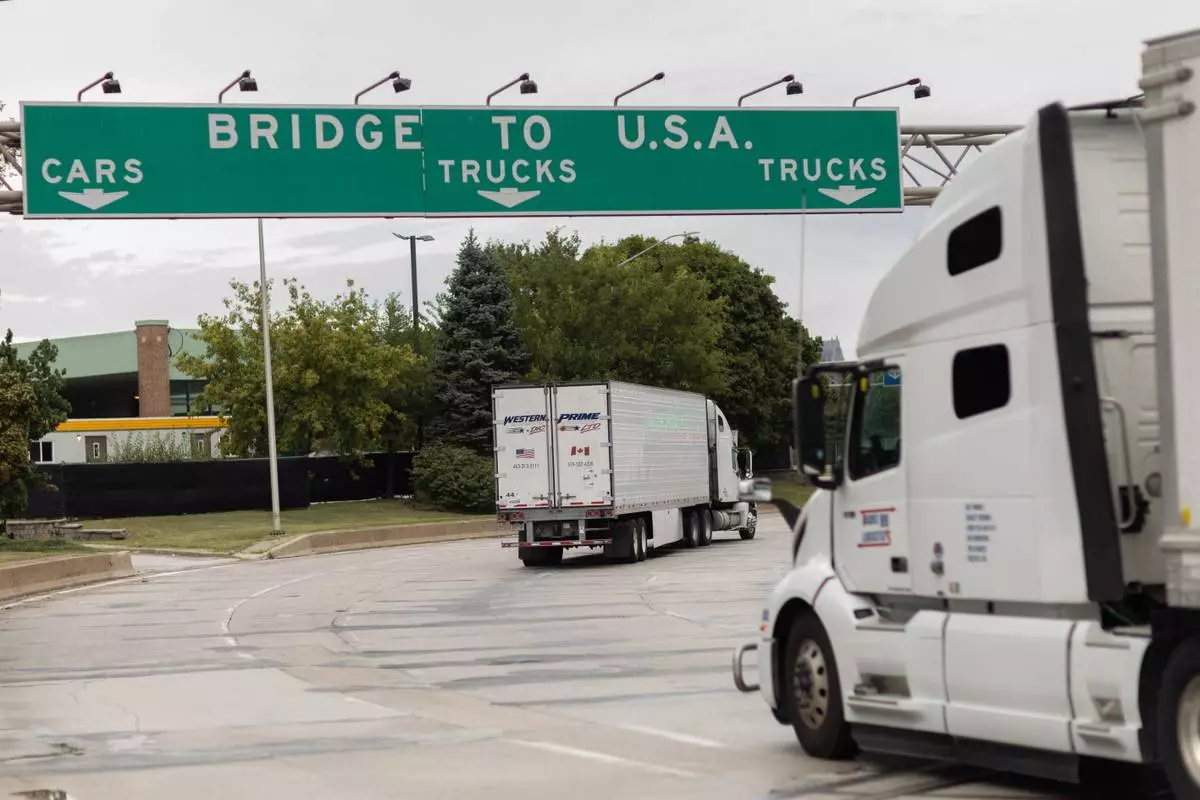
Transport trucks cross the Ambassador Bridge into the United States of America, in Windsor, Ontario, Canada, Saturday, Aug. 22, 2026. (Dax Melmer/The Canadian Press via AP)
Transport trucks cross the Ambassador Bridge into the United States of America, in Windsor, Ontario, Canada, Saturday, Aug. 22, 2026. (Dax Melmer/The Canadian Press via AP)

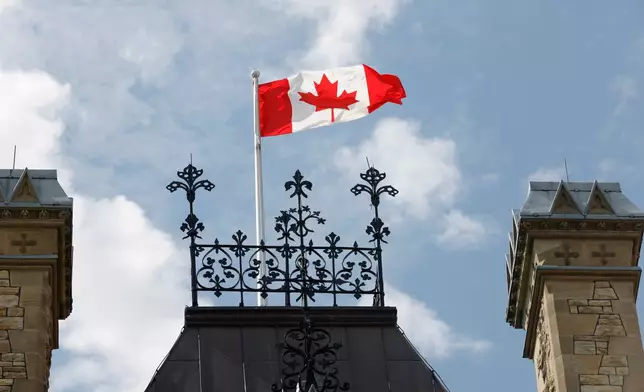
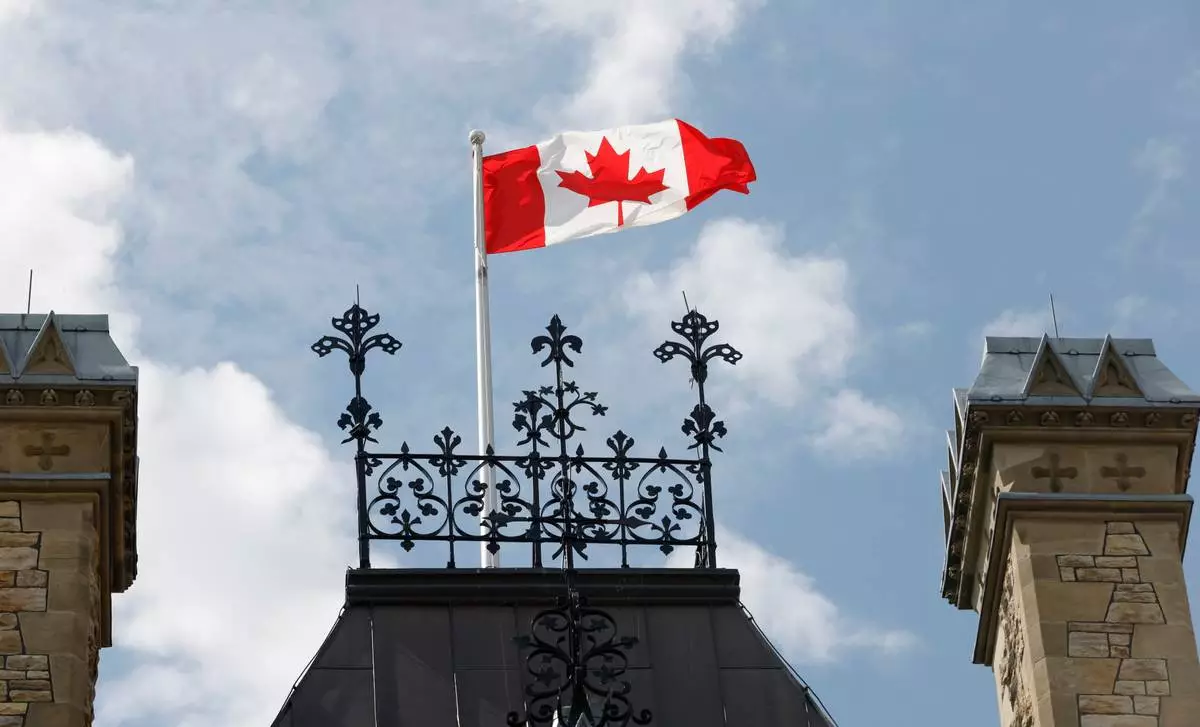
A Canadian flag flies on Parliament Hill in Ottawa on Saturday, Aug. 22, 2026. (Patrick Doyle/The Canadian Press via AP)
A Canadian flag flies on Parliament Hill in Ottawa on Saturday, Aug. 22, 2026. (Patrick Doyle/The Canadian Press via AP)

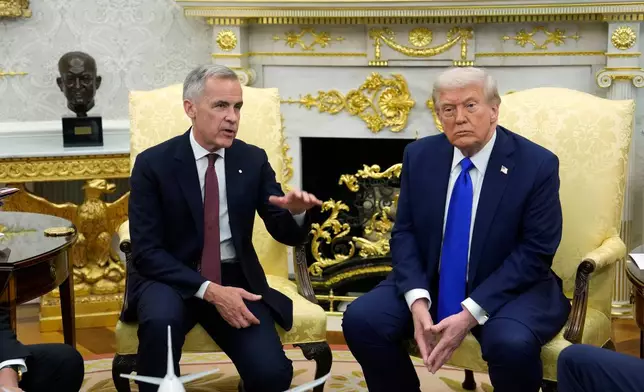
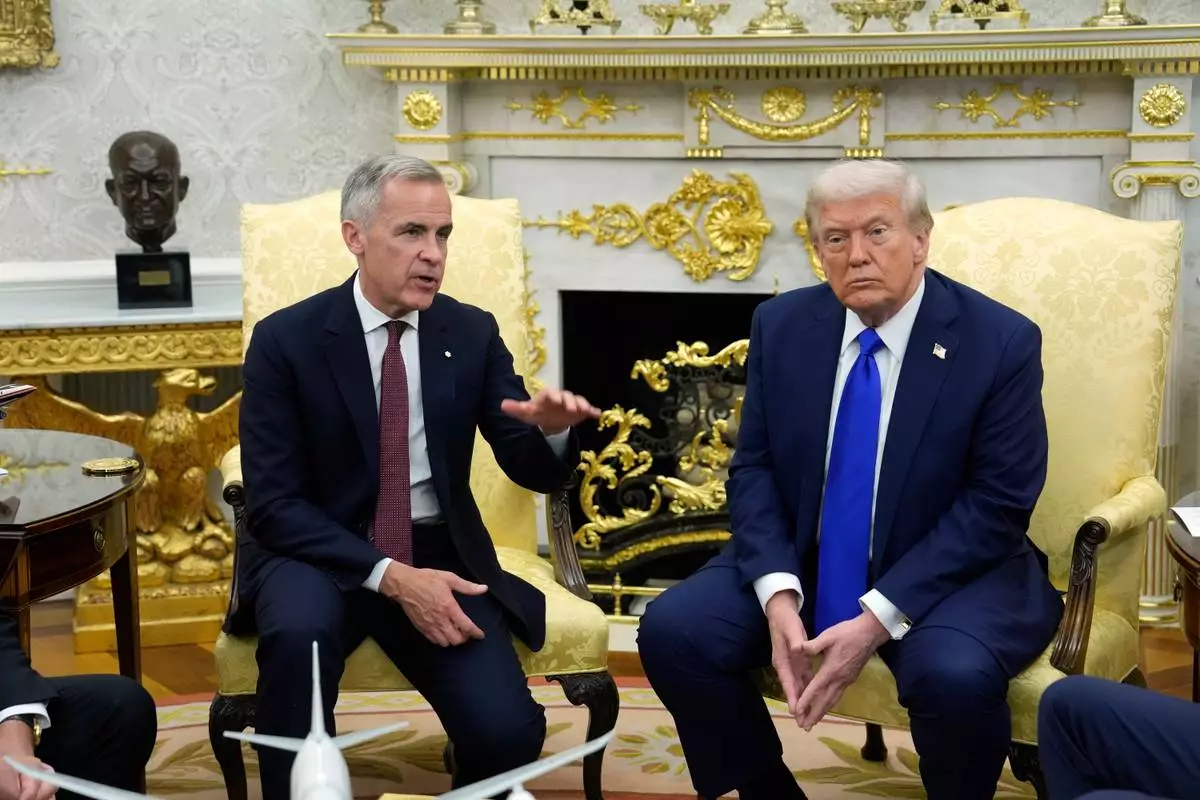
FILE - Canada Prime Minister Mark Carney and President Donald Trump hold a press conference at the White House in Washington, D.C., Oct. 7, 2025. (Adrian Wyld/The Canadian Press via AP, File)
FILE - Canada Prime Minister Mark Carney and President Donald Trump hold a press conference at the White House in Washington, D.C., Oct. 7, 2025. (Adrian Wyld/The Canadian Press via AP, File)

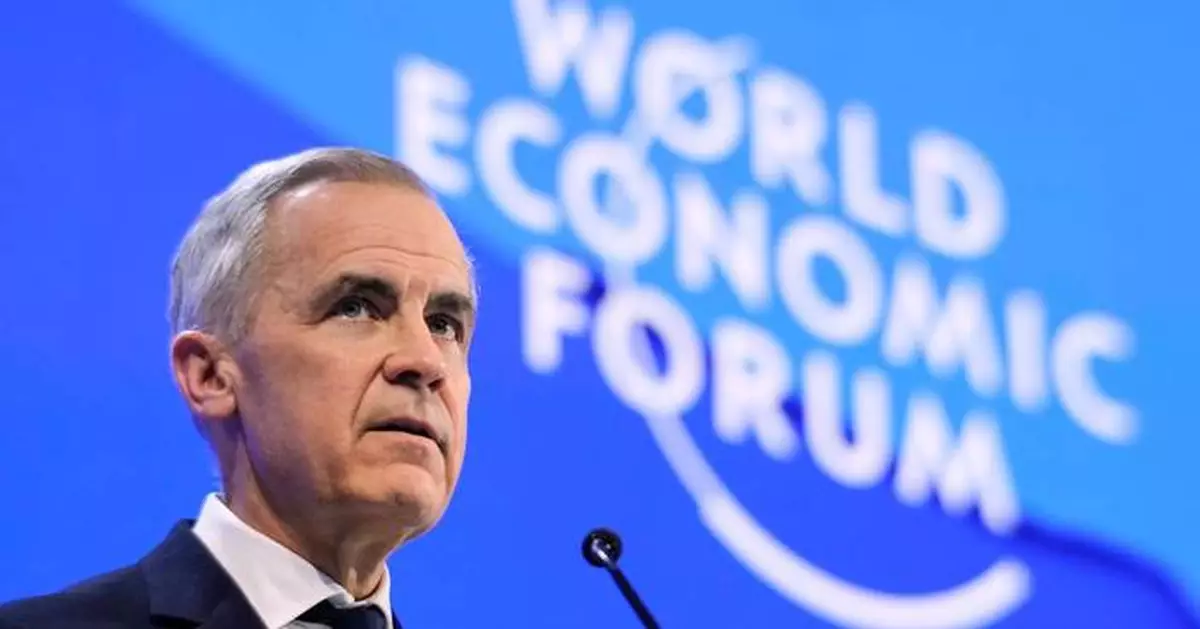
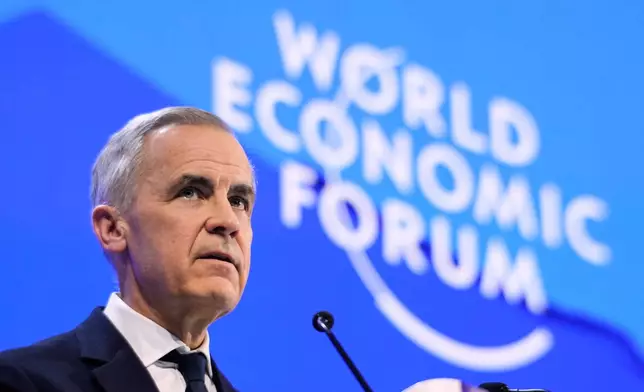
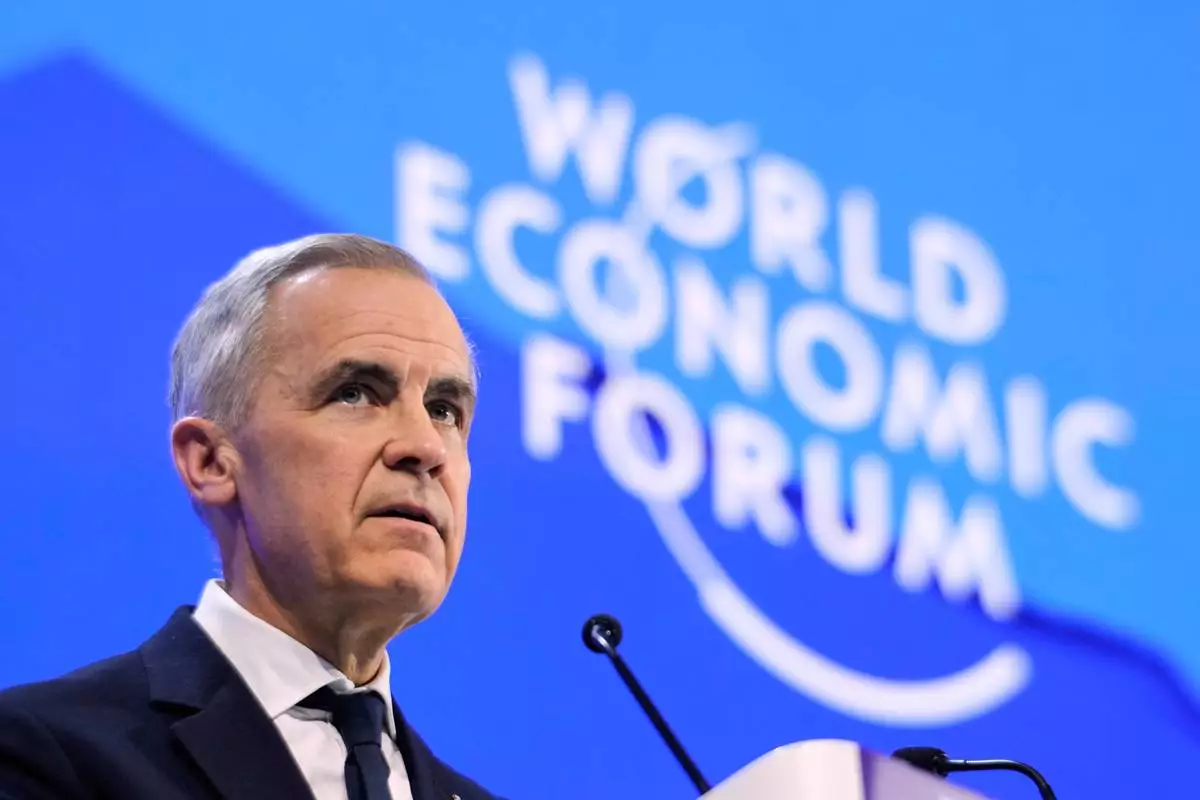
FILE - Canada's Prime Minister Mark Carney speaks during the Annual Meeting of the World Economic Forum in Davos, Switzerland, Jan. 20, 2026. (AP Photo/Markus Schreiber, File)

FILE - Canada's Prime Minister Mark Carney speaks during the Annual Meeting of the World Economic Forum in Davos, Switzerland, Jan. 20, 2026. (AP Photo/Markus Schreiber, File)

“We’re going to hit back,” Carney said.

Carney is doing what many other American allies have so far avoided: risking economic pain rather than yielding to tariff pressure.

For Carney, the showdown is the clearest test yet of his argument that middle powers must stand up to economic pressure from great powers such as the United States and China, even when it comes at a cost. Canada’s response could show how countries navigate a world in which long-standing alliances offer less protection and economic ties themselves become sources of leverage.

It could also shape how Carney is viewed at home and abroad, and how other U.S. allies respond to the Republican president.

The trade dispute also has become a test of sovereignty.

Carney said Washington introduced language in the final hours of negotiations that would have restricted Canada’s ability to make trade deals with other countries. He said that demand was “unacceptable” and “a question of sovereignty.”

British Columbia Premier David Eby said accepting such a condition would have reduced Canada “to the economic equivalent of the 51st state” — a status Trump has mused about often.

Carney’s message resonated in January when he addressed the World Economic Forum in Davos, Switzerland, as Europe braced for Trump’s threats over Greenland and new tariffs.

Carney said the international order was undergoing “a rupture, not a transition.” He argued that sovereignty would depend increasingly on a country’s ability to “withstand pressure” and warned that middle powers negotiating alone with great powers do so from weakness.

Trump responded a day later by stressing Canada’s dependence on the United States. “ Canada lives because of the United States,” he said. “Remember that, Mark, the next time you make your statements.”

The president has repeatedly talked about making Canada the 51st U.S. state and dismissed the allies' border as artificial. On Sunday, Trump returned to that theme, writing on Truth Social that “Canada wants the benefits of being a State, without being one!!!” and accusing Canada of charging U.S. farmers “massive amounts” of tariffs for years. “No more!!!” he wrote.

Seven months since Davos, Canada has become a test case for the world Carney described.

“Our government understood, before many, that America would transform all its commercial relationships,” Carney said Saturday. He accused Washington of using “economic integration as a weapon” and said its “signature was written in pencil.”

Historian Robert Bothwell said Canada is uniquely vulnerable to U.S. pressure.

“No country is more exposed than Canada,” Bothwell said. “Other countries have to fear American misbehavior, but none as much as Canada.”

Bothwell said success ultimately means Canada retaining its independence “in the face of Trump’s desire to subordinate it and absorb it.” He said Carney "sees that very well.”

But Canada’s dependence on the U.S. market makes that difficult.

Nearly three-quarters of Canadian exports go to the United States, whose economy is roughly 10 times larger. Canada can sign new trade agreements, but replacing customers and supply chains built around the enormous U.S. market over decades is considerably harder.

Carney acknowledged retaliation would “raise costs and reduce choice for Canadians.”

U.S. Trade Representative Jamieson Greer rejected Canada’s account of the breakdown in talks, saying Ottawa introduced new demands and backed away from commitments even after Washington offered to reduce tariffs on steel, autos, lumber and other goods.

He said the United States was moving ahead with additional measures in response to Canada’s retaliation, raising the prospect of further escalation.

The European Union prepared retaliatory tariffs against the United States last year but repeatedly suspended them while negotiating with Washington.

Nelson Wiseman, a professor emeritus of political science at the University of Toronto, said Canada is providing the biggest test yet of whether Carney’s strategy can work and whether resistance by one middle power could change the calculations of others.

“Will there be a domino effect? We’ll see,” Wiseman said.

Ian Bremmer, president of the Eurasia Group, said Americans underestimate how angry Canadians are with the Trump administration.

“Taking a hard line in response to U.S. policy perceived as predatory — even with major economic cost to Canada — is popular among most Canadians,” he said in a social media post.

Manitoba Premier Wab Kinew said Canadians should be prepared for a prolonged confrontation and that Trump could emerge weaker after the U.S. midterm elections in November.

“He’s got two more years left in office. We should be prepared to duke it out for two years, and then hopefully, sanity will return,” Kinew said.

Carney has framed the confrontation as a test of whether Canada can preserve its independence under U.S. pressure.

“Last spring, I warned that America is trying to break us so that they can own us,” Carney said Saturday. “And I promised: ‘That will never, ever happen.’ We are keeping that promise.”
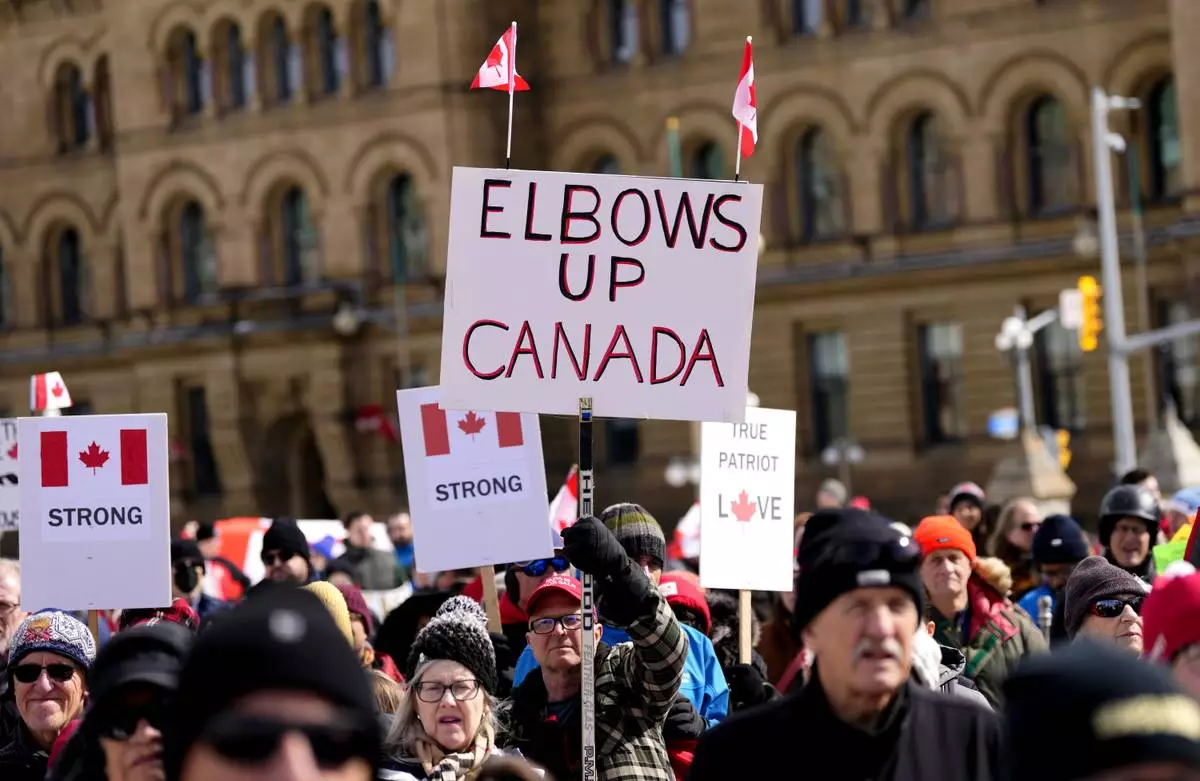
FILE - People rally in response to U.S. President Donald Trump's threats to Canadian sovereignty on Parliament Hill in Ottawa, March 9, 2025. (Justin Tang/The Canadian Press via AP File)
FILE - People rally in response to U.S. President Donald Trump's threats to Canadian sovereignty on Parliament Hill in Ottawa, March 9, 2025. (Justin Tang/The Canadian Press via AP File)

Transport trucks cross the Ambassador Bridge into the United States of America, in Windsor, Ontario, Canada, Saturday, Aug. 22, 2026. (Dax Melmer/The Canadian Press via AP)
Transport trucks cross the Ambassador Bridge into the United States of America, in Windsor, Ontario, Canada, Saturday, Aug. 22, 2026. (Dax Melmer/The Canadian Press via AP)

A Canadian flag flies on Parliament Hill in Ottawa on Saturday, Aug. 22, 2026. (Patrick Doyle/The Canadian Press via AP)
A Canadian flag flies on Parliament Hill in Ottawa on Saturday, Aug. 22, 2026. (Patrick Doyle/The Canadian Press via AP)

FILE - Canada Prime Minister Mark Carney and President Donald Trump hold a press conference at the White House in Washington, D.C., Oct. 7, 2025. (Adrian Wyld/The Canadian Press via AP, File)
FILE - Canada Prime Minister Mark Carney and President Donald Trump hold a press conference at the White House in Washington, D.C., Oct. 7, 2025. (Adrian Wyld/The Canadian Press via AP, File)

FILE - Canada's Prime Minister Mark Carney speaks during the Annual Meeting of the World Economic Forum in Davos, Switzerland, Jan. 20, 2026. (AP Photo/Markus Schreiber, File)

FILE - Canada's Prime Minister Mark Carney speaks during the Annual Meeting of the World Economic Forum in Davos, Switzerland, Jan. 20, 2026. (AP Photo/Markus Schreiber, File)
JAKARTA, Indonesia (AP) — Indonesian police on Sunday arrested 72 people suspected of starting some of the recent forest and peatland fires as huge blazes in central and western parts of the country triggered a harmful cloud known as a choking haze.

Indonesia has been battling fires driven by an intensifying El Nino pattern and a prolonged dry season, generating dense smoke that crossed into Malaysia, according to Indonesia’s National Disaster Management Agency, or BNPB.

Fires are a regular problem in the country and often strain relations with neighbors.

Plantation owners and traditional farmers often start fires to clear land for farming, said Mohammad Irhamni, director of special crimes at the National Police’s Criminal Investigation Agency.

The arson suspects were being investigated in connection with 89 forest and land fire cases across five provinces on the island of Borneo and four on Sumatra, Irhamni said.

He said most of the suspects were accused of deliberately burning land to clear areas for plantations at lower cost. Investigators were still tracing financial records to determine whether companies financed or ordered the land clearing, signaling the probe could expand beyond those arrested.

“We will not stop at the perpetrators on the ground,” Irhami said in a news conference Sunday in the capital, Jakarta. “We will determine who benefited from these activities and who was ultimately behind them.”

The suspects face charges that carry penalties ranging from hefty fines to prison terms of up to 15 years, he said.

Indonesian President Prabowo Subianto flew on Saturday to Central Kalimantan province, where more than 7,600 hectares (18,700 acres) have burned, to encourage authorities to get the haze cloud under control.

Prabowo promised government resources required to contain the fires, including helicopters and water pumps, and vowed to hold accountable any companies found to have contributed to the fires.

“I hope we can control this soon,” Prabowo said during the visit. “We have experienced worse forest and land fires in the past, and we were able to overcome them.”

Accompanying the president was Prasetyo Hadi, the head of State Secretariat. He said at least four companies in West Kalimantan province are under investigation for allegedly using fire to clear land. If they are proven to have intentionally set the fires, they could face sanctions, including the revocation of their operating permits, he added.

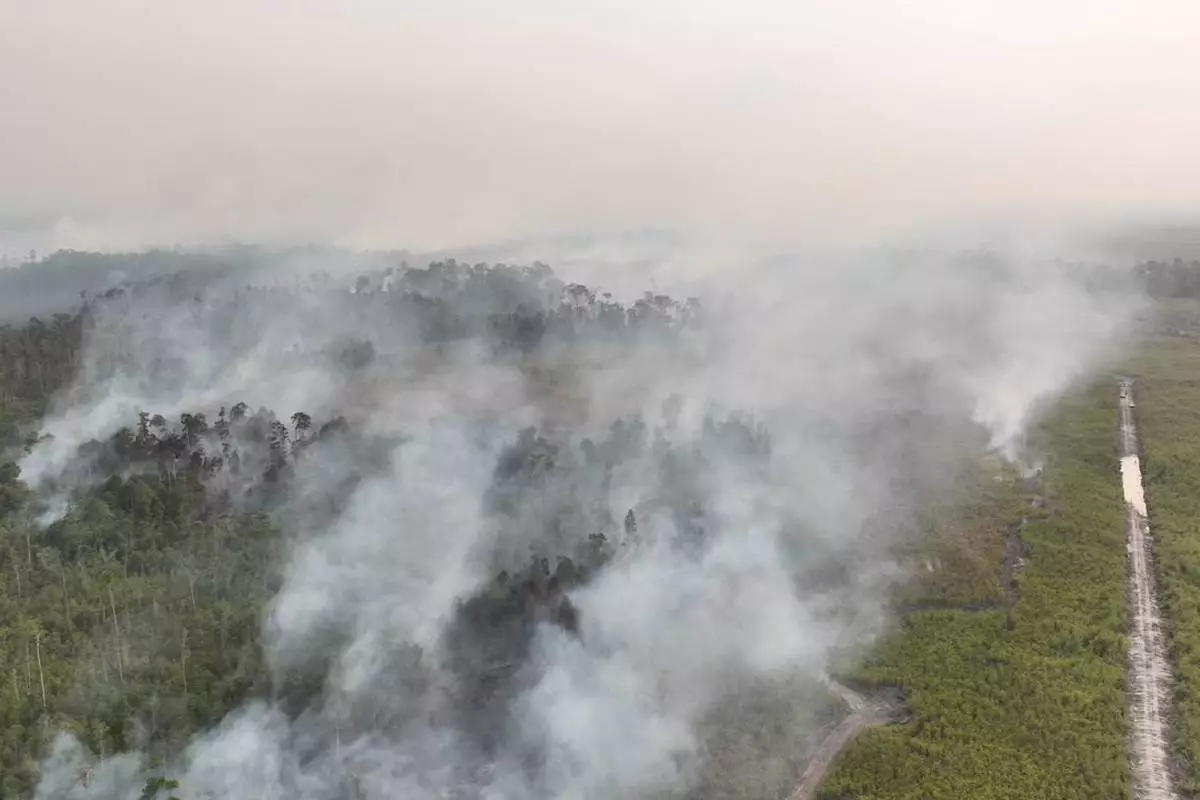
Smoke from the fires on Sunday blanketed parts of Borneo, the world’s third-largest island shared by Indonesia, Malaysia and Brunei. Indonesia administers about three-quarters of the island, where the country’s Environment Ministry recorded more than 3,700 hot spots on Sunday.

BNPB chief Suharyanto said fire activity had increased in West, Central and South Kalimantan provinces on Borneo, where many blazes worsen due to peatlands, prolonging the dangerous haze in several areas.

Fires that appear "extinguished on the surface may still contain embers underneath, so sufficient rainfall is crucial to rewet the peat and fully suppress the fires,” said Suharyanto, who, like many Indonesians, uses a single name.

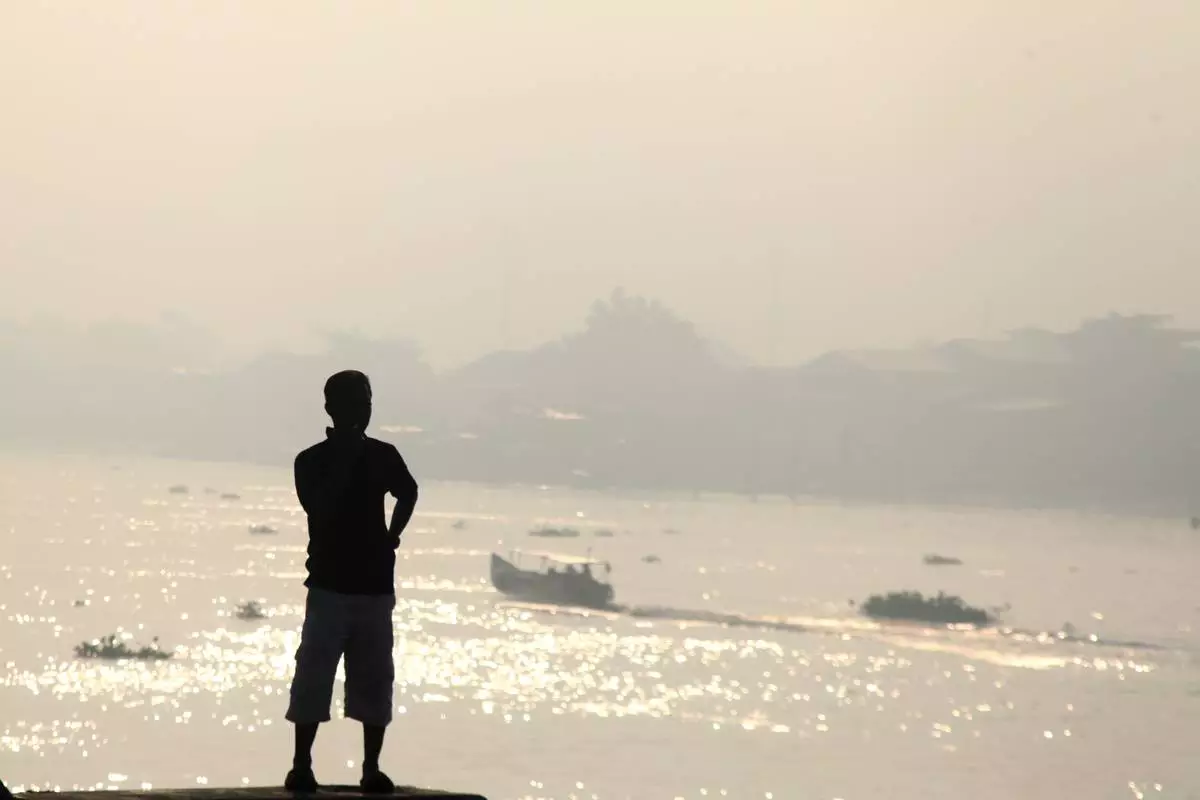
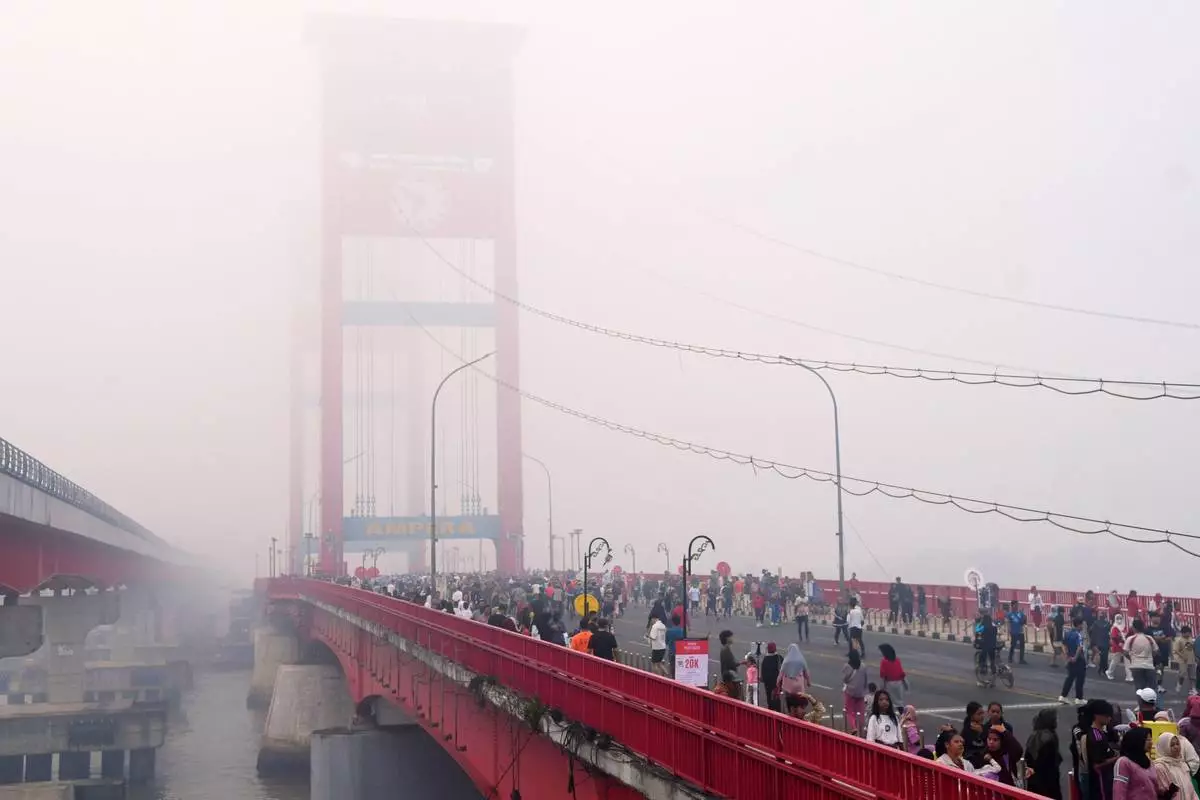
The western island of South Sumatra also battled fires, with more than 1,700 hot spots detected on Sunday, causing a choked haze cloud and reducing visibility to only 10 meters (33 feet) in some areas, the ministry said.

Cloud-seeding resumed over Kalimantan on Sunday, with 30 helicopters for water-bombing and aerial patrol missions, and another 22 helicopters covering Sumatra.

Meanwhile, Malaysia has suffered severe smoke from the fires, with its eastern state of Sarawak among the hardest hit. One district recorded “very unhealthy” air quality on Friday, while eight others posted unhealthy readings, prompting the closure of nearly 600 schools and affecting about 200,000 students, the Sarawak government said.

A man is silhouetted against the haze from wildfires that blankets Musi River in Palembang, South Sumatra, Indonesia, Sunday, Aug. 23, 2026. (AP Photo/Muhammad Fajri)

A man is silhouetted against the haze from wildfires that blankets Musi River in Palembang, South Sumatra, Indonesia, Sunday, Aug. 23, 2026. (AP Photo/Muhammad Fajri)

People walk along the Ampera Bridge as haze from wildfires blankets the city of Palembang, in South Sumatra, Indonesia, Sunday, Aug. 23, 2026. (AP Photo/Muhammad Fajri)

People walk along the Ampera Bridge as haze from wildfires blankets the city of Palembang, in South Sumatra, Indonesia, Sunday, Aug. 23, 2026. (AP Photo/Muhammad Fajri)

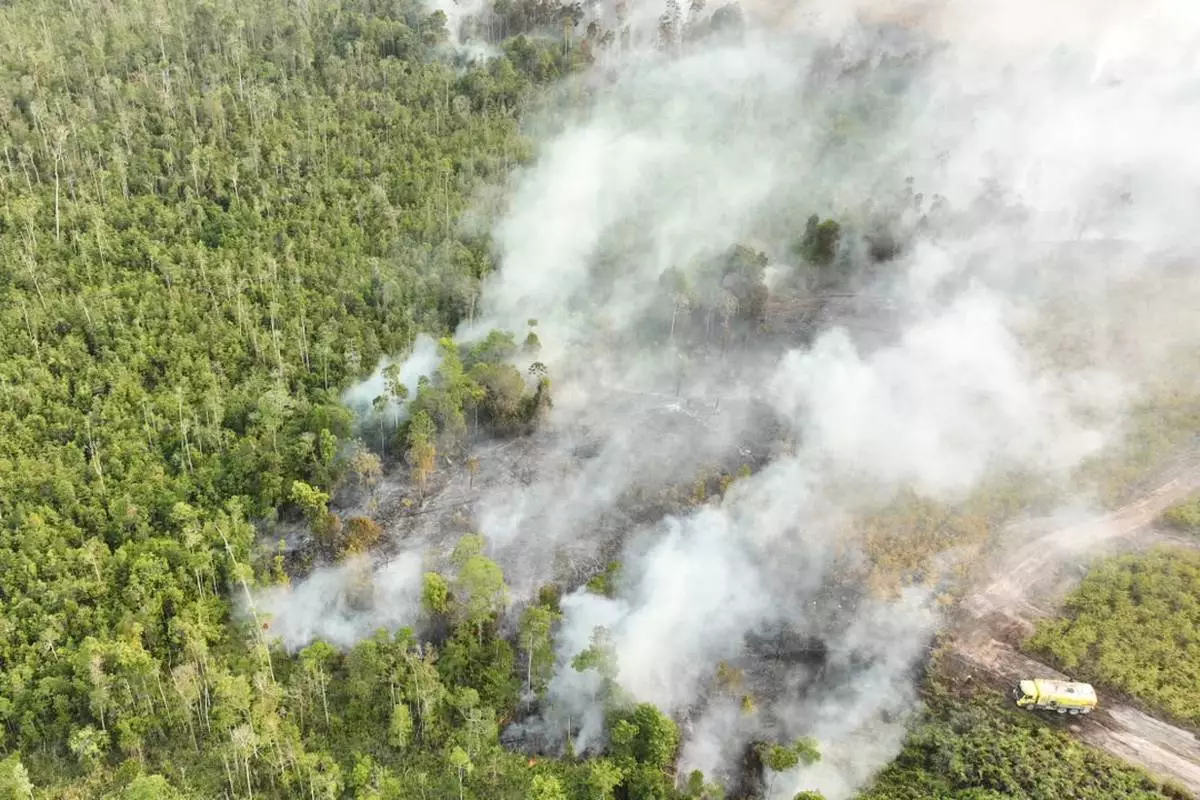
In this aerial photo released by Indonesia's National Disaster Mitigation Agency (BNPB) on Friday, Aug. 21, 2026, smoke billows as a wildfire rages through a peatland forest in Bulungan, North Kalimantan, Indonesia. (BNPB via AP)

In this aerial photo released by Indonesia's National Disaster Mitigation Agency (BNPB) on Friday, Aug. 21, 2026, smoke billows as a wildfire rages through a peatland forest in Bulungan, North Kalimantan, Indonesia. (BNPB via AP)

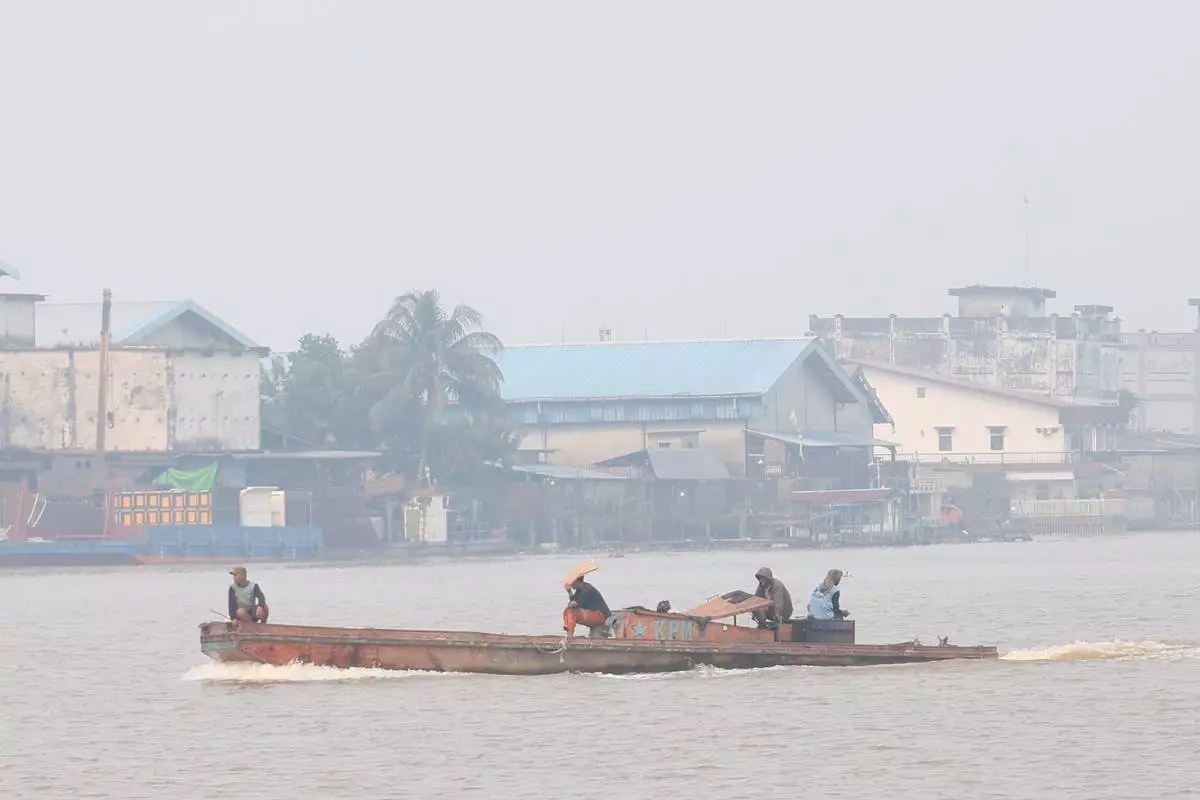
A boat cruises on the Kapuas River as haze from wildfires blankets the city of Pontianak, West Kalimantan, Indonesia, Friday, Aug. 21, 2026. (AP Photo/Stefanus Taman)

A boat cruises on the Kapuas River as haze from wildfires blankets the city of Pontianak, West Kalimantan, Indonesia, Friday, Aug. 21, 2026. (AP Photo/Stefanus Taman)

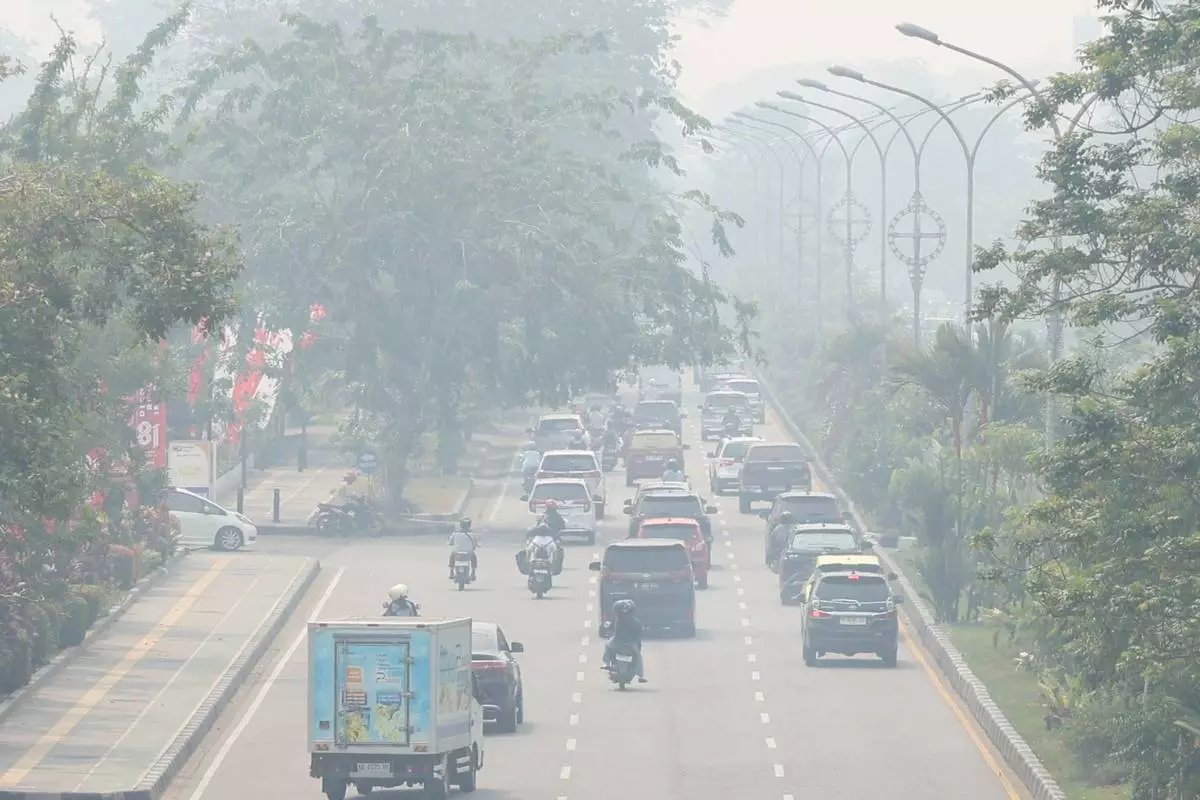
Motorists ride on a road as haze from wildfires blankets the city of Pontianak, West Kalimantan, Indonesia, Friday, Aug. 21, 2026. (AP Photo/Stefanus Taman)

Motorists ride on a road as haze from wildfires blankets the city of Pontianak, West Kalimantan, Indonesia, Friday, Aug. 21, 2026. (AP Photo/Stefanus Taman)

In this aerial photo released by Indonesia's National Disaster Mitigation Agency (BNPB) on Friday, Aug. 21, 2026, smoke billows as a wildfire rages through a peatland forest in Bulungan, North Kalimantan, Indonesia. (BNPB via AP)

In this aerial photo released by Indonesia's National Disaster Mitigation Agency (BNPB) on Friday, Aug. 21, 2026, smoke billows as a wildfire rages through a peatland forest in Bulungan, North Kalimantan, Indonesia. (BNPB via AP)

Recommended Articles