Skip to Content Facebook Feature Image

A landslide at a landfill in the capital of Guinea kills 30 people, officials say

News

A landslide at a landfill in the capital of Guinea kills 30 people, officials say
News

News

A landslide at a landfill in the capital of Guinea kills 30 people, officials say

2026-08-24 05:36 Last Updated At:05:40

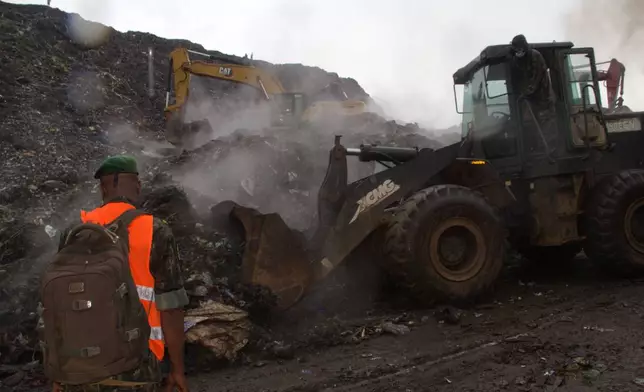
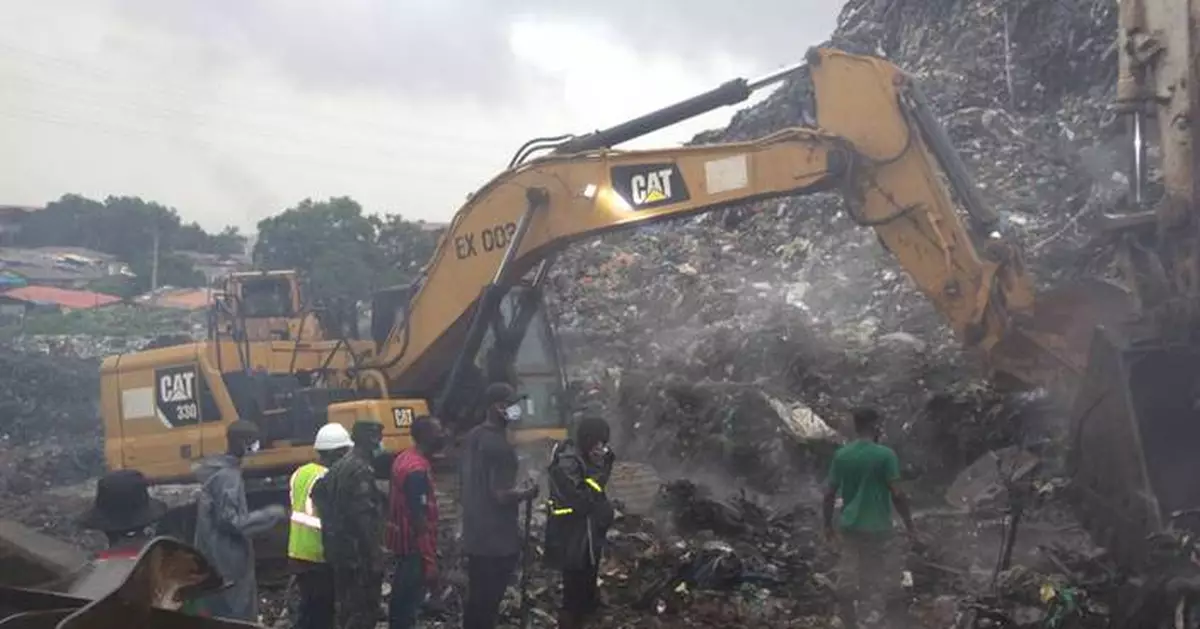
CONAKRY, Guinea (AP) — A mountainous heap of refuse collapsed at the largest landfill in Guinea 's capital of Conakry early on Sunday, killing 30 people, according to the central government.

Authorities said that heavy rains, which started at around 2 a.m., washed over the refuse at Dar Es Salam — the largest landfill in Conakry — and triggered a landslide that buried nearby shacks. A search and rescue operation was underway to find survivors. Six people were seriously injured and several homes were destroyed.

More Images
Rescue workers search through a heap of refuse after it collapsed at Conakry’s largest landfill, Guinea, Sunday, Aug. 23, 2026. (AP Photo/Fodo Toure)
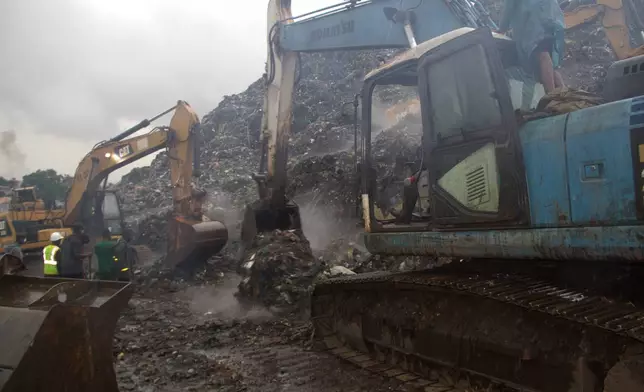
Rescue workers search through a heap of refuse after it collapsed at Conakry’s largest landfill, Guinea, Sunday, Aug. 23, 2026. (AP Photo/Fodo Toure)
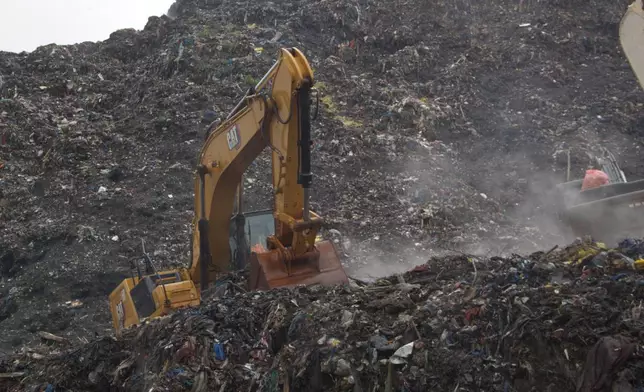
Rescue workers search through a heap of refuse after it collapsed at Conakry’s largest landfill, Guinea, Sunday, Aug. 23, 2026. (AP Photo/Fodo Toure)
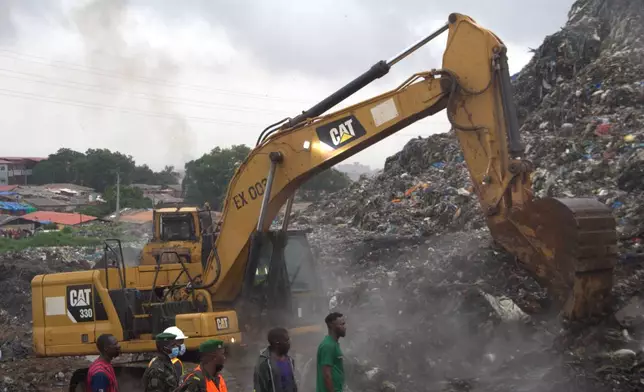
Rescue workers search through a heap of refuse after it collapsed at Conakry’s largest landfill, Guinea, Sunday, Aug. 23, 2026. (AP Photo/Fodo Toure)
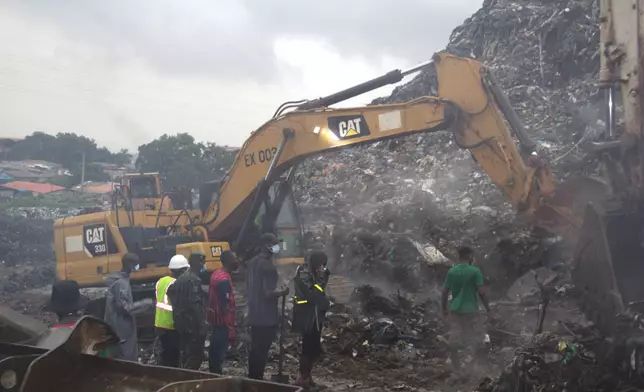
Rescue workers search through a heap of refuse after it collapsed at Conakry’s largest landfill, Guinea, Sunday, Aug. 23, 2026. (AP Photo/Fodo Toure)

Rescue workers search through a heap of refuse after it collapsed at Conakry’s largest landfill, Guinea, Sunday, Aug. 23, 2026. (AP Photo/Fodo Toure)

Rescue workers search through a heap of refuse after it collapsed at Conakry’s largest landfill, Guinea, Sunday, Aug. 23, 2026. (AP Photo/Fodo Toure)

Rescue workers search through a heap of refuse after it collapsed at Conakry’s largest landfill, Guinea, Sunday, Aug. 23, 2026. (AP Photo/Fodo Toure)

Rescue workers search through a heap of refuse after it collapsed at Conakry’s largest landfill, Guinea, Sunday, Aug. 23, 2026. (AP Photo/Fodo Toure)

Rescue workers search through a heap of refuse after it collapsed at Conakry’s largest landfill, Guinea, Sunday, Aug. 23, 2026. (AP Photo/Fodo Toure)

The site, an open-air waste dump which is the largest in the city, had been designated for closure on Sunday, according to Lt. Col. Baldé Mamadou Bailo, the sanitation officer for the military engineering battalion.

Locals living around the landfill had been given eviction notices, which forced many to leave the area, but many others were still around at the time of the disaster, according to authorities.

"We will ensure that the remaining families are relocated elsewhere,” Dienabou Touré, the minister of territorial administration and decentralization, said at the scene.

Guinea is mineral-rich with huge deposits of bauxite — the largest in the world — and also has iron ore, gold, diamonds and minerals. However, according to the World Bank, 43.7% of the population lives below the national poverty line.
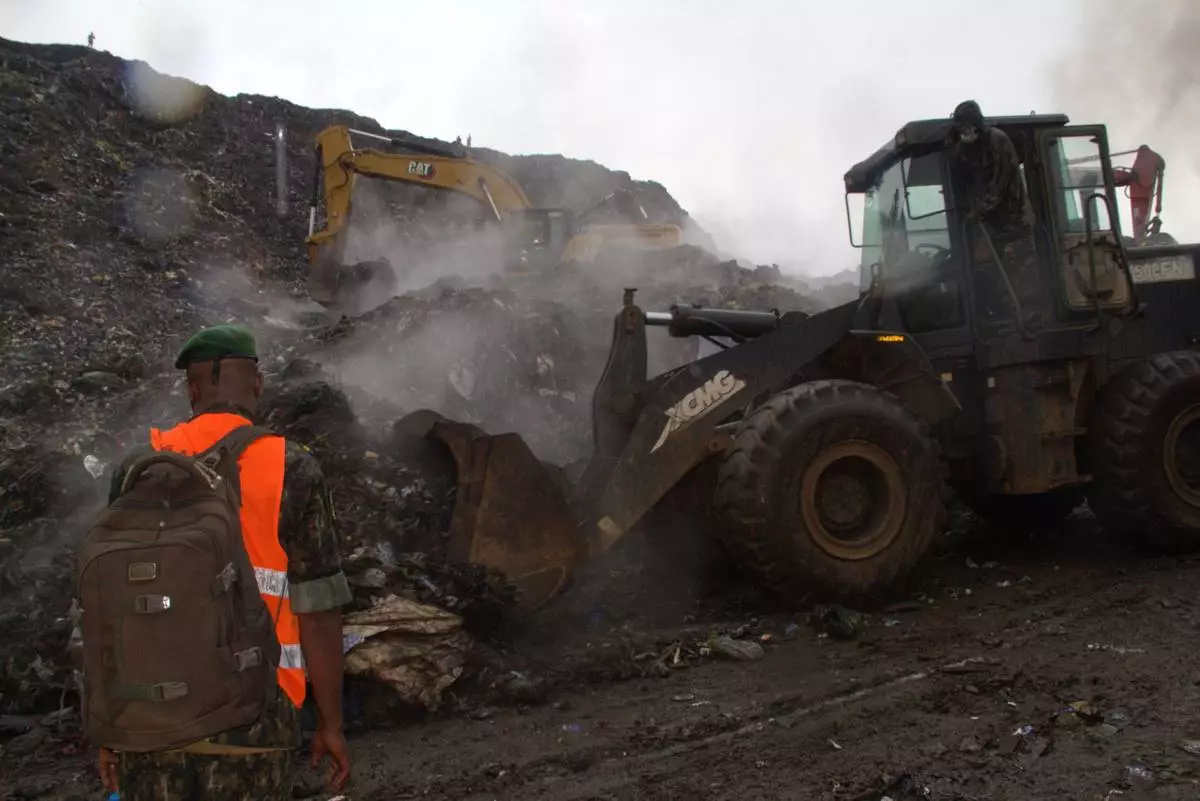
Rescue workers search through a heap of refuse after it collapsed at Conakry’s largest landfill, Guinea, Sunday, Aug. 23, 2026. (AP Photo/Fodo Toure)
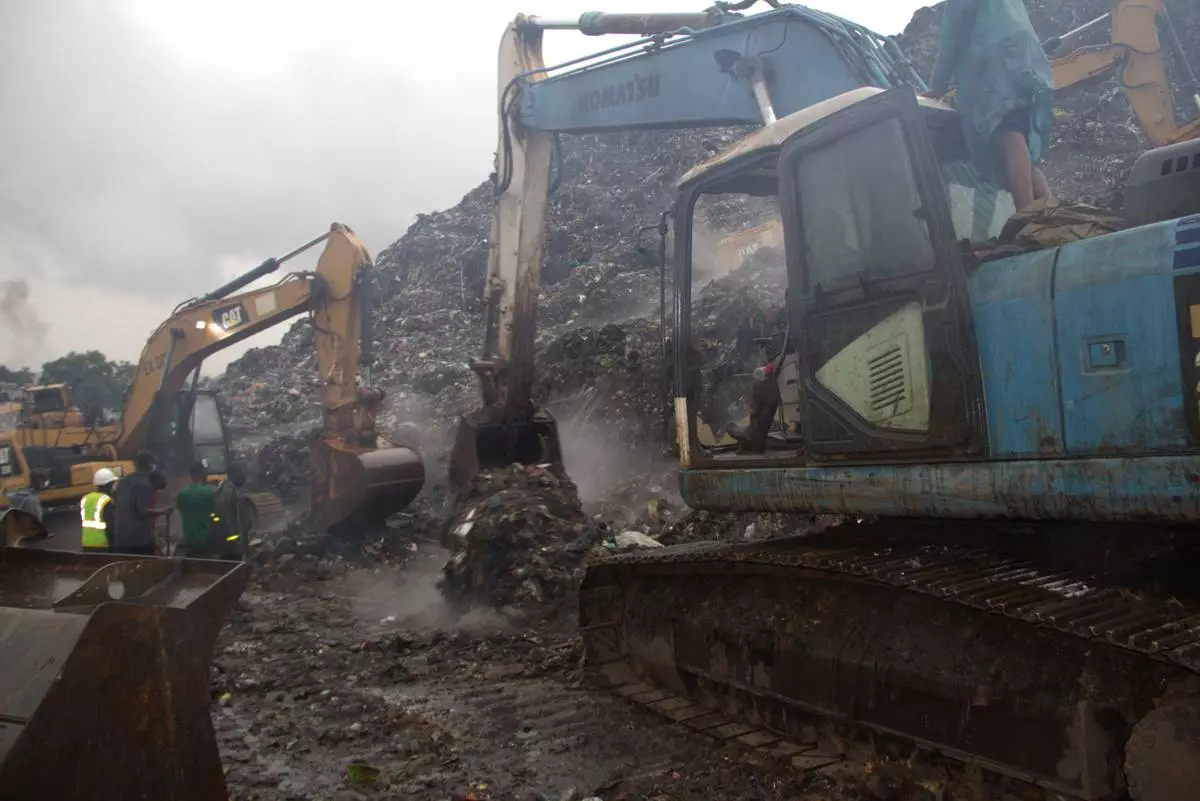
Rescue workers search through a heap of refuse after it collapsed at Conakry’s largest landfill, Guinea, Sunday, Aug. 23, 2026. (AP Photo/Fodo Toure)
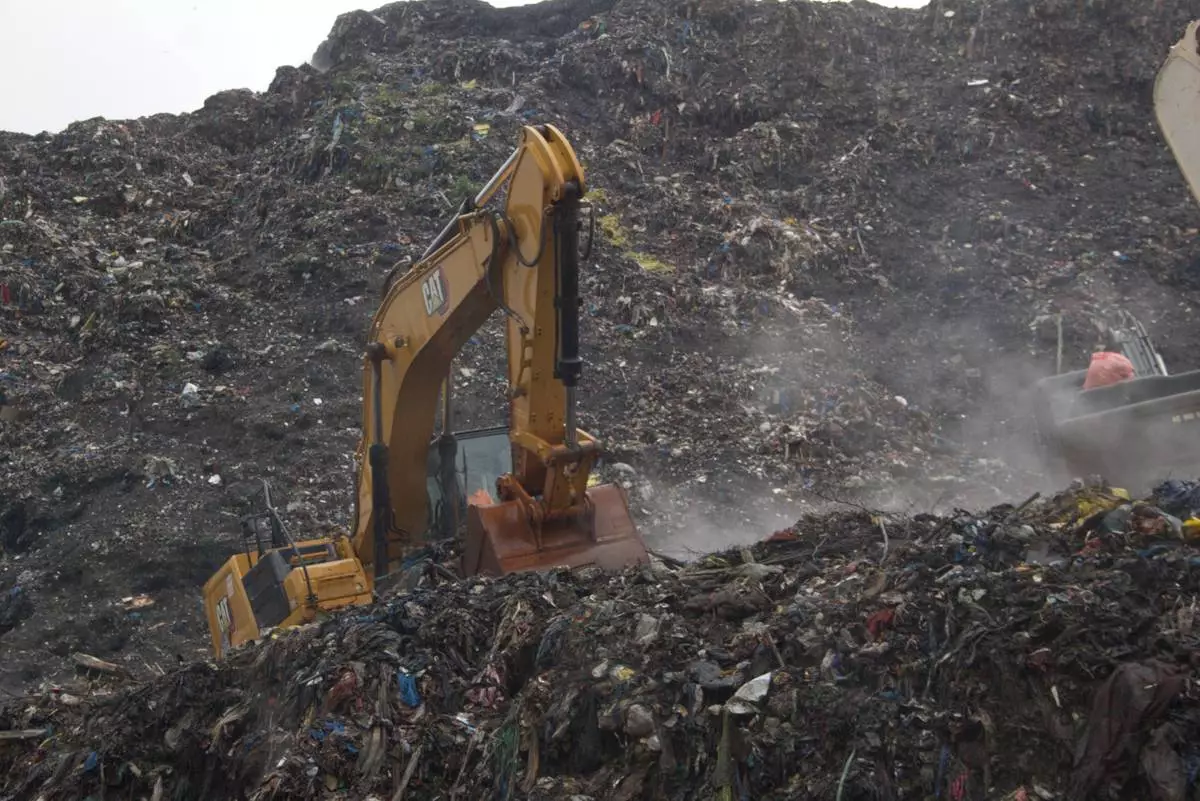
Rescue workers search through a heap of refuse after it collapsed at Conakry’s largest landfill, Guinea, Sunday, Aug. 23, 2026. (AP Photo/Fodo Toure)
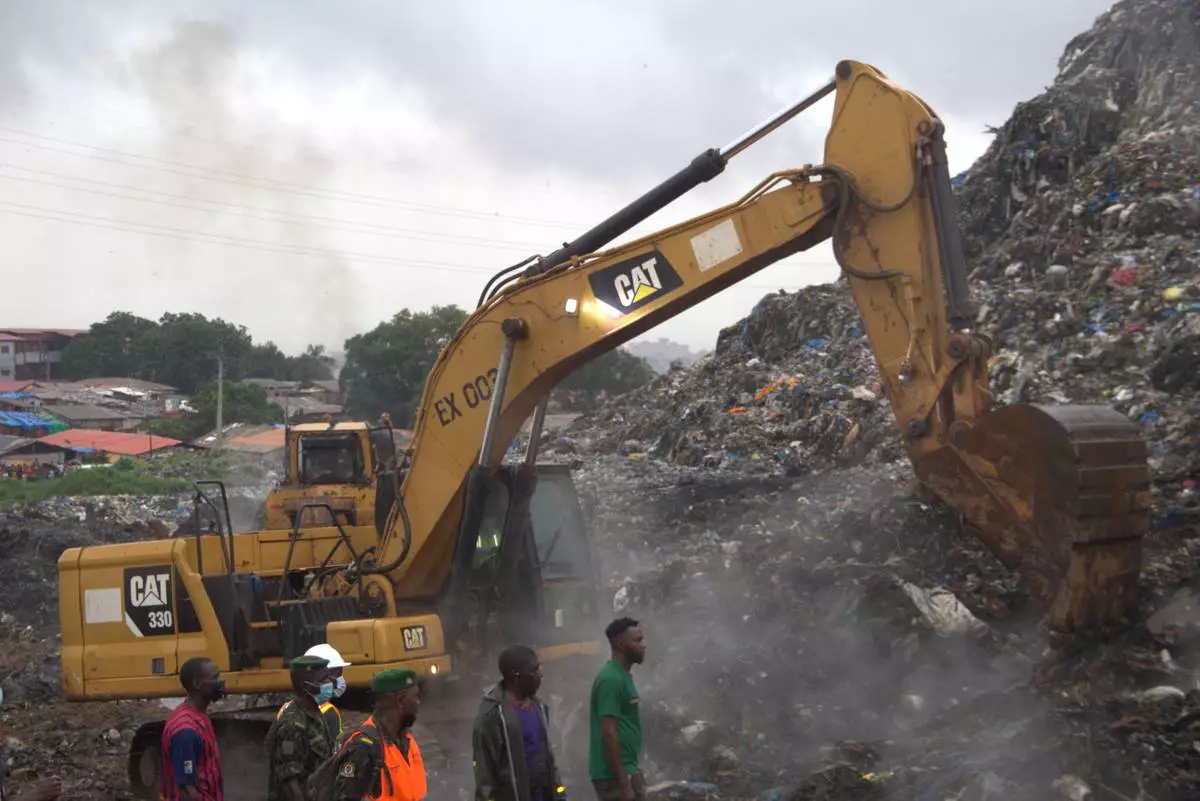
Rescue workers search through a heap of refuse after it collapsed at Conakry’s largest landfill, Guinea, Sunday, Aug. 23, 2026. (AP Photo/Fodo Toure)
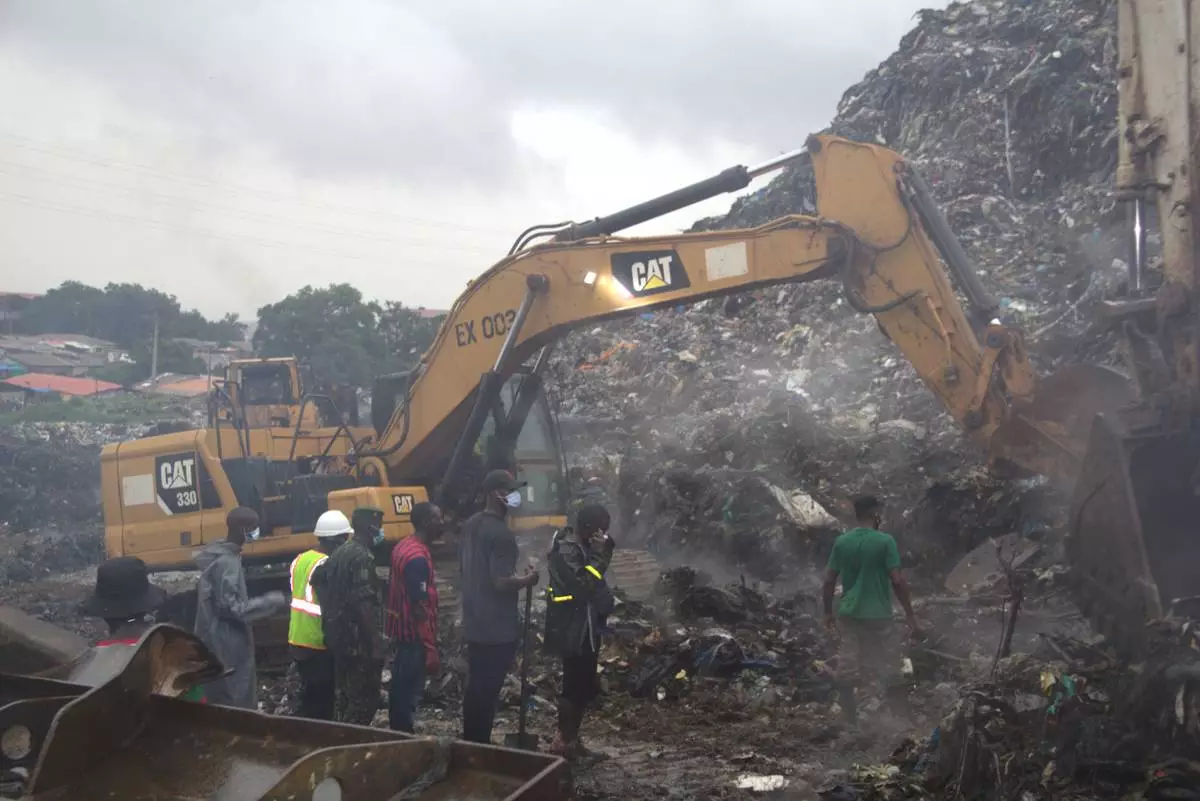
Rescue workers search through a heap of refuse after it collapsed at Conakry’s largest landfill, Guinea, Sunday, Aug. 23, 2026. (AP Photo/Fodo Toure)

Rescue workers search through a heap of refuse after it collapsed at Conakry’s largest landfill, Guinea, Sunday, Aug. 23, 2026. (AP Photo/Fodo Toure)
Rescue workers search through a heap of refuse after it collapsed at Conakry’s largest landfill, Guinea, Sunday, Aug. 23, 2026. (AP Photo/Fodo Toure)
Rescue workers search through a heap of refuse after it collapsed at Conakry’s largest landfill, Guinea, Sunday, Aug. 23, 2026. (AP Photo/Fodo Toure)

Rescue workers search through a heap of refuse after it collapsed at Conakry’s largest landfill, Guinea, Sunday, Aug. 23, 2026. (AP Photo/Fodo Toure)

Rescue workers search through a heap of refuse after it collapsed at Conakry’s largest landfill, Guinea, Sunday, Aug. 23, 2026. (AP Photo/Fodo Toure)

HONOLULU (AP) — Tropical Storm Moke was swirling past Hawaii on Sunday, close enough to dump heavy rain on Big Island communities in the aftermath of Hurricane Lala.

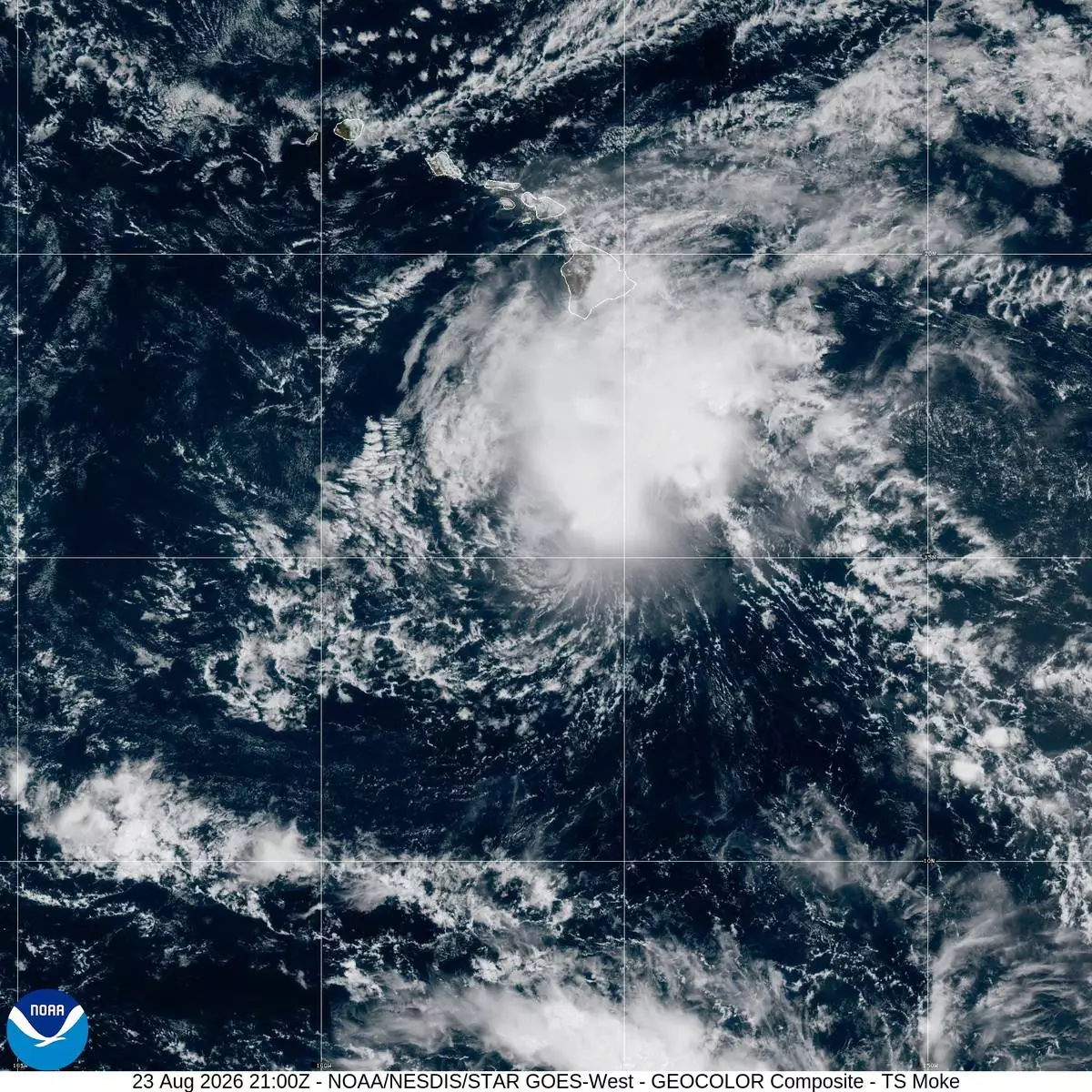
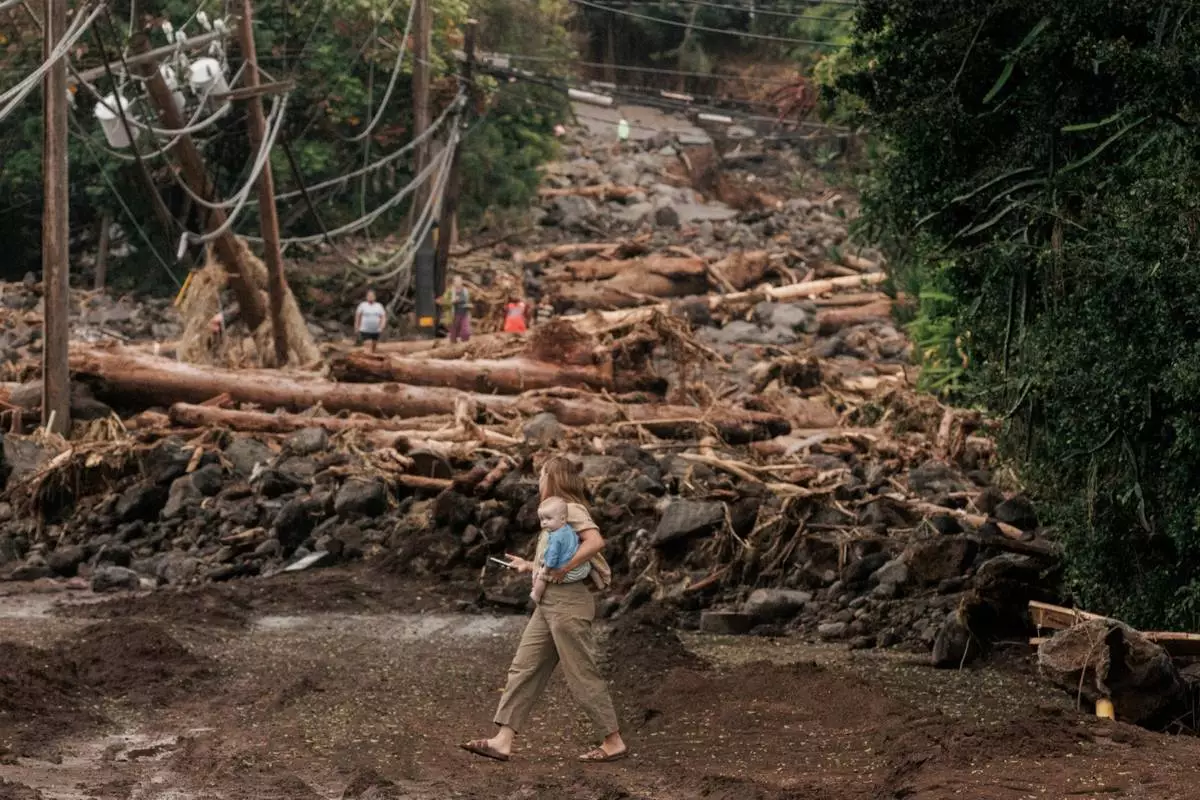
The National Hurricane Center located Moke's center about 320 miles (515 kilometers) south-southwest of Hilo around midday. Top sustained winds were around 40 mph (65 kph), though the real impact is expected from rainfall in places where last weekend’s hurricane flooded communities, triggered mudslides and damaged roads and power lines. Two deaths linked to the hurricane have been reported in Hawaii.

Forecasters expected Moke to produce as much as 10 inches (25 centimeters) of total rain across the Big Island, and up to 15 inches (38 centimeters) in some isolated places, enough to cause life-threatening flooding and mudslides for the windward and southeast slopes, especially in steep terrain and over areas affected by Lala.

Forecasters aid the center of Moke was expected to pass south of the Big Island later in the day, then south of the smaller main islands in Hawaii early in the week.

In eastern Maui, the next in the island chain, up to 6 inches (15 centimeters) of rain was expected, and the other islands may get an inch or two (between 2.5 and 5 centimeters), according to the hurricane center.

As with Hurricane Lala, the Big Island was expected to bear the brunt of Moke's rain and winds as the storm moves westward, south of the island chain. After moving away from the islands, Lala was downgraded and remained a strong tropical storm on Sunday far out in the Central Pacific.

The northeast coast of the Big Island saw the heaviest total rainfall from Lala, at 43.54 inches (1.1 meters), according to the weather service. More than 6,700 customers, most of them on the Big Island, remained without electricity on Sunday, according to poweroutage.us.

Ahead of Moke's approach, Hawaii Gov. Josh Green urged people to prepare by restocking food, medicine and other essentials.

In the eastern Pacific, meanwhile, Tropical Storm Iselle formed earlier Sunday and was gaining strength, far away from Mexico's southwest coast.

Iselle had top sustained winds of 50 mph (85 kph) on Sunday afternoon and was about 535 miles (860 kilometers) southwest of the southern tip of Mexico's Baja California peninsula. No coastal watches or warnings were in effect for Iselle as it moved to the northwest at 16 mph (26 kph).

The U.S. National Hurricane Center in Miami said Iselle could become a hurricane in another day or two and would kick up strong ocean swells on Baja's western coastline starting Monday.

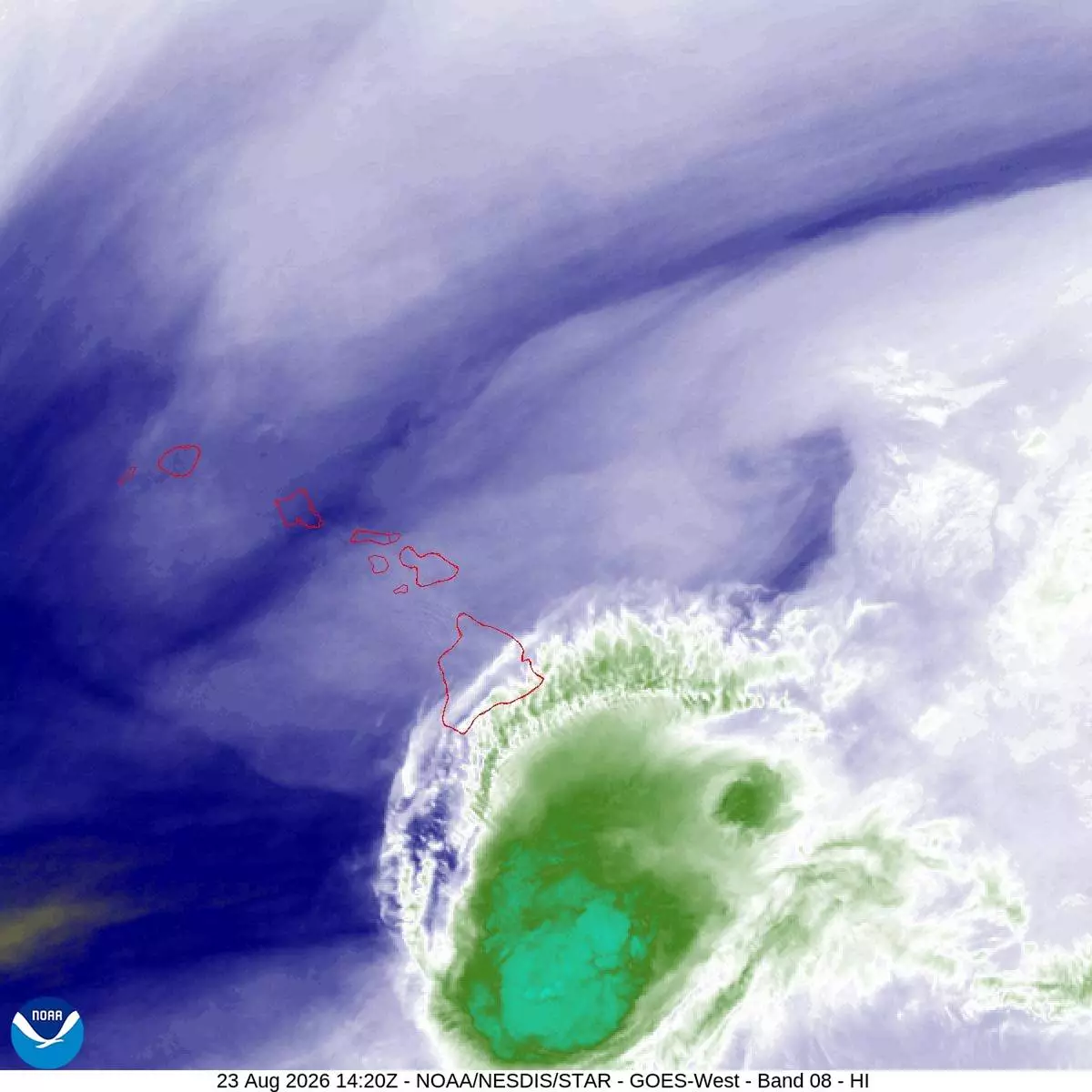
This satellite image provided by NOAA shows Tropical Storm Moke at 5 p.m. ET on Sunday, Aug. 23, 2026, near Hawaii. (NOAA via AP)

This satellite image provided by NOAA shows Tropical Storm Moke at 5 p.m. ET on Sunday, Aug. 23, 2026, near Hawaii. (NOAA via AP)

A woman and child walk past a debris-strewn street in Naalehu, Hawaii, Monday, Aug. 17, 2026, after a severe weather system went through the area. (Stephen Lam/San Francisco Chronicle via AP)

A woman and child walk past a debris-strewn street in Naalehu, Hawaii, Monday, Aug. 17, 2026, after a severe weather system went through the area. (Stephen Lam/San Francisco Chronicle via AP)

This NOAA satellite image taken Sunday, Aug. 23, 2026, shows the water vapor of Tropical Storm Moke as it advanced toward Hawaii's Big Island. (NOAA via AP)

This NOAA satellite image taken Sunday, Aug. 23, 2026, shows the water vapor of Tropical Storm Moke as it advanced toward Hawaii's Big Island. (NOAA via AP)

Recommended Articles