Russian air defense system intercepted and shot down 269 Ukrainian drones over multiple Russian regions in 12 hours, the Russian Defense Ministry said on Sunday.
During the day, from 08:00 to 20:00 Moscow time, air defense systems intercepted and destroyed 269 Ukrainian fixed-wing drones, the ministry said in a statement.
A day earlier, Russian President Vladimir Putin noted that over the past 40 days, the Ukrainian Armed Forces had persistently launched attacks on Russian civilian and logistics facilities using missiles and drones, which he described as "another gamble" by Ukraine and its Western backers aimed at inflicting a strategic defeat on Russia.
Putin said that Russian troops were not only continuing offensives along all fronts but also stepping up military pressure, and expressed confidence in accomplishing the goals of the special military operation.
Ukrainian President Volodymyr Zelensky said on Sunday that Ukraine expects 30 billion euros from the European Union (EU) this year to help fund its fiscal deficit, while the country faces 27 billion U.S. dollars of defense budget deficit.
He also said that holding elections is impossible under the country's current conditions, adding that elections right now would be a tsunami for the country that would tear Ukraine apart.
His strategy is to bring the country to the end of the war and preserve an independent and sovereign state, Zelensky told reporters.
Ukraine would be ready to discuss holding possible elections only if its partners provide specific guarantees that the vote could be held safely, legitimately and democratically, without strikes or shelling, Zelensky said.
Former Ukrainian Defense Minister Mykhailo Fedorov recently said that Ukraine should find a legal and safe way to hold elections even during the conflict.
A presidential election was expected to be held in 2024 but was postponed due to the country's martial law, which has been in effect since the escalation of the Ukraine crisis.

Russia downs 269 Ukrainian drones; Ukraine faces 27 bln US dollars defense budget deficit

Russia downs 269 Ukrainian drones; Ukraine faces 27 bln US dollars defense budget deficit
U.S. stocks closed mixed on Monday as a sharp sell-off in semiconductor equities dragged down the technology sector, while investors digested new U.S. economic sanctions announced against Iran and fresh trade tariff warnings targeting Canada.
The Dow Jones Industrial Average rose 140.15 points, or 0.26 percent, to 53,417.16. The S and P 500 sank 21.51 points, or 0.28 percent, to 7,652.86. The Nasdaq Composite Index shed 200.264 points, or 0.77 percent, to 25,980.19.
Eight of the 11 primary S and P 500 sectors ended in the green, with consumer staples and financials leading the gainers by going up 1.76 percent and 1.24 percent, respectively. Meanwhile, technology and energy led the laggards by losing 1.59 percent and 0.76 percent, respectively.
The tech sector's pullback stemmed from broad weakness across chipmakers. Memory and semiconductor shares came under heavy pressure following weekend reports that graphics processor leader Nvidia plans to implement price hikes across select AI server configurations. SanDisk, Western Digital, SK Hynix, Micron Technology and Seagate Technology all finished lower.
Geopolitical developments dominated macroeconomic headlines as U.S. Treasury Secretary Scott Bessent on Monday threatened Iran with "an economic D-Day," announcing a wave of new sanctions aimed at further isolating the country.
On the trade front, U.S. President Donald Trump escalated trade frictions with Canada, announcing intentions to raise tariffs on Canadian cars, automotive parts and steel to 50 percent effective Jan. 1, 2027. The announcement weighed on domestic automotive equities, pulling shares of General Motors and Ford lower.
In corporate earnings disclosures, U.S.-listed shares of Chinese e-commerce firm PDD and electric vehicle maker XPeng declined 1.48 percent and 8.53 percent, respectively, following their latest quarterly financial reports.
Market attention is now converging on two critical catalysts later this week: Nvidia's highly anticipated second-quarter earnings release on Wednesday, expected to serve as a vital referendum on the ongoing AI investment cycle, and Federal Reserve Chair Kevin Warsh's scheduled address at the central bank's annual Jackson Hole Economic Policy Symposium.
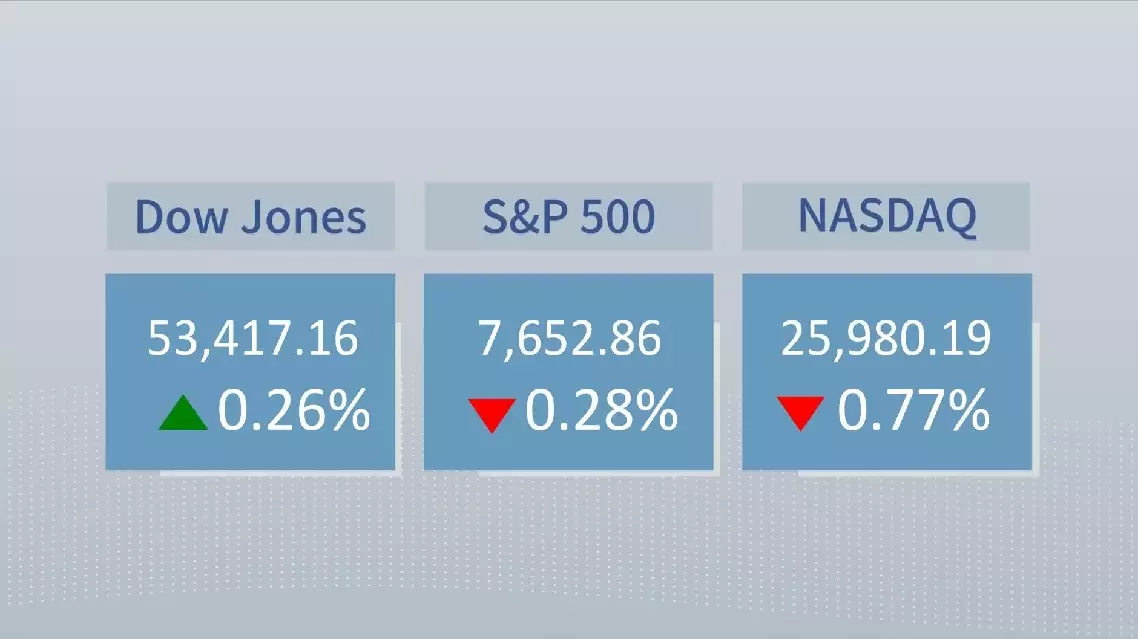
U.S. stocks close mixed as chip stocks sink