BUNIA, Congo (AP) — More than 300 people died of Ebola in eastern Congo in the past week, one of the highest weekly tolls yet, government data showed Monday, as health workers struggle to catch up with an outbreak that is spreading at unprecedented speed.
Ministry of Health data showed that as of Saturday, the outbreak had recorded 5,514 cases and 2,642 deaths, including 317 deaths reported in the previous seven days. But Congolese experts have said the outbreak that started weeks before it was confirmed could be three times the known size.
This is the fastest-growing Ebola outbreak in history, with many people dying outside treatment centers. It has recorded seven times more deaths at this stage than the 2014-2016 West Africa Ebola outbreak that is the deadliest in history with over 11,000 in all.
Most new cases in Ituri province, the current epicenter, still come from outside monitored contacts.
Nearly half of people infected have died — 47.9% — but the government data shows much higher rates in hard-to-reach areas such as North Kivu province, which has a fatality rate of 68.6%.
A key challenge has been the lack of approved vaccines or treatments for the rare Bundibugyo virus responsible for the outbreak.
On Friday, Congo received more than 16,000 doses of the Ervebo vaccine that was effective in past Ebola outbreaks caused by a different, more common type. The World Health Organization says it also will be used in clinical trials for a Bundibugyo virus vaccine.
WHO says it’s not known whether Ervebo can protect against the Bundibugyo virus, although early laboratory and animal data suggest it may offer some protection.
Officials have not said when the vaccine will be rolled out to frontline workers. In Ituri, locals expressed optimism that it will help slow the outbreak.
“I am very pleased that these vaccines have finally arrived,” said Héritier Ramazani, a resident. “We are fed up with recording new cases of Ebola every day.”
The outbreak is unfolding in some of the most challenging conditions imaginable, with rebel threats and intense population movements.
Medical teams in Ituri and other affected provinces also face work stoppages by responders who haven’t been paid, anger from long-traumatized communities, bad roads and misinformation claiming that Ebola isn’t real.
Experts believe the virus was spreading in the mining town of Mongbwalu as early as February, months before authorities declared the outbreak on May 15.

Residents and frontline workers embark on Ebola outbreak awareness campaign in Beni, North Kivu province, eastern Congo, Friday, Aug. 21, 2026. (AP Photo/Sebastien Kitsa Musayi)

People dressed in protective gear unload a coffin containing the remains of six-year-old Baudjo Baraka Jules, who died of Ebola, for a burial service in Bunia, Ituri province, eastern Congo, Tuesday, Aug. 18, 2026. (AP Photo/Dieudonne Dirole)
ALLENTOWN, Pa. (AP) — Una sola cosa. Just one thing. That's all Victor Martinez wanted from listeners of his Spanish-language radio station — tell him one positive thing about President Donald Trump.
The calls started rolling in. Someone mentioned the $5,000 payout that Trump promised if Republicans keep control of Congress, which Martinez thought was so hilarious that he played a laugh track.
Then a trucker shared a silver lining from high diesel prices — he was expecting to take an unplanned vacation because he could no longer afford to fill up his rig.
Martinez has been hosting his show for nearly a decade in Pennsylvania's Lehigh Valley, where Latinos have gone from a fifth to nearly a quarter of the population over the same time period. He added an hour of politics to his morning talk show at the end of Trump's first term, and listeners flooded his phone with their worries about the Jan. 6 attack on the U.S. Capitol, their unhappiness with inflation and their concern over Joe Biden's age.
Now, at the halfway mark of Trump's second term, Martinez said people are just as frustrated as they were then. They're angry about higher prices for fuel and groceries, and Republicans could face the consequences in the midterm elections.
“It’s the economy, stupid. That’s what it is. I mean, things have gotten so bad,” Martinez said. “People didn’t think Biden did a good job. Everything was expensive and now it’s worse.”
Martinez broadcasts from a fourth floor studio with hardwood floors and a view of an old church in downtown Allentown. He operates the show's control board like an orchestra conductor and sits in front of a poster with campaign signs for Democrats and Republicans.
The studio is located in Pennsylvania's 7th Congressional District, where freshman incumbent Ryan Mackenzie faces Democratic challenger Bob Brooks, a retired firefighter and union official, in one of the most closely watched races in the country.
Latinos are about a quarter of the district's population, and they were a key part of Trump's winning coalition two years ago.
Both candidates have organized Latino outreach efforts.
Brooks calls himself “Bombero Bob” — Spanish for firefighter — and recently stopped by a Mexican restaurant and a barber shop with a Dominican flag hanging inside. Mackenzie's campaign has promoted support from Latino voters and officials, and the congressman opened a district office in downtown Allentown with Spanish-speaking staff.
Martinez is a longtime critic of the president, and this year is backing Brooks. But he said his political roots are in the Republican Party. He supported candidates like Marco Rubio and Jeb Bush, and he opposed Biden's decision to seek reelection because he was too old.
Martinez said he uses his show to keep people engaged with politics when some have despaired about the prospect of things getting better.
“I got a call yesterday from a guy that said that he was just not going to vote,” Martinez said. “I understand that feeling of frustration, but not doing nothing is not the answer.”
Republicans know Martinez's show is an avenue to reach voters, and they're buying advertising time on it.
Jackie Rivera, vice chair of Lehigh County Republicans, said the party wants to hold on to the support from Latino voters that Trump won over two years ago, and that means connecting with them on issues like “faith and family.”
Although Trump often brags about the economy under his leadership, she said her party wasn't making the same mistake as Democrats did before.
“We’re not pretending everything is great right now,” she said. “You have to be honest with them so that they can believe in you and actually trust in what you’re stating to them.”
Matt Tuerk, Allentown’s Democratic mayor, said this year’s election has the “same vibes” as two years ago, when Biden was trying to convince people that the economy was strong.
“People on the street were like, ‘Yeah, but my monthly childcare bill is higher and then my monthly mortgage, the price of groceries is ridiculously high,’” he said. “That’s the same story that you hear right now. There’s been no improvement.”
Claudia Parrales-DeLeon, a Democratic listener from Allentown, said Martinez’s show helps people feel connected as they pay more for gas and groceries and face Trump’s immigration crackdown.
“I don’t know if it makes people less afraid, as much as it makes people more informed,” she said.
She recalled listening one day when a particular caller's story brought tears to her eyes.
“This one gentleman who shared how he just lost his job, he can’t find work, doesn’t even know where he’s going to get his next meal for him and his children," she said.
Alberto Pena isn’t a regular listener to Martinez, but his concerns are similar. For nearly two decades, Pena and his wife have run a Dominican restaurant in Allentown, where the aroma of crispy pastelillos and savory rice fills the dining room.
He voted for Trump hoping he’d turn things around after high inflation under Biden. But they're still “living day by day,” and he's leaning toward Brooks this year.
“This is not what we expected,” he said. “The economy is completely on the ground."

Victor Martinez, who runs La Mega 101.7, a Spanish-language radio station in Pennsylvania's Lehigh Valley, hosts a politics talk show from his studio in Allentown, Pa., Tuesday, Sept. 29, 2026. (AP Photo/Matt Rourke)

Victor Martinez, who runs La Mega 101.7, a Spanish-language radio station in Pennsylvania's Lehigh Valley, speaks during an interview after hosting a politics talk show from his studio in Allentown, Pa., Tuesday, Sept. 29, 2026. (AP Photo/Matt Rourke)

Victor Martinez, who runs La Mega 101.7, a Spanish-language radio station in Pennsylvania's Lehigh Valley, hosts a politics talk show from his studio in Allentown, Pa., Tuesday, Sept. 29, 2026. (AP Photo/Matt Rourke)
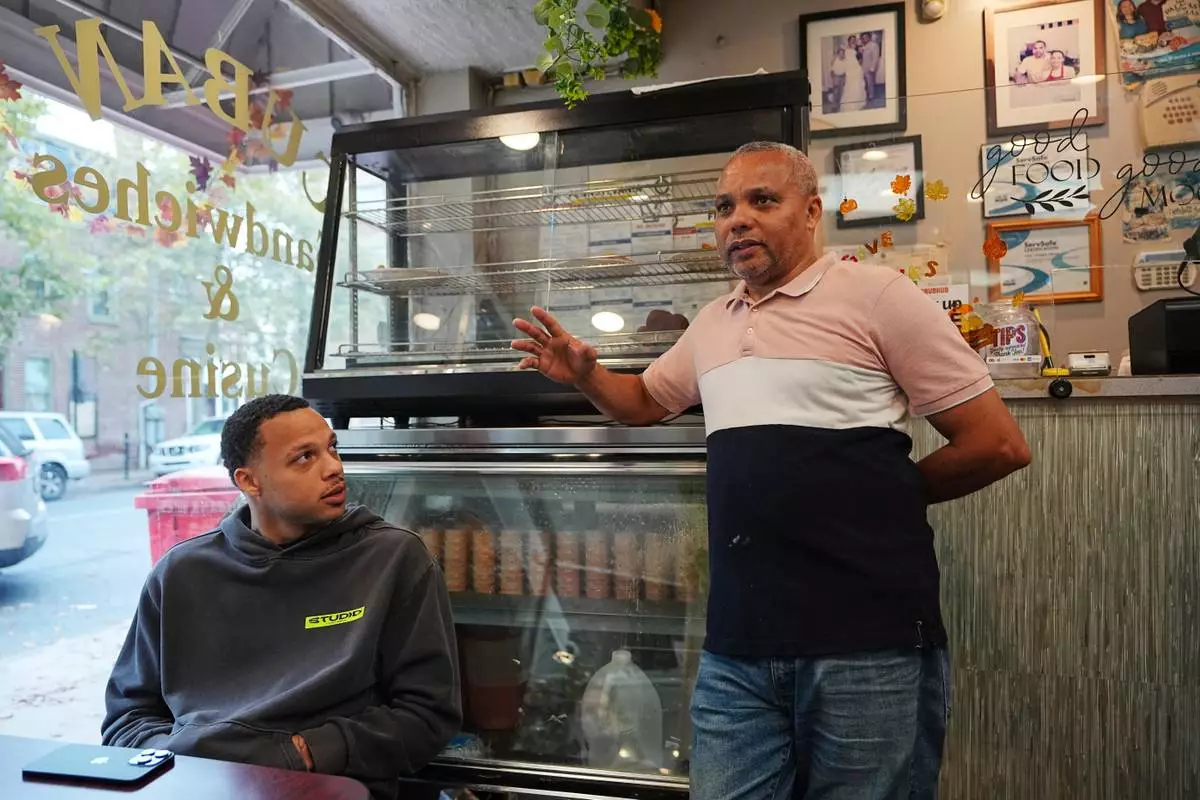
Alberto Pena who operates Las Palmas Restaurant that serves Dominican food, speaks as his son Miguel, looks on in Allentown, Pa., on Sept. 29, 2026. (AP Photo/Matt Rourke)
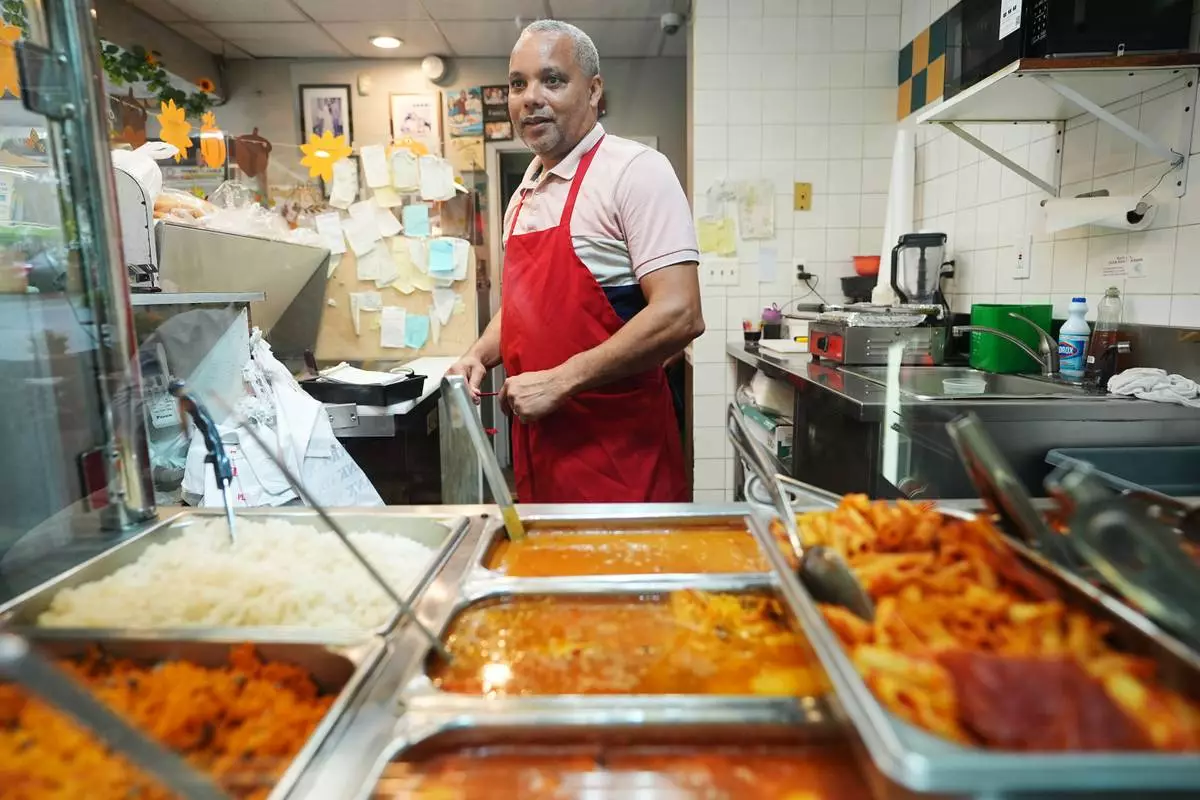
Alberto Pena who operates Las Palmas Restaurant that serves Dominican food, puts on his apron at the business he operates in Allentown, Pa., on Sept. 29, 2026. (AP Photo/Matt Rourke)
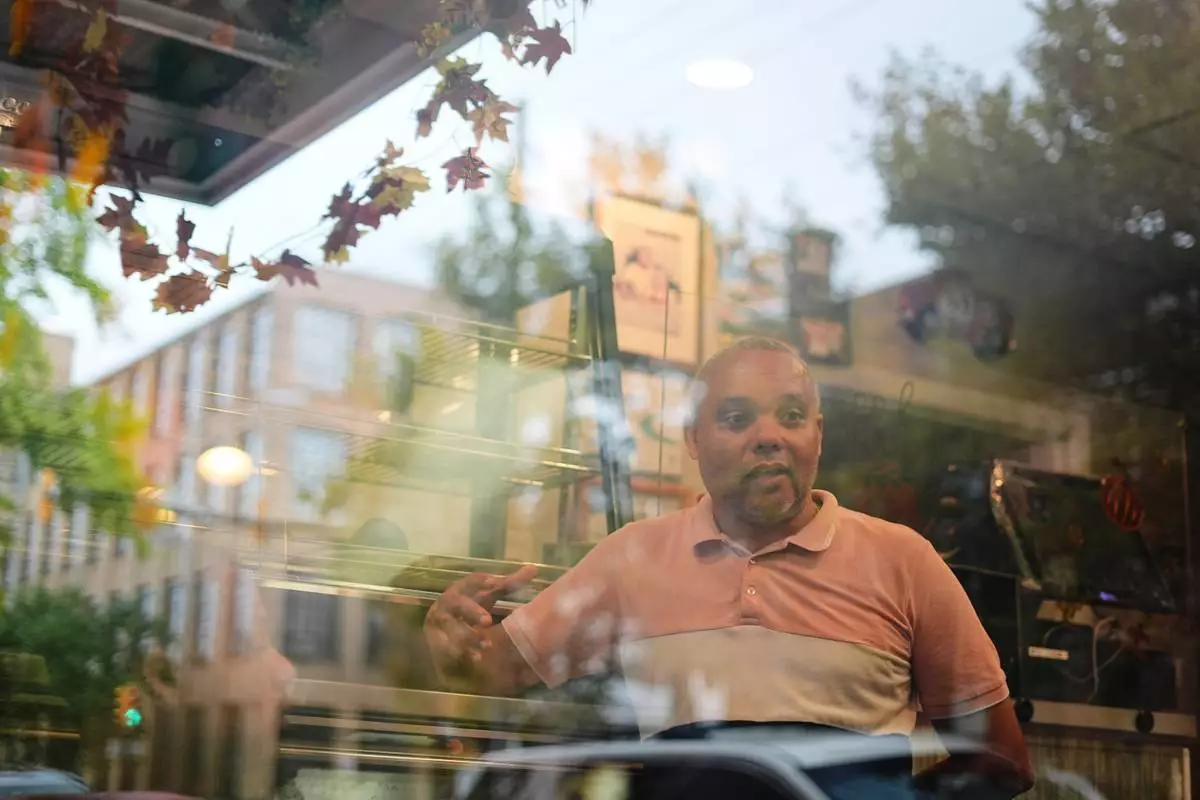
Alberto Pena who operates Las Palmas Restaurant that serves Dominican food, speaks during an interview in Allentown, Pa., on Sept. 29, 2026. (AP Photo/Matt Rourke)
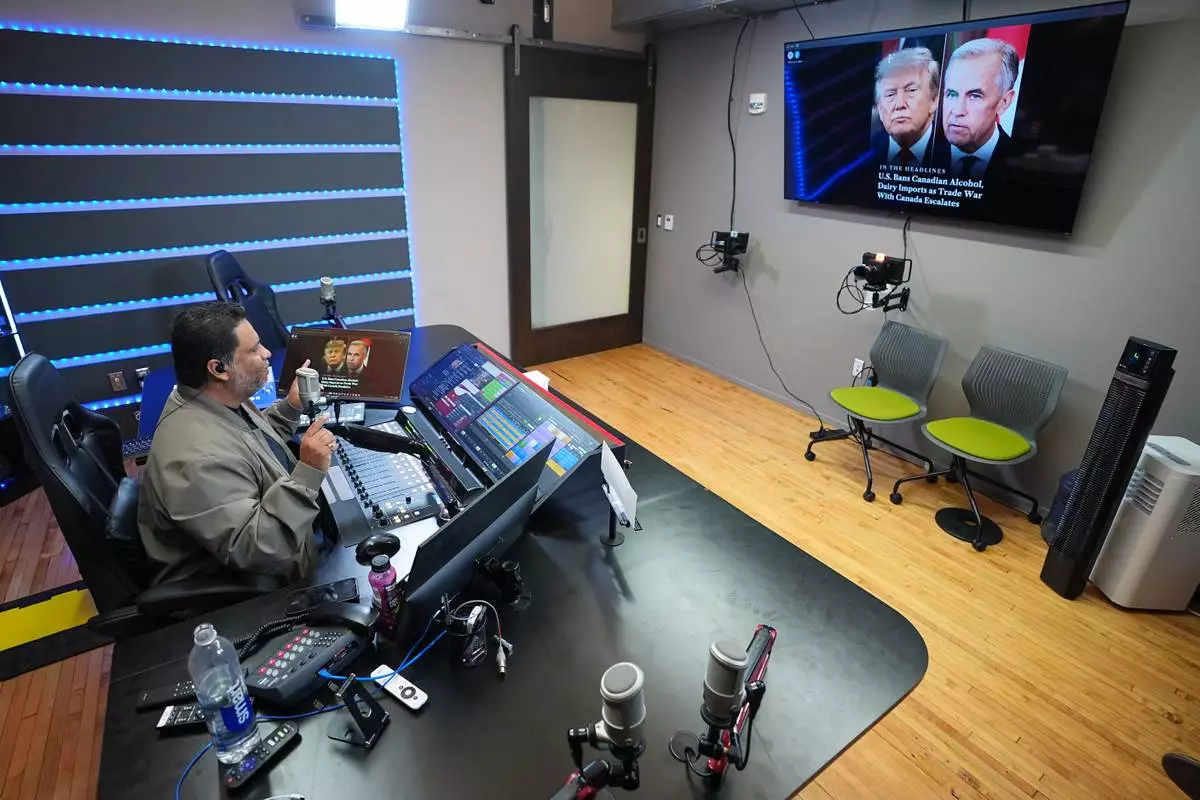
Victor Martinez, who runs La Mega 101.7, a Spanish-language radio station in Pennsylvania's Lehigh Valley, hosts a politics talk show from his studio in Allentown, Pa., on Sept. 29, 2026. (AP Photo/Matt Rourke)