LAKELAND, Fla.--(BUSINESS WIRE)--Aug 24, 2026--
Spark Dealer Group has completed the acquisition of Commercial Lawn Equipment, an outdoor power equipment dealer serving Lakeland and Central Florida. The transaction closed July 31. Terms were not disclosed.
This press release features multimedia. View the full release here: https://www.businesswire.com/news/home/20260824003262/en/
The acquisition gives Spark a presence in Lakeland as the company builds out its Florida operations. Spark recently acquired Grass Pro Shop in Tampa and Lawn Equipment Center in Naples, where Spark also recently opened a new location.
Commercial Lawn Equipment serves landscape professionals, municipalities and homeowners across the Lakeland market. The dealership carries commercial mower, turf and handheld equipment from brands including Wright, Toro, Hustler, Ferris, Stihl, Echo and Shindaiwa, with more brands to be added.
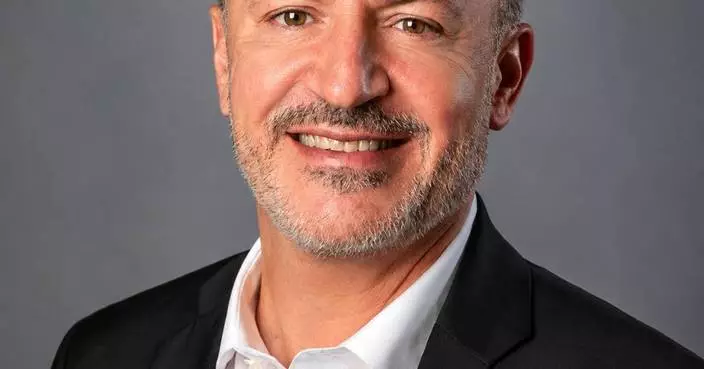
“Closing on Commercial Lawn Equipment continues our rapid expansion across Florida,” said Jon Salinas, CEO of Spark Dealer Group. “With locations in Tampa, Sarasota, Bradenton, Naples, Belleview and now Lakeland, we can put more inventory in the state, build deeper relationships with manufacturers and give our stores more ways to solve problems for customers. We’ve built a strong presence along Florida’s Gulf Coast and are expanding into Central Florida, with plans to continue east. That coverage will help us serve customers across the state.”
Commercial Lawn Equipment will become part of Mowers Inc., Spark’s dealership operation in Florida. The Lakeland store will remain open throughout the transition, with equipment sales, parts and service continuing for existing customers.
“Commercial customers judge a dealership by what happens when they need something,” said Ray Harney, director of market development for Mowers Inc. in Florida. “Do we have the equipment? Yes. Can we get the part? Of course. Can we get their machine back to work? Definitely! Adding Lakeland gives us another place to execute for customers.”
With the addition of Commercial Lawn Equipment, Spark Dealer Group now operates 20 outdoor power equipment dealership locations.
About Spark Dealer Group
Spark Dealer Group is a long-term owner of independent outdoor power equipment dealerships across the United States. The company partners with local operators to maintain dealership identity while providing centralized support to strengthen operations over time.
About Commercial Lawn Equipment
Commercial Lawn Equipment is an outdoor power equipment dealer serving Lakeland and Central Florida. The dealership provides commercial mower, turf and handheld equipment to landscape professionals, municipalities and homeowners throughout the region.

Spark Dealer Group Completes Acquisition of Commercial Lawn Equipment in Lakeland, Florida
The U.S. is reopening a border crossing in Arizona to cattle from Mexico on Monday as part of a broader effort by the Trump administration to reduce record-high beef prices, though economists doubt the move will mean much to grocery store shoppers.
The U.S. Department of Agriculture has said concerns about the New World screwworm's spread lessened enough to allow the movement of cattle from Mexico at a crossing in Douglas, Arizona, about 230 miles (370 kilometers) southeast of Phoenix. Over time, it hopes to reopen other crossings in New Mexico and Texas.
Beef prices clearly are a concern for President Donald Trump, who announced Friday that he would allow up to 331,000 tons (300,000 metric tons) of imported ground beef into the U.S., tariff-free, to be sold at below-market prices over the next 90 days. In February, the White House said closing the border to livestock imports from Mexico more than a year ago was “essential” to containing the screwworm but it has exacerbated a shortage of cattle for slaughter in the U.S.
“The administration obviously has a lot of incentive to try to be able to say that they’re doing something about high beef prices in particular,” said Derrell Peel, a professor of agribusiness at Oklahoma State University. “Beef has been singled out because it is an expensive product and because it’s just high profile.”
The Trump administration closed the border to cattle imports in May 2025 as part of its response to the screwworm, a parasite with flesh-eating larvae that can infest and even kill cattle or other animals. The move came as the U.S. already was struggling to meet beef demand, thanks to a cattle herd that has been shrinking for five years and now is the smallest in decades.
Because the USDA plans a phased reopening of the border, it will take months for Mexican imports to return to their traditional levels, Peel said. Mexico has traditionally provided 1.1 million head, or about 3% of the U.S. cattle supply.
“I don’t expect to see any measurable impact on cattle prices or beef prices soon,” Peel said.
The USDA reported that on Jan. 1, the U.S. cattle herd had dropped to 86.2 million head, the lowest figure in 75 years. Beef prices skyrocketed over the past five years, rising significantly faster than food prices as a whole, according to the U.S. Bureau of Labor Statistics.
The average price of a pound (453 grams) of ground beef rose nearly 57% from July 2021 to July 2026, from $4.39 to $6.89 — hitting a peak of $6.90 in May — with a 10% increase over the previous year. Food prices have risen about 25% overall in those five years, according to the bureau's numbers.
The price for a pound of uncooked steak rose 35% over the past five years, reaching a record $13.06 per pound in July, also 10% higher than a year before.
But Glynn Tonsor, a professor of agricultural economics at Kansas State University, said the potential effect on beef prices from the smaller supply of cattle was lessened because the U.S. beef industry is more efficient and has been able to get more meat from each animal than in past years.
U.S. government and industry officials view the New World screwworm fly as a major threat to the nation's $113 billion cattle industry. It was an annual warm-weather scourge for U.S. ranchers from at least the 1930s through the 1960s, until the U.S. largely eradicated it. The fly was contained for years near the Panama Canal, but returned to southern Mexico in late 2024 and advanced toward the U.S., with the first case in Texas since 1966 reported June 3.
Since then, more than 40 cases have been confirmed in southern Texas and southeastern New Mexico, with infestations of cattle, sheep, goats and dogs.
In her July announcement of plans for a phased reopening of the border, U.S. Agriculture Secretary Brooke Rollins said it was possible to start with an Arizona crossing because the northern Mexican states of Sonora and Chihuahua had stronger animal health programs than other parts of Mexico. She also said each animal would be inspected and declared free of the parasite before crossing the border.
U.S. Senate Agriculture Committee Chair John Boozman said the USDA is taking a “careful, science-based” approach to reopening the border and imposing strong animal health protocols.
“This is an important step for America’s cattle producers, especially our feeders in the border states,” Boozman, an Arkansas Republican, said in a statement. “Restoring this long-standing trade is critical to strengthening our cattle supply and supporting a healthy, competitive beef industry.”
Drought in cattle-producing regions of the U.S. is a major reason the national herd is so small, said David Anderson, professor of agricultural economics at Texas A&M University. If grass doesn’t grow, cattle have nothing to graze upon, forcing ranchers to sell them off. Low cattle prices over the past two decades also are a factor.
“Where we are today is sort of the culmination of some 18, 19, 20 years of very low cattle prices,” he said. “That forces us to reduce our herds. Drought forces us to reduce them even further.”
The shortage of cattle also has left beef processing plants operating below capacity.
Tyson Foods, one of the nation's largest meat processors, announced in November that it was reorganizing its beef operations and closing a plant in Lexington, Nebraska, about 220 miles (354 kilometers) southwest of Omaha. Earlier this month, it announced plans to close a plant in Utah outside Salt Lake City and another in Illinois about 150 miles (241 kilometers) southeast of Chicago.
In June, another major U.S. processor, JBS USA, announced plans to close beef plants in Memphis and outside Philadelphia, though it later said it would keep some operations at the Pennsylvania plant to preserve 400 jobs there.
Rebuilding the U.S. herd — and ultimately lowering prices — likely will take years, largely because a cow typically has only one calf a year, Peel said. In addition, breeding a heifer keeps her out of the food supply, tightening it further as the herd is rebuilt.
Peel said prices will remain high for some time and for elected officials, “There’s nothing you can do.”
This story has been corrected to show that John Boozman is chair of the Senate Agriculture Committee, not the House Agriculture Committee.
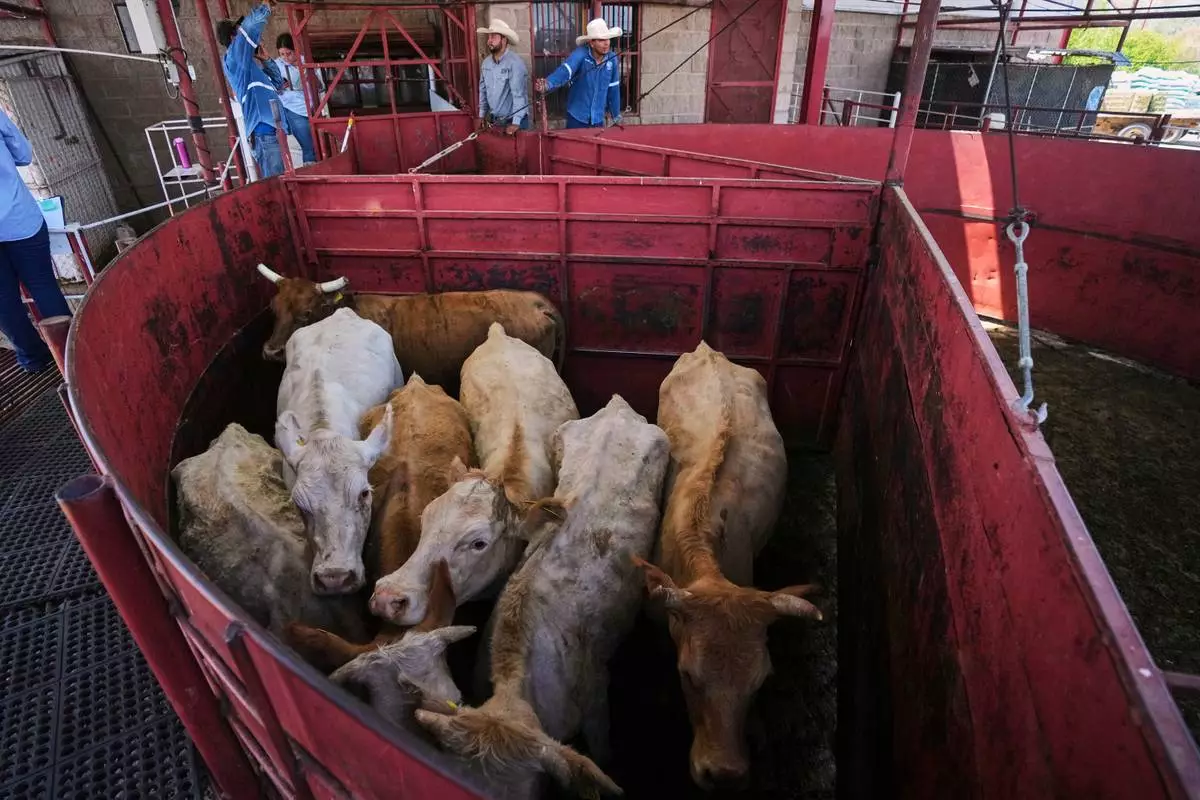
FILE - Cows are fenced in before being displayed at a cattle auction in Hermosillo, Sonora state, Mexico, on July 29, 2025. (AP Photo/Fernando Llano, File)