The wife of an active-duty U.S. soldier was deported Monday to her native Honduras, according to her family and the U.S. Department of Homeland Security.
Cristy Maryori Villafranca-Trejo is at least the seventh spouse or parent of an active-duty U.S. military service member to be deported under President Donald Trump's immigration crackdown.
The Associated Press has found more than 50 cases in which immediate family members of U.S. troops were placed in federal immigration detention after the Trump administration rolled back protections for military families. In some instances, DHS has released military spouses following media attention and advocacy by congressional leaders.
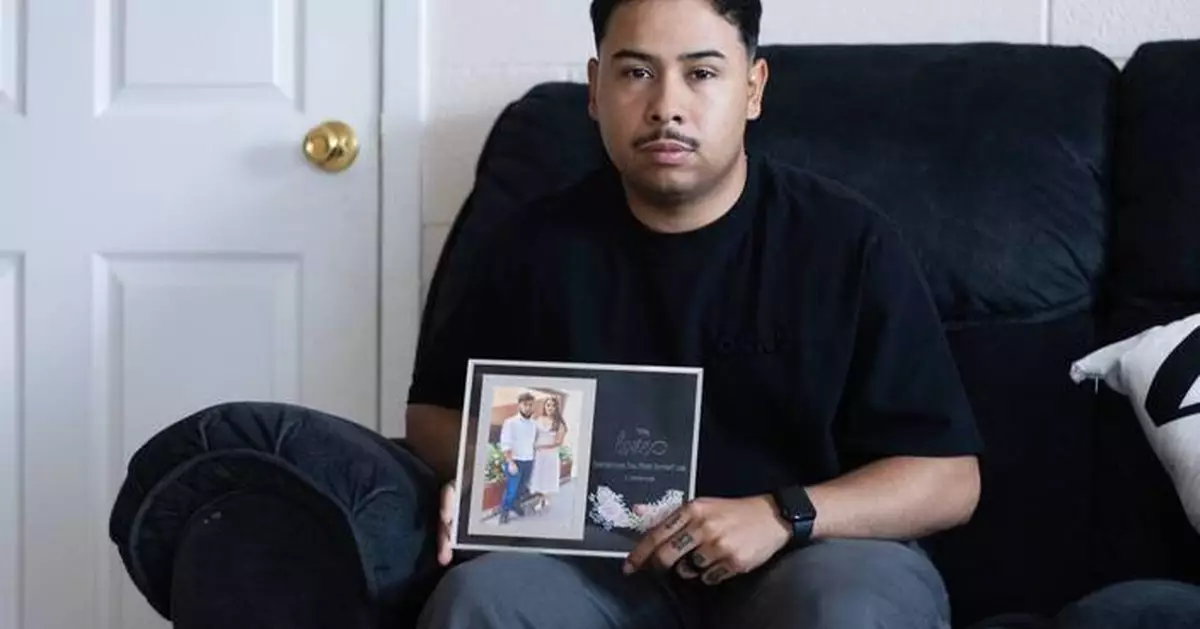
Villafranca-Trejo's husband, Army Sgt. Hedar Leonel Turcios Juarez, said he has been struggling to manage his military duties since she was detained July 11 outside a Walmart near Fort Bliss, Texas, where he is stationed. Since then, he's had to care for their 6-year-old daughter without his wife's help. Instead of training in the mornings, he takes his daughter to first grade, and he said he has already had to postpone a planned assignment at another base.
“I don’t know if I will be able to continue with this,” Turcios Juarez told AP of his Army career. “I have to make a plan to make sure I can still fulfill my military responsibilities — but also take care of my family.”
DHS confirmed Villafranca-Trejo's deportation, saying she had “received due process.”
Villafranca-Trejo, who has no known criminal record and entered the U.S. in 2016 at age 18, was issued a final order of removal by an immigration judge in 2017 after failing to appear at a hearing, according to DHS. Villafranca-Trejo's husband said she had not received a notice for the hearing she missed and did not realize she had been ordered deported until they went to apply for her green card after marrying in 2022.
Originally from Honduras, Turcios Juarez became a U.S. citizen in 2024 after enlisting two years earlier.
Villafranca-Trejo's motion to reopen her case was denied last May and an appeal before the Board of Immigration Appeals remained pending, according to her attorney. She had also been waiting for about a year for a decision on her application for military parole-in-place, a program that allows the immediate family of U.S. troops to remain in the country to apply for a green card.
“We were following the rules -- we did everything we could on our side to fix this problem,” Turcios Juarez told the AP.
Prior to Trump's second administration, U.S Immigration and Customs Enforcement would typically allow immediate family members of U.S. troops to adjust their legal status even if they had been issued a final order of removal, according to Dan Gividen, who served as ICE deputy chief counsel from 2016 to 2019 under Trump.
“If you've got an active-duty military member that's married to someone now, and that's going to give her the opportunity to get a green card, you wouldn't detain them, much less execute the removal order,” Gividen said.
JP Caballero, a spokesperson for U.S. Rep. Veronica Escobar, a Democrat representing El Paso, said Escobar had opened a congressional inquiry into Villafranca-Trejo's case and visited her at the Camp East Montana detention facility in Texas earlier this month.
“My heart breaks for her, her children and the soldier who must feel so betrayed by the country he is sacrificing for,” Escobar told AP in a statement. “There are far too many families like theirs who are being targeted instead of supported.”
Turcios Juarez said he is unsure how he will care for his daughter without his wife. He still hasn’t figured out how to tell his daughter what has happened. But he says he still wants to keep serving his country.
“I love what I do, I want to keep doing this," he said of the Army. “I just don’t know how I am going to keep doing this.”
Brook is a corps member for The Associated Press/Report for America Statehouse News Initiative. Report for America is a nonprofit national service program that places journalists in local newsrooms to report on undercovered issues.
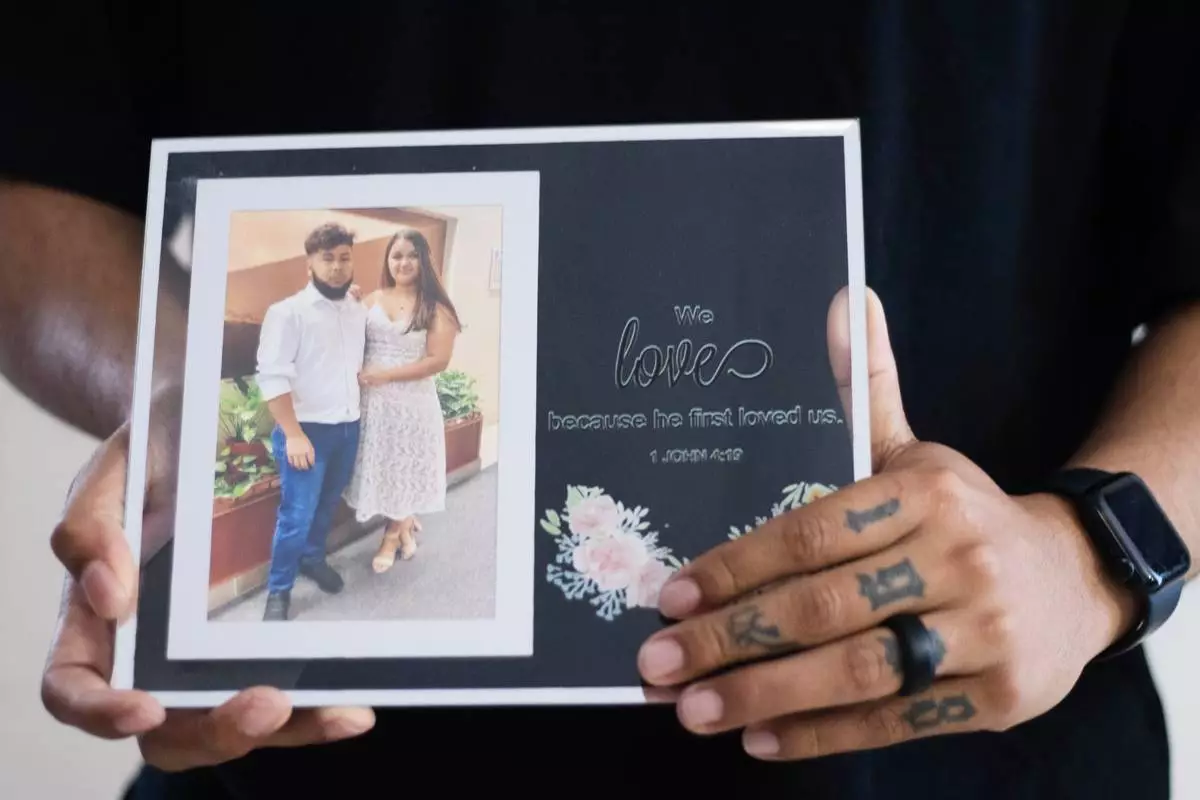
FILE - Army Sgt. Hedar Leonel Turcios Juarez holds a picture of himself with with his wife Cristy at home in El Paso, Texas, July 21, 2026. (AP Photo/Ryan Romero, File)
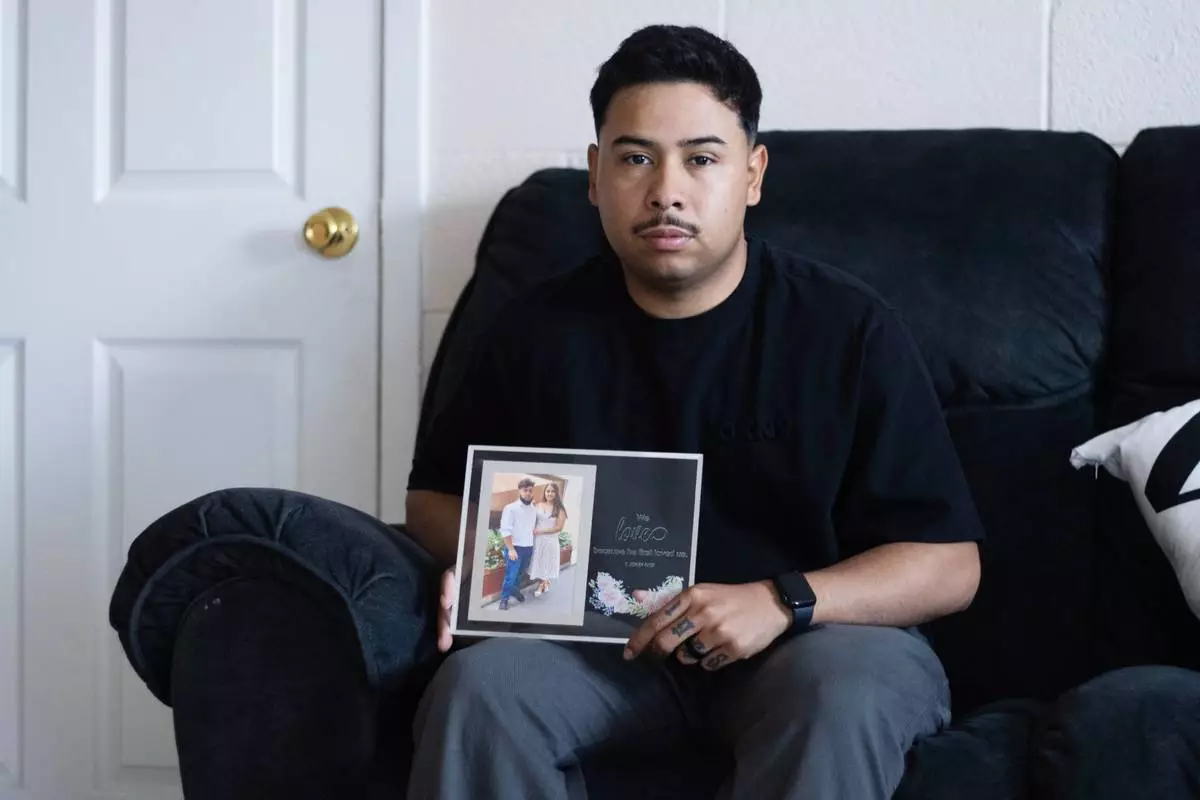
FILE - Army Sgt. Hedar Leonel Turcios Juarez holds a picture of himself with with his wife Cristy at home in El Paso, Texas, July 21, 2026. (AP Photo/Ryan Romero, File)
SAN FRANCISCO (AP) — The California Supreme Court is weighing whether a Southern California sheriff who seized election ballots must return them to county election officials.
The high court heard oral arguments Monday regarding Riverside County Sheriff Chad Bianco’s seizure of approximately 650,000 ballots from a November 2025 special election on redistricting. The measure passed in the county by roughly 80,000 votes.
Bianco in March seized 1,000 boxes of election materials to investigate a complaint from a local citizens group that the count was off — though not by an amount that would have changed the outcome. Local election officials had previously said the complaint was unfounded. Bianco was running for governor at the time.
Democratic Attorney General Rob Bonta immediately launched a legal challenge in March, arguing the sheriff has no authority over election materials and warning the seizure was designed to sow distrust in elections. He ordered Bianco to return the ballots, but Bianco did not. The University of California, Los Angeles Voting Rights Project also sued the sheriff on behalf of several Riverside County voters. The state Supreme Court heard arguments in both cases.
Chad Dunn, legal director and co-founder of the UCLA Voting Rights Project, told the court there are mechanisms to contest election results, and Bianco failed to follow them.
“The elections code provides a process. Citizens could have triggered a recount within, I think, it’s five days of the canvass, and they chose not to do that. They could ask the attorney general, the secretary of state, and there’s other officials to trigger an official recount,” Dunn told the court.
Bianco began recounting the vote using sheriff’s officials under the supervision of a special master appointed by a court but suspended it days later, citing mounting legal challenges from the state attorney general and a voting rights group. But he has not returned the ballots.
“Nowhere else in election law, in this state, in any other that I’m familiar with, does anybody get to handle ballots on their own in the back room with their deputies,” Dunn told the judges.
Bradley Hertz, who represented Bianco, argued the sheriff had a legal duty to open an investigation after receiving a complaint and he followed the penal code to carry out that investigation, first issuing search warrants in February.
Hertz said Bianco has not returned the ballots to the Riverside County registrar of voters because those ballots are “evidence.”
“The sheriff is holding that evidence, safeguarding it as a custodian for the court,” Hertz said.
He said Bianco didn’t follow Bonta’s order to return the ballots because a legal fight was already playing out.
Bianco said after the hearing that if he were to face the same complaint, he would again seize ballots.
“I did this and this was legal,” he said. “I went a different route. They are legal. Both routes are legal. It's just their side doesn't like the route I chose,” he told reporters.
At the time of the ballots’ seizure, Bianco was one of two prominent Republicans running for governor in a crowded June primary. He did not advance to the general election and later announced plans to run for reelection as sheriff in 2028.
Xavier Becerra, a former state attorney general and Democrat running for governor, is part of the UCLA lawsuit to halt Bianco's efforts.
“We hope that the Supreme Court of California will issue a swift decision protecting the right to vote, protecting the ballots that are cast by our voters, so we can once again give our voters the confidence to know that when they go out and do their democratic duty and cast their vote, it not only will be counted, it will be protected," Becerra said.
The ballot investigation came as President Donald Trump has repeatedly disputed the results of the 2020 election, citing unsubstantiated instances of fraud. His administration recently seized ballots and other documents from an election office in Georgia. Some Republicans have mirrored Trump’s rhetoric on voting in their states.
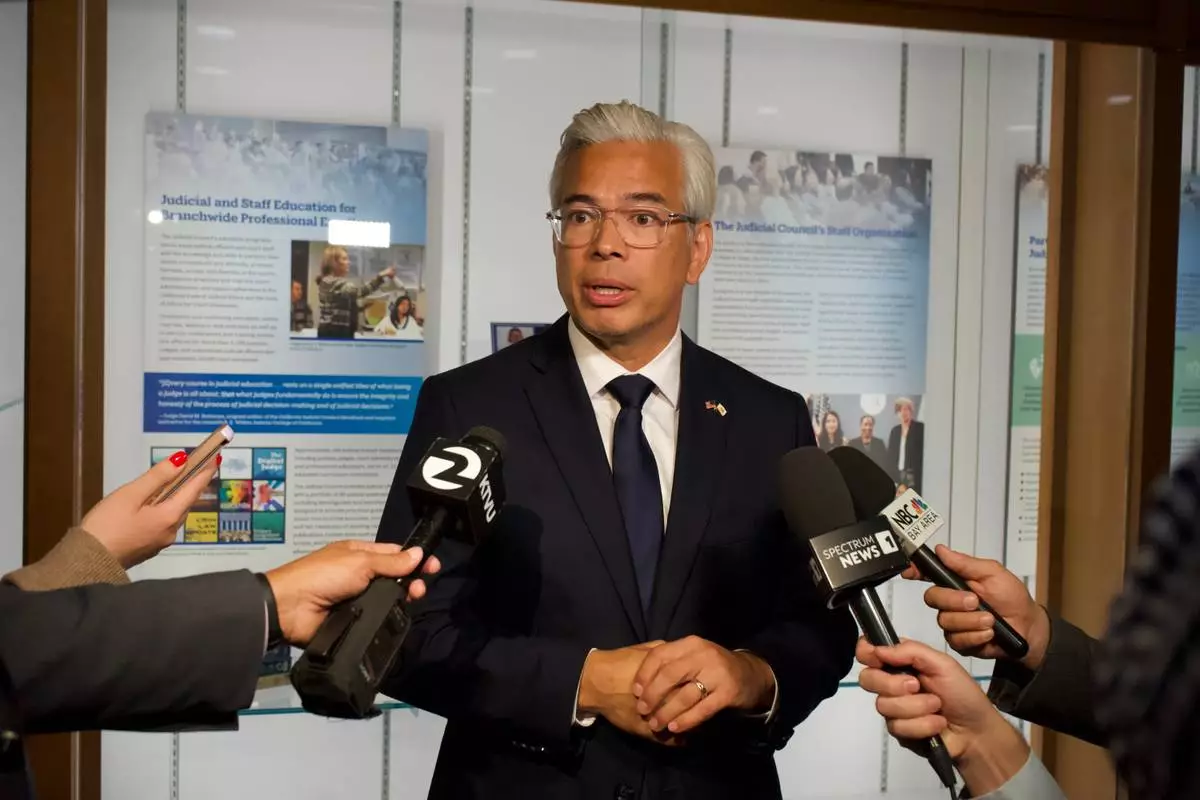
California Attorney General Rob Bonta speaks after a hearing about Riverside County Sheriff Chad Bianco's seizure and recount of more than half a million 2025 election ballots on Monday, Aug. 24, 2026, at California Supreme Court in San Francisco. (Alicia Ramirez/The Riverside Record, Pool)
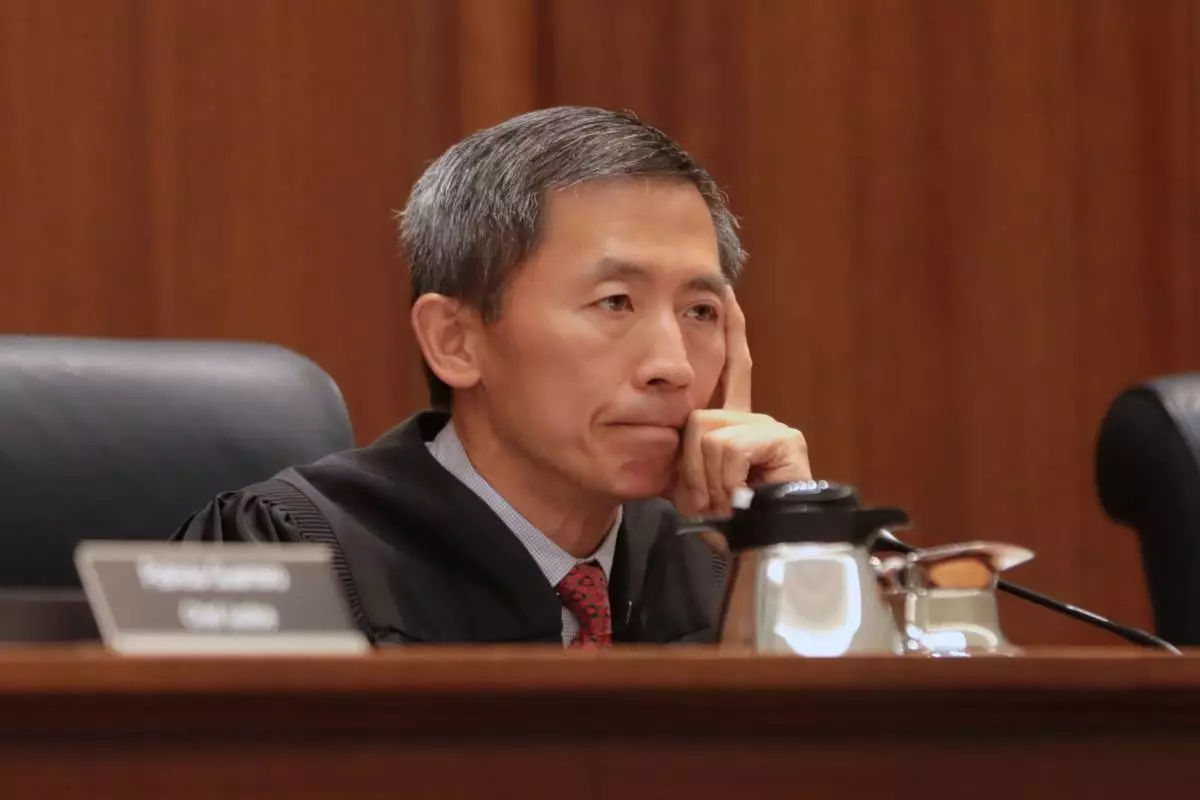
Associate Justice Goodwin Liu listens during a hearing about Riverside County Sheriff Chad Bianco's seizure and recount of more than half a million 2025 election ballots on Monday, Aug. 24, 2026, at California Supreme Court in San Francisco. (Martin Novitski/Supreme Court of California via AP)
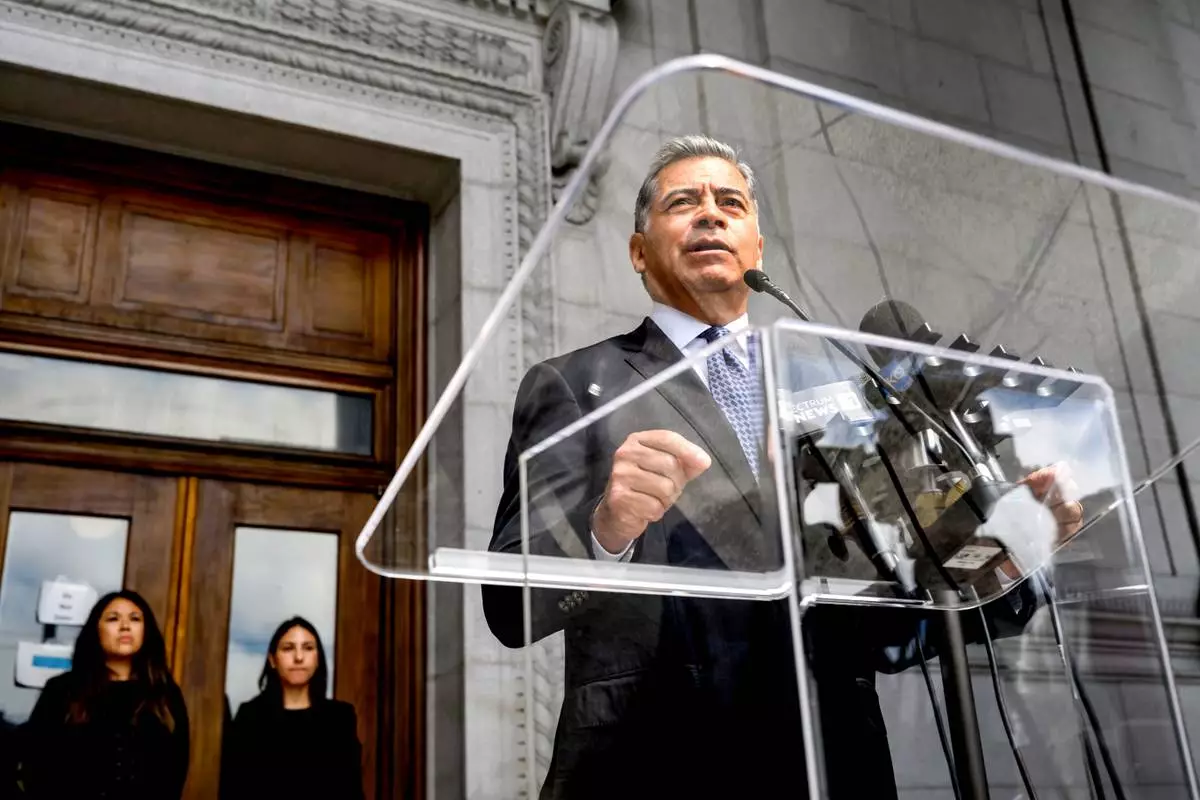
California gubernatorial candidate Xavier Becerra speaks outside the Supreme Court of California following a hearing about Riverside County Sheriff Chad Bianco's seizure and recount of more than half a million 2025 election ballots on Monday, Aug. 24, 2026, in San Francisco. (AP Photo/Noah Berger)
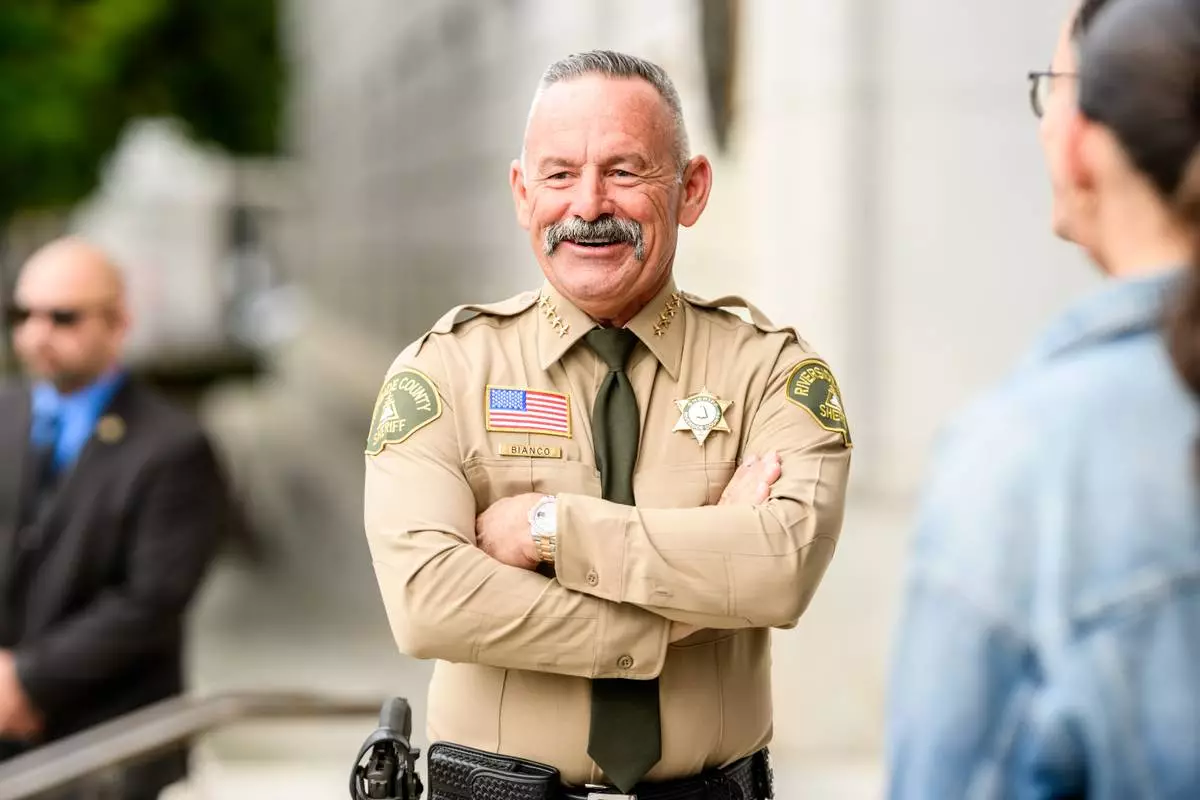
Riverside County Sheriff Chad Bianco arrives at the Supreme Court of California for a hearing about his seizure and recount of more than half a million 2025 election ballots on Monday, Aug. 24, 2026, in San Francisco. (AP Photo/Noah Berger)
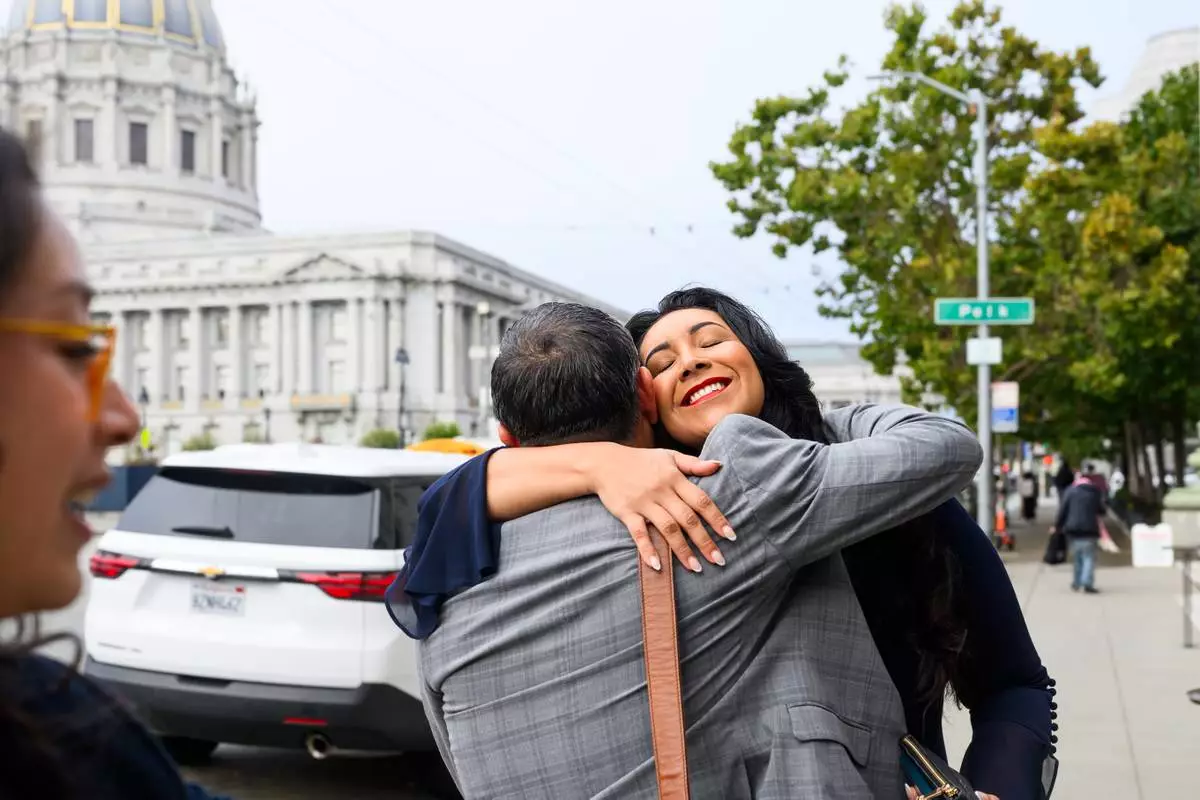
Plaintiff Clarissa Cervantes hugs a legal team member before attending a hearing about Riverside County Sheriff Chad Bianco's seizure and recount of more than half a million 2025 election ballots on Monday, Aug. 24, 2026, in San Francisco. (AP Photo/Noah Berger)
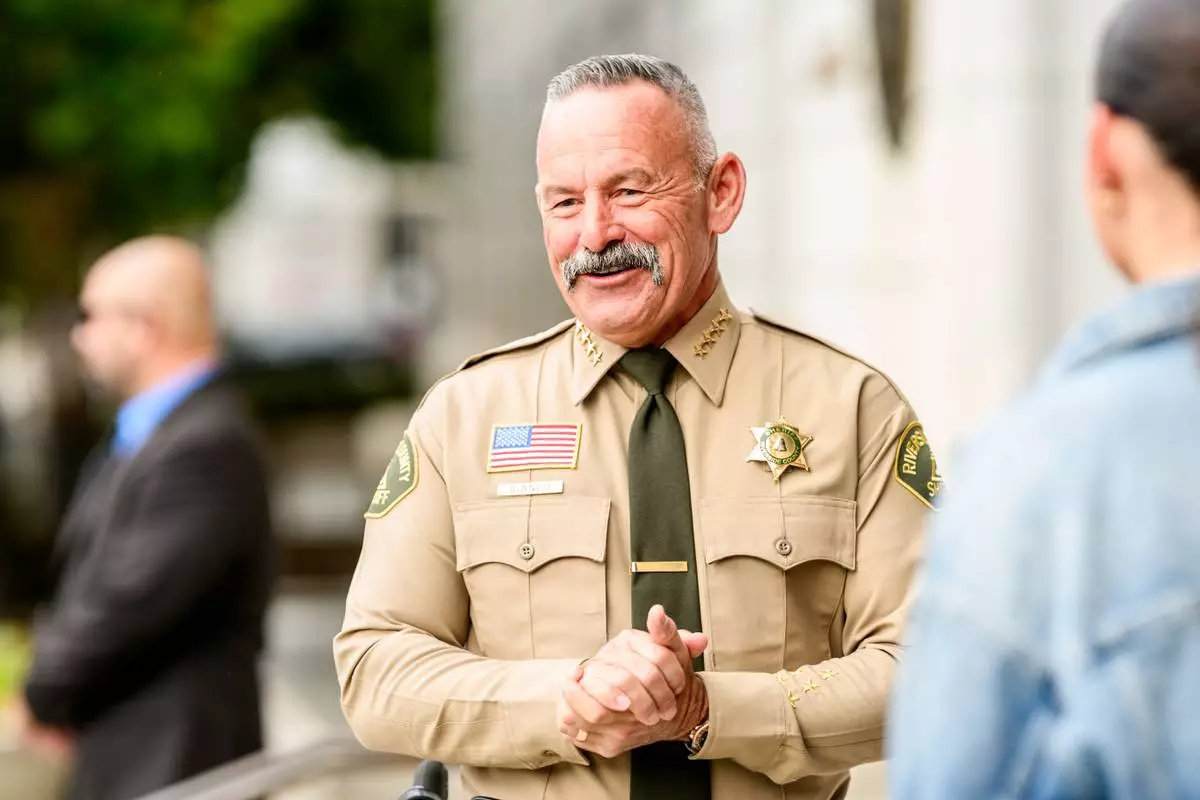
Riverside County Sheriff Chad Bianco arrives at the Supreme Court of California for a hearing about his seizure and recount of more than half a million 2025 election ballots on Monday, Aug. 24, 2026, in San Francisco. (AP Photo/Noah Berger)
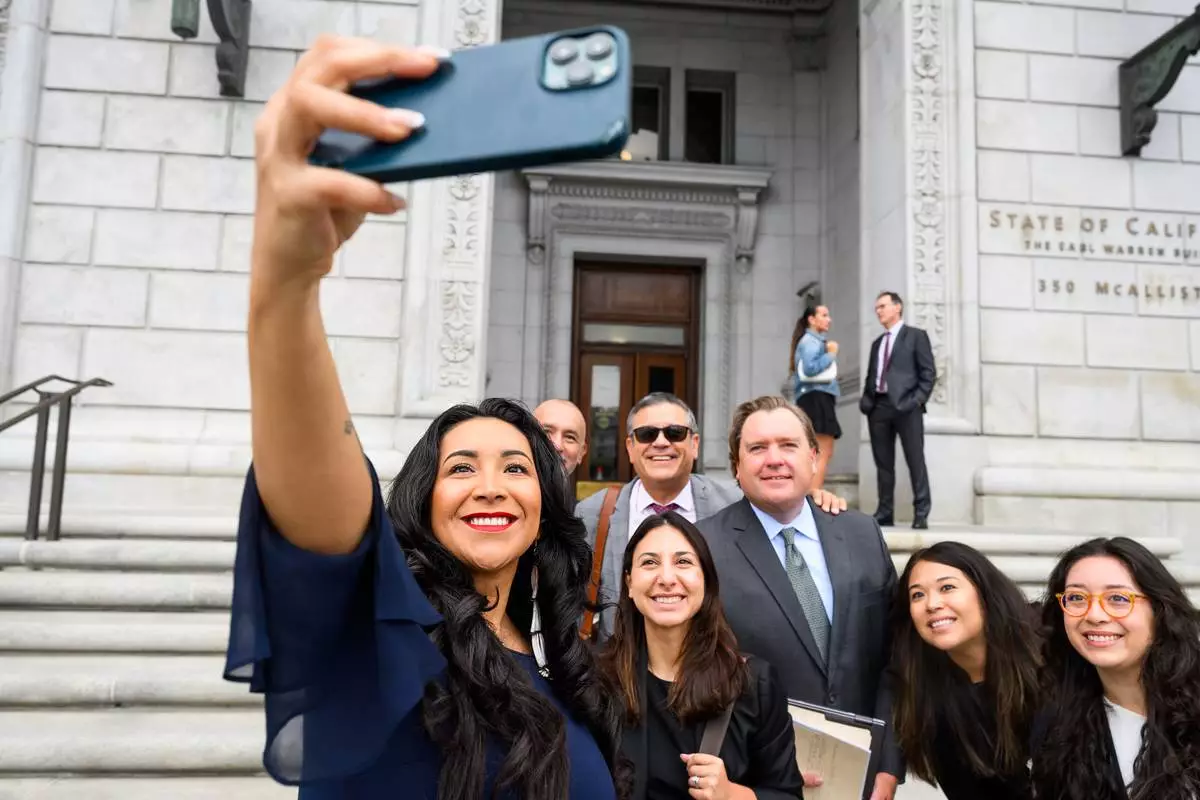
Plaintiff Clarissa Cervantes takes a selfie with legal team members before attending a hearing about Riverside County Sheriff Chad Bianco's seizure and recount of more than half a million 2025 election ballots on Monday, Aug. 24, 2026, in San Francisco. (AP Photo/Noah Berger)
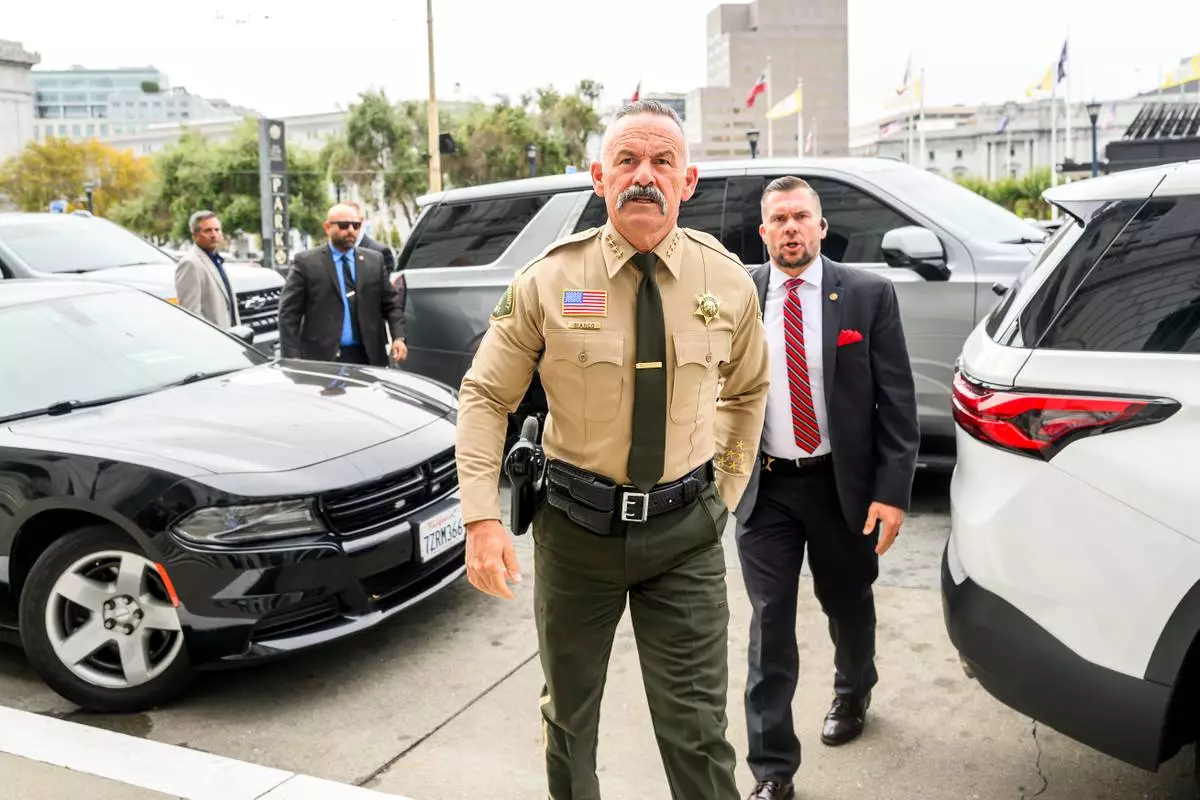
Riverside County Sheriff Chad Bianco arrives at the Supreme Court of California for a hearing about his seizure and recount of more than half a million 2025 election ballots on Monday, Aug. 24, 2026, in San Francisco. (AP Photo/Noah Berger)