Skip to Content Facebook Feature Image

A political amnesty law takes effect in Thailand but excludes lese majeste

News

A political amnesty law takes effect in Thailand but excludes lese majeste
News

News

A political amnesty law takes effect in Thailand but excludes lese majeste

2026-08-25 10:41 Last Updated At:10:50

BANGKOK (AP) — An amnesty for political offenses committed in Thailand over the past two decades took effect Monday, but the law excludes some of the more serious cases, including those involving lese majeste, or defaming the monarchy.

The amnesty was introduced to promote reconciliation after past political instability, violent protests and military coups and could cover about 6,000 people, according to estimates made in Parliament. But the exclusion of lese majeste offenses has drawn criticism that the amnesty will not truly resolve political divisions.

The Peaceful Society Promotion Act passed a final vote by lawmakers in July and was published in the Royal Gazette on Sunday. A committee chaired by the prime minister will determine who qualifies for the amnesty. The committee must hold its first meeting within 30 days, although it's unclear how long the process will take.

The law covers a range of offenses related to political activities from Jan. 1, 2005 to July 15, 2025. It will not only grant release for current prisoners, but also close investigations and prosecutions, dismiss pending court cases, and clear criminal records of those eligible for the amnesty.

In addition to lese majeste, the amnesty will also exclude corruption and crimes resulting in death or serious injury.

The lese majeste law, also known as Article 112 of the Criminal Code, is controversial not only because it has been used to punish things as simple as liking a post on Facebook, but also because anyone — not just royals or the authorities — can lodge a complaint that most of the time leads to detention during lengthy legal proceedings.

A conviction of defaming the monarchy carries a prison term of up to 15 years, and critics say Article 112 has often been used to quash political dissent.

Student-led pro-democracy demonstrations starting in 2020 sought reforms of the lese majeste law, but the protesters became targets of the law.

Thai Lawyers for Human Rights, a law advocacy group, says more than 290 people, many of them student activists, have been charged with violating Article 112 since early 2020.

As of July, the group said at least 54 people remained imprisoned in connection with political cases. Only about 10 were expected to benefit from the new amnesty, since the others were accused of lese majeste.

Thailand’s machinery of state remains deeply conservative. Its political establishment is sensitive about any perceived threats to the status of the monarchy.

The country’s political conflicts revolved mostly around former Prime Minister Thaksin Shinawatra, who was ousted by a military coup in 2006.

His populist policies won strong support among poorer voters, particularly in the rural north and northeast, but his popularity and sometimes high-handed style created deep fractures between his base and the country’s urban elites, royalists and the military. Violent protests and political upheaval repeatedly followed as parties aligned with Thaksin returned to power while he remained in self-imposed exile.
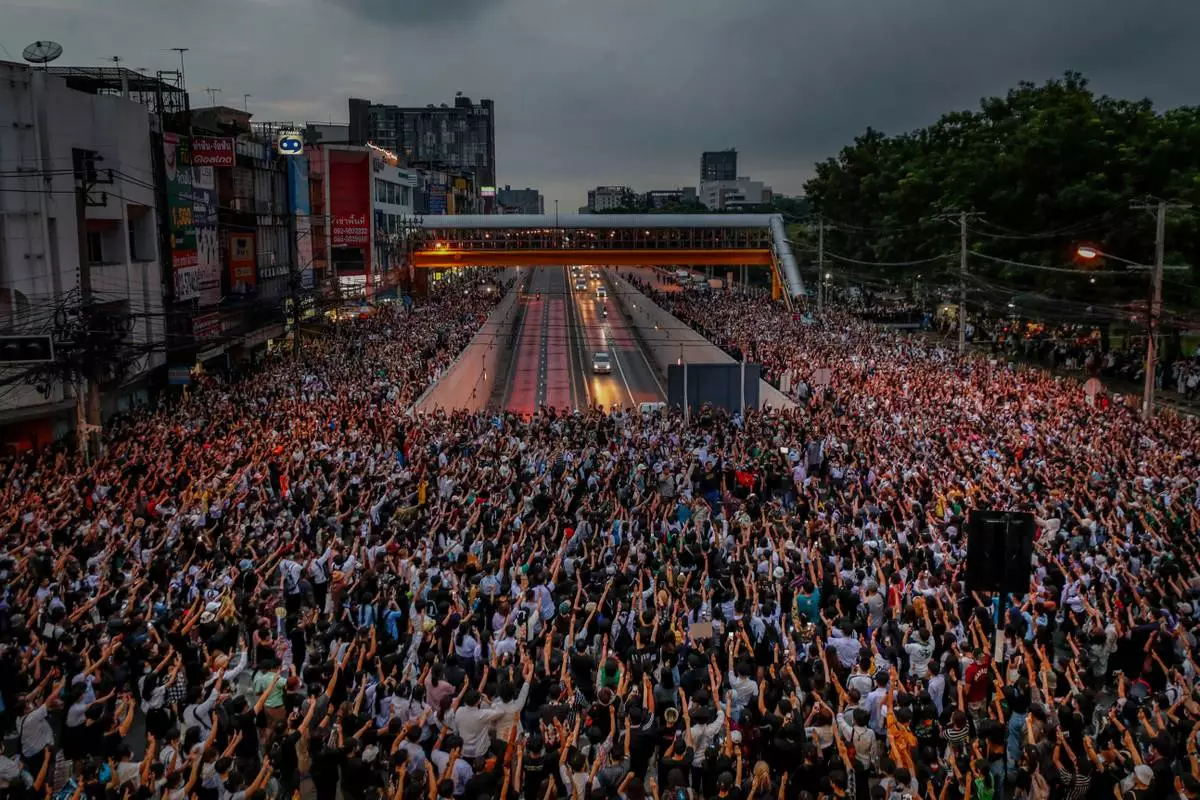
FILE - Pro-democracy activists flash three-fingered salutes during a demonstration at Kaset intersection, suburbs of Bangkok, Thailand, on Oct. 19, 2020. (AP Photo/Sakchai Lalit, File)
FILE - Pro-democracy activists flash three-fingered salutes during a demonstration at Kaset intersection, suburbs of Bangkok, Thailand, on Oct. 19, 2020. (AP Photo/Sakchai Lalit, File)

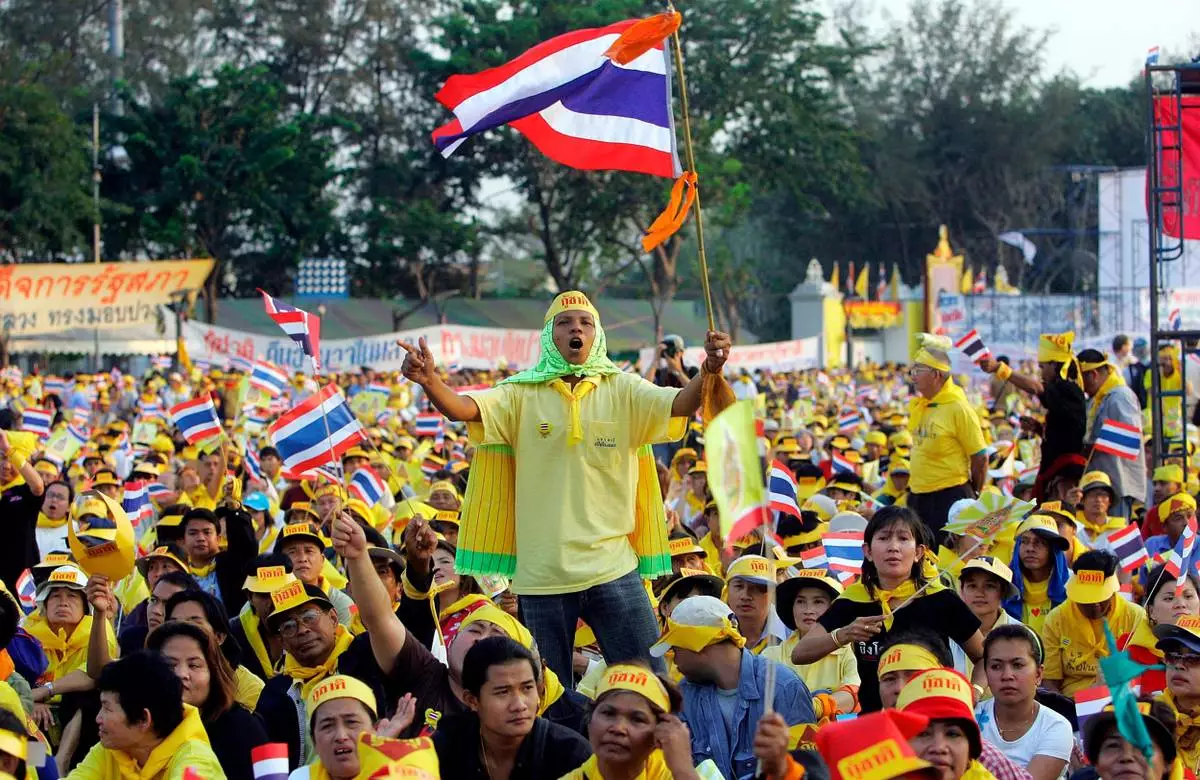
FILE - Thai protesters wave flags and cheer during a rally opposing Prime Minister Thaksin Shinawatra at the Royal Plaza in Bangkok, Thailand, on Feb. 4, 2006. (AP Photo/Sakchai Lalit, File)
FILE - Thai protesters wave flags and cheer during a rally opposing Prime Minister Thaksin Shinawatra at the Royal Plaza in Bangkok, Thailand, on Feb. 4, 2006. (AP Photo/Sakchai Lalit, File)

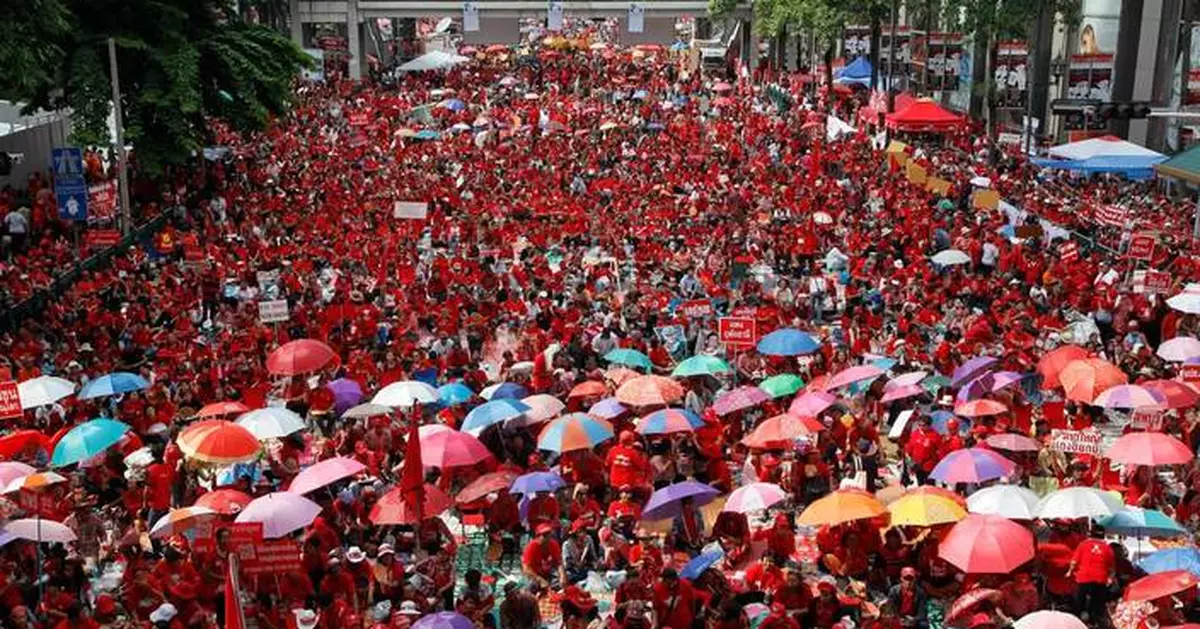
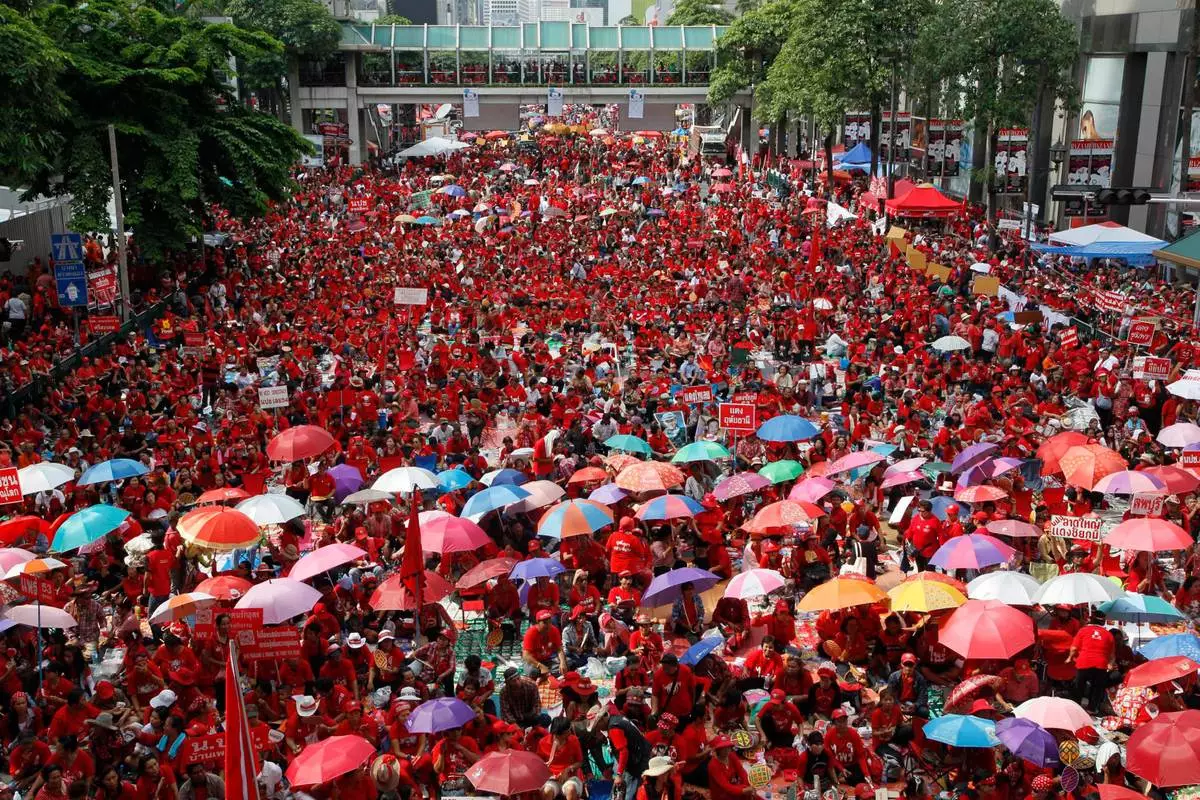
FILE - "Red Shirts" protesters attend a prayer session marking the first anniversary of the army's crushing of a two-month-long protest in central Bangkok on May 19, 2011. (AP Photo/Sakchai Lalit, File)

FILE - "Red Shirts" protesters attend a prayer session marking the first anniversary of the army's crushing of a two-month-long protest in central Bangkok on May 19, 2011. (AP Photo/Sakchai Lalit, File)
DHAKA, Bangladesh (AP) — A special tribunal in Bangladesh’s capital on Monday asked authorities to keep three journalists jailed until their trial in a case involving a mass uprising that ousted former Prime Minister Sheikh Hasina from office in 2024, lawyers said.

During the student-led uprising, hundreds of people were killed, and Hasina was later sentenced to death on charges of crimes against humanity. She fled to India two years ago and was tried in absentia.

The tribunal asked that Mozammel Babu, editor-in-chief of private Ekattor Television, its principal correspondent Farzana Rupa and Shyamal Dutta, editor of daily Bhorer Kagoj and former general secretary of the National Press Club in Dhaka, remain jailed.

After they appeared before the tribunal on Monday, the judge fixed Oct. 25 for the next court proceedings and asked the investigators to submit their findings against the journalists.

Global human rights groups have criticized the jailing of the journalists and the denial of bail, asking the government to drop the charges against them and stop criminalizing news reporting.

Prosecutors allege the three journalists incited the suppression of student demonstrators during the uprising. They say that the journalists asked Hasina provocative questions at a press conference on July 14, 2024, that led her to make disparaging remarks about the demonstrators before launching a bloody crackdown on the protesters leading to hundreds of deaths.

The three journalists have been in custody for years following Hasina’s ouster as they face various charges including murder involving the uprising in July-August 2024. They were arrested during an interim government headed by Nobel Peace Prize laureate Muhammad Yunus who handed over power in February to a new government.

The families of the journalists complained that they were held illegally.

“Launching a crimes-against-humanity case against journalists Shyamal Dutta, Mozammel Babu, and Farzana Rupa for simply asking questions at a press conference is outrageous and deeply troubling,” Kunal Majumder, CPJ’s Asia-Pacific Program Coordinator, said in a statement earlier this month.

He added that “editorial decisions may be partisan or ethically questionable, but they cannot be criminalized. Criminalizing editorial judgment sets a dangerous precedent and undermines Bangladesh’s reputation as a democracy. Authorities must immediately release the three journalists and drop the charges.”

Hasina has been in India since Aug. 5, 2024, but recently she said she would return to the country in December. The Yunus-led government and incumbent administration of Prime Minister Tarique Rahman requested India to extradite Hasina, but India refused.

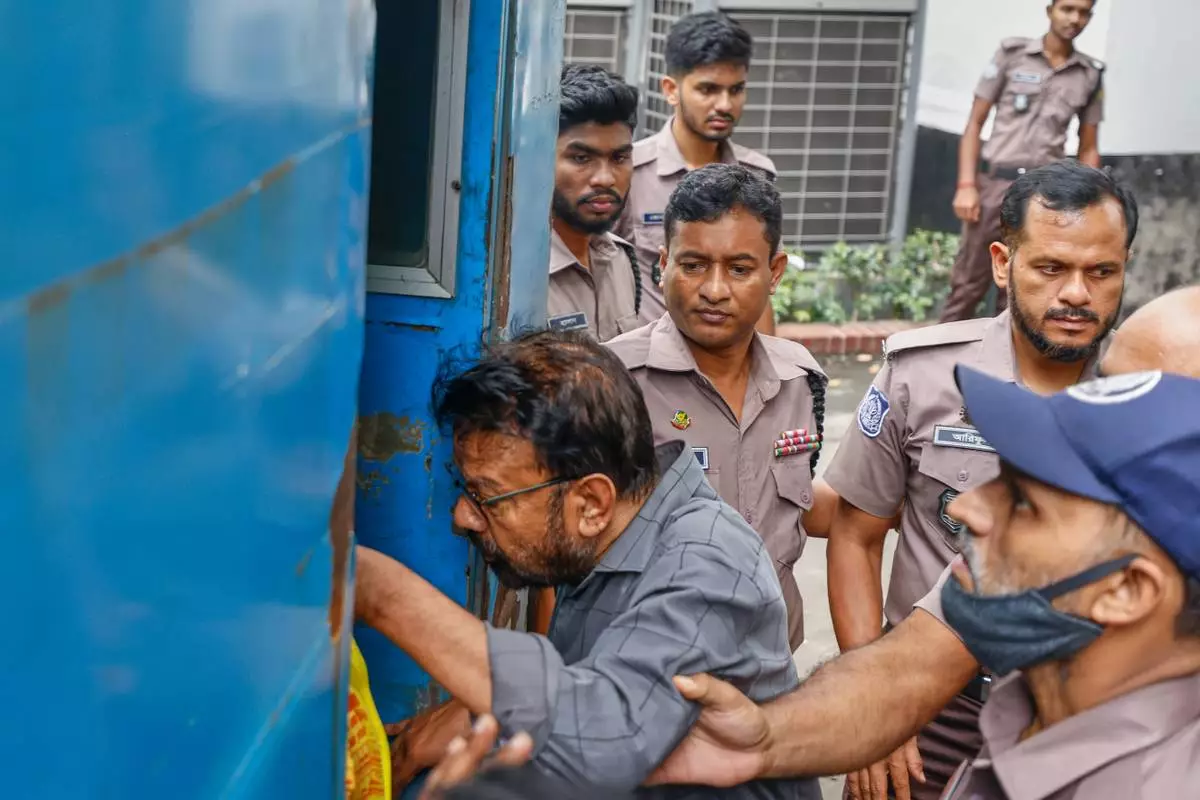
Shyamal Dutta, editor of daily Bhorer Kagoj is escorted into a prison van after the International Crimes Tribunal ordered him to remain jailed, in Dhaka, Bangladesh, Monday, Aug. 24, 2026. (AP Photo/Rajib Dhar)

Shyamal Dutta, editor of daily Bhorer Kagoj is escorted into a prison van after the International Crimes Tribunal ordered him to remain jailed, in Dhaka, Bangladesh, Monday, Aug. 24, 2026. (AP Photo/Rajib Dhar)

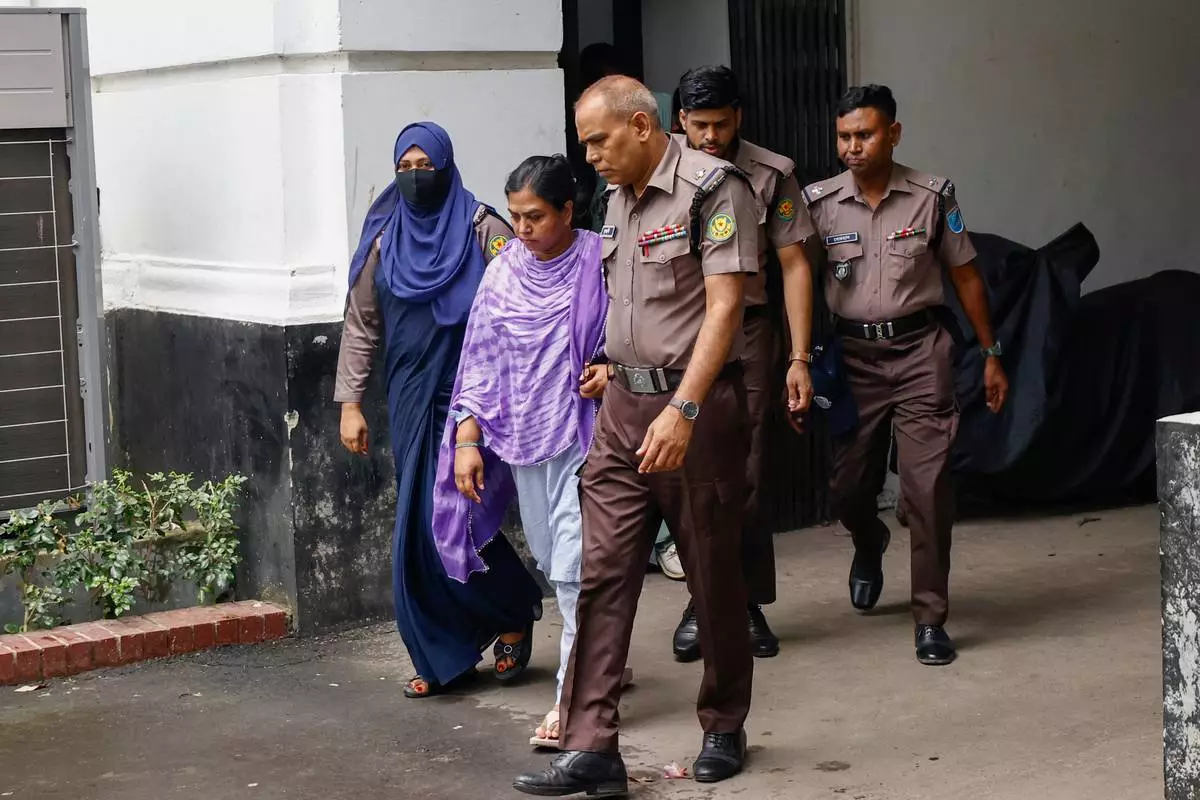
Police escort Ekattor television's former principal correspondent Farzana Rupa, after the International Crimes Tribunal ordered her to remain jailed, in Dhaka, Bangladesh, Monday, Aug. 24, 2026. (AP Photo/Rajib Dhar)

Police escort Ekattor television's former principal correspondent Farzana Rupa, after the International Crimes Tribunal ordered her to remain jailed, in Dhaka, Bangladesh, Monday, Aug. 24, 2026. (AP Photo/Rajib Dhar)

Recommended Articles