PLYMOUTH, Mass. (AP) — After nearly a month of testimony, jurors in the Lindsay Clancy murder trial are set to hear from the final witnesses in a case that has largely been about her mental state when she strangled her three young children.
The trial will resume Tuesday with more testimony from a forensic psychologist hired by prosecutors to evaluate Clancy's psychiatric history and asses the defense claim that she was suffering from acute postpartum psychosis when she killed the children at their Massachusetts home.
EDITOR’S NOTE: This story includes discussion of suicide. If you or someone you know needs help, the national suicide and crisis lifeline in the U.S. is available by calling or texting 988.
Kirk Heilbrun told jurors Monday that he believed Clancy took her children's lives so they wouldn’t “suffer” after she killed herself. He said he didn't believe Clancy's claim that she hallucinated a voice telling her to kill the children.
Clancy's lawyer, Kevin Reddington, will get a chance Tuesday to question Heilbrun about his conclusions. Prosecutors are then expected to call at least one more expert witness before the trial moves on to closing arguments, likely no earlier that Wednesday.
Earlier in the trial, jurors heard from other medical experts, called by the defense, who said Clancy wasn't responsible for her actions because she had lost her grip on reality due to postpartum psychosis, a rare mental illness that can follow childbirth.
In the months before killing her children, Clancy had sought treatment for mental health problems from multiple providers and admitted herself to a psychiatric hospital.
After killing her children, Clancy jumped from a second-floor window. She remains paralyzed from the waist down.
Prosecutors say the former labor and delivery nurse planned the killings and contrived to get her husband out of the house by sending him to pick up medicine for one of their children and dinner for the family.
Clancy, 36, has pleaded not guilty to murder charges in the January 2023 deaths of Callan, Dawson and Cora Clancy, who ranged from 8 months to 5 years old.
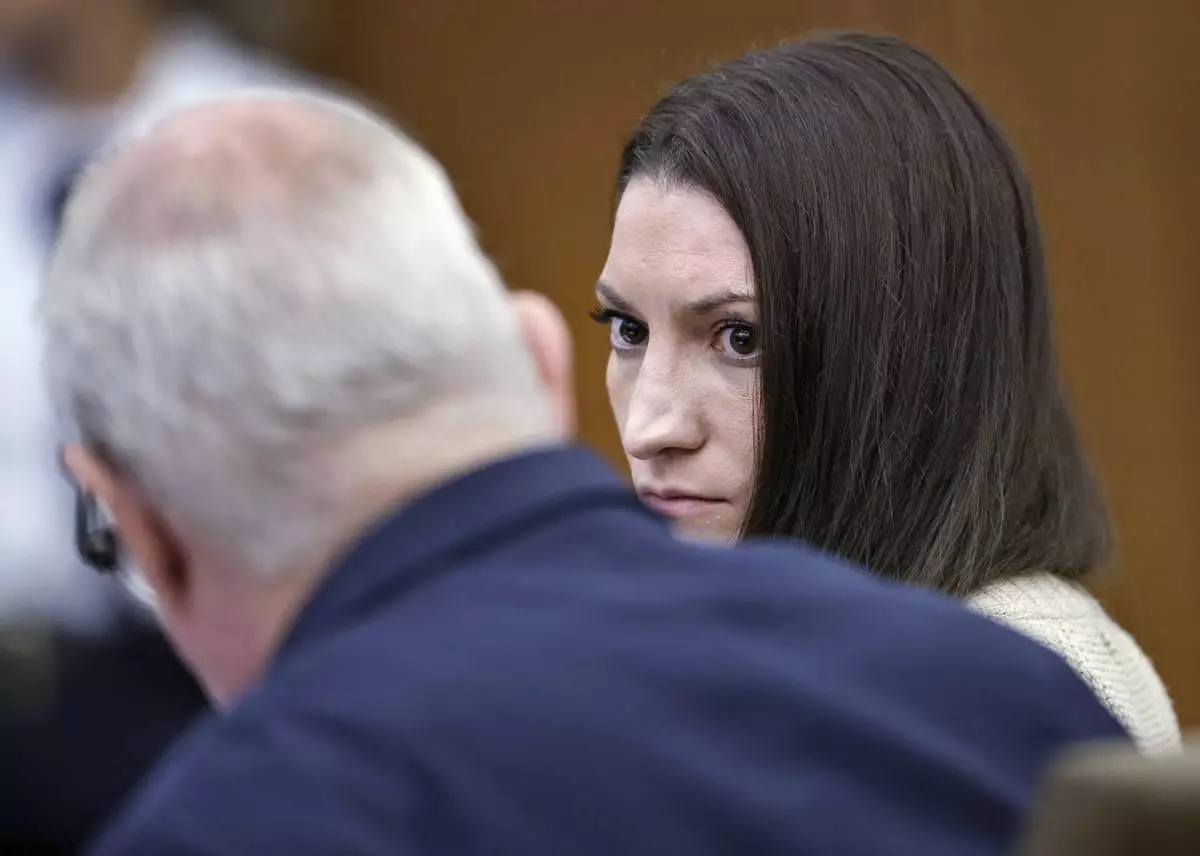
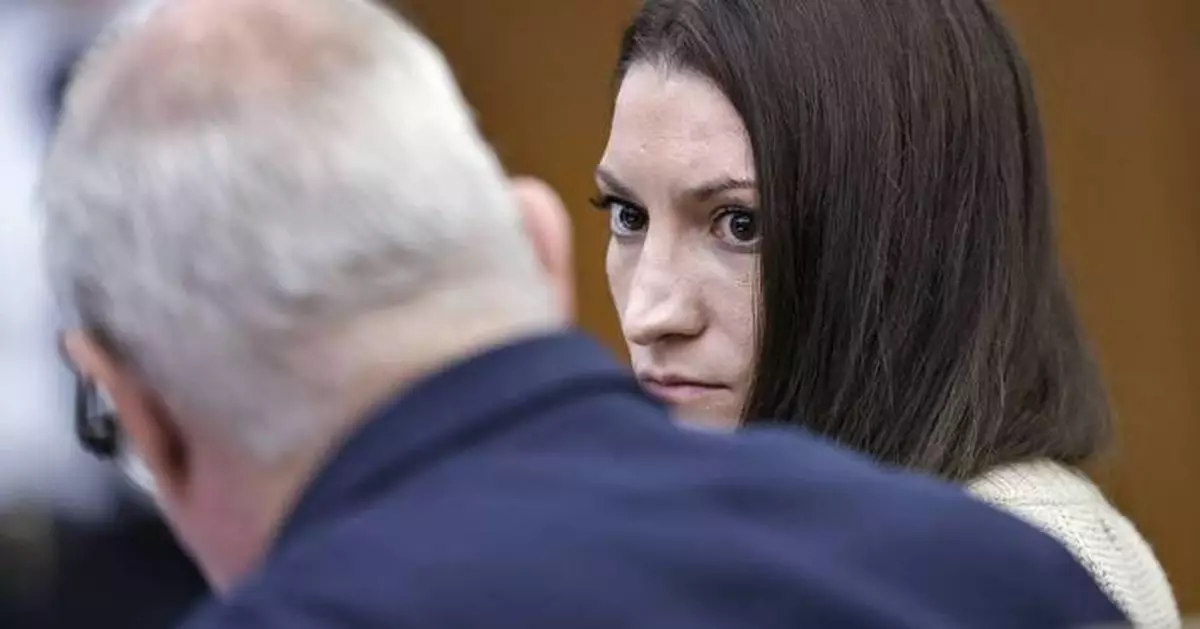
Defendant Lindsay Clancy talks with her lawyer Kevin Reddington. during her murder trial at Plymouth Superior Court, Monday, Aug. 24, 2026 in Plymouth, Mass. (Greg Derr/The Patriot Ledger via AP, Pool)
WASHINGTON (AP) — The Supreme Court opened a path Monday for possible implementation of President Donald Trump's executive order restricting mail-in voting, though it remains unclear how much can be put in place before the fast-approaching midterm elections.
The decision leaves room for additional court challenges that could further slow Trump's order, and other similar cases have already been filed. The U.S. Postal Service laid out how it would implement the order last week, but time is running short to impose major changes. North Carolina is sending out ballots Sept. 4 overseas and to military voters, and other states will quickly follow suit in just a few weeks.
The Supreme Court's conservative majority didn’t decide the legality of Trump's order, instead ruling that states who sued did not have the legal right to challenge it.
While the emergency order is not final, it does have the potential to create chaos around voting across the country, with Trump often questioning the integrity of elections and the nation's highest court again the possible arbiter of a political controversy.
“The Court’s disposition of this application does not mean that any measure taken by the Government to implement the Order will necessarily be lawful. On that score, time will tell,” the majority wrote in an unsigned order.
The three liberal-leaning justices publicly dissented, with Justice Ketanji Brown Jackson writing that the rule “lets another shoe drop in the Kafkaesque nightmare that our precedents have been steadily creating for certain plaintiffs who seek to bring election-related challenges.”
New York Attorney General Letitia James foreshadowed more legal fights ahead, calling the decision a “painful setback” but vowing it would “not be the final word.”
The court’s order opens a path for the administration to begin action to restrict mail voting, but it also could lead to further litigation that could freeze the federal government again.
“This is just the first inning of a very fast nine-inning game,” said Derek Muller, a law professor at Notre Dame University.
Mail balloting has long been a favorite target for Trump, who has claimed that it breeds fraud despite strong evidence to the contrary and his own use of the voting method.
Trump's executive order, signed in March, calls on his administration to create lists of eligible voters and orders the U.S. Postal Service to deliver mail ballots only to people on those lists. New requirements released Friday would forbid the Postal Service from sending mail ballots from any state that does not comply with Trump’s order.
A Postal Service spokesperson did not immediately respond messages seeking comment. The White House did not immediately respond to a message seeking comment.
Democratic officials in 23 states and the District of Columbia sued to block the order. They argued that the Constitution gives states and Congress the power to run elections, and Trump’s changes could lead to chaos and partisan abuse.
“The consequences of allowing such transformative changes to take effect so close to this fall’s elections would be extreme,” attorneys for the states wrote. Dozens of state and local election officials weighed in, asking the justices to leave the order frozen while election preparations are already underway.
Senate Minority Leader Chuck Schumer of New York said Monday the order was aimed at making it “harder for Americans to vote” in the pivotal elections for control of Congress, and vowed that Democrats would "fight every attempt to hijack mail-in voting and rig the rules before voters have their say this November.”
A judge in Massachusetts blocked the plan for the midterm elections in those states. An appeals court upheld her decision. She later granted a second order blocking it nationwide in a separate case, another remaining stumbling block for the Trump administration, which Monday night asked her to void or suspend it in light of the Supreme Court ruling.
The Justice Department appealed to the Supreme Court on procedural grounds in late July, arguing that the states sued too soon. They also pointed to another ruling out of Washington, where a judge allowed Trump’s order to proceed. An appeals court backed that decision, while still leaving room for future court action if the changes are implemented.
Federal attorneys argued that the Massachusetts order “blocks the government’s ability to finalize and implement the President’s proposed policies to promote election integrity for the upcoming federal elections in November.”
A dozen Republican-leaning states supported the federal government in their own appeal before the high court, saying states would have input on the final voter lists.
The Supreme Court has previously ruled against Trump-backed arguments on mail-in ballots, finding in a 5-4 decision that states can count ballots that arrive after Election Day. That case was decided after full briefing and arguments, rather than on the court’s emergency docket.
Trump has blamed mail voting — without credible evidence — for his loss to Democrat Joe Biden in 2020. He has promoted the proposed changes in his executive order as safeguards to keep non-U.S. citizens from voting.
He’s also repeatedly pressed for the passage of the legislation that requires proof of citizenship to vote. Noncitizen voting has been shown to be exceedingly rare, and is a felony that can be punishable by deportation.
Using mail ballots has become increasingly popular with voters of both parties, with about 30% of all ballots cast that way during the 2024 presidential election, according to federal data. The process also is secure. A 2025 Brookings Institution study found only about four cases of fraud out of every 10 million mail ballots cast.
David Becker, a former justice department lawyer who co-wrote a book debunking Trump’s 2020 election lies, said the high court created “pure chaos leading up to the midterm elections, waiting weeks after an administration filing, and just days before mail ballots go out, to completely rewrite the rules.”
Riccardi reported from Denver. Associated Press writer John Hanna in Topeka, Kansas contributed to this report.
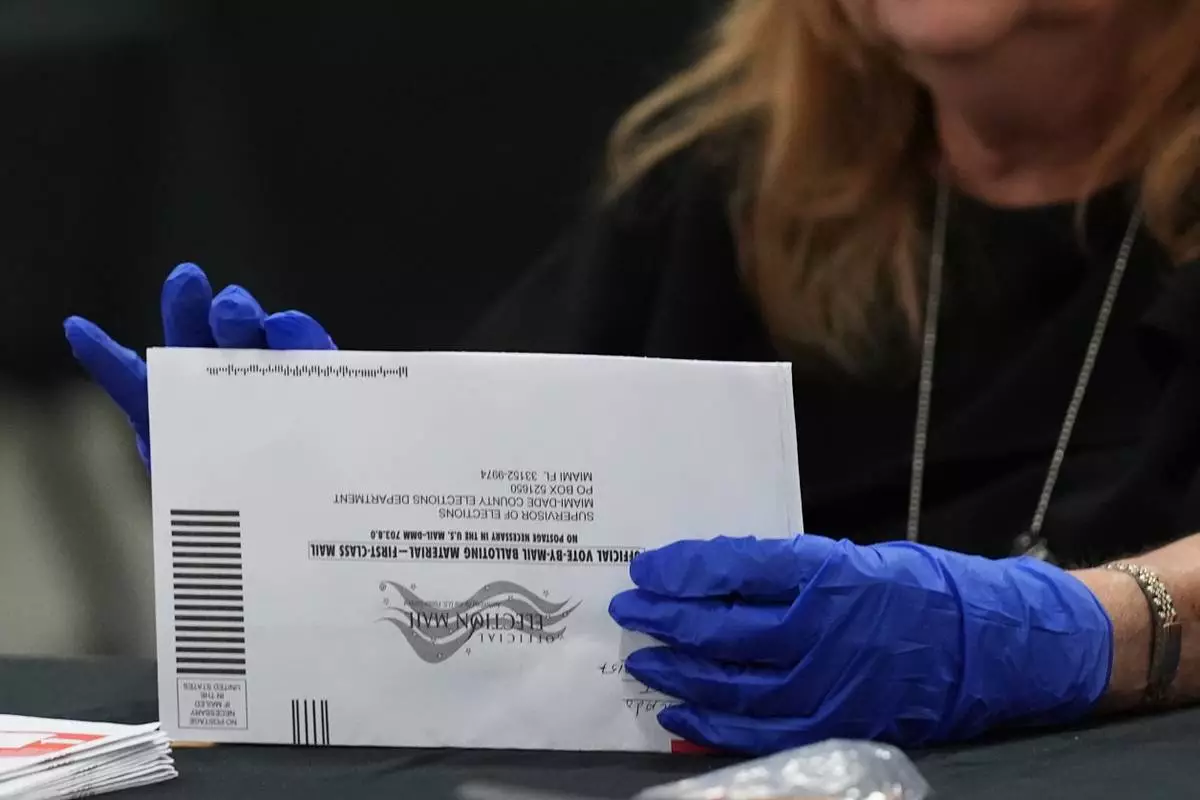
An election worker sorts vote-by-mail ballots at the Miami-Dade County Supervisor of Elections Office for the Florida primary election in Doral, Fla., Tuesday, Aug. 18, 2026. (AP Photo/Lynne Sladky)
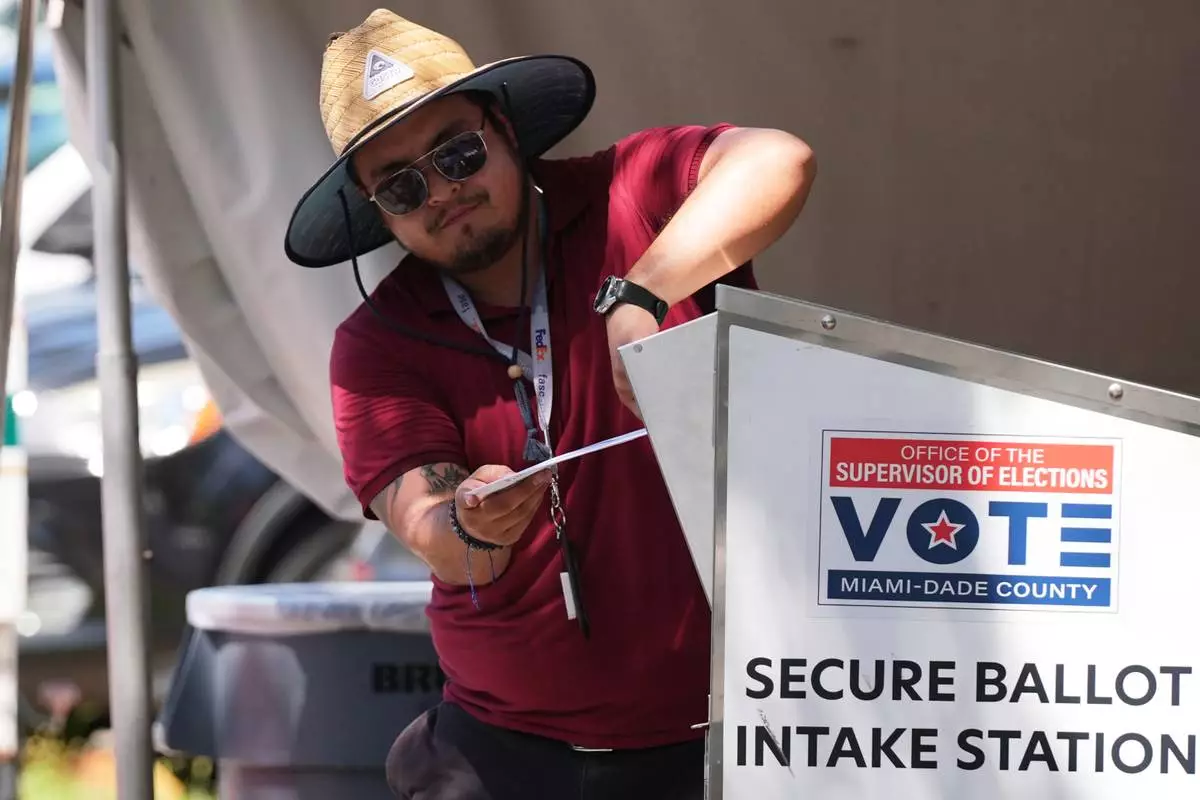
An election worker places a vote-by-mail ballot into a secure bin at the Miami-Dade County Supervisor of Elections Office during the Florida primary election in Doral, Fla., Tuesday, Aug. 18, 2026. (AP Photo/Lynne Sladky)