NEW YORK (AP) — Oil prices are falling again on Tuesday, which is helping to ease worries in the bond market and support stock prices.
The S&P 500 rose 0.4% and pulled a bit closer to its all-time high set earlier this month. The Dow Jones Industrial Average was up 65 points, or 0.1%, as of 9:35 a.m. Eastern time, and the Nasdaq composite was 0.7% higher.
Click to Gallery
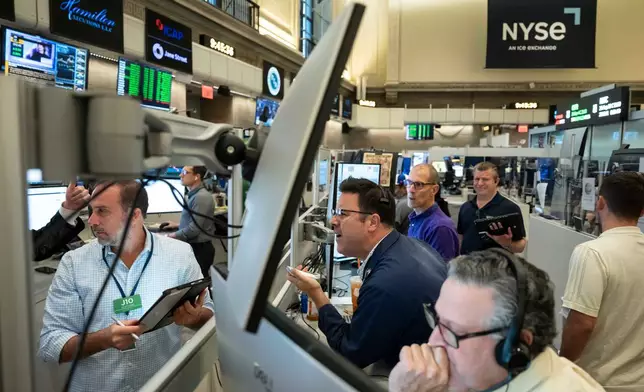
Options traders work on the floor of the New York Stock Exchange in New York, Friday, Aug. 21, 2026. (AP Photo/Yuki Iwamura)
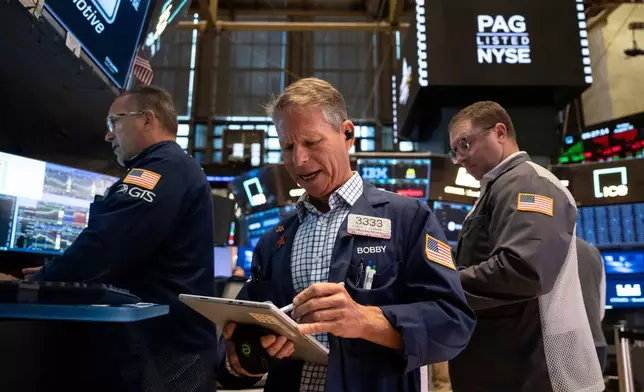
Trader Robert Charmak works on the floor of the New York Stock Exchange in New York, Friday, Aug. 21, 2026. (AP Photo/Yuki Iwamura)
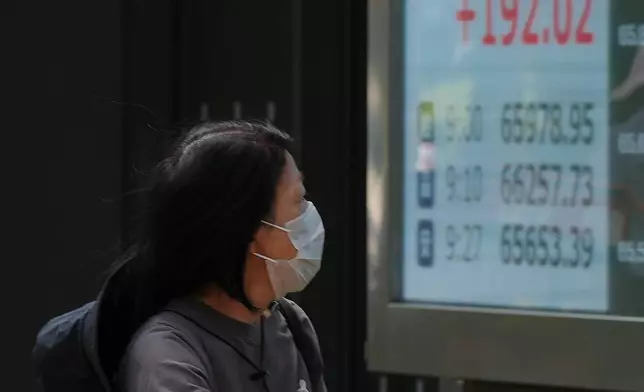
A person walks by an electronic stock board showing Japan's Nikkei index at a securities firm Monday, Aug. 24, 2026, in Tokyo. (AP Photo/Eugene Hoshiko)
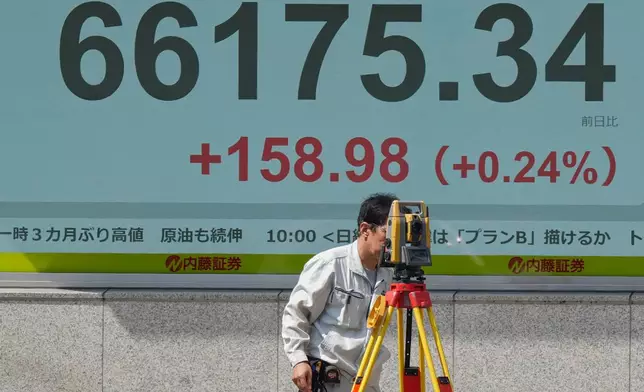
A surveyor works in front of a stock market chart Monday, Aug. 24, 2026 in Tokyo. (AP Photo/Eugene Hoshiko)
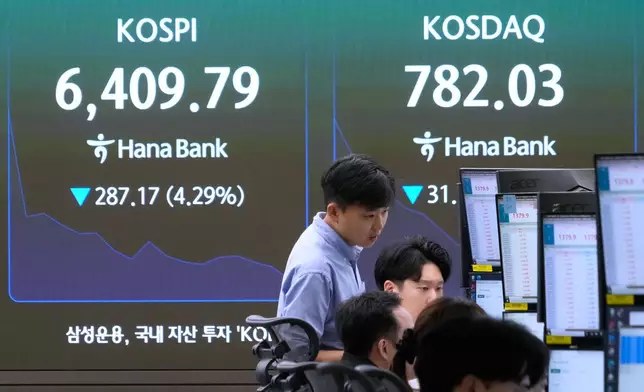
Currency traders watch monitors near a screen showing the Korea Composite Stock Price Index (KOSPI) and the foreign exchange rate between U.S. dollar and South Korean won at the foreign exchange dealing room of the Hana Bank headquarters in Seoul, South Korea, Tuesday, Aug. 25, 2026. (AP Photo/Ahn Young-joon)
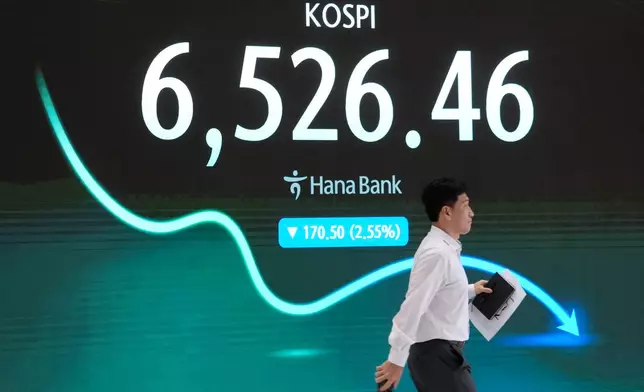
A currency trader passes by a screen showing the Korea Composite Stock Price Index (KOSPI) at the foreign exchange dealing room of the Hana Bank headquarters in Seoul, South Korea, Tuesday, Aug. 25, 2026. (AP Photo/Ahn Young-joon)
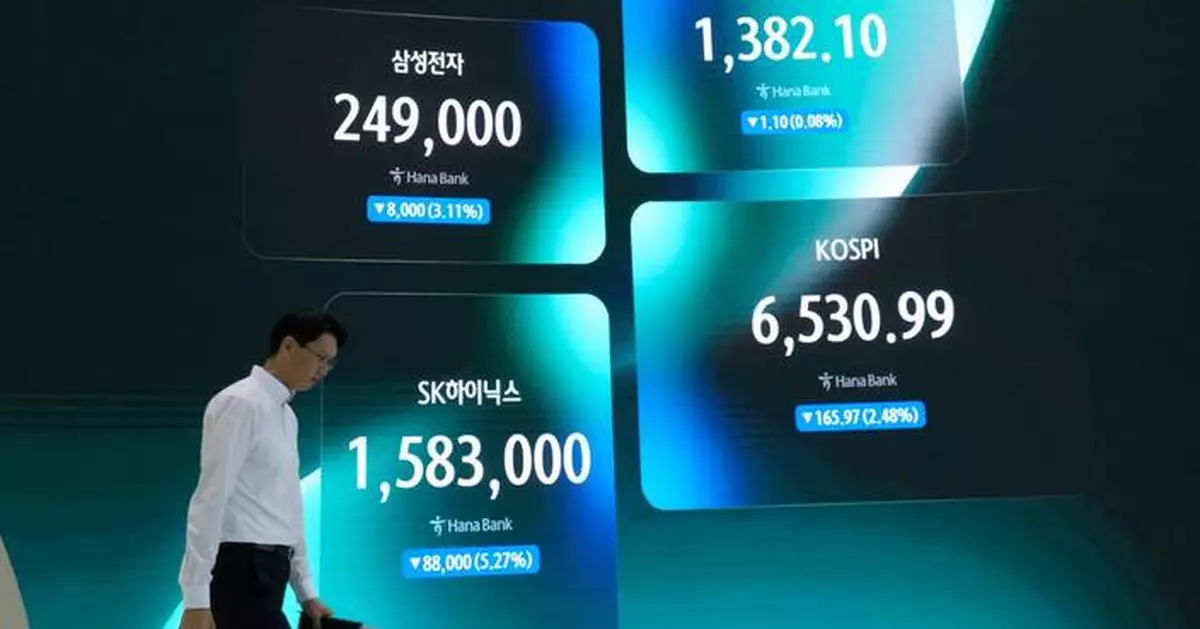
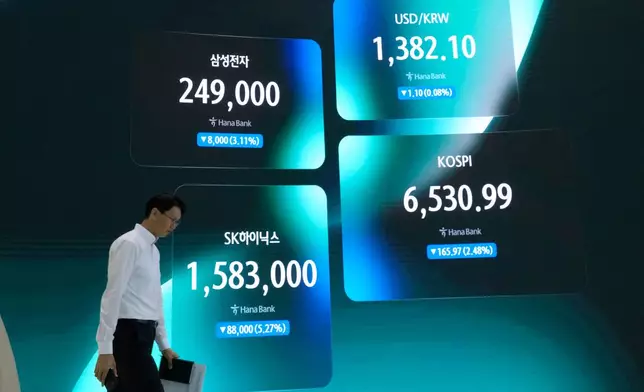
A currency trader passes by a screen showing the Korea Composite Stock Price Index (KOSPI), the foreign exchange rate between U.S. dollar and South Korean won, SK Hynix and Samsung Electronics Co. stock price at the foreign exchange dealing room of the Hana Bank headquarters in Seoul, South Korea, Tuesday, Aug. 25, 2026. (AP Photo/Ahn Young-joon)
Some of the strongest action was in the oil market, where the price for a barrel of Brent crude fell 2.8% to $87.99 and was heading for a second decline following 13 gains in 14 days. The drop came even though tensions between the United States and Iran seemed to ratchet higher after the Trump administration announced new sanctions to further hurt Iran’s economy.
Brent’s price zigzagged between $72 and $102 last month as hopes rose and fell that the United States and Iran could reach a deal that would allow oil tankers to freely exit the Persian Gulf again.
Tuesday's drop in oil prices tempered the worries about high inflation that helped drive Treasury yields in the bond market higher through the summer. Yields had gotten so high that the U.S. Treasury Department announced a surprise move last week to increase its repurchases of longer-term Treasury notes and bonds.
High yields make borrowing more expensive for everyone and can slow the economy’s growth while undercutting prices for stocks, cryptocurrencies and other investments.
The yield on the 10-year Treasury fell to 4.66% from 4.70% late Monday and from 4.74% at the end of last week. That’s a significant move for the bond market, though the 10-year yield remains firmly above its 3.97% level from before the war with Iran sent oil prices and worries about inflation much higher.
On Wall Street, Nvidia and other winners of the boom in artificial-intelligence technology helped lead the way. Nvidia rose 1.6%, a day after its drop of 2.9% was the heaviest weight on the S&P 500.
AI stocks have veered up and down through the summer on worries that their prices shot too high and that the AI boom may not be sustainable if it doesn’t produce enough profits for companies. Nvidia will report its latest quarterly results on Wednesday, which could help steer the next move for AI-related stocks.
The gains for chip stocks helped offset a 21.8% drop for Dick’s Sporting Goods, which reported weaker results for the latest quarter than analysts expected. Executive Chairman Ed Stack said the retailer cut prices on some of its footwear and apparel to remain competitive, while launches for some footwear during the quarter ended up being weaker than it expected.
The company cut is forecast for an underlying measure of profit in 2026 for both its Dick’s and Foot Locker businesses. Its stock is potentially heading toward its worst day in three years.
In stock markets around the world, many indexes drifted modestly higher. South Korea’s Kospi, which is dominated by two AI winners, added 0.7% for one of the world’s biggest moves. It’s been steadying since plunging 22.2% in July.
AP Business Writers Matt Ott and Elaine Kurtenbach contributed to this report.
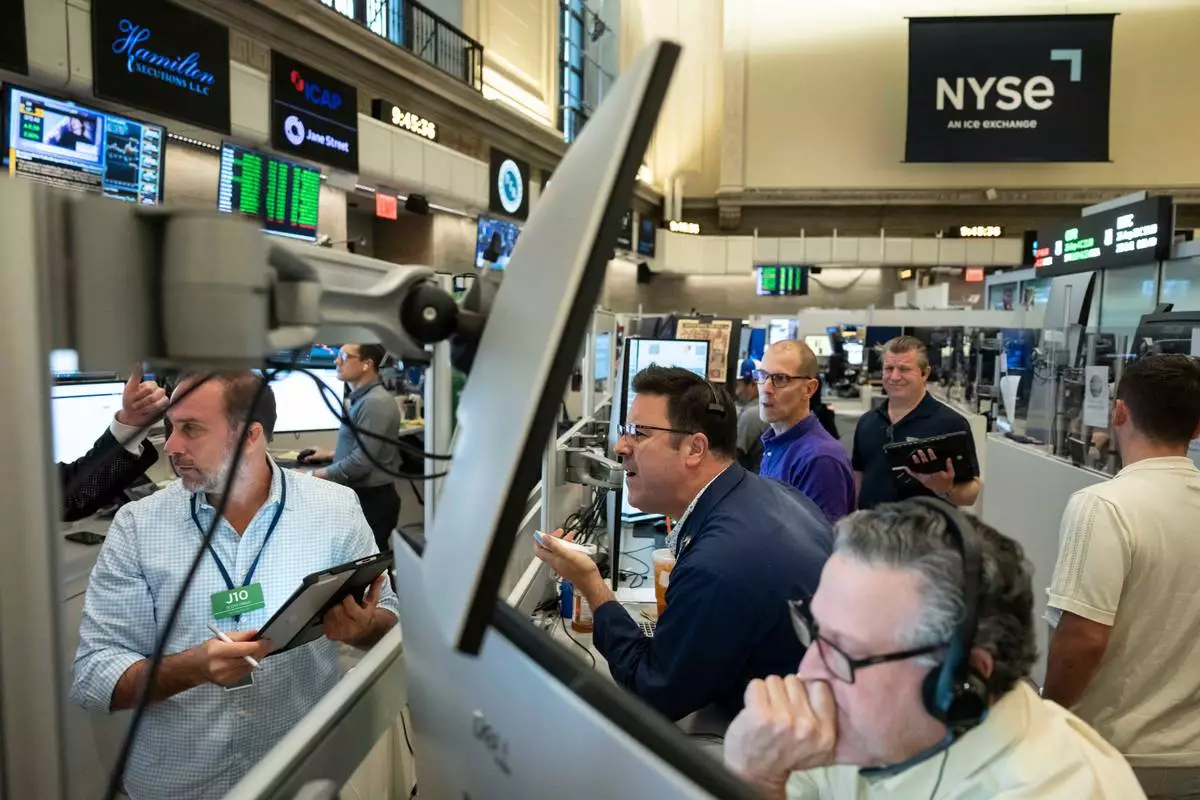
Options traders work on the floor of the New York Stock Exchange in New York, Friday, Aug. 21, 2026. (AP Photo/Yuki Iwamura)
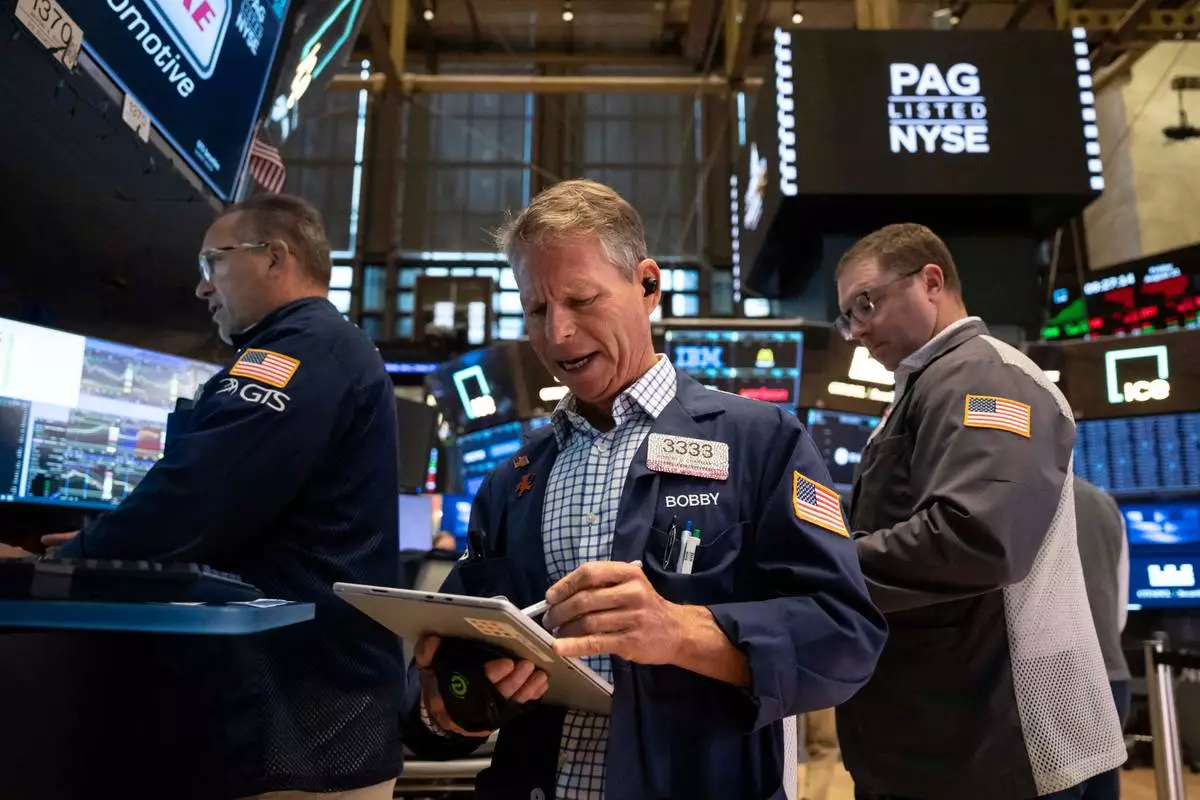
Trader Robert Charmak works on the floor of the New York Stock Exchange in New York, Friday, Aug. 21, 2026. (AP Photo/Yuki Iwamura)
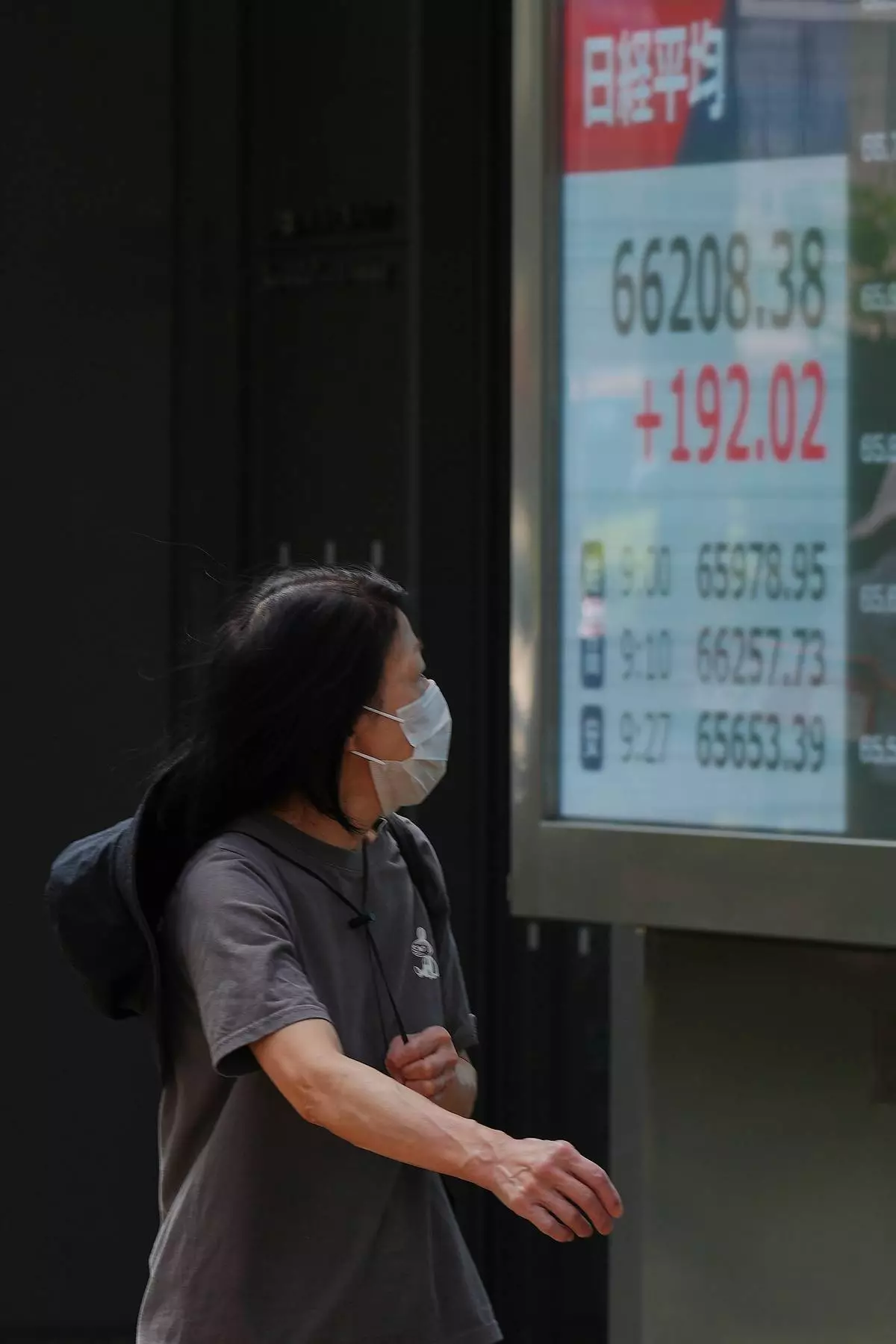
A person walks by an electronic stock board showing Japan's Nikkei index at a securities firm Monday, Aug. 24, 2026, in Tokyo. (AP Photo/Eugene Hoshiko)
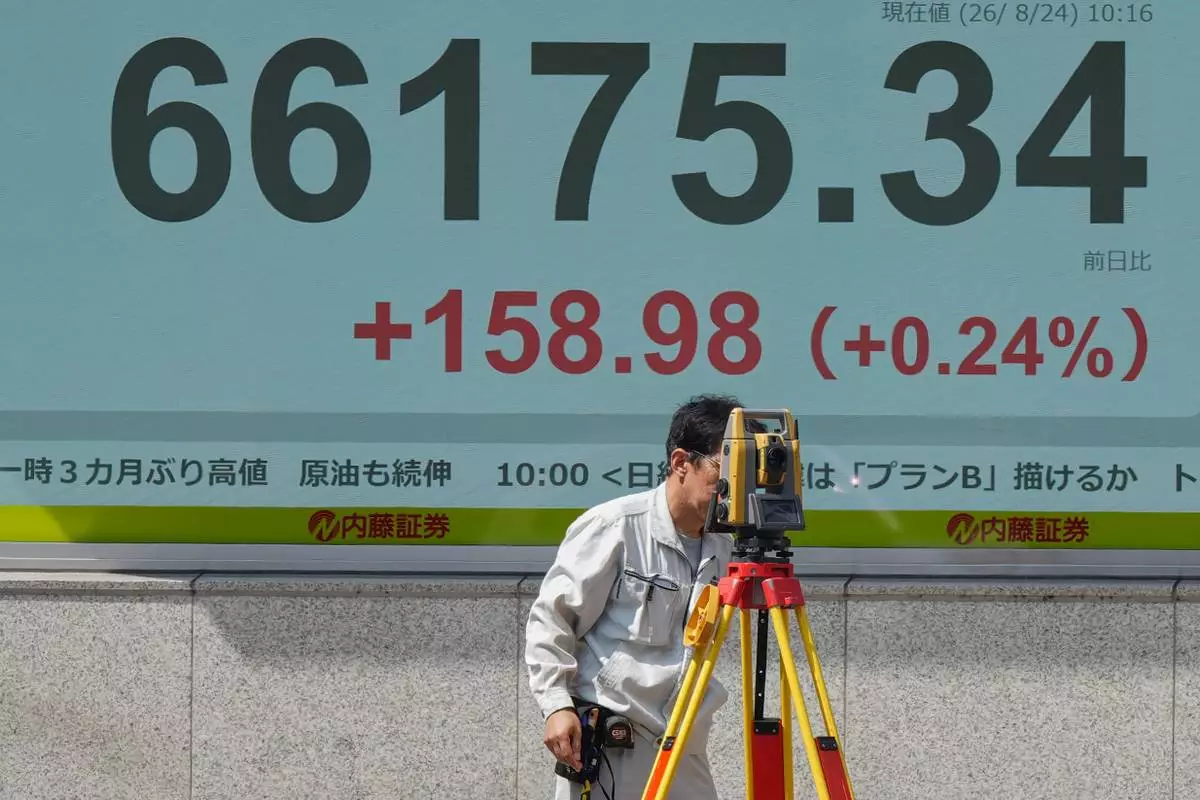
A surveyor works in front of a stock market chart Monday, Aug. 24, 2026 in Tokyo. (AP Photo/Eugene Hoshiko)
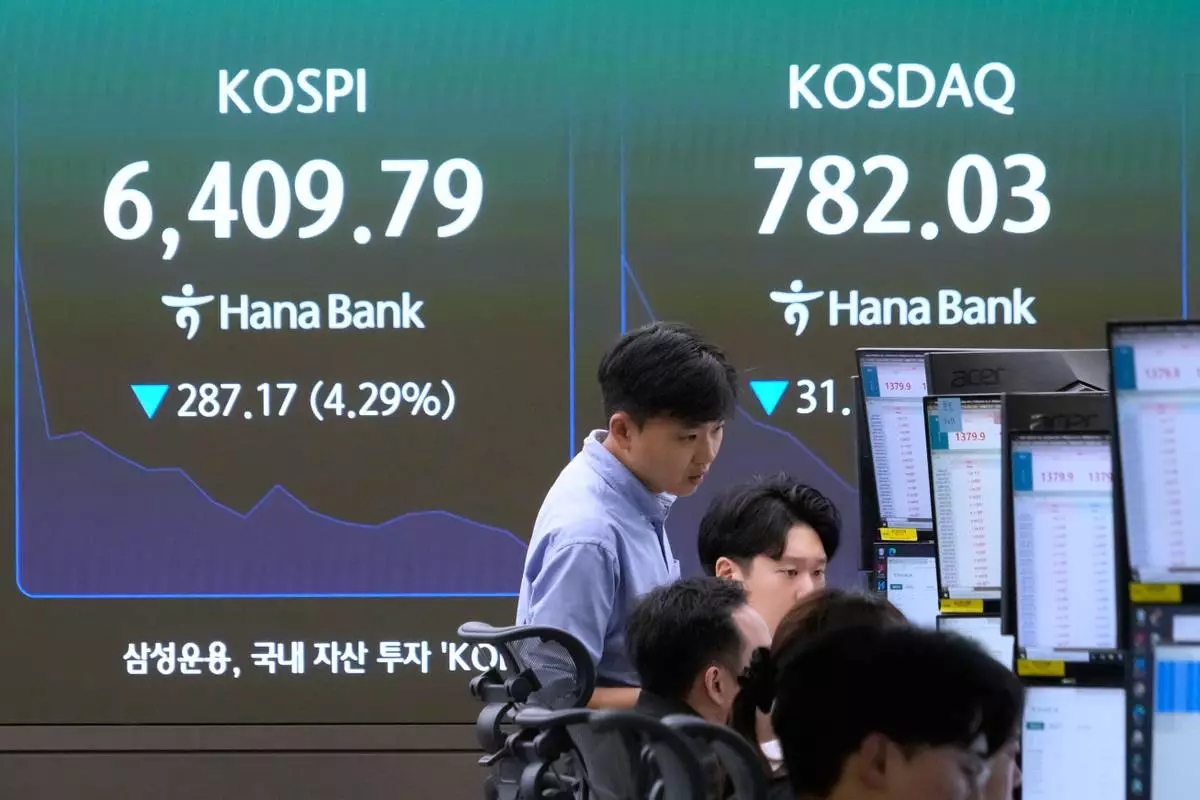
Currency traders watch monitors near a screen showing the Korea Composite Stock Price Index (KOSPI) and the foreign exchange rate between U.S. dollar and South Korean won at the foreign exchange dealing room of the Hana Bank headquarters in Seoul, South Korea, Tuesday, Aug. 25, 2026. (AP Photo/Ahn Young-joon)
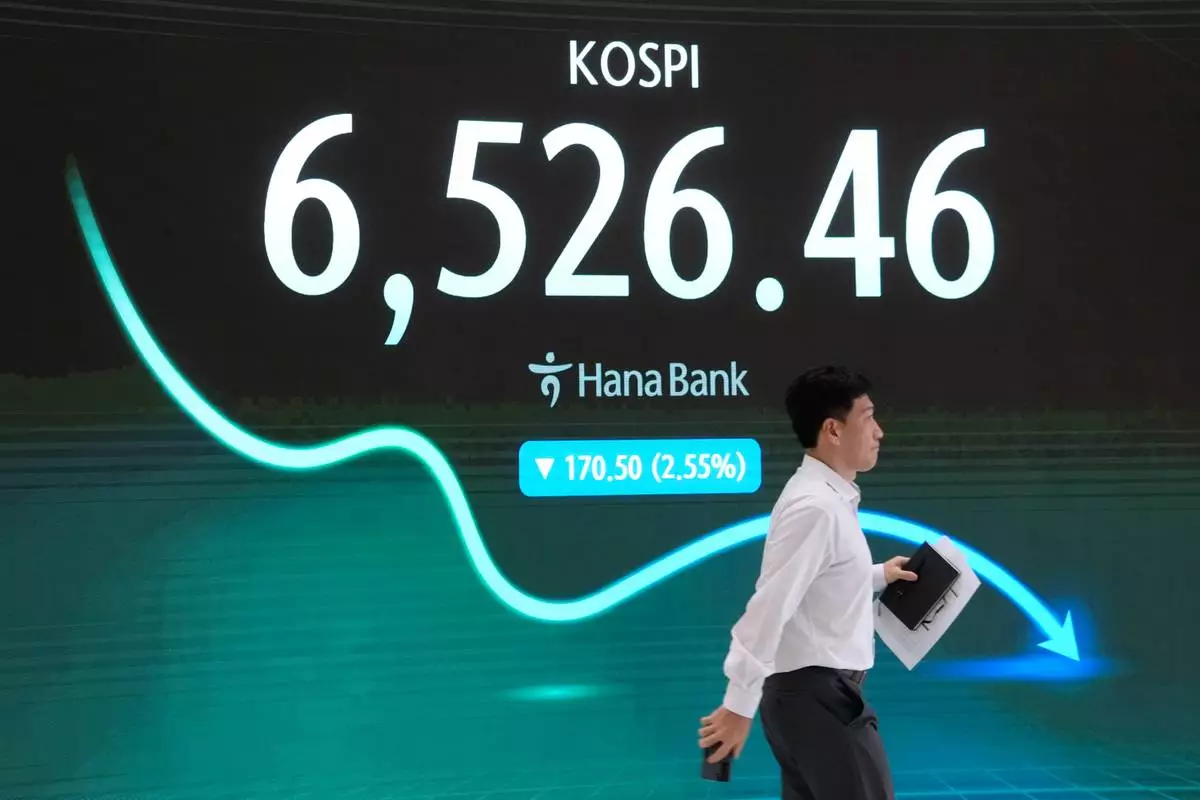
A currency trader passes by a screen showing the Korea Composite Stock Price Index (KOSPI) at the foreign exchange dealing room of the Hana Bank headquarters in Seoul, South Korea, Tuesday, Aug. 25, 2026. (AP Photo/Ahn Young-joon)

A currency trader passes by a screen showing the Korea Composite Stock Price Index (KOSPI), the foreign exchange rate between U.S. dollar and South Korean won, SK Hynix and Samsung Electronics Co. stock price at the foreign exchange dealing room of the Hana Bank headquarters in Seoul, South Korea, Tuesday, Aug. 25, 2026. (AP Photo/Ahn Young-joon)
The Supreme Court's decision giving preliminary approval for President Donald Trump's order restricting mail voting may not lead to a single election procedure changing during the November midterms, but it has already thrown into uncertainty the method that nearly one-third of the country uses to vote.
Rather than saying that Trump's order is legal, the high court said Monday it was too early for Democratic-run states to challenge it in June, when they convinced a federal judge in Boston to freeze the order for November's election. That effectively restarts the legal fight over the order in an incredibly compressed timeline, with initial ballots scheduled to be sent to North Carolina's overseas and military voters in just over a week, on Sept. 4.
A second injunction barring the U.S. Postal Service from making changes to comply with Trump's directive remains in effect. Still, the administration late Monday filed a motion asking that the second hold be removed, and has posted new regulations from the Postal Service that would go into effect Tuesday if the legal pathway is fully cleared.
That new rule requires specific formatting for envelopes containing mail ballots — which may force some jurisdictions to completely revise theirs — and makes states use an electronic system to identify to the Postal Service who is voting by mail. If states don't comply with the rule, their mail ballots won't get sent.
The prospect of such a potential sweeping overhaul in mere days boggled critics' minds. In her dissent, Justice Ketanji Brown Jackson warned that the decision “needlessly injects chaos and uncertainty into the upcoming midterm elections.”
David Becker, executive director of the Center for Election Innovation & Research, agreed, saying the majority “seemed to create complete chaos leading up to the midterm elections” and it'd be “impossible” for states to comply with the new rules at this late date.
Jesse Salinas, the registrar of Yolo County in California and president of that state's association of election officers, noted that ballots in his state start going out in 11 days and his county already printed its envelopes.
“You look at the timeline, and it's a bit chaotic,” Salinas said, noting he doesn't know precisely which envelope designs comply with the new rules.
He dismissed the idea of a last-minute revision in procedures. “The capacity to do that, I just don't see it,” Salinas said.
Tammy Patrick, chief program officer at the Elections Center, an association of 2,500 election officers, warned that it's impossible for any state to comply with the rule and that no one she talked to has tried.
“There isn't a single state that does their elections in a way that this postal rule lays out,” Patrick said in an interview. “There has been this assumption that this is not going to happen because it could not happen the way it's laid out, because no one does it this way.”
Cisco Aguilar, the Democratic Secretary of State in Nevada, where every registered voter gets a mail ballot, noted the post office had already misdelivered three dozen mail ballots from his state's June primary.
“They're going to come in within seven days and build a massive database that has 100% accuracy?” Aguilar said in disbelief. “It is impossible to implement this system in that time frame.”
Trump has long sought to make voting by mail largely impossible, though he himself has repeatedly cast his ballots by mail.
Trump falsely blamed his 2020 loss on mail voting and spun up baroque conspiracy theories that he's tried to prove while back in office. Judges blocked him from creating new voting restrictions by executive order last year, and he only issued his latest order after his bill to revamp voting procedures stalled in the Senate amidst Democratic opposition.
The Election Assistance Commission found that 29% of voters in 2024 cast their ballots through the mail. Democrats are more likely to use mail voting than Republicans, a reflection of how the process has become polarized since Trump began attacking it in 2020. Still, the president has to date been unable to make the sweeping changes he's sought because the Constitution grants control of voting rules to states, and in federal elections, to Congress — not the president.
Legal experts stressed that's why they view it as unlikely Trump's order will actually be implemented. Not only did the majority in the Supreme Court's unsigned order note that it hasn't determined whether the measure is constitutional, but every victory the administration has won so far has only been because it's argued that it's premature to talk about its constitutionality. Opponents are already weighing new lawsuits since the final rule was published Friday night.
Becker, a former Department of Justice lawyer who co-wrote a book debunking Trump's 2020 election lies, added that he expects the next round of litigation to keep the order from being implemented in November. Rick Hasen, a UCLA law professor, said after the ruling: “This doesn't necessarily mean anything in terms of November.”
Derek Muller, a Notre Dame law professor, said the Supreme Court still ensured a fraught court battle in the coming days.
“It puts courts in a terrible place, because whatever happens is super close to the election,” Muller said. “If it permits it, it creates super disruption for the states. If it suspends it, it visibly angers the administration.”
Hasen said it's inconceivable that the regulation will impact voters in November.
“Both legal and practical reasons make this practically impossible to enforce,” he said of Trump's mail voting order.
Elections are run by local officials in thousands of scattered offices, many of which don't even have a full-time employee. Patrick said that those who work in the field have been left reeling.
“Election officials just feel like punching bags at this moment because they plan one way of conducting their elections, and have contingency plans if a fire breaks out, or one location loses power,” Patrick said. “But how do you plan for something that affects one-third, one half, or all of your voters?”
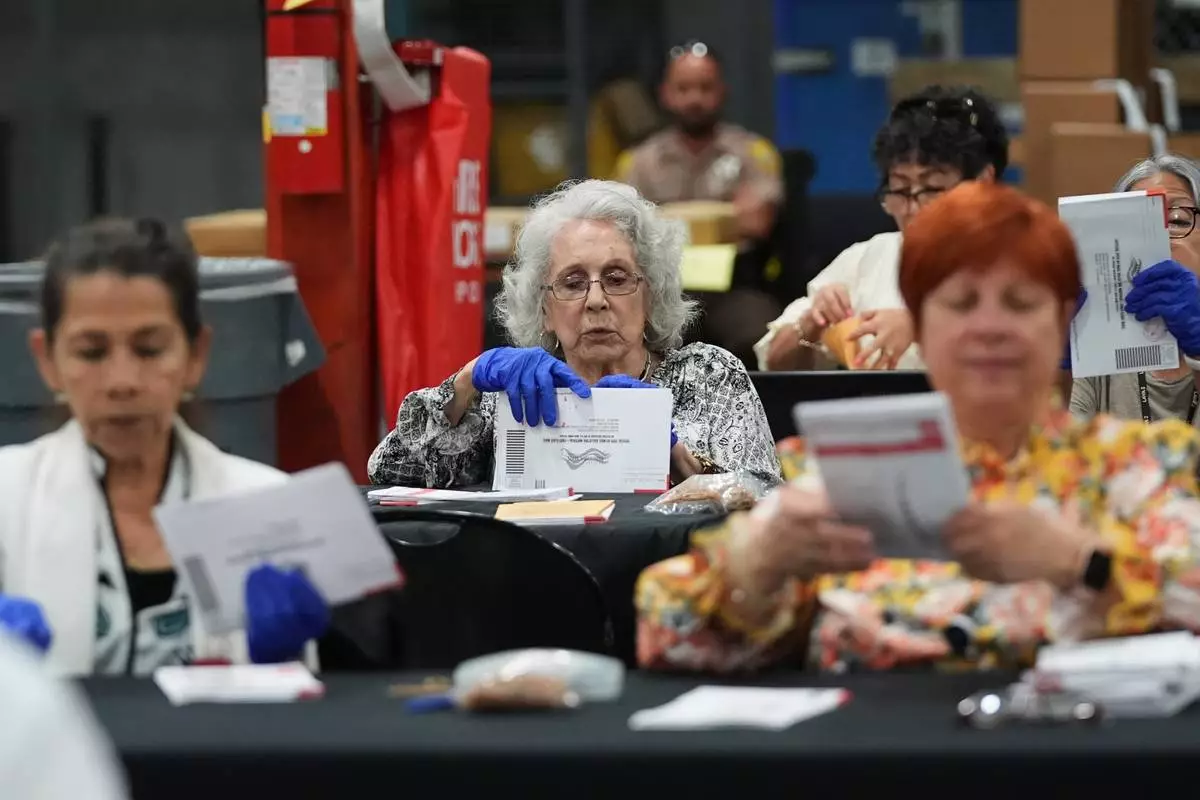
Election workers sort vote-by-mail ballots at the Miami-Dade County Supervisor of Elections Office for the Florida primary election in Doral, Fla., Tuesday, Aug. 18, 2026. (AP Photo/Lynne Sladky)
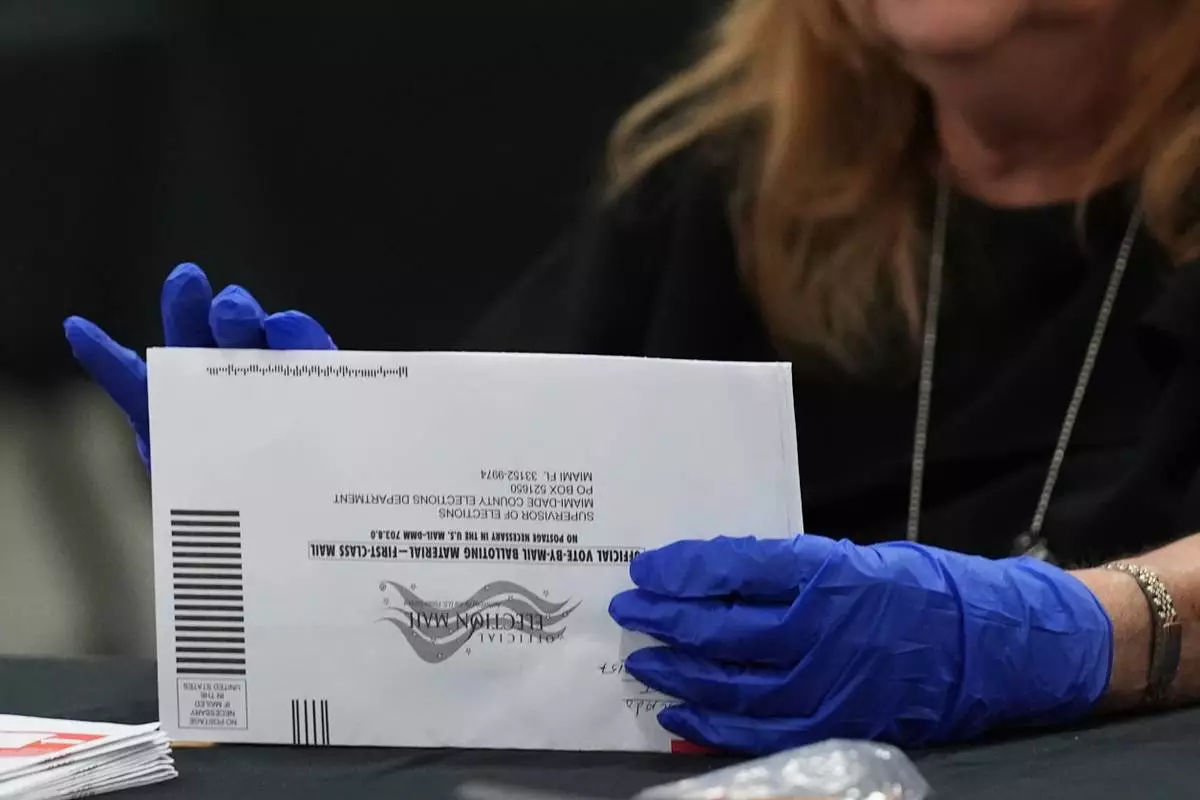
An election worker sorts vote-by-mail ballots at the Miami-Dade County Supervisor of Elections Office for the Florida primary election in Doral, Fla., Tuesday, Aug. 18, 2026. (AP Photo/Lynne Sladky)