I’ve written about how to decide how much to set aside for long-term-care expenses for people who have decided to forgo insurance. But where and how should those funds be invested?
You don’t have to maintain a separate account for your long-term-care fund, but you do need to let your loved ones know of its existence.
The question is, which account makes the most sense, from a tax perspective, as a receptacle for out-of-pocket long-term-care costs?
A health savings account might look like the obvious choice. Withdrawals from an HSA to cover qualified healthcare expenses are tax-free, and most long-term-care expenses would qualify. There are a couple of drawbacks, however. One is that annual contribution limits—in 2026, they’re set at $4,400 for people with single coverage and $8,600 for those with family plans—might impede the ability of people over age 50 to build up a significant bulwark in the HSA between now and retirement. (Once you’re covered by Medicare, you can’t be covered by a high-deductible health plan; additional HSA contributions are also off limits.) It’s still well worth investing in an HSA if you have access to one, but you might not be able to gain critical mass for long-term-care expenses.
My other reservation is that the tax benefits of HSAs are almost too good for long-term-care expenses. That’s because long-term-care costs are deductible to the extent that they, combined with other healthcare outlays, exceed 7.5% of your adjusted gross income in a given year. That means that you could be taking tax-free withdrawals from the HSA in the same year that you had those very high deductions, so you’re not taking full advantage of the HSA’s tax benefits. Finally, any unused funds in that long-term-care bucket could pass to your heirs. The problem is that, if HSAs are inherited by someone other than your spouse, the tax benefits effectively cease upon your death.
To help take advantage of high deductions associated with long-term care, you’d ideally pull your long-term-care expenses from an account that itself is highly taxed. That points toward a traditional IRA. Most older adults have the bulk of their retirement savings in IRAs to begin with. Withdrawals from a traditional IRA or other traditional tax-deferred account are indeed taxable, to the extent that they consist of pretax contributions and investment earnings (in other words, the bulk of most tax-deferred accounts). But individuals incurring heavy long-term-care costs often easily exceed the threshold for deductibility of healthcare expenses. (In 2026, healthcare expenses that exceed 7.5% of adjusted gross income are deductible.) That means that the deduction can offset the taxes due on the IRA withdrawal.
Most long-term-care costs are incurred later in life, when required minimum distributions (which apply to traditional tax-deferred accounts for people over age 73) are in effect. In other words, the money has to come out of the account and be taxed at this life stage anyway, and the medical-expense deduction helps to ease the tax burden.
In terms of how to invest the long-term-care funds, one thing’s for sure: Cash isn’t going to cut it, especially if you haven’t yet retired or just did. That’s because long-term-care inflation has been running higher than the general inflation rate. In Genworth/CareScout’s 2025 Cost of Care survey, for example, inflation for assisted living was running above the general inflation rate. (To be fair, inflation was more modest in other long-term care categories.)
Obviously, outearning inflation is mission-critical for your long-term-care fund. You need some growth, and you need to take some risk to enable that growth.
Your proximity to spending your money should be the key determinant of how much risk to take. If you’re setting up a long-term-care fund in your mid-60s, for example, the data on long-term-care usage suggest that you’re unlikely to need care—or your fund—for another 15 years. (The average nursing home resident is 81.) In other words, at that life stage, your risk capacity is high, and your long-term-care portfolio should be built for growth and mainly parked in equities.
As you move into your mid-70s and a long-term-care need could realistically arise within the next five to 10 years, you can transition more of that portfolio to bonds and cash. A balanced asset allocation, along the lines of my Moderate Retirement-Bucket Portfolios, is a guide. If and when you begin spending from the long-term-care fund, it makes sense to position the assets more conservatively still, with the lion’s share of assets in bonds and cash.
Of course, none of this is an exact science because you’re missing some key inputs: You can’t tell in advance whether and when you’ll have a long-term-care need and for how long.
This article was provided to The Associated Press by Morningstar. For more retirement content, go to https://www.morningstar.com/retirement.
Christine Benz is director of personal finance and retirement planning for Morningstar and co-host of The Long View podcast. Subscribe to her free newsletter, Improving Your Finances.
Related Links:
Don’t Fear Long-Term-Care Expenses. Prepare for Them
https://www.morningstar.com/retirement/dont-fear-long-term-care-expenses-prepare-them
Worried About Long-Term-Care Expenses? Let’s Do Something About It.
https://www.morningstar.com/retirement/youre-worried-about-long-term-care-expenses-lets-do-something-about-it
How Likely Are You to Have an Extended Long-Term-Care Need?
https://www.morningstar.com/retirement/how-likely-are-you-have-an-extended-long-term-care-need
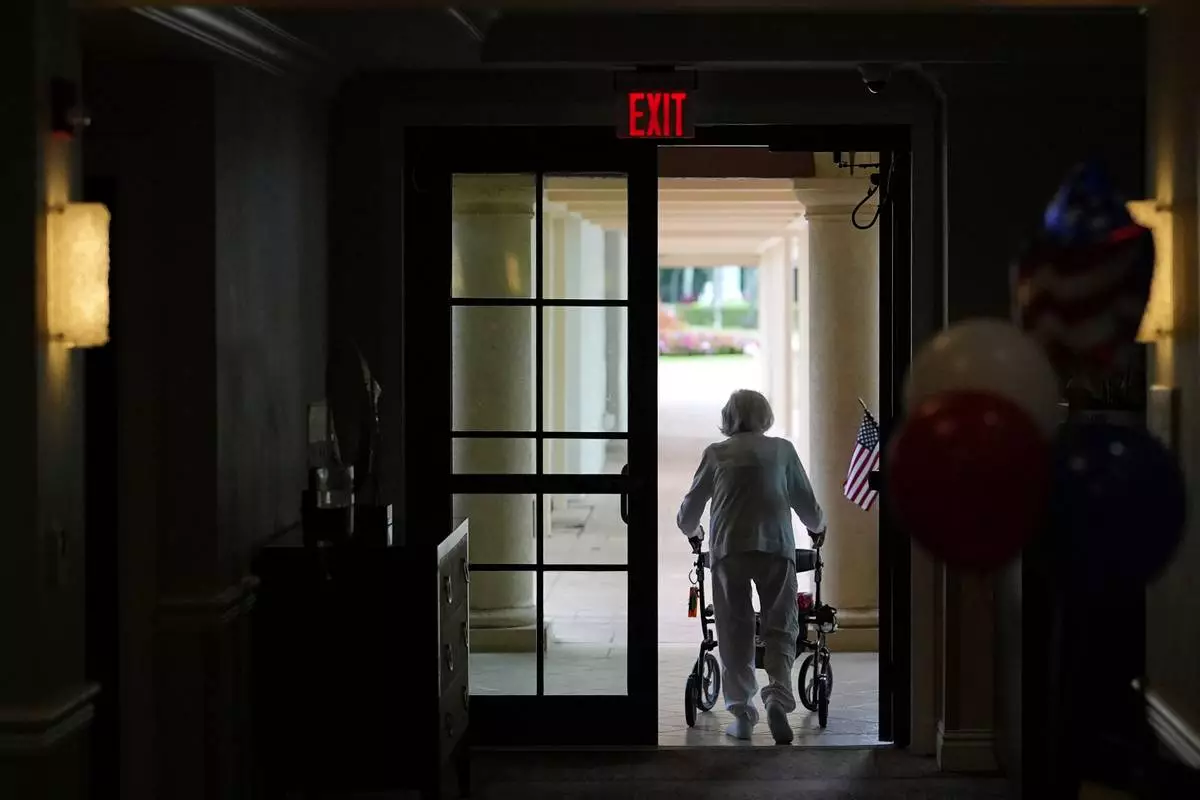
FILE - A woman uses a walker as she exits an assisted living building, July 4, 2025, in Boca Raton, Fla. (AP Photo/Rebecca Blackwell, File)
RUTHERFORD, Calif.--(BUSINESS WIRE)--Aug 25, 2026--
Today, One Mind™ is proud to announce the recipients of the 2026 One Mind Rising Star Awards, a program that fuels breakthrough research to deepen understanding of the brain and mental health conditions, enhance detection and diagnosis, and drive the treatment and prevention of psychiatric disorders. This year, five visionary scientists conducting research at Children’s Hospital of Philadelphia, Columbia University, Harvard University, Massachusetts Eye and Ear Infirmary, and Washington University have been selected to receive a $300,000 research grant over three years. Alongside leadership training, mentoring, and connections to One Mind’s network and community, including a renowned network of Rising Star Awardees built over more than 20 years, awardees will receive the skills and support needed to maximize the impact of their research and leadership over the course of their careers.
This press release features multimedia. View the full release here: https://www.businesswire.com/news/home/20260825045310/en/
A core component of One Mind Research, the One Mind Rising Star Awards invest in innovative scientists in neuroscience, psychiatry, and related fields, who are pursuing bold, boundary-pushing research aimed at advancing our understanding, treatment, and prevention of mental health conditions. Selected through a rigorous grants process by One Mind’s Scientific Advisory Board —composed of ten of the world’s leading scientists and clinicians—renowned senior Rising Star Scientists, and the One Mind Lived Experience Council, these awardees represent the future of mental health research. To date, the Rising Star Awards have supported 54 researchers who are pushing the frontiers of mental health science.
The 2026 Rising Star Awards are made possible by the generous support of One Mind Board of Directors members Harvey Schwartz and Annette B. Smith, as well as the Dolby Family, Elizabeth and Bram Hall, and Lisa and Matt Sonsini. These visionary supporters share a deep and enduring commitment to advancing mental health solutions, empowering exceptional early-career scientists to pursue bold discoveries that are transforming care and changing lives around the world.
The 2026 Rising Star Awardees will present their One Mind-funded research at the 32nd One Mind Music Festival on Saturday, September 19, 2026, hosted at Staglin Family Vineyard in the heart of Napa Valley. Presentations will take place during the Science & Innovation Symposium, alongside keynote speakers Dr. Ekaterina Malievskaia, Co-Founder of COMPASS Pathways, and Lars Wilde, Co-Founder of COMPASS Pathways and CEO of Pangea Bio.
“The Science & Innovation Symposium represents the best and brightest in the mental health field and showcases the collective power of researchers, clinicians, individuals with lived experience, industry leaders, and communities to have lasting impact on the most urgent mental health needs,” said Dr. Kathy Pike, CEO of One Mind. “Thanks to the generous support of individuals, foundations, families and business leaders who share our commitment to advancing science, we’re able to fuel the research of visionary neuroscientists and forward-thinking organizations devoted to enhancing how we understand mental health and treat mental illness.”
This year’s Rising Star Awardees are:
Aaron Alexander-Bloch, MD, PhD, Associate Professor of Psychiatry at The Children’s Hospital of Philadelphia and University of Pennsylvania, recipient of the 2026 One Mind Dolby Family Rising Star Award.
Predicting Treatment Response in Young People with Psychosis
Multi-Modal Neurogenetic Markers of Treatment Resistance for Precision Psychiatry in Youth with Psychosis: The first episode of psychosis can be a terrifying turning point for young people and their families. People living with psychosis spectrum disorders like schizophrenia vary widely in how they respond to treatment. Despite advances in neuroimaging and genetics, we still cannot predict who will respond well to available treatments and who will develop resistant forms of psychosis. This limits opportunities for early intervention and the personalized care our patients deserve. This project addresses this gap by harnessing genetic data and clinical brain MRIs obtained during first-episode psychosis. Using AI-driven advances in image processing, we benchmark quantitative MRI measurements against brain growth charts. We hypothesize that youth with rare genetic variants and greater deviations from typical neurodevelopmental patterns are more likely to develop treatment-resistant psychosis. This work will inform predictive models that enable us to tailor treatments for our most vulnerable youth.
Kiyohito Iigaya, PhD, Assistant Professor of Psychiatry at Columbia University, recipient of the 2026 One Mind Ben Langford and Nicholas Hall Rising Star Award.
Understanding the Loss of Pleasure in Depression
Toward Personalized, Mechanistic Diagnosis and Treatment of Anhedonia through Computational Psychiatry: Anhedonia, the inability to experience pleasure, is a debilitating symptom in major depression and schizophrenia. For many individuals, the core problem lies not in experiencing rewards themselves but in anticipating them. People fail to experience pleasure while waiting for rewards, even though eventual consumption is enjoyable. This “anticipatory anhedonia” is strongly linked to treatment resistance, disability, and suicide risk. Yet current approaches cannot explain why it occurs or how to treat it effectively. This project reframes a core aspect of anhedonia as a failure in the dynamic construction of anticipation. This internal process unfolds over time and can be quantified, modeled, and therapeutically targeted. Rather than relying on standard measures that capture reward responses over only a few seconds, we computationally model and directly measure how anticipation evolves across brain circuits over extended timescales of up to 40 seconds.
Jan Kubanek, PhD, Associate Professor of Psychiatry at Washington University, recipient of the 2026 One Mind Harvey Schwartz Rising Star Award.
Using Ultrasound to Map Brain Circuits Involved in Depression
Precision Psychiatry with Focused Ultrasonic Waves: Major depression is the leading cause of disability, estimated to affect nearly 300 million people worldwide. Approximately one in three patients are resistant to existing treatments. Emerging circuit-directed therapies are limited by the lack of understanding of the circuits and networks involved in the disorder. This project develops a noninvasive tool, based on transcranial focused ultrasound, that can engage the deep brain circuits hypothesized to be involved in depression precisely and flexibly. The system is unique in that it compensates for ultrasound aberrations caused by the head, thus delivering defined ultrasound intensity into the desired targets.
Kimberly Reinhold, PhD, Assistant Professor of Otolaryngology at Harvard Medical School, recipient of the 2026 One Mind Carey Michele Rising Star Award.
How the Brain Weakens Learned Associations
Weakening Persistent Cue Associations in the Brain: Across various psychiatric conditions, sensory cues may become linked to maladaptive thoughts or actions. A major challenge in treatment is that these cue-driven responses can be highly persistent. Even when therapy alleviates a response, the cue itself may remain intrusive, and old responses may readily return. This is consistent with a known phenomenon in neuroscience: new learning generally does not “undo” the original physical changes in the brain. With this project, we ask whether that originally acquired cue association can be directly and specifically weakened. The central question is simple but important: once learning has changed a neural circuit, can those changes be pushed back in the opposite direction?
Shriya Srinivasan, PhD, Assistant Professor of Bioengineering at Harvard University, recipient of the 2026 One Mind Lisa and Matt Sonsini Rising Star Award.
Defining the Gut-Brain Connection in Depression and Anxiety
Digital Control of Stress and Depression via Closed-Loop Ingestible Enteric Neuromodulation: Depression and anxiety affect nearly one billion people worldwide, yet 30–50% of patients fail first-line antidepressants: drugs that require 4–6 weeks for effect, cannot be adjusted in real time, and produce systemic side effects that drive high discontinuation rates. The gut-brain axis offers a powerful, underexplored solution. The gut harbors 400 million neurons that communicate with the brain via the vagus nerve, regulating stress hormones, emotional state, and autonomic tone. Targeted stimulation of these circuits can modulate mood without any direct intervention in the brain. This project will design a system to perform gut-brain stimulation to reduce anxiety- and depression-like behaviors in rat models of chronic stress. In the future, this system would enable digital control of the gut-brain access for mood, cognition and more.
“At One Mind Research we help emerging scientists become the leaders who will shape the future of mental health,” said Dr. Tahilia Rebello, Chief Scientific Officer at One Mind. “We invest in bold science and the people behind it. Through early research funding, leadership development, mentorship, convenings, and pipeline programs, we nurture the next generation of innovators, ensuring cutting-edge projects are cultivated and supported.”
This year, One Mind Research will also host an invitation-only Summit on the Future of Mental Health Research presented by Bristol Myers Squibb and Kaiser Permanente on Friday, September 18, 2026 at The Culinary Institute of America at Copia (CIA at Copia) in Napa, CA. The Summit will convene a gathering of leaders across science, medicine, industry, philanthropy, policy, and lived experience to explore the theme of “Science and Courage.”
“Breakthroughs rarely emerge from following established paths alone; they require the willingness to question long-held assumptions, pursue new ideas, develop new models and approaches, and explore possibilities that can transform our understanding of brain and mental health,” said Dr. Rebello. “As advances in neuroscience, artificial intelligence, and data science create new opportunities for discovery, the field must embrace the curiosity, creativity, and bold thinking needed to open new frontiers in mental health research.”
Through a series of focused and curated conversations, the Summit will bring together diverse perspectives across disciplines and lived experience to explore the ideas, partnerships, and leadership needed to shape the next generation of mental health research. The discussions will culminate in a set of shared priorities and actionable opportunities to advance scientific discovery, strengthen the research enterprise, and build greater trust in science.
For more information on our partnership opportunities, please contact Tal Gerzon at tal.gerzon@onemind.org, or visit www.onemind.org/contact.
About One Mind™
One Mind is a leading global nonprofit dedicated to improving mental health outcomes for individuals, families, and society. Guided by science and lived experience, One Mind brings more than 30 years of leadership to closing critical gaps between discovery and real-world impact, advancing solutions that improve prevention, diagnosis, treatment, and well-being at scale. Through a portfolio of integrated programs, One Mind catalyzes breakthrough research, accelerates evidence-driven innovation, transforms workplace mental health, and elevates lived experience to inform more effective solutions. With science as our foundation and people at the center of everything we do, One Mind is shaping a more effective, inclusive, and hopeful mental health ecosystem.
About One Mind Research
One Mind Research invests in bold, high-impact science and cultivates the next generation of leaders advancing neuroscience and mental health. Anchored by the nationally recognized Rising Star Award, One Mind Research supports innovative research through multi-year grants with the potential to transform how mental health conditions are understood, diagnosed, treated, and prevented. Complementing this investment, the Science Leaders Program equips Rising Star awardees with leadership, communication, entrepreneurship, and systems-level skills needed to translate discovery into action and influence policy, practice, and public trust. Completing One Mind Research, the One Mind Internship Program strengthens the future talent pipeline by providing students with immersive, real-world experience across research, workplace mental health, and lived experience initiatives, helping ensure lasting progress and meaningful impact in mental health research.
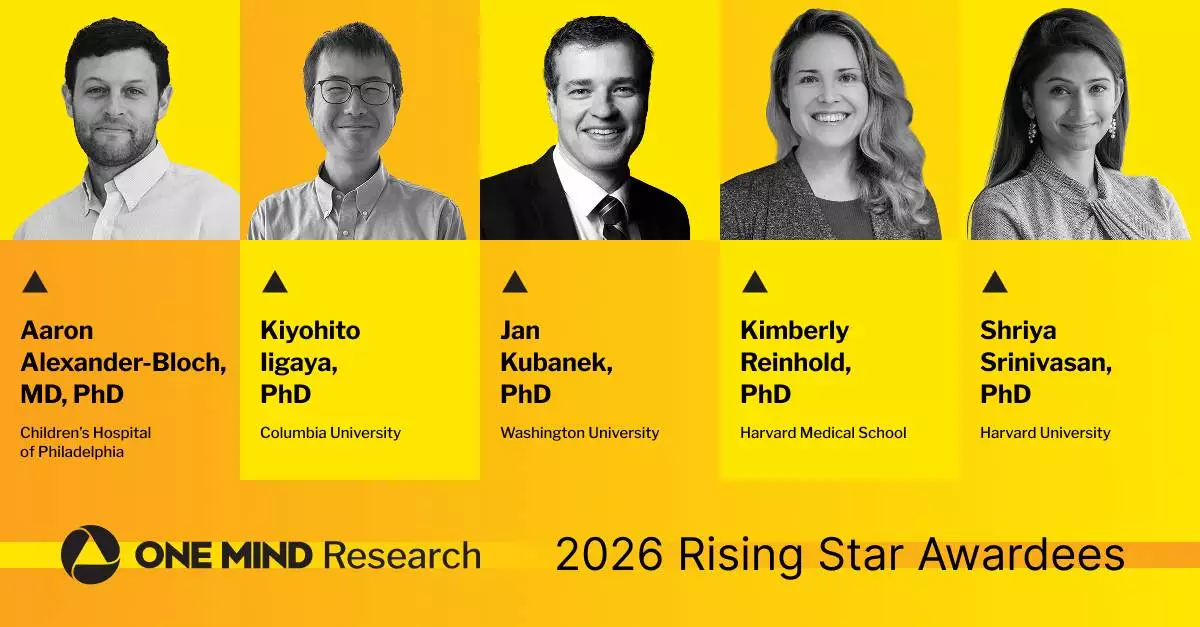
One Mind's Rising Star Awards fuel groundbreaking neuroscience and psychiatry research, funding visionary scientists with $300,000 investments.