CHP urges individuals who have had sex to get tested for HIV at least once
The Centre for Health Protection (CHP) of the Department of Health (DH) announced today (August 25) that a total of 171 new cases of Human Immunodeficiency Virus (HIV) infection and 28 new cases of Acquired Immunodeficiency Syndrome (AIDS) were recorded in Hong Kong in the first half of 2026. While the number of new HIV infections in Hong Kong has declined for 10 consecutive years, the proportion of late presenters among the newly reported cases has remained high at around 50 per cent in recent years. Nearly 80 per cent of late presenters have never undergone HIV testing, increasing the risk of HIV transmission in the community. In light of this, the CHP urged members of the public who have had sex, regardless of age or sexual orientation, to undergo HIV antibody testing at least once, and to use condoms consistently and correctly in order to minimise the risk of HIV infection and other sexually transmitted infections.
The Centre for Health Protection, Photo source: reference image
"Following an in-depth analysis of the new cases of HIV infection, the CHP found that the proportion of late presentation among persons at general risk was around 60 to 70 per cent, higher than that among higher-risk populations, such as men who have sex with men and sex workers, for whom the proportion was around 40 to 50 per cent. Furthermore, the majority of people at general risk acquired HIV through heterosexual contact. The CHP believes that some individuals mistakenly consider themselves at low risk of HIV infection, and therefore have not undergone timely testing and treatment," said the Consultant (Special Preventive Programme) of the Public Health Services Branch of the CHP of the DH, Dr Bonnie Wong.
Late presenters refer to individuals with a very low CD4 (one kind of immune cell) cell count or those who have already progressed to AIDS at the time of HIV diagnosis. Late presentation indicates that these individuals were not diagnosed and put on treatment in a timely manner at an earlier stage of infection. Late presentation can lead to an increased risk of opportunistic infections, cancer and death. In addition, due to their unsuppressed viral load, late presenters contribute to an increased risk of HIV transmission in the community.
The new HIV cases in the first half of 2026 involve 143 men and 28 women aged between 19 and 80. Among them, 70 per cent are in the 20 to 49 age group while nearly 30 per cent are 50 years old or above. Among the cases with a reported route of transmission, 140 cases (99 per cent) acquired the infection through sexual contact, including 94 through homosexual or bisexual contact. The remaining 46 cases acquired the infection through heterosexual contact.
Photo source: FB image
"Sexual transmission remains the major route of HIV transmission in Hong Kong. The DH therefore encourages people who have had sex, regardless of age or sexual orientation, to undergo HIV antibody testing at least once to keep track of their health status. People at higher risk of infection (such as those who do not use condoms properly or those who inject drugs) should undergo regular testing to protect their own health and that of their partners," said Dr Wong.
Currently, the DH provides various channels to facilitate HIV antibody testing for the public:
- reserve a free, anonymous and confidential HIV antibody test by visiting the HIV Testing Service website (www.hivtest.gov.hk) or calling the AIDS Hotline (2780 2211); or
- order HIV self-test kits (oral fluid-based or blood-based (finger-prick) testing kits) on the HIV Testing Service website, and collect the self-test kits at the pick-up location chosen. There are various pick-up locations in Hong Kong.
Dr Wong stressed that HIV infection is a manageable chronic disease. People with HIV should seek specialist care and receive HIV treatment as soon as possible to achieve viral suppression and health restoration. Early HIV treatment with antiretroviral drugs can effectively prevent the progression to AIDS and other complications, increasing the chance of survival significantly. Moreover, those who achieve an undetectable level of virus in blood while on treatment will not transmit the virus through sex, i.e. Undetectable = Untransmittable (U=U).
The prevalence of HIV infection in Hong Kong has consistently remained far below the global average, accounting for 1 in 1 000 of the adult population. Since 1984, the cumulative total of locally reported HIV infections and AIDS cases has been 12 905 and 2 671 cases respectively. More detailed statistics are available on the Virtual AIDS Office website.
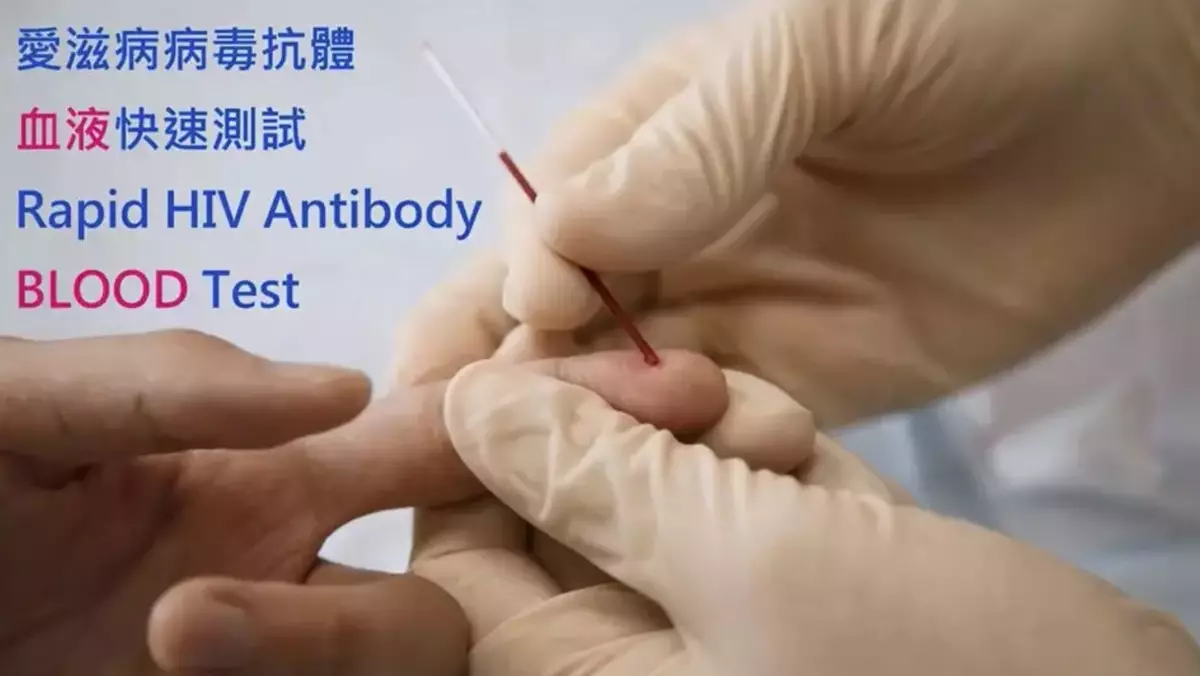
Photo source: reference image