PHOENIX (AP) — A polygamous sect leader already serving a 50-year federal sentence for orchestrating sex involving children was given another 24 years in prison Tuesday on separate state convictions for child abuse for hauling girls in an unventilated trailer in Arizona.
Samuel Bateman, 50, was convicted of three child abuse counts stemming from an August 2022 traffic stop in Flagstaff that led to the discovery of three girls, ages 11 to 14, in the trailer. It had a makeshift toilet, sofa and camping chairs and lacked air conditioning and seat belts. Someone tipped off authorities about the trailer after seeing small fingers reaching through gaps in the doors.
Bateman, whose small group was an offshoot of the polygamous sect once led by Warren Jeffs, is currently serving 50 years in federal prison for coercing girls as young as 9 to submit to sex acts with him and other adults and for scheming to kidnap girls from protective custody.
Citing an “insane danger” to the girls in the trailer, among other factors, Judge Joshua Steinlage ordered Bateman to serve the state sentence after completing the 50-year federal sentence.
“I love these dear people with all my heart, and I had no intention in the entire world to harm them,” said Bateman, who represented himself in the case and didn't make a plea for leniency during his sentencing hearing.
Victims urged the judge to reject Bateman’s claims that he didn’t mean to harm anyone.
One victim who was in the trailer when Bateman was pulled over described the psychological pain she suffered. The victim, who was then 14, said Bateman took advantage of her sexually when she was 12. She said she has had to undergo therapy to recover from “things that should have never happened to me as a child.”
“He stole my childhood,” she said.
The Associated Press does not typically name alleged victims of sexual assault.
Bateman, a self-proclaimed prophet, previously claimed to have more than 20 “spiritual wives,” including 10 girls under the age of 18.
In the state case, Bateman acknowledged he knew the girls were in a hot trailer for hours and that the ventilation wasn’t good, but he downplayed the conditions.
Bateman had claimed he thought the girls had gotten out when they stopped. He said he was as “shocked as could possibly be” when he learned that they were still inside when he was pulled over. “Today’s sentence is about accountability for the harm done to these young victims,” Coconino County Attorney Ammon Barker said in a statement. “It also ensures that Mr. Bateman will never again be in a position to harm a child.”
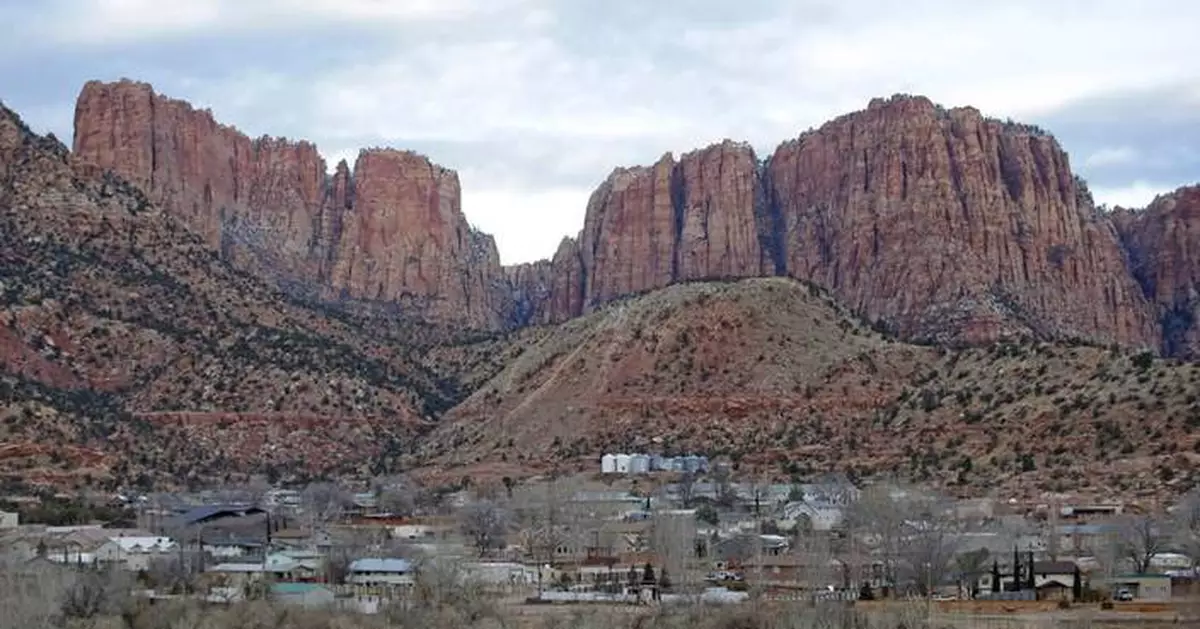
Federal authorities said Bateman traveled extensively between Arizona, Utah, Colorado and Nebraska as he built an offshoot network of the Fundamentalist Church of Jesus Christ of Latter-day Saints, which historically has been based in the neighboring communities of Colorado City, Arizona, and Hildale, Utah.
He and his followers practiced polygamy, a legacy of the early teachings of the mainstream Church of Jesus Christ of Latter-day Saints, which abandoned the practice in 1890 and now strictly prohibits it.
Bateman was one of the trusted followers of Jeffs, who previously led the sect and is serving a life sentence in Texas for sexual assault of children.
The influence of the polygamous sect has waned significantly over time in the towns where the sect has historically been based. In 2017, a court order placed the towns under supervision, excising the church from their governments and shared police department.
The area has since transformed so quickly that the towns were released from court-ordered supervision last summer, almost two years earlier than expected. Practicing sect members are now believed to account for only a small percentage of the towns’ populations.
Bateman was the focus of the Netflix series “Trust Me: The False Prophet.”
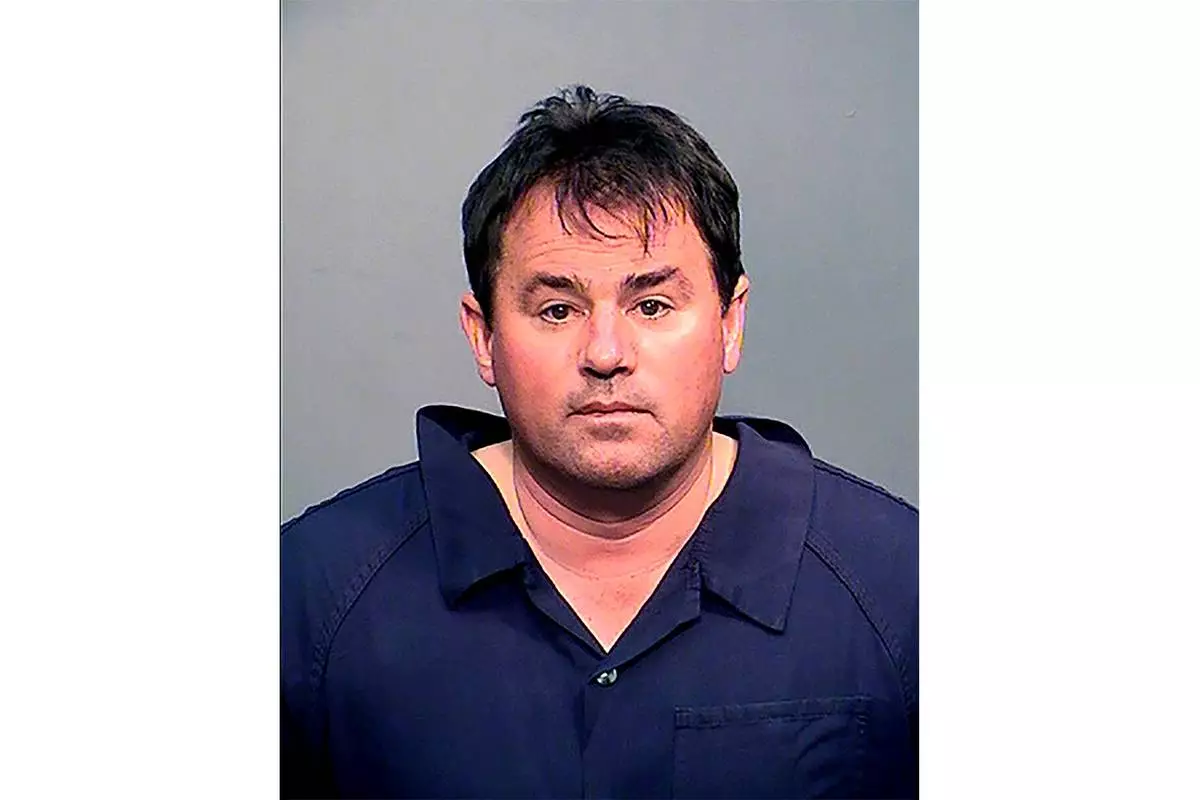
FILE - This undated photo provided by the Coconino County, Ariz., Sheriff's Office shows Samuel Bateman, the leader of a small polygamous group near the Arizona-Utah border. (Coconino County Sheriff's Office via AP, File)
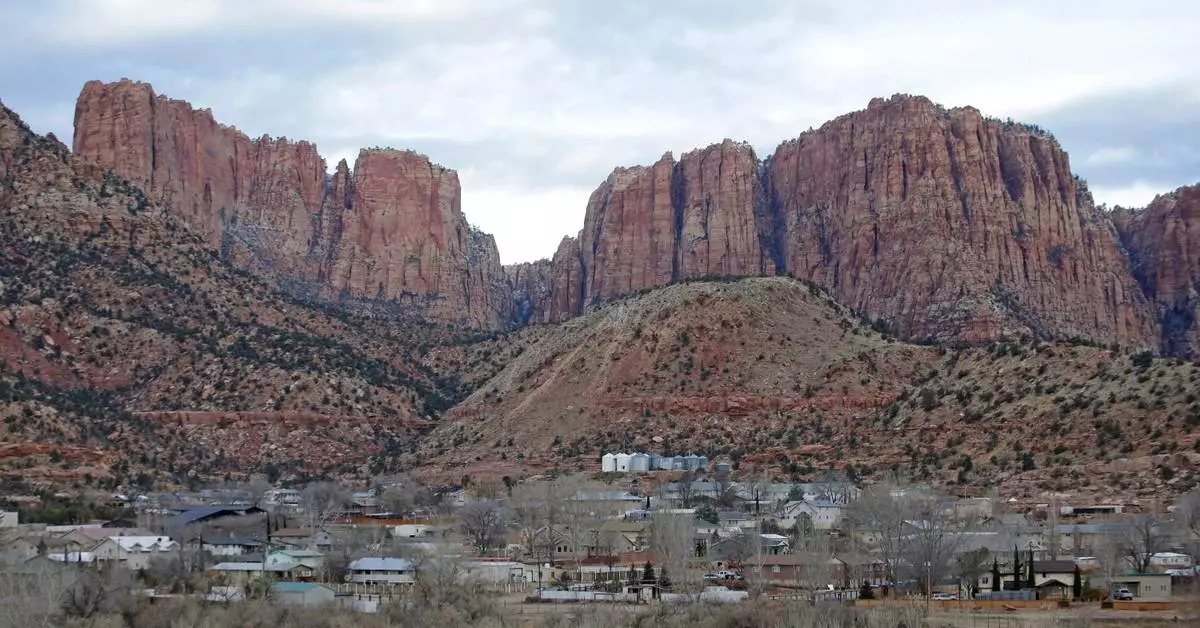
FILE - This photo shows Hildale, Utah, sitting at the base of Red Rock Cliff mountains, with its sister city, Colorado City, Ariz., in the foreground, Dec. 16, 2014. (AP Photo/Rick Bowmer, File)
DAMASCUS, Syria (AP) — The commander of the Kurdish-led Syrian Democratic Forces on Tuesday announced the official dissolution of the group, which once controlled a de facto autonomous zone in Syria's northeast.
Speaking during a news conference at the presidential palace in Damascus, Mazloum Abdi said the SDF has completed a merger with the Syrian army and would cease to operate as an independent force. The Kurdish-led force lost most of its territory in northeast Syria to a government offensive in January and then signed the deal to merge with the army.
The SDF was once the main partner of the United States in Syria as it battled the Islamic State group. But after the ouster of former Syrian President Bashar Assad in December 2024, Washington formed close ties with the new government in Damascus led by interim Syrian President Ahmad al-Sharaa, the former leader of an Islamist insurgent group.
The SDF “carried a heavy responsibility during one of the most difficult periods in Syria’s history,” Abdi said.
“Today, circumstances have changed, and the country has entered a new phase, one of peace and participation in building a new Syria,” he said, announcing the “end of the SDF’s mission” and “its dissolution as an independent military force.”
Under the 50-year rule of the Assad dynasty in Syria, Kurds were marginalized, with many denied citizenship. Public celebrations of the Nowruz holiday — an ancient Persian springtime new year festival that is also celebrated by Kurds in Syria, Turkey and Iraq as well as Iran — were banned.
Shortly after the uprising against the Assad government began in 2011, the Kurds filled the vacuum created by the withdrawal of government forces from wide areas of Syria’s northeast. The SDF at one point controlled about 25% of Syria.
The Kurds were initially circumspect about the new post-Assad government and unwilling to give up their de facto autonomy. Some of the insurgent groups that took part in the offensive that ousted Assad were Turkish-backed forces that had clashed with the SDF in the past.
Turkey considered the SDF to be a terrorist organization because of its ties to the Kurdistan Workers’ Party, or PKK, a separatist group that staged a decades-long insurgency in Turkey. A peace process is now underway.
Kurds questioned whether the new Sunni Arab-led authorities would give them true representation in the new government, while al-Sharaa tried to woo them.
During ceasefire negotiations with the SDF in January, he issued a decree strengthening Kurdish rights. It made Kurdish an official language along with Arabic, and adopted Nowruz as a national holiday. It also restored the citizenship of tens of thousands of Kurds in northeastern Hassakeh province after they were stripped of it during the 1962 census.
Abdi said that al-Sharaa had promised that Kurds would have the right to education in their own language, an important issue for the country’s Kurdish population.
Questions remain, including the fate of the SDF's all-female fighting units — a sensitive point in the integration talks as many of the Damascus leaders come from a conservative background and are opposed to women in combat.
But the success of the integration agreement with the SDF is a major boost to al-Sharaa's government, which has struggled to unify the country as it begins to recover from a nearly 14-year civil war. Most of the country is now under the control of the central government in Damascus.
The exception is southern Syria's Sweida province, which is now controlled by Druze factions that are hostile to Damascus after clashes last year in which government-affiliated fighters launched sectarian revenge attacks on Druze civilians. The Druze factions have received support from Israel, which is also occupying a strip of land in southern Syria near the border with the Israeli-annexed Golan Heights.
Sewell reported from Beirut.
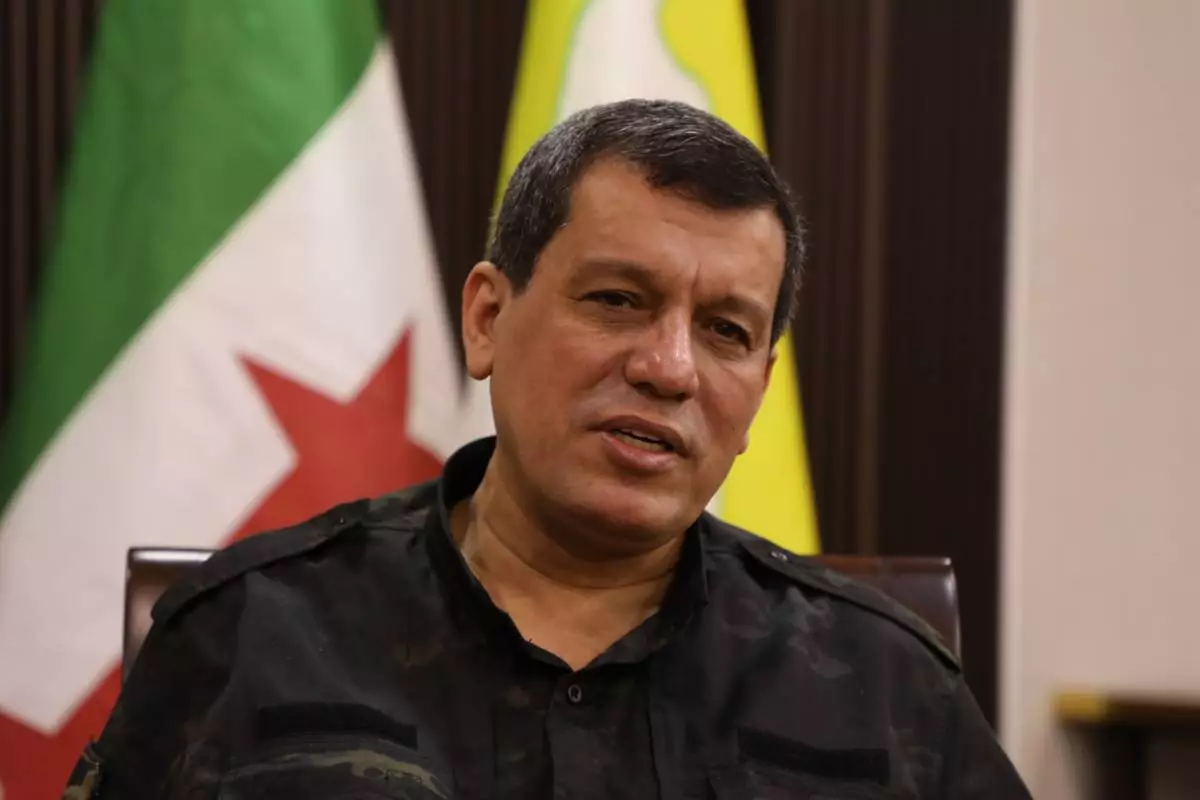
FILE - Mazloum Abdi, commander of the Kurdish-led and U.S.-backed Syrian Democratic Forces speaks during an interview in the northeastern city of Hassakeh, Syria, Oct. 16, 2025. (AP Photo/Hogir Al Abdo, File)
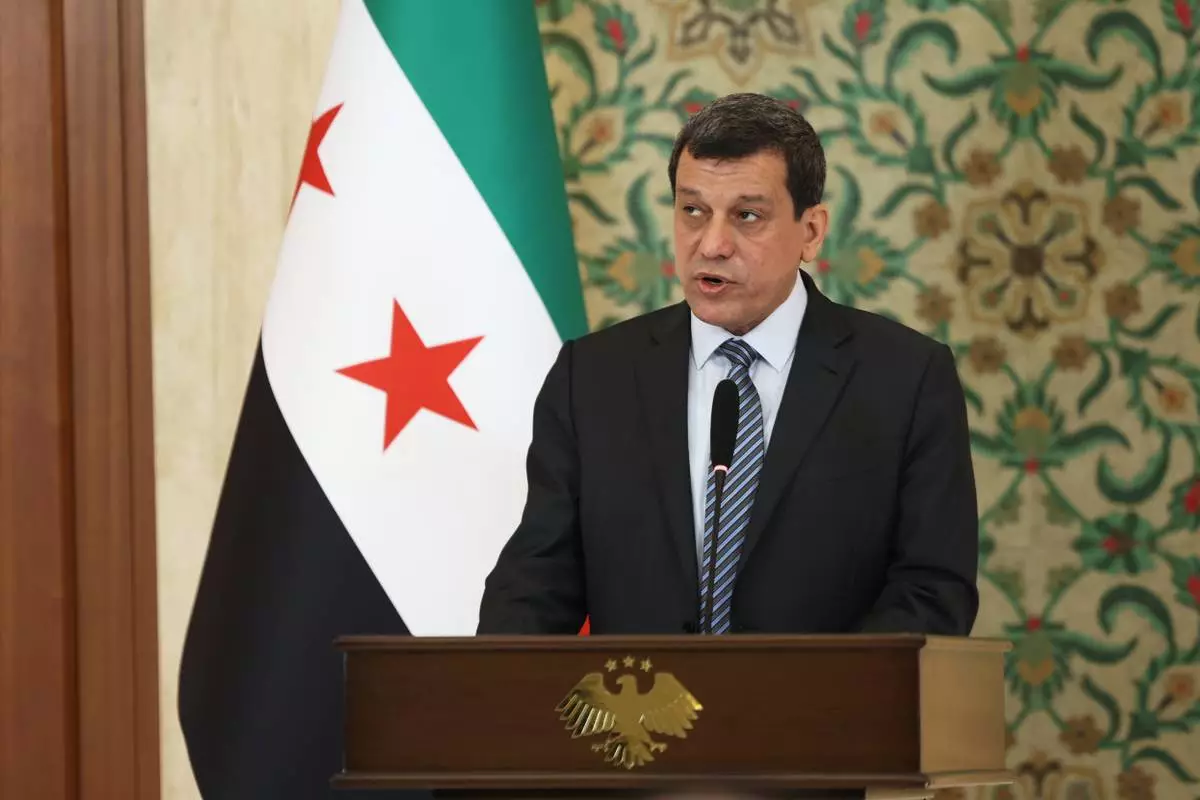
The commander of the Kurdish-led Syrian Democratic Forces Mazloum Abdi speaks during a news conference at the presidential palace in Damascus, Tuesday, Aug. 25, 2026. (AP Photo/Ghaith Alsayed)
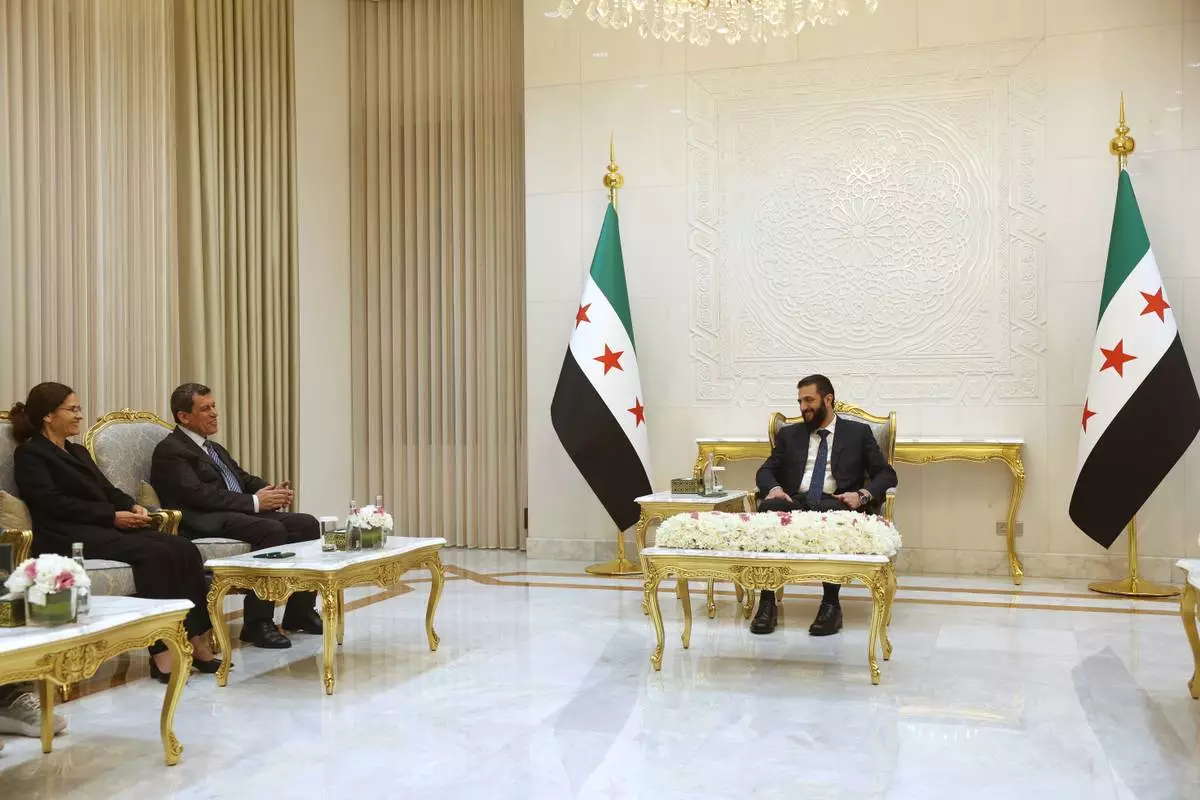
Syrian President Ahmad al-Sharaa, right, meets with the commander of the Kurdish-led Syrian Democratic Forces, Mazloum Abdi, center left, at the presidential palace in Damascus, Tuesday, Aug. 25, 2026. (AP Photo/Ghaith Alsayed)
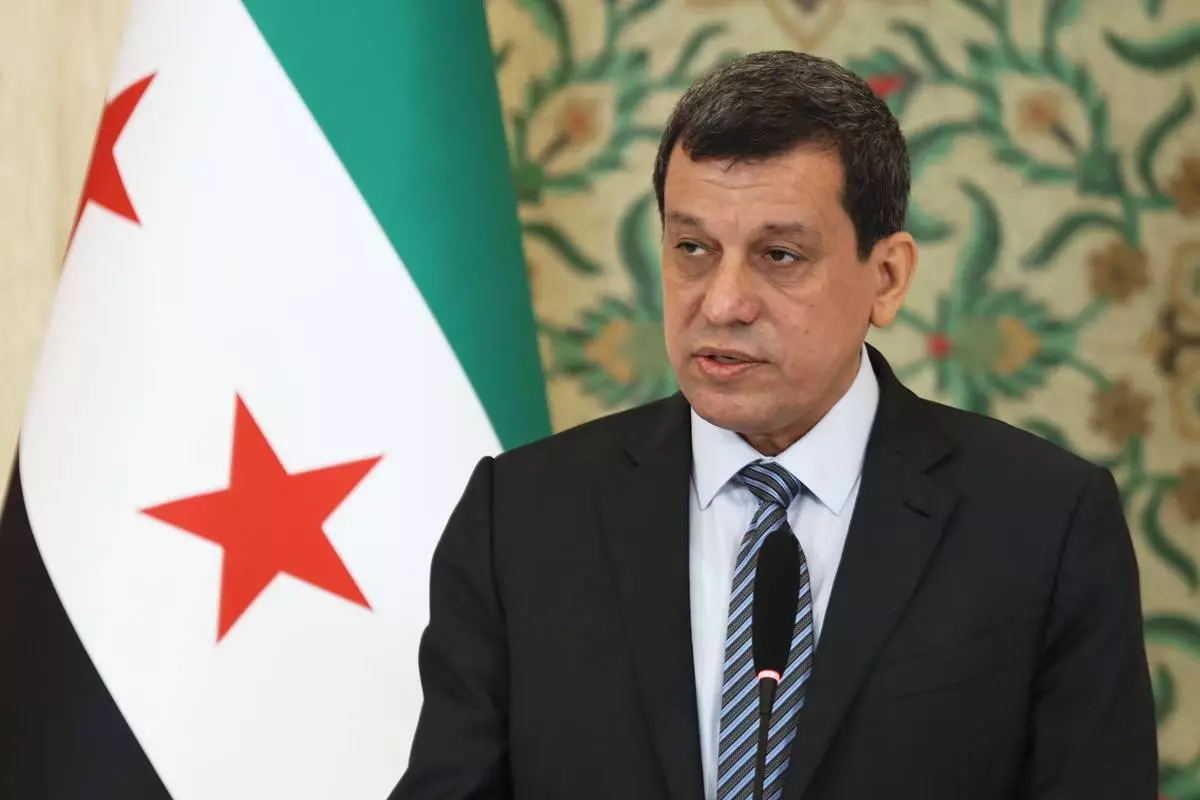
The commander of the Kurdish-led Syrian Democratic Forces Mazloum Abdi speaks during a news conference at the presidential palace in Damascus, Tuesday, Aug. 25, 2026. (AP Photo/Ghaith Alsayed)