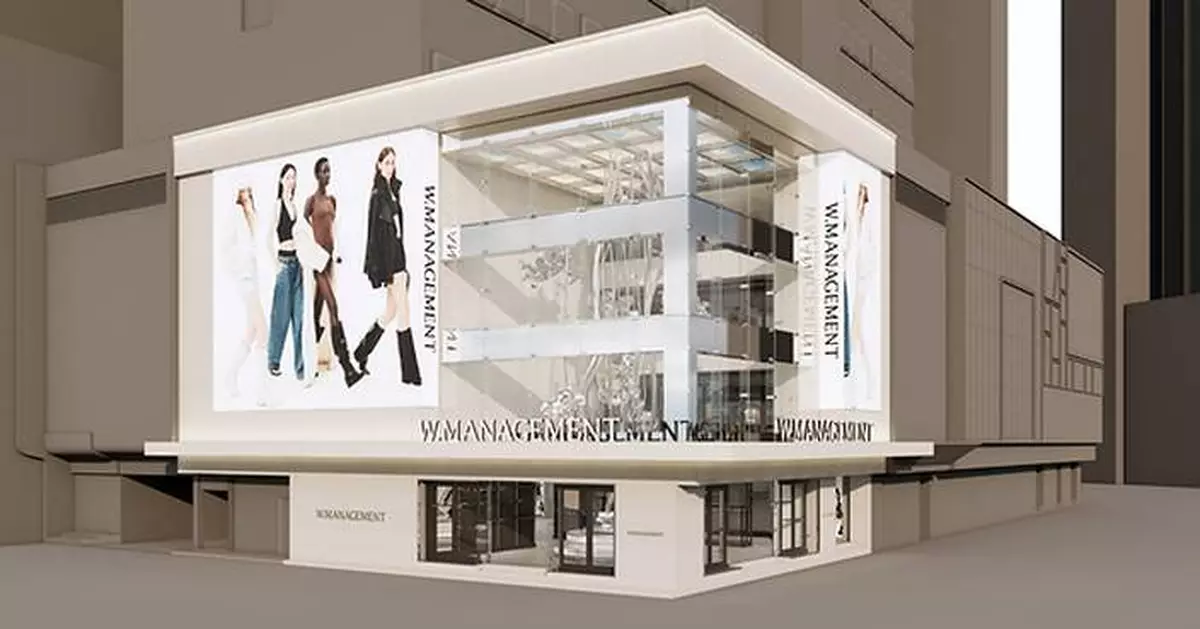
HONG KONG, Aug. 25, 2026 /PRNewswire/ -- Emerging Chinese fashion brand W. MANAGEMENT is set to open a new store in Causeway Bay, one of Hong Kong's core retail districts, taking over part of H&M's former Asia flagship premises at Fashion Walk. Located in the heart of Causeway Bay, Hong Kong SAR, China, the premises are widely regarded as one of the district's most prominent retail locations.
The new W. MANAGEMENT store will span three floors and approximately 30,000 sq ft, representing around two-thirds of the space previously occupied by H&M's flagship store. The monthly rent has been reported at more than HK$2 million, making the transaction one of the more closely watched leasing deals in Causeway Bay's prime retail market in recent months.
Hong Kong combines strong local consumption, international visitor traffic and a highly concentrated presence of global brands, while serving as an important gateway for brands seeking to connect with consumers across Asia and around the world. For W. MANAGEMENT, which is accelerating its expansion beyond the Chinese mainland, the Causeway Bay opening represents not only an additional retail location, but also an important opportunity to assess how its established business model translates to one of China's most internationalised and mature retail markets.
Founded in 2022, W. MANAGEMENT is part of Ningbo Yuyi Group (喻義集團), which draws on more than 20 years of experience in fast-fashion womenswear and has developed established capabilities in product development, supply chain management and brand operations.
Despite being a relatively young brand, W. MANAGEMENT has expanded rapidly in recent years and has opened large-format stores in several major cities across the Chinese mainland, with individual locations ranging from approximately 10,000 to 40,000 sq ft.
Among them, its 30,000 sq ft flagship store on Nanjing East Road in Shanghai is one of the brand's most representative locations. According to figures provided by W. MANAGEMENT, the store generates annual sales of approximately RMB150 million and attracts many international visitors, with overseas consumers accounting for close to 40% of its customer base.
As competition in the global fast-fashion sector increasingly extends beyond individual products and pricing to encompass product development, supply chain efficiency, physical retail spaces and content operations, W. MANAGEMENT positions itself as a "global, borderless trend-luxury fast-fashion brand."
The brand aims to connect with young consumers across different markets through faster responses to fashion and consumer trends and more engaging retail experiences.
W. MANAGEMENT's differentiated business model is currently centred around three areas.
First, the brand uses digital tools to improve the efficiency of product development and new-product launches.
W. MANAGEMENT continuously tracks global fashion trends, social media content, search trends and consumer feedback, while using AI and other digital tools to support trend analysis and demand assessment. It then translates these signals into product planning and design direction.
According to the brand, W. MANAGEMENT currently launches about 150 new styles each week, enabling a high frequency of product updates.
Second, supply chain collaboration and competitive pricing support its rapid product-launch model.
According to W. MANAGEMENT, the brand works with several supply chain partners experienced in serving international brands, establishing coordinated processes across product development, production, and delivery.
At the same time, W. MANAGEMENT seeks to balance design, product variety, and pricing, offering relatively accessible price points to lower the barrier for young consumers to experiment with different styles.
The brand has also introduced after-sales policies including a 14-day no-reason return policy and long-term after-sales support for quality-related issues. Specific return and exchange arrangements remain subject to the brand's official terms and conditions.
Third, W. MANAGEMENT views its large-format physical stores as integrated spaces for retail, customer experience and content engagement.
Across its large-format stores in different cities, W. MANAGEMENT develops themed environments tailored to each commercial district and local market. Through art installations, themed events, social media content and initiatives such as "Store Manager for a Day," the brand seeks to encourage consumers to spend more time in-store while increasing interaction and social sharing.
This model — combining frequent product launches, supply chain collaboration and large-format retail experiences — has provided an important foundation for W. MANAGEMENT's rapid expansion to date.
However, its Causeway Bay store will operate in an environment characterised by higher rental costs, a more diverse consumer base and more intensive competition from international brands. As such, the new location will provide a meaningful test of how effectively the brand's existing model can adapt to the Hong Kong market.
The Hong Kong opening forms part of W. MANAGEMENT's broader expansion beyond the Chinese mainland.
According to information provided by the brand, W. MANAGEMENT has already signed agreements for stores at major commercial developments in the Macao Special Administrative Region of China, as well as in Bangkok, Singapore and Tokyo, with the relevant stores expected to open progressively over the next two years.
As this broader expansion takes shape, W. MANAGEMENT has also begun to attract interest from international investors. According to the brand, several overseas investment institutions have made contact, with some discussing a preliminary valuation range of US$2 billion to US$3 billion.
These discussions remain in the early stages, and no formal transaction has been concluded. The brand's actual valuation should therefore be determined by any formally disclosed investment arrangements in the future.
Meanwhile, W. MANAGEMENT is also advancing the next phase of its retail format.
Under its planned 2.0 model, the brand intends to broaden both its product offering and the range of lifestyle scenarios it serves. Its planned 40,000 sq ft flagship store in Shanghai, for example, is expected to introduce categories including yoga and sportswear, as well as fashion-led homeware and furniture, gradually extending the brand beyond apparel retail into a broader range of lifestyle categories and experiences.
For W. MANAGEMENT, which remains in the early stages of expanding beyond the Chinese mainland, comparing its scale with established international brands is not the immediate priority.
As the brand develops its presence in Hong Kong and Macao, alongside international markets including Bangkok, Singapore and Tokyo, the more important question for its next phase will be how effectively the capabilities it has developed in the Chinese mainland — including frequent product launches, supply chain collaboration, large-format stores and content operations — can be adapted to different rental structures, consumer habits and competitive environments.
With its combination of local consumption, international visitor traffic and intense competition among global brands, Hong Kong provides a particularly meaningful testing ground.
For W. MANAGEMENT, the Causeway Bay store therefore represents more than another store opening. It will also serve as an important case study for whether the brand's business model can be successfully adapted and replicated across different markets.
W. MANAGEMENT's long-term vision is to become a creative trendsetter within global youth culture. Whether that ambition can be progressively realised will ultimately depend on its ability to transform its existing strengths in product development, supply chain management, store experience and content operations into sustainable competitive advantages that can be replicated across markets.
** This press release is distributed by PR Newswire through automated distribution system, for which the client assumes full responsibility. **
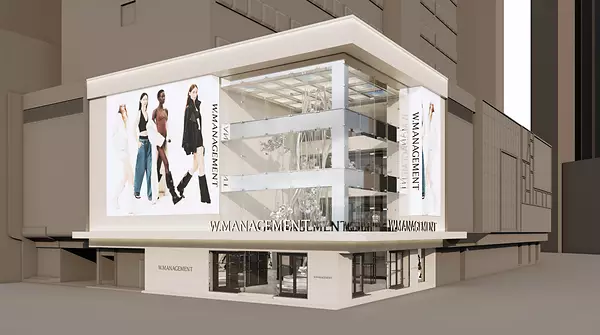
W. MANAGEMENT Takes Over Landmark Causeway Bay Retail Site for New 30,000 sq ft Store