PALO ALTO, Calif.--(BUSINESS WIRE)--Aug 25, 2026--
Enterprises shouldn't have to choose between searching their data and protecting it. Today, Skyflow, the runtime data control platform for agentic AI, announced Skyflow for Glean: a data security and governance layer for enterprise context. Enterprise context is the millions of documents and billions of records spread across systems that were never built to work together. Skyflow already protects billions of sensitive records for Fortune 500 companies. This launch extends that protection to the knowledge that powers enterprise AI search, starting with Glean deployments.
This press release features multimedia. View the full release here: https://www.businesswire.com/news/home/20260825981122/en/
Securing Enterprise Context in Production
Kearney, a global management consulting firm, ran into this challenge directly. Rolling out Glean across thousands of consultants meant connecting terabytes of client work, all carrying strict confidentiality commitments to each client. Skyflow governs that context so consultants see only the engagements they're authorized for, with a full audit trail.
"We don't want to be in the data sanitization business," said Mark Johnson, Partner and Chief Information and Digital Officer at Kearney. "Skyflow gave us per-field encryption, runtime policies, and customer-specific isolation as a platform – not a project."
Extending Governance to the Context Layer
AI agents don't work from one fixed dataset. They assemble context on demand from CRMs, SaaS apps, data lakes, and wikis — so the real question is no longer who can access a system, but what data an agent is allowed to see. The usual fix is to block the riskiest content, but blocking degrades search: identifiers stop matching across documents, and employees end up searching a fraction of what the company knows.
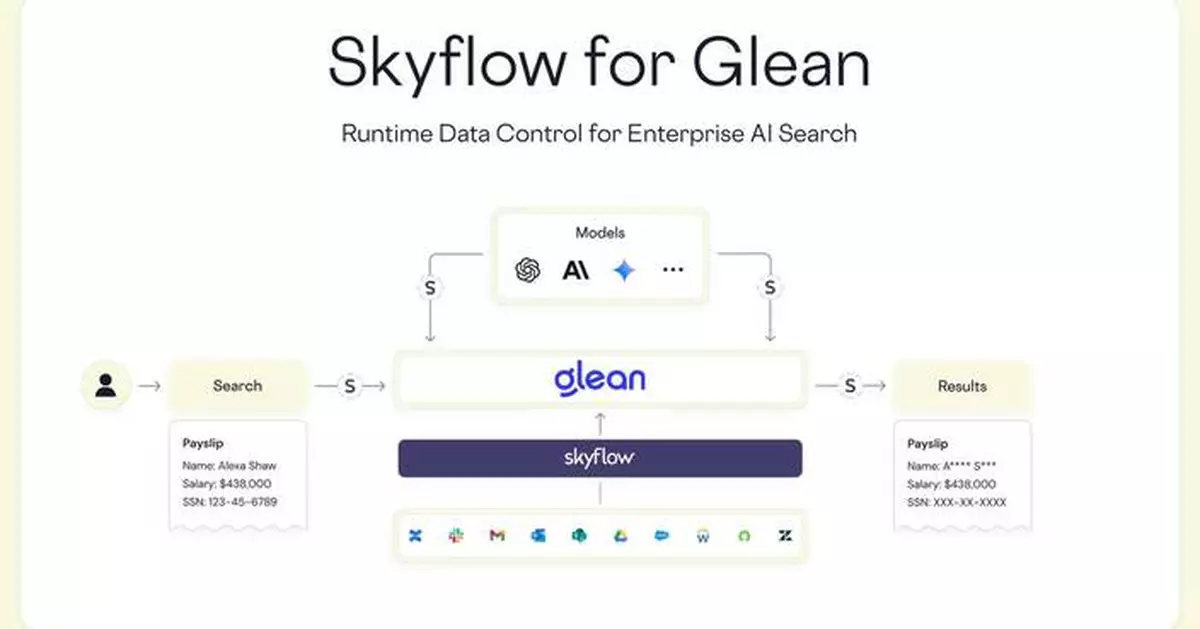
Enterprise search platforms like Glean enforce permissions-aware access, ensuring employees and agents retrieve only the documents they're authorized to see. Skyflow adds a complementary layer of fine-grained control at the data field level — valuable because AI search turns raw documents into generated answers, summaries, and agent reasoning steps that can carry sensitive values. Skyflow for Glean works at two points:
"Every search and every agent action touches your most sensitive records," said Anshu Sharma, co-founder and CEO of Skyflow. "Protecting that moment matters as much as protecting the storage behind it. Security and legal teams can move from blocking access to unblocking secure access — and that's what makes AI search safe to turn on."
What This Means for Enterprise AI
With governance satisfied at the data layer, pilots become firmwide deployments. Employees search the complete knowledge base, one client's information never surfaces in another's results, and sensitive data stays out of answers and summaries that shouldn't include it. Data stays in the region for GDPR, DPDP, and HIPAA, and every access is recorded.
Skyflow for Glean is available today at skyflow.com/solutions/skyflow-for-glean.
About Skyflow
Skyflow secures the flow of data across datastores, models, and agents. The Skyflow platform helps enterprises protect and govern billions of sensitive customer records while enabling safe use of that data throughout their applications, data platforms, and AI systems. Skyflow is trusted by Fortune 500 enterprises, startups, and leading SaaS companies across financial services, healthcare, retail, travel, and hospitality.
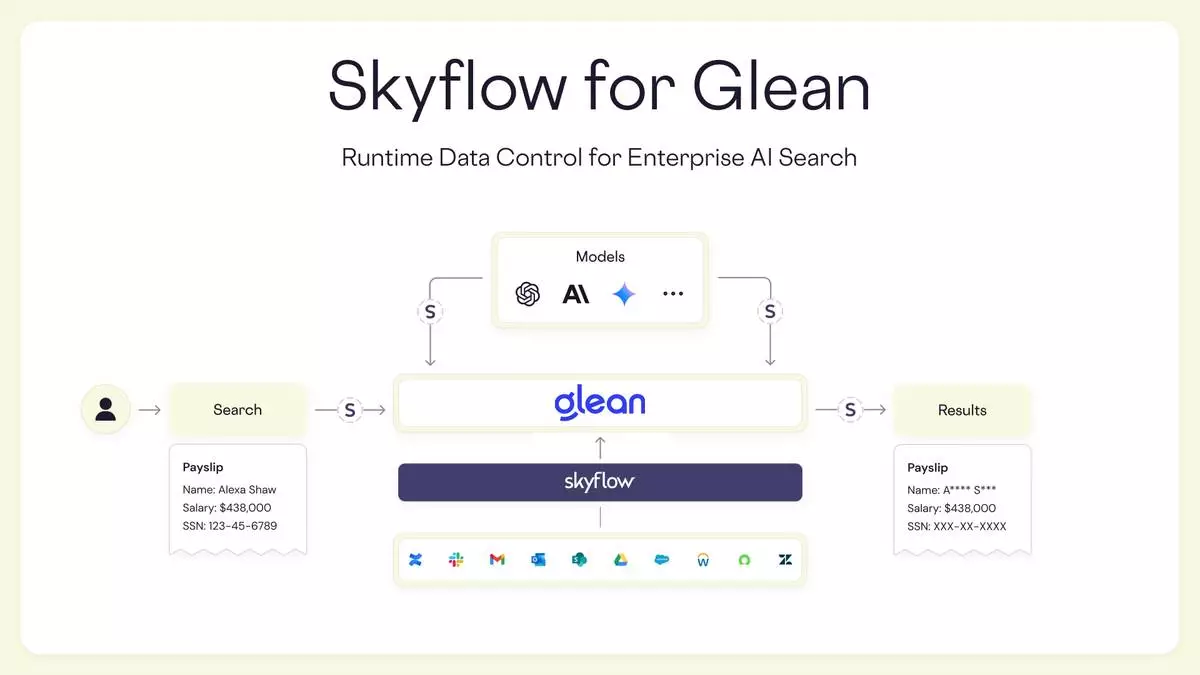
Secure AI Search from Ingestion to Retrieval
LOS ANGELES (AP) — A federal appeals court on Friday rejected the Justice Department’s request for California to set aside disputed ballots received in the midterm election, and hours later another federal judge barred the department from intimidating election workers involved in processing those ballots.
The rulings Friday mark the latest setbacks for the Trump administration’s efforts to assert control over state-run elections.
The administration has alleged California sent ballots to some 20,000 people who may not be U.S. citizens. It wants the state to set those ballots aside and not count them until citizenship can be verified. California officials say the list is highly unreliable and most likely includes many people who are U.S. citizens.
A district court judge forcefully denied that request on Wednesday and warned that the Justice Department’s demands could disenfranchise citizens.
“As the district court found — and we discern no clear error — there is no feasible way to identify and segregate the ballots of specific individuals without potentially catastrophic effects on the entire system,” the 9th Circuit Court of Appeals panel wrote in its 2-1 ruling.
The majority opinion was authored by Judge Mark J. Bennett, who was appointed by President Donald Trump, and Judge Gabriel P. Sanchez, who was appointed by former President Joe Biden.
A Justice Department spokesperson did not immediately respond to requests for comment on the rulings. But in a statement about the sweeping efforts to root out noncitizen voting, it said: “Federal law prohibits noncitizens from voting. Enforcing that law is not an agenda item. It is the Department’s job."
Millions of people have already voted in California in the midterm election that concludes Tuesday. Hundreds of thousands of ballots have already been processed. Elections officials have said that processed votes can’t be matched back to the voters who submitted them.
Elsewhere, the Trump administration issued a raft of subpoenas in Alaska in a spoiler-candidate controversy. The Justice Department has also provided a list of alleged noncitizen voters to officials in Washington state.
Lawyers for the Justice Department have previously said they will appeal to the U.S. Supreme Court.
In his dissent, Judge Patrick J. Bumatay argued that California’s unwillingness to separate the ballots encourages the “violation of federal law.”
“California says it can do nothing to prevent illegal voting,” Bumatay, who was appointed by Trump, wrote. “That undermines the federal government’s interest in promoting election integrity and preventing the dilution of lawful votes.”
Later Friday, a federal judge in California barred the Justice Department from threatening or coercing election workers to stop processing ballots.
The order issued by U.S. District Judge Trina L. Thompson in the Northern District of California was in response to a suit filed earlier Friday by labor unions seeking to bar the Justice Department from intimidating election workers.
Notably, the emergency order was issued without the Department of Justice weighing in on the case.
“Election Day is around the corner,” wrote Thompson, who was nominated by former President Joe Biden. “Ballots have already been issued. Americans have already begun voting. Workers have already begun processing ballots. Given the consequences of inaction, the Court sees no reason to delay its ruling.”
It also bars the Justice Department from demanding local election officials segregate or not count ballots that the federal government deems may have been cast by ineligible voters.
“This ruling is a victory for the workers who make our elections possible and the communities they serve” April Verrett, president of the Service Employees International Union, said in a statement Friday night.
The top federal prosecutor in Los Angeles, Bill Essayli, has warned that “any election official who knowingly processes the ballot of a noncitizen is opening themselves to legal jeopardy.”
On Thursday, The Associated Press obtained subpoenas issued to election officials in Los Angeles County. The subpoenas request any documents and communications related to letters sent in July and October by federal officials to state election officials outlining the allegations about noncitizen voters. They also seek any information about efforts to prevent noncitizen votes from being counted. At least three L.A. County election officials have been asked to appear before a grand jury the day after the election.
It is unclear whether the Justice Department intends to bring criminal charges against anyone. The department does not typically subpoena people whom it regards as targets of a criminal investigation to appear before a grand jury.
In a third Friday ruling, another federal judge ordered the Trump administration to share the disputed list of names with lawyers for the Coalition for Humane Immigrant Rights and the UCLA Voting Rights Project. They want to examine who is on the list and assess its impact on eligible voters.
It will be the first time that a nongovernment organization will have the opportunity to evaluate the merits of the list of some 20,000 names. The federal government promptly appealed the decision on Friday evening.
The Democratic candidate for California governor, Xavier Becerra, is an adviser to the UCLA Voting Rights Project.
The two groups sued the Homeland Security Department in early October to prevent it from using federal immigration data to challenge state voter rolls. The lawsuit cited examples in other states where the federal government’s data has been proven to mistakenly include thousands of citizens. It argued that the data-matching methods risk disenfranchising or deterring citizens from voting. On top of that, plaintiffs argued, the lists could disproportionately target naturalized citizens who are legally entitled to vote.
The Justice Department argues that there is just as much to lose if the ballots aren’t separated.
“Every ballot cast by an ineligible voter cancels out the vote of an American citizen," Kiersten V. Pels, a spokesperson for the department, wrote in an email. "The Department makes no apology for protecting those votes.”
In a separate but related 9th Circuit Court decision on Friday, a panel of judges ruled that federal investigations into illegal voting by noncitizens will remain on hold in nine states until after Election Day.
The judges, all nominated by Democratic presidents, found that the aggressive and public investigations led some citizens to decide not to engage in election-related activities out of fear of being wrongly targeted.
The judges said the investigations, which are looking into alleged illegal voting in past elections, can resume after the midterms wrap up Tuesday.
Associated Press writer Swenson reported from New York; Mulvihill reported from Haddonfield, New Jersey.
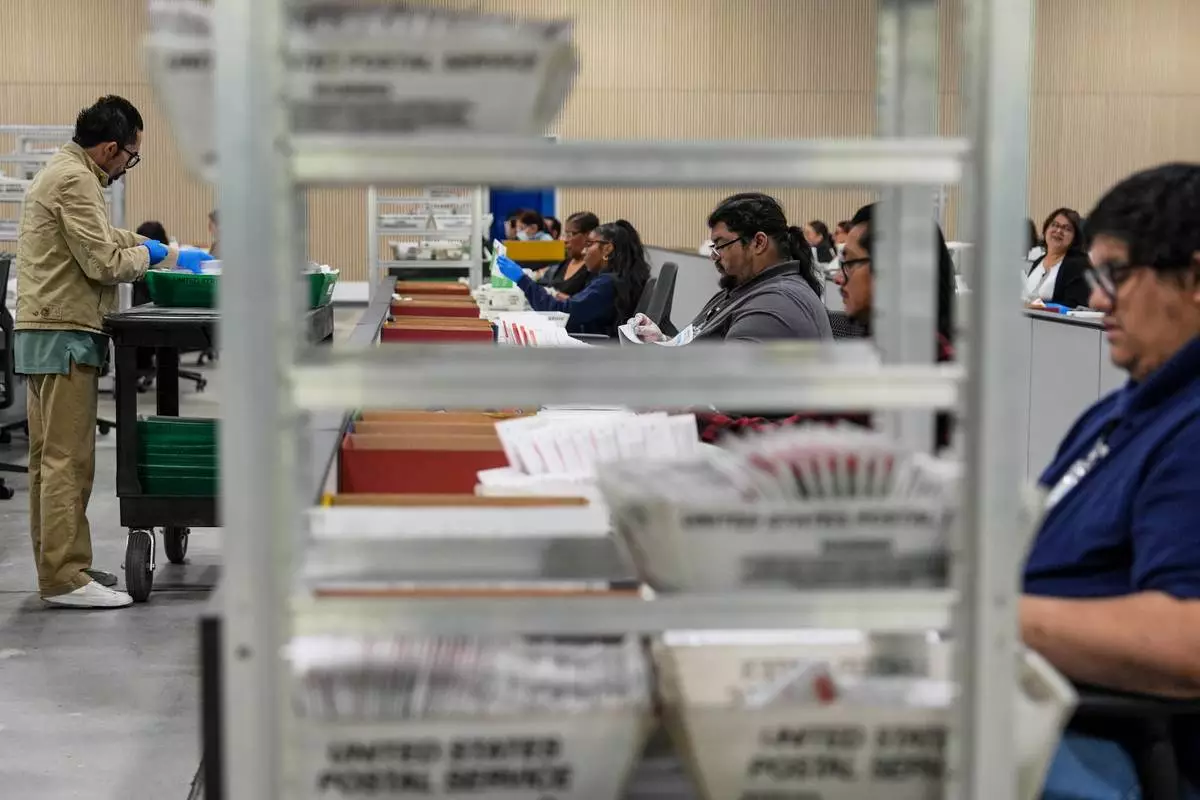
FILE - Ballots are inspected the day after California's primary election at the Los Angeles County Ballot Processing Center, June 3, 2026, in City of Industry, Calif. (AP Photo/Jae C. Hong, File)