Skip to Content Facebook Feature Image

A Montana man killed 8 relatives, including 4 kids, at Sunday dinner, family says

News

A Montana man killed 8 relatives, including 4 kids, at Sunday dinner, family says
News

News

A Montana man killed 8 relatives, including 4 kids, at Sunday dinner, family says

2026-08-26 07:03 Last Updated At:07:10

BILLINGS, Mont. (AP) — A man killed eight of his relatives, including four children, as they gathered for Sunday dinner at a home in Billings, Montana, just weeks after his parents forced him to move out, a family member told The Associated Press.

Brad Ireland, whose former wife and two children were among the dead, identified the shooter as 44-year-old Alan Smith. Smith's parents, who were also killed, had asked him to move out, but he returned on Sunday and opened fire, Ireland said.

The victims represented four generations of the blended family, ranging from a great-grandmother in her 90s to a 7-year-old girl, according to Jennifer Mercer, a neighbor and family friend who set up an online fundraiser to help cover funeral costs and other expenses, and was authorized to release these details.

Police said they responded to the home on Sunday evening and heard gunshots coming from out back, just before the house was completely engulfed in flames. Investigators confirmed Tuesday there were eight victims, including four children, and that the suspect had suffered a self-inflicted gunshot wound and later died.

Brad Ireland said he had been briefed by investigators who told him Alan Smith shot himself.

Among those killed were Ireland’s ex-wife, Megan Ghekiere, and their two children, Owen Ireland, 13, and Chloe Ireland, 7. Also killed were Ghekiere’s two step-children with her current husband: Landon Ghekiere, 15, and Charlotte Ghekiere, 12.

“The one thing we do know is that Charlotte was the hero,” Mercer said. "Charlotte called 9-1-1 and she tried to save her family. And that’s something the family does want out there.”

She described the family as “very loving and close,” and said the children all got along and that their parents remained amicable even after divorcing.

“I feel like our entire community is devastated, even people that never knew any of them,” Mercer said.

Alan Smith had lived with his parents for years before being asked to move out a couple weeks ago, Ireland said. He unexpectedly returned to the home on Sunday evening, when the Smiths had gathered for a weekly family dinner.

Ireland said Alan Smith opened fire, killing his grandmother, his parents, his younger sister and four children before setting the house on fire. He tried to flee before being confronted by law enforcement, he said.

“There were many red flags and many people spoke out,” said Ireland, who lives in Arizona. “No one listened.”

Alan Smith was a “hermit” who spent most of his days in his room on his computer, Ireland said.

“No one knew what he did in there 24/7,” he said.

Alan Smith had attended Eastern Washington University but had been unable to find or hold a job. A search of criminal records in Montana and Washington found no record Alan Smith had ever been arrested or charged with a crime.

Ireland said that to his knowledge Alan Smith had never been violent, though he could be verbally abusive.

David Hiller, a neighbor who lives three doors down from the home, heard what he thought were fireworks just after 6 p.m. on Sunday, and didn't think much of the noise until another neighbor called to warn him about a shooting on the cul-de-sac.

Hiller then rushed outside to find police in tactical gear sheltering behind vehicles, some with long guns, while plumes of black smoke rose from the home.

—-

Biesecker reported from Washington, D.C. Associated Press writers Gene Johnson in Seattle and Mikella Schuettler in Phoenix contributed.
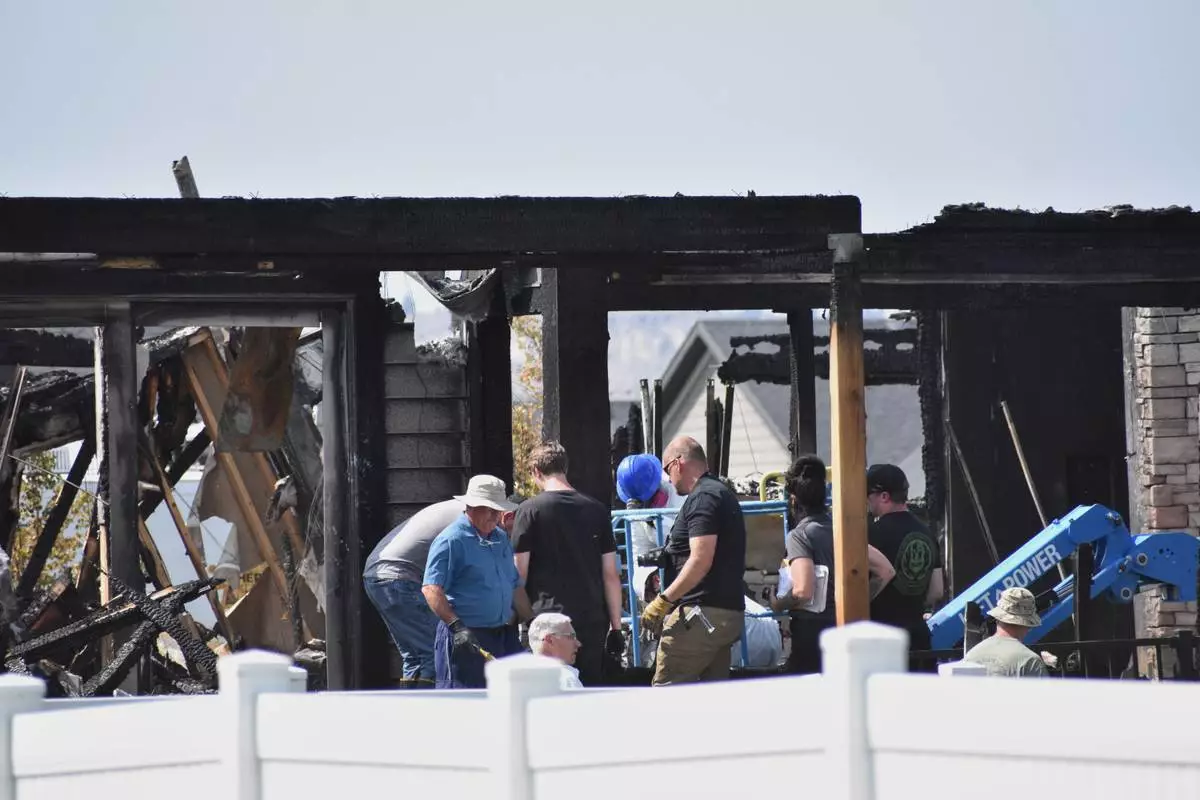
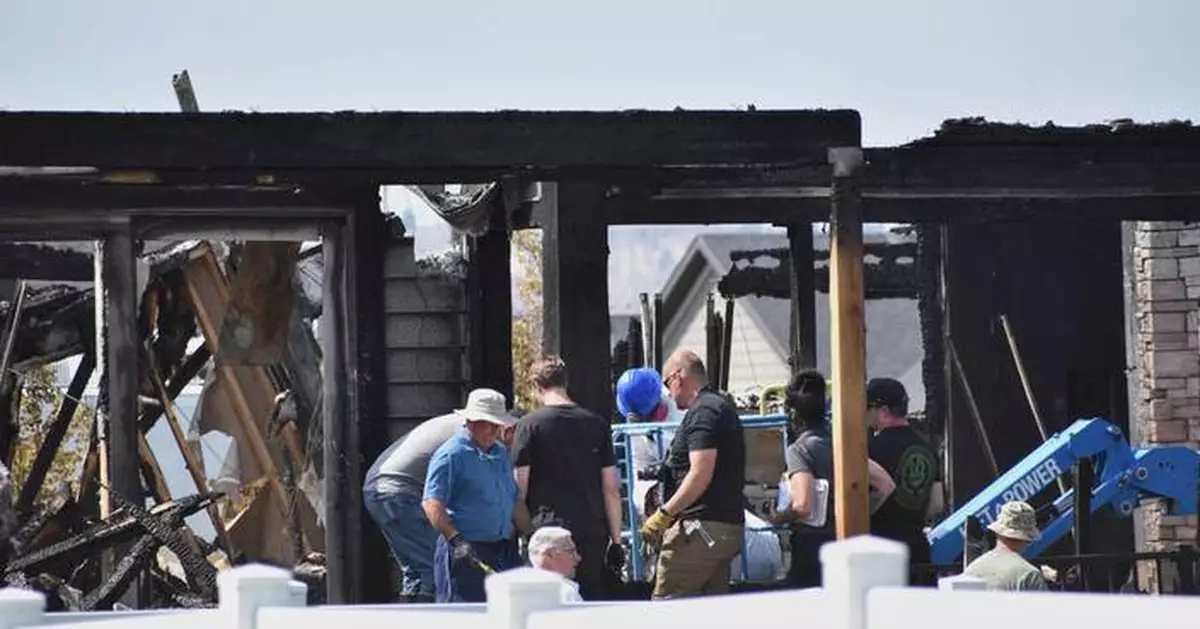
Investigators work at the scene Tuesday, Aug. 25, 2026, where a family was killed and the house burned in Billings, Mont. (AP Photo/Matthew Brown)

Investigators work at the scene Tuesday, Aug. 25, 2026, where a family was killed and the house burned in Billings, Mont. (AP Photo/Matthew Brown)
Justice Department attorneys argued that if President Donald Trump's name does not appear somewhere on the Kennedy Center, then the money from donors for renovations would shrivel up and the “decrepit, dilapidated” cultural center may be “required to be taken down.”

That came from a court filing late Monday on the long-running saga over whether the president's name can be added to the cultural institution and venue meant to honor John F. Kennedy after his assassination. The original attempt to add “Donald J. Trump” on the building's facade was halted by the court in May following a lawsuit from Democratic Rep. Joyce Beatty, an ex officio member of the Kennedy Center.

The center's Trump-aligned board of trustees then voted again this month to get the president's name back on the cultural institution in a different way: by appending “Renovated and Restored By President Donald J. Trump” under the title on the building’s facade. Another phrase, “Endowed by the Trump Kennedy Center Fund” would be a possible addition, as well as renaming the plaza in front of the Kennedy Center to honor the president.

In response, Beatty again asked the federal court to block those stylings, arguing that they were “clear violations of the Kennedy Center statute” that barred the board from making the center into a memorial to anyone else. A federal judge will hear arguments on that request on Thursday.

Justice Department attorneys replied in Monday's filing with a grim picture of the state of the Kennedy Center: “a financially insolvent facility, housed in a decrepit, dilapidated, crumbling building” that “continues to race toward physical and financial ruin.”

Renovations were required, they argued, but “an order blocking the Board from appropriately recognizing President Trump will cause donors to flee, financial contributions to dry up, and structural rehabilitation to stop. There will simply not be the expertise or funding necessary to rebuild and renovate this decimated structure.”

If allowed to deteriorate further, they continued, the Kennedy Center “will be required to be taken down, with a determination to follow on what to build on the site.”

That could be an outdoor amphitheater overlooking the Potomac River, they said, adding that it would “fail to adequately honor President John F. Kennedy” but would be easier to build and maintain.

This latest attempt to add Trump's name on and around the center was met with some incredulity from Beatty's attorneys, who said it “is a transparent attempt to effectuate the renaming in another guise.”

“It’s déjà vu all over again,” they wrote. “Plaintiff and the Court should not need to play Defendants’ game of whack-a-mole.” They requested a final ruling to stop the renaming attempts “and put an end to this childish gambit.”

It's not the first time the board of trustees has used the argument that fundraising could be impeded without Trump's name on the building. A panel of judges in July said that the claim came without the support of “ specific facts or evidence.”

The Kennedy Center has fallen on harder times since Trump got more involved, with several artists canceling performances and attendance dropping.

This is one of several attempts by the presidential administration to put Trump's stamp on the U.S. capital, including a plan for a 250-foot (76-meter) triumphal arch, and, as Trump called it, a “military complex slash ballroom ” at the White House.

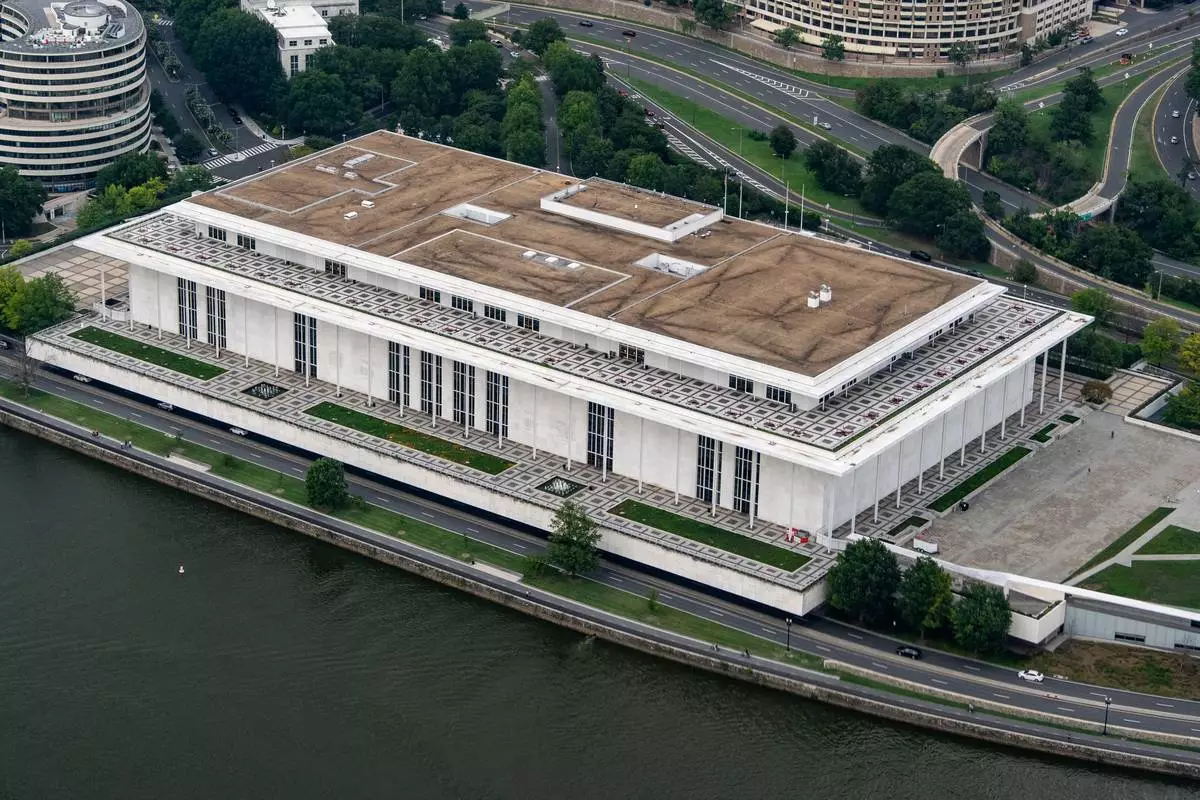
The Kennedy Center is seen from the air in Washington, Saturday, Aug. 15, 2026. (AP Photo/Alex Brandon)

The Kennedy Center is seen from the air in Washington, Saturday, Aug. 15, 2026. (AP Photo/Alex Brandon)

Recommended Articles