WASHINGTON (AP) — Robert Gilman’s release from Russian custody this month heralded a long-awaited homecoming for the Marine veteran after more than four years behind bars.
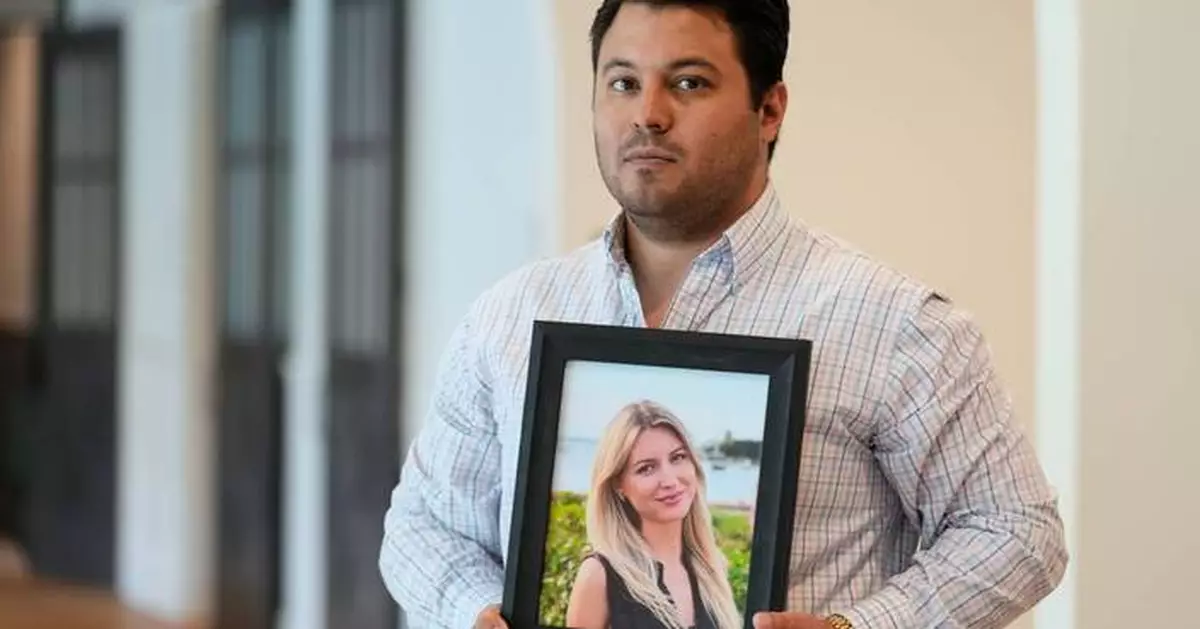
But as Harold Jezler followed the media coverage from the United States, he couldn’t help but notice Gilman’s gaunt and sickly appearance and think of the implications for his wife, Olga, who has been detained in Russia since 2022 and faces her own health problems.
“You just look at the pictures and the guy is not in good shape. It’s concerning for me and for all the families, I would imagine," Jezler said in an interview with The Associated Press. "Is this what it takes for the government to really make a move and prioritize this — that the person is basically in dire straits? It was a very bittersweet thing to see that."
Gilman is the latest in a succession of prisoners freed by Russia going back years, but his release hardly cleared the decks of Americans held there. Some who remain are grappling with medical problems and receiving what family members and advocates say is below-standard care, adding urgency to the calls for their release.
Among those jailed are a Navy veteran with gastrointestinal illness, a man with an autoimmune disease, another with severe dental damage and Olga Jezler, 36, who was diagnosed with endometriosis, a condition involving abnormal tissue growth from the uterus that can cause severe pain and infertility.
“These are American citizens who are innocent of violations of Russian law. They're being held in Russia because they are Americans or because they have American status, and we shouldn't need to wait for their health to be on the brink of death for there to be an urgency to bring them home,” said Eric Lebson, chief strategy officer for Global Reach, a firm that advocates for hostages and detainees and represents multiple Americans jailed in Russia.
The State Department said it was aware of concerns about medical care and continues to raise the issue with the Russians. The Russian Federal Penitentiary Service did not respond to a message seeking comment.
Paul Whelan assumes he received better-than-normal care in the Russian prison system given the high-profile nature of his captivity and his value as trade bait. But the more than five years the Michigan man spent in captivity on espionage charges the U.S. government called baseless gives him a good vantage point.
He spent the emergence of the COVID-19 pandemic in Russian custody, when he says extra raw onions were distributed as an apparent source of immunity. Prisoners with damaged teeth, he recalled, were more likely to have them yanked out than repaired. They had to make do without a ready supply of first aid kits, including by using makeshift bandages, and bartered with guards for fresh fruit and vegetables, he said.
He had complained for months of a hernia, and when he finally was taken for an emergency, middle-of-the-night surgery, he recalls seeing medical instruments that were dropped on the floor cavalierly returned to the surgical tray.
“The poor conditions are part of the punishment,” said Whelan, who was freed in 2024 in a blockbuster prisoner swap. “You are supposed to get less of everything than normal citizens would get.”
The medical care of Russia's prisoners has long been a source of scrutiny, including because of the 2009 death of whistle-blowing Russian lawyer Sergei Magnitsky of untreated pancreatitis and more recently with the case of Trevor Reed, a Marine veteran who before his 2022 release had coughed up blood and experienced lung pain and a broken rib.
Gilman, a Massachusetts teacher, had been detained since 2022 on charges of assaulting a police officer. His family disputed the charges, and the State Department classified him as wrongly detained.
Before Gilman was flown out of Russia, he had been in “a dissociative stupor” for 47 days due to abuse he suffered in prison, Lebson has said. After Gilman was moved to the hospital, he was hooked up to a feeding tube and handcuffed to a bed.
The images of Gilman on the plane ride home raised troubling questions about his condition and the care he received, said Liz Richards, director of hostage advocacy and research at the Foley Foundation, a hostage advocacy organization. “We know he wasn't getting the medical care and treatment that he needs.”
“I really do think Russia realized, if we don't release him, he is going to die, and that would create an international incident between our two countries — to have a Marine Corps veteran, an American, die in custody in Russia because of their treatment,” Richards said.
Chuck Zimmerman, 59, was sailing from the U.S. to New Zealand in June 2025 when he was intercepted by the Russian navy in international waters and charged with transporting firearms on his yacht. His representatives say he voluntarily disclosed them after arriving in Sochi, a Black Sea port city. He was sentenced to five years in prison.
Within months, he developed excruciating stomach pain that became so bad that he took to making himself vomit to ease the discomfort.
An initial diagnostic test failed to identify the source of the pain, but a doctor consulted by the advocacy group Hostage US identified possible causes as a gastric ulcer, pancreatitis or a hiatal hernia with gastric bypass disorder, according to Global Reach.
“It's heart-wrenching to know that he's having to make himself do that to stop the pain,” said his younger sister, Robin Stultz, who says her brother tells her he worries he might die in Russia. “It's hard for me to sit down and eat dinner knowing that he's throwing up his.”
A recent letter from 16 senators to Secretary of State Marco Rubio cited Gilman's weakened condition in urging that more be done to secure the release of five other Americans. Besides Zimmerman and Jezler, the letter names Aleksandr Antonov, who advocates say has a traumatic brain injury; Andre Khachatoorian, jailed for nearly five years and living with an autoimmune disease; and David Barnes, who advocates say requires urgent dental surgery.
Other Americans who remain jailed include Stephen Hubbard, who is accused of fighting as a mercenary in Ukraine and has been classified by the U.S. as wrongfully detained, and Travis Leake, a rock musician held on drug-related charges. Richards, of the Foley Foundation, says that about 28 Americans are jailed in Russia, including a half dozen the organization considers wrongfully detained.
Olga Jezler, a green card holder, was arrested in 2022 after arriving in Russia to visit a sister grappling with cancer and was charged with possessing CBD capsules that her husband and representatives say were legally permissible to carry.
She has been diagnosed with endometriosis, and a growth on her ovary continues to expand. Her husband and supporters are concerned the Russian government approach will be simply to remove the ovary if the cyst keeps growing, jeopardizing her ability to have children, as opposed to trying to preserve as much healthy tissue as possible — which they say would be the standard of care in the U.S.
The couple recently marked their seventh anniversary, but “it's the fifth one we've celebrated apart,” Harold Jezler said.
“She's been there,” he lamented, “way over half our marriage."
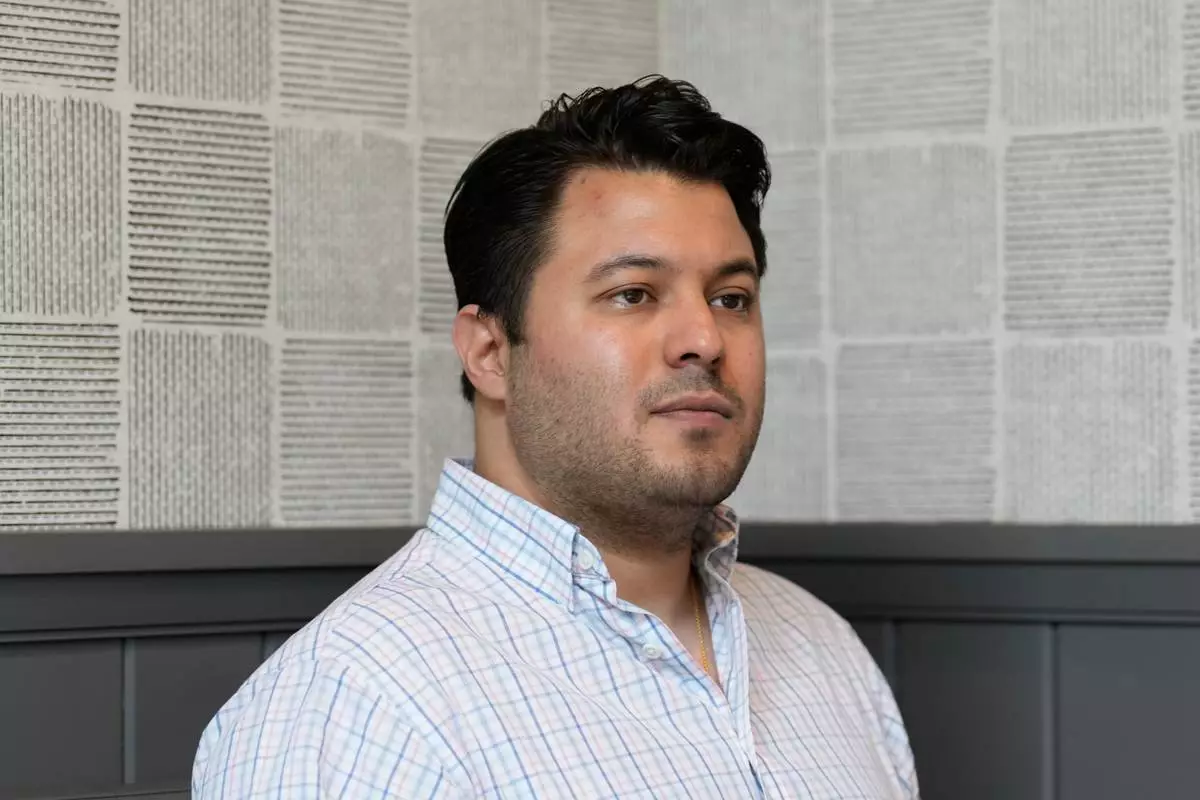
Harold Jezler poses for a picture in West Harrison, N.Y., Friday, Aug. 21, 2026. (AP Photo/Seth Wenig)
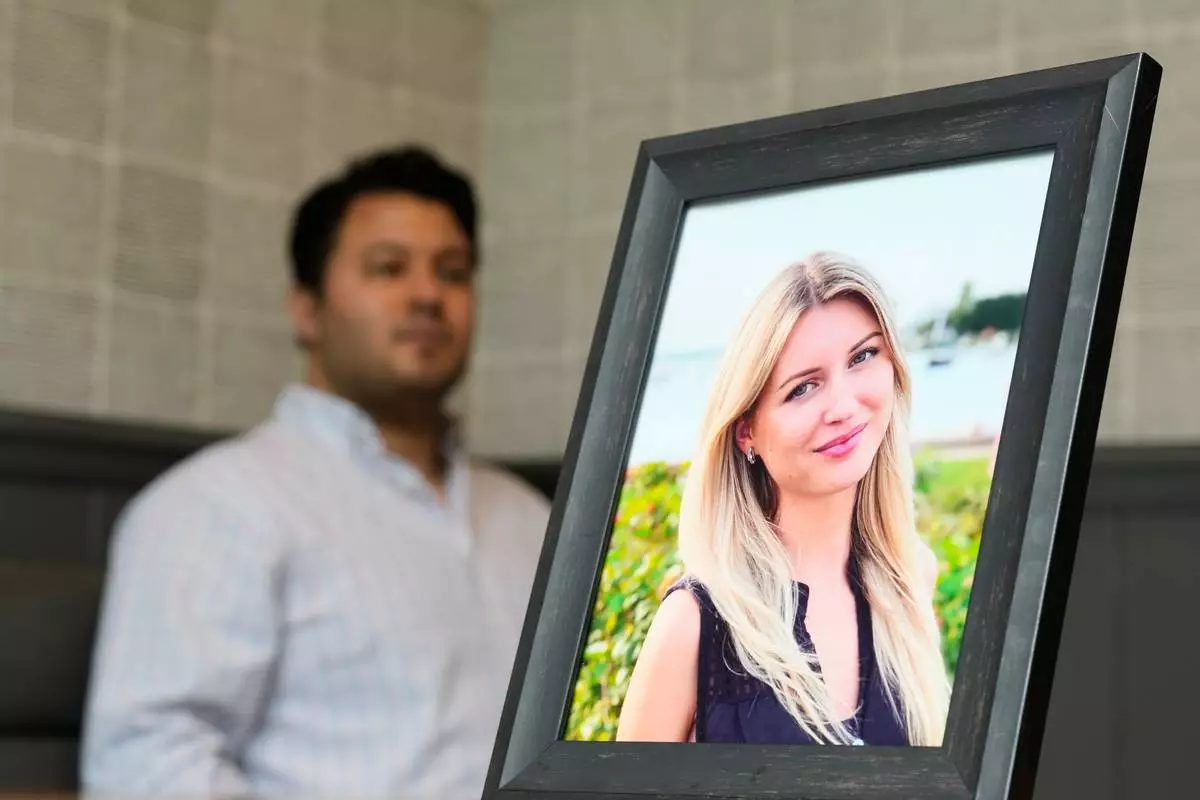
Harold Jezler poses for a picture with a photo of his wife, Olga Jezler, in West Harrison, N.Y., Friday, Aug. 21, 2026. (AP Photo/Seth Wenig)
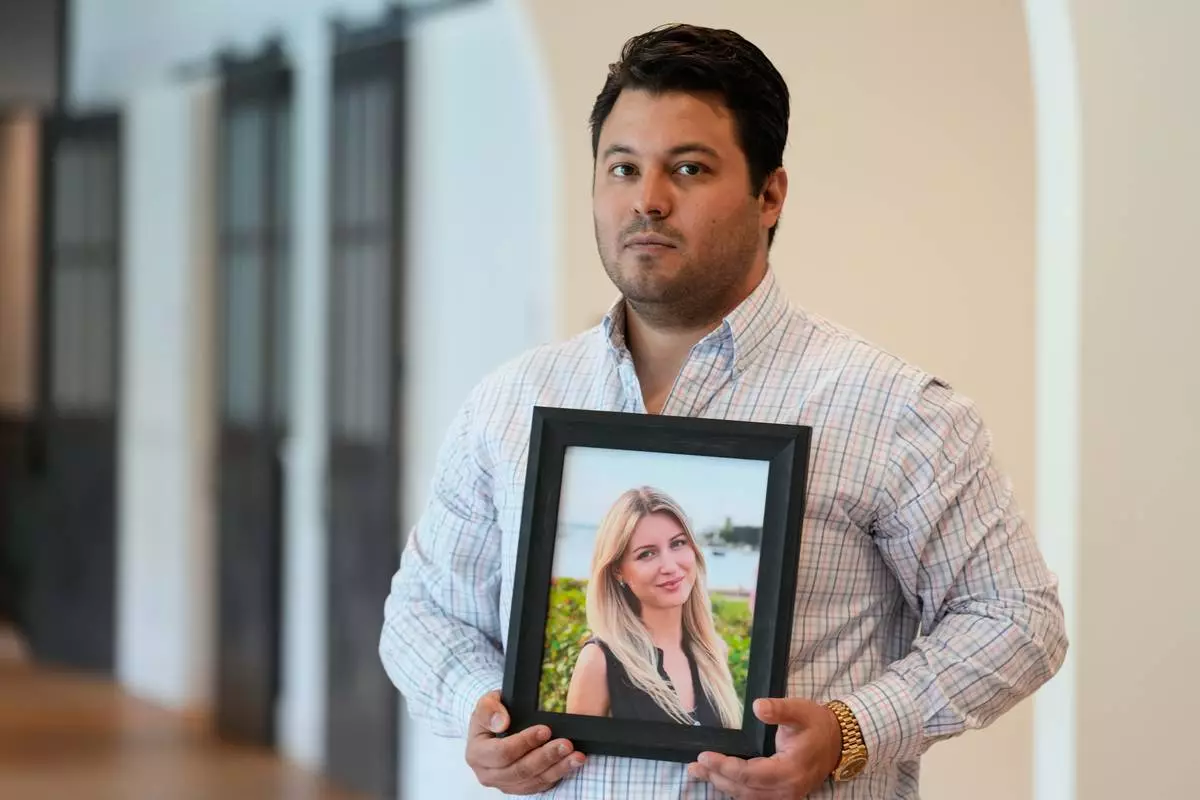
Harold Jezler poses for a picture with a photo of his wife, Olga Jezler, in West Harrison, N.Y., Friday, Aug. 21, 2026. (AP Photo/Seth Wenig)