
SINGAPORE – Media OutReach Newswire – 26 August 2026 – On Sunday, 26 July 2026, Dr. Terence Tan of Halley Body Slimming Clinic presented at the Society of Aesthetic Medicine (Singapore) Conference 2026. Organised by the Society of Aesthetic Medicine (Singapore), the two-day conference brought together doctors to discuss developments across aesthetic medicine and related areas of clinical practice. In his presentation, "Achieving More With Semaglutide: The STEP UP Evidence", Dr. Tan reviewed recent clinical evidence on semaglutide treatments while also examining a wider question: how should doctors support patients before, during, and after medical weight loss?
Looking beyond semaglutide treatment in isolation
Semaglutide belongs to a class of medicines known as glucagon-like peptide-1 receptor agonists, or GLP-1 RAs. Dr. Tan began by reviewing how these GLP-1 injectables work and the growing body of research investigating their role in weight management.
A central part of the presentation focused on the Semaglutide Treatment Effect in People with obesity (STEP) clinical development programme and, in particular, the STEP UP trial. STEP UP was a 72-week randomised, double-blind, multicentre, placebo-controlled trial involving adults with obesity and without type 2 diabetes. Participants received once-weekly semaglutide 7.2 mg, semaglutide 2.4 mg, or placebo, alongside a lifestyle intervention that included dietary modification and physical activity.
Under the treatment-policy analysis, mean body-weight change at week 72 was -18.7% among participants receiving semaglutide 7.2 mg, compared with -15.6% with semaglutide 2.4 mg and -3.9% with placebo. The study also examined the proportions of participants achieving higher levels of body-weight reduction.
However, the presentation did not position higher weight-loss percentages as the sole goal of treatment. Instead, Dr. Tan used the evidence as a starting point for discussing how weight management plans may need to evolve as medical treatments make more substantial weight reduction possible.
Navigating patient selection for semaglutide treatment
After reviewing the STEP evidence, Dr. Tan turned to how these findings translate into clinical decision-making, starting with one of the most important questions in practice: who is suitable for semaglutide treatment, and at what dose?
During the presentation, Dr. Tan shared that semaglutide is indicated as an adjunct to a reduced-calorie diet and increased physical activity for adults with an initial BMI of:
- 30 kg/m² or above, which falls within the obesity range; or
- 27 kg/m² to below 30 kg/m², where at least one weight-related comorbidity is present.
However, these numerical thresholds are only one part of the assessment. In everyday GP and aesthetic practice, doctors may encounter patients with very different motivations, health profiles, and circumstances. Dr. Tan's presentation therefore raised broader considerations such as Asian ethnicity, psychological and social factors, occupational pressures, and the resources available within the clinic to provide appropriate ongoing care.
This reinforces the need to assess the individual patient rather than viewing semaglutide as a treatment based on weight or BMI alone.
Weight management remains a clinical process
Additionally, Dr. Tan emphasised that prescription weight loss medication represents only one part of weight management. Semaglutide treatment can be used to support weight reduction in suitable patients, but doctors should take into account the patient's goals, lifestyle changes, commitment to treatment, and support system.
To address this, he highlighted several areas that should be addressed alongside medication:
- Treatment goals: His presentation discussed establishing realistic weight goals from the outset and reviewing progress over time, rather than focusing only on the number shown on the weighing scale at each visit.
- Lifestyle changes: Diet and exercise remained central to his approach. Rather than prescribing one way of eating, he encouraged doctors to consider different dietary approaches and support sustainable lifestyle changes.
- Motivation and support: Dr. Tan stressed the importance of "treating the mind as well as the body" by helping patients commit to the process and, where appropriate, involving family and friends. This recognises that longer-term weight management also depends on motivation, behaviour, and the patient's support system.
- Ongoing follow-up: He suggested beginning with monthly reviews, checking for nausea and other side effects, reinforcing positive lifestyle changes, and adjusting the interval between visits according to the patient's clinical needs.
- Wider care and community support: The presentation also pointed to the possible role of healthcare clusters, nurse practitioners, medical social workers, and other support networks where appropriate.
Taken together, these points positioned semaglutide treatment as one component within a longer-term management process rather than a standalone solution. The doctor's role, in Dr. Tan's framework, extends from deciding who may be suitable for treatment to helping patients navigate lifestyle changes, treatment tolerability, ongoing motivation, and the support they may need along the way.
Taking a broader approach to weight management and aesthetics
Towards the end of his presentation, Dr. Tan also explored how weight management can intersect with aesthetic care in two different ways.
First, weight loss itself can affect skin laxity. As a patient loses a significant amount of weight, the reduction in underlying fat volume may leave the skin looking looser, particularly where there has been a substantial change in body size. This means that skin laxity may become a separate aesthetic concern that needs to be assessed after, or during, the weight management journey.
Second, there is the question of treatment sequencing. Dr. Tan raised whether weight management should always come before aesthetic treatments such as CoolSculpting Elite body contouring. While he noted that body contouring does not contribute to overall weight loss, he emphasised that treatment planning should not follow a rigid sequence for every patient. Instead, doctors should take into account the patient's individual concerns, circumstances, and preferences. Weight management, fat reduction, and skin-tightening treatments address different needs and may therefore be considered at different stages of a patient's care.
From clinical evidence to patient care
Dr. Tan's presentation brought the discussion back to a practical point: semaglutide is only one part of a patient's broader weight management journey. The way doctors plan and navigate treatment should change over time, particularly as their patients' health priorities, weight-related concerns, and aesthetic considerations evolve.
This patient-led approach also underpins Dr. Tan's work at Halley Body Slimming Clinic, where weight management is considered in the context of each patient's wider needs rather than as a standalone treatment. Patients can visit their website to learn more about the clinic's treatment philosophy and the range of weight management and body-contouring services available.
Hashtag: #halleybodyslimming #weightlossinjection #weightlosssingapore #medicalweightmanagement
The issuer is solely responsible for the content of this announcement.
About Halley Body Slimming Clinic
Halley Body Slimming Clinic is a clinic in Singapore that offers doctor-led weight management, body contouring, and skin tightening treatments. Patients undergo a clinical assessment before a treatment plan is recommended based on their individual concerns, goals, and suitability. Services include prescription weight-loss medication, as well as non-invasive fat-reduction and body-contouring treatments such as CoolSculpting Elite and Vanquish. The clinic also emphasises regular follow-up and patient education, allowing treatment plans to be reviewed as patients progress toward their weight management goals.
** This press release is distributed by Media OutReach Newswire through automated distribution system, for which the client assumes full responsibility. **
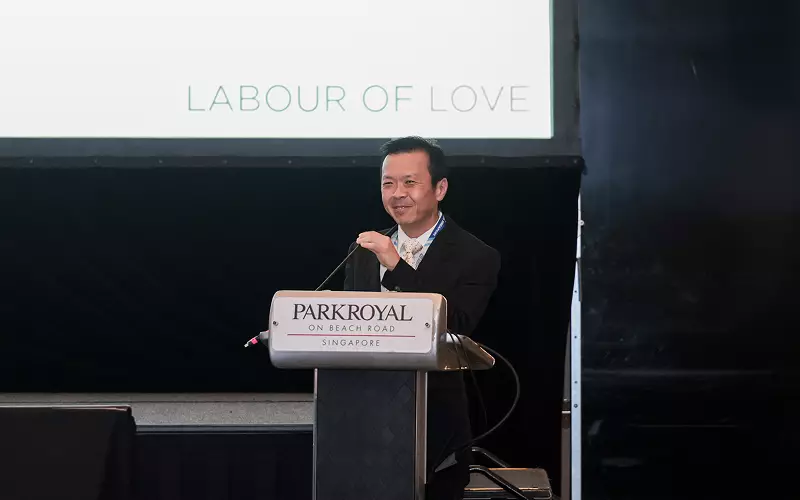
Dr. Terence Tan of Halley Body Slimming Clinic presented "Achieving More With Semaglutide: The STEP UP Evidence" at the Society of Aesthetic Medicine (Singapore) Conference 2026