Hong Kong Customs detects illegal storage warehouse for smuggled controlled pharmaceutical products with seizures worth over $11 million
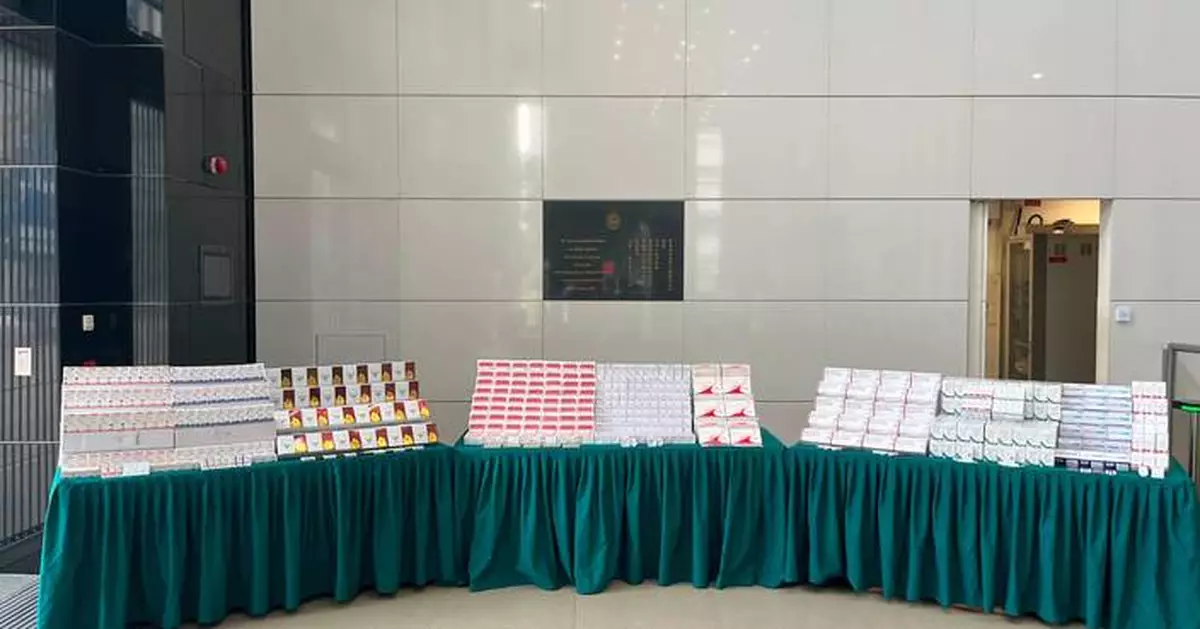
In view of the recent increasing demand for injections and medicines from society, Hong Kong Customs has strengthened enforcement against the smuggling of controlled medicines and detected an illegal storage warehouse for smuggled controlled pharmaceutical products with seizures worth over $11 million. Two persons were arrested.
Customs officers yesterday (August 25) identified a warehouse in Sheung Shui which was suspected of involvement in the smuggling and possession of controlled pharmaceutical products. A 56-year-old Mainland woman and a 51-year-old Mainland man were arrested. Customs seized a total of around 400 000 pieces of suspected pharmaceutical products with an estimated market value of over $11 million.
An investigation is ongoing. The two arrested persons will be holding charged with one count of importing prohibited articles not under and in accordance with an import licence, and one count of possession of Part 1 poisons. In addition, the 51-year-old arrested Mainland man will be holding charged with one additional count of breach of condition of stay. The case will be brought up at the Fanling Magistrates' Courts tomorrow (August 27).
Customs will continue to combat cross-boundary smuggling activities with firm enforcement action based on risk assessment and intelligence analysis.
Smuggling is a serious offence. Under the Import and Export Ordinance, any person found guilty of importing or exporting unmanifested cargo is liable to a maximum fine of $2 million and imprisonment for seven years. Any person who imports pharmaceutical products and medicines without a valid import licence commits an offence. The maximum penalty upon conviction is a fine of $500,000 and imprisonment for two years.
Under the Pharmacy and Poisons Ordinance, any person who possesses any poison included in Part 1 of the Poisons List other than in accordance with provisions commits an offence. The maximum penalty upon conviction is a fine of $100,000 and imprisonment for two years.
Members of the public may report any suspected smuggling activities to Customs' 24-hour hotline 182 8080 or its dedicated crime-reporting email account (crimereport@customs.gov.hk) or online form (eform.cefs.gov.hk/form/ced002).
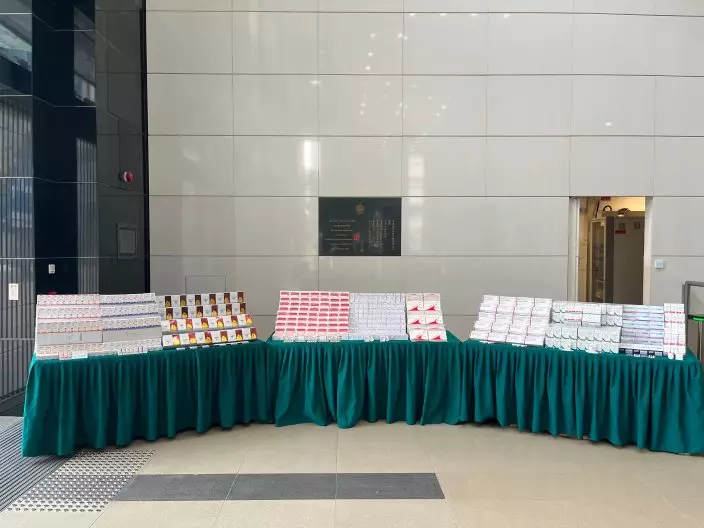
In view of the recent increasing demand for injections and medicines from society, Hong Kong Customs has strengthened enforcement against the smuggling of controlled medicines and detected an illegal storage warehouse for smuggled controlled pharmaceutical products with seizures worth over $11 million. Two persons were arrested. Photo shows the suspected controlled pharmaceutical products seized. Source: HKSAR Government Press Releases
Hong Kong Customs detects two incoming passenger drug trafficking cases at airport
Hong Kong Customs yesterday (August 25) detected two drug trafficking cases involving passengers at Hong Kong International Airport and seized about 38 kilograms of suspected ketamine, with a total estimated market value of about 15 million. Three persons were arrested.
In the first case, a 51-year-old local woman and a 26-year-old local man, arrived in Hong Kong from Rome, Italy yesterday. During customs clearance, Customs officers found a batch of suspected ketamine weighing about 36 kg inside their check-in suitcases. The two persons were subsequently arrested.
In the second case, a 40-year-old Mainland male passenger arrived in Hong Kong from Kuala Lumpur, Malaysia yesterday. During customs clearance, Customs officers found about 2 kg of suspected ketamine inside the false compartment of his checked-in suitcase. He was subsequently arrested.
The two arrested persons in the first case have been jointly charged with one count of trafficking in dangerous drug, while the arrested man in the second case has been charged with one count of trafficking in dangerous drug. Both cases will be brought up at the West Kowloon Magistrates' Courts tomorrow (August 27).
Customs will continue to step up enforcement against drug trafficking activities through intelligence analysis. The department also reminds members of the public to stay alert and not to participate in drug trafficking activities for monetary return. They must not accept hiring or delegation from another party to carry controlled items into and out of Hong Kong. They are also reminded not to carry unknown items for other people.
Customs will also continue to apply a risk assessment approach and focus on selecting passengers from high-risk regions for clearance to combat transnational drug trafficking activities.
Under the Dangerous Drugs Ordinance, trafficking in a dangerous drug is a serious offence. The maximum penalty upon conviction is a fine of $5 million and life imprisonment.
Members of the public may report any suspected drug trafficking activities to Customs' 24-hour hotline 182 8080 or its dedicated crime-reporting email account (crimereport@customs.gov.hk) or online form (eform.cefs.gov.hk/form/ced002).
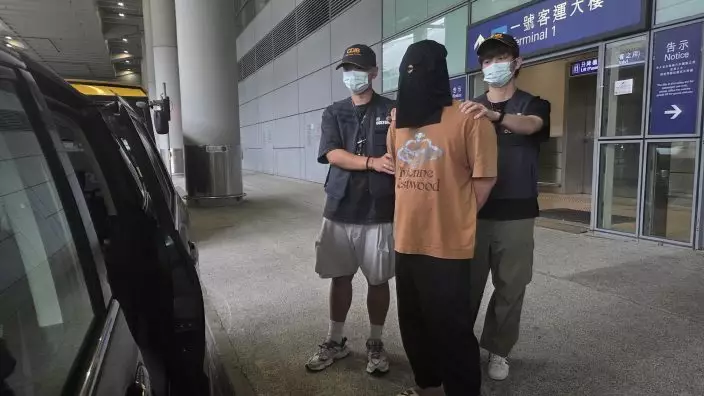
Hong Kong Customs yesterday (August 25) detected two drug trafficking cases involving passengers at Hong Kong International Airport and seized about 38 kilograms of suspected ketamine, with a total estimated market value of about 15 million. Three persons were arrested. Photo shows the arrested person in the second case. Source: HKSAR Government Press Releases
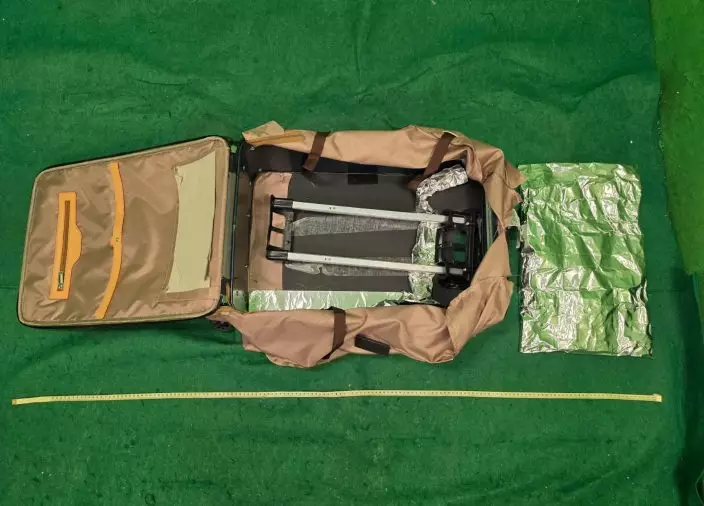
Hong Kong Customs yesterday (August 25) detected two drug trafficking cases involving passengers at Hong Kong International Airport and seized about 38 kilograms of suspected ketamine, with a total estimated market value of about 15 million. Three persons were arrested. Photo shows the suspected ketamine seized in the second case. Source: HKSAR Government Press Releases
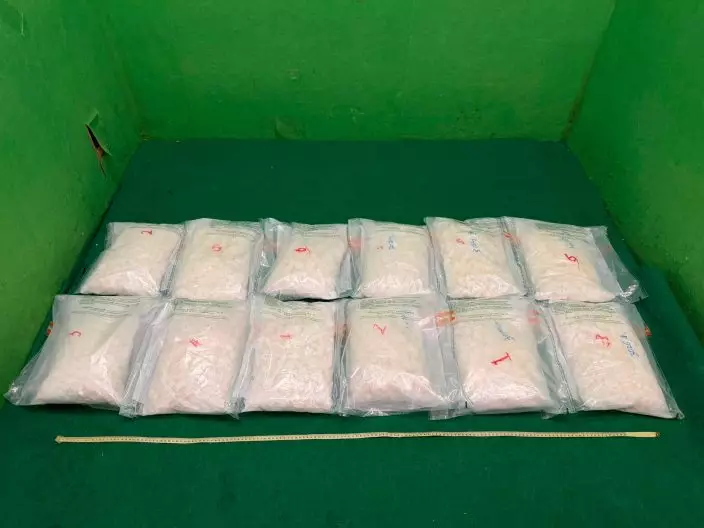
Hong Kong Customs yesterday (August 25) detected two drug trafficking cases involving passengers at Hong Kong International Airport and seized about 38 kilograms of suspected ketamine, with a total estimated market value of about 15 million. Three persons were arrested. Photo shows the suspected ketamine seized in the first case. Source: HKSAR Government Press Releases