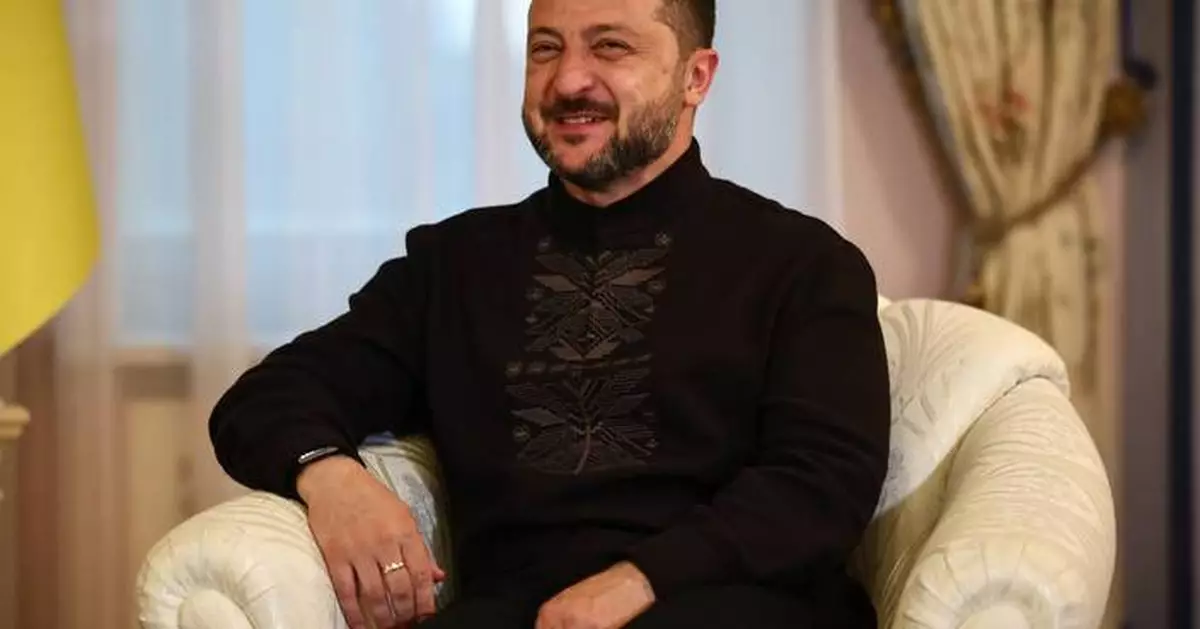
KYIV, Ukraine (AP) — Ukrainian President Volodymyr Zelenskyy on Wednesday awarded Elon Musk the Order of Freedom, one of Ukraine’s highest state honors, for his “outstanding personal merits” in protecting human life and freedom and strengthening ties between Ukraine and the United States.
Musk, the founder of SpaceX, has become one of the most influential, and contentious, private sector figures in Ukraine’s war effort. His decision to provide Ukraine with access to Starlink, SpaceX’s satellite internet network, was critical. It remains a communications lifeline for Ukrainian forces and civilians after Russia’s full-scale invasion in 2022.
Starlink has become deeply embedded in Ukraine’s military operations, with commanders and soldiers relying on satellite connectivity to communicate and coordinate operations.
Musk’s decision-making could shape Ukraine’s future military capabilities. Starlink doesn't currently operate over Russian territory, but Zelenskyy wants Musk to reconsider the policy. That would allow Ukrainian forces to maintain satellite connectivity for longer-range drone attacks targeting Russia's military and economic infrastructure.
Musk made no immediate comment on the award, which was announced by presidential decree.
The technology has been integrated into Ukraine’s drone operations, helping operators maintain links with drones and navigate them over longer distances. Ukraine's access to Starlink is the main reason for the early successes of its middle-strike drone campaign, which caught Russian forces off guard and undermined their logistics lines earlier this year.
Musk has allowed the Ukrainians to use Starlink inside their own territory, including in Ukrainian regions occupied by the Russians, but has restricted use of the satellite system inside Russia.
SpaceX’s decision earlier this year to accept Kyiv's pleas and block unauthorized Starlink terminals being used by Russian forces in occupied territory also strengthened Ukraine’s position.
The campaign has put pressure on Russian logistics in Crimea, giving Ukrainian forces a degree of battlefield momentum that Kyiv has not enjoyed since its successful counteroffensives around Kherson and Kharkiv in late 2022.
Musk is both a crucial partner for Kyiv and a potential source of vulnerability and dependence. As Starlink has become embedded in Ukraine’s wartime communications, Musk and SpaceX have significant influence over how the technology can be used.
Musk's decisions can have direct consequences for Ukraine’s military capabilities, making it important for Kyiv to preserve a positive relationship.
Zelenskyy has sought U.S. help in persuading Musk to permit Ukraine to expand its ability to use Starlink beyond Ukraine. Musk has said he believes that would be a significant and dangerous escalation, Zelenskyy told reporters last week.
A reported mix-up over whether SpaceX had approved Ukraine’s use of Starlink for operations inside Russia contributed to tensions between Zelenskyy and then-Defense Minister Mykhailo Fedorov, who was the government's main interlocutor with Musk.
Fedorov was dismissed in July as part of a broader government shake-up.
Zelenskyy said inaccurate information from the Defense Ministry that SpaceX had approved the bid had contributed to an awkward exchange with U.S. President Donald Trump, who accused the Ukrainian president of deceiving him. He did not say when that occurred.
That contributed to “some of the steps” taken against Fedorov, Zelenskyy told reporters last week, without explicitly accusing him of deliberately providing false information.
Federov's dismissal also highlights the political element of Musk’s role in Ukraine’s war effort.
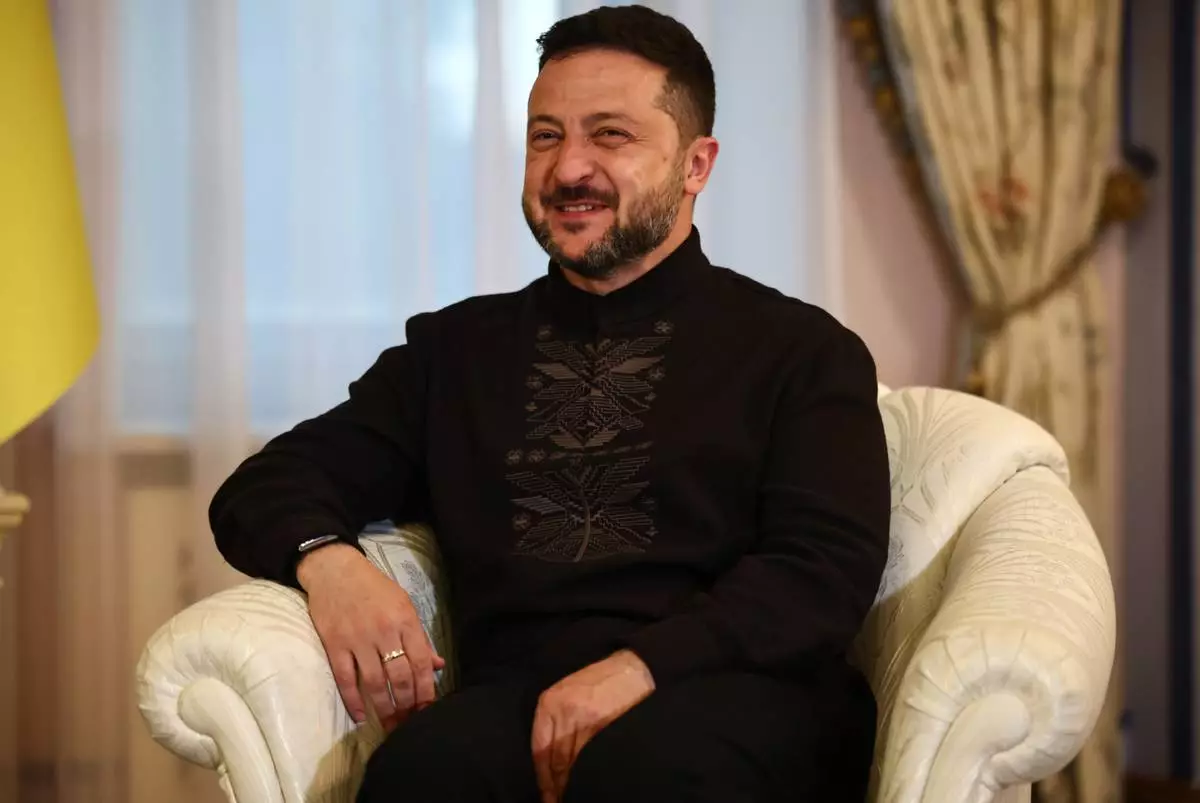
Ukraine's President Volodymyr Zelenskyy talks with Britain's Prime Minister Andy Burnham at Horodetskyi House during their bilateral meeting in Kyiv, Monday, Aug. 24, 2026. (Henry Nicholls/Pool Photo via AP)
NEW YORK (AP) — Just weeks after Hurricane Helene devastated the American South in 2024, Dolly Parton stood on a stage in her iconic blonde wig, with a song on her lips. She promised the flood-ravaged community in her native Tennessee — to the tune of her classic song “Jolene” — that “we're all here to mend these broken hearts.”
For the music legend and multimillionaire businesswoman, that meant using her wealth for good. That day, she announced a $1 million donation, matched by her Dollywood companies and their partners, to an Appalachian relief nonprofit.
It's one of the enduring images of the charismatic humanitarian, whose good humor and straightforward generosity lifted the well-being of communities in her home state and beyond. Fans across generations and geographies say it will remain part of Parton's legacy. She died Tuesday at the age of 80.
“I just give from my heart,” she said in a 2022 speech accepting the Carnegie Medal of Philanthropy. “I never know what I’m going to do or why I’m gonna do it. I just see a need and if I can fill it, then I will.”
The Library of Congress called Parton a “titan of children's literacy” for the millions of free books provided monthly through her Imagination Library. Also well-known is the $1 million gift she made to Vanderbilt University's Medical Center to help develop Moderna’s COVID-19 vaccine. The not-for-profit Dolly Parton Children's Hospital recently received an undisclosed sum to improve pediatric care across eastern Tennessee.
Then there's the quieter giving that the public was still uncovering in her final years. Internet sleuths realized she'd long paid for many Tennessee high schools' band uniforms. She bought a Nashville strip mall with her “I Will Always Love You” songwriting royalties to support the surrounding Black neighborhood.
The simplicity of her solutions is what made Parton so “magical,” according to Stacia West, the co-founder of the University of Pennsylvania’s Center for Guaranteed Income Research and an associate professor at the University of Tennessee. West studied Parton’s $12 million fund for families who lost their homes in the 2016 fires that swept through Sevier County, Tennessee. Through The My People Fund, as it was called, Parton's foundation provided families $1,000 per month for half the year with no strings attached.
The concept of providing unconditional cash was much more “taboo” at the time, West recalled. That trust in the fund’s beneficiaries to exercise their own agency is one lesson that West said philanthropy can take from Parton.
“The piece that really carries forward is her belief in the goodness of people and her ability to apply that to seemingly difficult problems,” West said.
Parton applied the same framework to her reading initiative, West noted. Rather than hand out library cards that still required the time and transportation to visit a local branch, Parton simply mailed books straight to participants' doors.
The fourth of 12 children from a poor Appalachian family, Parton said her father inspired the Imagination Library. He was a “very smart man,” she once recalled, and she “often wondered what he could have done had he been able to read and write.” Kids across the United States, Canada, the United Kingdom, Ireland and Australia have received more than 330 million books since the program began.
Ohio first lady Fran DeWine described Parton's “devotion to children and literacy” as “unparalleled.” Over a million children had received nearly 28 million books in the state, according to DeWine.
“Her generosity and selfless spirit leave a legacy that will live on for generations to come,” she said.
In addition to the Imagination Library’s work, Andrew Carnegie Foundation President Dame Louise Richardson noted the Dollywood Foundation’s efforts to “secure educational success for children born in poverty.” Parton started the foundation to provide college scholarships for students from the county where she grew up near the Great Smoky Mountains.
“What’s more, she made philanthropy fun!” Richardson said in a statement.
Parton's family asked that, in lieu of flowers, donations be made to the Imagination Library — a fitting request given that Parton once said the initiative “meant as much, if not more to me, than nearly anything that I've ever done.”
“Of course, I’ll always be a singer-songwriter,” she said in a 2024 appearance expanding the program in Kentucky. “But I just hope people will just say she was a good ol’ girl, you know? She tried hard, she worked hard and she tried to make the world a better place and try to make people happy. And I will be doing that till I keel over.”
Gamboa reported from Cleveland. Staff writer Julie Carr Smyth contributed reporting from Columbus, Ohio.
Associated Press coverage of philanthropy and nonprofits receives support through the AP’s collaboration with The Conversation US, with funding from Lilly Endowment Inc. The AP is solely responsible for this content. For all of AP’s philanthropy coverage, visit https://apnews.com/hub/philanthropy.
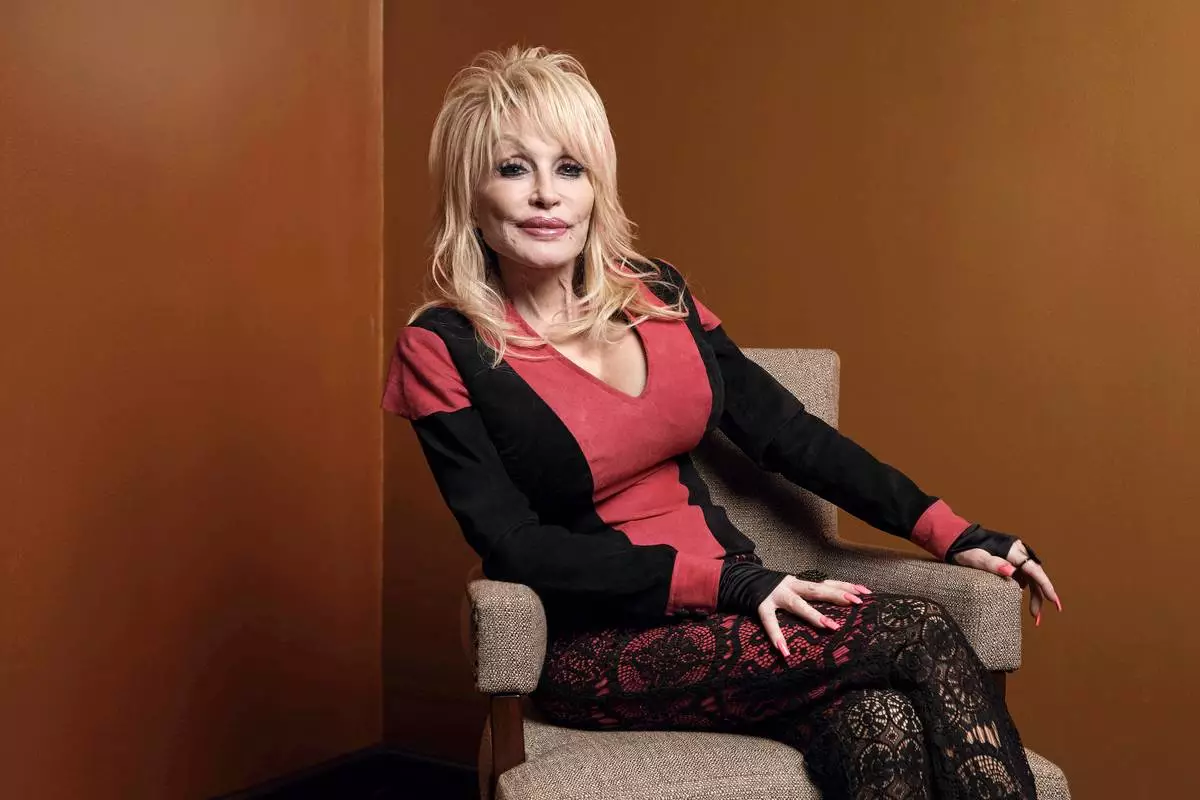
FILE - Dolly Parton poses at the Carnegie Medal of Philanthropy Ceremony in New York, on Oct. 13, 2022. (AP Photo/Andres Kudacki, File)
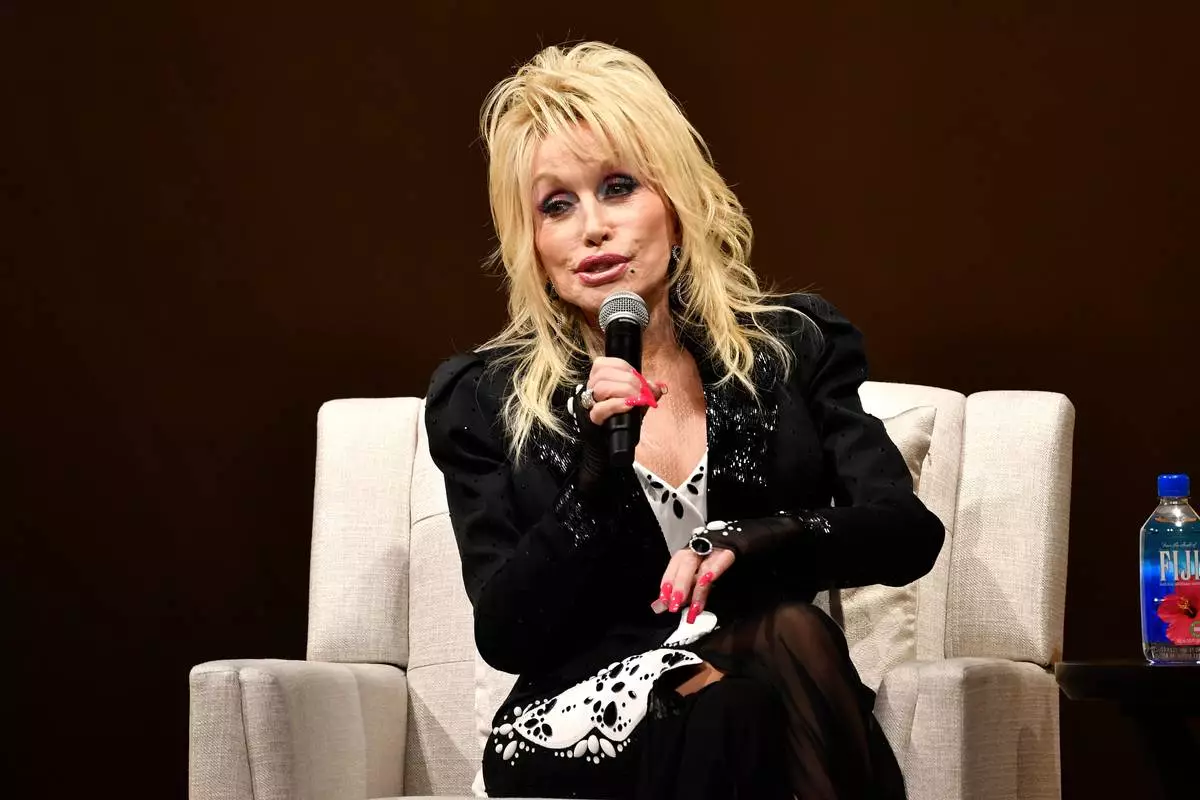
FILE - Dolly Parton speaks to a audience gathered to celebrate the expansion of the Imagination Library of Kentucky at the Lyric Theatre in Lexington, Ky., on Aug. 27, 2024. (AP Photo/Timothy D. Easley, File)
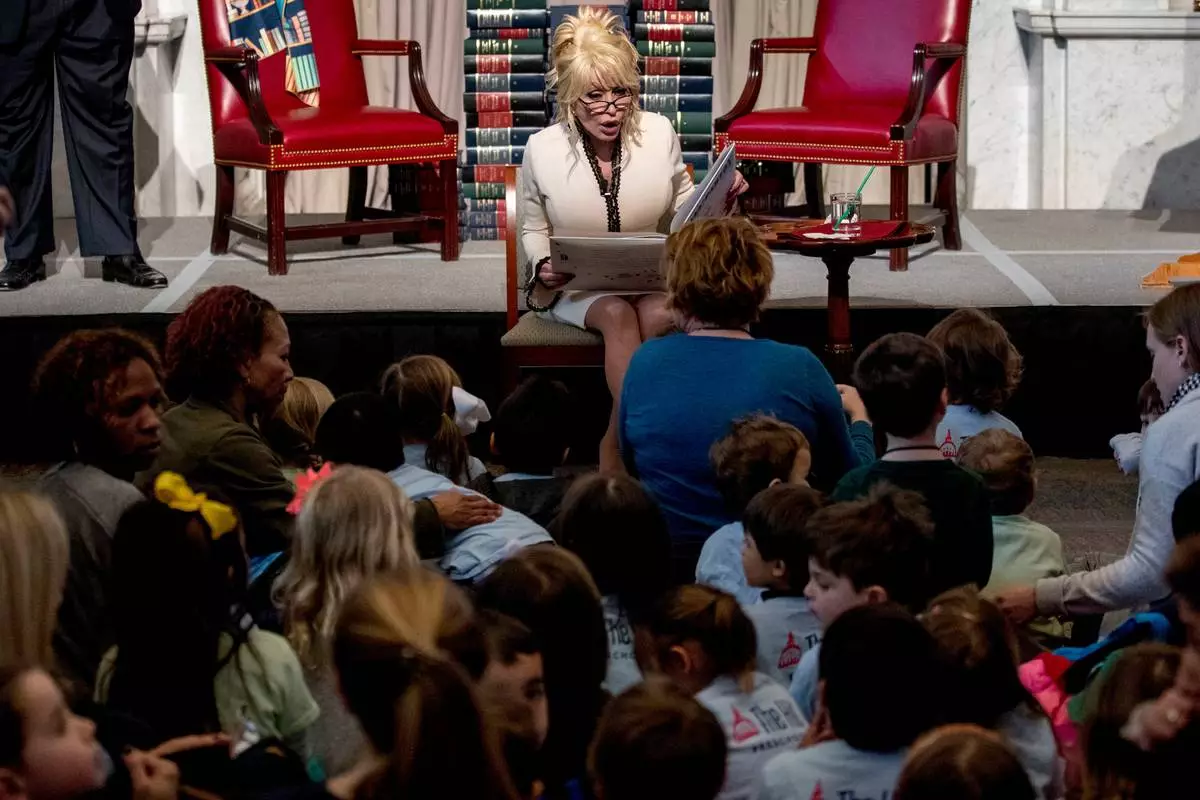
FILE - Dolly Parton reads her book "Coat of Many Colors," at the Library of Congress in Washington on Feb. 27, 2018. (AP Photo/Andrew Harnik, File)