BANGKOK (AP) — A Thai woman accused of killing her ex-husband, a U.S. diplomat, has been sentenced to one year in prison for violating Myanmar's immigration laws, but she still might go to trial for murder, a lawyer familiar with her case said Wednesday.
The court in Yangon’s Kamayut township on Tuesday found Pavinee Supasirivisan guilty under a provision applying to any foreign national who commits a crime in the country, according to the lawyer.
The charge carries a sentence ranging from six months to five years, the lawyer said on condition of anonymity to avoid possible repercussions from Myanmar’s military-backed government, which exercises tight control over information. Pavinee is being held at Insein Prison.
Neither U.S. nor Myanmar officials have publicly named the dead man, but the New York Post and other Western media have identified him as 43-year-old Daniel Paul Riva, who served as a U.S. State Department assistant regional security officer. An online obituary for someone of that name has details including the same day of death as the victim and recollections of him having worked in several U.S. diplomatic missions.
The U.S. State Department had confirmed the death of a U.S. government employee, but refused to provide further information, including the victim's name, citing privacy reasons.
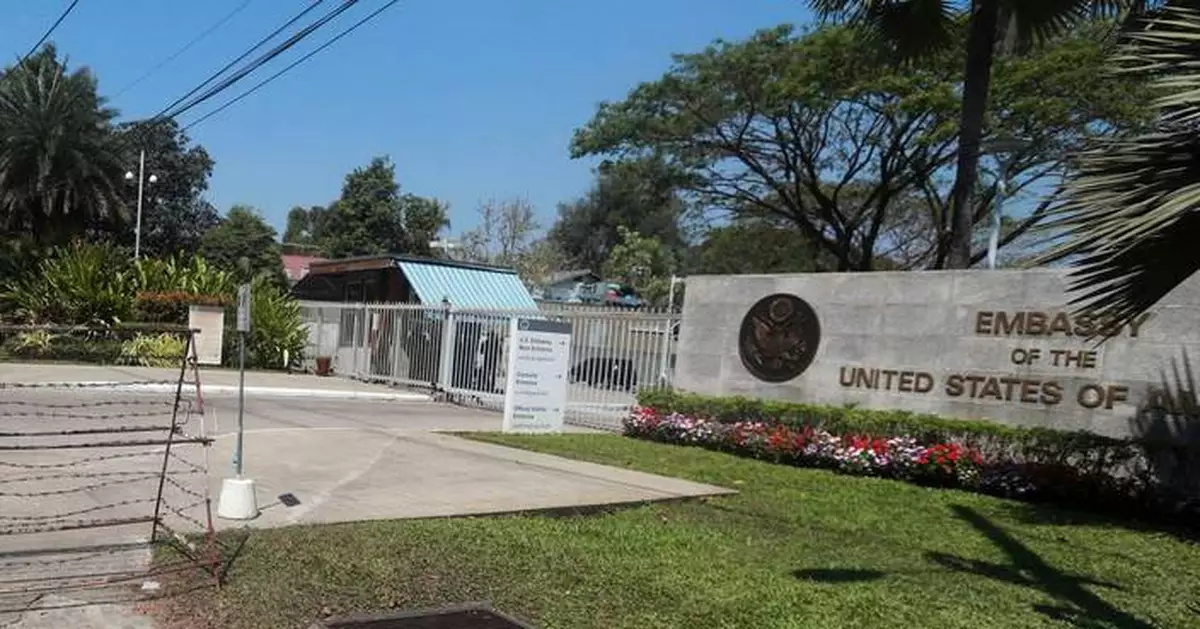
Pavinee was arrested after the diplomat was found dead with stab wounds to the head and neck on May 11 at the Sakura Residence & Hotel, a facility popular with diplomats, business people, and other international visitors that is about 1½ kilometers (a mile) from the U.S. Embassy.
Police have opened a case at the township’s police station under the relevant murder provision, which carries a sentence ranging from 10 years in prison to the death penalty. But it's not clear whether she has been formally charged with murder, or even whether a murder investigation is still ongoing, the lawyer said.
An official from Kamayut township’s immigration and population department confirmed her sentence for violating immigration law, but wouldn't provide further details. He spoke on condition of anonymity, because he wasn't authorized to speak with the media.
The military seized power from democratically elected Aung San Suu Kyi in 2021, giving rise to widespread protests that have expanded into a civil war in Myanmar, which is also known as Burma.
Authorities rarely speak with the media, which is tightly controlled. Police investigating the case, the Thai Embassy in Yangon, and the court that sentenced her all refused to comment.
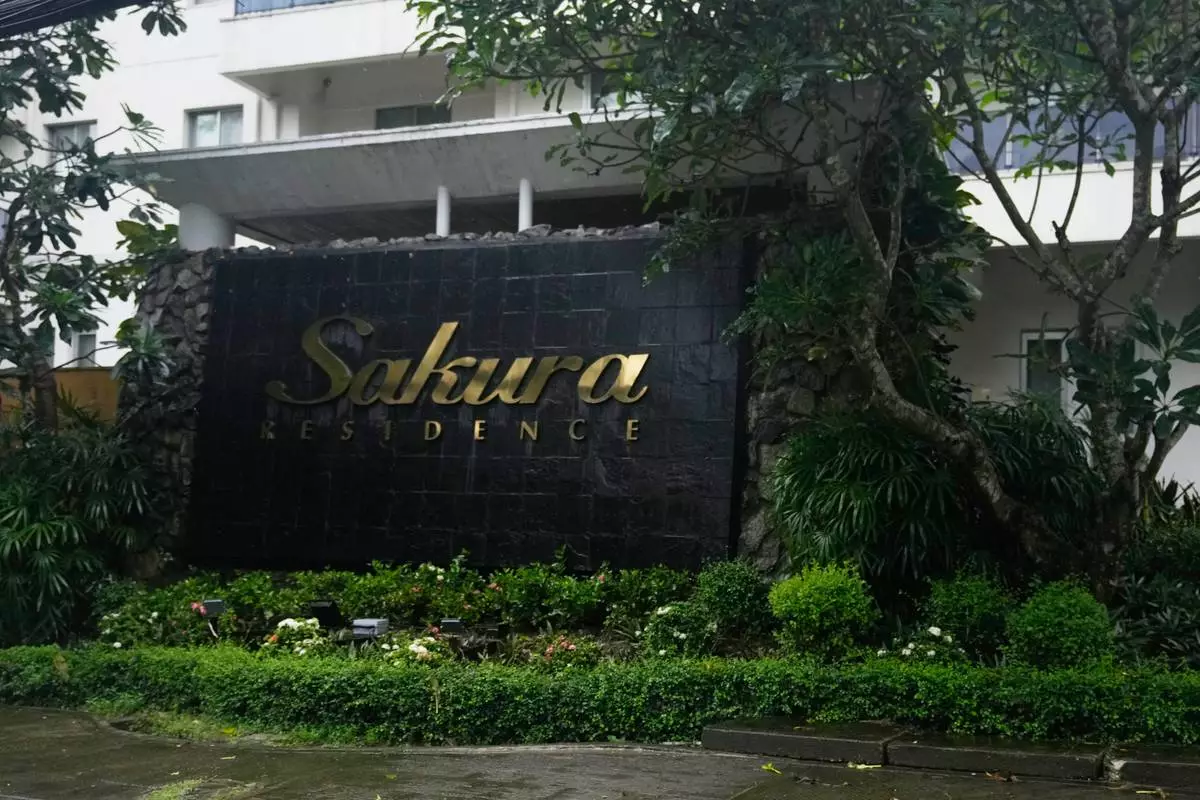
FILE - The Sakura Residence is seen in Yangon, Myanmar, June 12, 2026. (AP Photo, File)
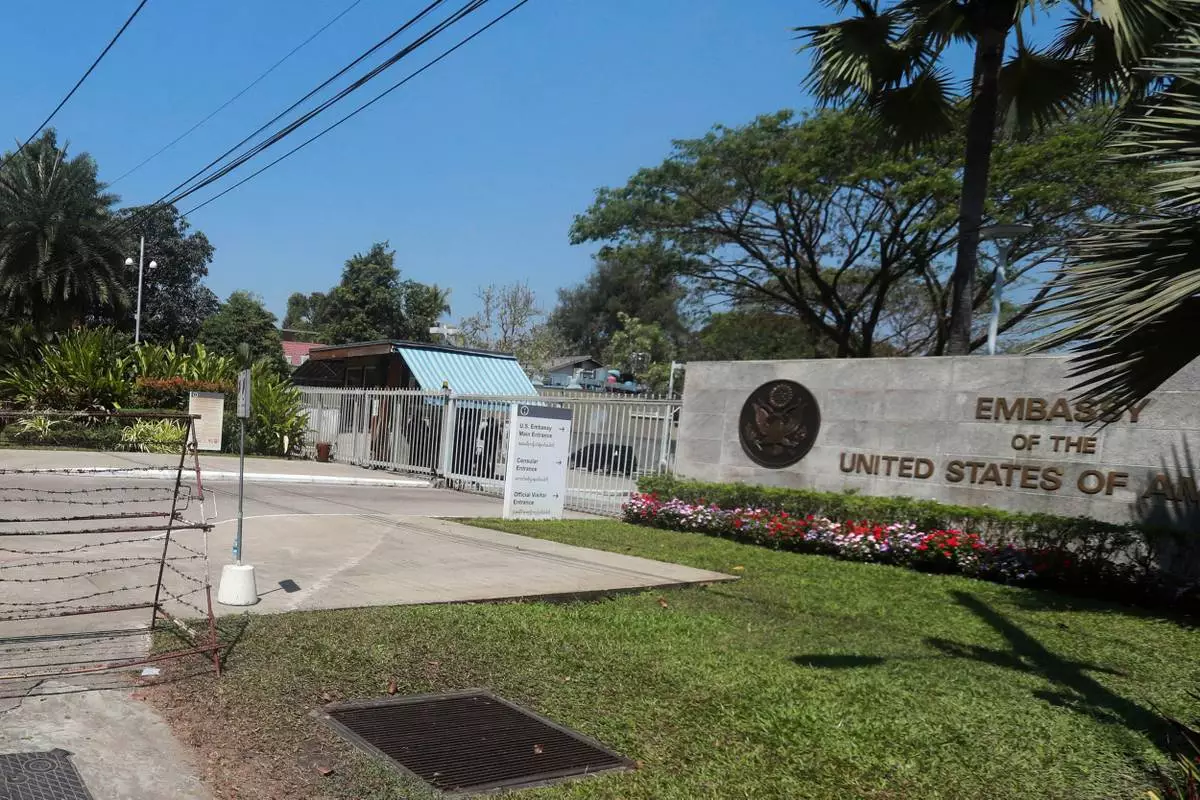
FILE - The U.S. Embassy is seen in Yangon, Myanmar, Feb. 13, 2021. (AP Photo, File)
A federal judge on Wednesday lifted a major obstacle to President Donald Trump’s executive order limiting mail voting, but the decision will only clear the path for more legal challenges.
The decision to lift an injunction against Trump's directive came shortly after a group of Democratic state officials filed a fresh lawsuit against it, underscoring how a Supreme Court ruling earlier this week was already injecting confusion into the midterm elections. The first mailed ballots are set to be sent out next week.
In her decision Wednesday, U.S. District Judge Indira Talwani in Boston, an appointee of former Democratic President Barack Obama, agreed to remove her previous injunction prohibiting the U.S. Postal Service from carrying out Trump’s order for November’s elections. She did so after the Supreme Court’s conservative majority ruled that a similar injunction Talwani had placed on the federal government in a separate case against the mail voting order was premature.
Talwani said the Supreme Court’s Monday decision “compelled” her to toss out the injunction. She nevertheless said the executive order could unleash “chaos” and referred to it as “likely unconstitutional.”
The administration can now move forward and implement a Postal Service rule published late Friday. It would require states to follow a uniform style for the envelopes used for mail ballots and give the Postal Service a list of voters eligible to receive them. Talwani found on Tuesday that the issuance of the rule technically violated her injunction, but she declined to penalize the administration over it.
The new lawsuit, filed by about two dozen Democratically controlled states against the U.S. Postal Service, marked a new phase in the high-stakes litigation just two days after the Supreme Court ruled against them in a separate case, but did not say Trump’s order was legal.
The high court majority found the Democratic lawsuit was premature, but that was before the Republican administration issued a rule governing Postal Service delivery of mail ballots. Election officials warn it will be impossible to implement in the days before the first wave of mail ballots are sent out next week.
“Across the country, states are already deep into preparations for the 2026 elections. Now, at the last moment, the federal government is attempting to meddle in those preparations and potentially threaten countless Americans’ right to vote,” New York Attorney General Letitia James, one of 25 Democratic attorneys general filing the lawsuit, said in a statement. “USPS has no authority to decide who can and cannot vote by mail.”
Trump’s executive order remains barred from taking effect under a separate injunction that the administration argues needs to be immediately rescinded in light of the high court’s ruling in the previous Democratic state lawsuit. It also had succeeded in a third case filed in May in the District of Columbia, convincing a judge that it was too early to prevent its implementation of the executive order.
All previous challenges were filed before the administration published its mail ballot rule Friday night. The rule says that if states want their mail ballots delivered, they will need federal approval of the design of their envelopes and must give the Postal Service a list of voters eligible to receive them.
White House spokesperson Lauren Bis on Wednesday said the Postal Service’s proposals were “commonsense measures that protect the security of mail-in ballots” and that the administration would continue to work to implement them to boost “the safety and security of our elections.”
The Postal Service said it would not comment because of the pending lawsuit.
National Democrats on Tuesday cited the rule in asking the federal judge in the Washington case to block Trump’s order after he declined to do so last spring, saying the administration at the time had not taken concrete action. In Boston, U.S. District Judge Indira Talwani also found that the administration moving forward with the mail ballot rule had violated a separate injunction she had placed on the Postal Service prohibiting it from enacting Trump’s order, although she did not take any action against the government.
Talwani, who was nominated by Democratic President Barack Obama, had issued the injunction against Trump’s executive order in the prior Democratic state case, which is the one the Supreme Court overturned on Monday. She has yet to act on the administration’s urging her to revoke her second injunction. It was issued Aug. 11 in a case against the executive order and was filed by the League of Women Voters and other voting rights groups while the Supreme Court was considering the administration’s appeal of the judge's first order.
Trump has long targeted mail voting, which he falsely blames for his 2020 election loss and is disproportionately used by Democrats as a result of Trump’s condemnations. Since returning to power, Trump has tried to claim authority over election rules, saying he thinks Republicans should “take over” vote counting in Democratic areas.
He issued his first election executive order just months after retaking office, attempting to require documentary proof of citizenship to vote, among other changes. He has also been pushing a sweeping election bill that has stalled in the Senate amid opposition from Democrats and even some within his own party.
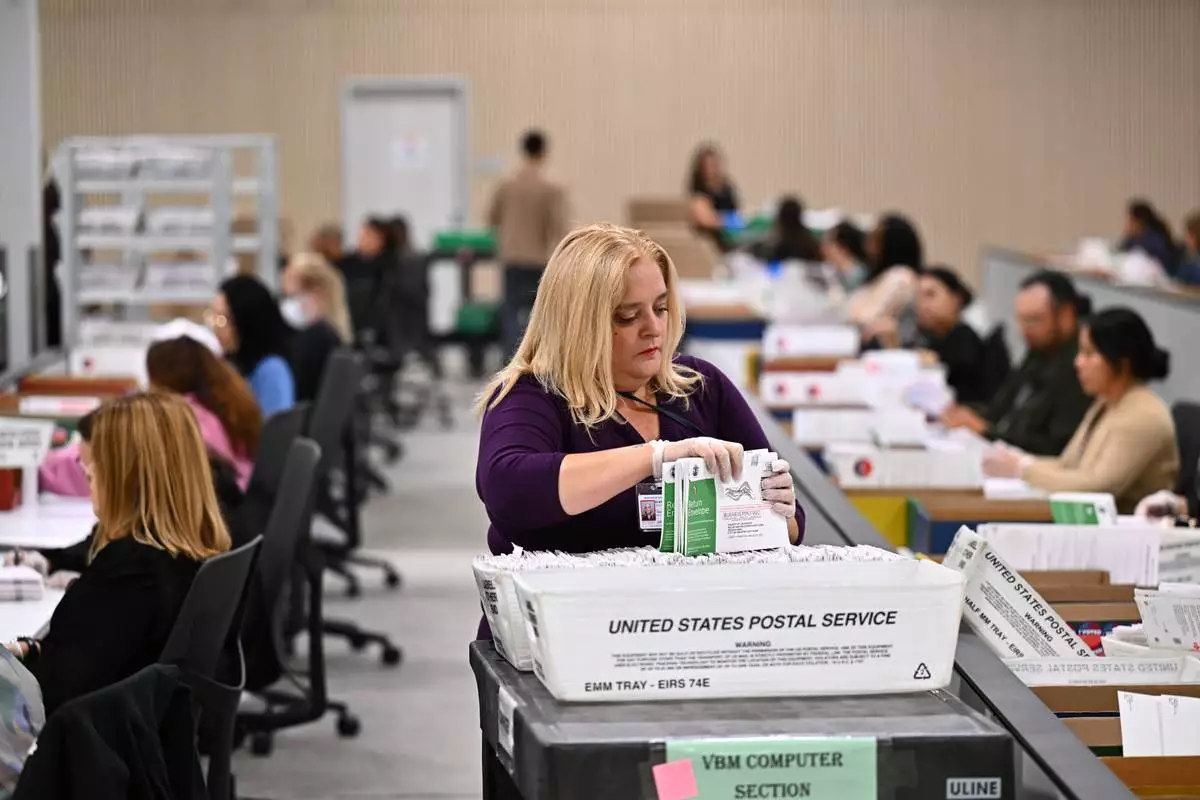
FILE - A worker sorts ballots at the L.A. County Ballot Processing Center during the California primary election, June 2, 2026, in City of Industry, Calif. (AP Photo/William Liang, File)
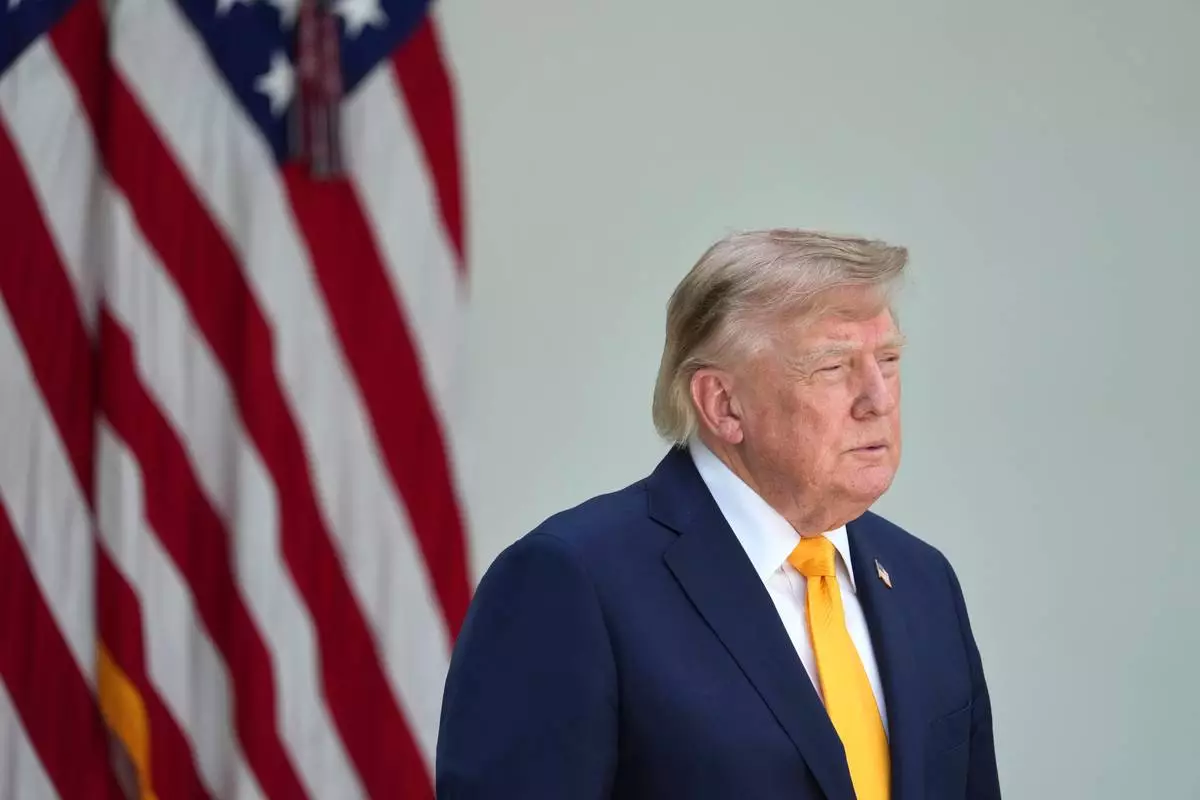
President Donald Trump listens during a back to school event in the Rose Garden of the White House, Monday, Aug. 24, 2026, in Washington. (AP Photo/Alex Brandon)
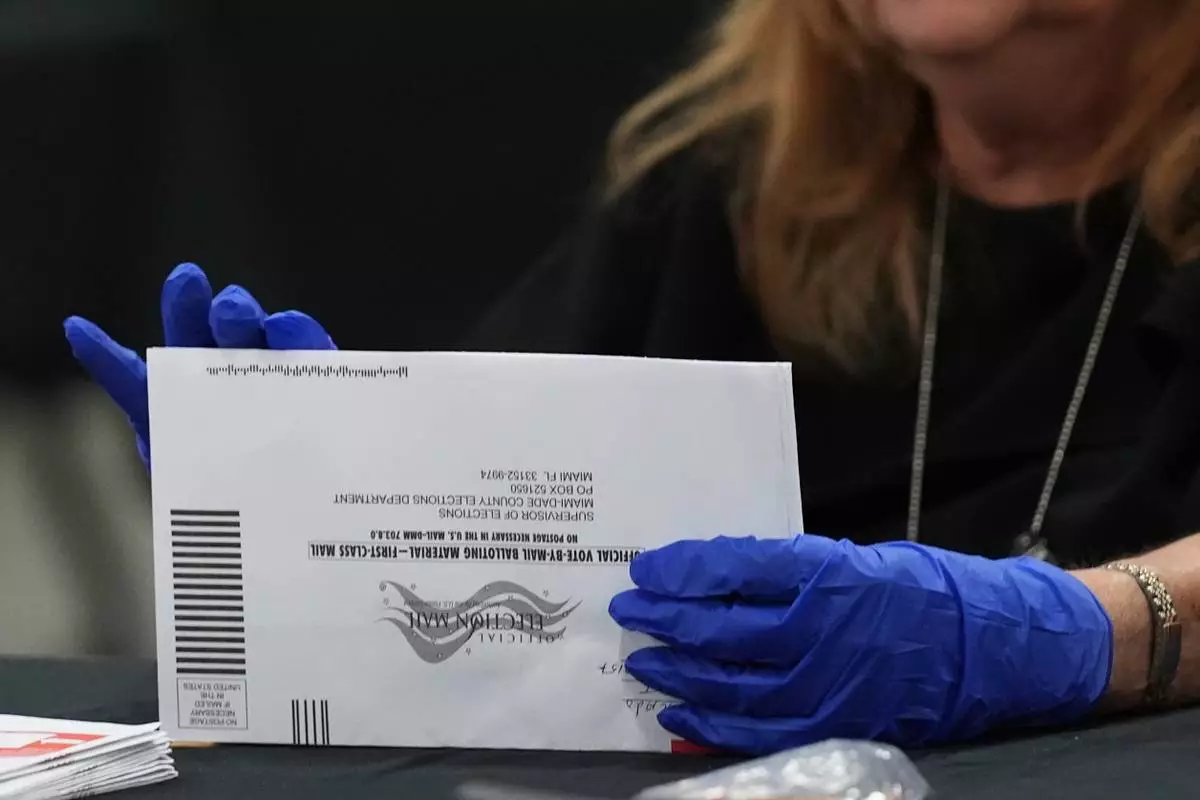
An election worker sorts vote-by-mail ballots at the Miami-Dade County Supervisor of Elections Office for the Florida primary election in Doral, Fla., Tuesday, Aug. 18, 2026. (AP Photo/Lynne Sladky)
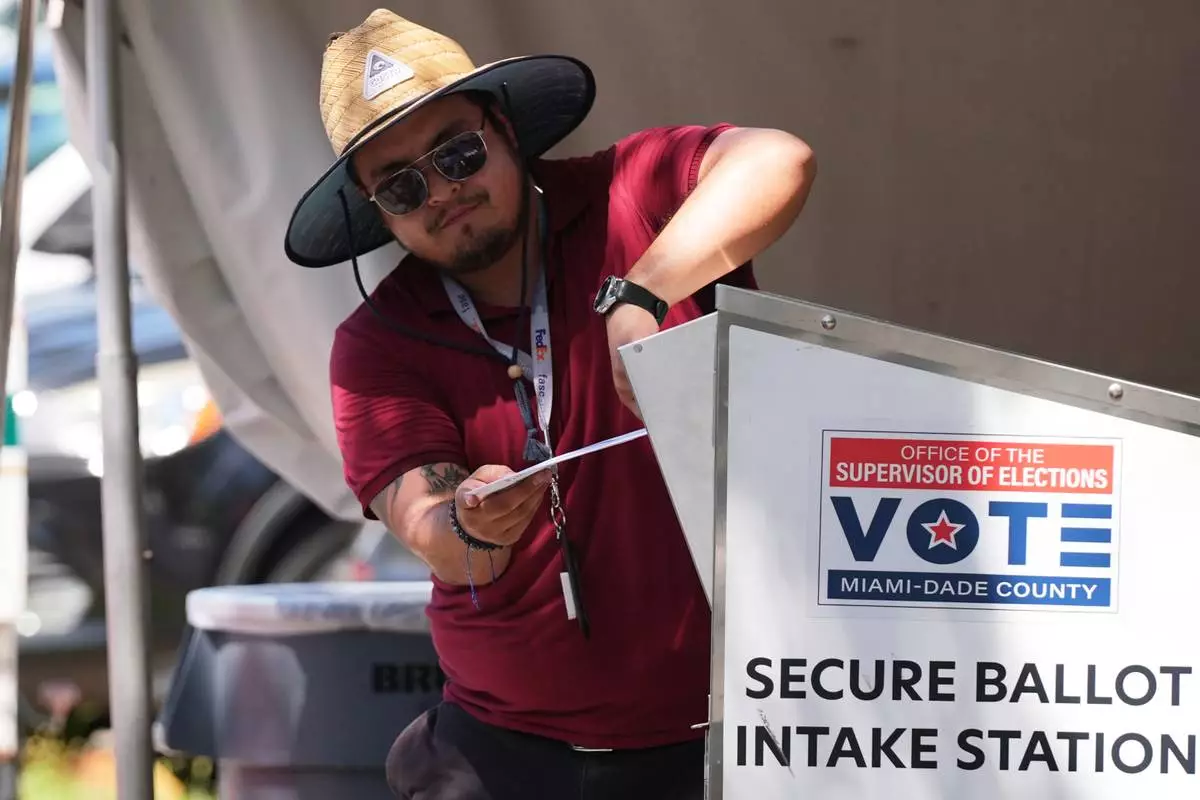
An election worker places a vote-by-mail ballot into a secure bin at the Miami-Dade County Supervisor of Elections Office during the Florida primary election in Doral, Fla., Tuesday, Aug. 18, 2026. (AP Photo/Lynne Sladky)