
Skip to Content Facebook Feature Image

Photos show revelers pelting one another with tomatoes at Spain’s La Tomatina food fight

News

Photos show revelers pelting one another with tomatoes at Spain’s La Tomatina food fight
News

News

Photos show revelers pelting one another with tomatoes at Spain’s La Tomatina food fight

2026-08-27 03:44 Last Updated At:03:51

BUÑOL, Spain (AP) — Thousands pelted one another with overripe tomatoes at La Tomatina in Buñol, Spain. The food fight began in 1945 and drew international crowds by the 1980s. About 40% of people come from abroad. One rule: Squash tomatoes before throwing them.

Revelers throw tomatoes at each other during the annual "Tomatina" tomato fight fiesta, in the village of Bunol near Valencia, Spain, Wednesday, Aug. 26, 2026. (AP Photo/Alberto Saiz)

Revelers throw tomatoes at each other during the annual "Tomatina" tomato fight fiesta, in the village of Bunol near Valencia, Spain, Wednesday, Aug. 26, 2026. (AP Photo/Alberto Saiz)

Revelers throw tomatoes at each other during the annual "Tomatina" tomato fight fiesta, in the village of Bunol near Valencia, Spain, Wednesday, Aug. 26, 2026. (AP Photo/Alberto Saiz)

Revelers throw tomatoes at each other during the annual "Tomatina" tomato fight fiesta, in the village of Bunol near Valencia, Spain, Wednesday, Aug. 26, 2026. (AP Photo/Alberto Saiz)

Revelers throw tomatoes at each other during the annual "Tomatina" tomato fight fiesta, in the village of Bunol near Valencia, Spain, Wednesday, Aug. 26, 2026. (AP Photo/Alberto Saiz)

Revelers throw tomatoes at each other during the annual "Tomatina" tomato fight fiesta, in the village of Bunol near Valencia, Spain, Wednesday, Aug. 26, 2026. (AP Photo/Alberto Saiz)
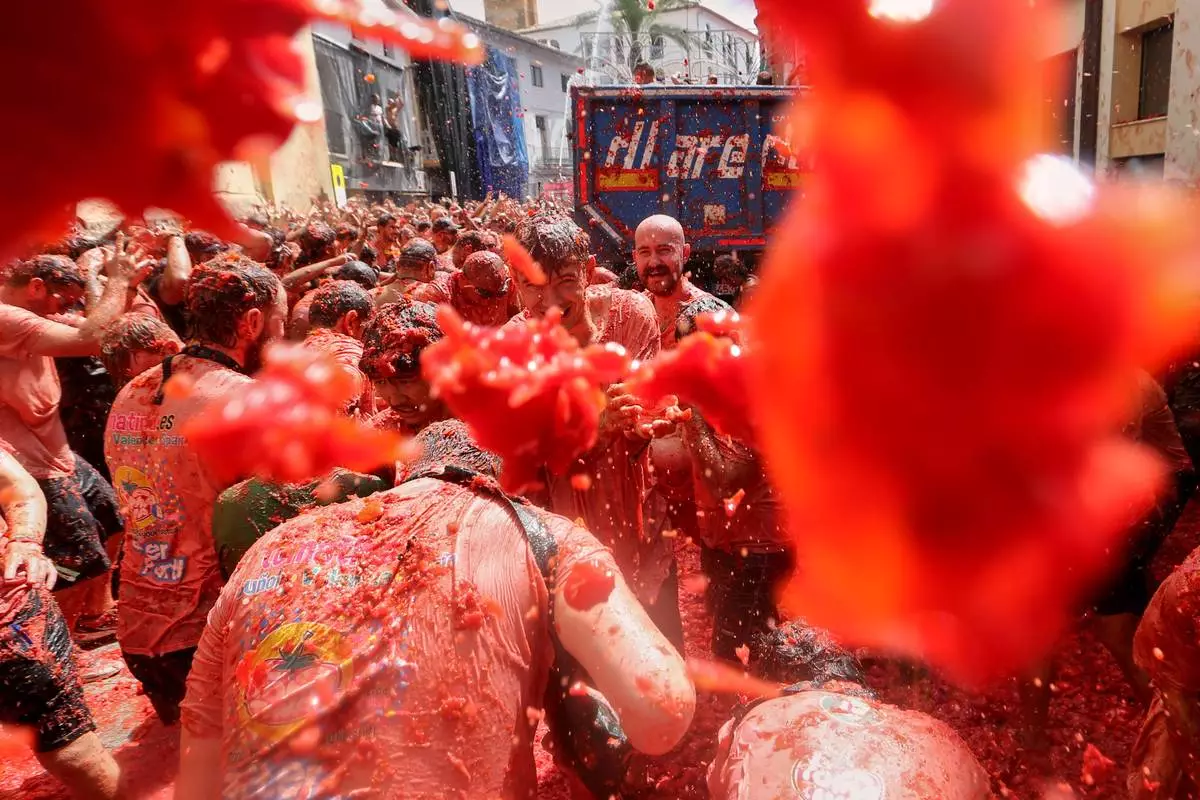
Revelers throw tomatoes at each other during the annual "Tomatina" tomato fight fiesta, in the village of Bunol near Valencia, Spain, Wednesday, Aug. 26, 2026. (AP Photo/Alberto Saiz)
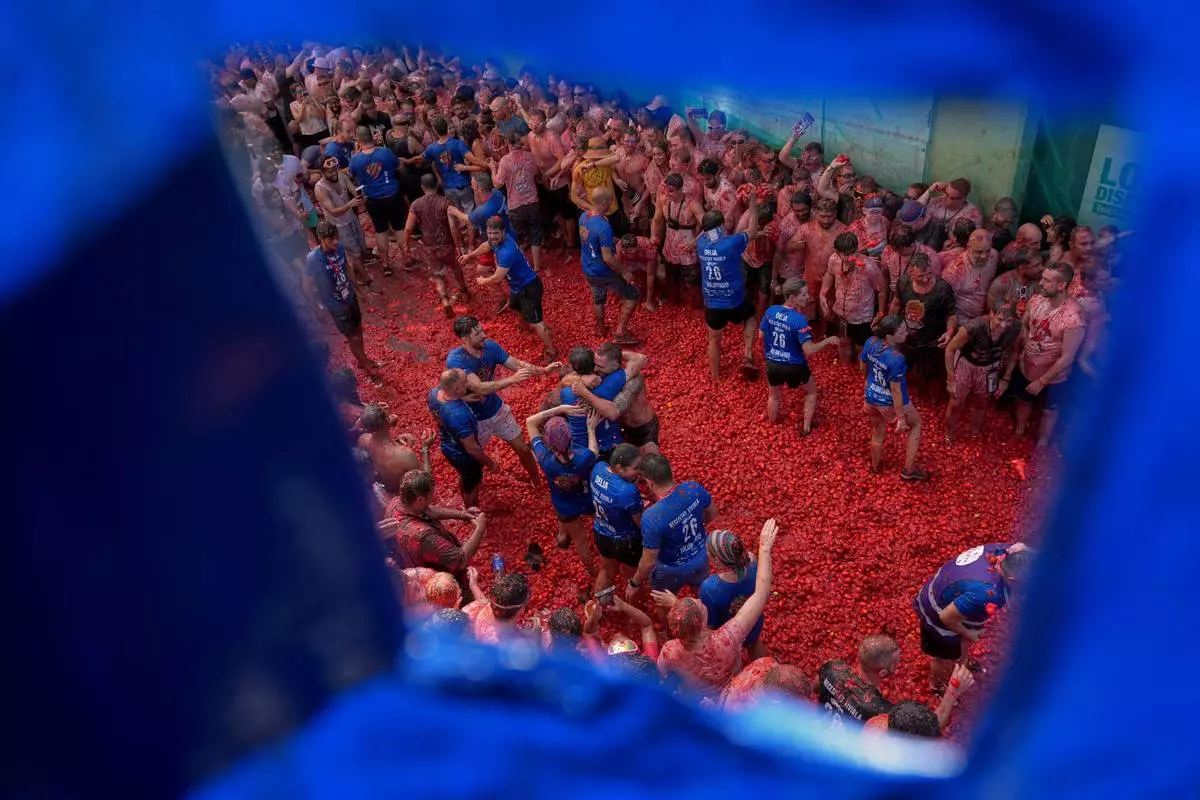
Revelers throw tomatoes at each other during the annual "Tomatina" tomato fight fiesta, in the village of Bunol near Valencia, Spain, Wednesday, Aug. 26, 2026. (AP Photo/Alberto Saiz)

Revelers throw tomatoes at each other during the annual "Tomatina" tomato fight fiesta, in the village of Bunol near Valencia, Spain, Wednesday, Aug. 26, 2026. (AP Photo/Alberto Saiz)

Revelers throw tomatoes at each other during the annual "Tomatina" tomato fight fiesta, in the village of Bunol near Valencia, Spain, Wednesday, Aug. 26, 2026. (AP Photo/Alberto Saiz)

A reveler takes part in the annual "Tomatina" tomato fight fiesta, in the village of Bunol near Valencia, Spain, Wednesday, Aug. 26, 2026. (AP Photo/Alberto Saiz)

A reveler takes part in the annual "Tomatina" tomato fight fiesta, in the village of Bunol near Valencia, Spain, Wednesday, Aug. 26, 2026. (AP Photo/Alberto Saiz)

Revelers throw tomatoes at each other during the annual "Tomatina" tomato fight fiesta, in the village of Bunol near Valencia, Spain, Wednesday, Aug. 26, 2026. (AP Photo/Alberto Saiz)
Revelers throw tomatoes at each other during the annual "Tomatina" tomato fight fiesta, in the village of Bunol near Valencia, Spain, Wednesday, Aug. 26, 2026. (AP Photo/Alberto Saiz)

Revelers throw tomatoes at each other during the annual "Tomatina" tomato fight fiesta, in the village of Bunol near Valencia, Spain, Wednesday, Aug. 26, 2026. (AP Photo/Alberto Saiz)

Revelers throw tomatoes at each other during the annual "Tomatina" tomato fight fiesta, in the village of Bunol near Valencia, Spain, Wednesday, Aug. 26, 2026. (AP Photo/Alberto Saiz)

A reveler takes part in the annual "Tomatina" tomato fight fiesta, in the village of Bunol near Valencia, Spain, Wednesday, Aug. 26, 2026. (AP Photo/Alberto Saiz)
A reveler takes part in the annual "Tomatina" tomato fight fiesta, in the village of Bunol near Valencia, Spain, Wednesday, Aug. 26, 2026. (AP Photo/Alberto Saiz)

Revelers throw tomatoes at each other during the annual "Tomatina" tomato fight fiesta, in the village of Bunol near Valencia, Spain, Wednesday, Aug. 26, 2026. (AP Photo/Alberto Saiz)

Revelers throw tomatoes at each other during the annual "Tomatina" tomato fight fiesta, in the village of Bunol near Valencia, Spain, Wednesday, Aug. 26, 2026. (AP Photo/Alberto Saiz)


A man throws himself over a pool of tomatoes during the annual "Tomatina" tomato fight fiesta, in the village of Bunol near Valencia, Spain, Wednesday, Aug. 26, 2026. (AP Photo/Alberto Saiz)
A man throws himself over a pool of tomatoes during the annual "Tomatina" tomato fight fiesta, in the village of Bunol near Valencia, Spain, Wednesday, Aug. 26, 2026. (AP Photo/Alberto Saiz)
More Images
Revelers throw tomatoes at each other during the annual "Tomatina" tomato fight fiesta, in the village of Bunol near Valencia, Spain, Wednesday, Aug. 26, 2026. (AP Photo/Alberto Saiz)
Revelers throw tomatoes at each other during the annual "Tomatina" tomato fight fiesta, in the village of Bunol near Valencia, Spain, Wednesday, Aug. 26, 2026. (AP Photo/Alberto Saiz)

Revelers throw tomatoes at each other during the annual "Tomatina" tomato fight fiesta, in the village of Bunol near Valencia, Spain, Wednesday, Aug. 26, 2026. (AP Photo/Alberto Saiz)

Revelers throw tomatoes at each other during the annual "Tomatina" tomato fight fiesta, in the village of Bunol near Valencia, Spain, Wednesday, Aug. 26, 2026. (AP Photo/Alberto Saiz)

Revelers throw tomatoes at each other during the annual "Tomatina" tomato fight fiesta, in the village of Bunol near Valencia, Spain, Wednesday, Aug. 26, 2026. (AP Photo/Alberto Saiz)
Revelers throw tomatoes at each other during the annual "Tomatina" tomato fight fiesta, in the village of Bunol near Valencia, Spain, Wednesday, Aug. 26, 2026. (AP Photo/Alberto Saiz)

Revelers throw tomatoes at each other during the annual "Tomatina" tomato fight fiesta, in the village of Bunol near Valencia, Spain, Wednesday, Aug. 26, 2026. (AP Photo/Alberto Saiz)

Revelers throw tomatoes at each other during the annual "Tomatina" tomato fight fiesta, in the village of Bunol near Valencia, Spain, Wednesday, Aug. 26, 2026. (AP Photo/Alberto Saiz)
Revelers throw tomatoes at each other during the annual "Tomatina" tomato fight fiesta, in the village of Bunol near Valencia, Spain, Wednesday, Aug. 26, 2026. (AP Photo/Alberto Saiz)

Revelers throw tomatoes at each other during the annual "Tomatina" tomato fight fiesta, in the village of Bunol near Valencia, Spain, Wednesday, Aug. 26, 2026. (AP Photo/Alberto Saiz)

A reveler takes part in the annual "Tomatina" tomato fight fiesta, in the village of Bunol near Valencia, Spain, Wednesday, Aug. 26, 2026. (AP Photo/Alberto Saiz)

A reveler takes part in the annual "Tomatina" tomato fight fiesta, in the village of Bunol near Valencia, Spain, Wednesday, Aug. 26, 2026. (AP Photo/Alberto Saiz)

Revelers throw tomatoes at each other during the annual "Tomatina" tomato fight fiesta, in the village of Bunol near Valencia, Spain, Wednesday, Aug. 26, 2026. (AP Photo/Alberto Saiz)

Revelers throw tomatoes at each other during the annual "Tomatina" tomato fight fiesta, in the village of Bunol near Valencia, Spain, Wednesday, Aug. 26, 2026. (AP Photo/Alberto Saiz)

Revelers throw tomatoes at each other during the annual "Tomatina" tomato fight fiesta, in the village of Bunol near Valencia, Spain, Wednesday, Aug. 26, 2026. (AP Photo/Alberto Saiz)

Revelers throw tomatoes at each other during the annual "Tomatina" tomato fight fiesta, in the village of Bunol near Valencia, Spain, Wednesday, Aug. 26, 2026. (AP Photo/Alberto Saiz)

A reveler takes part in the annual "Tomatina" tomato fight fiesta, in the village of Bunol near Valencia, Spain, Wednesday, Aug. 26, 2026. (AP Photo/Alberto Saiz)

A reveler takes part in the annual "Tomatina" tomato fight fiesta, in the village of Bunol near Valencia, Spain, Wednesday, Aug. 26, 2026. (AP Photo/Alberto Saiz)

Revelers throw tomatoes at each other during the annual "Tomatina" tomato fight fiesta, in the village of Bunol near Valencia, Spain, Wednesday, Aug. 26, 2026. (AP Photo/Alberto Saiz)

Revelers throw tomatoes at each other during the annual "Tomatina" tomato fight fiesta, in the village of Bunol near Valencia, Spain, Wednesday, Aug. 26, 2026. (AP Photo/Alberto Saiz)

A man throws himself over a pool of tomatoes during the annual "Tomatina" tomato fight fiesta, in the village of Bunol near Valencia, Spain, Wednesday, Aug. 26, 2026. (AP Photo/Alberto Saiz)

A man throws himself over a pool of tomatoes during the annual "Tomatina" tomato fight fiesta, in the village of Bunol near Valencia, Spain, Wednesday, Aug. 26, 2026. (AP Photo/Alberto Saiz)

TORONTO (AP) — U.S. President Donald Trump says his country does not need Canada. But every day, roughly 4 million barrels of Canadian crude oil flow south, helping fuel American cars, trucks and airplanes and supply U.S. industry.

And oil is only the beginning.

Canada also supplies aluminum, potash to U.S. farms and parts for an auto industry built on both sides of the border.

“WE DON’T NEED CANADA, THEY NEED US!” Trump posted this week, repeating his long-running claim.

Yet Trump has imposed a 50% tariff on Canadian aluminum while acknowledging this week that the United States badly needs the metal.

“This country desperately needs aluminum,” Trump said. “We don’t have it. We get it all from Canada for the most part, and we need it badly.”

The contradiction underscores how deeply the two economies remain intertwined — and how much could be at stake if Trump’s trade war reaches more of the energy, materials and supply chains that the U.S. still relies on Canada to provide.

Canada is the United States’ second-largest trading partner after Mexico and energy is at the heart of that relationship.

The two countries exchanged about $872 billion in goods and services last year. Canadian crude imports equal nearly 20% of total U.S. petroleum consumption, according to the U.S. Energy Information Administration, part of the Department of Energy.

Daniel Béland, a political science professor at McGill University, said Trump’s claim that the United States does not need Canada is “absolutely false,” citing U.S. reliance on Canadian oil and natural gas and deeply integrated industries such as autos.

Much of Canada’s crude flows to Midwest refineries built to process its heavy oil into gasoline, diesel and jet fuel.

Energy also explains much of the U.S. trade deficit with Canada, which Trump frequently cites as evidence of an unfair relationship.

The White House this week portrayed the relationship in starkly negative terms, saying Canada had taken roughly $50 billion a year from the United States over the past decade. Much of that gap reflects U.S. purchases of Canadian energy, which helps power the U.S. economy. And Canada's heavy crude typically trades at a discount to U.S. benchmark oil, according to the U.S. Energy Information Administration.

Energy more than accounted for last year’s $48.3 billion goods deficit. Without energy, the United States would have run a trade surplus.

After trade talks collapsed last Friday, the U.S. imposed 50% tariffs on about $20 billion worth of Canadian goods. The measures cover only about 5% of Canadian exports to the United States and exclude energy.

For now, using oil as a weapon in trade negotiations remains a remote possibility. Alberta Premier Danielle Smith opposes restricting energy exports, arguing that doing so would hurt her province.

But former Alberta Premier Jason Kenney said Canada should not rule out export taxes on oil, fuel or potash if Trump escalates further.

Such retaliation “would affect Republicans who drive F-150s and lay fertilizer on their farm fields,” Kenney said.

“They should be mindful that if they really want to escalate, it will not end well for the American economy two months before midterm elections,” he said.

Ontario Premier Doug Ford cited Canadian commodities as leverage, accusing Trump of “putting out fake news” about the United States not needing Canada. He called potash used by U.S. farmers “one of the most powerful tools we have” and said Washington would have to turn to suppliers such as Russia if Canada redirected shipments.

Saskatchewan Premier Scott Moe strongly rejected the approach, saying his province “cannot and will not support” export tariffs on resources. Moe said Saskatchewan is on track to supply about half the world’s potash and warned that taxing exports could cost Canadian jobs, raise fertilizer prices on both sides of the border and push U.S. buyers toward suppliers such as Belarus.

“This would be a tremendously flawed policy on behalf of Canadians,” Moe said.

Kenney stopped short of advocating an export tax, and Béland said such a move would probably be “a very divisive issue politically in provinces like Alberta and Saskatchewan.”

That underscores the limits of Canada’s leverage: measures aimed at hurting U.S. industries could also hurt Canadian producers and strain political unity at home.

Canada has long been the dominant foreign source of aluminum for the United States. Smelting the metal requires enormous amounts of electricity, giving hydro-rich Canada a major advantage.

Prime Minister Mark Carney told a New York business audience in May that Canadian aluminum exports to the U.S. are “the energy equivalent of 10 Hoover dams.”

American farmers are even more dependent on Canada for potash, a fertilizer essential to crops such as corn and soybeans. More than 80% of U.S. potash imports come from Canada.

Even Trump’s ambassador has disputed the idea that the United States needs nothing from its neighbor.

“America has a tremendous amount of things where we have a need,” Ambassador Pete Hoekstra said in June. Pointing to Canadian fertilizer supplies, he added: “We need potash.”

Then there are cars.

Canada and the United States have built an integrated auto industry in which parts can cross the border up to six times before final assembly, according to the Canadian government.

Trump said Monday that his administration would impose 50% tariffs on Canadian cars, trucks and auto parts starting Jan. 1, 2027 — after the November midterm elections.

That means a tariff aimed at Canada can land in Michigan or Ohio. Tax Canadian aluminum and an American automaker may pay more for metal. Tax Canadian parts and the cost of assembling an American vehicle can rise.

Artificial intelligence is driving a surge in electricity demand. Canada supplied 85% of U.S. electricity imports in 2023, according to the Canada Energy Regulator, and Carney says the country needs to double the capacity of its electricity grid by 2050 through major hydroelectric and nuclear projects.

Carney said Canada could help the United States “meet exploding demand to power AI."

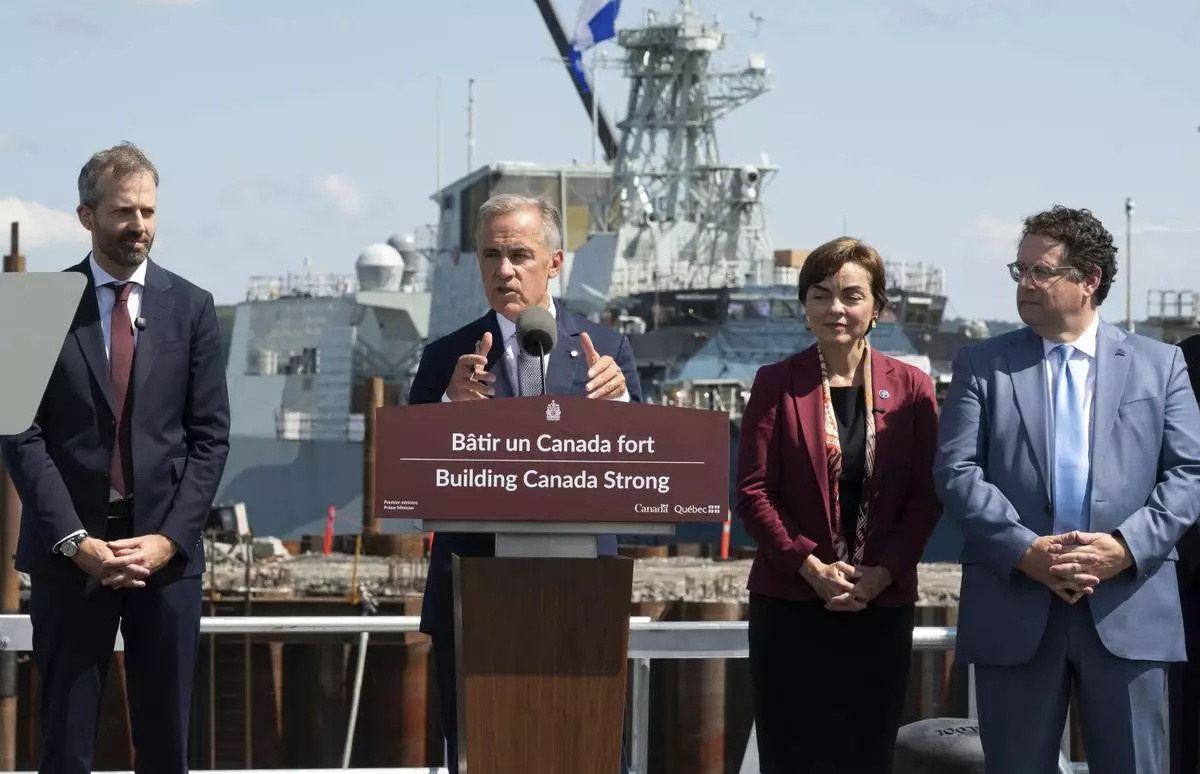
Canadian Prime Minister Mark Carney, center, speaks at the Davie shipyard in Levis, Quebec on Monday, Aug. 24, 2026. Joël Lightbound, Minister of Government Transformation, Public Works and Procurement, left, Quebec Premier Christine Frechette, and Quebec Minister of Economy, Innovation and Energy and Minister Responsible for Maritime Strategy Bernard Drainville look on. (Jacques Boissinot/The Canadian Press via AP)

Canadian Prime Minister Mark Carney, center, speaks at the Davie shipyard in Levis, Quebec on Monday, Aug. 24, 2026. Joël Lightbound, Minister of Government Transformation, Public Works and Procurement, left, Quebec Premier Christine Frechette, and Quebec Minister of Economy, Innovation and Energy and Minister Responsible for Maritime Strategy Bernard Drainville look on. (Jacques Boissinot/The Canadian Press via AP)

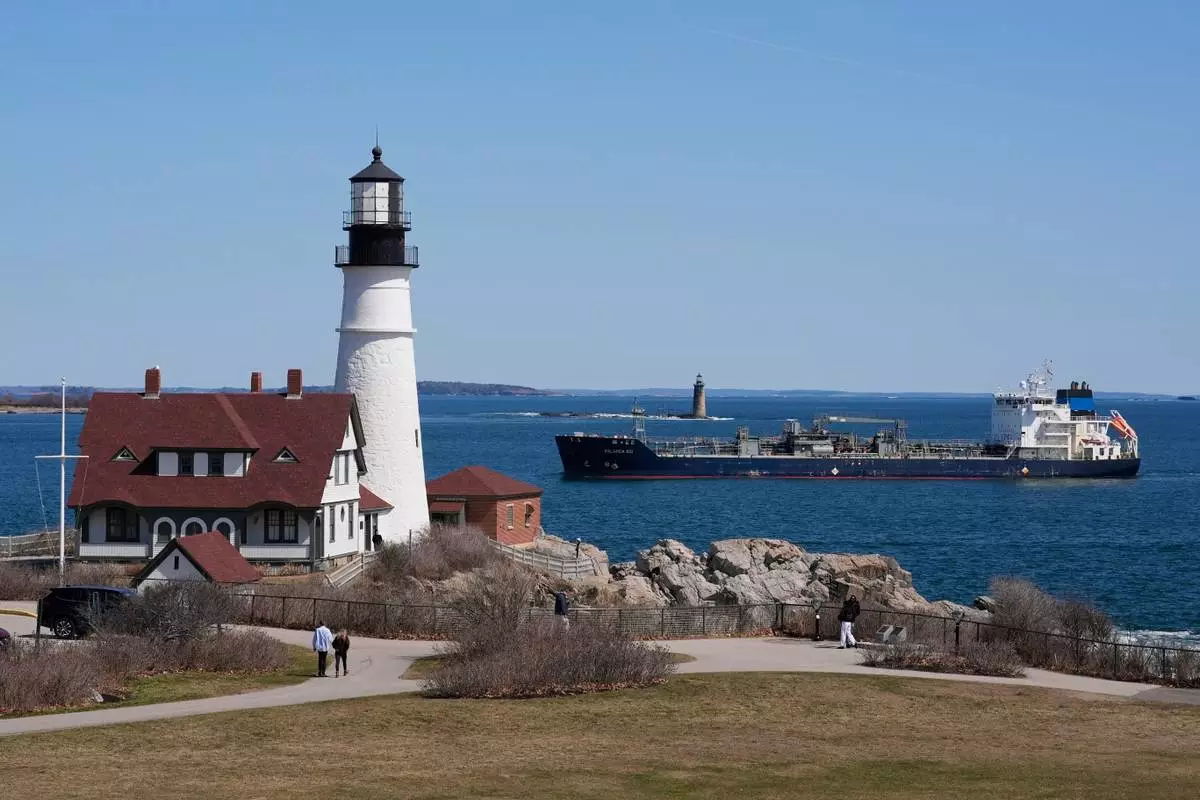
FILE - The oil tanker Palanca Rio passes by Cape Elizabeth, Maine, on April 2, 2025, after a two-day voyage from St. John, New Brunswick, Canada. (AP Photo/Robert F. Bukaty, File)

FILE - The oil tanker Palanca Rio passes by Cape Elizabeth, Maine, on April 2, 2025, after a two-day voyage from St. John, New Brunswick, Canada. (AP Photo/Robert F. Bukaty, File)

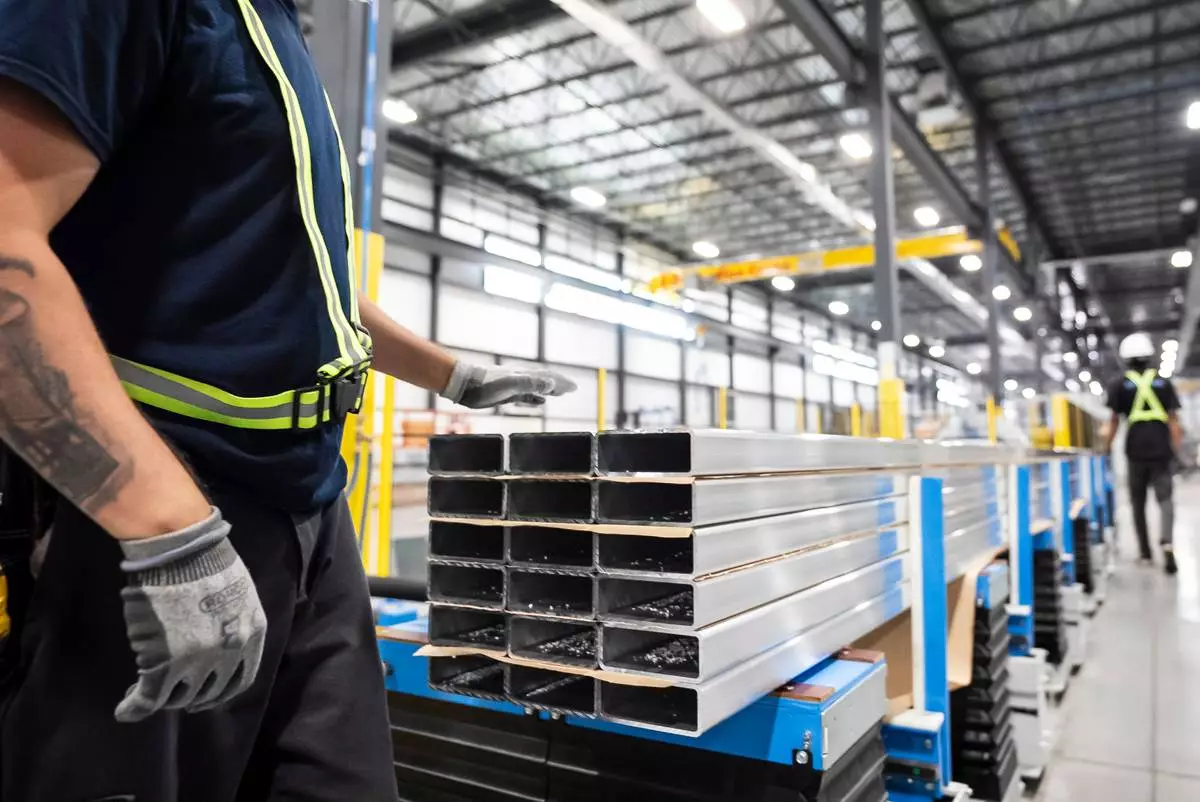
FILE - Workers prepare extruded aluminum product for packaging at Magna Aluminum Profile's fully electric powered extrusion facility in Salaberry-de-Valleyfield, Quebec, Canada, on Sept. 3, 2025. (Christopher Katsarov/The Canadian Press via AP, File)

FILE - Workers prepare extruded aluminum product for packaging at Magna Aluminum Profile's fully electric powered extrusion facility in Salaberry-de-Valleyfield, Quebec, Canada, on Sept. 3, 2025. (Christopher Katsarov/The Canadian Press via AP, File)

Recommended Articles