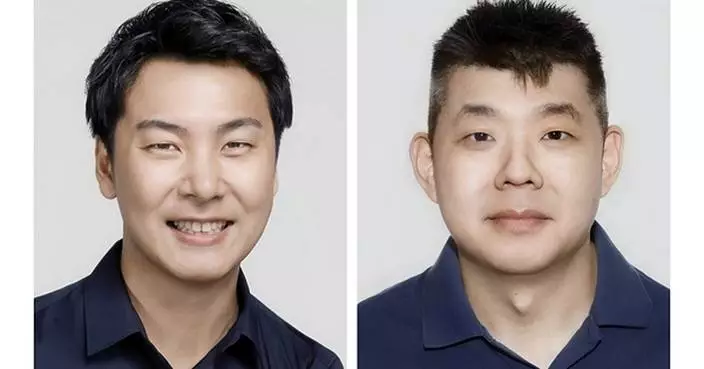
SYDNEY, Aug. 27, 2026 /PRNewswire/ -- US$350 billion* global asset manager American Century Investments® today announces Nigel Stewart has joined the firm as Managing Director and Head of Asia Pacific, based in Sydney. Stewart will report to Eduardo Repetto, CIO of Avantis Investors®, an investment offering from American Century.
"Nigel is a global visionary leader with a strong track record in the financial services sector. It is more than an honor to be able to work with him helping advisers and consultants help their clients around the world achieve financial success," said Eduardo Repetto, Avantis Investors CIO. "Nigel joins a team with a strong service culture who are eager to deliver the best for our clients. His passion for positive community impact and helping investors makes him an excellent fit with the team."
"Throughout my career, I've focused on helping investors achieve better outcomes, and I see this role as a natural extension of that mission," said Stewart. "American Century's commitment to aligning its success with the success of clients, combined with its unique purpose-driven ownership model and longstanding support of medical research, strongly resonates with my personal values around philanthropy and community wellbeing. I'm thrilled for the opportunity to contribute and drive more positive change for investors."
Stewart was previously an executive director of Dimensional Fund Advisors, having co-founded DFA Australia Limited in 1994. He brings a proven track record of helping advisers build lasting bridges to the next generation of investors through thoughtfully integrated philanthropy and sustainability strategies.
Commitment to investors in the Asia-Pacific region
In September 2025, Avantis entered the Australian market with three dual access exchange-traded funds (ETFs): Avantis Small Cap Value Active ETF (AVTS), Avantis Global Equity Active ETF (AVTG) and Avantis Emerging Markets Equity Active ETF (AVTE).
The launch of the Avantis funds built on American Century's nearly decade-long presence in Australia, which includes the Global Small Cap Value AUT and a range of investment strategies spanning Global Non-U.S. Growth, Small Cap Growth and Global REITs.
"Our focus is on making it easier for clients across Asia Pacific to access the investment solutions they need. We listen closely to investors in each market and respond with locally available solutions and the service to support them," said Repetto. "Nigel is well suited to help us meet the growing demand from across the Asia Pacific region and beyond."
Powered by financial science
Avantis Investors is a $160 billion* investment offering from global asset manager American Century Investments. Founded in 2019, Avantis helps clients pursue their investment goals through well-diversified strategies designed to fit seamlessly into portfolios—combining the benefits of indexing with the potential for outperformance. Today, Avantis offers more than 40 investment strategies across equity, fixed income, real estate assets and target date funds, with offerings in the United States, Canada, Australia, and Europe. With a focus on financial science and a range of low-cost investment vehicles, Avantis, along with American Century, has become a top five active ETF issuer by assets under management1. For more information, visit: www.AvantisInvestors.com.
About American Century Investments
American Century Investments is a leading global asset manager focused on delivering investment results and building long-term client relationships while supporting breakthrough medical research. Founded in 1958, American Century Investments' approximately 1,400 employees serve financial professionals, institutions, corporations and individual investors from offices in Kansas City, Mo.; New York; Los Angeles; Santa Clara, Calif.; Portland, Ore.; London; Frankfurt, Germany; Hong Kong; and Sydney. Jonathan S. Thomas is chairman, chief executive officer and president, and Victor Zhang serves as senior vice president and chief investment officer. Delivering investment results to clients enables American Century Investments to distribute 40% of its dividends to the Stowers Institute for Medical Research, a 500-person, nonprofit biomedical research organization with a focus on foundational research. The Institute is the largest owner of American Century Investments and has received dividend payments of more than $2 billion since 2000. For more information about American Century Investments, visit www.americancentury.com.
This document is issued by American Century Investment Management, Inc. (Manager)
Equity Trustees Limited ABN 46 004 031 298, AFSL 240975 (Responsible Entity), is the responsible entity of the Avantis Emerging Markets Equity Active ETF (ARSN 685 854 719) (AVTE), Avantis Global Equity Active ETF (ARSN 685 854 862) (AVTG) and Avantis Global Small Cap Value Active ETF (ARSN 685 855 252) (AVTS). The Responsible Entity is a subsidiary of EQT Holdings Limited ABN 22 607 797 615, a publicly listed company on the Australian Securities Exchange (ASX: EQT). The investment manager for each of AVTS, AVTE and AVTG is American Century Investment Management, Inc. (Manager), who is exempt from holding an AFSL under the Corporations Act 2011 (Cth) (Australian Corporations Act) in respect of the financial services it provides to "wholesale clients" for the purposes of the Australian Corporations Act and does not hold such a license. The Manager is regulated by the Securities and Exchange Commission (SEC) (CRD#105778/SEC#:801-8174) under the United States laws which differ from Australian laws. The Manager relies on ASIC relief provided for under Class Order [CO 03/1100] for U.S. SEC-regulated financial services providers in relation to the provision of financial services to Australian clients.
The information in respect of the Funds issued by the Responsible Entity is general information only. The Responsible Entity has not taken your objectives, financial situation or needs into account when preparing any of the information on this website so it may not be applicable to your circumstances. You should consider your circumstances and the Product Disclosure Statement ("PDS") for each Fund before making any investment decision. You can access the PDSs on this website or by calling the Responsible Entity on +613 8623 5000. Before you make any financial decision regarding a Fund, you should seek professional advice from a suitably qualified adviser.
A copy of the Target Market Determinations (TMD) for the Funds which are prepared and issued by the Responsible Entity can be obtained from this website or by calling the Responsible Entity on +613 8623 5000. It includes a description of who the financial product is appropriate for. You should refer to the TMD of a Fund before making any investment decisions.
An investment in a Fund is subject to investment and other known and unknown risks, some of which are beyond the control of the Responsible Entity and the Manager, including possible delays in repayment and loss of income and principal invested You should have regard to the risks outlined in the risks section of a Fund's PDS. Neither the Responsible Entity, the Manager nor any of their related entities, directors or officers give any guarantee as to the success of any Fund, amount or timing of distributions, capital growth or taxation consequences of investing in any of the Funds.
*Assets under supervision as of 08/13/26. Source: American Century Investments
©2026 American Century Proprietary Holdings, Inc. All rights reserved.
1 Source: Morningstar data out of 422 ETF issuers overall and 376 active ETF issuers as of April 30, 2026
** This press release is distributed by PR Newswire through automated distribution system, for which the client assumes full responsibility. **

AMERICAN CENTURY INVESTMENTS AND AVANTIS INVESTORS NAME NIGEL STEWART MANAGING DIRECTOR AND HEAD OF ASIA-PACIFIC REGION
AMERICAN CENTURY INVESTMENTS AND AVANTIS INVESTORS NAME NIGEL STEWART MANAGING DIRECTOR AND HEAD OF ASIA-PACIFIC REGION
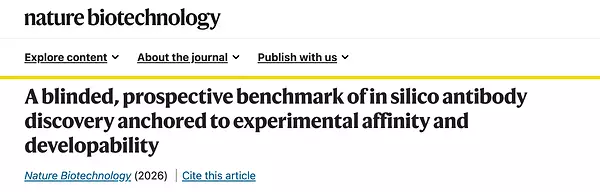
SHANGHAI and LAGUNA HILLS, Calif., Aug. 27, 2026 /PRNewswire/ -- The complete results of AIntibody, the first international AI antibody design competition, have now been formally published in Nature Biotechnology.
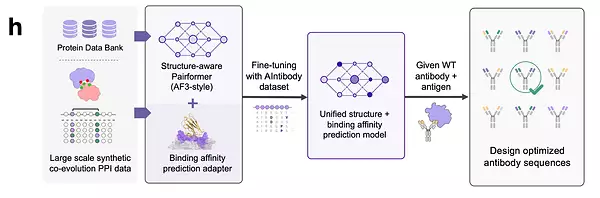
Widely regarded as the field's most rigorous test — every entry validated by independent wet-lab experiments under identical conditions — this blinded benchmark saw Aureka Biotechnologies take first place in Challenge 1 (in-silico affinity maturation) with AuraIDE, its in-house antibody design model, entered and cited in the paper as AuraBind.
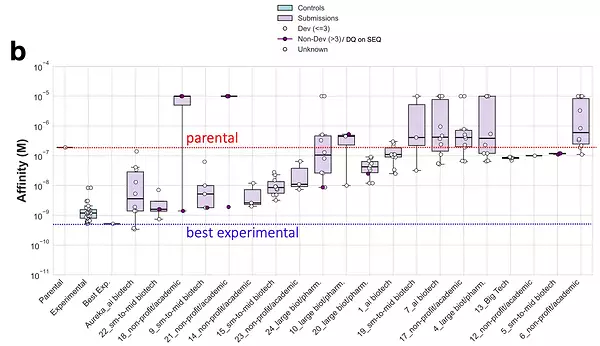
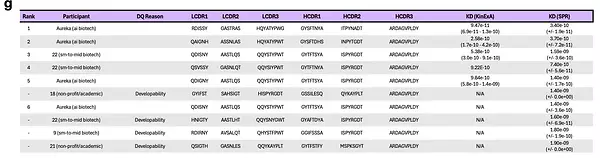
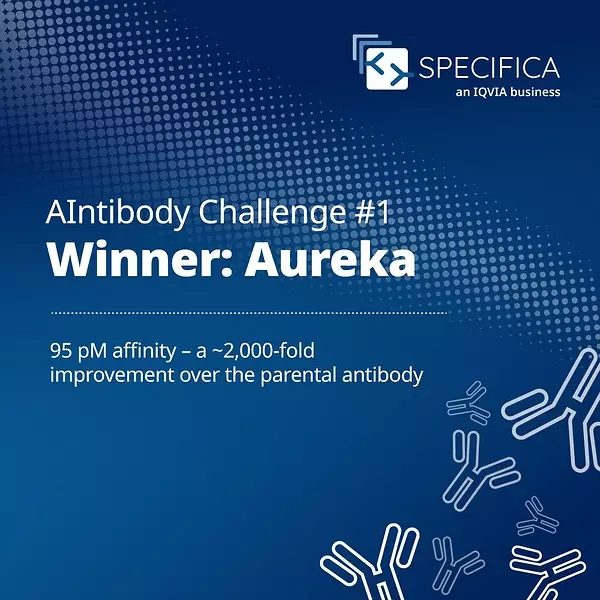
The winning antibody designed by AuraIDE reached an affinity of 94.7pM as measured by KinExA, an approximately 2,000-fold improvement over the parental antibody. Two further antibodies submitted by AuraIDE ranked second and fifth, giving the model three of the top five places in Challenge 1. In addition, AuraIDE designed a total of six antibodies with affinities below 10 nM that also met the competition's developability criteria.
The AIntibody Challenges: A Blinded, Independently Wet-Lab-Validated Benchmark for AI Antibody Design
Generative AI is already widely used in antibody discovery and protein design, yet the field still has no objective way to measure what any given model can actually do. In protein structure prediction, the blinded-benchmark paradigm established by CASP has become the accepted standard for judging a model's true capability. Through prospective blind testing and unified evaluation criteria, it pulls computational methods out of their own datasets and internal benchmarks and holds them all to one common standard — the way AlphaFold2's breakthrough performance was validated.
AIntibody applies that same approach to antibodies, putting two questions the field has yet to answer to the test: how good are AI-designed antibodies, really — and does any model's design capability hold up under standardized, independent wet-lab testing?
The first AIntibody challenge targeted the receptor-binding domain (RBD) of the SARS-CoV-2 Spike protein. The RBD is among the most thoroughly studied proteins in the world, backed by extensive public structural and sequence data, and the organizers supplied participants with a rich set of experimental screening data on top of that. That abundance is exactly what makes it a demanding test: with so much of the RBD already in public training data, a model can only stand out by having genuinely learned the rules of antibody binding rather than memorized them.
The competition comprised three tasks. Challenge 1 focused on in-silico affinity maturation: from organizer-supplied NGS data covering only the first stage of the parental antibody's affinity maturation, participants had to design new antibodies outright — higher in affinity, and developable. Challenge 2 asked participants to rank existing candidate antibodies by affinity; Challenge 3, to design novel CDR combinations beyond the screening data.
For Aureka, Challenge 1 was the most important of the three. It was the only task built on data from a sequencing pipeline like the ones used in real antibody development, and the one that maps most directly onto lead optimization as it is actually practiced. In its Discussion, Nature Biotechnology further notes that Challenge 1 is, among this year's tasks, the scenario in which the applied value of AI is currently clearest.
The first competition attracted 29 participating organizations and tested 511 AI-designed or AI-predicted antibodies, with participants spanning academia, non-profit organizations, AI startups, biotechnology companies, and large pharmaceutical and technology companies.
Teams had 14 days from the release of each task to submit, and in Challenge 1 no more than 10 sequences each. All submitted sequences were expressed as full-length IgG by the organizers under uniform conditions, first measured for affinity by SPR, with high-affinity candidates then further validated by single-point and standard KinExA.
Affinity alone was not enough. Each antibody also had to clear five developability assessments — HIC, BVP, AC-SINS, Tm and Tagg — covering hydrophobicity, polyreactivity, self-interaction, thermal stability and aggregation propensity. Only candidates whose composite scores met the competition's thresholds counted as developable. And throughout, the process stayed blinded: no participant saw any experimental result until the competition closed.
In a field awash in technical reports and preprints, a blind test like AIntibody earns its weight. It does not take a model's word for its own performance, scored retrospectively on its own dataset. It puts every team's model into head-to-head competition under identical wet-lab conditions, stripping out the distortion of experimental variation and selective reporting, so that capability is judged on real experimental data and nothing else.
AuraIDE Wins: Compute in Place of Wet-Lab Cycles, Efficiently Powering Antibody Affinity Maturation
Challenge 1, which Aureka won, focuses on a critical step in antibody development: once a hit capable of binding the target has been obtained, how to further improve affinity without altering the molecular framework and within a defined variable-region scope, while keeping the molecule developable throughout.
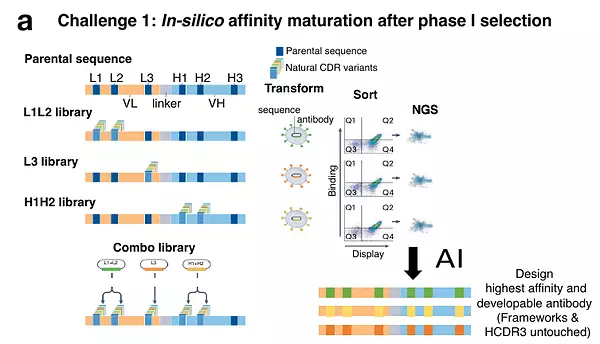
The raw data the competition provided came from NGS sequencing of the parental antibody's first affinity maturation stage. Yeast display libraries were constructed and screened separately for HCDR1, HCDR2, LCDR1, LCDR2 and LCDR3, while HCDR3 and the framework were held constant. That first-stage sequencing output was the only data the competing models ever saw.
In a conventional experimental workflow, however, this is only the first step.
From here, researchers would normally recombine the best-performing mutations from the separate CDR libraries into a combinatorial library and run another round of wet-lab screening, searching the resulting combinations for the clones with the highest affinity.
The data from this round of combinatorial screening, however, was withheld entirely from all competing models.
So the models saw only first-round NGS data, yet had to answer outright a question that a conventional workflow would settle only through further library construction, screening and repeated experimentation:
Which combinations of mutations would actually yield antibodies that are both higher in affinity and developable?
Twenty-five organizations took on that question, submitting 165 antibody designs to Challenge 1. Every one of them was then put through real wet-lab validation under uniform conditions.
This is what makes Challenge 1 fundamentally different from retrospective prediction in the usual sense: the models were not reproducing an experimental answer that already existed, but proposing directly — with the final experimental results unknown — the antibody sequences most worth validating in the next round.
94.7pM: AI Design Surpasses the Best Experimental Result
The final results show that the winning antibody designed by AuraIDE, Aureka's in-house foundation model, had an affinity (KD) of 94.7pM as measured by KinExA — an approximately 2,000-fold improvement in affinity over the parental antibody.
By comparison, the best experimental antibody, obtained through a second round of combinatorial library construction and wet-lab screening, had a KinExA KD of 113 pM.
In other words, a sequence AuraIDE designed in under a week outperformed the best clone from three months of phage maturation experiments. No other team in the competition matched it.
AuraIDE's designed candidate sequences placed 1st, 2nd and 5th on the final leaderboard — all three among the top five. Across its full submission, Aureka produced six antibodies below 10 nM that also met the competition's developability standard. Under blinded conditions and a hard cap on submissions, clustering several candidates near the top says more about a model's reliability than any single top hit does.
What that reliability means in practice is this: AI is no longer just triaging which candidates are worth taking into the lab; it is beginning to do part of the optimization work that once took repeated rounds of library construction, screening and trial and error. Aureka also placed third in Challenge 2 and ninth in Challenge 3 — the only team to finish in the top 10 of all three.
Starting from Existing Data, Exploring a Broader Sequence Space
The winning sequence was something new — not a recombination of the high-frequency mutations already present in the experimental data.
Calculated by Levenshtein distance over the concatenated full-length CDR sequences, the winning antibody differs from the original parental antibody at 19 amino acid positions; even compared with the most similar sequence in the experimental dataset, it still differs by at least 12 amino acids. By contrast, the other top-ranked designs were on the whole closer to existing experimental sequences.
AuraIDE, then, is not mining the existing NGS data for its most frequent mutation combinations and stitching them together. Instead it extracts from the first round of experimental data the signal that guides affinity optimization, then explores sequence space the screening data never reached, generating high-affinity antibodies that hold up under independent wet-lab validation.
From first-round NGS data to a 94.7pM winning antibody; from a single top hit to multiple high-affinity, developable candidate sequences — AIntibody's prospective, blinded wet-lab benchmark has provided a direct, independent validation of what AuraIDE can do in antibody optimization.
For Aureka, though, the win matters for more than first place on a benchmark.
As compute begins to replace part of a wet-lab process that has depended on repeated library construction, screening and trial and error, the value of AI in drug discovery is also beginning to shift from "predicting more accurately" to "developing more quickly."
Paper: https://www.nature.com/articles/s41587-026-03238-6
DOI: https://doi.org/10.1038/s41587-026-03238-6
About Aureka Biotechnologies
Aureka Biotechnologies is an AI-native TechBio company dedicated to building a new generation of biological foundation models and closed-loop, AI-native infrastructure to reengineer the entire drug discovery process. The company has raised nearly US$200 million to date and has established strategic collaborations with several leading global pharmaceutical companies to jointly advance the development of differentiated antibody therapeutics.
AuraIDE, the company's in-house foundation model, is trained on proprietary protein co-evolution data and has established a leading position in protein folding and de novo design. Its open-source version, OpenDDE, has passed independent third-party evaluation and ranks among the world's leading open-source models; AuraIDE has now also won the global AI antibody design competition published in Nature Biotechnology. Combining a proprietary single-cell functional screening platform with project-specific post-training techniques, the company has produced high-value, differentiated antibodies at scale across a number of programs that are difficult to address with conventional methods, such as GPCRs and dual-target monoclonal antibodies. Through end-to-end, agentic R&D infrastructure, it accelerates the translation of innovative concepts into candidate molecules, providing sustained support for the scaled advancement of both its internal pipeline and external collaboration projects.
** This press release is distributed by PR Newswire through automated distribution system, for which the client assumes full responsibility. **
Nature Biotechnology | Aureka Wins the Global Blinded AI Antibody Benchmark: AI Design Surpasses the Best Experimental Result
Nature Biotechnology | Aureka Wins the Global Blinded AI Antibody Benchmark: AI Design Surpasses the Best Experimental Result
Nature Biotechnology | Aureka Wins the Global Blinded AI Antibody Benchmark: AI Design Surpasses the Best Experimental Result
Nature Biotechnology | Aureka Wins the Global Blinded AI Antibody Benchmark: AI Design Surpasses the Best Experimental Result
Nature Biotechnology | Aureka Wins the Global Blinded AI Antibody Benchmark: AI Design Surpasses the Best Experimental Result
Nature Biotechnology | Aureka Wins the Global Blinded AI Antibody Benchmark: AI Design Surpasses the Best Experimental Result