
DEVIGHAT, Nepal (AP) — Rescue teams were searching for hundreds of missing people along the Nepal-China border after a catastrophic and deadly torrent of floods and mud swept through several communities a day earlier following a glacial collapse.
The National Disaster Risk Reduction and Management Authority in Nepal said 826 people were missing and the death toll from the country’s flash floods rose to 165 on Thursday. Nepalese authorities ramped up operations in the worst-affected districts of Nuwakot and Rasuwa.
Click to Gallery
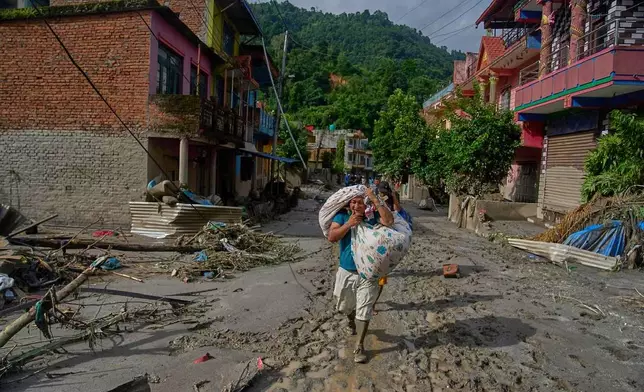
Residents carry their belongings as they walk to safer areas in the aftermath of flash floods in Devighat, in Nepal's Nuwakot district, Thursday, Aug. 27, 2026. (AP Photo/Niranjan Shrestha)
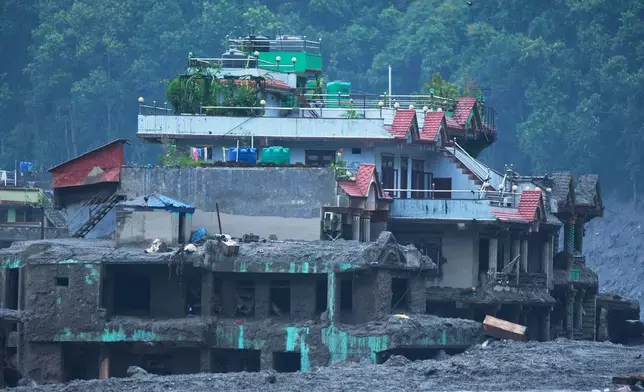
Damage in the aftermath of flash floods in Devighat in the Nuwakot district in Nepal, Thursday, Aug 27, 2026. (AP Photo/Niranjan Shrestha)
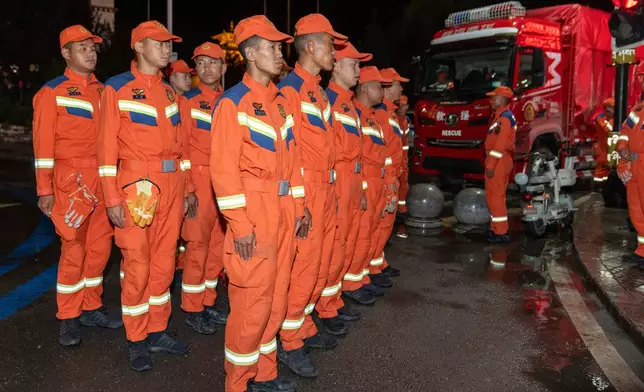
In this photo released by Xinhua News Agency, rescuers prepare before heading to the mudslide-stricken area near Gyirong Port in Gyirong County, southwestern China's Tibet Autonomous Region early Thursday, Aug. 27, 2026. (Tenzing Nima Qadhup/Xinhua via AP)
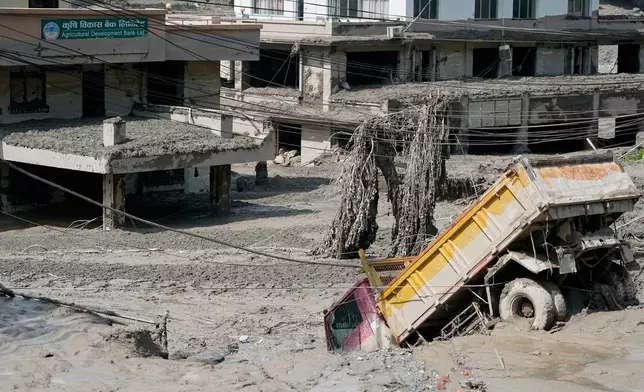
Damaged houses and vehicles are seen in the aftermath of flash floods along the Trishuli River in Nepal's Nuwakot district, Wednesday, Aug. 26, 2026. (AP Photo/Niranjan Shrestha)
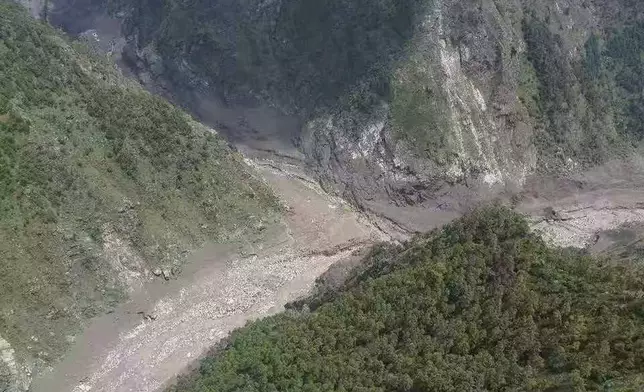
This photo released by Xinhua News Agency, shows a mudslide-hit area near Gyirong Port in southwestern China's Tibetan Autonomous Region on Wednesday, Aug. 26, 2026. (Xinhua via AP)
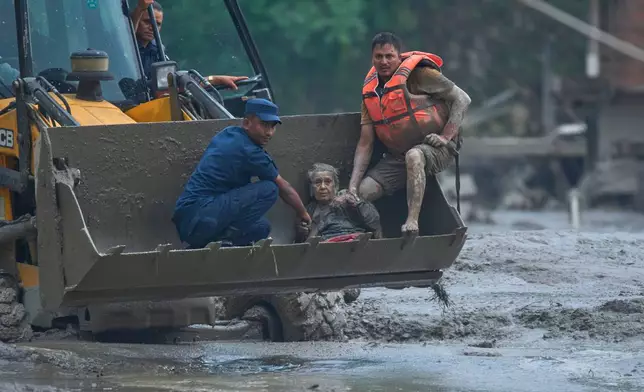
Rescuers use an earthmover to carry a victim of flash flooding to safety along the Trishuli River in Nepal's Nuwakot district, Wednesday, Aug. 26, 2026. (AP Photo/Niranjan Shrestha)
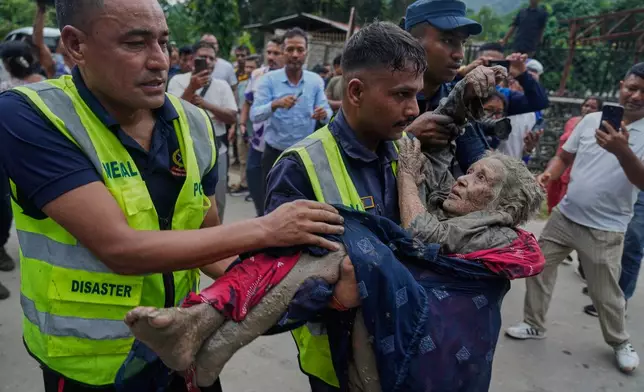
Rescuers carry a victim of flash flooding to safety along the Trishuli River in Nepal's Nuwakot district, Wednesday, Aug. 26, 2026. (AP Photo/Niranjan Shrestha)
Chinese state broadcaster CCTV separately reported that 260 of the 558 missing people in Tibet were foreigners and two villagers were rescued. At least three people were killed as of Thursday morning, it said.
The disaster in Nepal and Tibet is not a one-off. The Lhende Khola river system has now flooded twice in just 14 months and the increasingly unstable Himalayan ice system threatens communities, infrastructure and water supplies across one of the world’s most densely populated regions.
The region saw similar flash floods in August last year, when a glacial lake in Tibet overflowed because of high temperatures. Nine people were killed, and critical infrastructure, including a bridge connecting Nepal and China, was damaged.
Drone footage in Nepal showed roads destroyed and buildings buried by thundering water the color of wet cement.
The region’s steep valleys are economic lifelines and travel corridors but are precarious when disaster strikes. Images showed what appeared to be the second floors of buildings in Nepal’s hard-hit Nuwakot district slathered in mud after the torrent rushed by. Debris hung from tree branches and wires, vehicles were buried and some stunned survivors were caked in mud. The floods halted travel in some areas.
There was little time for anyone to flee.
“When I reached Dhunge bazaar, in half an hour, the flood came and damaged all the market. People were preparing to go to office then,” resident Shoyam Rajbhandari said. “How many people are missing or dead, we don’t know.”
Since early morning, army and private helicopters have been deployed. The Nepalese army has rescued more than 100 people from flood-affected areas through helicopter operations on Thursday morning, army spokesperson Brigadier General Raja Ram Basnet said.
At least eight foreign nationals were airlifted to Kathmandu, he said, adding that army teams also evacuated people trapped inside facilities linked to the Trishuli hydropower project.
Rescuers found bodies about a hundred kilometers downstream from the disaster zone in Chitwan district. Dozens of injured people have been transported to the country's capital, Kathmandu, for advanced medical care.
In Tibet, a mudslide that struck near the land border crossing of Gyirong Port on Wednesday left mud in the surrounding areas more than 1.5 meters deep (5 feet) on average, with some road sections exceeding 2 meters (6 feet), Chinese state broadcaster CCTV reported Thursday. Roads leading to the port were all damaged, while communication was cut off, it said. With light rain continuing in the area, secondary collapses or landslides may occur, it added.
CCTV said a barrier lake has also been discovered in the direction of the port, posing challenges to the rescue operation. Chinese authorities deployed a large military transport aircraft to send a team to the region, it said.
Officials in Nepal had earlier said hundreds of foreigners were reported missing, including Indian nationals on pilgrimage to Mount Kailash in Tibet, a sacred site for Hindus.
Australia’s Foreign Minister Penny Wong told reporters Thursday at least 34 Australians on pilgrimages and hiking tours were missing.
“We understand these Australians were part of separate pilgrimage and tour groups,” Wong told reporters in Adelaide, Australia.
The Nepalese government had not yet requested help but Australia was coordinating with Nepal, the United Nations, the Red Cross and other organizations on a humanitarian response, she said.
Malaysia’s Foreign Ministry on Thursday revised upward its number of missing, saying 55 Malaysians in Kathmandu are now unreachable, with severe disruptions to infrastructure hampering efforts to contact them. It said there is no official confirmation of Malaysian casualties and that it was working closely with authorities to ascertain their safety and whereabouts.
The U.S. Geological Survey first reported a magnitude 4.4 earthquake early Wednesday, about 66 kilometers (41 miles) north of Kathmandu, near the border. The USGS later updated its analysis to say the seismic event it measured was a magnitude 5.2 glacial collapse that sent debris flowing downstream with catastrophic impact on communities. It said its determination was based on data from nearby seismic stations, long period seismic waves and satellite imagery, and that no earthquake had occurred.
Climate experts at the Kathmandu-based International Centre for Integrated Mountain Development said an avalanche from a glacier likely caused Wednesday’s flash flood.
“Hydrological observations indicate the exceptional speed and magnitude of the flood wave,” they said in an emailed statement, noting that water levels at one point on the Trishuli river rose by as much as 9 meters (27 feet) over half an hour.
The Lhende Khola River, a tributary of the Bhotekoshi, had maximum flooding, they said.
“The Lhende Khola has flooded twice in 14 months, this time triggered by an ice rock avalanche from a glacier on the Nepal side that blocked the river and released a sudden surge downstream,” said Saswata Sanyal, a disaster risk reduction specialist at the climate research group.
He noted the importance of early warnings in “a warming Himalaya.”
The Himalayan mountain range spans several countries in South Asia and has many of the world’s highest peaks and remaining glaciers.
The steep slopes and the lush valleys below the Himalayan mountain range are especially vulnerable to flooding and landslides, and extreme weather events like intense monsoons and melting glaciers have become more common because of warming due to human-caused climate change.
Researchers in Kathmandu found earlier this year that glaciers across the Hindu Kush Himalaya region are melting faster, with ice loss rates doubling since 2000.
The threat from melting glaciers has become a global concern.
Kafle reported from Kathmandu, Nepal. Associated Press journalists Kanis Leung in Hong Kong, Rod McGuirk in Melbourne, Australia, and Eileen Ng in Kuala Lumpur, Malaysia, contributed to this report.
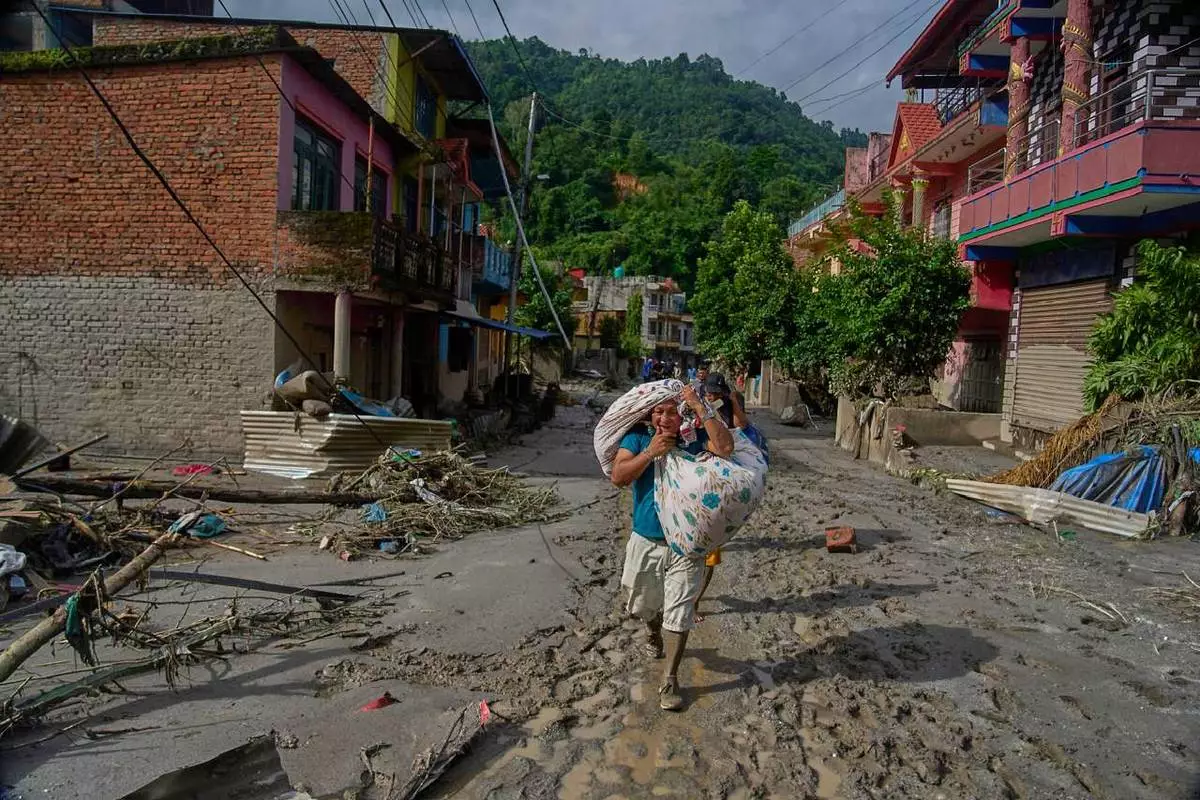
Residents carry their belongings as they walk to safer areas in the aftermath of flash floods in Devighat, in Nepal's Nuwakot district, Thursday, Aug. 27, 2026. (AP Photo/Niranjan Shrestha)
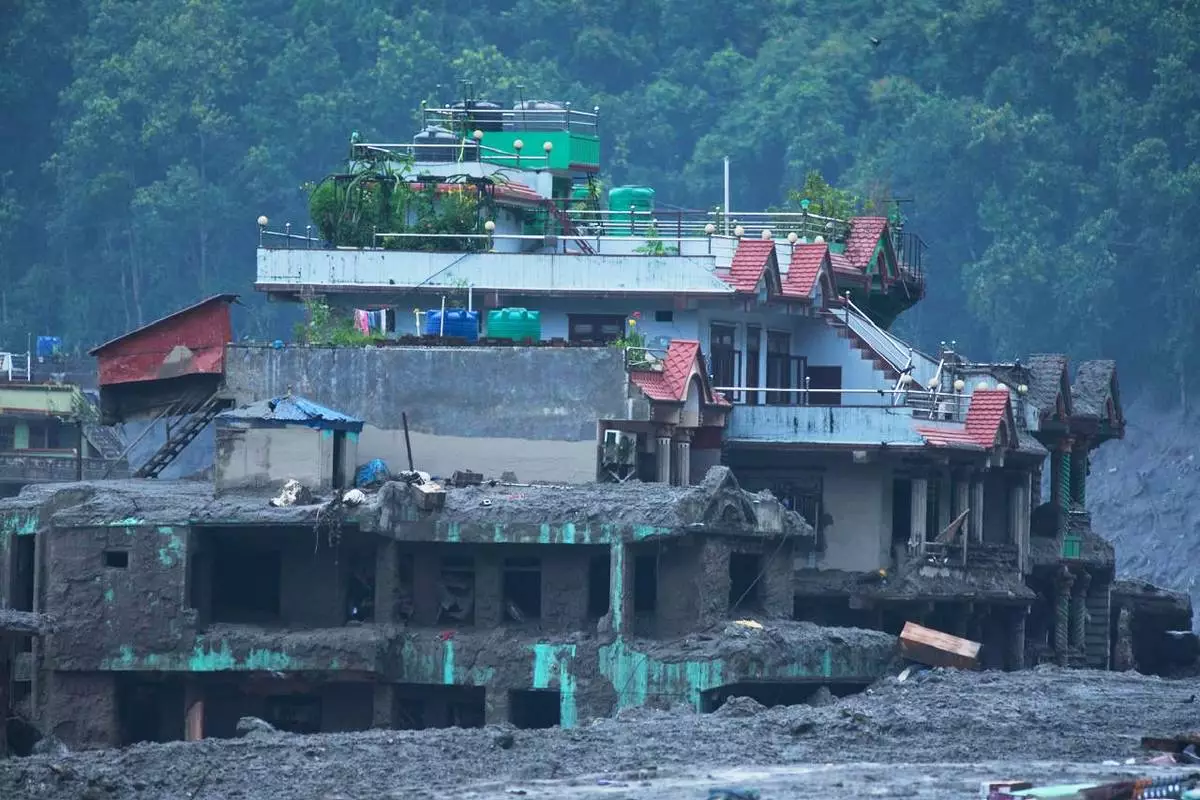
Damage in the aftermath of flash floods in Devighat in the Nuwakot district in Nepal, Thursday, Aug 27, 2026. (AP Photo/Niranjan Shrestha)
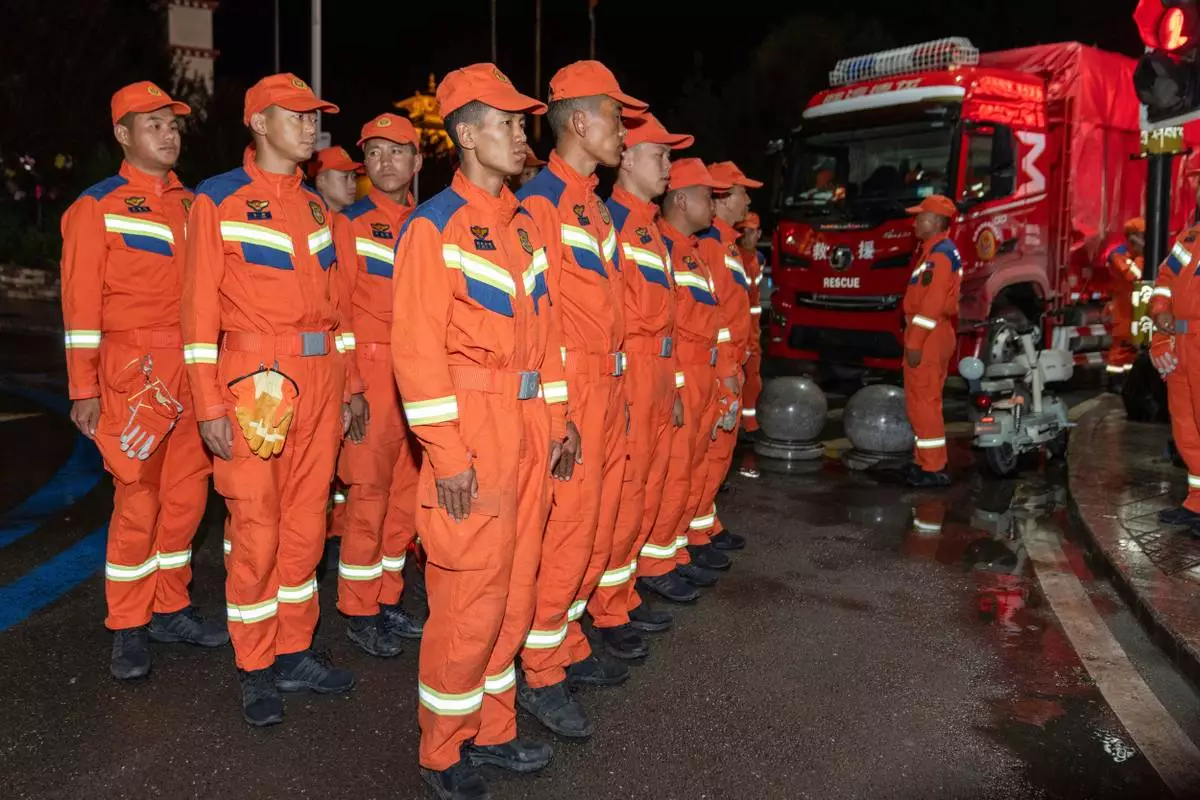
In this photo released by Xinhua News Agency, rescuers prepare before heading to the mudslide-stricken area near Gyirong Port in Gyirong County, southwestern China's Tibet Autonomous Region early Thursday, Aug. 27, 2026. (Tenzing Nima Qadhup/Xinhua via AP)
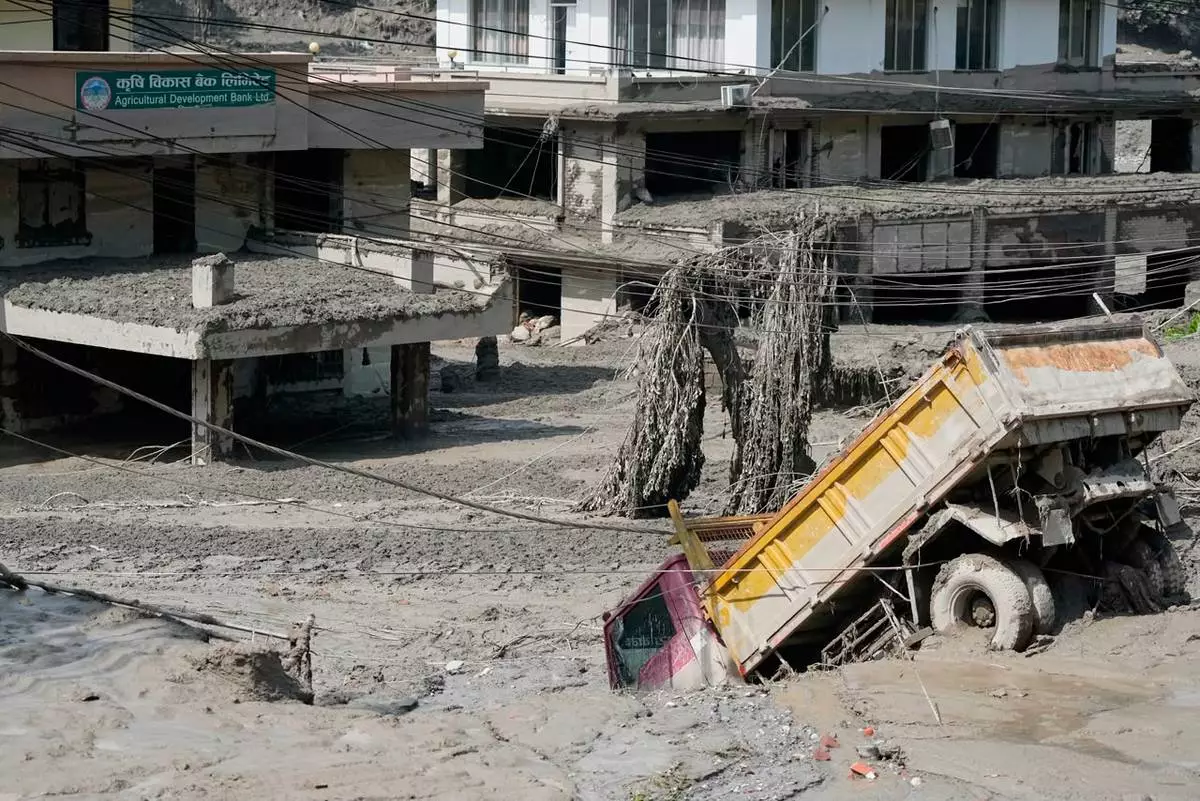
Damaged houses and vehicles are seen in the aftermath of flash floods along the Trishuli River in Nepal's Nuwakot district, Wednesday, Aug. 26, 2026. (AP Photo/Niranjan Shrestha)
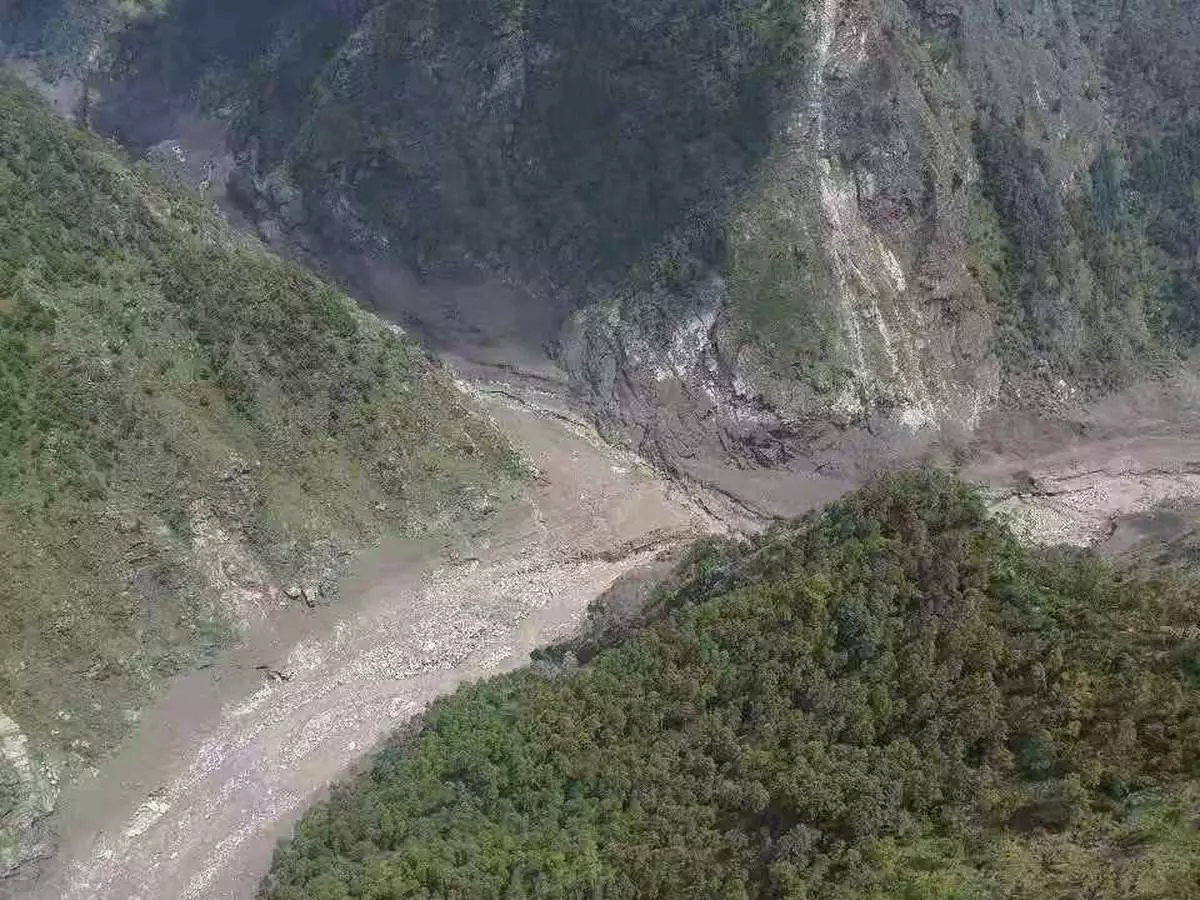
This photo released by Xinhua News Agency, shows a mudslide-hit area near Gyirong Port in southwestern China's Tibetan Autonomous Region on Wednesday, Aug. 26, 2026. (Xinhua via AP)
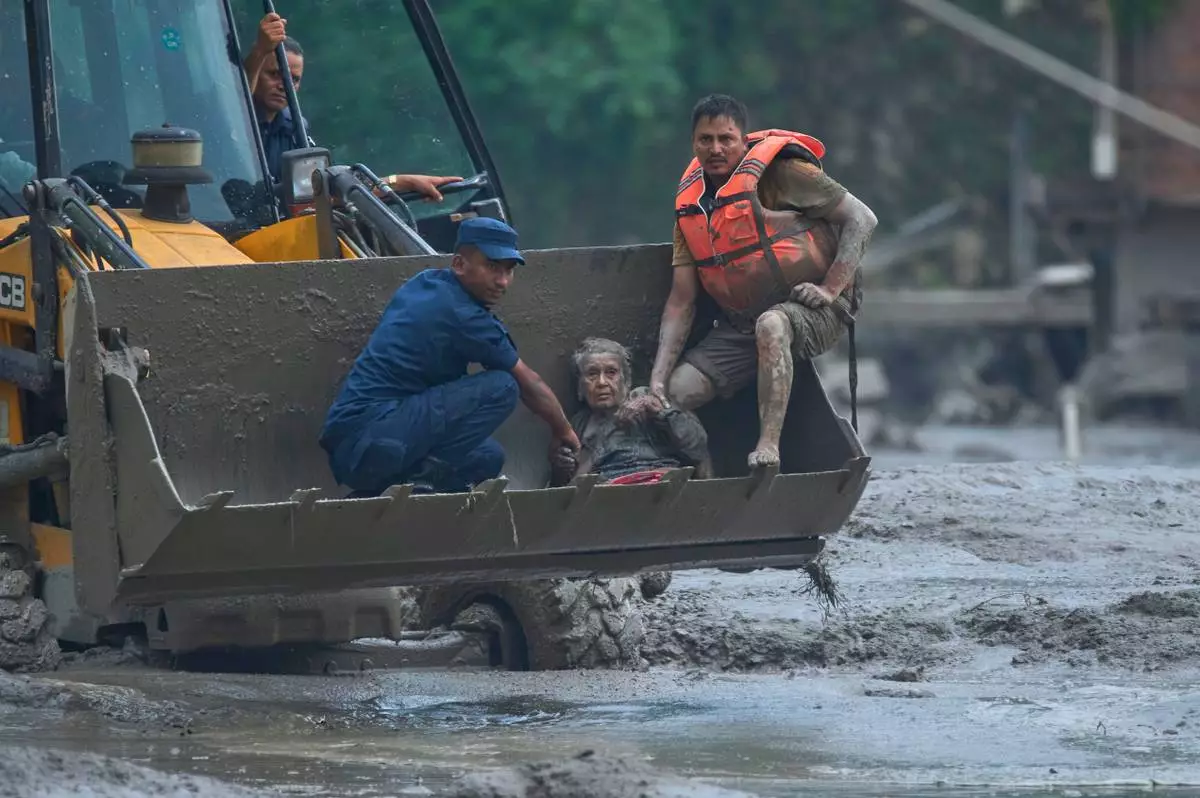
Rescuers use an earthmover to carry a victim of flash flooding to safety along the Trishuli River in Nepal's Nuwakot district, Wednesday, Aug. 26, 2026. (AP Photo/Niranjan Shrestha)
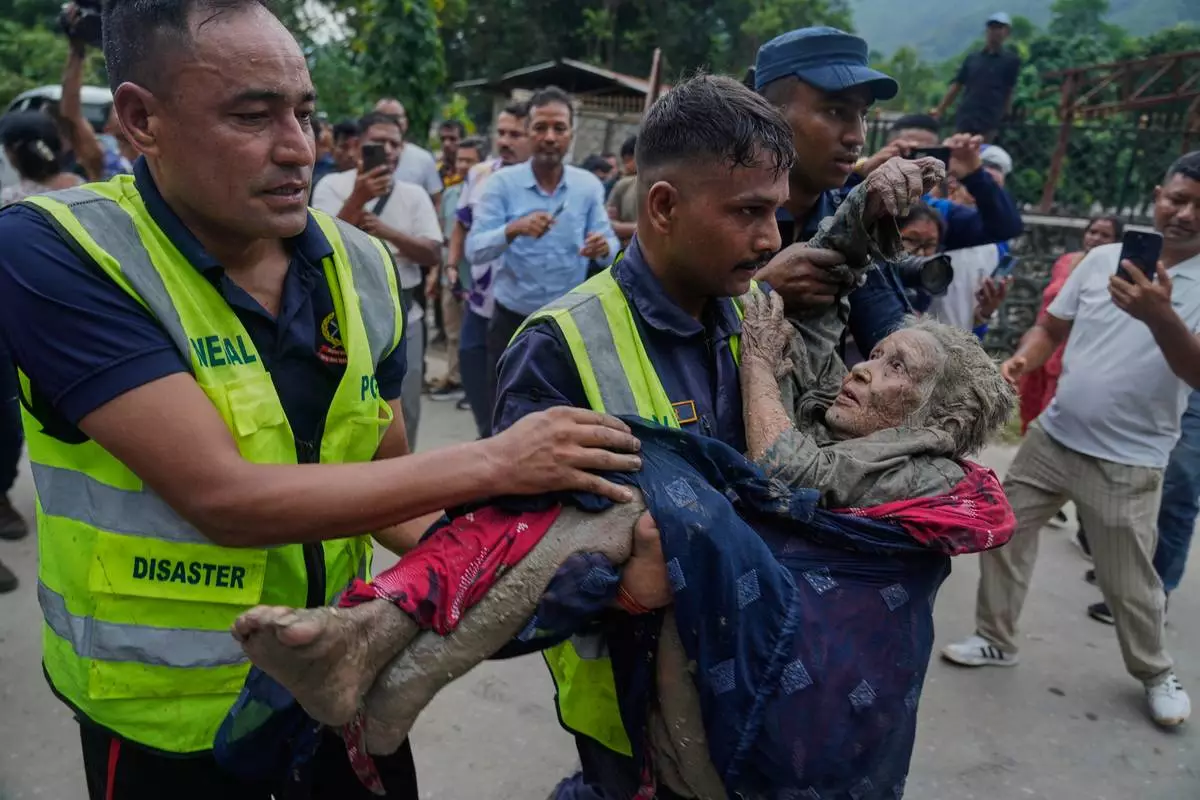
Rescuers carry a victim of flash flooding to safety along the Trishuli River in Nepal's Nuwakot district, Wednesday, Aug. 26, 2026. (AP Photo/Niranjan Shrestha)