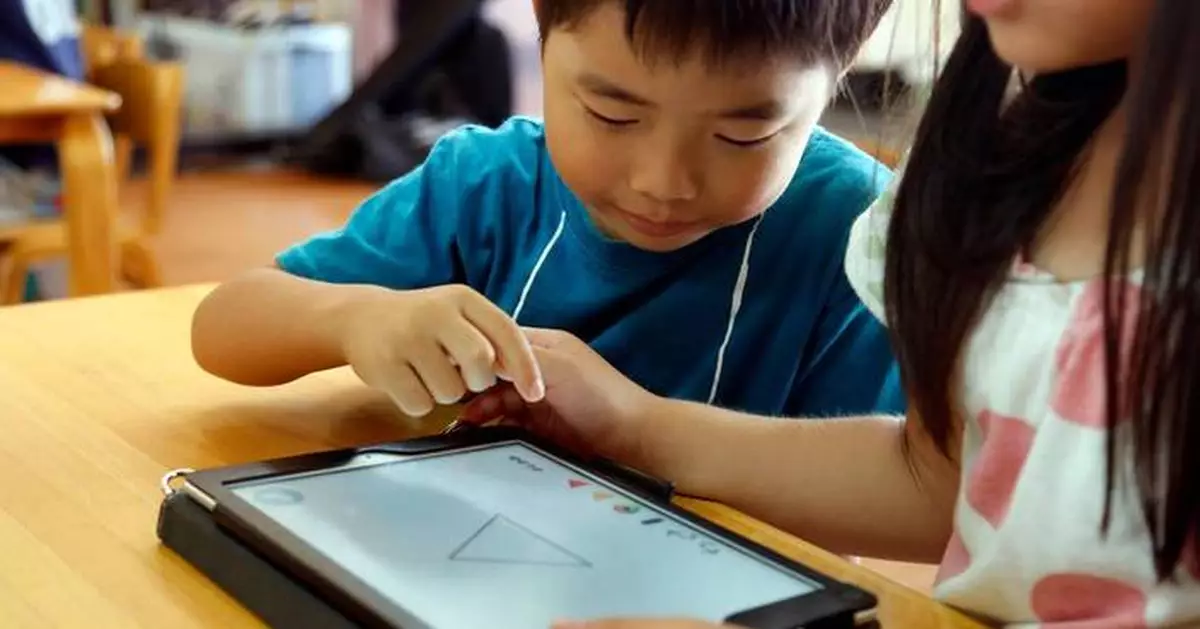
Tablets and computers have become crucial school supplies for many students. But the same devices children use to read text, write essays, solve math problems or research history projects can also offer distractions in the form of games, social media and web browsing.
It can be a challenge for parents to figure out how to help children stay focused when using these devices. That can be especially complicated with school-managed devices, where parents may have limited control over settings and restrictions.
Helpful options can include using built-in tools and settings on devices, creating routines and introducing time-management techniques.
Here are some tips for parents to help children stay on task.
The strategies parents choose may depend on whether their children are working on their own devices or ones issued and managed by schools.
Parents have more control over personal tablets or computers, and are able to restrict pop-up notifications from programs, block websites or remove apps entirely. But school-issued devices often come with preloaded software and apps, and schools might manage those devices' settings.
Parents can talk with school administrators about what controls and restrictions are already in place and what options may be available to families concerned about screen time. Parents can also ask whether assignments or homework can be completed on paper. But reducing students’ use of technology entirely can also involve tradeoffs, particularly when some tools offer individualized instruction or help students develop technology skills increasingly expected in the workforce.
In some cases, schools are giving parents additional tools to monitor and manage devices outside of school hours. Battle Ground Public Schools in Washington, for example, introduced overnight login restrictions last year for elementary and middle school students on school-issued Chromebooks, while also allowing exemptions for some families. The restrictions were put in place as a result of parent concerns about device usage late at night and possible interruptions to sleep.
Students can be distracted by notifications that pop up from apps, messages and other services. One simple way to quiet those interruptions is to put up a digital Do Not Disturb sign.
Apple devices, including MacBooks, have focus modes that let users silence some or all notifications, calls and texts. Do Not Disturb is one of the preset modes, and users can also set up their own. On Android devices, a standalone Do Not Disturb feature does the same thing while a separate focus mode, available through Digital Wellbeing in settings, can pause selected apps and gray out their icons so they are harder to open.
Parents can also use built-in controls on Apple and Android devices to regulate screen time, either on their own phone or on a child’s linked device. Depending on the device and how it is set up, parents can restrict access to categories of apps, such as games or entertainment, or set a daily time limit for an individual app.
Google users can use Family Link to manage settings and screen-time limits on a child’s Android device or Chromebook. Apple users can manage these controls for a child’s iPhone, iPad or Mac through Family Sharing.
Keep in mind that screen-time limits aren’t foolproof. Depending on the device and settings, children may be able to request additional time or override some restrictions.
If a setting is unavailable, parents may need to check the school’s device policy or ask the school or district’s technology department what controls are available.
There’s also a decidedly low-tech solution to a distracting app: Delete it. If a particular app is consistently pulling a child away from schoolwork, removing it from the device eliminates the temptation to open it in the first place.
Device settings can remove some distractions, but experts say parents should also help children learn how to manage their own attention and technology use.
“Everybody has individual rhythms of attention,” said Gloria Mark, professor emerita at the University of California, Irvine, and author of “Attention Span.”
Experts recommend paying attention to when students are most alert, and scheduling work that requires the most concentration during those periods. Those rhythms can vary throughout the day and depend partly on whether someone naturally functions better earlier or later in the day. A quiet or dedicated workspace can also help, as can avoiding multiple devices at once, such as texting while reading or switching to another screen during homework.
To learn and retain information, Mark said, students need to actively engage with material and avoid frequent distractions: “So quick attention shifts are not conducive for learning and retaining information.”
“When people become more conscious of what they’re doing, they can also become more intentional. And when you’re more intentional, you can form a plan,” she said, adding that setting goals and rewarding accomplishment helps people focus on their tasks.
Children should also start homework as early as possible after taking time to decompress from the school day, experts say. Waiting until late at night can interfere with sleep.
The goal isn’t necessarily to eliminate every distraction or monitor every move, Mark said. Parents can instead help children understand when and how they focus best and develop strategies for staying with one task. They don’t need to “helicopter” their children, she said, but should help them understand the importance of focusing and staying with one thing.
AP Business Writer Kelvin Chan contributed to this report from London.
The Associated Press’ education coverage receives financial support from multiple private foundations. AP is solely responsible for all content. Find AP’s standards for working with philanthropies, a list of supporters and funded coverage areas at AP.org.
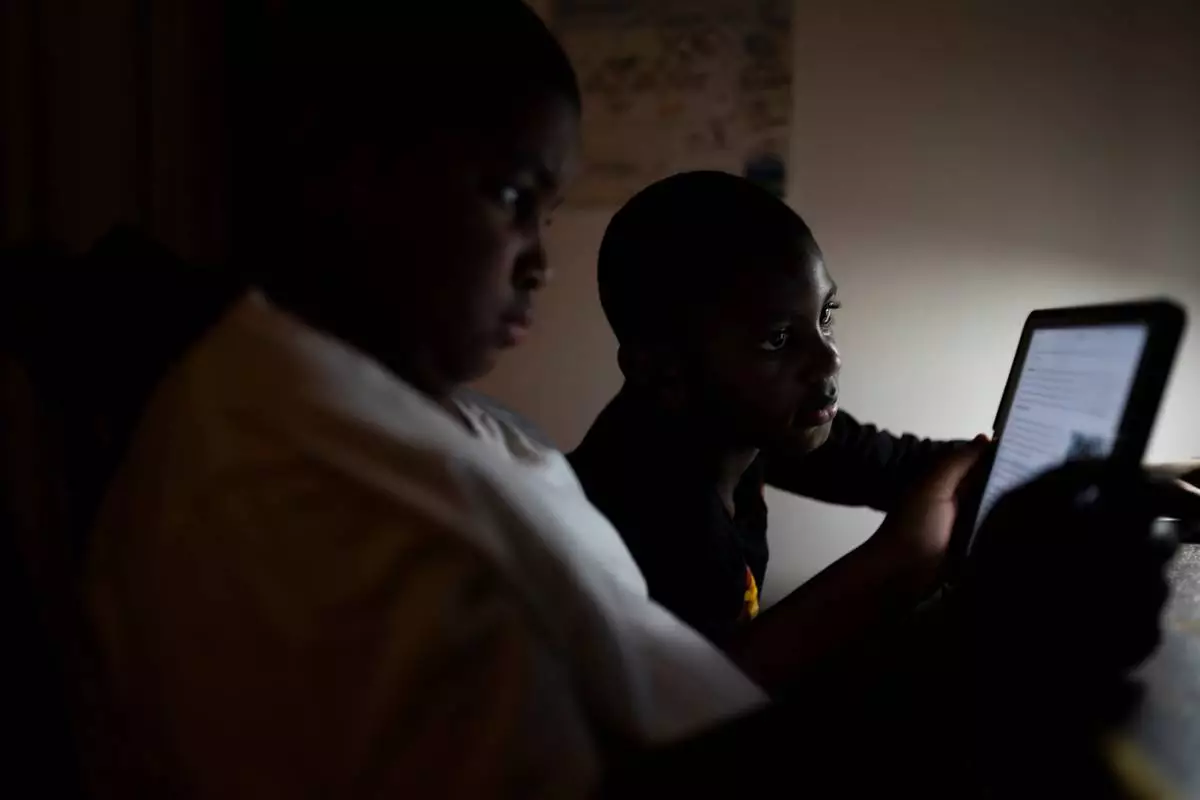
FILE - Children read on a tablet computer in their bedroom, Dec. 8, 2021, in the Brooklyn borough of New York. (AP Photo/John Minchillo, File)
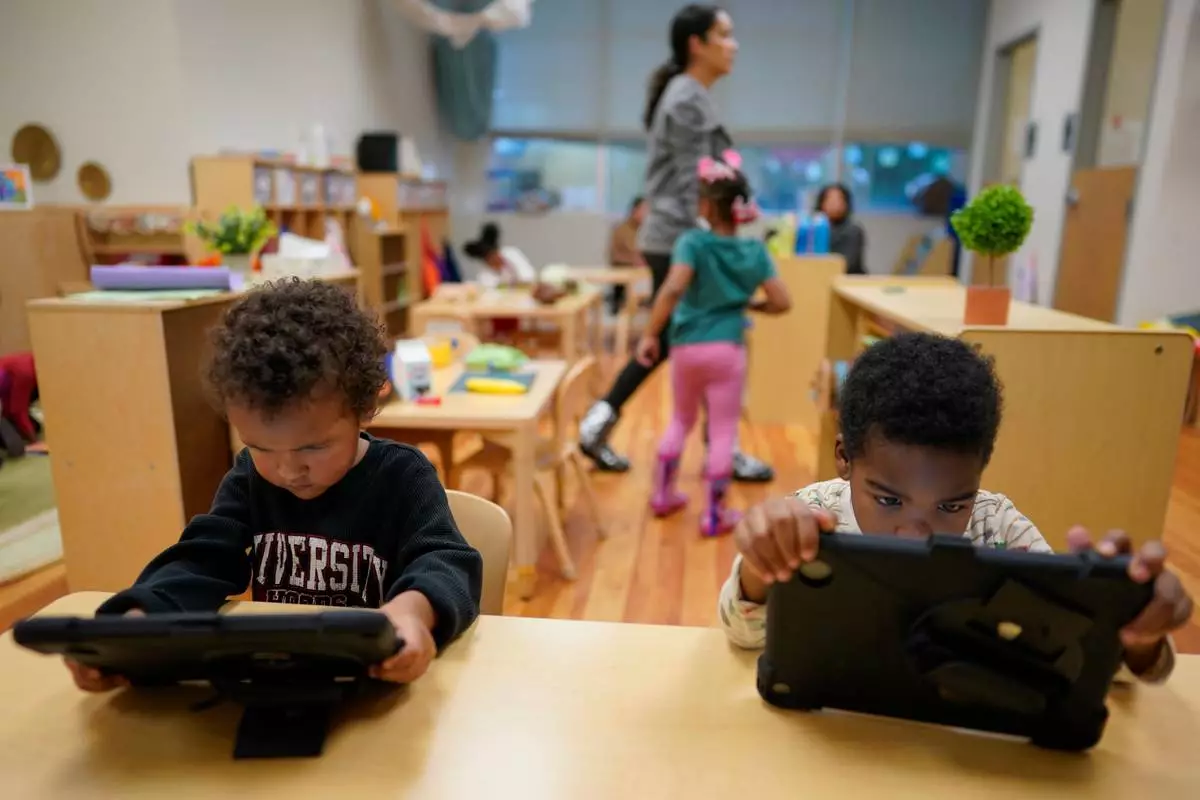
FILE - Children work on tablets during a preschool class at the Life Learning Center - Head Start, in Cincinnati, Nov. 21, 2023. (AP Photo/Carolyn Kaster, File)
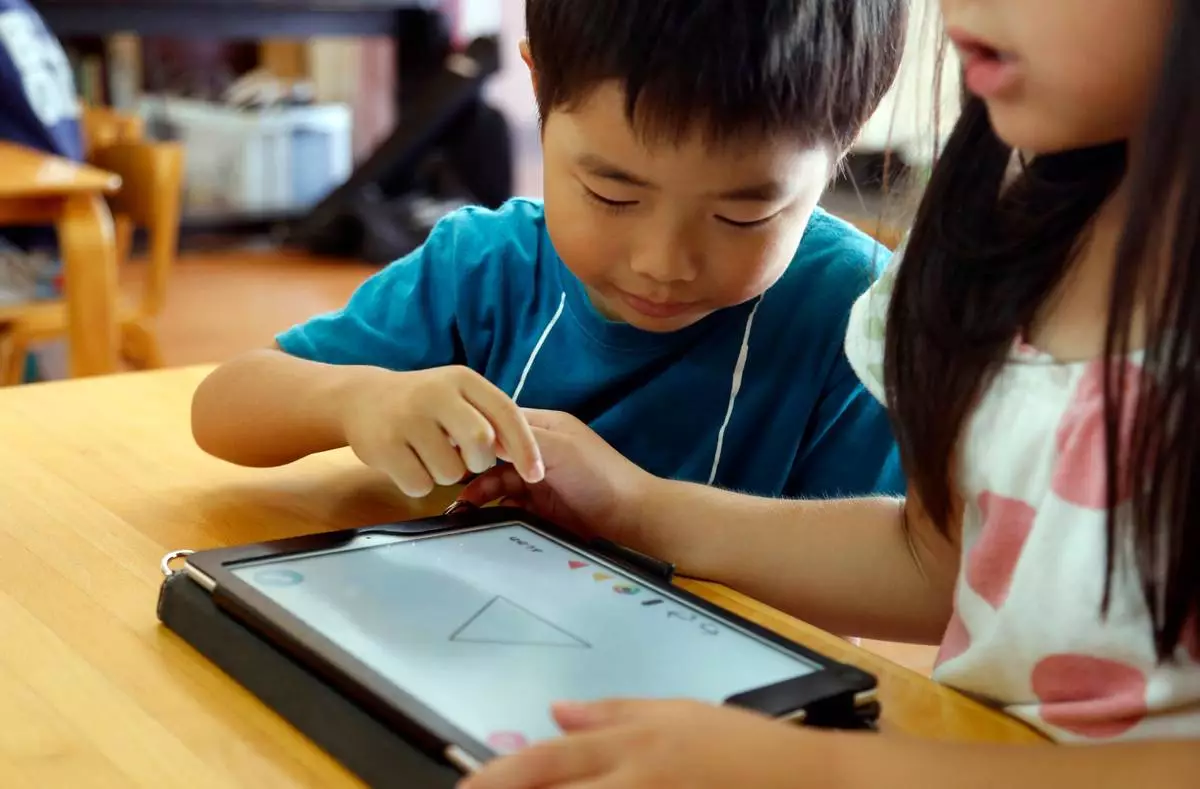
FILE - Children work on a digital program at Coby Preschool in Yoshikawa, suburban Tokyo, July 12, 2018. (AP Photo/Yuri Kageyama, File)
NEW YORK (AP) — Karolina Muchova and Jakub Mensik won the U.S. Open mixed doubles title on Wednesday night, beating Belinda Bencic and Flavio Cobolli 6-3, 1-6 (10-6).
The Czech duo pulled out match tiebreakers in both matches on the second night of the two-day event, helped by Mensik's powerful serve combined with some good hands near the net. He put away the final with an ace to earn $1 million for him and Muchova to share.
They were a point from losing in the semifinals, erasing two match points and running off the final four to edge Mirra Andreeva and Andrey Rublev 5-4 (6), 3-5 (11-9).
Wearing the same pink tops and maroon bottoms they settled on when Mensik texted Muchova on the eve of the tournament to coordinate their outfits, the Czechs blasted their way out of trouble whenever they faced tough times.
“I think at the end, really the matching outfit made the difference for us,” Muchova said.
They looked good. Now they look like a million bucks.
The final was the only match of the tournament that resembled a regular match, with standard sets to six games and a tiebreaker at 6-all. Through the first three rounds, sets were to four games, with a tiebreaker at 4-all.
Bencic and Cobolli rallied to end the run of spouses Elina Svitolina and Gael Monfils in the first semifinal with a 4-5 (7), 4-1 (10-5) victory.
They appeared headed toward a matchup with Andreeva and Rublev, who were smiling and pumping their fists after opening the lead in the match tiebreaker. Muchova flung her racket to the court in disgust after missing a volley that gave the Russians a 7-5 lead.
But the Wimbledon women’s runner-up never lost belief, thanks in part to her hard-serving partner, a French Open semifinalist who will turn 21 next week.
Bencic and Cobolli knocked Serena Williams and Carlos Alcaraz out of the tournament Tuesday in the quarterfinals.
Then they dropped a set for the first time in the tournament in the semis, but began to dominate midway through the second set, winning the final 11 points to force the match tiebreaker.
It was the second year of the new format in mixed doubles, with the event shortened and moved to the week before the singles main draw begins, with the U.S. Tennis Association hoping that would get top singles players to compete.
Plenty of top names did compete but much of the star power, including Williams and Alcaraz, went out early. Aryna Sabalenka and Novak Djokovic lost their opening match, as did Alex Eala and Felix Auger-Aliassime, and Jessica Pegula and Taylor Fritz.
That could explain a good number of empty seats in Ashe, particularly after both semifinals went the distance and pushed the start of the final back toward nearly 11 p.m. EDT.
None of the teams featuring doubles specialists survived to the final four, leaving an opening for some players still seeking Grand Slam glory such as Rublev, who has fallen 10 times in major quarterfinals.
Svitolina and Monfils, who have both reached the U.S. Open singles semifinals, accepted a wild card to team up for the first time. Married since 2021, they were trying to win a championship in the final appearance in a Grand Slam tournament for Monfils, who will turn 40 on Sept. 1, before he retires.
They pulled out a back-and-forth tiebreaker in the first set in which they blew a 4-0 lead, then erased two set points. They went ahead 8-7 when Bencic tried to hit a cross-court backhand but nailed Cobolli, who had strayed into the middle. Cobolli then double-faulted to lose the set.
He recovered with consecutive volley winners to break Svitolina’s serve for a 2-1 lead in the second set. The match tiebreaker was tied at 2 but swung the way of Bencic and Cobolli when Svitolina was just wide on three straight shots.
See AP’s full tennis coverage here
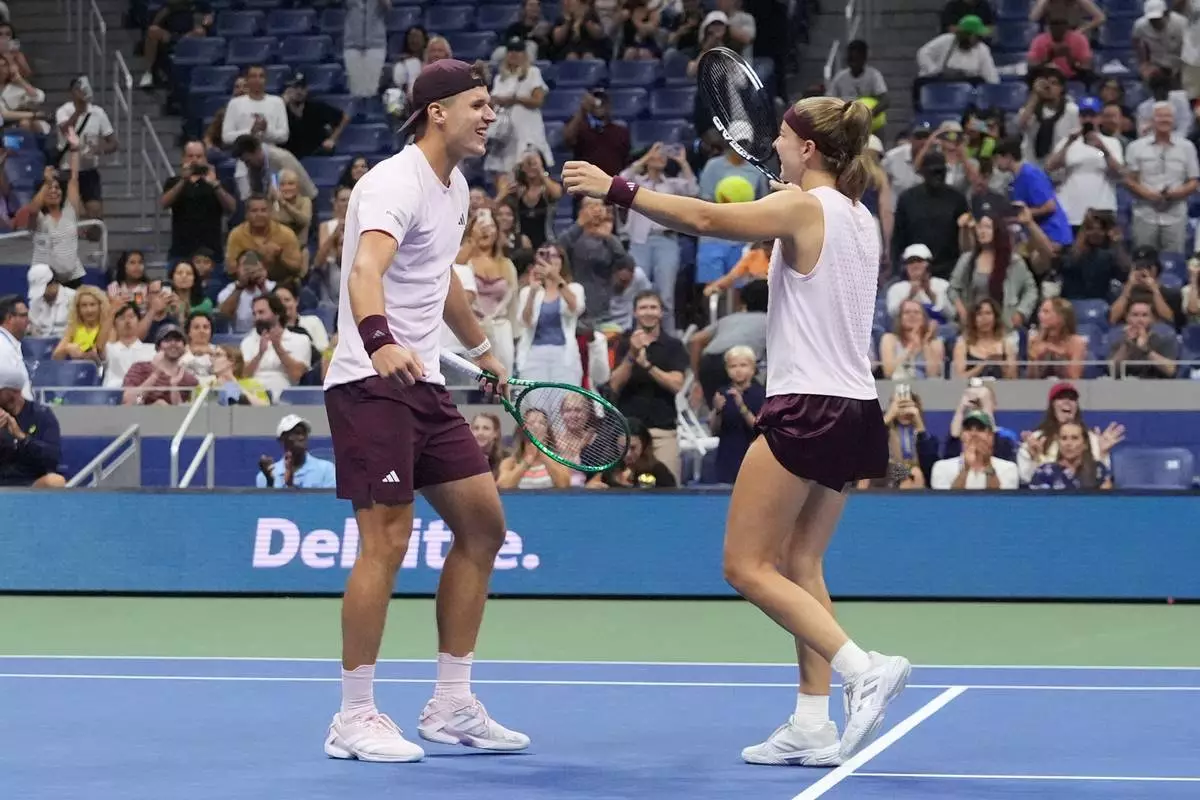
Jakub Mensik, of the Czech Republic, left celebrates with Karolina Muchova, of the Czech Republic, after they won the mixed doubles final match against Belinda Bencic, of Switzerland, and Flavio Cobolli, of Italy, at the U.S. Open tennis championships Wednesday, Aug. 26, 2026, in New York. (AP Photo/Frank Franklin II)
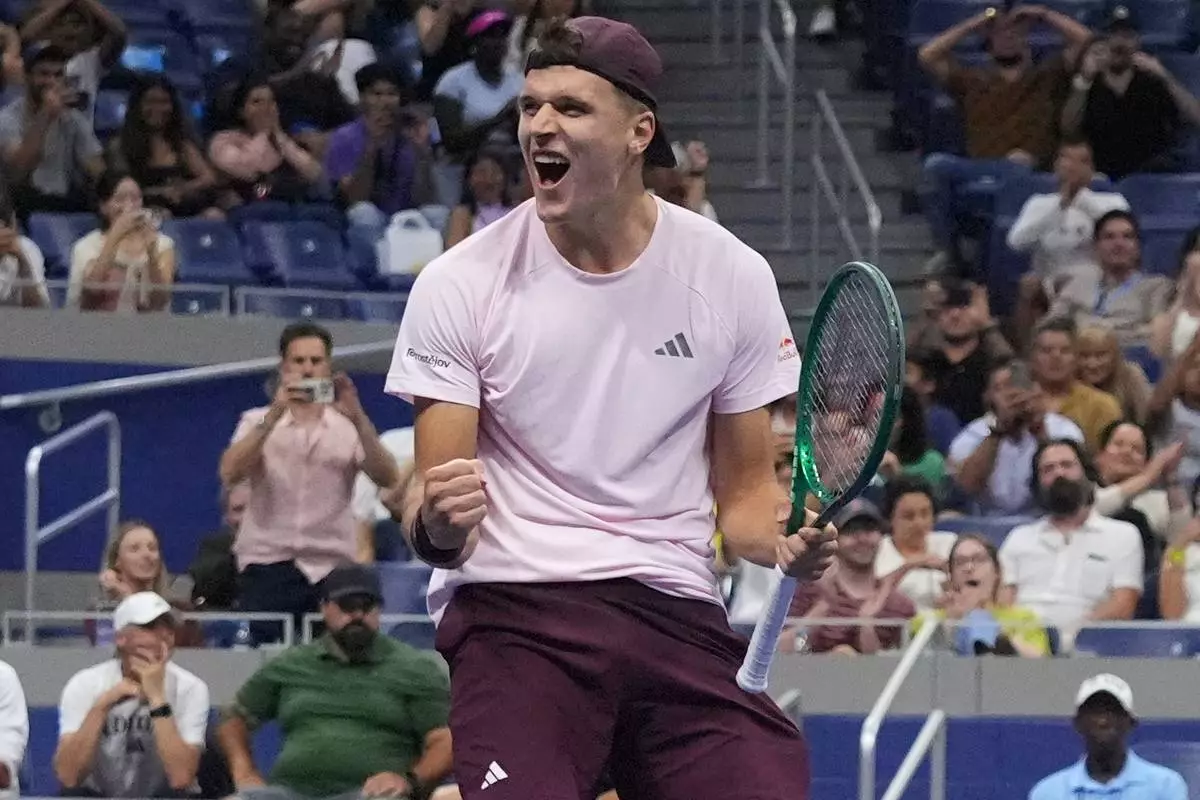
Jakub Mensik, of the Czech Republic, celebrates after he and Karolina Muchova, of the Czech Republic, defeated Belinda Bencic, of Switzerland, and Flavio Cobolli, of Italy, in the mixed doubles final match at the U.S. Open tennis championships Wednesday, Aug. 26, 2026, in New York. (AP Photo/Frank Franklin II)
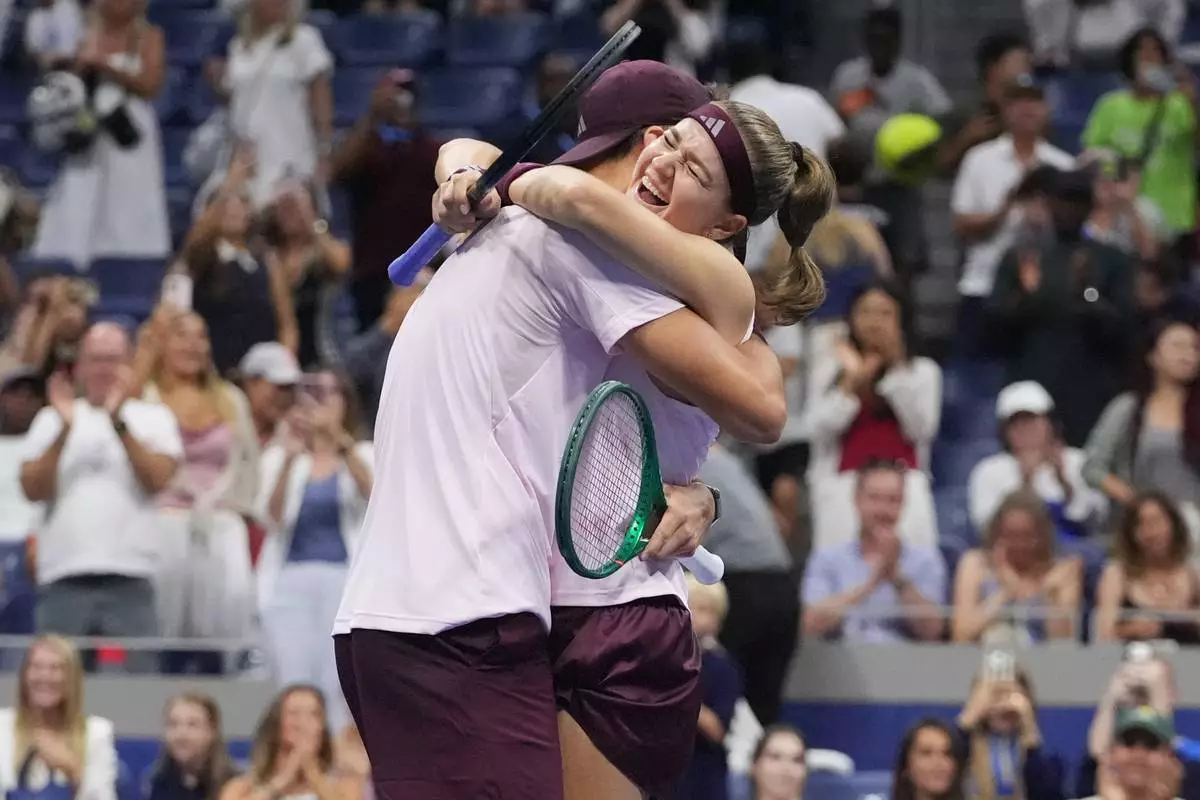
Jakub Mensik, of the Czech Republic, celebrates with Karolina Muchova, right, of the Czech Republic, after they won the mixed doubles final match against Belinda Bencic, of Switzerland, and Flavio Cobolli, of Italy, at the U.S. Open tennis championships Wednesday, Aug. 26, 2026, in New York. (AP Photo/Frank Franklin II)
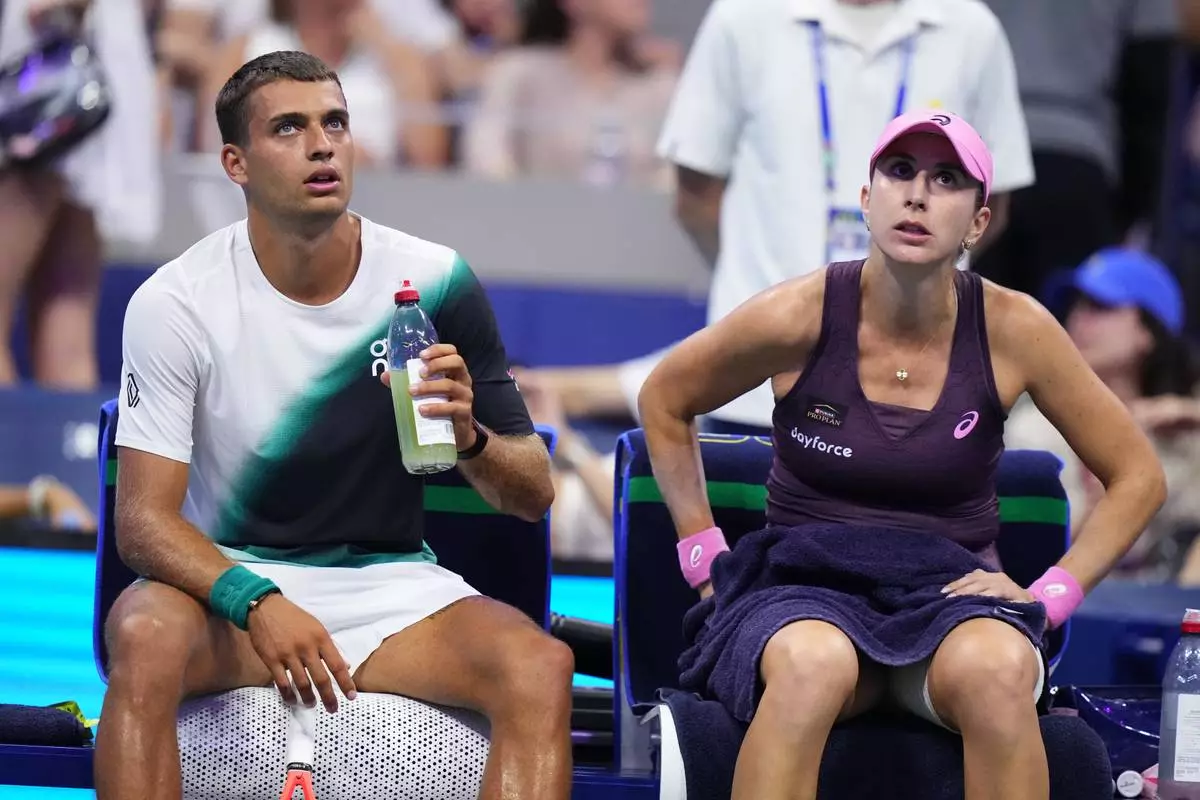
Belinda Bencic, right, of Switzerland, and Flavio Cobolli, of Italy, sit between sets while competing against Jakub Mensik, of the Czech Republic, and Karolina Muchova, of the Czech Republic, during the mixed doubles final match at the U.S. Open tennis championships Wednesday, Aug. 26, 2026, in New York. (AP Photo/Frank Franklin II)
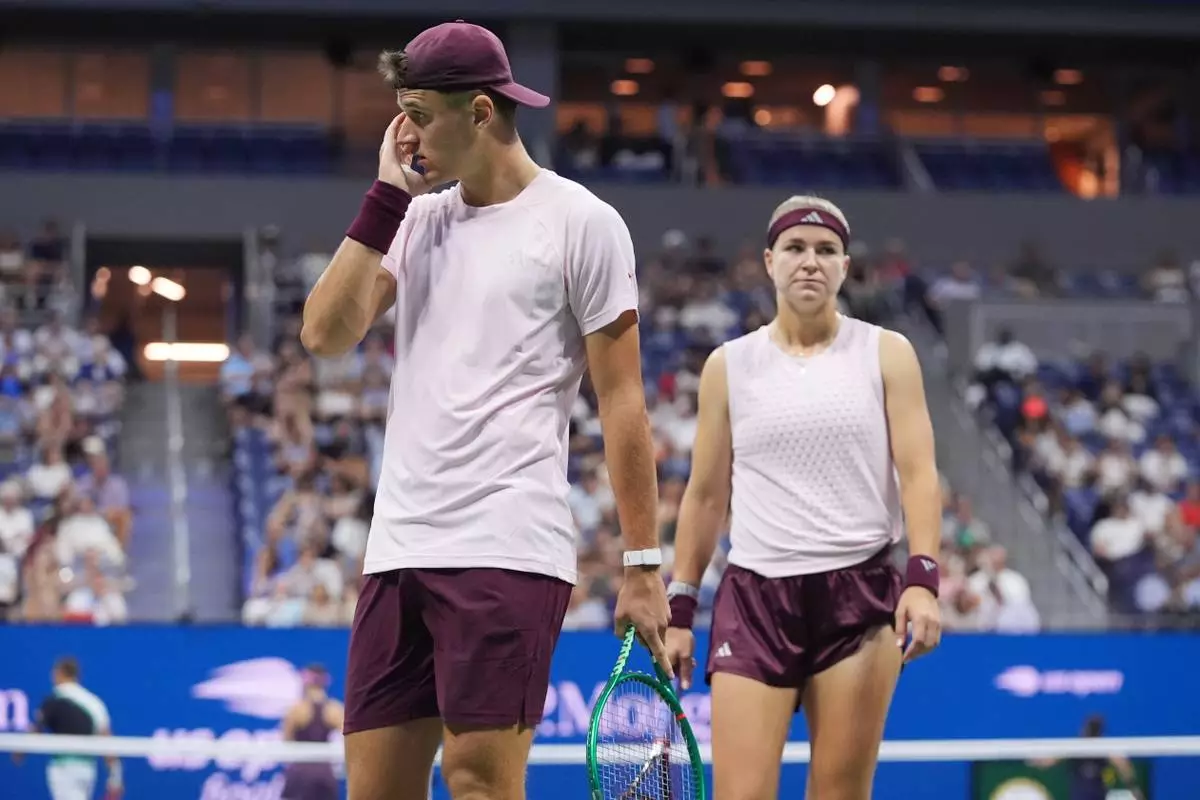
Jakub Mensik, left, of the Czech Republic, and Karolina Muchova, of the Czech Republic, react during the mixed doubles final match against Belinda Bencic, of Switzerland, and Flavio Cobolli, of Italy, at the U.S. Open tennis championships Wednesday, Aug. 26, 2026, in New York. (AP Photo/Frank Franklin II)
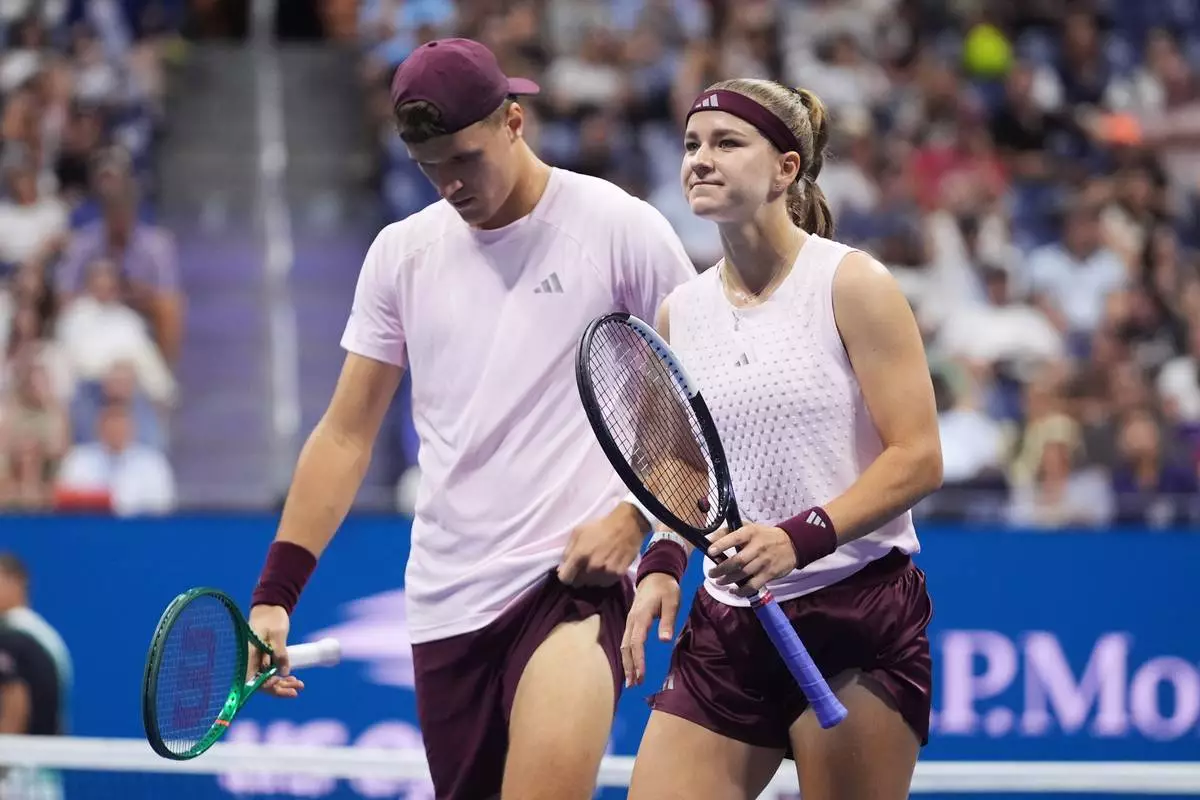
Jakub Mensik, left, of the Czech Republic, and Karolina Muchova, of the Czech Republic, react during the mixed doubles final match against Belinda Bencic, of Switzerland, and Flavio Cobolli, of Italy, at the U.S. Open tennis championships Wednesday, Aug. 26, 2026, in New York. (AP Photo/Frank Franklin II)
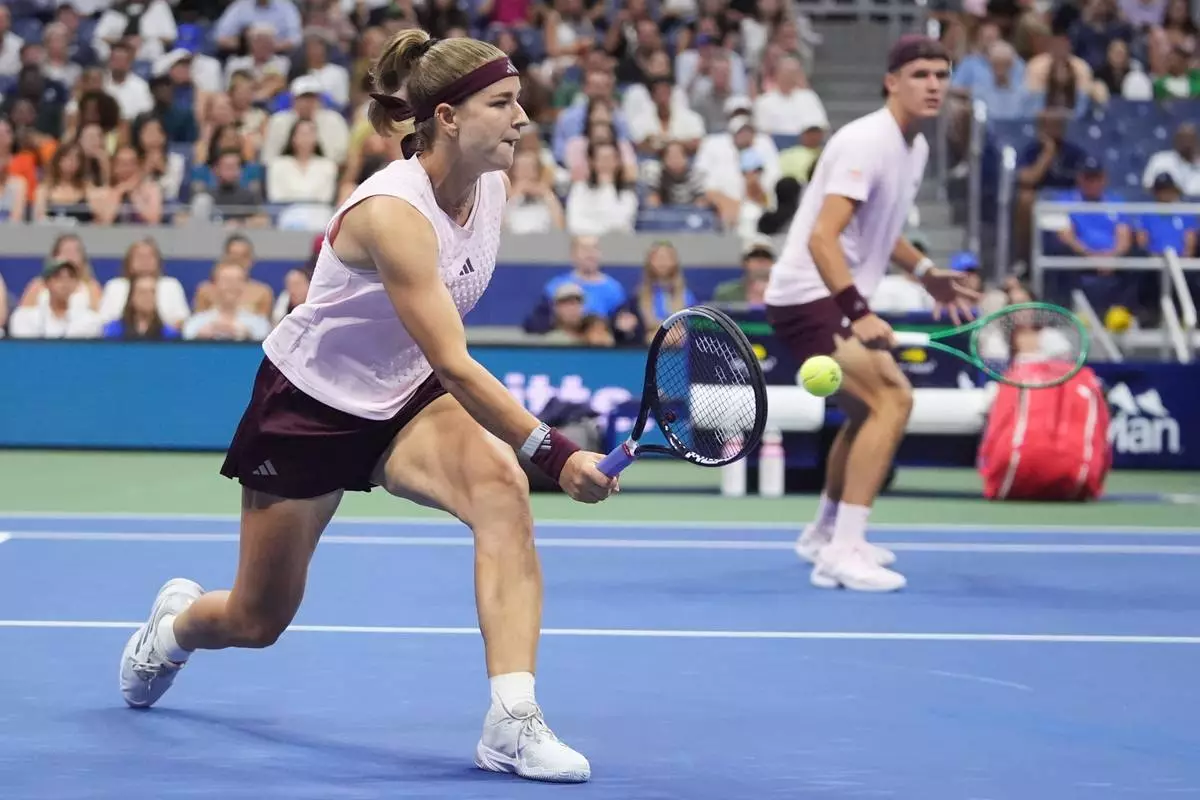
Karolina Muchova, left, of the Czech Republic, returns the ball while competing with Jakub Mensik, of the Czech Republic, against Mirra Andreeva, of Russia, and Andrey Rublev, of Russia, during a mixed doubles semifinal match at the U.S. Open tennis championships Wednesday, Aug. 26, 2026, in New York. (AP Photo/Frank Franklin II)
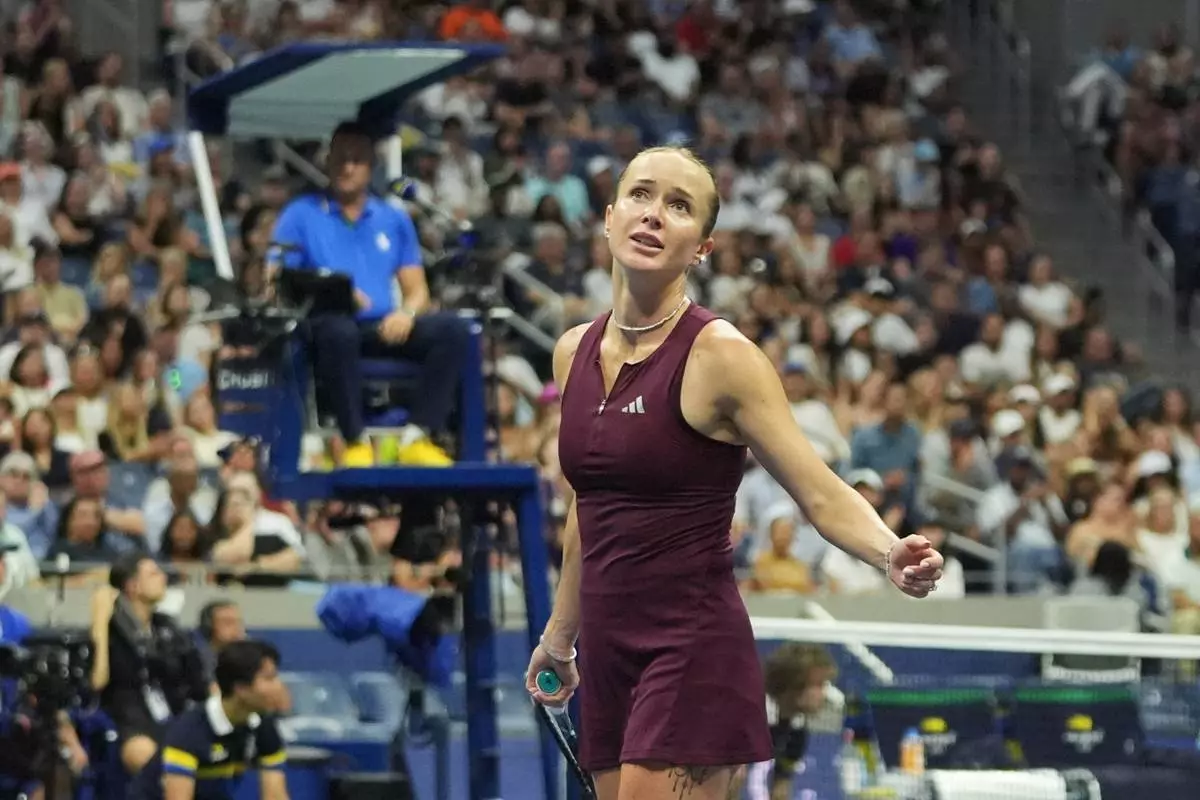
Elina Svitolina, of Ukraine, reacts after missing a shot while competing with and Gael Monfils, of France, against Belinda Bencic, of Switzerland, and Flavio Cobolli, of Italy, during a mixed doubles semifinal match at the U.S. Open tennis championships Wednesday, Aug. 26, 2026, in New York. (AP Photo/Frank Franklin II)
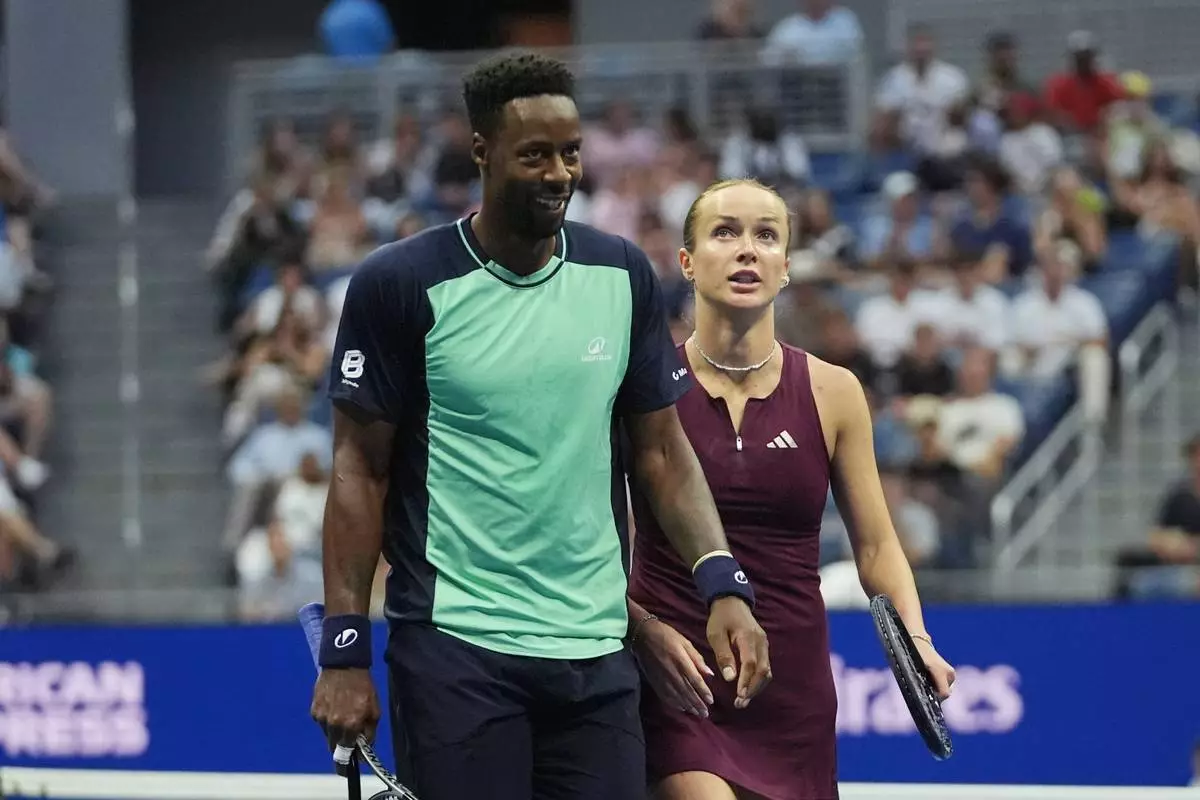
Elina Svitolina, of Ukraine, and Gael Monfils, left, of France, react while competing against Belinda Bencic, of Switzerland, and Flavio Cobolli, of Italy, during a mixed doubles semifinal match at the U.S. Open tennis championships Wednesday, Aug. 26, 2026, in New York. (AP Photo/Frank Franklin II)
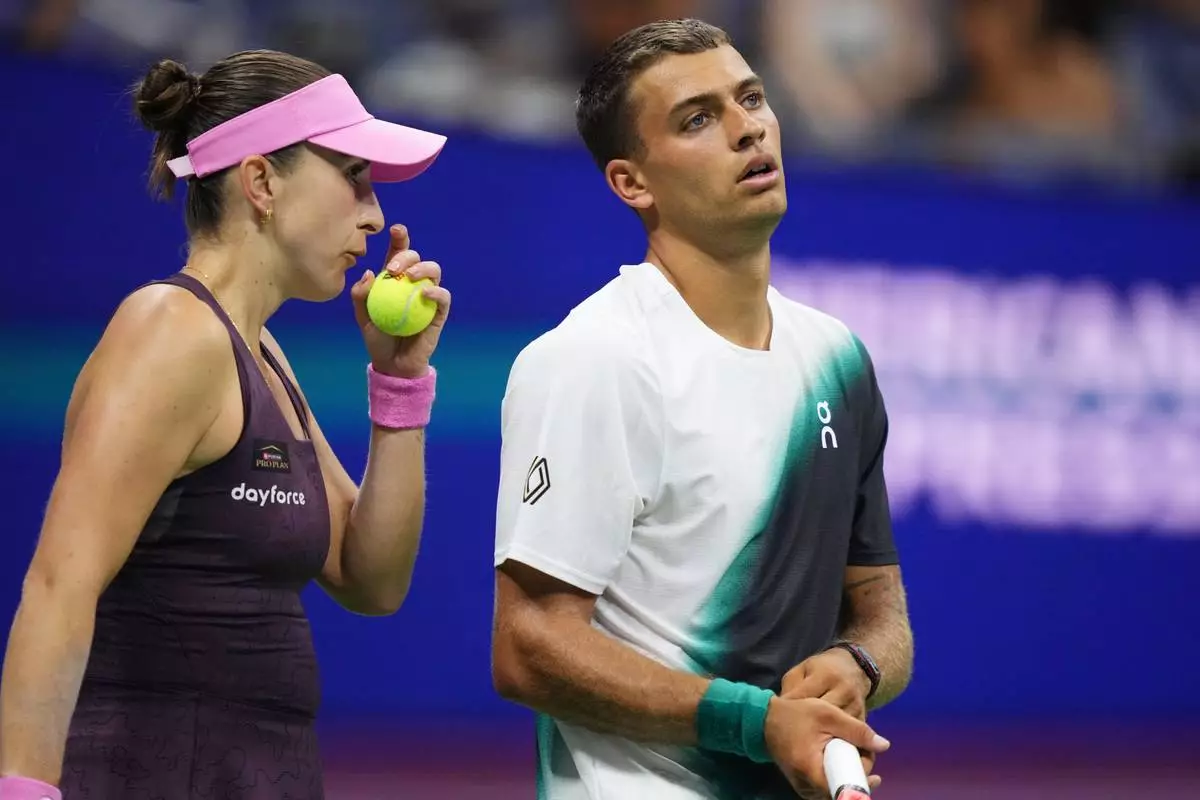
Belinda Bencic, left, of Switzerland, and Flavio Cobolli, of Italy, react while competing against Elina Svitolina, of Ukraine, and Gael Monfils, of France, during a mixed doubles semifinal match at the U.S. Open tennis championships Wednesday, Aug. 26, 2026, in New York. (AP Photo/Frank Franklin II)
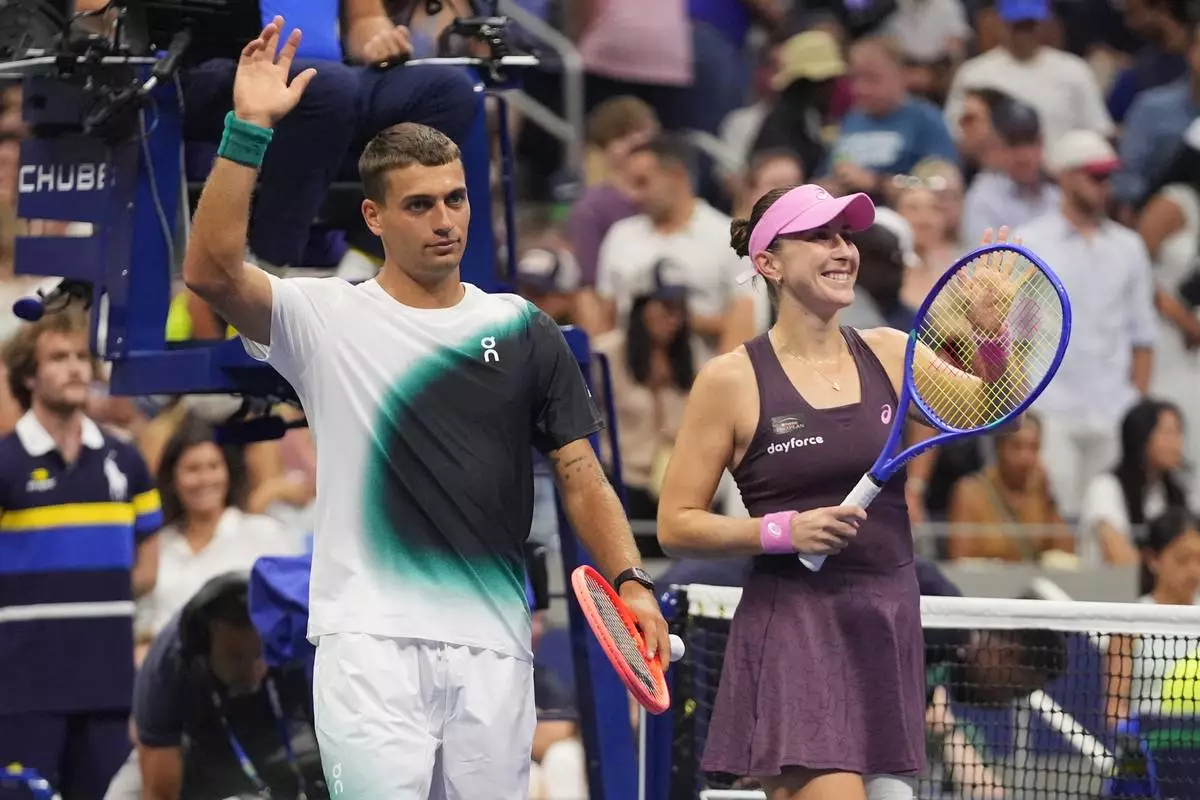
Belinda Bencic, of Switzerland, and Flavio Cobolli, of Italy, left, celebrate after defeating Elina Svitolina, of Ukraine, and Gael Monfils, of France, in a mixed doubles semifinal match at the U.S. Open tennis championships Wednesday, Aug. 26, 2026, in New York. (AP Photo/Frank Franklin II)