Two incoming passengers convicted and jailed for importing duty-not-paid cigarettes
Two incoming Mainland passengers were sentenced to ten months' imprisonment with a fine of $1,000, and eight months' imprisonment with a fine of $2,000, respectively by the West Kowloon Magistrates' Courts today today (August 27) for importing duty-not-paid cigarettes and failing to declare them to Customs officers in contravention of the Dutiable Commodities Ordinance (DCO).
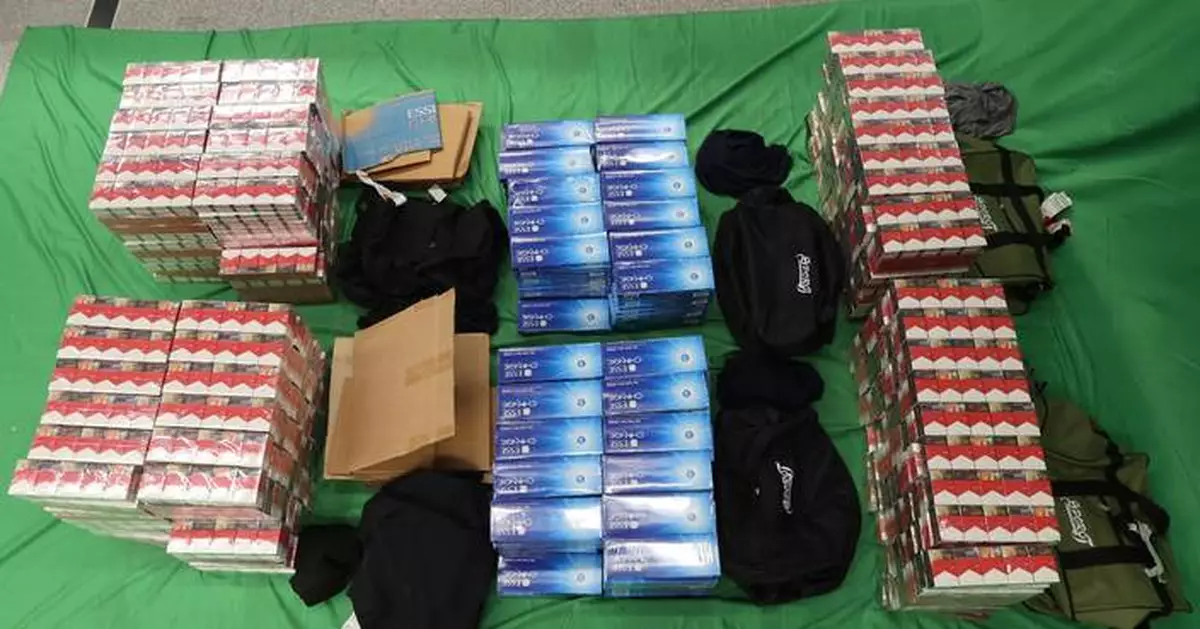
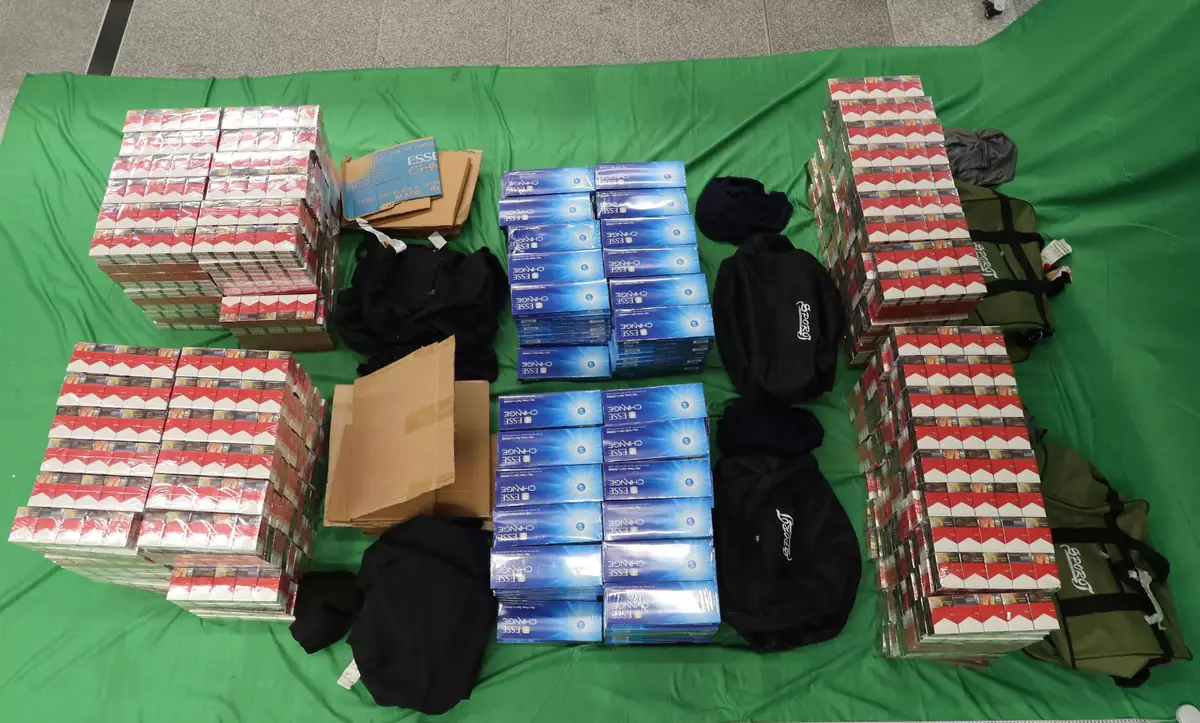
Customs officers intercepted an incoming Mainland female passenger, aged 42, at Hong Kong International Airport on August 7 and seized about 130 800 duty-not-paid cigarettes, with an estimated market value of about $588,600 and a duty potential of about $432,400, from her personal baggage. The passenger was subsequently arrested and was sentenced to ten months' imprisonment and fined $1,000 today.
In addition, Customs officers intercepted an incoming Mainland male passenger, aged 41, at Hong Kong International Airport yesterday (August 26). About 76 800 sticks of duty-not-paid cigarettes were seized from his personal baggage. The estimated market value was about $384,000, and the duty potential was about $253,900. He was subsequently arrested and was sentenced to eight months' imprisonment and fined $2,000 today.
Customs welcomes the sentences. The custodial sentences have imposed a considerable deterrent effect and reflects the seriousness of the offences.
Customs reminds members of the public that under the DCO, cigarettes are dutiable goods to which the DCO applies. Any person who imports, deals with, possesses, sells or buys illicit cigarettes commits an offence. The maximum penalty upon conviction is a fine of $2 million and imprisonment for seven years.
Members of the public may report any suspected illicit cigarette activities to Customs' 24-hour hotline 182 8080 or its dedicated crime-reporting email account (crimereport@customs.gov.hk) or online form (eform.cefs.gov.hk/form/ced002).

Two incoming passengers convicted and jailed for importing duty-not-paid cigarettes Source: HKSAR Government Press Releases
Two incoming passengers convicted and jailed for importing duty-not-paid cigarettes Source: HKSAR Government Press Releases
CHP investigates cluster of Carbapenemase-producing Enterobacteriaceae carrier cases
The Centre for Health Protection (CHP) of the Department of Health is today (August 27) investigating a cluster of Carbapenemase-producing Enterobacteriaceae (CPE) carrier cases involving four residents of a residential care home for the elderly (RCHE). The CHP reminded all RCHEs to implement measures for the prevention and control of infectious diseases in accordance with theGuidelines on Prevention of Communicable Diseasein RCHEs(the Guidelines).
The CHP received a notification from the Hospital Authority (HA) in recent months that two residents living on the same floor of an RCHE in Wan Chai District had been admitted to a public hospital for treatment due to their underlying illnesses. Their admission screening samples tested positive for CPE upon laboratory testing and they were suspected to have been infected in the RCHE. Following the HA's notification, the CHP immediately conducted epidemiological investigations and contact tracing and screening. Two additional carrier cases were subsequently identified.All four patients (one male and three females, aged between 73 and 90) are carriers, with none of them having exhibited symptoms associated with CPE infection. They are currently in stable condition.
The CHP's investigation found that the source of infection of the aforementioned four recently detected carrier cases may have come from another previously known carrier on the same floor of the RCHE who had been infected in hospital. The CHP inspected the RCHE concerned and found that the RCHE management had not duly implemented the related infection prevention and control measures. It cannot be ruled out that the bacteria were transmitted by the staff or through contaminated environment within the RCHE. The CHP reminded the RCHE management to adhere to the Guidelines and take necessary measures, which include ensuring adequate hand-washing facilities, enhancing good hand hygiene among staff and residents, and cleaning and disinfecting the environment thoroughly. The CHP also recommended that the RCHE cohort the carriers in the same area.
The CHP will continue to investigate the cluster of cases and conduct screening at the RCHE concerned to determine whether there are any other CPE-carriers. The CHP will also continue to put the RCHE under medical surveillance.
Enterobacteriaceae (such as Escherichia coli andKlebsiella) are common pathogens that can cause infections in various parts of the body, including urinary tract infections, intra-abdominal infections or blood infection. CPE are enterobacteriaceae that produce carbapenemase, an enzyme that can deactivate carbapenems and other beta-lactam antibiotics such as penicillins. These bacteria are commonly resistant to multiple antibiotics, limiting therapeutic options, and may render severe clinical infections difficult to treat. The range of diseases associated with CPE varies from asymptomatic carriage to potentially life-threatening or fatal infections. The level of risk depends on which part of the body is affected by the infection and the patient's general health.
The proper use of antibiotics and maintaining good personal and environmental hygiene, especially hand hygiene, are important for preventing the emergence and cross-transmission of multi-drug resistant organisms (MDROs), such as CPE. In addition, susceptible individuals such as the elderly, infants, young children, people with weakened immunity and pregnant women can reduce their risk of contracting MDROs by avoiding raw or undercooked foods.
Source: AI-found images