ATLANTA (AP) — Good Good Golf lost its partnership with Callaway on Thursday and no longer will be title sponsor of a PGA Tour event in November as the fallout continued over a video for a new Callaway driver that showed a man shoving a woman to the ground who was trying to touch the golf club.
Good Good, among the most popular in the YouTube Golf space, has said the video was meant to be a spinoff from the movie, “Obsession.” But the criticism was immediate and relentless, and the pressure began mounting by the day.
The video was deleted the same day it was posted on Aug. 20, but it continued to make the rounds on social media and apologies from Good Good and Callaway had little effect.
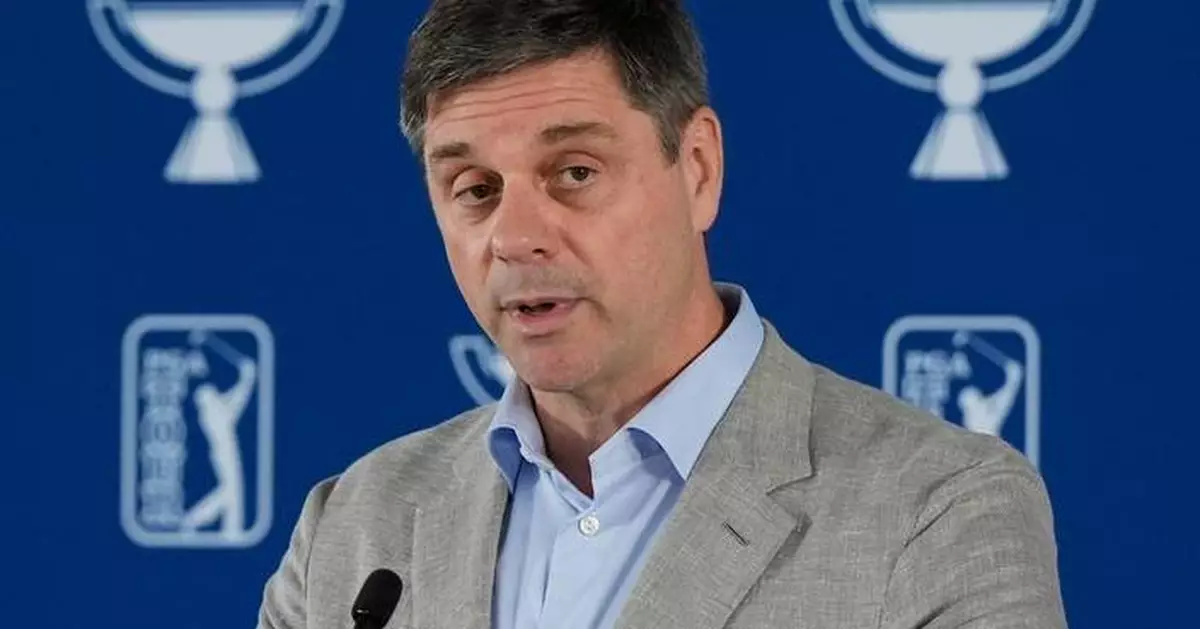
“We were disappointed with what we saw,” PGA Tour CEO Brian Rolapp said Tuesday of the response from Good Good. He said its role as a title sponsor was a “fluid situation.”
“We agree with their decision to use this time to focus on their organization and the work ahead,” the tour said in a statement Thursday. “The PGA Tour believes in golf’s ability to bring people together and create a welcoming environment for all.”
The tournament already was changed on the PGA Tour's website to “Austin Championship.”
Golf Channel postponed a Good Good reality show Wednesday because a sponsor, reported to be Galaxy Golf, wanted its brand scrubbed from the telecast. Dick's Sporting Goods removed the apparel from its stories. And then Callaway said it was ending the three-year sponsorship.
The PGA Tour confirmed Good Good said it would pull out as title sponsor of the new Nov. 12-15 tournament in Austin, Texas. The tour said the tournament still would be played.
“After thoughtful discussions with the PGA Tour and careful reflection, we have decided to step away as sponsor of the tour event in Austin this fall,” Good Good said in a social media post. “We recognize that we have work to do as an organization, and our focus right now is on our team, our culture and ensuring we will learn from this situation.”
In the 60-second video for Callaway’s new driver co-branded with Good Good, Garrett Clark shoves Alexis Miestowski to the ground as she reaches for the driver. As she is on the ground he leans over tells her, "Do not touch my new driver.”
Clark and Miestowski work for Good Good.
The video was pulled the night it was posted, and it was followed by apologies by Good Good Golf and Callaway Golf the next day. But then Callaway added another layer of apologies, this one from CEO Chip Brewer, who conceded that while Good Good produced the video, Callaway approved it before it was posted.
Brewer said the approval never should have happened and the company would investigate.
Callaway posted to its social media channels on Thursday that it has ended its relationship with Good Good effective immediately; has taken “appropriate internal corrective actions” and strengthened approval procedures to avoid another mistake; and has committed $1 million to support organizations working to prevent violence against women.
“These actions do not undo the harm caused or excuse our role in it,” the statement said. “We sincerely apologize to everyone who was hurt, disappointed, or offended by this incident.”
Good Good Golf was launched as a YouTube channel in 2020 and now is among the largest content creators in the sport, featuring eight men and four women competing in golf and various challenges. It has made-for-TV shows, apparel and other merchandise.
Clark, the Good Good founder, posted a rambling, eight-minute video Wednesday evening in which he called it “the worst ad known to man” and the reaction to the ad was “not what we stand for.”
“I do not support DV (domestic violence) or abuse or any of that of any kind," he said.
The PGA Tour has embraced such content creators over the last several years, even staging exhibitions during the week of The Players Championship and Tour Championship.
See AP’s full golf coverage here
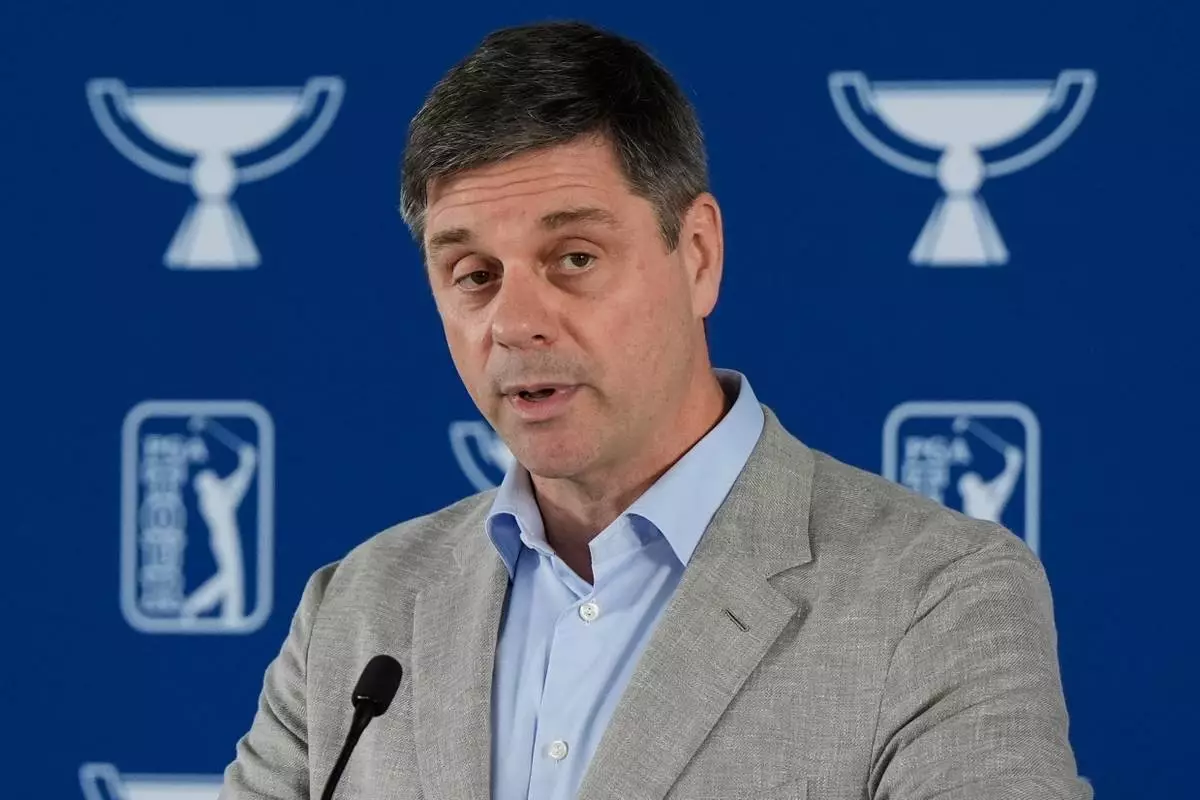
FILE - PGA Tour CEO Brian Rolapp speaks before a practice round of the Tour Championship golf tournament, Wednesday, Aug. 20, 2025, in Atlanta. (AP Photo/Mike Stewart, File)
WASHINGTON (AP) — A judge on Thursday expressed skepticism about the Kennedy Center’s intention to return President Donald Trump’s name to the historic performing arts venue by early next month, challenging the board’s insistence on moving forward even in the face of a court ruling that blocked and reversed a previous effort.
Just seconds after the Trump administration's lawyer, Bradley Mayers, began making his case at a nearly two-hour hearing, U.S. District Court Judge Christopher Cooper interrupted to ask why the center needed to begin inscribing the president's name on the institution's facade as soon as Sept. 8.
“What’s magic about that date?” Cooper asked, quipping that sometimes judges travel over the Labor Day holiday.
Mayers responded that the timeline was in accordance with a vote earlier this month by the Trump-aligned board. As he returned to his arguments that renovations at the Kennedy Center require energy and talent, Cooper interjected again.
“That’s all fine and good,” the judge said. “What does that have to do with what Congress intended in these statutes? That’s really what’s before me.”
Trump has spent much of his second term reshaping Washington to his liking, demolishing the East Wing of the White House to make way for a ballroom, planning a triumphal arch near Arlington National Cemetery and a renovated golf course along the Potomac River. The Kennedy Center is a rare stumbling block in that effort after Cooper ruled in May that Trump's name was added to the building illegally, ordering it to be removed.
Trump and his allies, however, have refused to let that be the final word.
The Trump-aligned board at the Kennedy Center voted earlier this month to inscribe his name on the venue’s facade so it would read “The John F. Kennedy Center for the Performing Arts Restored and Renovated By President Donald J. Trump.” If the Trump Kennedy Center Fund reached $100 million, another inscription would be added reading: “Endowed by the Trump Kennedy Center Fund.”
The plaza in front of the Kennedy Center would also be renamed in Trump's honor.
Mayers argued that the moves amount to a recognition of Trump, not the renaming the institution earlier sought. The institution no longer calls itself the Trump-Kennedy Center or focuses on such branding, and there's no effort to return to that argument.
The government's lawyer also encouraged Cooper not to rule on the inscription related to the endowment because no money has been raised, essentially leaving it a theoretical possibility for now.
Despite Cooper's skepticism of the developments, he also questioned whether he had authority to block the moves as the administration appeals his earlier ruling. He pressed a lawyer for Rep. Joyce Beatty on whether he had jurisdiction in the case given the Trump administration is pursuing an appeal of his May ruling that adding Trump’s name to the building was illegal.
“I want to make sure I have the jurisdiction to do whatever I did,” Cooper said of an eventual ruling in the case.
Beatty is an ex officio member of the board who has led the effort to block Trump's moves to put his stamp on the institution. Her lawyer, Nathaniel Zelinsky, warned Cooper that failing to act “would create this black hole where there’s no way to enforce” the earlier decision.
Hanging over the hearing was the prospect that the administration may seek to demolish the Kennedy Center. In a filing earlier this week, administration lawyers told the court that absent recognition of the president, the Kennedy Center would struggle to raise money for renovations. Without that money, they suggested, the building may need to be demolished, a prospect that alarmed some given Trump’s swift moves last year to dismantle the East Wing.
The Kennedy Center, the lawyers argued, “will deteriorate further into an unsafe, decrepit structure that will be required to be taken down, with a determination to follow on what to build on the site, such as a large outdoor amphitheater overlooking the Potomac River that has been proposed, by some, for many years.”
Commerce Secretary Howard Lutnick, who attended the hearing, seemed to downplay that possibility.
“What was pointed out,” he told reporters, “was that if you do nothing, bad things happen. But they’re not going to happen on Thursday.”
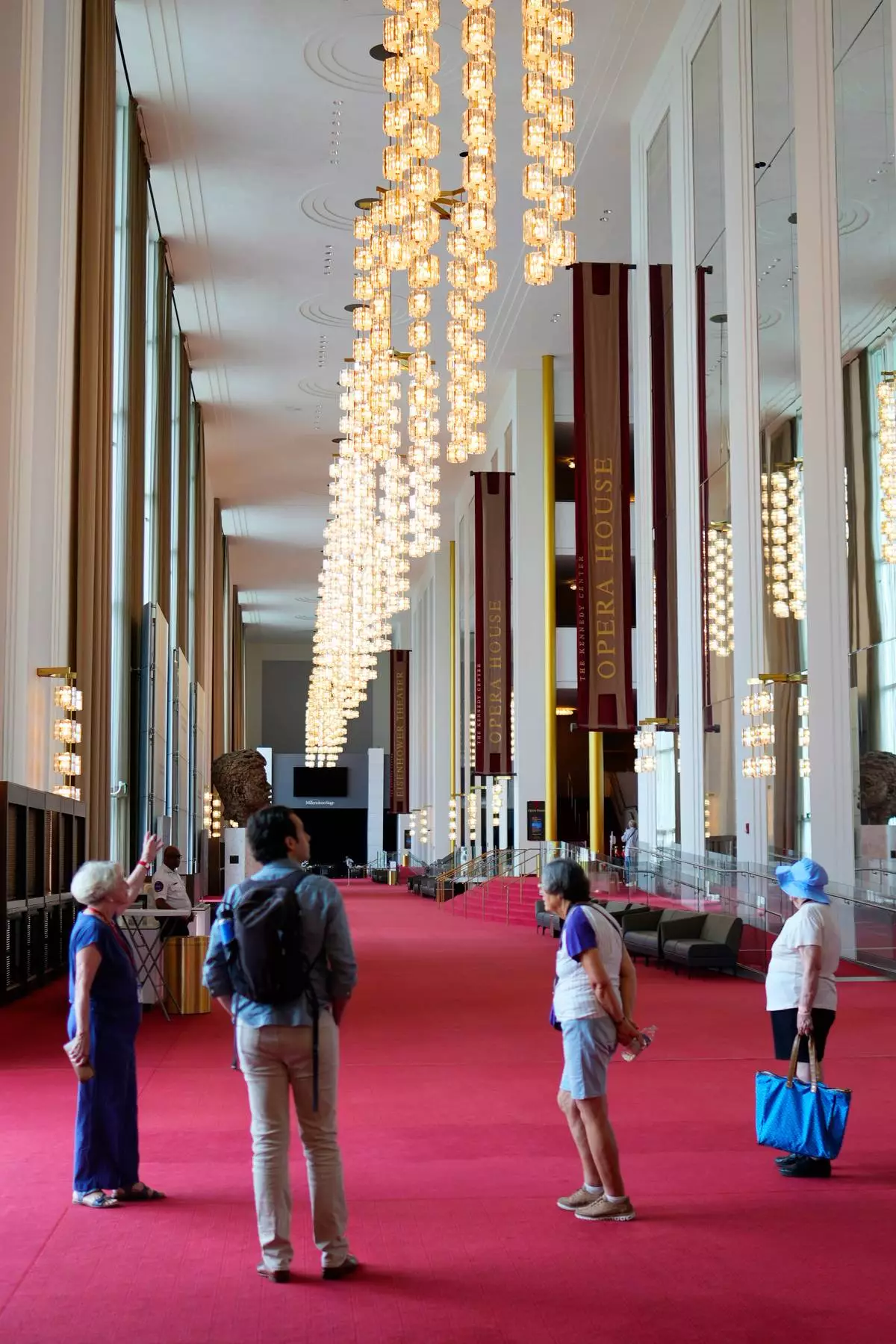
People are seen in the Grand Foyer at the Kennedy Center, Thursday, Aug. 27, 2026 in Washington. (Photo/Pablo Martinez Monsivais)
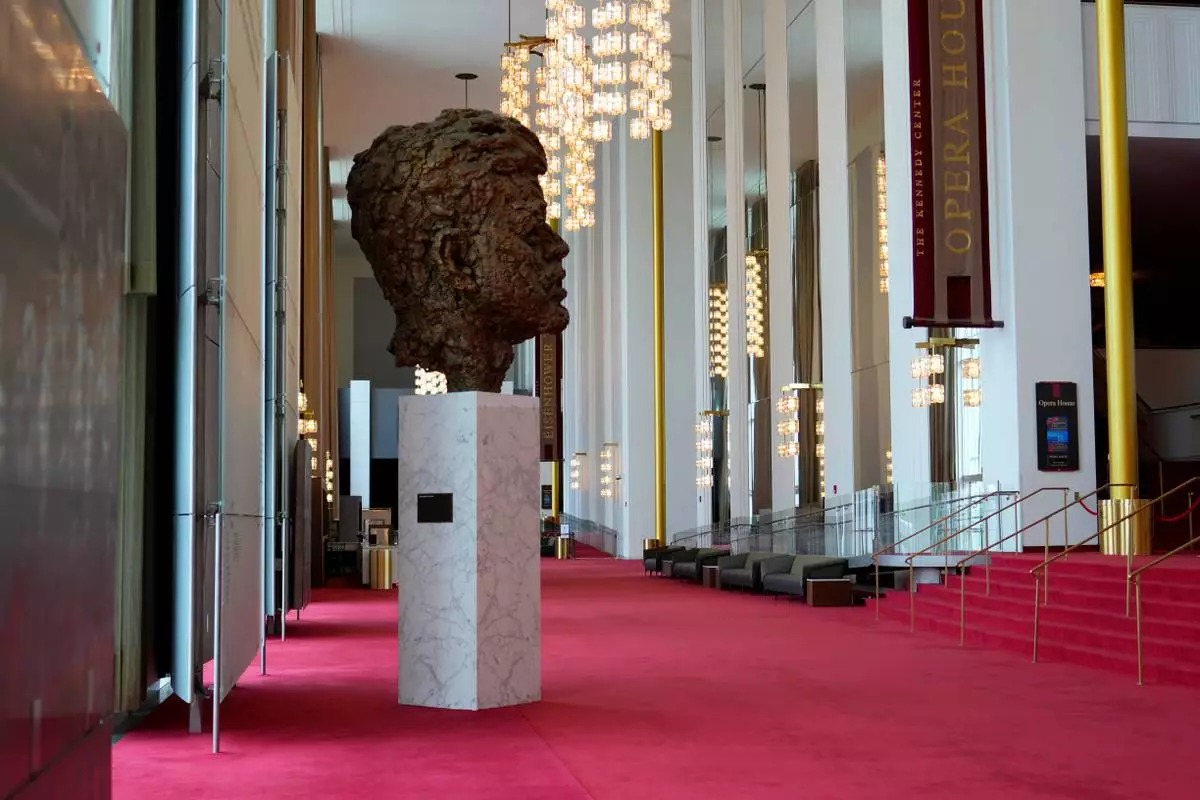
The bust of President John F. Kennedy is displayed in the Grand Foyer at the Kennedy Center, Thursday, Aug. 27, 2026 in Washington. (Photo/Pablo Martinez Monsivais)
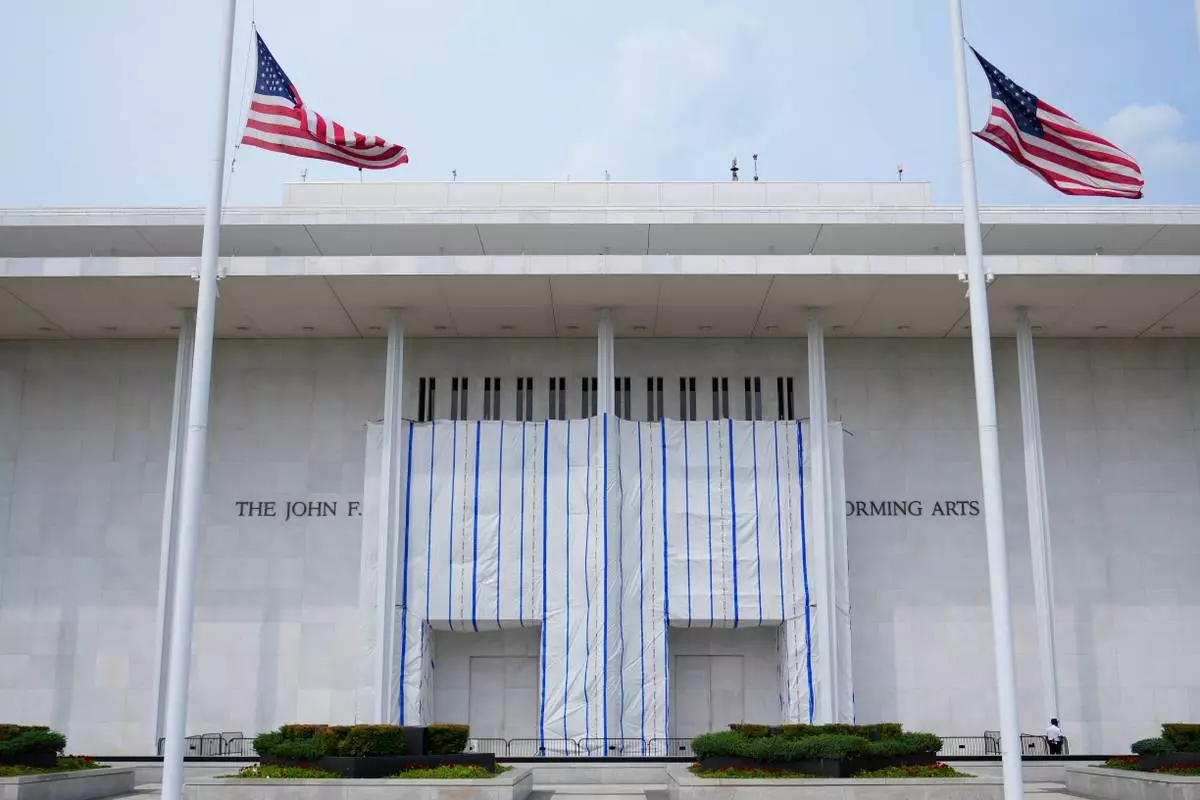
The exterior of the Kennedy Center is seen, Thursday, Aug. 27, 2026 in Washington. (Photo/Pablo Martinez Monsivais)
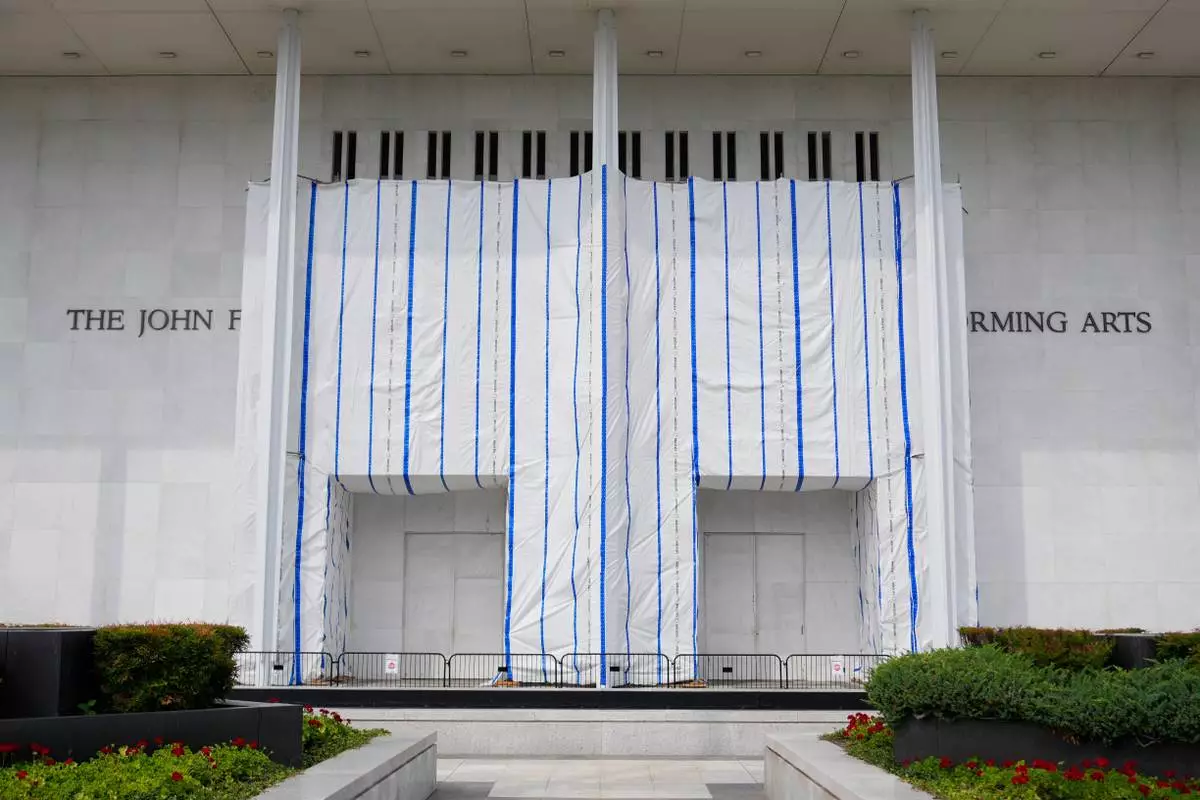
The exterior of the Kennedy Center is seen, Thursday, Aug. 27, 2026 in Washington. (Photo/Pablo Martinez Monsivais)