The death toll from Wednesday's devastating flash floods in Nepal's Bhote Koshi River has risen to 389, the Nepal Police said on Thursday evening.
Rescue and relief operations are currently underway in affected areas. In the Trishuli Bazaar area of Nuwakot district, a temporary hospital has been set up, and survivors are being airlifted by helicopter to nearby army camps. A large number of military personnel have been deployed to assist in the rescue efforts.
However, rescue work in some more remote areas has been severely hampered by mudslides that have blocked local roads. In one village in Nuwakot district, nearly all the houses have been partially submerged in mud.
With large amounts of silt blocking the entrances to affected villages, the pressure on road repair crews has intensified.
For the Nepalese government, ensuring road access and advancing quickly into harder-hit and more remote areas has become a pressing challenge in ongoing disaster relief efforts.
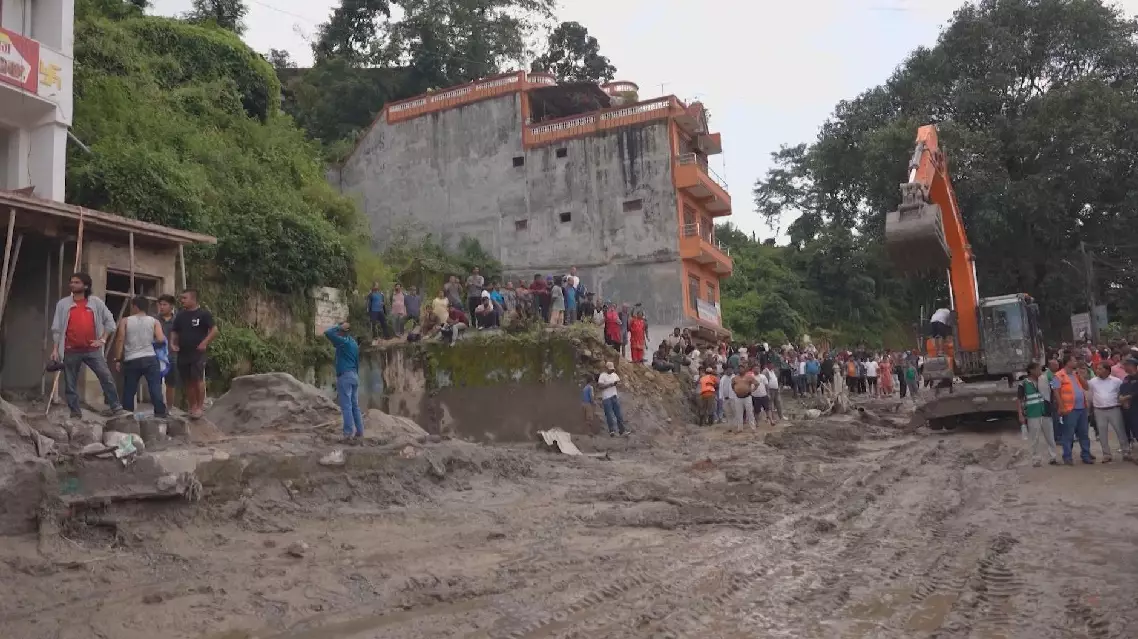
Death toll from Nepal flash floods rises to 389
Once the world's fourth largest lake, the Aral Sea has lost over 90 percent of its area since the 1960s. In recent years, Chinese and Uzbek scientists have collaborated on restoring its ecosystem and have made promising progress.
The Aral Sea covered around 66,000 square kilometers until the Soviet irrigation projects diverted the two rivers feeding it, primarily to grow cotton, and the water began disappearing.
"The Aral Sea began to dry up in the early 1960s. Unfortunately, today it is not possible to fill up that lake again," said Abdurashid Myrzambetov, deputy director of the Aral Sea International Innovation Center in Nukus.
Today, around 90 percent of the sea is gone, leaving ships stranded in a new desert called the Aralkum.
The damage travels far beyond the former shoreline as winds lift salt and toxic agricultural residues from the exposed seabed, arousing dust storms that can carry contaminated particles hundreds of kilometers away.
In Xinjiang, 1,500 kilometers away from Nukus, the situation is strikingly similar.
Xinjiang accounts for over 40 percent of China's total saline-alkali land. For decades, scientists there have been fighting salt, learning which soils can be restored and which plants can survive.
"It's all salt. Look, you can see it's mostly made up of salt crusts. To cultivate anything here, you first have to understand the characteristics of saline-alkali land. We have to go out into the wild fields to collect samples," said Tian Changyan, senior researcher of Xinjiang Institute of Ecology and Geography, Chinese Academy of Sciences (CAS).
"Let me show you Salicornia. This plant is really impressive, extremely salt‑tolerant. Taste it. It's very salty, because it can absorb salt into itself," Tian said.
Tasting salt‑tolerant plants has become a routine practice for the scientists in their work. Through repeated trials, plants that can survive in Xinjiang's saline‑alkali soil have also been found to grow in the Aral Sea basin of Uzbekistan.
Since 2018, researchers from the Xinjiang Institute of Ecology and Geography have been shuttling between China and Uzbekistan.
They've introduced salt-tolerant plant seeds, more than 1.3 tons of them to the shores of the Aral Sea.
"We provided 36 species at the early stage, which were screened under this environment. Based on the plants we supplied to them, the scope can be further expanded. The ability to excrete salt externally allows the plant to adapt to the saline-alkali conditions," said Zhao Zhenyong, another researcher from the Xinjiang institute.
Among the species, some are salt-accumulating, like salicornia. Some are salt-secreting, like limonium and tamarisk. Others are salt-rejecting, like reeds. Each plays a unique role in fixing the soil and preventing dust storms, Zhao said.
To reduce soil salinity and help vegetation return, another challenge is using less water for cotton, the thirsty crop whose massive irrigation helped drain the Aral Sea in the first place.
"Today, the cotton is being irrigated from underground with a drip irrigation system, which has been newly implemented from China. It cuts water consumption by around 40 to 50 percent," said Timur Toreshov, a researcher, Laboratory of Plant Physiology and Biotechnology, Aral Sea International Innovation Center in Nukus.
From advanced agriculture machinery and precision drip irrigation, to modern precise facilities, China’s experience and expertise in cotton production are being put into practice in Uzbekistan.
The results are visible. Salt dust storms have weakened. Cotton yields have tripled with drip irrigation. And a green belt more than two million hectares is slowly returning to the basin.
"Seeds are our carriers. When they get there, they won't just sprout and grow into new life. They also embody the Chinese vision of creating a beautiful, green, and sustainable environment throughout the broader region," said Zhang Yuanming, director of Xinjiang Institute of Ecology and Geography.
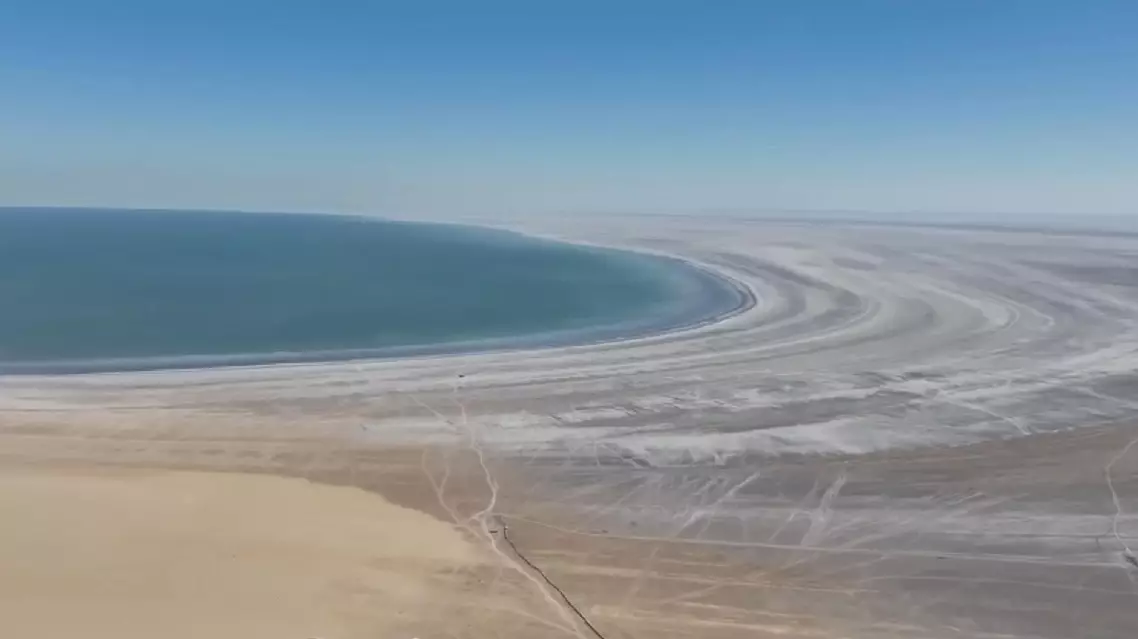
China, Uzbekistan join hands to restore ecosystem of Aral Sea