NUUK, Greenland (AP) — Two reports investigating the forcible contraception of thousands of Indigenous women and girls in Greenland by Danish health authorities for decades were split over whether the practice constituted genocide.
The Greenlandic government, which commissioned the inquiry, released the reports Friday but, when pressed by journalists during a news conference, would not say whether its leaders concluded whether a genocide had occurred. The government told the authors to use the definition under the United Nations' 1948 genocide convention, which includes “imposing measures intended to prevent births within the group.”
The reports come as U.S. President Donald Trump pushes to control the Arctic island, which is a self-governing territory of Denmark. The leaders of Greenland and Denmark say the island is not for sale and only Greenlanders can decide their fate.
Known as the “spiral case, " the revelations have rocked both Denmark and Greenland. More than 350 Greenlandic Indigenous women and girls, including some 12 years old and younger, previously came forward to investigators and reported that they were forcibly given contraception by Danish health authorities. Denmark says more than 4,000 women and girls — reportedly half the fertile women in Greenland at the time — received IUDs between the 1960s and mid-1970s.
The Inuit victims, many of them teenagers at the time, said they were either fitted with intrauterine contraceptive devices, known as IUDs or coils, or given a hormonal birth control injection. They were not told details about the procedure, or did not give their consent.
The alleged purpose was to limit population growth in Greenland by preventing pregnancies. The population on the Arctic island was rapidly increasing at the time because of better living conditions and better health care.
The cases occurred between the 1960s and the early 1990s. Greenland took over its own healthcare programs on Jan. 1, 1992.
The Danish government on Thursday approved payouts of 300,000 Danish kroner (about $46,500) to each victim. Danish Prime Minister Mette Frederiksen officially apologized last year.
Greenlandic Prime Minister Jens-Frederik Nielsen said a reconciliation commission would be set up, a move that Frederiksen endorsed in a statement Friday.
On Friday, the Greenlandic government only accepted the findings of one of the reports, saying that an expert found that the second — the one that definitively said a genocide had not taken place — did not meet recognized scientific standards.
“There is no empirical evidence to assume that any Danish or Greenlandic authority, or any individual healthcare professional, at any time had any intention of destroying the Greenlandic population or a significant proportion of it,” the authors of the rejected report wrote. “There was no genocide.”
The accepted report, however, did not conclude whether there was a genocide. The authors wrote that they were not able to determine if any intent to destroy the population existed solely through the forcible contraception cases, and suggested further study that encompassed other Danish practices at the time that affected Greenlandic children and families. The authors did not, unlike the other report, conclusively say a genocide did not occur.
“It is difficult to imagine circumstances in which an attempt to substantially reduce the population of a single ethnic group could not constitute an intent to destroy, in part, that ethnicity,” the report said.
The reports were originally supposed to be a single publication but two of the four members of the group broke away several months ago and wrote their own report. Theirs was the one rejected by the island's government; one of the authors is a former director of the Danish Institute for Human Rights.
“The reason given was professional disagreements amongst the members and, to some extent, concerns about the geopolitical situation,” the Greenlandic government said Friday in a news release.
The news release did not elaborate on what the two authors considered to be the geopolitical situation.
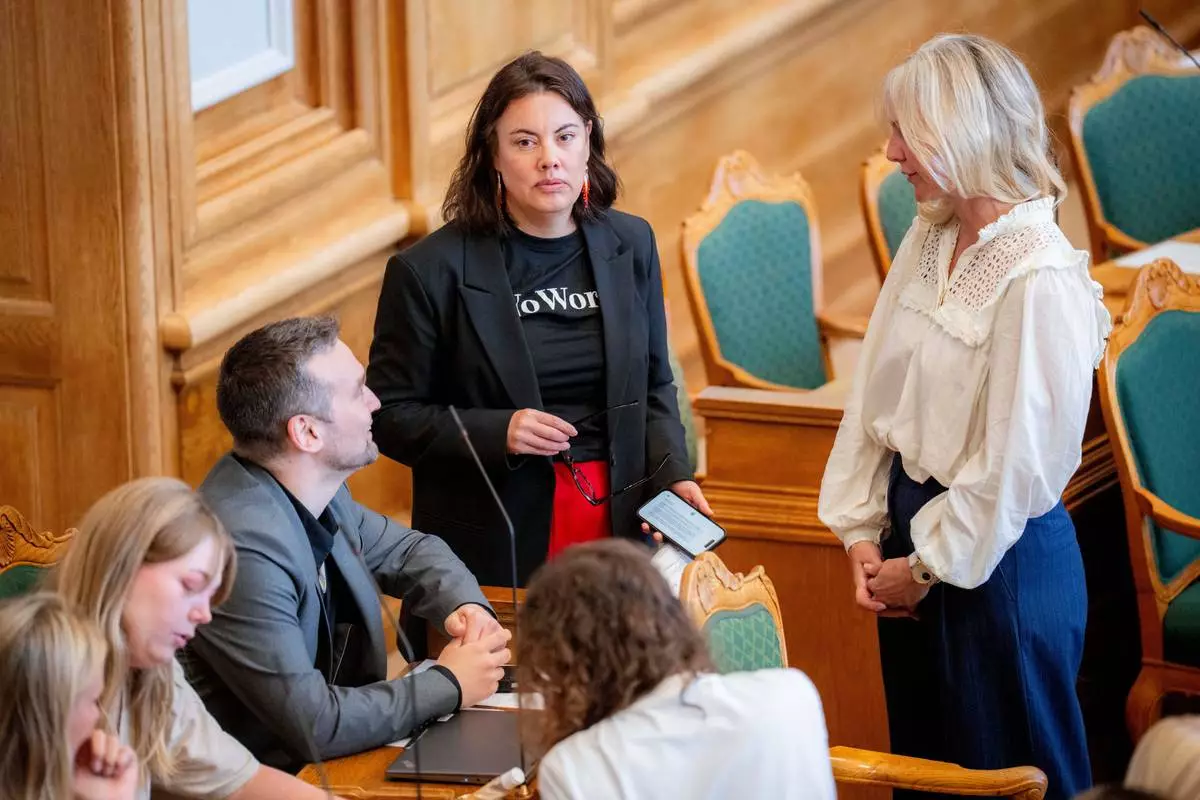
Naleraq's Qarsoq Hoeegh-Dam from Greenland , Inuit Ataqatigiit's Naaja H. Nathanielsen from Greenland and Minister of Health and Church Affairs Ida Auken during a meeting in the Folketing Hall at Christiansborg, Copenhagen, Thursday, Aug. 27, 2026. The meeting includes a vote on compensation in the so called "spiral case". (Ida Marie Odgaard/Ritzau Scanpix via AP)
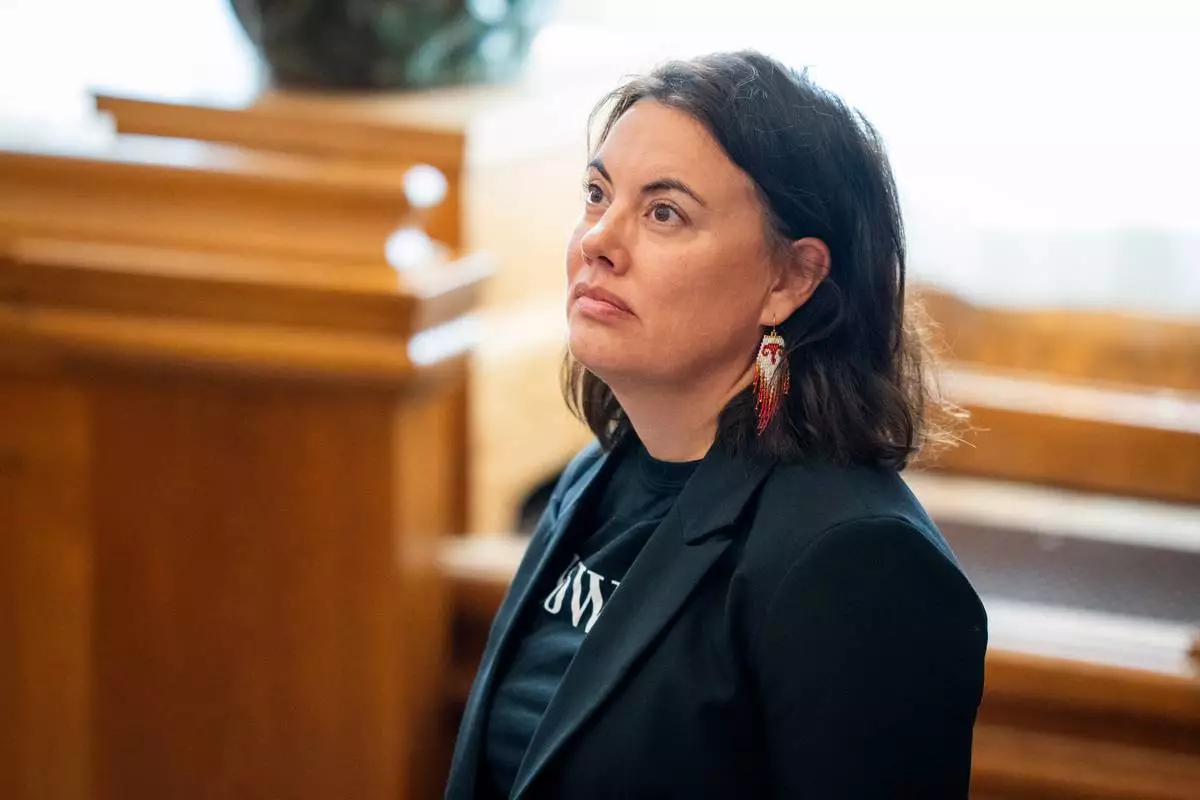
Greenlands Naaja H. Nathanielsen during a meeting in the Folketing Hall at Christiansborg, Copenhagen, Thursday, Aug. 27, 2026. The meeting includes a vote on compensation in the so called "spiral case". (Ida Marie Odgaard/Ritzau Scanpix via AP)
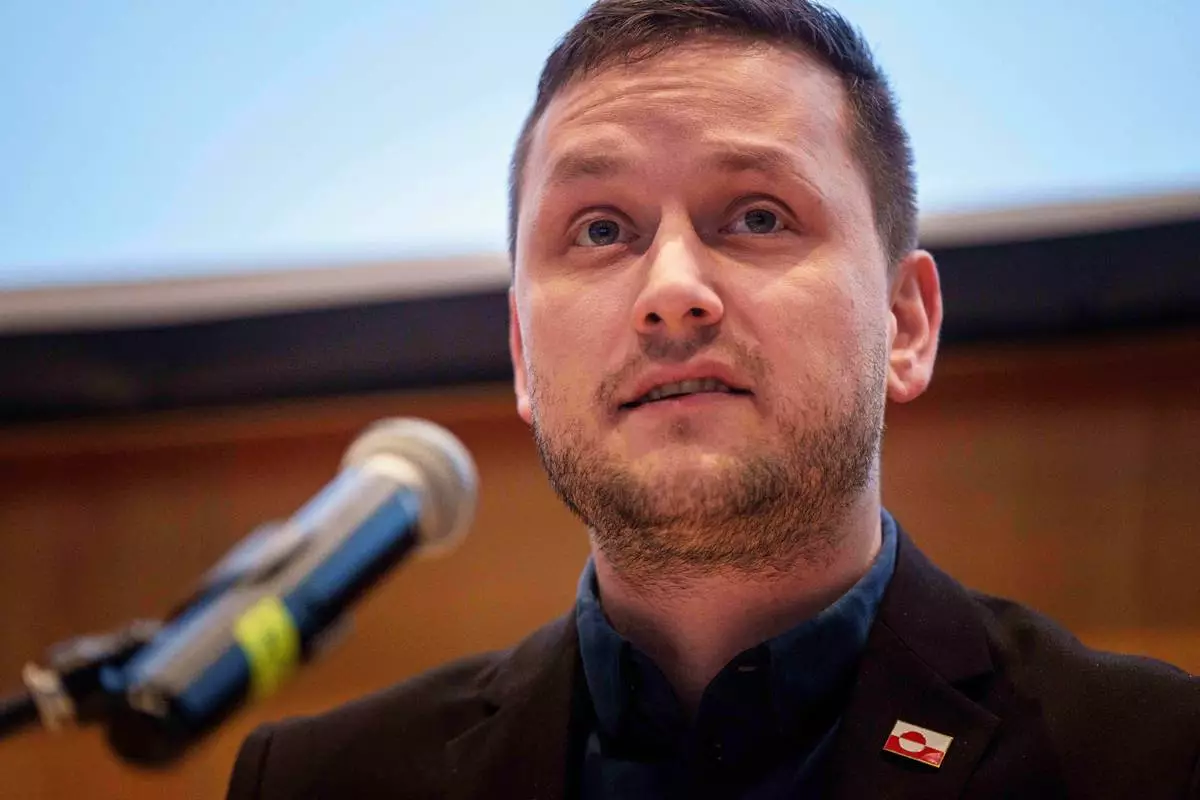
FILE - Prime Minister of Greenland Jens-Frederik Nielsen speaks to journalists at a press conference in Nuuk, Greenland, on Jan. 22, 2026. (AP Photo/Evgeniy Maloletka, File)
NEW YORK (AP) — A federal judge on Friday once again spurned Donald Trump’s effort to erase his hush money conviction, rejecting the president’s bid to move the state court case to federal court and have it dismissed on presidential immunity grounds.
Judge Alvin K. Hellerstein reiterated his earlier finding against Trump, saying that the reasons Trump cited for renewing his request were “neither new nor legally sufficient.”
The judge added: “He has failed to show good cause and diligence.”
It is the third time Hellerstein has blocked Trump from having the U.S. District Court in Manhattan seize control of the case from the New York court where he was tried and convicted.
And, like before, Trump will appeal, according to a spokesperson for his legal team who called Hellerstein's ruling “baseless and lawless.”
“The Supreme Court’s historic decision on Immunity, the Federal and New York State Constitutions, and other established legal precedent mandate that the Witch Hunt perpetrated by the Manhattan DA be removed to federal court, and immediately overturned and dismissed,” a statement issued on behalf of the legal team said. "President Trump will be filing a powerful appeal, and will continue defeating Democrat weaponization at every turn.”
The guilty verdict, reached in May 2024 while Trump was between terms, made him the first former — and now current — U.S. president to be convicted of a crime. Trump is also challenging his conviction through the state court appellate process, which is pending.
Hellerstein’s decision came after a federal appeals court last year ordered him to reconsider his prior denial. The judge previewed his ruling during oral arguments in February, slamming Trump’s lawyers for legal maneuvers that amounted to taking “two bites at the apple.”
State prosecutors did not immediately respond to a request for comment.
Trump was convicted in May 2024 of 34 felony counts of falsifying business records to conceal a $130,000 hush money payment to adult film actor Stormy Daniels, whose claim of a sexual encounter with Trump a decade earlier had threatened to upend his 2016 presidential campaign.
Trump was sentenced to an unconditional discharge, which left his conviction intact but spared him any punishment. He had long denied Daniels’ claim and said he did nothing wrong. He has sought to get the conviction overturned both by attempting to move the case to federal court and through the appeals process in state court, which is pending.
Hellerstein rejected Trump’s requests to move the case twice before. The first was after Trump’s March 2023 indictment. The second was after Trump’s trial, as his lawyers sought to nix his conviction in the wake of the Supreme Court’s July 2024 ruling that presidents and ex-presidents can’t be prosecuted for official acts and prosecutors can’t use official acts as evidence that unofficial actions were illegal.
Trump appealed Hellerstein’s post-trial ruling and, last November, the 2nd U.S. Circuit Court of Appeals ordered the judge to reconsider his decision, finding that he had failed to consider “important issues relevant” to the president’s request to move the case.
A three-judge appellate panel said it expressed no view on how he should rule but instructed Hellerstein to closely review evidence that Trump claimed was related to official acts and whether Trump could argue those actions were taken as part of his White House duties.
The judges also instructed Hellerstein to determine if Trump had “diligently sought” to have the case moved to federal court and whether the case can even be moved to federal court now that Trump has been convicted and sentenced in state court.
During oral arguments in February, Hellerstein took issue with the Trump legal team’s decision-making after the Supreme Court ruling.
Instead of immediately seeking to move the case to federal court, he noted, Trump’s lawyers first asked the trial judge in state court, Juan Merchan, to throw out the verdict on immunity grounds. Normally, such a request must be made within 30 days of an arraignment, but a federal appeals court in Washington, D.C. has ruled that exceptions can be made if “good cause” is shown.
Trump, a Republican, did not attend the arguments.
Trump lawyer Jeffrey Wall argued that prosecutors rushed to trial instead of waiting for the Supreme Court’s presidential immunity decision and that Trump’s legal team was crunched for time after the high court’s ruling because his sentencing was scheduled for just 10 days later.
Trump’s lawyers did not ask Hellerstein to intervene until nearly two months later, while their request to Merchan was still pending. The judge called that a “strategic decision” and suggested that by going to the state court first, Trump’s lawyers cost him the right to pursue remedies in federal court.
“No, your honor,” Wall replied. “It is what any sensible litigant would do” in that situation.
“Not so,” Hellerstein replied.
“That is a decision on your part,” the judge added. “You didn’t have to do that. You could have come right to the federal court. Just by filing a notice of removal, there would be no sentencing.”
Trump’s lawyers “made a choice,” Hellerstein said, “and you sought two bites at the apple.”
In his written ruling Friday, Hellerstein said Trump was asking for a “'second bite at the apple,' a result the law disfavors.”
The judge added that “Trump’s delay in filing for removal constitutes a ‘quintessential strategic decision,’ and the ‘fact that he later came to view that decision as a poor one is not sufficient, by itself, to establish cause.’”
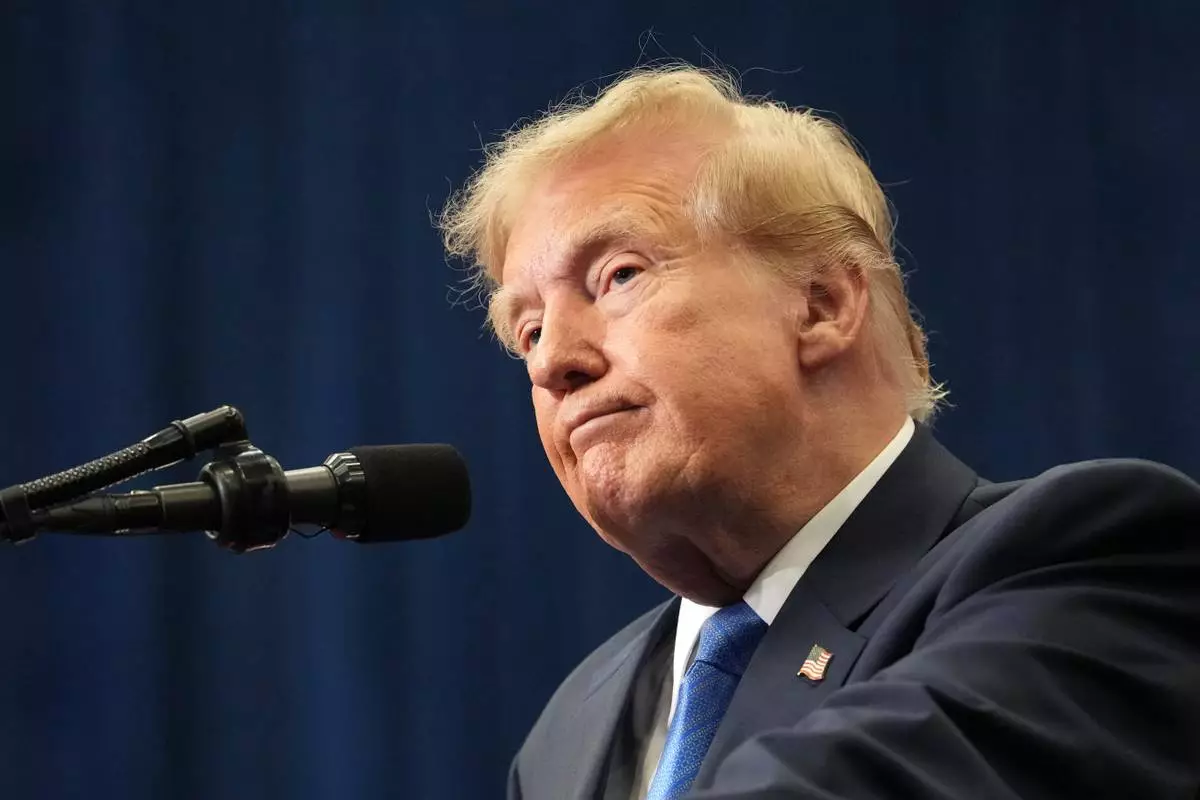
President Donald Trump speaks during an event to present the Congressional Space Medal of Honor to Artemis II crew members, Friday, Aug. 28, 2026, at Johnson Space Center in Houston. (AP Photo/Mark Schiefelbein)