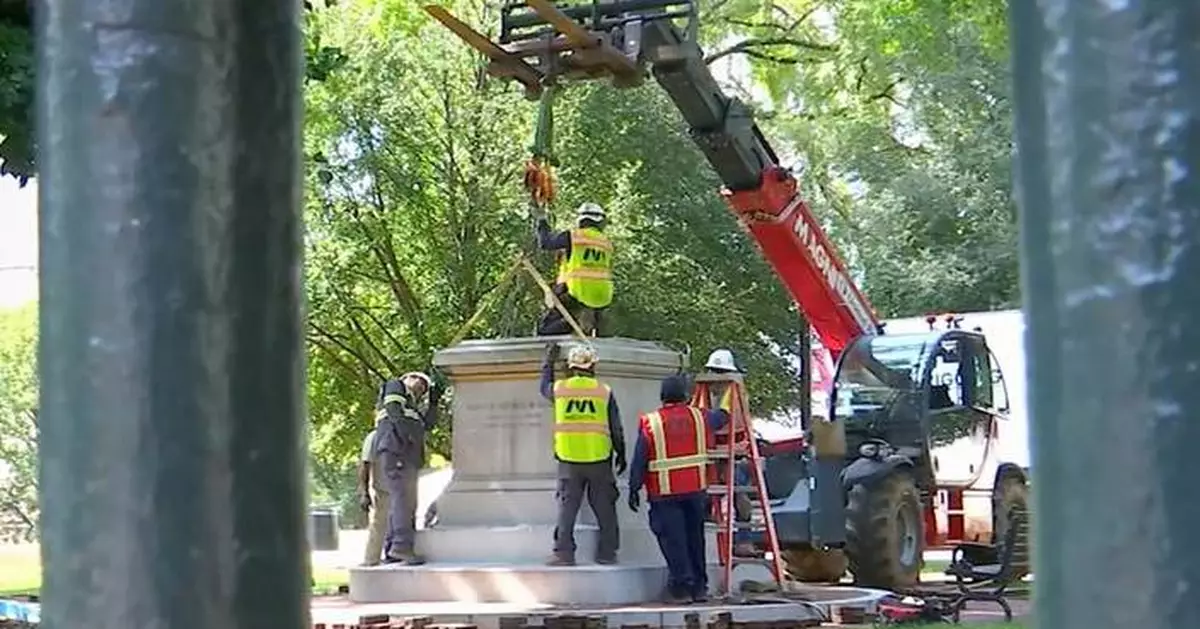
Years into efforts to purge Richmond, Virginia — a former Confederate Capital — of memorials honoring the Confederacy, the Commonwealth of Virginia began removing three more Confederate memorials in the city on Friday.
Statues honoring Confederate Generals Thomas J. “Stonewall” Jackson and Gov. William “Extra Billy” Smith, as well as Confederate Dr. Hunter Holmes McGuire, had been displayed in Capitol Square, a public park and civic campus near the state Capitol, for more than 100 years.
The Virginia legislature ordered the statues’ removal during its 2026 session.
“This doesn’t change the history of the Civil War,” said former Democratic State Sen. Adam Ebbin, who sponsored the legislation. “It changes who we choose to venerate on the Capitol lawn.”
Efforts to remove Confederate statues from prominent places of honor in Richmond began in 2018, estimated Democratic state Sen. Mike Jones.
“They’re symbols,” Jones said of the monuments. “Is this what the Commonwealth is about? Is this where we want to direct people to?”
“It's not.”
The monuments will be preserved by the Shenandoah Valley Battlefields Foundation, which said in a statement the statues will be relocated to battlefield sites within the Shenandoah Valley.
“These monuments were intended to serve as tributes to valor, sacrifice and community heritage during a difficult chapter in American history,” the Virginia division of the United Daughters of the Confederacy wrote in a statement. “Our desire is that memorials and works of art should be displayed in the manner in which donors intended, so that the public may continue to learn from them, think deeply about them and come to their own conclusions.”
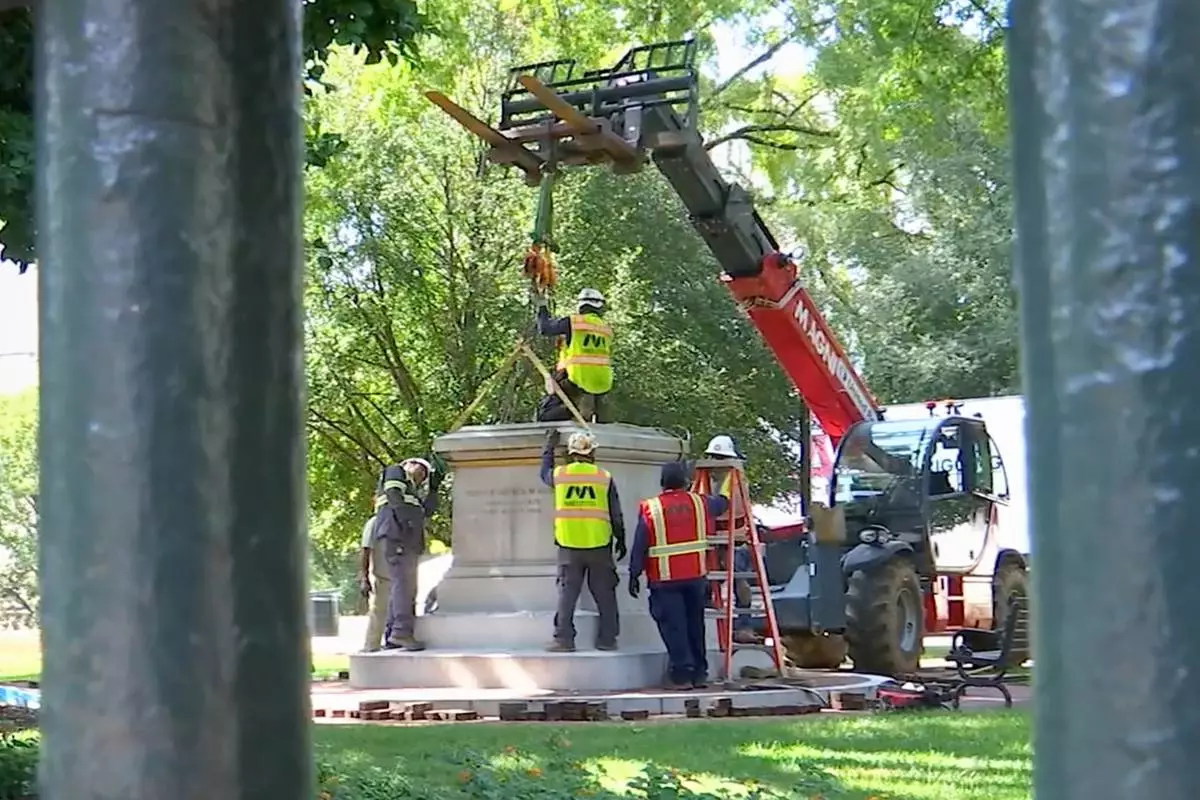
This image taken from a WRIC video shows workers attaching straps to a Confederate statue as they prepare to remove it from Capitol Square in Richmond, Va., on Friday, Aug. 28, 2026. (Courtesy WRIC)
WASHINGTON (AP) — President Donald Trump on Friday said the U.S. has entered an agreement with Venezuela to take control of 65 billion barrels of the South American country’s oil reserves.
Trump in a social media post announced the agreement he said was negotiated by Secretary of State Marco Rubio, Defense Secretary Pete Hegseth and Venezuela’s interim President Delcy Rodriguez.
“The United States of America has just entered into an Agreement with the Country of Venezuela on, THE BIGGEST OIL DEAL IN WORLD HISTORY!” Trump wrote.
The Venezuelan government’s press office did not immediately respond to a request for comment.
The announcement of the deal comes nearly nine months after the U.S. military at Trump’s direction carried out an operation to capture Venezuela’s president Nicolás Maduro and spirit him to the United States to face federal narcoterrorism and drug trafficking charges.
Trump faces mounting pressure to address high gas prices as the war in Iran reaches a six-month milestone with no conclusion in sight. The U.S. has tapped its strategic petroleum reserves, which in early August fell below 300 million barrels, down by more than 100 million barrels since the start of 2026.
The U.S.-Israel war against Iran has led to a dramatic slowdown of Gulf oil moving through the Strait of Hormuz, which about 20% of the world petroleum passed through prior to the conflict.
The average price of gas in the U.S. stood at about $4.09 a gallon on Friday, according to AAA. The average price was $3.21 at the same time last year.
Trump in his social media post Friday evening alluded to the Venezuela deal being part of a private partnership. The White House did not immediately reply to a request for comment about the private sector partners involved in the deal, and details on how the arrangement would work were not provided.
Persuading big American oil companies to return the region could face headwinds given the unrest and decades of badly damaged infrastructure.
Days after the ouster of Maduro, Trump gathered oil executives at the White House and called on them to rush back into Venezuela. Executives expressed interest in the opportunity but there was also a measure of caution given their past experience in the country.
Darren Woods, CEO of ExxonMobil, the largest U.S. oil company, said at that moment he saw the country as “un-investable.”
But Trump has insisted that his administration has brought a measure of stability to Venezuela.
He has argued that Venezuela stole U.S. oil when former Venezuelan President Hugo Chavez’s moved decades ago to nationalize hundreds of foreign-owned assets, including those owned by American oil companies.
Venezuela has one of the largest oil reserves in the world, with an estimated 303 billion barrels of crude oil in the ground. That’s about 17% of the world’s supply, according to the U.S. Energy Information Administration. Unlike other parts of the world, where geologists have to search for untapped oil, the reserves under Venezuela’s soil are largely mapped and known, experts say. But because of dilapidated infrastructure, the country only produces about 1% of the world’s oil.
__
Regina Garcia Cano in Caracas contributed to this report.
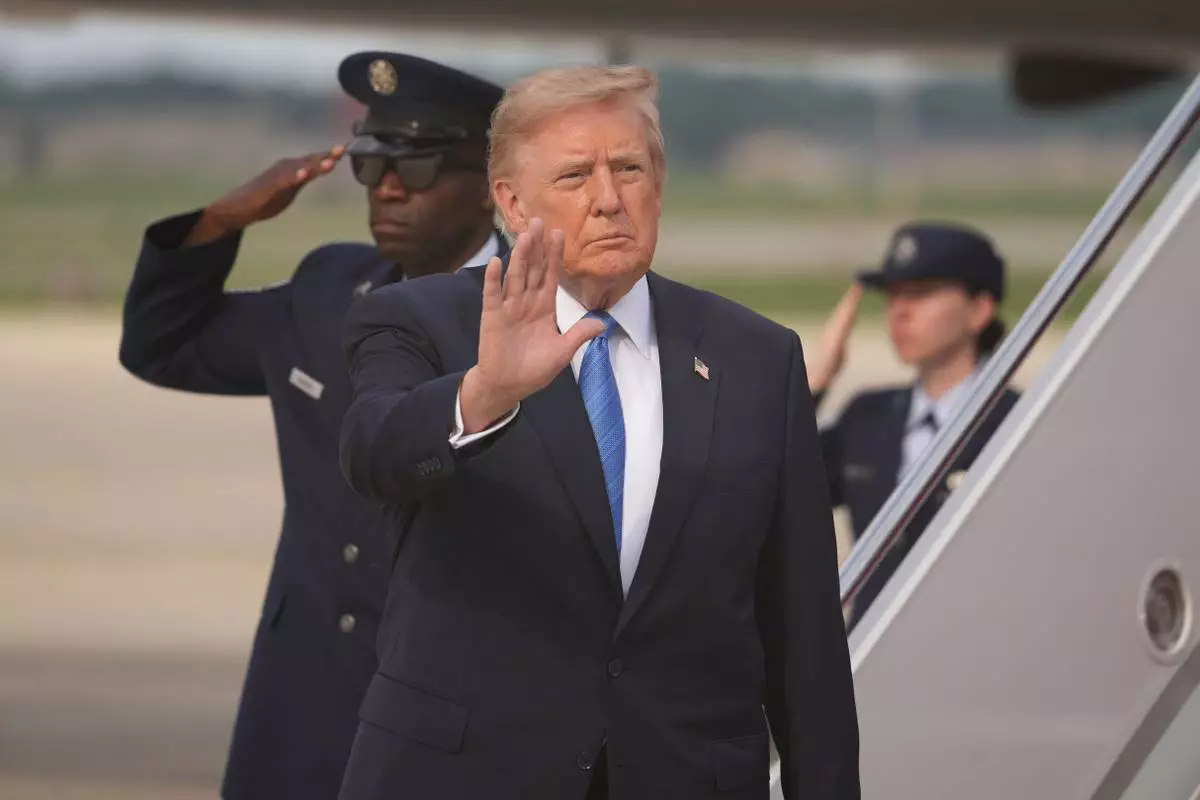
President Donald Trump waves after arriving off Air Force One, Friday, Aug. 28, 2026, at Joint Base Andrews, Md. (AP Photo/Mark Schiefelbein)