JOHANNESBURG (AP) — Scientists in South Africa are investigating why masses of sardines have washed up dead or dying along parts of the country's west and south coast — and if a herpes virus detected in the fish is responsible.
The mass mortality of sardines this month has so far stumped the country's Department of Forestry, Fisheries and the Environment, though scientists have come to at least one conclusion: it is the first time that the virus in question — pilchard herpesvirus, or PHV — has been identified in sardines off South Africa.
PHV, which was linked to two mass sardine mortality events in Australia in the 1990s, can cause inflammation and thickening of sardines’ gills, which interferes with their oxygen uptake, according to the South African environment department.
Sardines and pilchards are the same type of fish, with sardines being the younger, smaller ones.
PHV is a fish virus and poses no known risk to human health, the department said, and its detection does not mean that healthy sardines caught commercially or canned sardine products are unsafe to eat.
Dozens of sardines taken from affected areas, some dead and some alive, are being examined by scientists at the South African Institute for Aquatic Biodiversity and a local university.
In some initial results, dead fish collected from the mass mortality events showed consistently high levels of PHV, the department said in a statement, while live fish that were examined had varied levels of the virus.
Scientists have also considered whether harmful algae found in the ocean or unusually cold sea temperatures or low oxygen conditions might be responsible for the sardine deaths, but “the evidence increasingly points to PHV as the leading explanation,” the environment department said.
Dalene Vosloo, a biological sciences lecturer at South Africa's University of KwaZulu-Natal who is not involved in the investigation, said the herpes virus may not tell the whole story and "it remains possible that multiple factors contributed to the mortality event."
Changes in water quality or temperature can make fish more vulnerable to disease, she said.
While the investigation continues, the sardine deaths have caused other complications.
The Koeberg Nuclear Power Station north of Cape Town on South Africa's west coast — the only nuclear power station in Africa — had to cut power by 50% at one of its two units after dead sardines clogged a seawater intake, according to the national electricity company that runs the station.
AP Africa news: https://apnews.com/hub/africa
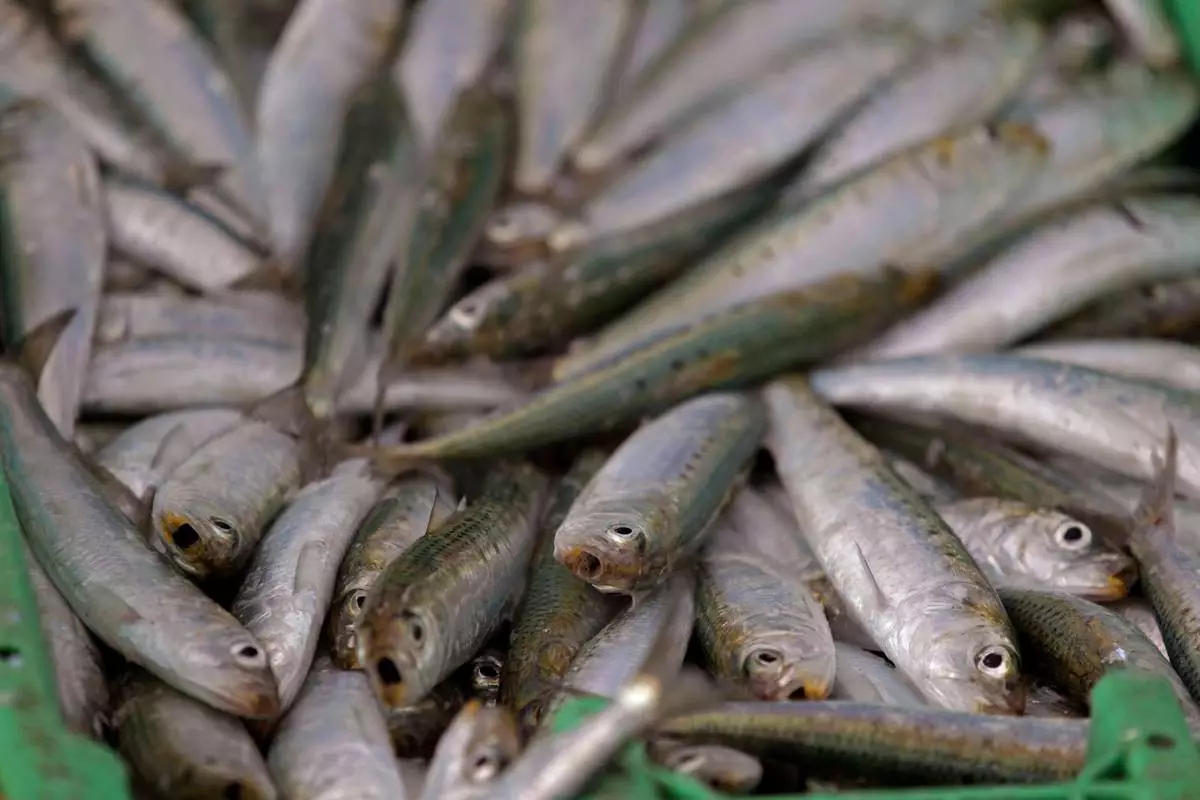
FILE - A catch of sardines pictured at the Hout Bay Harbour near Cape Town, South Africa, on Nov 20, 2011. (AP Photo/Schalk van Zuydam, File)
KYIV, Ukraine (AP) — At least 37 people have been killed following a Russian strike close to the Ukrainian capital of Kyiv, officials said Saturday, one of the deadliest attacks to hit Ukraine this year.
The attack sparked a fire in the Bucha district, west of Kyiv, that swept through homes and damaged at least 50 residential buildings, said Tymur Tkachenko, head of the local regional military administration.
The strike comes as almost constant Russian air raids on Kyiv reach their third day, choking the economy in the Ukrainian capital and severely disrupting civilian life more than 4½ years after Russia’s full-scale invasion of its neighbor.
But the nature of the strike, which was followed by explosions at the site, has also raised difficult questions for Kyiv, with Ukrainian President Volodymyr Zelenskyy describing a “terrible situation” and “terrible negligence on the part of those who stored explosives right next to people.”
Zelenskyy said in a statement that a warehouse had been struck in the village of Myla, “followed by a detonation.”
He did not give details on the site, but wrote in the same message that Ukrainian law forbade the storage of ammunition close to civilian homes and that criminal proceedings had been opened.
“Those who allowed this to happen must be held accountable for their decisions,” Zelenskyy said.
The Ukrainian leader also wrote that a care home for elderly people and people with disabilities had been damaged, and that an evacuation from the area was ongoing.
Regional head Tymur Tkachenko was later cited by Ukrainian media saying that 34 of those killed were residents at the care facility.
Ukrainian Prime Minister Serhii Koretskyi also didn't offer information on the warehouse targeted, but referenced an attack on the Kyiv suburb of Vyshneve early in July, which hit an ammunition depot, killing 22 and triggering large detonations and fires that tore through nearby homes.
“Unfortunately, we can already see that the terrible tragedy in Vyshneve did not become a lesson,” Koretskyi said. “In the fifth year of a full-scale invasion, making the same mistakes is criminal negligence. And all those guilty, without exception, must be severely punished so that such situations do not happen again.”
Russia's Ministry of Defense said that it had hit a warehouse in Myla storing components and launch boosters for long-range drones. It also said that it had attacked the ports of Mykolaiv and Izmail, as well as a logistics center and warehouse facilities storing parts for Ukraine's Flamingo cruise missiles in the Kyiv region.
Zelenskyy later announced that two officials from state-owned companies, including Ukraine’s largest arms producer, Ukroboronprom, had illegally allowed the storage of weapons on the site in Vyshneve and would be held accountable.
Drone attacks across Ukraine have become almost constant since Thursday, encompassing daylight and nighttime hours. Ukrainian officials say Russia builds up missile stocks and launches major attacks every few days, hoping to exhaust Ukrainian defenses through the sheer weight of numbers.
Russian strikes on the southern Kherson region Saturday killed two people and wounded 27 more, Oleksandr Prokudin, head of the region administration, said in a statement on social media.
He said that attacks had damaged homes and apartment blocks, and that one child was among the injured.
Earlier in the week, Prokudin said that Russia has intensified attacks on critical infrastructure in the region, which is about 70% under Russian control. He also urged tens of thousands of residents to move to safer regions because of the possibility of prolonged power and heating outages this winter.
Russia has significantly increased its use of jet-powered drones, and their numbers will keep growing as Moscow sees their effectiveness, said Pavlo Palisa, deputy head of Ukraine’s presidential office, in comments to journalists Friday that were embargoed until Saturday.
“Means of attack always outpace means of defense. We will certainly need to adapt. It will take time,” Palisa said. He said interceptor drones currently available to Ukraine, which could theoretically intercept jet-powered drones, have not yet demonstrated the expected effectiveness, though Ukraine is working on solutions.
Meanwhile, Ukraine has stepped up its long-range attacks on Russian military industries and energy facilities in recent months, using locally made drones, aiming to cut Moscow’s revenue for its invasion and make Russians feel the consequences.
In his evening statement to the nation Friday, Zelenskyy said Kyiv hoped to increase its long-range strikes on Russia to reach 1000 drone launches every day.
“Right now, we average over 300 of our long-range sanctions,” Zelenskyy said, his preferred term for Kyiv’s long-range attacks that have also lately targeted Russian large-scale online retailers. “There must be more. We have a very specific goal, and we will achieve it.”
Moscow’s forces destroyed 313 Ukrainian drones overnight, Russia’s Ministry of Defense said Saturday.
Ukrainian drone attacks wounded 11 people in Russia’s Rostov region, Gov. Yuri Slyusar said. Writing on social media, he said that nine people were hospitalized, including four children.
Follow the AP’s coverage of the war in Ukraine at https://apnews.com/hub/russia-ukraine
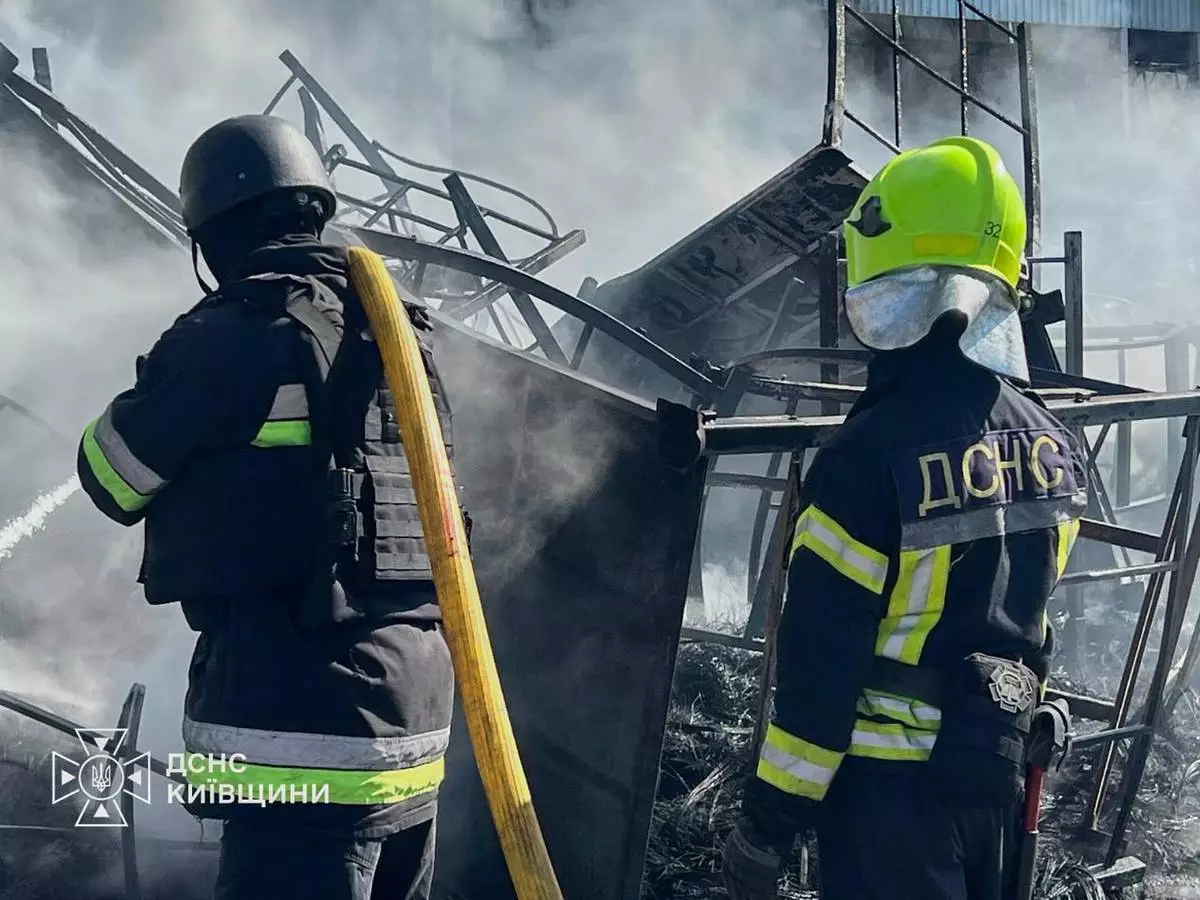
In this photo provided by the Ukrainian Emergency Service, firefighters put out a fire in a warehouse following a Russian drone attack near Kyiv, Ukraine, Saturday, Aug. 29, 2026. (Ukrainian Emergency Service via AP)
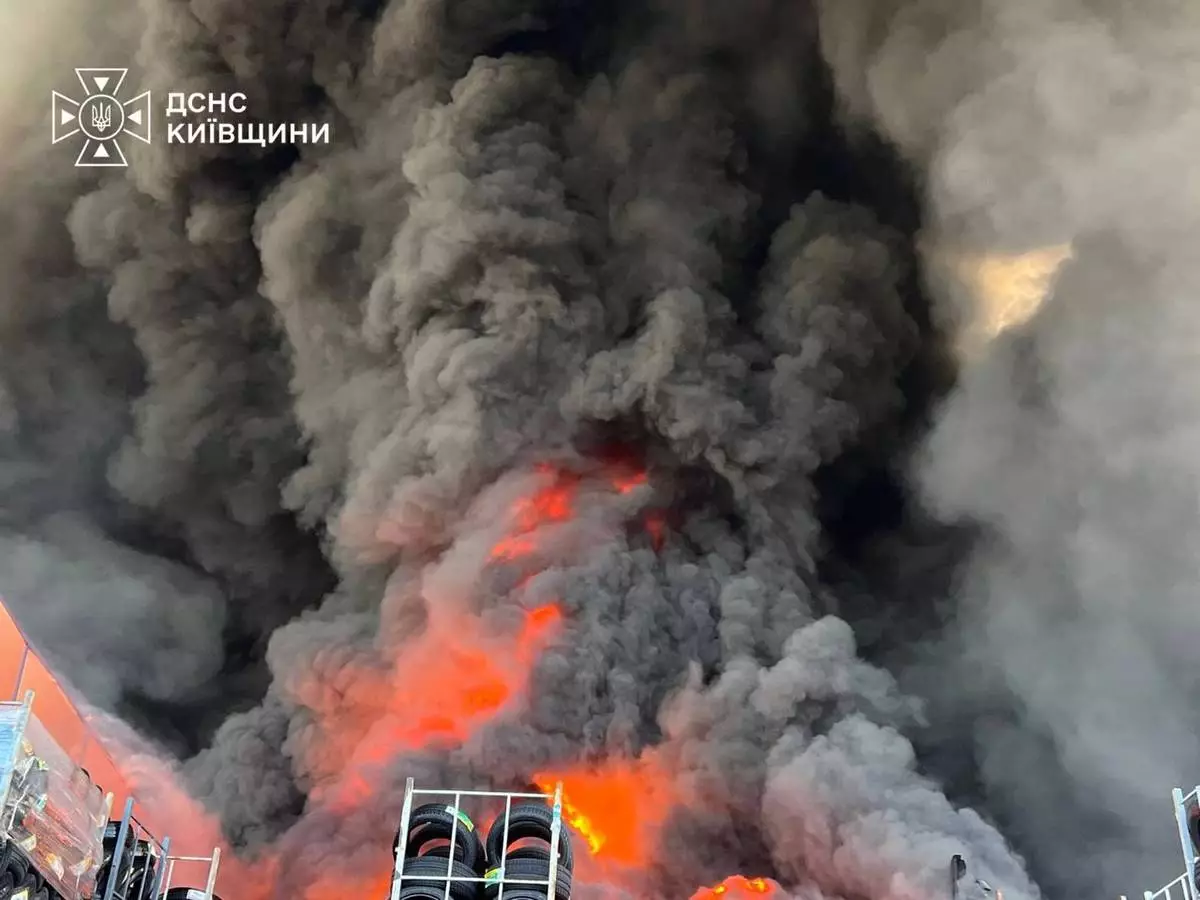
In this photo provided by the Ukrainian Emergency Service, firefighters put out a fire in a warehouse following a Russian drone attack near Kyiv, Ukraine, Saturday, Aug. 29, 2026. (Ukrainian Emergency Service via AP)