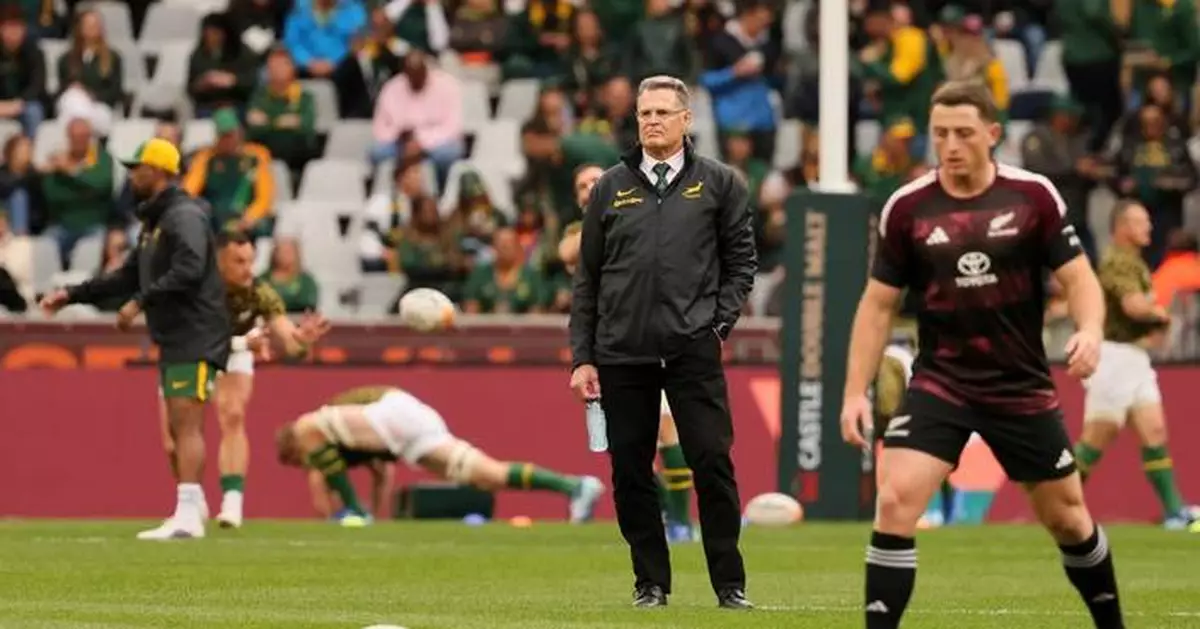
CAPE TOWN, South Africa (AP) — South Africa coach Rassie Erasmus was looking forward to watching New Zealand counterpart Dave Rennie squirm for the next week after tying their four-test series on Saturday.
The Springboks relied on a masterclass of goalkicking by Cheslin Kolbe — seven from seven off the tee — to win the second test 33-26 after New Zealand outscored them on tries 4-3.
World champion South Africa dropped the first test in Johannesburg and hasn't lost consecutive tests at home on Erasmus' watch — since 2018 — and he was relieved they got back into a series in which they started as the heavy favorite.
“Of course I felt the pressure, and the players will tell you I felt the pressure. I try not to put it on them but I was nervous,” Erasmus said.
He noted he and the older Rennie were November babies, both Scorpios, and quipped: “That's why he's able to work me out.
“It's his first loss (as All Blacks coach) ... and he'll feel what we felt this week.
"We 100% understand why people are upset because no one wants to support a losing team. No one in South Africa wants to support anything that's not working. A loss here and there doesn't make you a losing team immediately, but it's when you go on a losing run that the pressure comes on.
“We must make sure we're not confident and think we're all good again because there were a lot of things we didn't do well.”
One of the reasons Rennie was hired in March was because predecessor Scott Robertson had a 1-3 record against South Africa. Erasmus believed the All Blacks were “two classes up” from last year.
“They're really well coached and they've got athletes who can beat you on a dime,” he said. “A couple of more phases at the end and it could have been a draw.”
He explained the late switch of the front rows was because of the weather. They expected wet conditions but they turned out dry so he went with the lighter front row in the reserves. They were still a few kilograms heavier than New Zealand's starters.
Fullback Damian Willemse, a key playmaker who can cover midfield and flyhalf, injured a hamstring and Erasmus wasn't counting on him for the third test in Soweto next Saturday.
Rennie reported a clean bill of health apart from a neck issue for winger Will Jordan, who finished the match.
He described their lineout issues as “a work on” and thought the scrummaging, an issue in the first test, was reasonably managed by referee Angus Gardner but claimed the Springboks were still walking around and coming through the tighthead.
Erasmus called it “nonsense” and Boks loosehead Ox Nché said there were no complications: “We wasted a lot of time in scrums today because we all had different interpretations.”
See AP’s full rugby coverage here
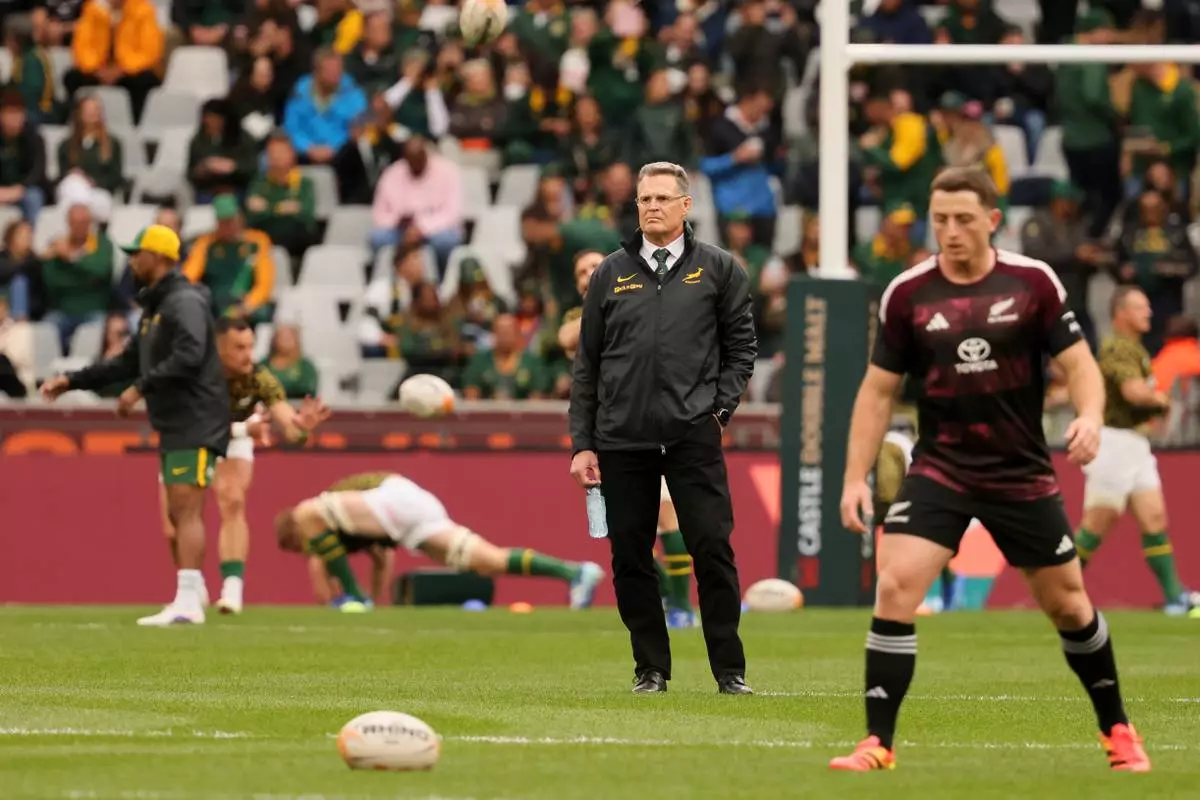
South Africa's head coach Rassie Erasmus watches on players warming up for a second Test rugby match between South Africa and New Zealand, in Cape Town, South Africa, Saturday, Aug. 29, 2026. (AP Photo/Halden Krog)
BISSAU, Guinea-Bissau (AP) — Guinea-Bissau was voting Sunday in a referendum to decide on granting new presidential powers ahead of December's general election, which will return the West African nation to democracy after its latest coup.
There was a low turnout across many voting stations after the opposition urged voters to boycott the referendum, saying it would make the head of the military government more powerful.
The military government seized power in November of last year following a disputed election in which former President Umaro Sissoco Embaló and opposition candidate Fernando Dias both claimed victory.
If passed, the new constitution by the self-styled National Transitional Council will grant more powers to the president and reduce parliamentary representation, among other issues.
The authorities argue that a parliament trimmed from 102 to 65 seats would allow for easier and more robust debates, while new presidential powers would underline the higher authority of the president over the prime minister, which they claim is a source of political instability in the country. Opposition groups reject the claim.
“In a community, there is only one leader. No community or village can have two leaders. We revised the constitution to avoid constant conflict between the president of the republic and the prime minister. We clarified the law and helped the public understand that the president of the republic is the national symbol. It is the president who stands for election in presidential polls,” Gen. Tomás Djassi, the head of the armed forces, said.
But the opposition has called on voters to boycott the referendum, saying it is a path for the head of the military government to amass power and calling it a "source of political instability at all levels".
“This constitution significantly weakens the prime minister and the government, subordinates the National People’s Assembly and political parties, and devalues — or even ignores — the popular will expressed at the polls, carrying all the attendant risks of political and social division and tension,” Muniro Conté, spokesperson for the African Party for the Independence of Guinea and Cape Verde, told The Associated Press.
Last year's coup in Guinea-Bissau worsened West Africa's democratic crisis, adding it to a growing number of countries in the region under military rule.
Leaders on the continent branded it a “staged” takeover after the military allowed the former president to host a press conference to announce he was being deposed and allowed to leave the country in seemingly favorable circumstances. Skeptics say Embaló had given up the seat to the military after seeing he was losing the election.
Since it gained independence from Portugal in 1973, the only Portuguese-speaking country in West Africa has been rocked by several coups and attempted coups. Before last year’s coup, a failed coup was reported only a month before.
The tiny country of around 2.2 million people has the highest proportion of natural wealth per capita in West Africa, according to the World Bank, but more than half of the country lives in poverty. The country is a hub for drug trafficking between Latin America and Europe, an issue experts say fuels its political instability.
Nearly 915,000 voters are registered to vote in the referendum, but the majority say the constitution is not a problem.
Bacar Camará, a high school teacher in the capital, Bissau, said he would not be voting and disapproves of the referendum, citing a fraught political and social environment.
“The transitional government should focus on creating conditions for better understanding and reconciliation among Guineans,” he said.
Another resident in Bissau, Carolina Djeme, said the constitution is unfamiliar to her.
"I’ll go vote on Sunday. However, I’ll vote ‘no’ because — honestly, and I think this is the case for many other citizens — I don’t know this new constitution well, so I can’t vote ‘yes’,” she said.
Analysts say the military government lacks the legitimacy to change the constitution, which has sparked discontent among the citizens.
“The fundamental question is: Who drafted this constitution, and on whose behalf? To protect which interests or institutions? Who stands to benefit from this constitution?” Paulino Quadé, a Guinean political analyst, said.
———
Adetayo reported from London.
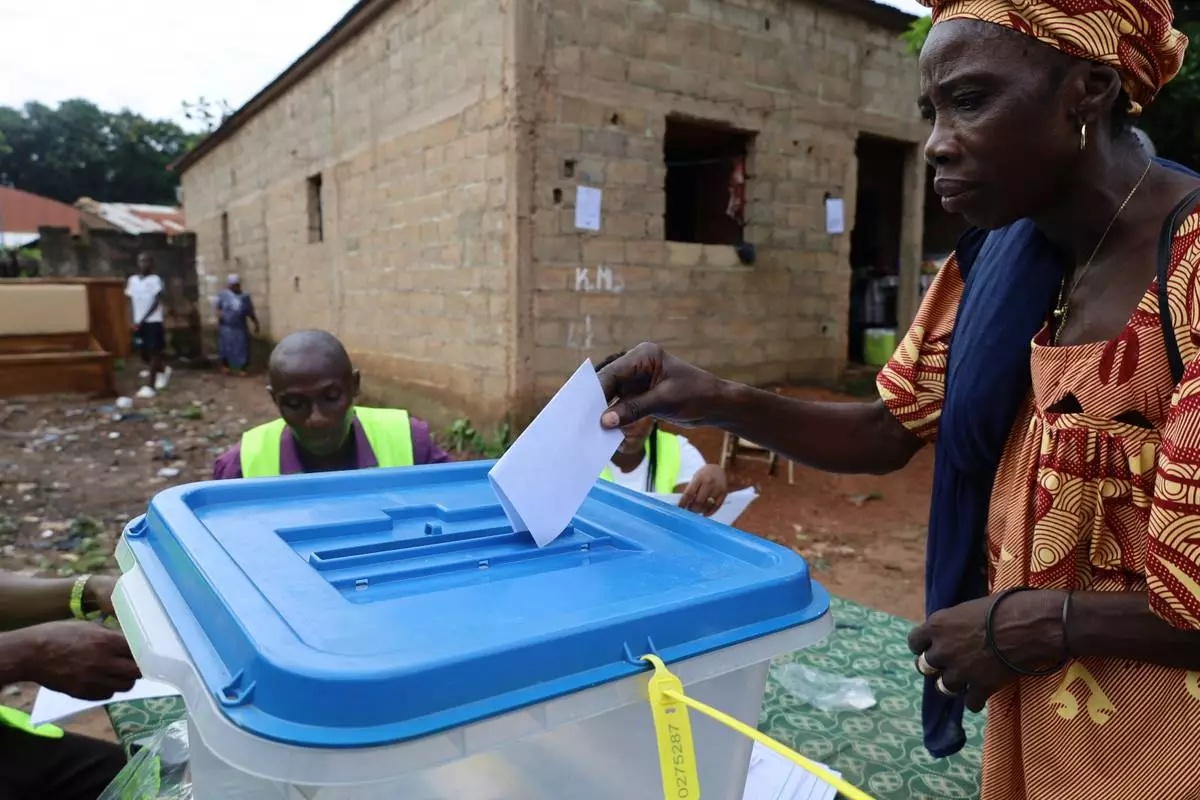
A voter casts her ballot during a referendum on granting new presidential powers, in Bissau, Guinea Bissau, Sunday, Aug. 30, 2026. (AP Photo/Darcicio Barbosa)
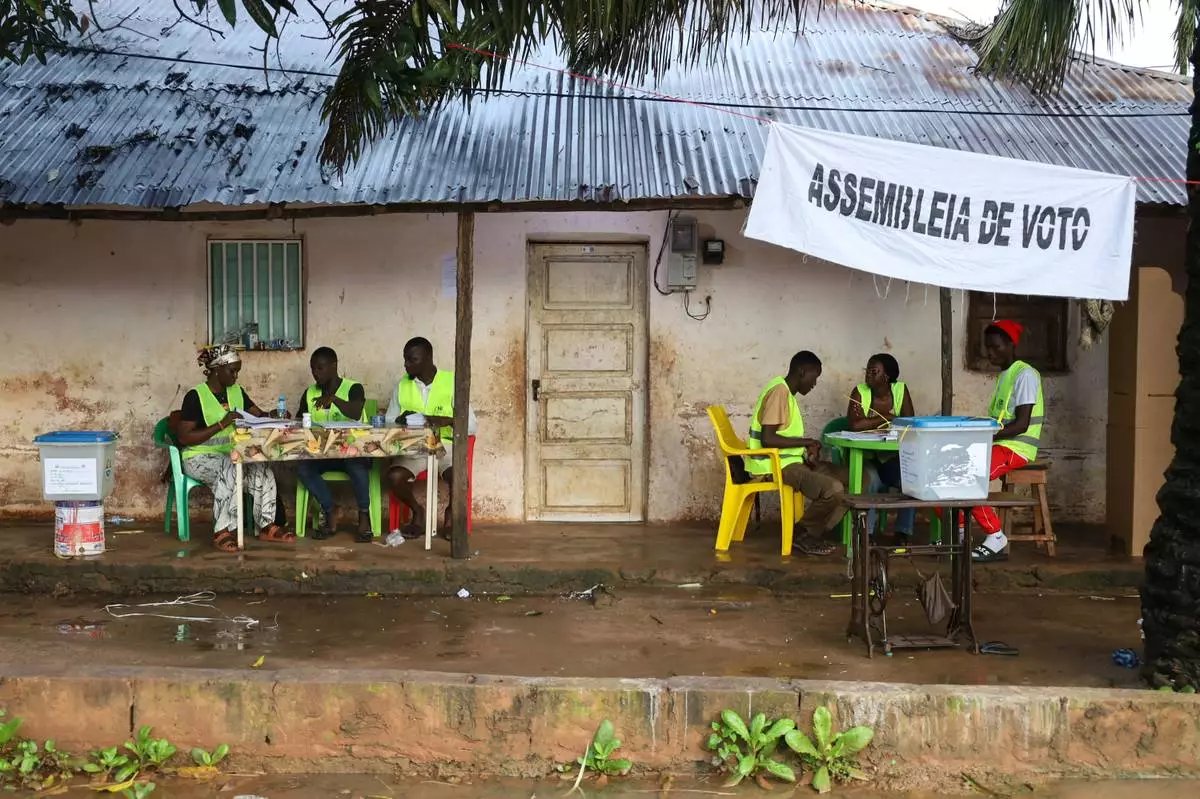
Election officials wait for voters to cast their ballots during a referendum on granting new presidential powers, in Bissau, Guinea Bissau, Sunday, Aug. 30, 2026. (AP Photo/Darcicio Barbosa)
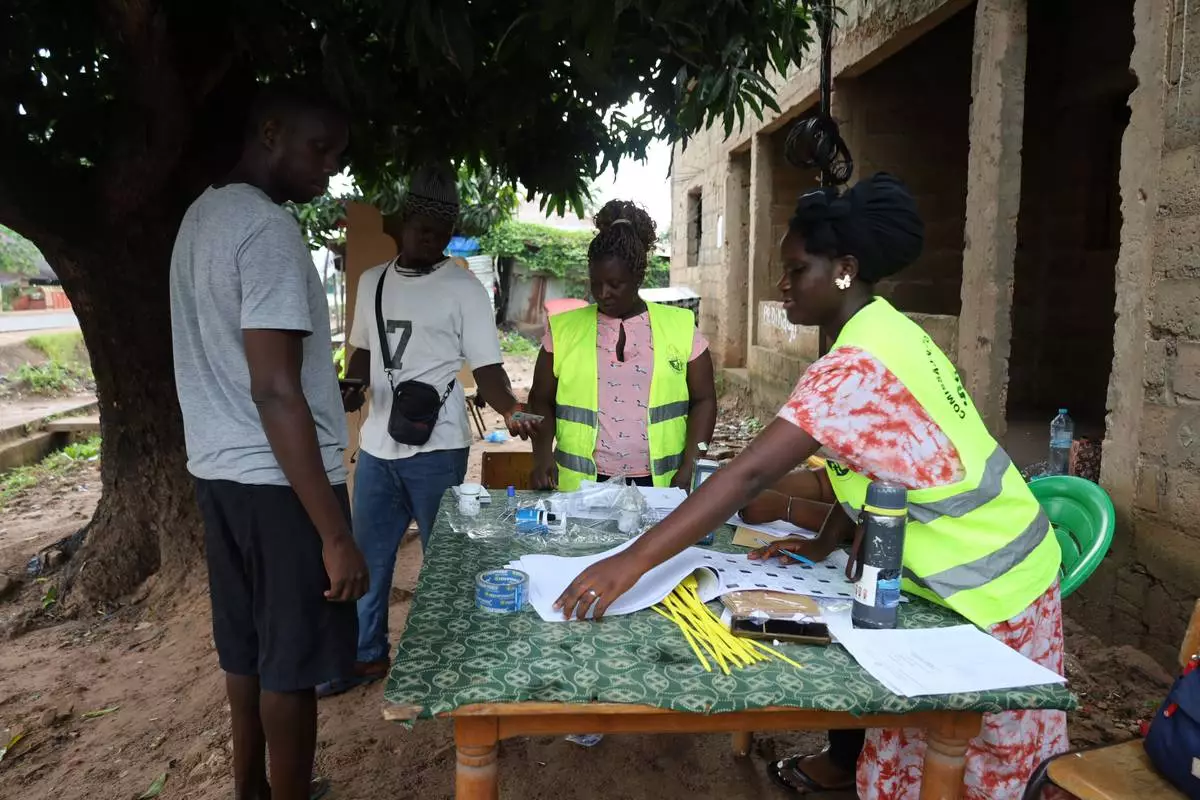
Voters prepare to cast their ballots during a referendum on granting new presidential powers, in Bissau, Guinea Bissau, Sunday, Aug. 30, 2026. (AP Photo/Darcicio Barbosa)
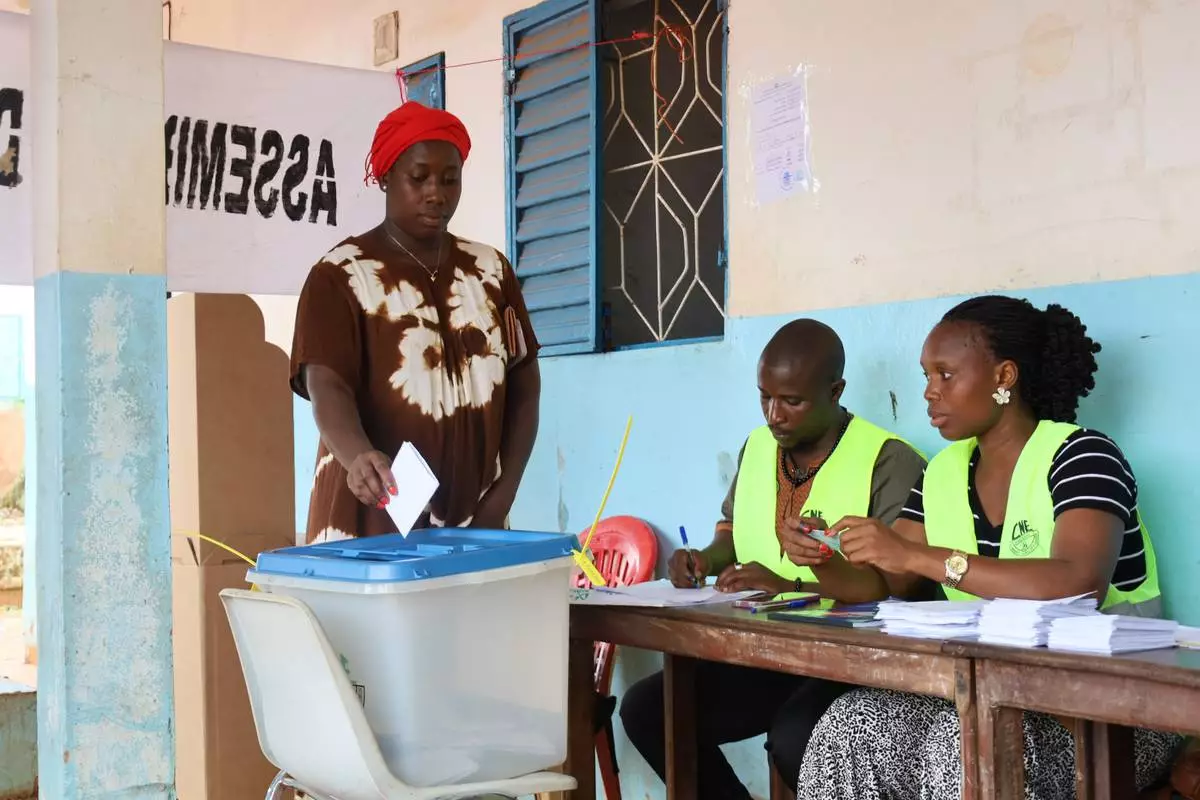
A voter casts her ballot during a referendum on granting new presidential powers, in Bissau, Guinea Bissau, Sunday, Aug. 30, 2026. (AP Photo/Darcicio Barbosa)
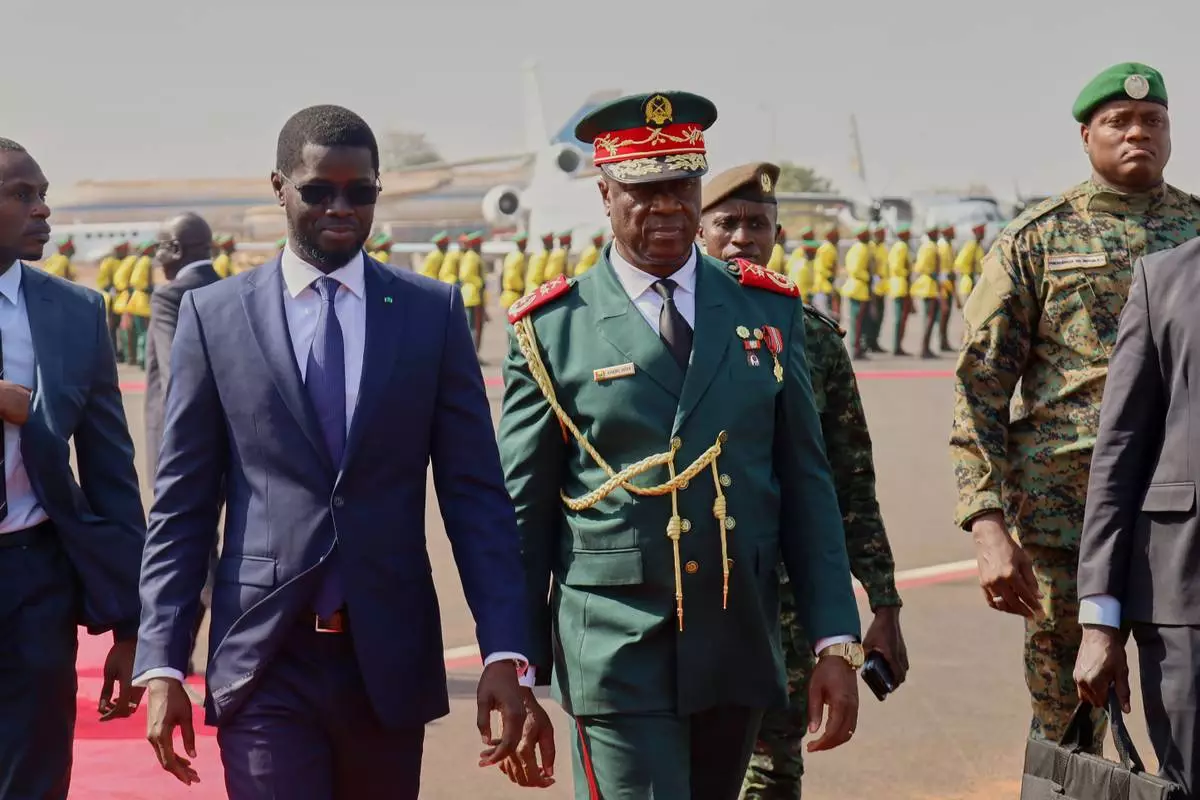
FILE - Guinea-Bissau Transitional President General Horta Inta-A-Na Man, centre, and President of Senegal Bassirou Diomaye Faye walk during an official ECOWAS mission to help resolve Guinea-Bissau's political crisis in Bissau, Guinea-Bissau, on Jan. 10, 2026. (AP Photo/Abubacar Queta, File)