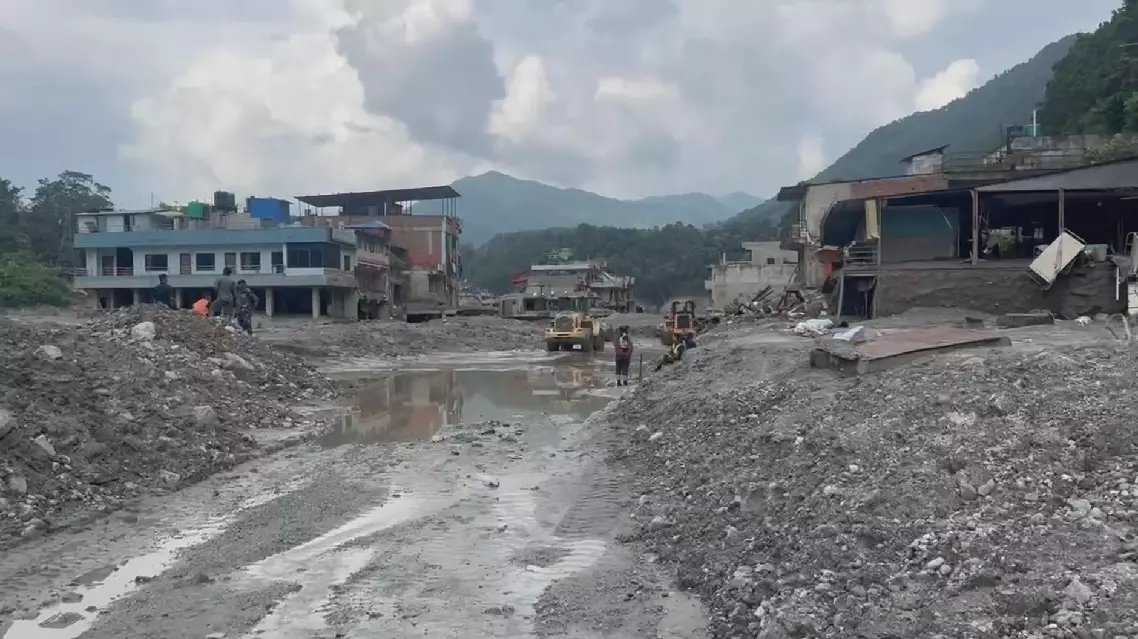
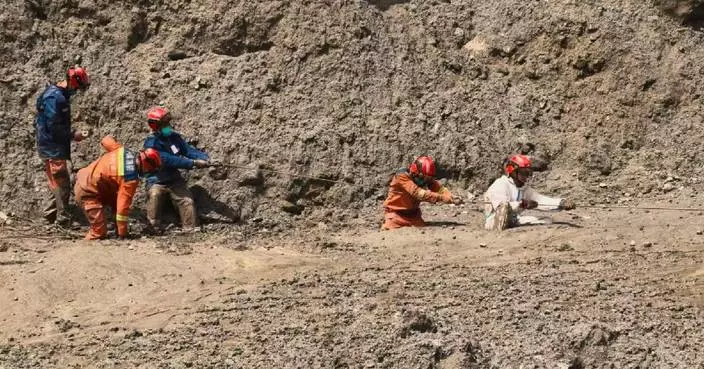
A high-altitude glacier collapse on the Nepalese side triggered the mudslide that devastated a major China-Nepal border crossing, experts with the Chinese Academy of Sciences (CAS) have said, warning that such glacial disasters are becoming more frequent and severe amid global warming.
As glaciers around the world melt at a faster pace, China has put unstable glaciers on the Qinghai-Xizang Plateau on a watch list to closely monitor their dynamics and enable early warning of potential collapses, according to the experts.
Over the past 60 years, China has cataloged its glaciers for three times, which showed that the recorded area of glaciers dropped from 61,000 square kilometers to 44,000 square kilometers, and then to 39,000 square kilometers.
"We can see that glaciers on the Qinghai-Xizang Plateau are rapidly shrinking. They have shrunk by 24 percent over the past 60 years, nearly a quarter of the total. The glaciers on the southern parts of the plateau, including the Gangdise Mountains, Nyenchen Tanglha Mountains, and Himalayas Mountains, shrank most sharply by around 40 percent over the past six decades," said Kang Shichang, director of the CAS Institute of Mountain Hazards and Environment.
The melting of glaciers has resulted in a significant expansion of glacial lakes, with the total area of around 14,000 glacial lakes exceeding 1,100 square kilometers, according to monitoring data.
"Over the past decades, glacial lakes have expanded rapidly, especially in the Himalayan region along the southern border of our country. Our observations show that the area of glacial lakes is increasing by approximately one percent each year," said Nie Yong, a researcher at the institute.
Currently more than 100 glacial lakes in the Himalayas have been identified as "at high risk of collapse", the experts warned.
"The Himalayas is a cross-border region. Such an incident that occurred in Nepal has affected our country. Therefore, it requires the two countries to share certain information with each other, monitor together and respond jointly. This is a difficult point for us to overcome and we need to improve our capability in this aspect for the time being and in the future," said Liu Qiao, another researcher.
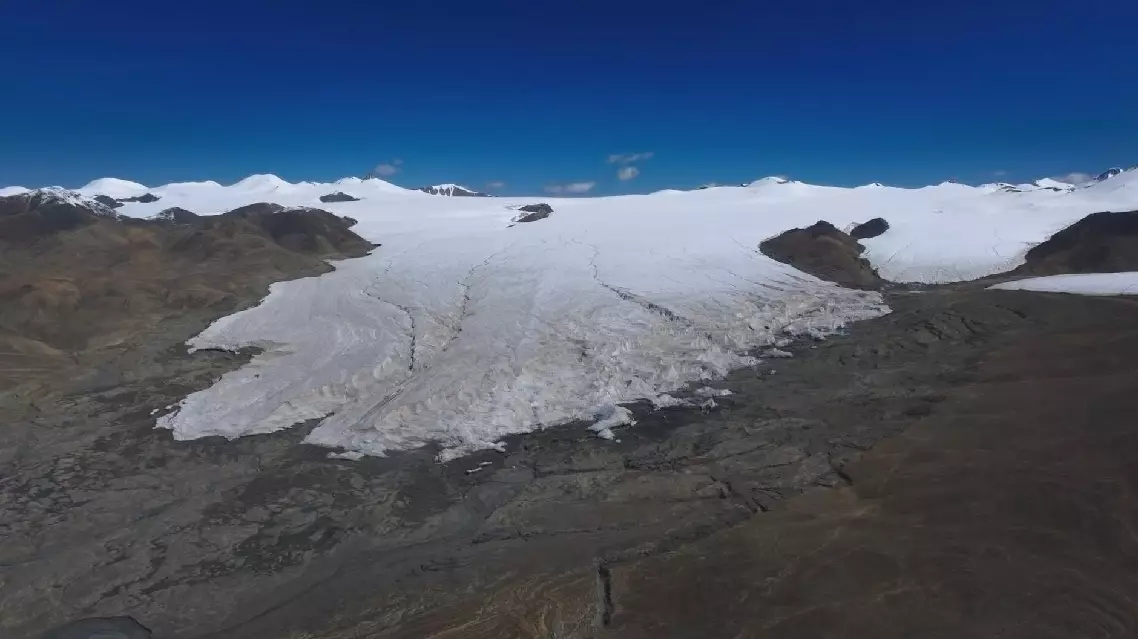
Glacier collapse triggered by global warming is vital cause of Nepal floods: experts