MOHALE'S HOEK, Lesotho (AP) — On a cold morning, Ntlhane Sehloho grabbed his backpack containing medical equipment and embarked on a three-hour journey, navigating the curving gravel roads leading to a clinic nestled in a valley of mountainous Lesotho.
Sehloho has an almost unheard-of role in this part of the world: male midwife.
Click to Gallery
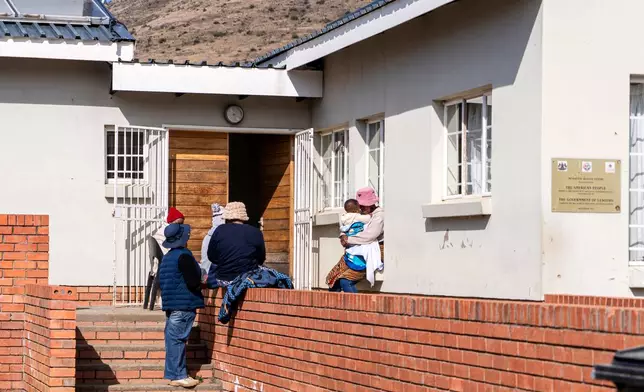
Patients wait outside Mpharane Health Centre in Mohale's Hoek district, Lesotho, Friday, July 10, 2026. (AP Photo/Kayleen Morgan)
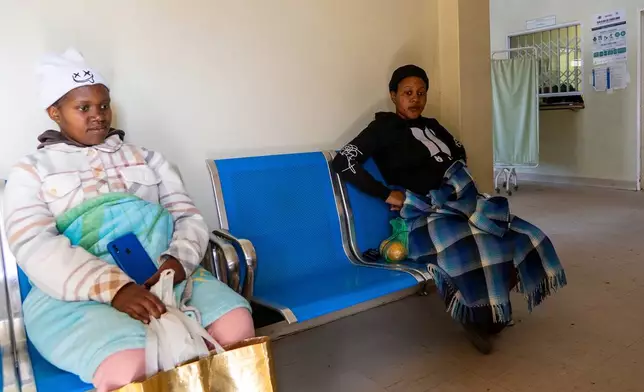
Expectant mothers Bonolo Tebelo, left, and Mpolokeng Mafereka wait for their appointments at Mpharane Health Centre in Mohale's Hoek district, Lesotho, Friday, July 10, 2026. (AP Photo/Kayleen Morgan)
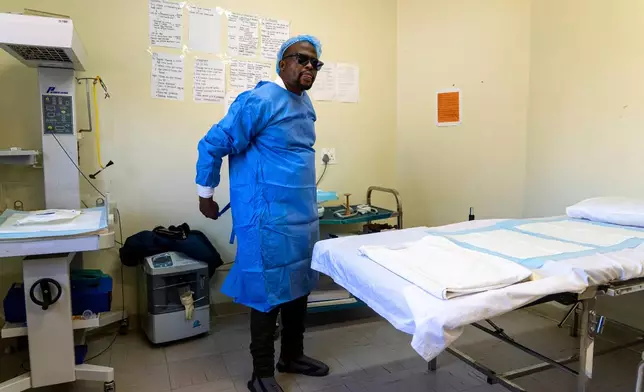
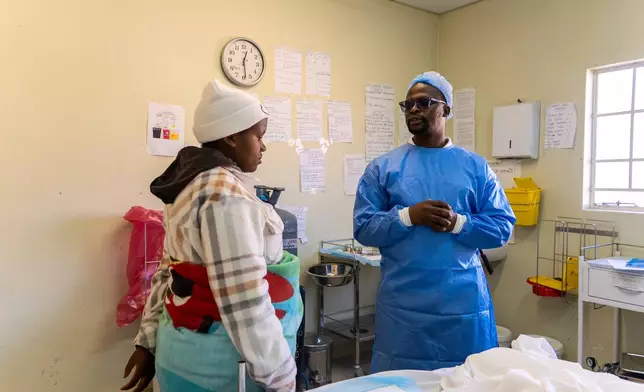
Male midwife Sehloho Ntlhane prepares for prenatal appointments at Mpharane Health Centre in Mohale's Hoek district, Lesotho, Friday, July 10, 2026. (AP Photo/Kayleen Morgan)
Male midwife Sehloho Ntlhane consults with expectant mother Bonolo Tebelo during an prenatal appointment at Mpharane Health Centre in Mohale's Hoek district, Lesotho, Friday, July 10, 2026. (AP Photo/Kayleen Morgan)
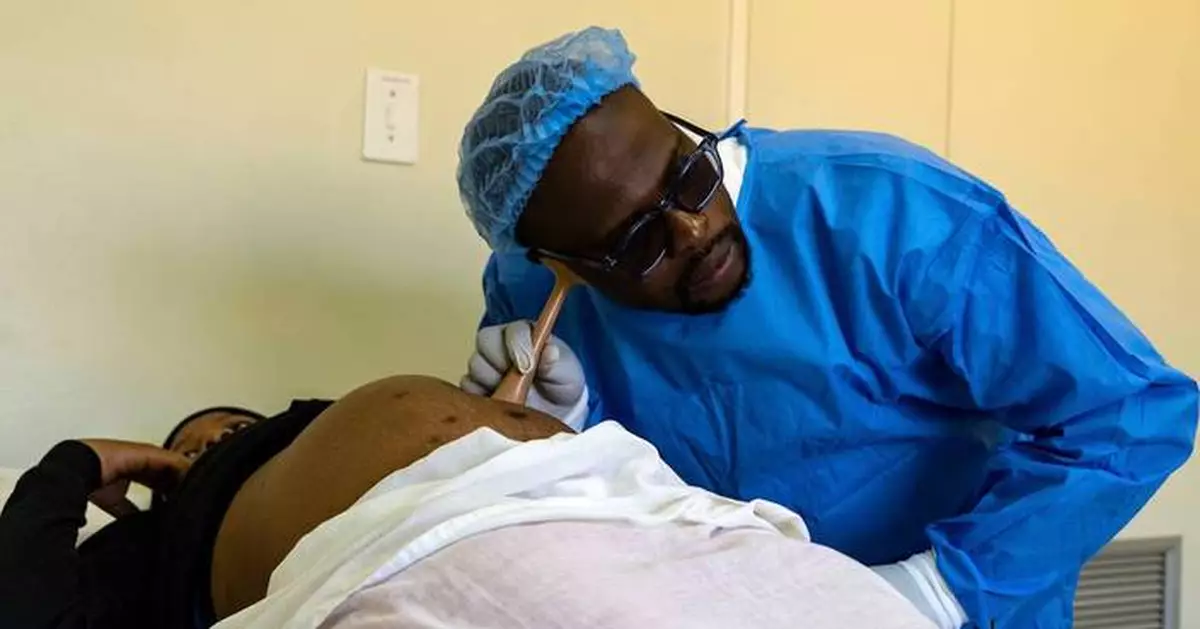
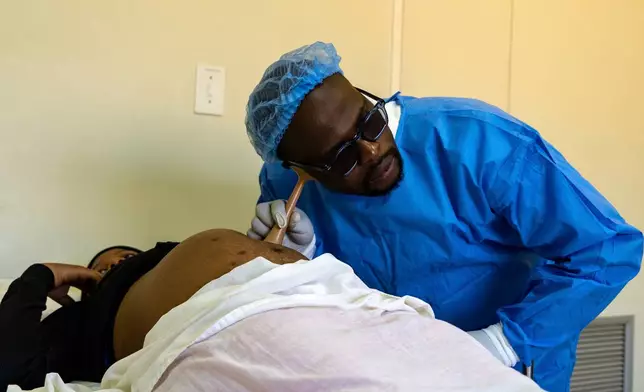
Male midwife Sehloho Ntlhane leans over a pregnant patient while using a Pinard horn to listen to the baby's heartbeat during a prenatal examination at Mpharane Health Centre in Mohale's Hoek district, Lesotho, Friday, July 10, 2026. (AP Photo/Kayleen Morgan)
His arrival at the Mpharane Health Center in the southern African kingdom is met with a sigh of relief from several women, some of them pregnant. Others carry crying babies on their backs.
Midwifery has been traditionally viewed as women’s work in Lesotho, but a growing number of men are joining the profession as the country tries to bring down its high rate of deaths around childbirth. For every 100,000 live births, about 530 women die, the United Nations says. That's far above the global average of about 200.
This is part of a series on maternal mortality in sub-Saharan Africa, which has the world’s fastest-growing population and accounts for 70% of global maternal deaths. Around 180,000 pregnancy deaths are recorded every year across the continent.
Lesotho, like many African nations, is a society with largely conservative views. The idea of a man who isn’t a doctor dealing with a woman so intimately still can make many hesitant, if not uncomfortable.
World Health Organization figures estimate that men make up less than 1% of all midwives around the world. Organizations like the WHO and UNICEF have called for more people, male and female, to become midwives and address shortages in childbirth responders.
Sehloho is one of about 300 male midwives in Lesotho and has been doing the work for two decades. The exact number of male midwives is not available as the government does not keep the data according to gender.
Talkative and ready with a joke, he seeks to put women at ease from the first of their prenatal visits.
He had good grades in school and wanted to become a nurse to help address the difficulties he had witnessed for pregnant women in his rural community.
“Our village was far away from the health facility, so most women who would be pregnant, some were delivering at home. We were still young, we were not supposed to see that, as some were dying,” he said. He didn’t understand how far they had to travel for care.
Health authorities later encouraged him and other male nurses to train as midwives to help address deaths around childbirth in a country with poorly staffed rural health posts and a population of just over 2 million people.
Now, after efforts to bring care closer to rural communities, UNICEF data show that 92% of births in Lesotho are now attended by a trained health care provider.
“I think the system and the community is starting to slowly accept that gender should not matter when it comes to this issue of delivery,” said Dr. Llang Maama, acting director of health services at Lesotho’s Ministry of Health.
There are still a small number of cases where the mother says she isn’t comfortable with a male midwife, she said. “But the system allows them to register their discomfort and get treated by a woman.” In the urgency of childbirth, however, there isn’t always time to choose.
Sehloho acknowledged that it is a matter of gaining women’s trust. He tries to put them at ease by explaining how he has delivered babies for years and how he grew up in similar rural circumstances.
“We are a very cultural and traditional African society,” he said.
There are usually mixed reactions to male midwives, said Blandina Motaung, a representative of the United National Population Fund, which works extensively with midwives in Lesotho.
The positive remarks include praise for how the men appear to be more gentle and less strict when working with pregnant women. During consultations, Sehloho checked women’s blood pressure and measured their progress, asking from time to time whether they were comfortable.
Most female midwives have given birth themselves, “but for the men, because they have not been through the process, they become more vigilant and more attentive to the nitty gritties, and that in itself improves the quality of care that they provide,” Motaung said.
One of the clinic’s patients, Mpolokeng Mafereka, 21, said she was more comfortable being treated by a woman, but sometimes a male midwife is the one available.
“I’m used to being treated by women,” she said.
But another patient, 21-year-old Bonolo Tebello, said she has never had a problem being treated by a male midwife.
“I’m happy to be treated by a male because they still provide the same level of care,” she said.
“Even when one arrives late for a check-up, they just treat you like any other person who arrived on time,” she added.
For more on Africa and development: https://apnews.com/hub/africa-pulse
The Associated Press receives financial support for global health and development coverage in Africa from the Gates Foundation. The AP is solely responsible for all content. Find AP’s standards for working with philanthropies, a list of supporters and funded coverage areas at AP.org.
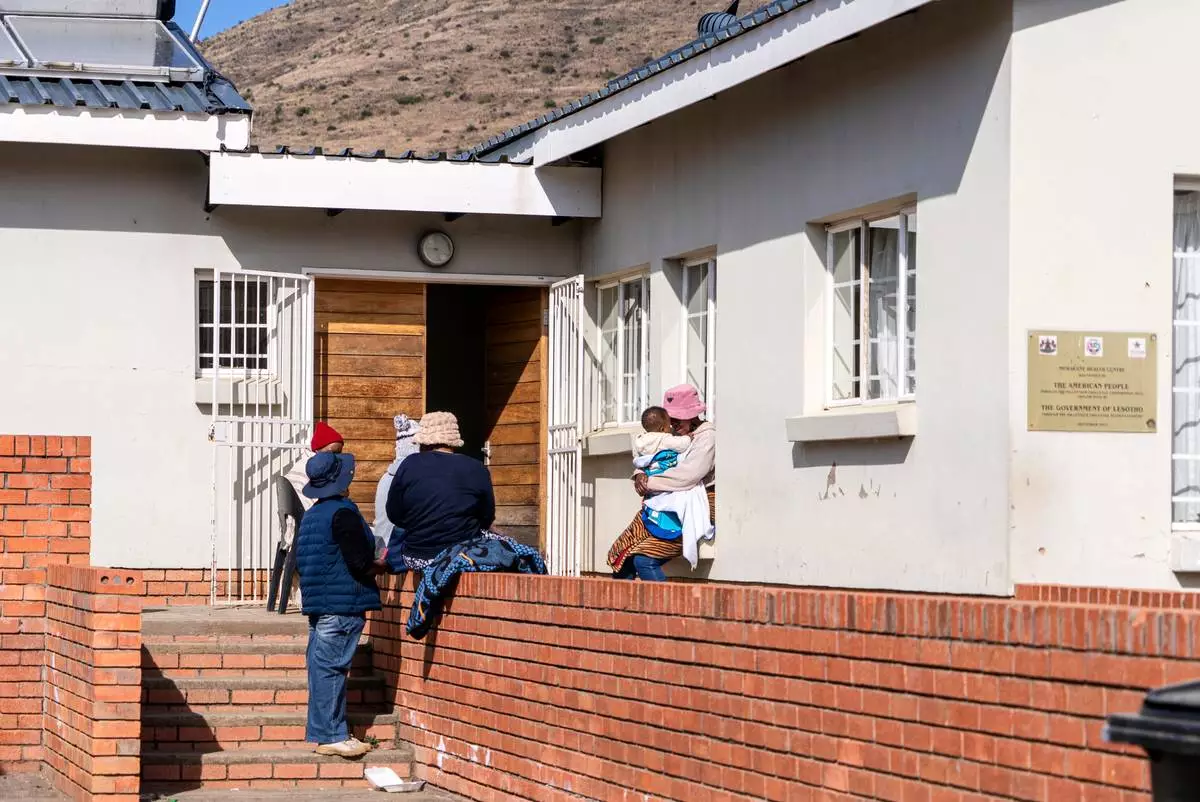
Patients wait outside Mpharane Health Centre in Mohale's Hoek district, Lesotho, Friday, July 10, 2026. (AP Photo/Kayleen Morgan)
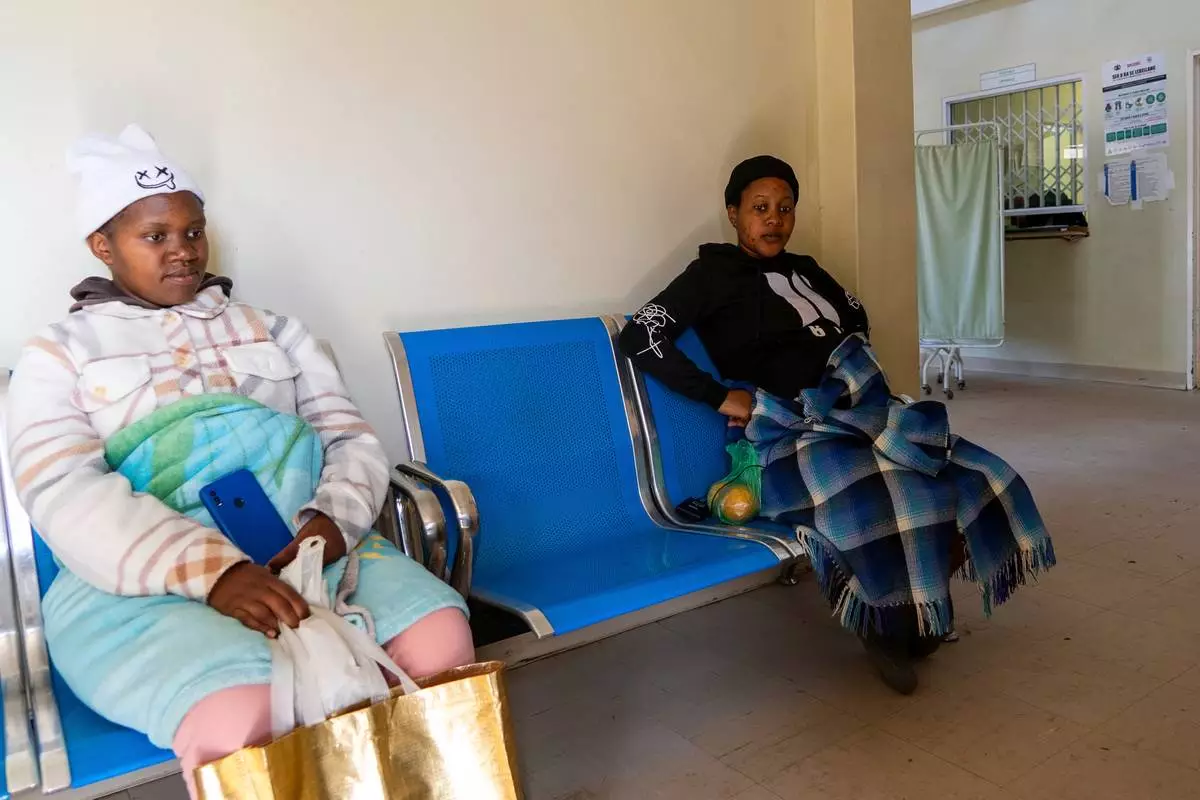
Expectant mothers Bonolo Tebelo, left, and Mpolokeng Mafereka wait for their appointments at Mpharane Health Centre in Mohale's Hoek district, Lesotho, Friday, July 10, 2026. (AP Photo/Kayleen Morgan)
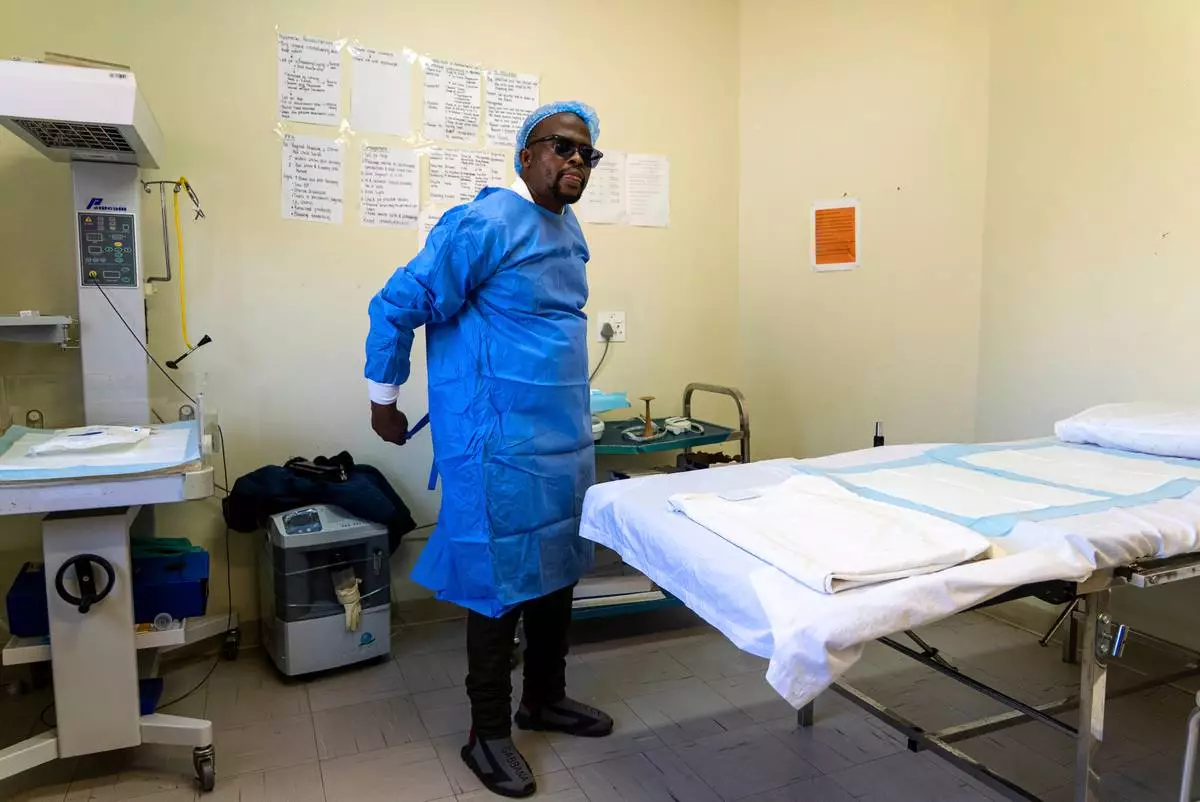
Male midwife Sehloho Ntlhane prepares for prenatal appointments at Mpharane Health Centre in Mohale's Hoek district, Lesotho, Friday, July 10, 2026. (AP Photo/Kayleen Morgan)
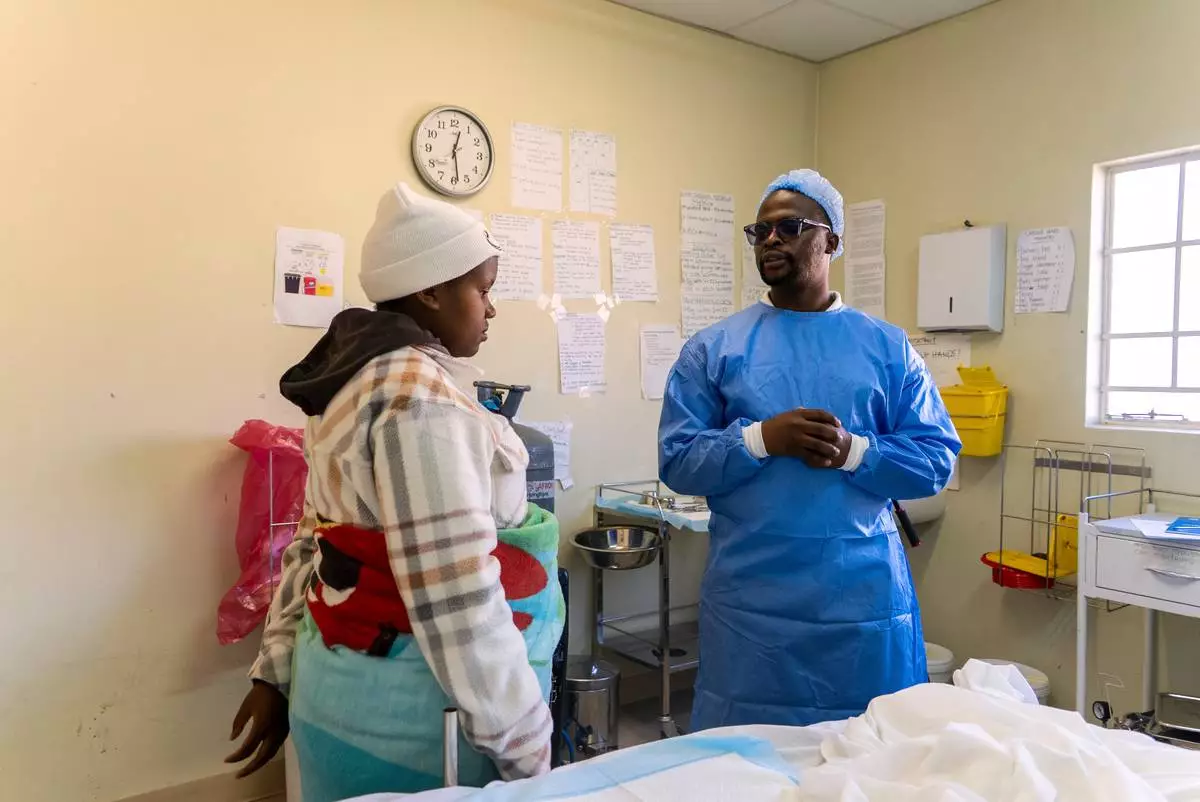
Male midwife Sehloho Ntlhane consults with expectant mother Bonolo Tebelo during an prenatal appointment at Mpharane Health Centre in Mohale's Hoek district, Lesotho, Friday, July 10, 2026. (AP Photo/Kayleen Morgan)
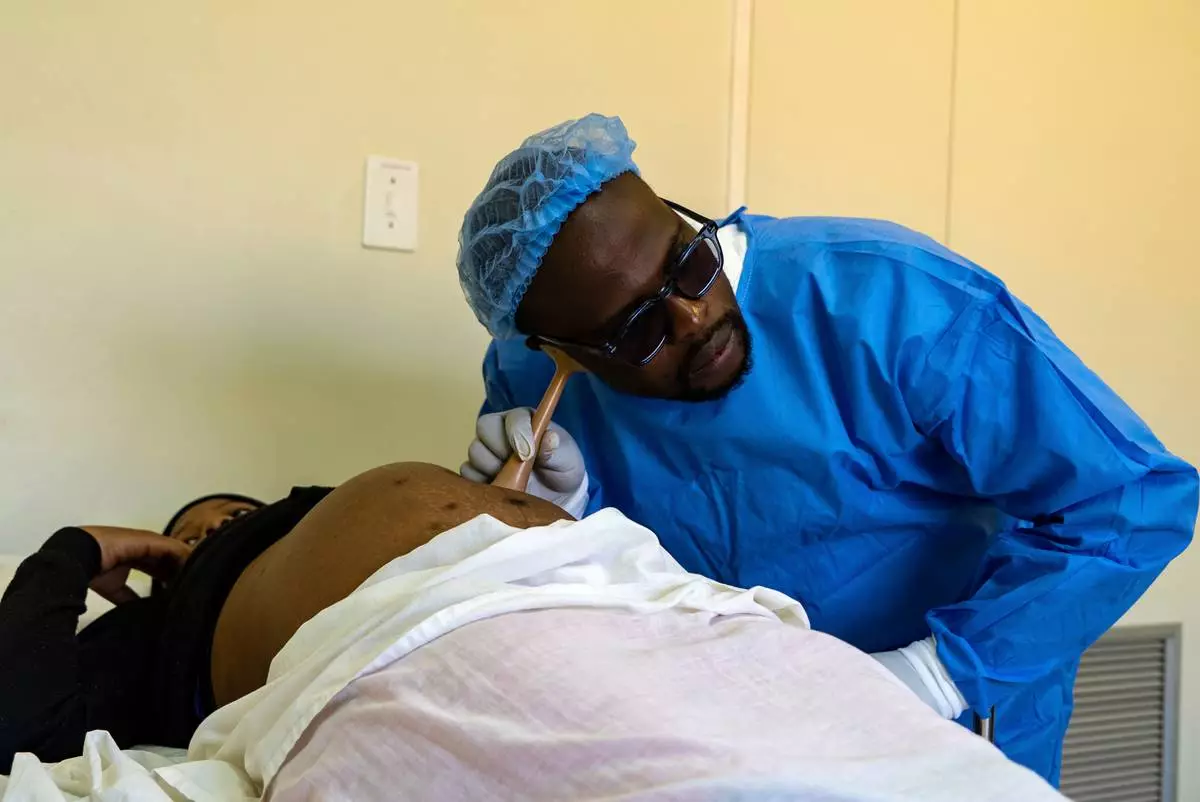
Male midwife Sehloho Ntlhane leans over a pregnant patient while using a Pinard horn to listen to the baby's heartbeat during a prenatal examination at Mpharane Health Centre in Mohale's Hoek district, Lesotho, Friday, July 10, 2026. (AP Photo/Kayleen Morgan)
Evoking the same do-it-yourself pop-rock feminism of her '90s musical influences, Olivia Rodrigo raised $20 million for women's well-being with a benefit show that activated her young audience.
Daisy Chain Fields united a women-led lineup boasting queer pop star Chappell Roan, breakout rapper Doechii and riot grrrl pioneers Bikini Kill behind issues of women's health, workplace protections and legal rights. Ahead of Saturday's festival in Irvine, California, Rodrigo announced the show had already raised enough to make a $10 million donation to 10 nonprofit partners including Planned Parenthood, National Women's Law Center and Black Mamas Matter Alliance.
Philanthropist Melinda French Gates pledged another $10 million through her Pivotal Ventures in a surprise appearance at the start of Rodrigo's set, calling her “a force” and praising her for "showing a new generation how much their voices matter."
Speaking Friday alongside the beneficiaries, Rodrigo said the festival's artists and activists give her hope despite the “regression of women's rights” today.
“That's actually why I fell in love with the name ‘Daisy Chain,'” she said Friday. "It served as a reminder of how individual parts can come together to create something strong and unbreakable."
Rodrigo, 23, has made a name channeling the rage and dissatisfaction of modern romance into chart-topping songs that are equal parts Taylor Swift and Alanis Morissette. Few superstars are better suited, then, to bridge the gap between Gen Z and nonprofits, which have struggled to build relationships with younger donors who tend to prefer informal ways of giving.
The connection is not lost on Daisy Chain Fields attendees.
“People don’t join together and mobilize unless they feel connected to the group that is mobilizing," said Grace Slevin, 24. "What’s better than music?”
All-star benefit concerts have long been popular for driving millions of dollars toward everything from refugee aid and famine relief to pandemic response and natural disasters. But it's been decades since a young artist with Rodrigo's following brought her peers together for gender justice.
That focus comes as President Donald Trump attempts to overhaul family planning grants that reproductive health clinics use to provide birth control and treat sexually transmitted infections. His administration paused $27.5 million last year for such organizations, including some Planned Parenthood affiliates, before officials agreed to restore the money.
For Slevin, an Orange County, California, resident who does anti-sex-trafficking advocacy, Daisy Chain Fields embodies the sentiment of “be who you needed when you were younger." She loves that attendees are welcome to learn about the beneficiaries' work in addition to donating.
Daisy Chain Fields invited nonprofit partners to engage with fans in its “philanthropy village.” Festivalgoers can collect pins from each booth as they learn about health services from Planned Parenthood's local partners or pay tribute to caregivers through the National Domestic Workers Alliance.
Younger generations expect that authenticity, Slevin said, something beyond what she called a “pseudo-sort-of-progressiveness.”
“They can see just how deeply intertwined the music is with the cause," she said. "It’s not just, like, a second thought.”
Rodrigo took inspiration from Lilith Fair, the all-women festival that raised $10 million for charity from 1997 to 1999. Sarah McLachlan, who founded the show to dispel the music industry’s notion they couldn't book women consecutively, is listed as a special guest of Daisy Chain Fields.
Planned Parenthood National Director of Arts and Entertainment Caren Spruch recalled working on Lilith Fair. Concert outreach has long been an important tool to reach people "where they are,” she said.
That culture-shifting work grows more important during times like this, she acknowledged, when abortion clinics are closing in restrictive states and anti-abortion groups are pushing the courts to limit access to the drugs used in the most common method of abortion.
Rodrigo, Spruch said, talks about those topics with “no shame or stigma.” As she did with other nonprofits, the three-time Grammy winner appeared in informational videos on Planned Parenthood's social media.
“All of that does so much to help us normalize the whole range of reproductive health and rights," Spruch said.
Melissa Shaw, 33, is driving to the festival from Tucson, Arizona, with her 8-year-old daughter.
They didn't plan to spend the day camped out for close-up views. Shaw wanted to let her daughter ask questions as they explored the nonprofits and visited art installations. She appreciates that Rodrigo is not only promoting well-known organizations such as Planned Parenthood, but also groups focused specifically on Black maternal health or baby formula access.
Shaw said it “definitely makes me a bigger fan knowing that they're dedicating their time to causes like these."
“It’s really important for me as a parent to expose my daughter to celebrities who set that example," she said.
Her daughter loves Rodrigo and Roan, and she herself grew up listening to Bikini Kill and fellow performer Santigold. The lineup seemed intentionally curated to attract multiple generations, she said. She's seen many mother-daughter duos sharing their festival plans online.
The festival's nonprofit partners were eager to join that multigenerational community of women, too. National Domestic Workers Alliance President Ai-jen Poo said the festival's joyful atmosphere serves as a “powerful reminder to women everywhere of all ages that, no matter what, we have each other.”
Her organization works to ensure federal workplace protections for domestic workers, who are disproportionately women and immigrant women. She wants to recruit more young people, many of whom she said are worried they can't afford to take care of their loved ones or start families.
“The only way change happens is through intergenerational connection and movements in our country," she said. "This generation of young people has the opportunity to really change how we support caregiving for future generations.”
Just as notable as the fundraising total is the type of donation made by the festival.
Charitable partners applauded the grants for general operating support — meaning the nonprofits decide how to spend the money.
Black Mamas Matter Alliance co-founder Angela Doyinsola Aina said that support “is often the hardest kind of funding to raise and the most useful kind to receive, because it sustains the training, convening, and advocacy that make everything else possible.”
For the National Women's Law Center, the gift offers flexibility to plug their own budgetary holes as they litigate sex discrimination cases. Uma Iyer, the nonprofit's chief external affairs officer, said the support also boosted staff morale.
“We work on really hard things every day,” she said. “It was really energizing for us and it’s been really uplifting.”
Including both everyday audiences and front line workers in benefits is key, according to Farm Aid co-executive director Jennifer Fahy. The annual fundraising concerts — launched by Willie Nelson, Neil Young and John Mellencamp to raise awareness of family farmers' challenges —- celebrated their 40th anniversary last year.
Fahy noted it is less common nowadays to see artists donate their performances for free.
“It’s just wonderful to see an artist of that generation, that new young generation, who is embracing that opportunity that exists to do these kinds of events, to share the stage and microphone to highlight issues that are important to the artist," Fahy said.
Associated Press coverage of philanthropy and nonprofits receives support through the AP’s collaboration with The Conversation US, with funding from Lilly Endowment Inc. The AP is solely responsible for this content. For all of AP’s philanthropy coverage, visit https://apnews.com/hub/philanthropy.
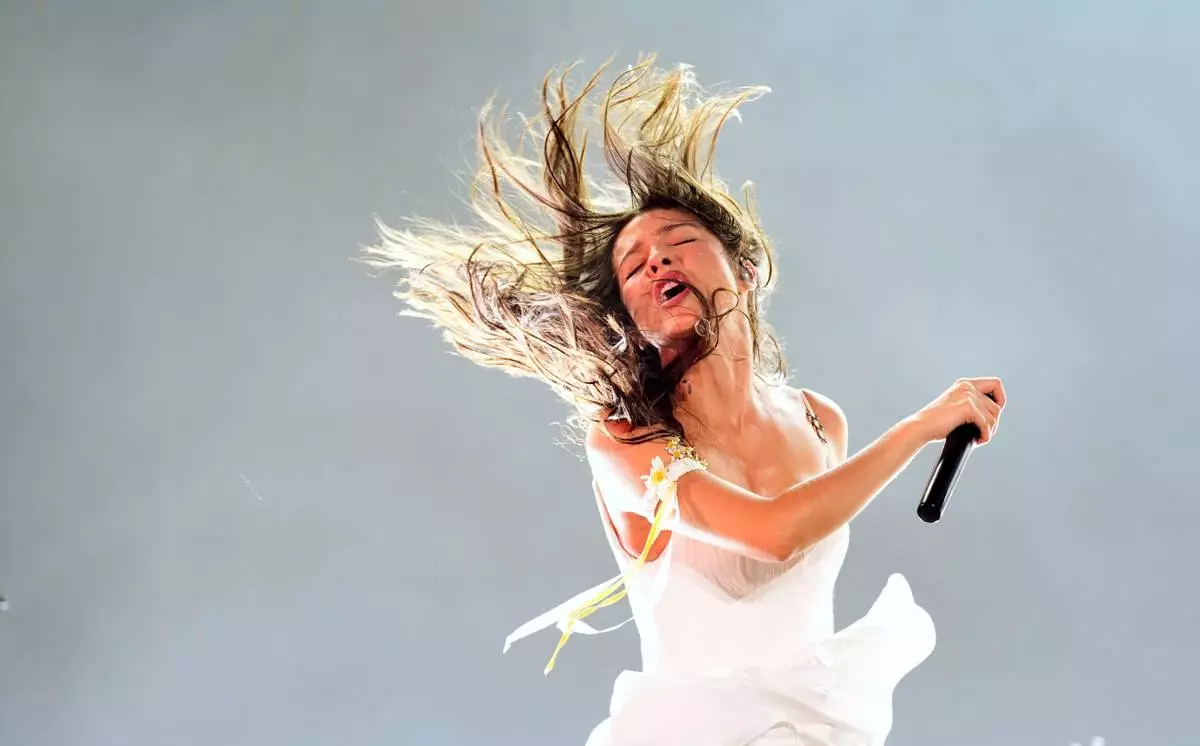
Olivia Rodrigo performs at the Daisy Chain Fields Music Festival on Saturday, Aug. 29, 2026, at Great Park in Irvine, Calif. (AP Photo/Chris Pizzello)
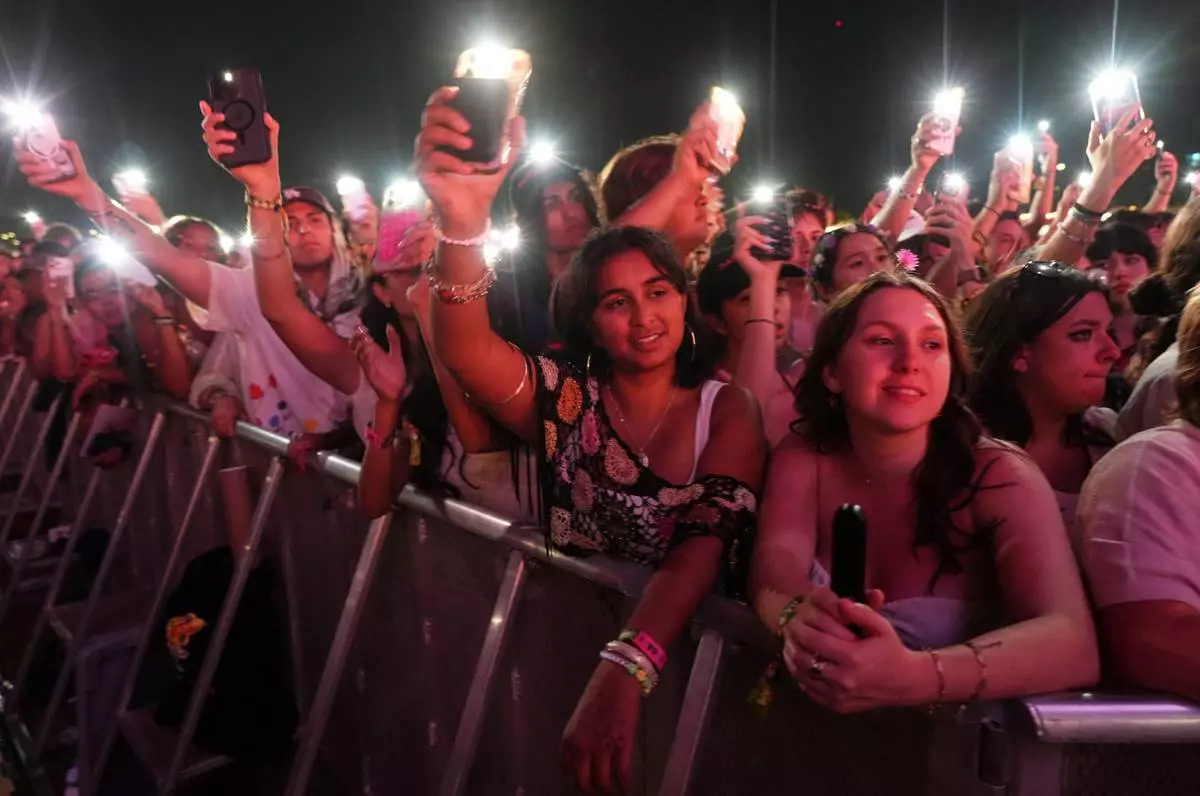
Audience members watch Olivia Rodrigo perform with special guest Sarah McLachlan at the Daisy Chain Fields Music Festival on Saturday, Aug. 29, 2026, at Great Park in Irvine, Calif. (AP Photo/Chris Pizzello)
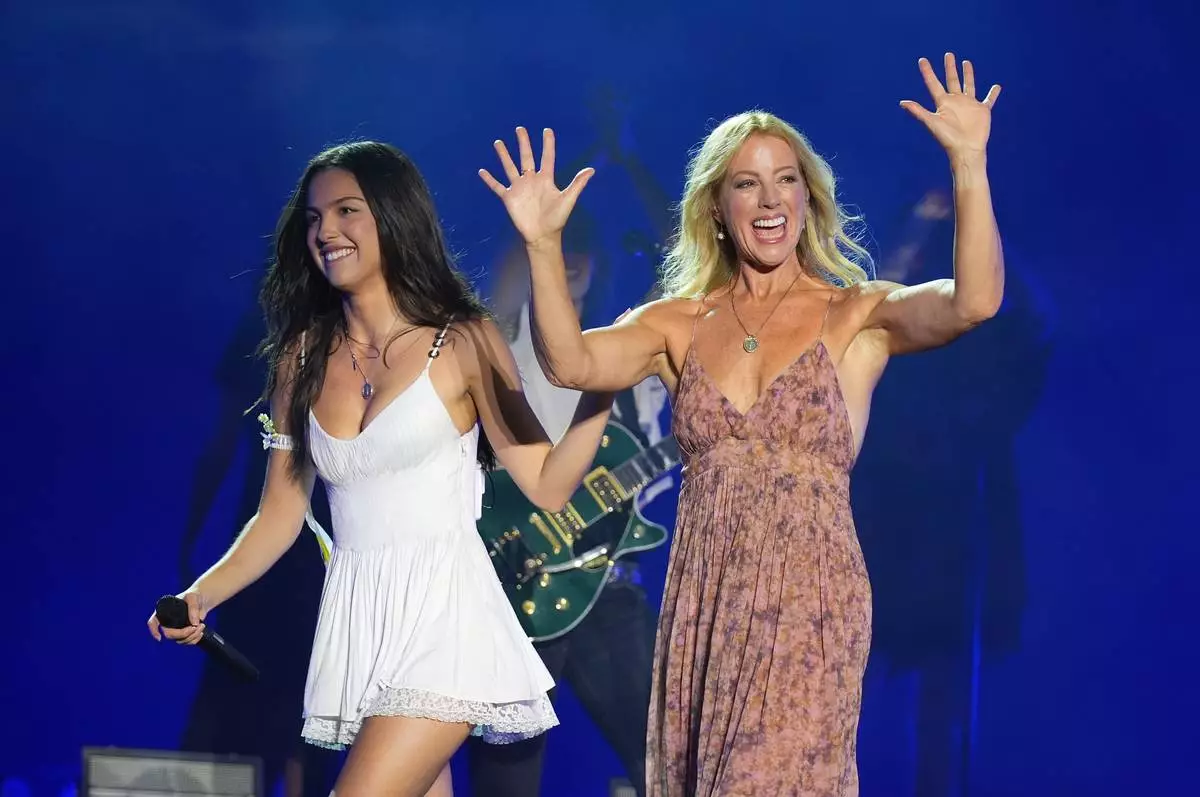
Olivia Rodrigo, left, introduces special guest Sarah McLachlan to the audience at the Daisy Chain Fields Music Festival on Saturday, Aug. 29, 2026, at Great Park in Irvine, Calif. (AP Photo/Chris Pizzello)
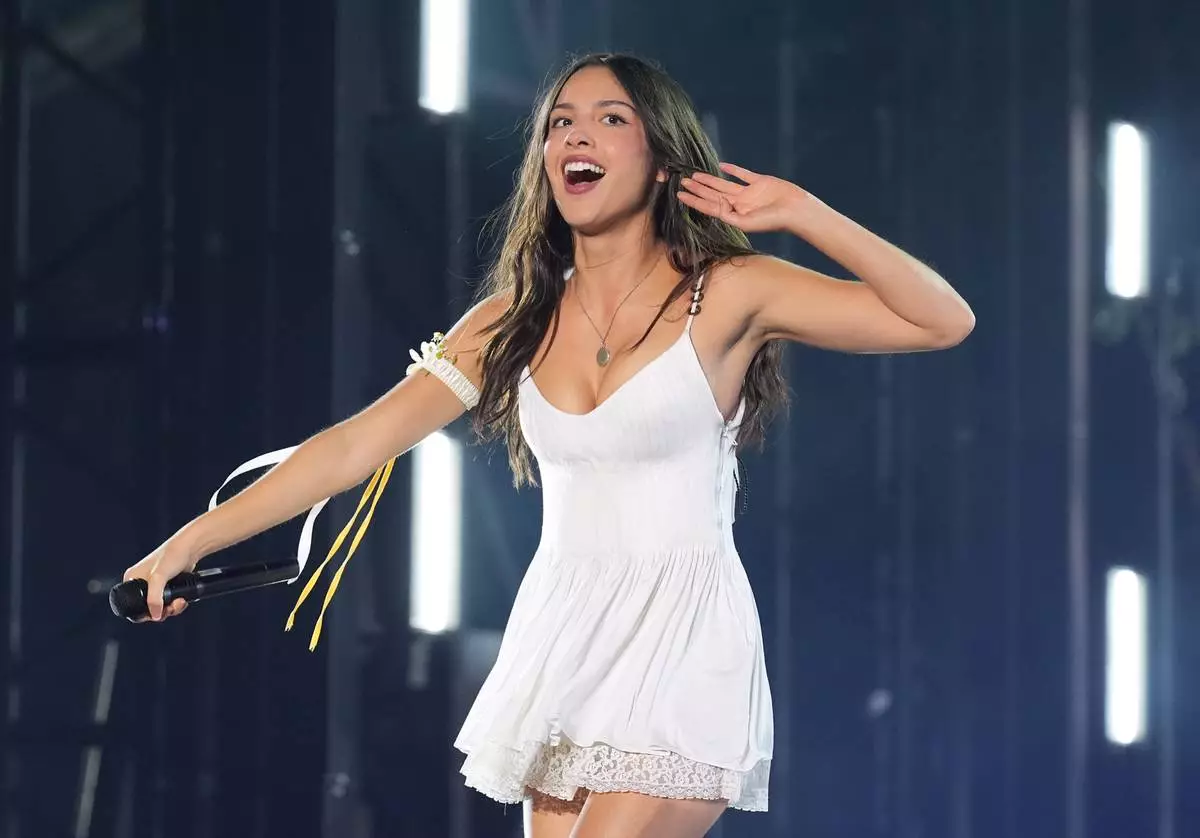
Olivia Rodrigo performs at the Daisy Chain Fields Music Festival on Saturday, Aug. 29, 2026, at Great Park in Irvine, Calif. (AP Photo/Chris Pizzello)
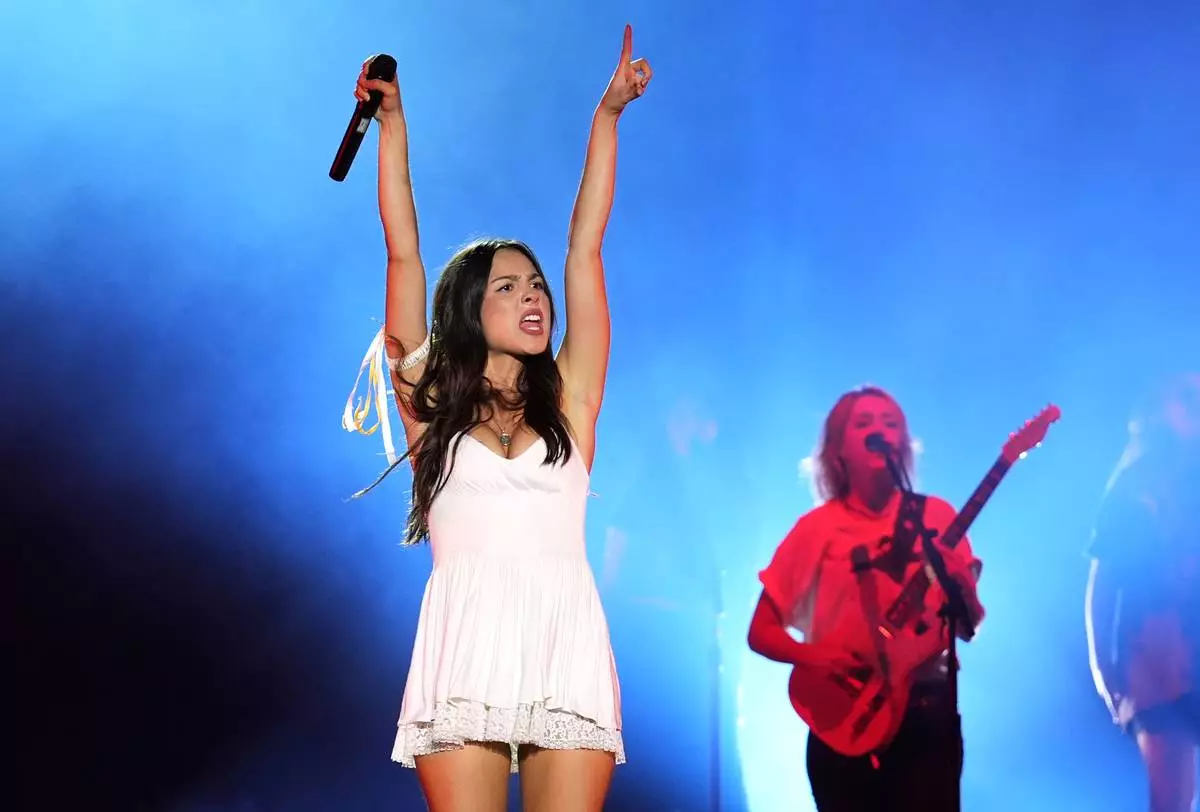
Olivia Rodrigo performs at the Daisy Chain Fields Music Festival on Saturday, Aug. 29, 2026, at Great Park in Irvine, Calif. (AP Photo/Chris Pizzello)
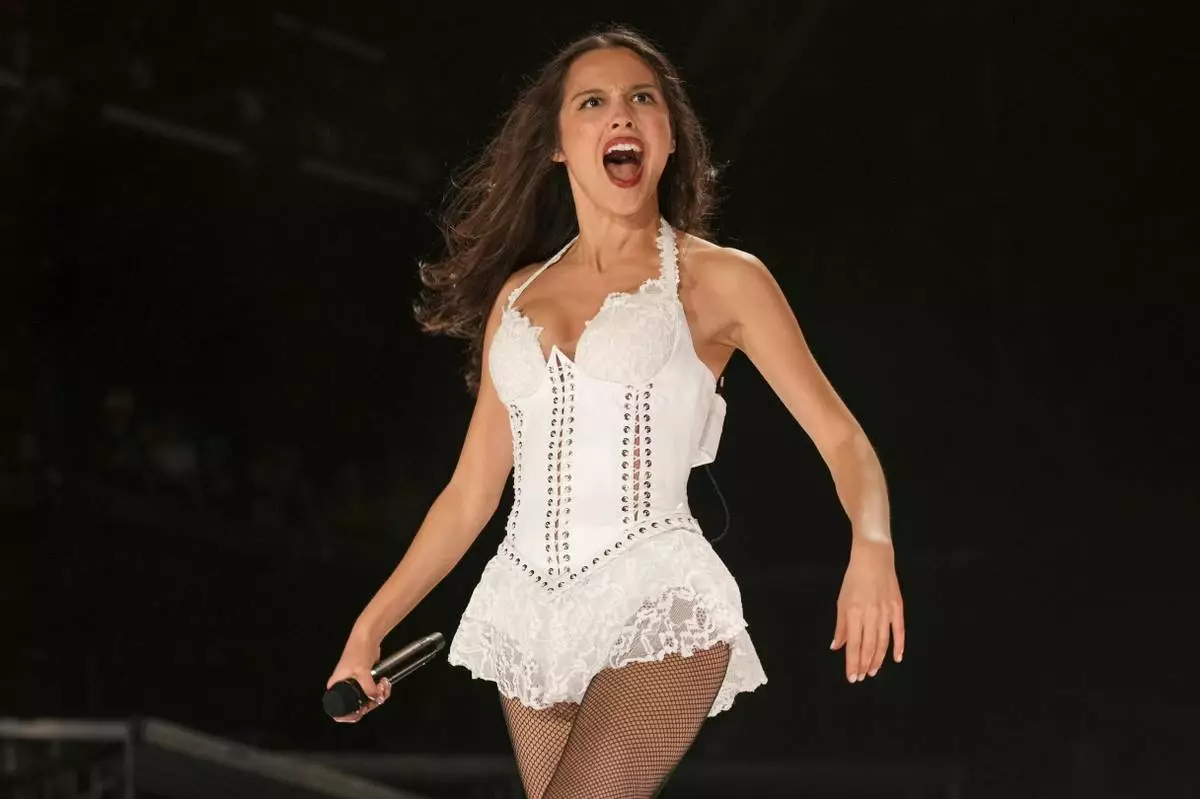
FILE - Olivia Rodrigo performs at the Glastonbury Festival in Somerset, England on June 29, 2025. (Scott A Garfitt/Invision/AP, File)