REYKJAVIK, Iceland (AP) — Iceland is headed toward rejecting a referendum that would have restarted negotiations to join the European Union more than a decade after previous talks died, the national broadcaster reported Sunday.
The vote will put the long-debated issue to rest for the second time. A euroskeptic government ended EU talks in 2015.
Click to Gallery
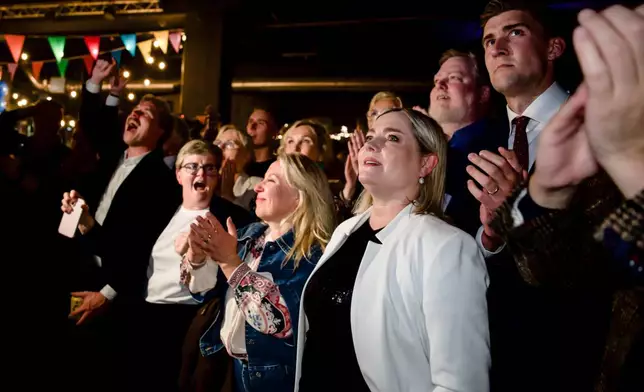
Supporters of the Yes campaign celebrate after Reykjavik results put their side into a narrow nationwide lead during an election-night gathering in Reykjavik, Iceland, Sunday, Aug. 30, 2026. (AP Photo/Marco Di Marco)
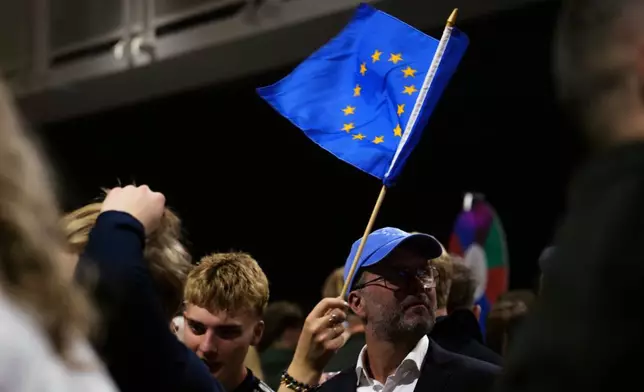
A supporter waves a European Union flag during an election-night gathering for the yes in Reykjavik, Iceland, Sunday, Aug. 30, 2026. (AP Photo/Marco Di Marco)
Former Icelandic Prime Minister and Centre Party leader Sigmundur Davíð Gunnlaugsson, left, Independence Party leader Guðrún Hafsteinsdóttir, center, and Progressive Party leader Lilja Dögg Alfreðsdóttir talk during a No campaign election-night gathering in Reykjavik, Iceland, Saturday, Aug. 29, 2026. (AP Photo/Marco Di Marco)
Leaders of the No campaign react as early results from rural Iceland put the No side ahead during an election-night gathering in Reykjavik, Iceland, Saturday, Aug. 29, 2026. (AP Photo/Marco Di Marco)
With all but one constituency fully reporting results, the vote against the EU led 52.5% to 47.5%, RÚV reported. The national broadcaster said it was almost impossible that the remaining votes to be counted in the southwest, where the measure was losing, could reverse the result.
The vote Saturday was held in the shadow of U.S. President Donald Trump’s repeated threats to control nearby Greenland that drove some voters to favor the idea of European solidarity. Although Iceland is a NATO member, supporters said they would have greater protection from their neighbors if Trump ever made similar threats toward the volcanic island.
Iceland’s left-leaning coalition government, elected in 2024, moved up the EU referendum it had planned for next year after Trump mistakenly named the country four times while speaking about his designs on Greenland.
It was a simple yes-or-no question for roughly 265,000 eligible voters: Should Iceland resume accession negotiations with the European Union?
Opponents rallied around fishing and the fact that Iceland already reaps benefits from being in the EU’s frictionless single market and the Schengen free-travel zone without the sovereignty compromises that inevitably come with full membership. They argued that Iceland’s voice would be muted in the large European Parliament and that it would be better off cutting its own trade deals, such as one with China.
Backers said EU membership would lower inflation and interest rates, and the euro would bring more stability than Iceland’s volatile króna. They said it was also in the nation’s interest to get closer to its European neighbors to tackle issues that don’t respect borders, such as climate change.

Supporters of the Yes campaign celebrate after Reykjavik results put their side into a narrow nationwide lead during an election-night gathering in Reykjavik, Iceland, Sunday, Aug. 30, 2026. (AP Photo/Marco Di Marco)
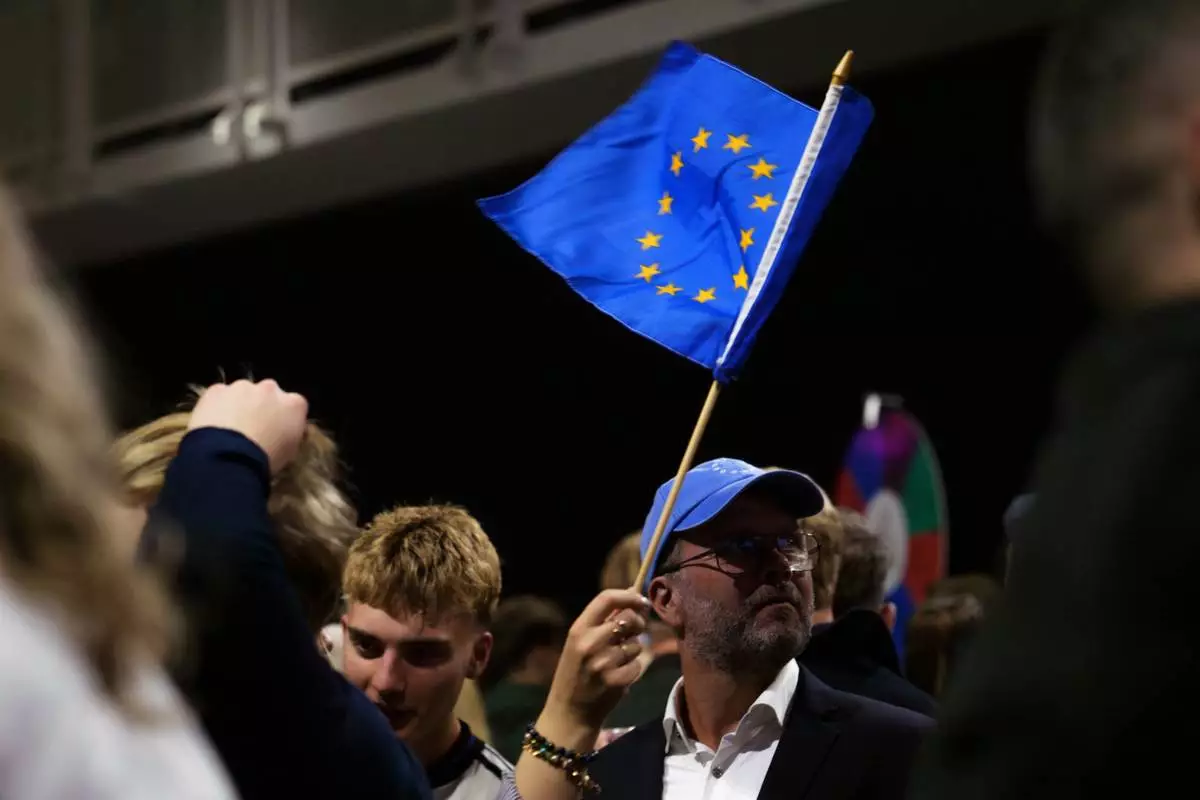
A supporter waves a European Union flag during an election-night gathering for the yes in Reykjavik, Iceland, Sunday, Aug. 30, 2026. (AP Photo/Marco Di Marco)

Former Icelandic Prime Minister and Centre Party leader Sigmundur Davíð Gunnlaugsson, left, Independence Party leader Guðrún Hafsteinsdóttir, center, and Progressive Party leader Lilja Dögg Alfreðsdóttir talk during a No campaign election-night gathering in Reykjavik, Iceland, Saturday, Aug. 29, 2026. (AP Photo/Marco Di Marco)

Leaders of the No campaign react as early results from rural Iceland put the No side ahead during an election-night gathering in Reykjavik, Iceland, Saturday, Aug. 29, 2026. (AP Photo/Marco Di Marco)
BISSAU, Guinea-Bissau (AP) — Guinea-Bissau is voting Sunday in a referendum to decide on granting new presidential powers ahead of December's general election, which will return the West African nation to democracy after its latest coup.
A military government seized power in November of last year following a disputed election in which former President Umaro Sissoco Embaló and opposition candidate Fernando Dias both claimed victory.
If passed, the new constitution by the self-styled National Transitional Council will grant more powers to the president and reduce parliamentary representation, among other issues.
The authorities argue that a parliament trimmed from 102 to 65 seats would allow for easier and more robust debates, while new presidential powers would underline the higher authority of the president over the prime minister, which they claim is a source of political instability in the country. Opposition groups reject the claim.
“In a community, there is only one leader. No community or village can have two leaders. We revised the constitution to avoid constant conflict between the president of the republic and the prime minister. We clarified the law and helped the public understand that the president of the republic is the national symbol. It is the president who stands for election in presidential polls,” Gen. Tomás Djassi, the head of the armed forces, said.
But the opposition has called on voters to boycott the referendum, saying it is a path for the head of the military government to amass power and calling it a "source of political instability at all levels".
“This constitution significantly weakens the Prime Minister and the government, subordinates the National People’s Assembly and political parties, and devalues—or even ignores the popular will expressed at the polls, carrying all the attendant risks of political and social division and tension,” Muniro Conté, spokesperson for the African Party for the Independence of Guinea and Cape Verde, told The Associated Press.
Last year's coup in Guinea-Bissau worsened West Africa's democratic crisis, adding it to a growing number of countries in the region under military rule.
Leaders on the continent branded it a “staged” takeover after the military allowed the former president to host a press conference to announce he was being deposed and allowed to leave the country in seemingly favorable circumstances. Skeptics say Embaló had given up the seat to the military after seeing he was losing the election.
Since it gained independence from Portugal in 1973, the only Portuguese-speaking West African country has been rocked by several coups and attempted coups. Before last year’s coup, a failed coup was reported only a month before.
The tiny country of around 2.2 million people has the highest proportion of natural wealth per capita, according to the World Bank, but more than half of the country lives in poverty. The country is a hub for drug trafficking between Latin America and Europe, an issue experts say fuels its political instability.
Nearly 915,000 voters are registered to vote in the referendum, but the majority say the constitution is not a problem.
Bacar Camará, a high school teacher in the capital, Bissau, said he would not be voting and disapproves of the referendum, citing a fraught political and social environment.
“The transitional government should focus on creating conditions for better understanding and reconciliation among Guineans,” he said.
Another resident in Bissau, Carolina Djeme, said the constitution is unfamiliar to her.
"I’ll go vote on Sunday. However, I’ll vote ‘no’ because — honestly, and I think this is the case for many other citizens — I don’t know this new Constitution well, so I can’t vote ‘yes’,” she said.
Analysts say the military government lacks the legitimacy to change the constitution, which has sparked discontent among the citizens.
“The fundamental question is: Who drafted this Constitution, and on whose behalf? To protect which interests or institutions? Who stands to benefit from this Constitution?” Paulino Quadé, a Guinean political analyst, said.
———
Adetayo reported from London.
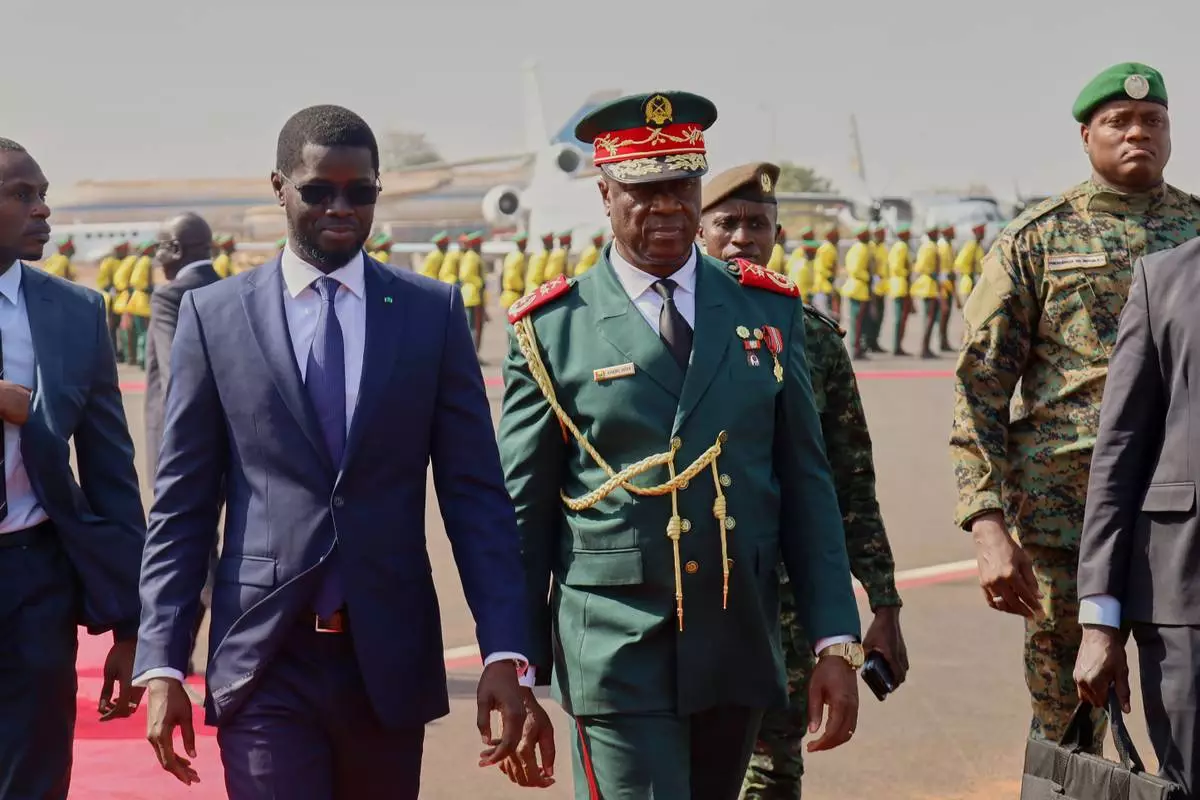
FILE - Guinea-Bissau Transitional President General Horta Inta-A-Na Man, centre, and President of Senegal Bassirou Diomaye Faye walk during an official ECOWAS mission to help resolve Guinea-Bissau's political crisis in Bissau, Guinea-Bissau, on Jan. 10, 2026. (AP Photo/Abubacar Queta, File)