Skip to Content Facebook Feature Image

AP Exclusive: US coaches Polish forces in a drone-focused drill based on lessons from Ukraine

News

AP Exclusive: US coaches Polish forces in a drone-focused drill based on lessons from Ukraine
News

News

AP Exclusive: US coaches Polish forces in a drone-focused drill based on lessons from Ukraine

2026-08-31 08:25 Last Updated At:08:30

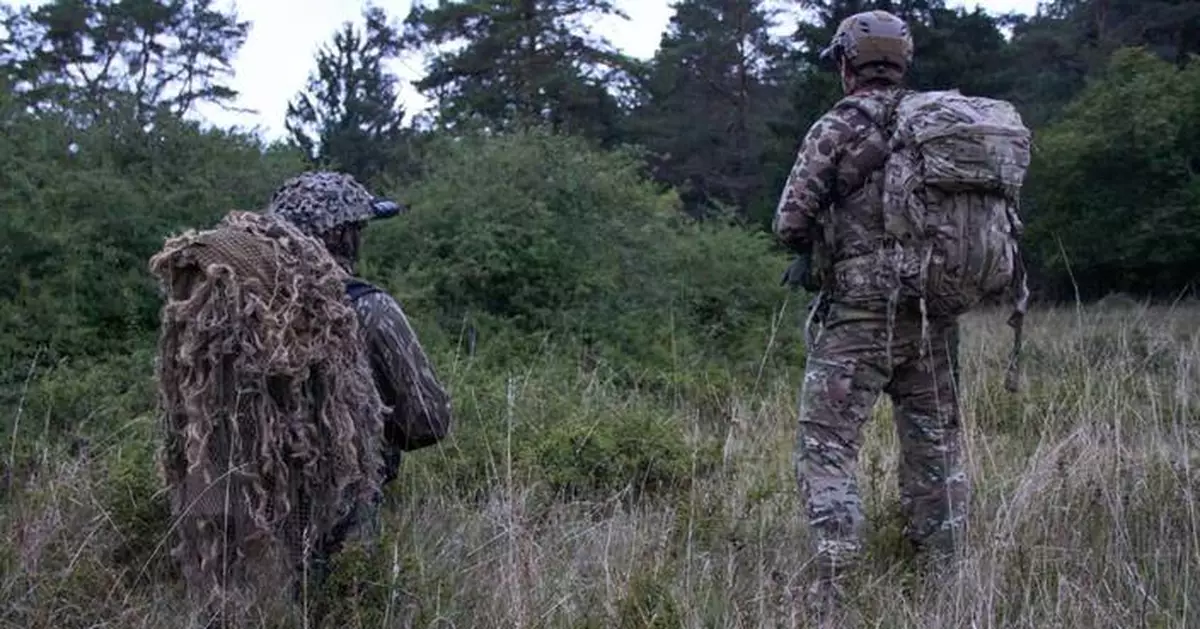
HOHENFELS, Germany (AP) — On a moonless and rainy night, a group of soldiers emerged from a ramshackle building meant to resemble a church. The alpine terrain loomed over them as they quietly set off for the tree line of the German countryside a short distance away.

The soldiers are members of the Polish special forces and are taking part in an exercise designed only months ago that simulates moving through enemy lines, traversing miles of enemy territory and launching a drone strike on a key enemy location.

Initially designed by the Army's Green Berets for U.S. special forces, the exercise that began Friday is informed by and simulates many of the challenges that Ukrainian troops have experienced in their conflict with Russia. It is the first time a NATO ally like Poland has undertaken the training, and it comes at a time when tensions between Russian President Vladimir Putin and NATO countries have escalated.

“We’re using lessons learned from Ukraine,” an Army Green Beret officer assigned to the training complex said Thursday. “All of those effects that we’re seeing either Russia or Ukraine having to overcome — we’re doing our best to replicate.”

The Associated Press received rare access to both the training ground and the troops conducting the exercise, which has only been conducted twice before, both times this year, by two different Green Beret teams.

The drill highlights the focus that some parts of the U.S. military have on learning the latest techniques in drone warfare, pioneered by Ukraine during its 4 1/2-year effort to repel Russian forces. It also shows how the U.S., its NATO allies and Ukraine are working together to counter the threat of possible further Russian action in coming years even as the Trump administration has warned of troop drawdowns in Europe.

CIA Director John Ratcliffe went to Moscow this week to warn Russia not to attack NATO countries, The Wall Street Journal reported. Russia has the appetite to conduct sabotage and cyberattacks against NATO countries, but Putin wants to avoid a direct confrontation, according to three Western officials, who spoke Friday on condition of anonymity to discuss sensitive military matters.

During the exercise in Germany, a senior enlisted soldier familiar with the training scenario at Joint Multinational Readiness Center Hohenfels — about an hour's drive southeast from Nuremberg — said the plan is to run it several times a year. The officer said he expects most, if not all, of the 32 NATO nations to express interest in sending their troops to try the exercise.

Both spoke on condition of anonymity in line with the U.S. military's longstanding policy of not publicly identifying individual members of special forces units.

The scenario, which runs for several days, takes place on a large, 1,100-square-mile (3,000-square-kilometer) plot of land nestled in the Bavarian countryside.

Poland's special forces will be expected to sneak past a U.S. Army airborne infantry unit, whose soldiers will play the enemy. The U.S. airborne infantry unit will parachute into the closed-off training area at the Army's Hohenfels base and set themselves up into a front line.

Assuming the Polish forces can make their way past the U.S. Army, they must then move north — through about 60 miles (100 kilometers) of German countryside — to another training area in the town of Grafenwoehr, where they are expected to destroy a simulated target.

In between lie German farms and villages, private and government cameras, as well as a city with a large population, all of which not only pose as obstacles but also create the potential for them to be spotted.

The senior enlisted soldier said that in previous instances of the exercise, the Army Green Berets removed their uniforms “so they can blend in” before adding that “blend in also means don’t get seen by civilians.”

German civilians in the area largely are not aware of the exercise and serve as a reasonable test of how well special forces can blend into the local population. If they fail, reports of suspicious people to police will make it back to the military, which will use them to pinpoint the team.

“This is supposed to be Russia and you’re going to stand out in Russia,” the enlisted soldier added.

Plus, the U.S. Army also will be looking for the Polish forces with drones of their own.

If they're spotted, “now you have the entire Russian arsenal coming at you,” the enlisted soldier said.

The U.S. Army can either send a military police unit to hunt for the Polish special forces with dogs or direct more drones to the area. In previous versions of the exercise, the U.S. Army had access to more than a hundred drones, the enlisted soldier said.

Troops are able to be “captured or killed” as part of the training.

While the exercise taps into drones and NATO teamwork, the message of collaboration and the value of drones has been somewhat mixed lately across the military.

President Donald Trump stirred confusion among NATO allies by going back and forth on drawing down U.S. troop levels in Europe, and the administration has launched a force review on next steps. And last week, the Army’s top officer shuttered a unit that specialized in drone warfare.

But overall, there is growing interest in tapping Ukraine for its expertise on modern warfare and, specifically, drones.

In March, Ukrainian President Volodymyr Zelenskyy said his country was helping five countries in the Middle East and Gulf region counter Iranian drone attacks launched during the war with the United States, while the U.S. and European countries were among those requesting support.

Meanwhile, the number of mysterious drone incursions in Europe have grown, including as recently as this month, when a pair of drones were spotted over a German military base and a drone carrying explosives was found at a key cargo airport in Germany.

Associated Press writer Emma Burrows in London contributed to this report.
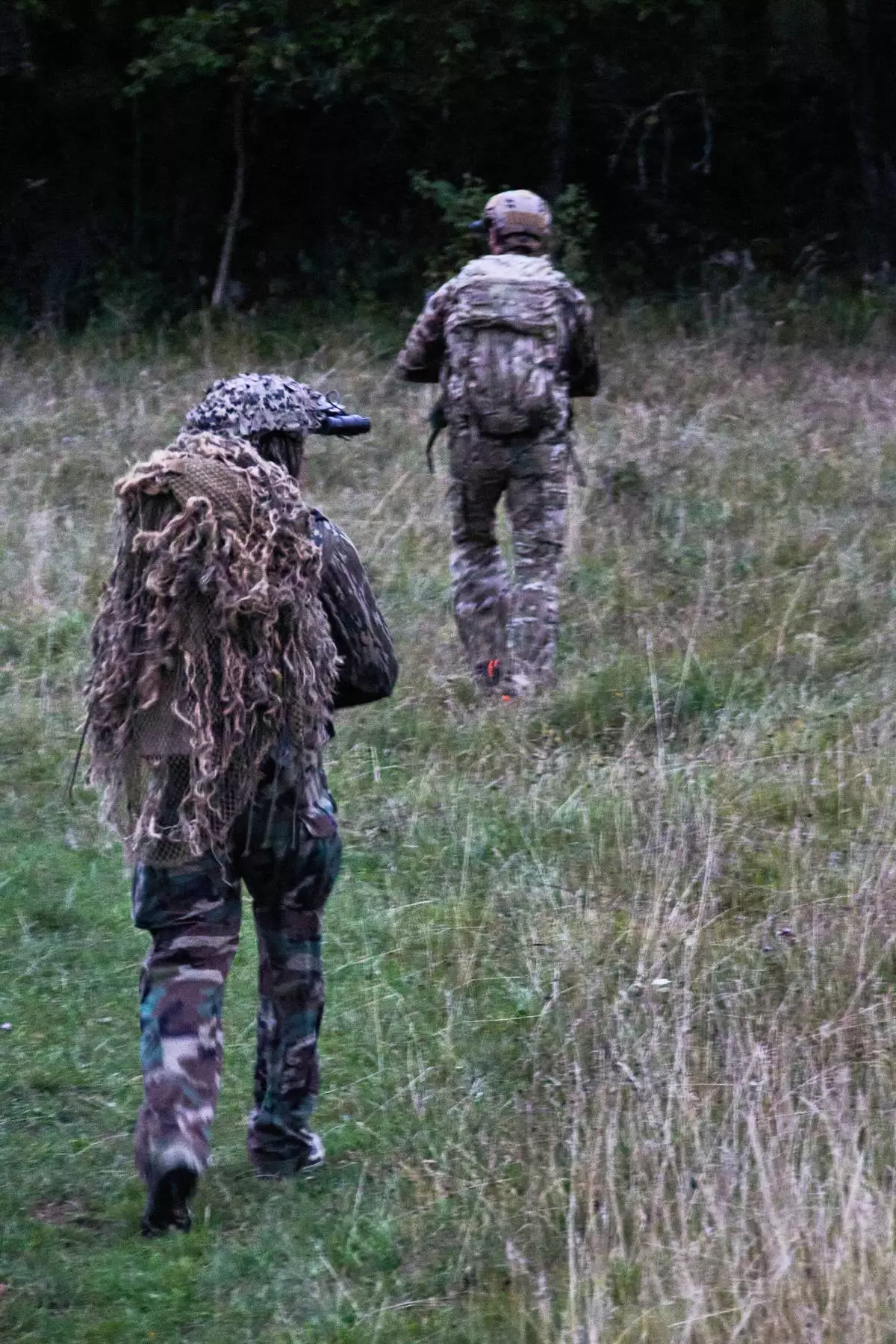
US special forces patrol during a joint military exercise with forces from Poland at the Joint Multinational Readiness Center in Hohenfels near Nuernberg, Germany, Friday, Aug. 28, 2026. (AP Photo/Konstantin Toropin)
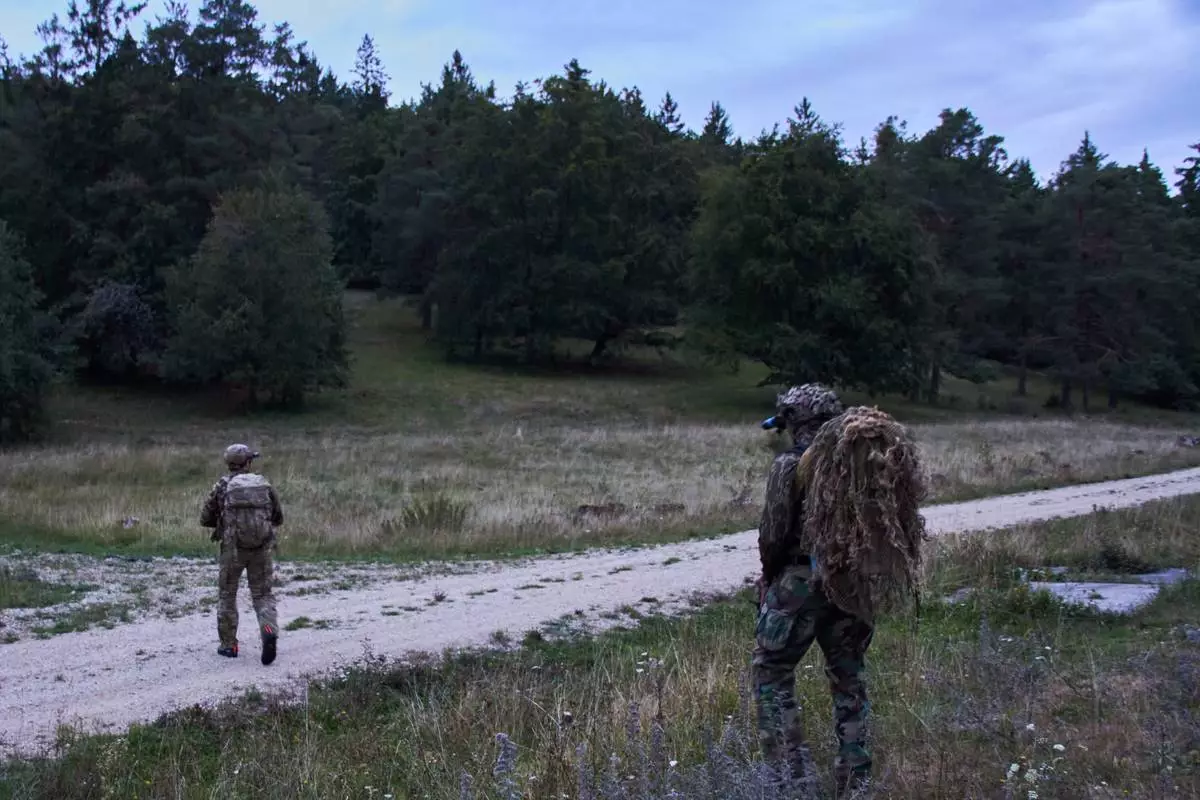
US special forces patrol during a joint military exercise with forces from Poland at the Joint Multinational Readiness Center in Hohenfels near Nuernberg, Germany, Friday, Aug. 28, 2026. (AP Photo/Konstantin Toropin)
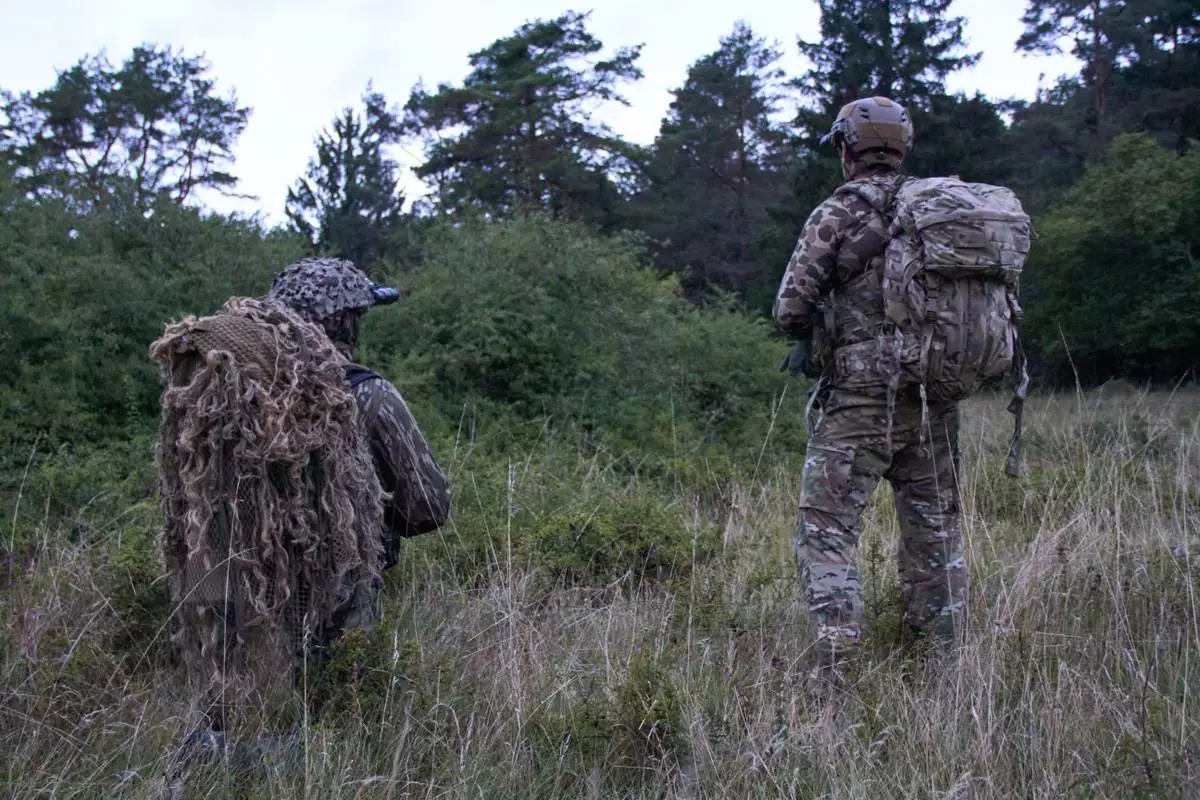
US special forces patrol during a joint military exercise with forces from Poland at the Joint Multinational Readiness Center in Hohenfels near Nuernberg, Germany, Friday, Aug. 28, 2026. (AP Photo/Konstantin Toropin)

US special forces patrol during a joint military exercise with forces from Poland at the Joint Multinational Readiness Center in Hohenfels near Nuernberg, Germany, Friday, Aug. 28, 2026. (AP Photo/Konstantin Toropin)
US special forces patrol during a joint military exercise with forces from Poland at the Joint Multinational Readiness Center in Hohenfels near Nuernberg, Germany, Friday, Aug. 28, 2026. (AP Photo/Konstantin Toropin)
US special forces patrol during a joint military exercise with forces from Poland at the Joint Multinational Readiness Center in Hohenfels near Nuernberg, Germany, Friday, Aug. 28, 2026. (AP Photo/Konstantin Toropin)
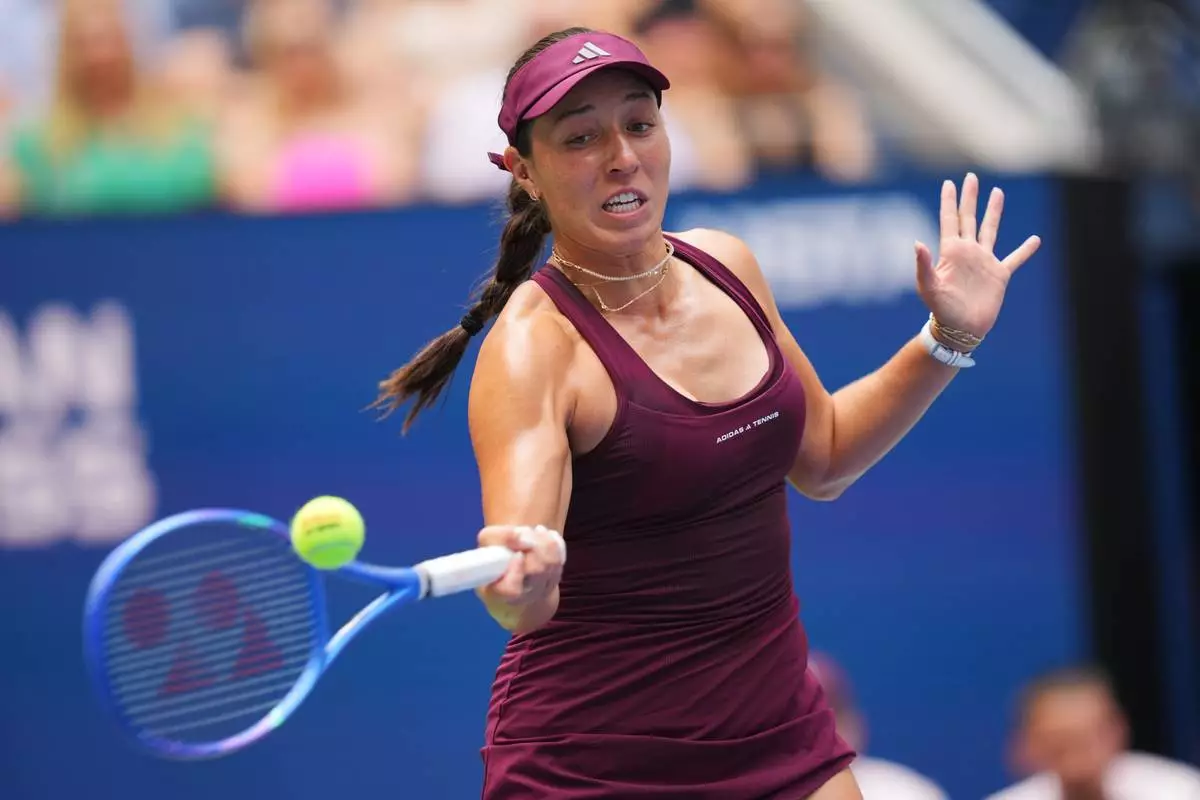
NEW YORK (AP) — Jessica Pegula was one of the first players to compete at the U.S. Open, and she learned last year that starting Sunday provided some nice relief.

“It is a little bit weird, but I did kind of enjoy that I could breathe for the next couple of days and everyone else is still freaking out about whether they’re going to win their first round,” she said.

The head start is great — unless it's a head start back to the airport.

“We were just talking about it, and I said, it’s so nice to play on Sunday when you win. But if you lose it’s not nice, because you feel like the tournament didn’t even start and you’re out of it,” No. 11 seed Marta Kostyuk said.

Pegula and Kostyuk both won easily and now the get the benefit of any extra day of rest before returning for the second round.

Novak Djokovic began his quest for a record-extending 25th Grand Slam title on Sunday night against Mariano Navone, with the match getting paused during the first set so that the roof above Arthur Ashe Stadium could be closed because of rain that suspended play on the outer courts. Djokovic, 39, most recently lost his opening match earlier this month at Cincinnati.

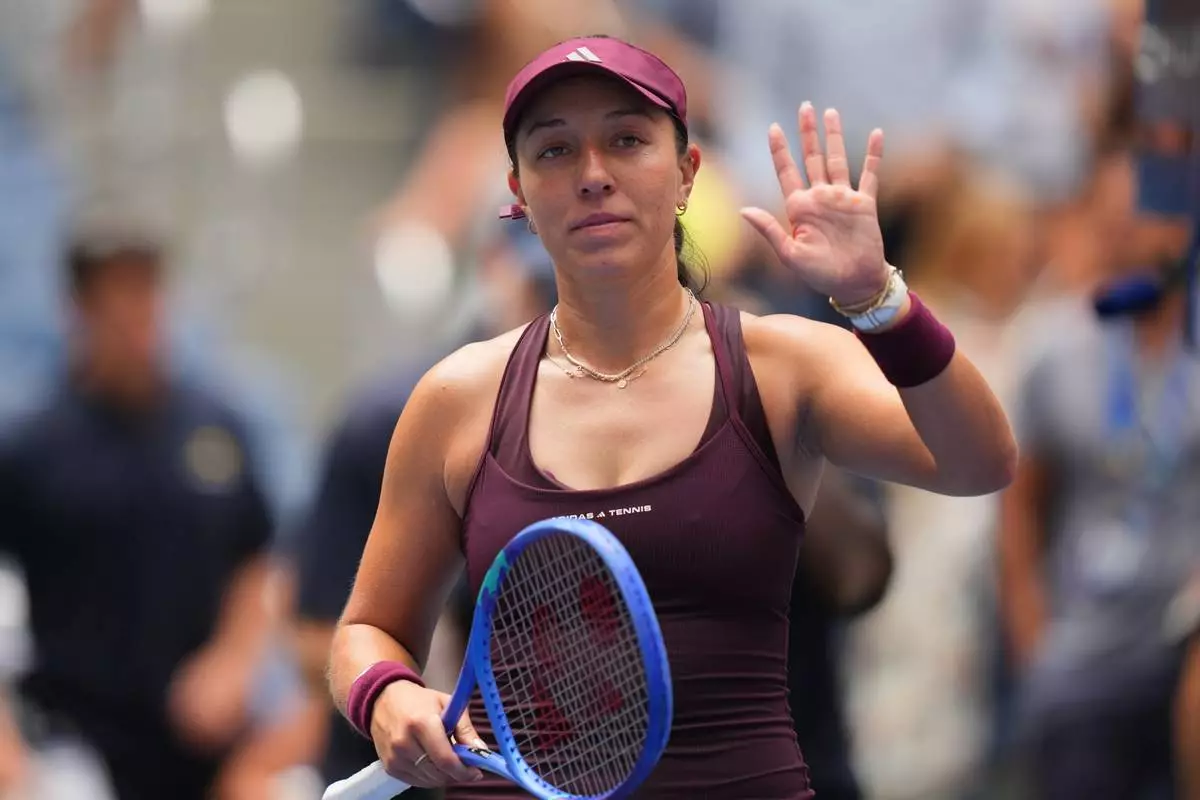
The No. 3-seeded Pegula beat Elena-Gabriela Ruse 6-3, 6-2. She said she was nervous early, which makes sense given what could be at stake for the 2024 U.S. Open runner-up.

Pegula leads the women’s tour with 46 wins this season. She has two titles and has reached three other finals. Pegula can become No. 1 in the rankings if she wins her first major title and No. 2 Elena Rybakina loses before the semifinals.

Pegula next faces the winner of the match between Venus Williams and fellow wild card Sofia Kenin. They were set to play in the nightcap at Ashe, and Williams and sister Serena are scheduled to play doubles together.

“I felt really nervous before I went out there, but I know my coaches were like, ‘You didn’t really look that nervous. We thought you played great,’” Pegula said.

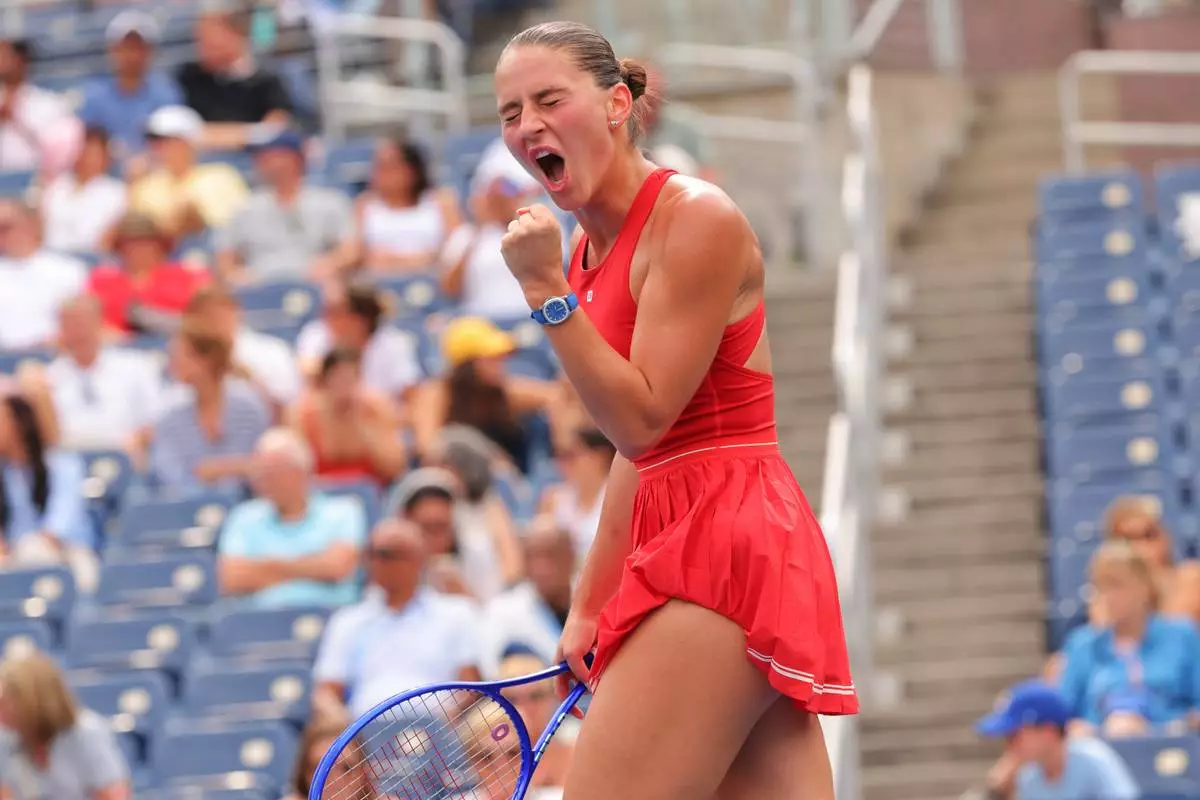
The No. 11-seeded Kostyuk sure did, beating Storm Hunter 6-4, 6-1 for a strong start to the year's final major after reaching the semifinals at the French Open and Wimbledon.

It was the second year of a Sunday start, though some of the biggest headliners don’t begin until Monday. Two-time defending champion Aryna Sabalenka plays her opening match against Camila Osorio, before Carlos Alcaraz, who won his second U.S. Open title last year, plays his first singles match since April after recovering from a right wrist injury.

Past U.S. Open champions Naomi Osaka, Iga Swiatek, Sloane Stephens and Stan Wawrinka are also on the Monday schedule, along with Wimbledon women’s champion Linda Noskova and men’s contenders such as Ben Shelton, Arthur Fils, Felix Auger-Aliassime and Frances Tiafoe.

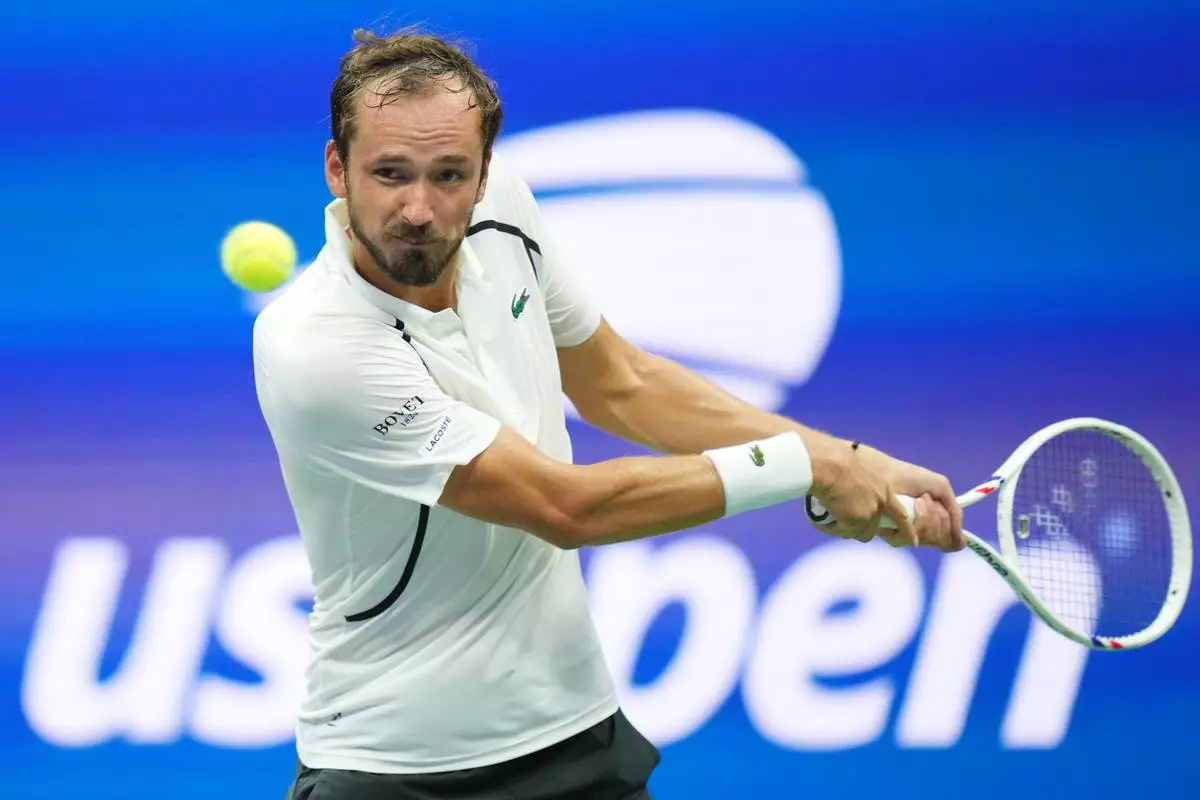
Daniil Medvedev, the 2021 U.S. Open champion, shook off his miserable preparation for the tournament by beating Hugo Gaston 6-4, 6-2, 6-4. The No. 7 seed was just 1-3 in the North American hard-court swing, usually a time he thrives.

“Last couple of weeks was not easy,” Medvedev said. “But I’m happy that today I managed to produce high-level tennis.”

Other winners Sunday included No. 9 Elina Svitolina, No. 19 Jasmine Paolini and No. 31 Leylah Fernandez, the 2021 U.S. Open runner-up. No. 27 seed Barbora Krejcikova, a two-time Grand Slam singles champion, lost 7-6 (4), 6-2 to Kamilla Rakhimova.

American Tommy Paul, the No. 20 seed, bounced back from losing a first-set tiebreak to Coleman Wong to win 6-7 (3), 6-1, 6-3, 6-3. Wong a year ago became the first man from Hong Kong to win an Open-era Grand Slam men’s singles match on the way to reaching the round of 32.

Maric Cilic, the 2014 U.S. Open champion, and 2022 runner-up Casper Ruud both withdrew with injuries on the opening day.

Though the main draws didn't begin until Sunday, action at the U.S. Open has already been going on for nearly a week. Large crowds gathered for the mixed doubles tournament, an exhibition headlined by Roger Federer's return to Flushing Meadows and the singles qualifying tournaments, with admission to the grounds free.

Fans who came for the first time Sunday may have noticed a tournament in transition. The U.S. Open is in the second year of a three-year renovation of Arthur Ashe Stadium, the main venue at the USTA Billie Jean King National Tennis Center. The improvements in the $800 million project include the addition of some lower-level seating, upgrades and additions of entertainment areas and the construction of a player performance center.

“Please pardon our appearance while we are reimagining spectacular,” reads a sign above the entrance to Ashe.

The project is scheduled to be completed in time for the 2027 U.S. Open.

See AP’s full tennis coverage here

Daniil Medvedev, of Russia, returns the ball to Hugo Gaston, of France, during the first round of the U.S. Open tennis championships Sunday, Aug. 30, 2026, in New York. (AP Photo/Kirsty Wigglesworth)

Daniil Medvedev, of Russia, returns the ball to Hugo Gaston, of France, during the first round of the U.S. Open tennis championships Sunday, Aug. 30, 2026, in New York. (AP Photo/Kirsty Wigglesworth)

Marta Kostyuk, of Ukraine, reacts following a match against Storm Hunter, of Australia, during the first round of the U.S. Open tennis championships, Sunday, Aug. 30, 2026, in New York. (AP Photo/Andres Kudacki)

Marta Kostyuk, of Ukraine, reacts following a match against Storm Hunter, of Australia, during the first round of the U.S. Open tennis championships, Sunday, Aug. 30, 2026, in New York. (AP Photo/Andres Kudacki)

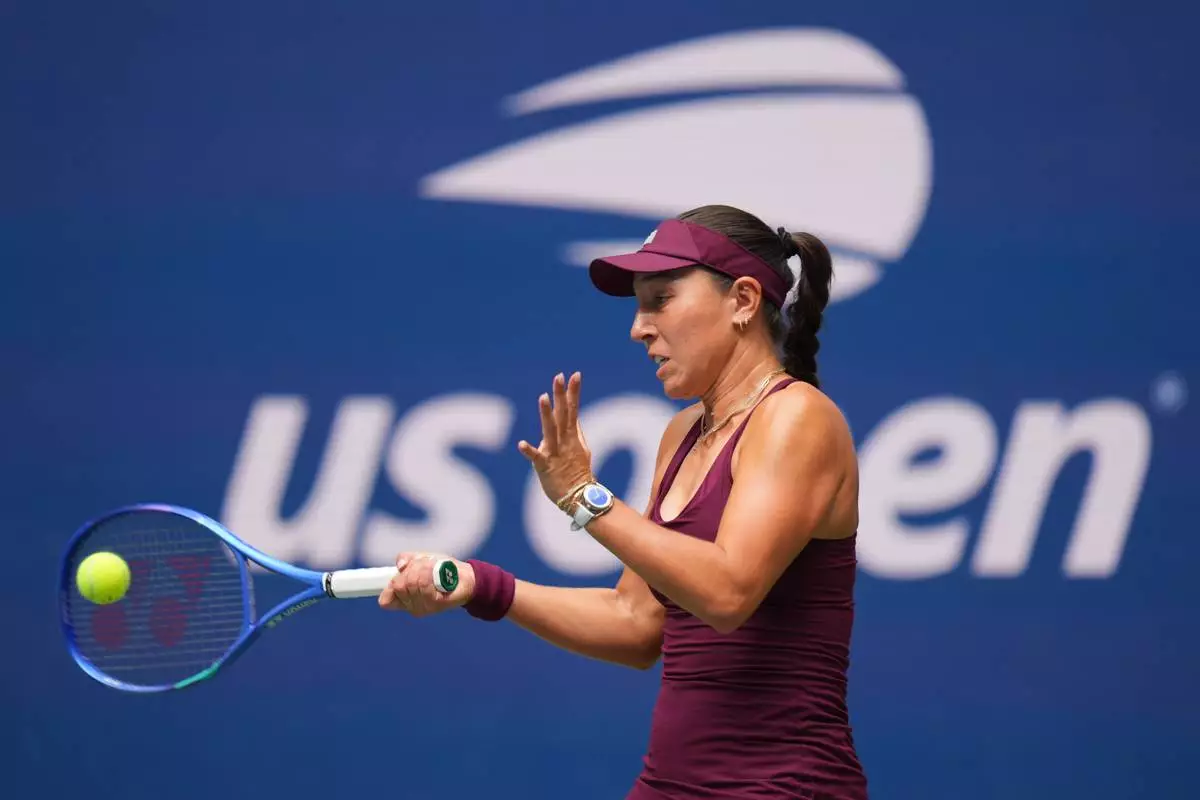
Jessica Pegula, of the United States, gestures after she defeated Elena-Gabriela Ruse, of Romania, in the first round of the U.S. Open tennis championships Sunday, Aug. 30, 2026, in New York. (AP Photo/Kirsty Wigglesworth)

Jessica Pegula, of the United States, gestures after she defeated Elena-Gabriela Ruse, of Romania, in the first round of the U.S. Open tennis championships Sunday, Aug. 30, 2026, in New York. (AP Photo/Kirsty Wigglesworth)

Jessica Pegula, of the United States, returns the ball to Elena-Gabriela Ruse, of Romania, during the first round of the U.S. Open tennis championships Sunday, Aug. 30, 2026, in New York. (AP Photo/Kirsty Wigglesworth)

Jessica Pegula, of the United States, returns the ball to Elena-Gabriela Ruse, of Romania, during the first round of the U.S. Open tennis championships Sunday, Aug. 30, 2026, in New York. (AP Photo/Kirsty Wigglesworth)

Jessica Pegula, of the United States, returns the ball to Elena-Gabriela Ruse, of Romania, during the first round of the U.S. Open tennis championships Sunday, Aug. 30, 2026, in New York. (AP Photo/Kirsty Wigglesworth)

Jessica Pegula, of the United States, returns the ball to Elena-Gabriela Ruse, of Romania, during the first round of the U.S. Open tennis championships Sunday, Aug. 30, 2026, in New York. (AP Photo/Kirsty Wigglesworth)

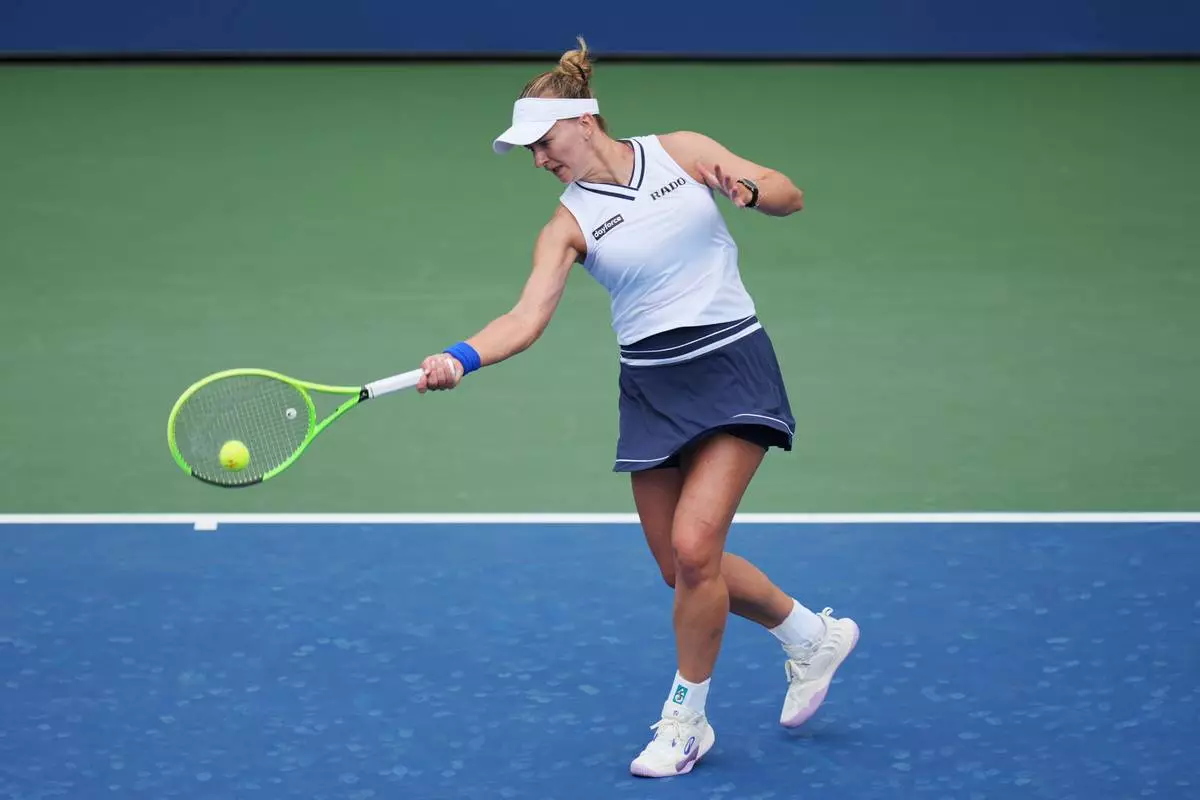
Barbora Krejcikova, of the Czech Republic, returns the ball to Kamilla Rakhimova, of Uzbekistan, during the first round of the U.S. Open tennis championships Sunday, Aug. 30, 2026, in New York. (AP Photo/Kirsty Wigglesworth)

Barbora Krejcikova, of the Czech Republic, returns the ball to Kamilla Rakhimova, of Uzbekistan, during the first round of the U.S. Open tennis championships Sunday, Aug. 30, 2026, in New York. (AP Photo/Kirsty Wigglesworth)

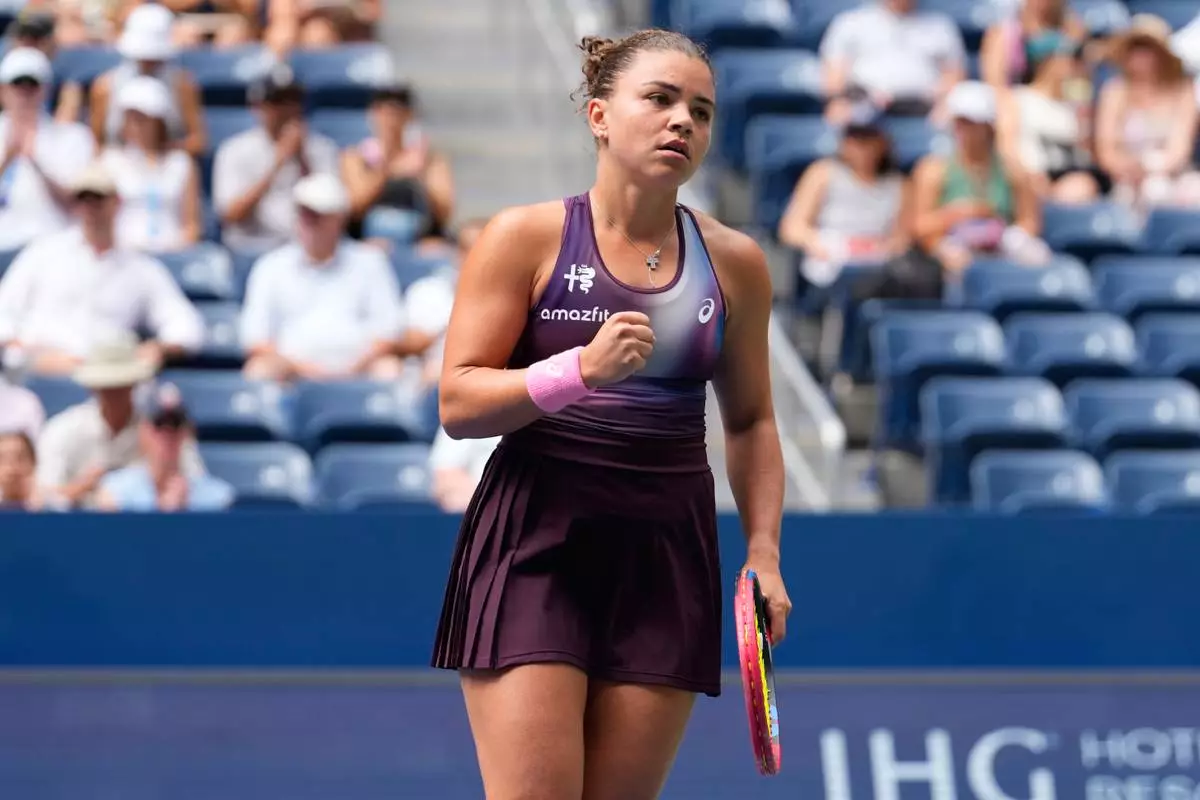
Jasmine Paolini, of Italy, reacts during the first round of the U.S. Open tennis championships against Veronika Erjavec, of Slovenia, Sunday, Aug. 30, 2026, in New York. (AP Photo/Yuki Iwamura)

Jasmine Paolini, of Italy, reacts during the first round of the U.S. Open tennis championships against Veronika Erjavec, of Slovenia, Sunday, Aug. 30, 2026, in New York. (AP Photo/Yuki Iwamura)

Recommended Articles