HONG KONG SAR – Media OutReach Newswire – 31 August 2026 – The next generation of microelectronics relies on improvements in transistor switching performance to advance computing power. However, conventional semiconductor technology has hit the physical "Boltzmann limit", which restricts the energy efficiency of traditional transistors. A research team at The Hong Kong Polytechnic University (PolyU) has engineered a novel tunnelling field-effect transistor (TFET) utilising 2D nanomaterials. The breakthrough can offer the fundamentals for energy-efficient computing and next-generation AI chips.
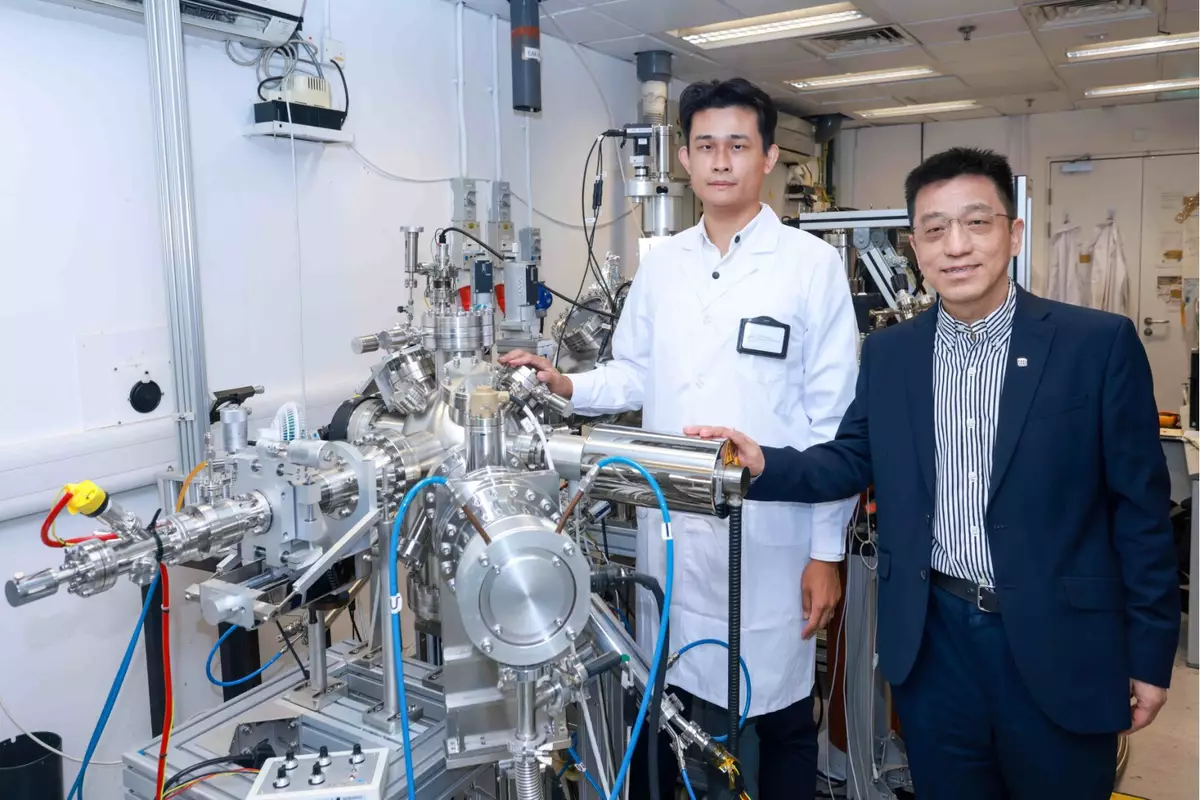
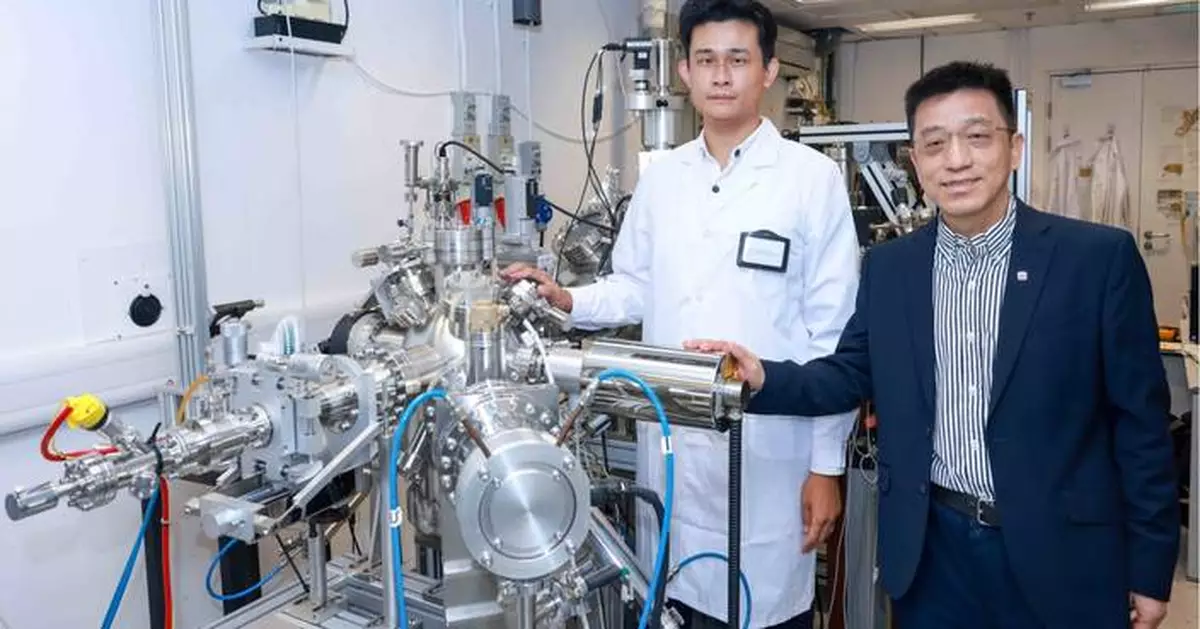
Prof. Jianhua Hao (right), Dr. Zehan Wu, Research Assistant Professor of Department of Physics and Materials at PolyU and the first author of the Research Article in Science (left), and the research team, fabricated ultra-thin heterostructure of 2D bismuth and indium selenide layers using pulsed laser deposition.
The research was led by Prof. Jianhua HAO, Head of the Department of Physics and Materials and Chair Professor of Materials Physics and Devices at PolyU, in collaboration with the National University of Singapore, The Hong Kong University of Science and Technology, Peking University, and the Singapore University of Technology and Design. The findings have been published in the prestigious scientific journal Science.
Conventional transistors rely on thermionic emission of electrical charges, which requires a minimum gating voltage of 60 millivolts (mV). However, the "Boltzmann limit" makes subthreshold swing values below 60 mV decade⁻¹ at room temperature physically impossible, limiting progress in high-performance electronics.
Prof. Hao said, "By adopting quantum tunnelling, our TFET breaks through this boundary, paving the way for ultra-low-power, high-performance integrated circuits essential for emerging AI chips and advanced semiconductor applications."
Prof. Hao's team created ultra-thin heterostructure of 2D bismuth and indium selenide alternating layers using pulsed laser deposition. By exercising precise control over the layer structure, the normally semi-metallic bismuth transforms into a semiconductor in 2D form, allowing charge carriers to tunnel efficiently into indium selenide through quantum tunnelling mechanism.
The resulting TFET achieved SS values well below the 60 mV decade⁻¹ limit. Operating at room temperature on silicon substrates, the device required a gate-voltage range of only 160 mV—far lower than the 800 mV originally required.
The device resolved a challenge in experimental TFETs by delivering a high output current alongside an exceptionally high ON/OFF current ratio, which helps drive multiple downstream logic gates and diminish circuit-delay.
Hashtag: #PolyU #PolyUResearch #Semiconductors #TFET #AIChips
The issuer is solely responsible for the content of this announcement.
** This press release is distributed by Media OutReach Newswire through automated distribution system, for which the client assumes full responsibility. **
NINGBO, CHINA – Media OutReach Newswire – 6 November 2026 – The Ningbo Consensus on Collaborative Development was jointly released by representatives from 15 countries at the main event of the 2026 Global Mayors Dialogue · Ningbo held in Ningbo, east China's Zhejiang Province, on November 3.
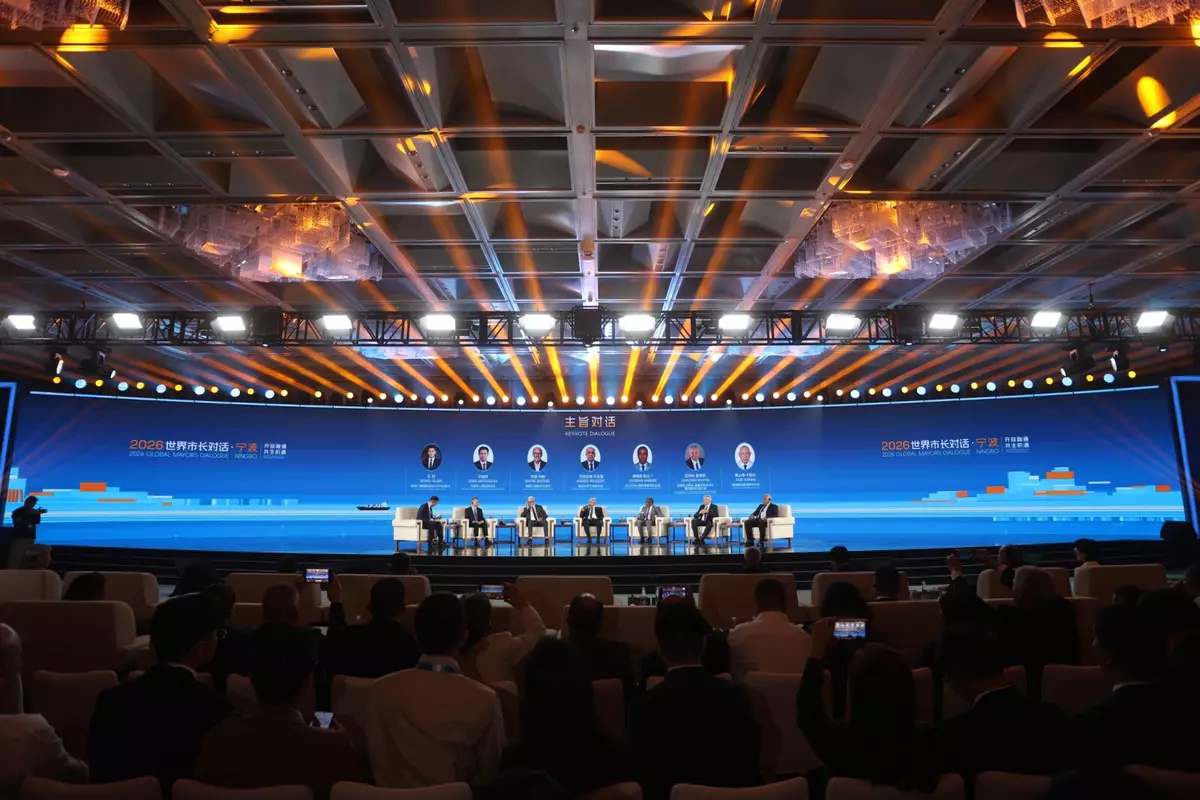
Photo shows the thematic dialogue session at the main event of the 2026 Global Mayors Dialogue· Ningbo.
Held from Nov. 2 to 5 in Ningbo, the 2026 Global Mayors Dialogue · Ningbo, themed "Openness and Connectivity for Shared Opportunities", has brought together more than 260 participants, including mayors and their representatives from 20 cities of 15 countries, such as France, Italy and New Zealand, as well as representatives of international organizations such as the United Nations Global Compact, business representatives and media professionals.
After in-depth discussions, the representatives agreed on three points of consensus covering deepening industrial cooperation, upholding trade openness and promoting people-to-people exchanges.
They agreed that advancing industrial development through cooperation, creating opportunities through openness, and fostering closer people-to-people ties are important ways to keep pace with economic globalization and promote urban prosperity and people's well-being.
Participants will build on their respective strengths and resource endowments, identify their comparative advantages and pursue distinctive paths of open development. They will promote complementarity and resource sharing, expand two-way investment, and foster an open, inclusive and mutually beneficial environment for innovation, enabling the sharing of innovation outcomes.
On trade and openness, participants have pledged to firmly uphold the multilateral trading system, strengthen connectivity, facilitate the orderly flow and efficient allocation of production factors, safeguard stable and smooth supply chains, and resolve differences through dialogue.
They have also agreed to deepen exchanges and cooperation in culture, education, healthcare and other fields, improve mechanisms for interaction and expand people-to-people exchanges to foster mutual understanding and closer ties. They called for promoting exchanges and mutual learning among civilizations to overcome estrangement and prevent conflicts.
Looking ahead, participants will continue to promote openness and connectivity and share development opportunities, build new mechanisms for city-to-city cooperation, and strengthen mutual understanding and trust, contributing to the sustainable development of cities worldwide.
Guided by the State Council Information Office, the 2026 Global Mayors Dialogue · Ningbo is co-hosted by the People's Government of Ningbo Municipality, the Information Office of the People's Government of Zhejiang Province, and Xinhua News Agency Zhejiang Bureau.
The issuer is solely responsible for the content of this announcement.
** This press release is distributed by Media OutReach Newswire through automated distribution system, for which the client assumes full responsibility. **