Skip to Content Facebook Feature Image

Keeping cool saves thousands of lives yearly, but at a cost of worsening global warming, experts say

TECH

Keeping cool saves thousands of lives yearly, but at a cost of worsening global warming, experts say
TECH

TECH

Keeping cool saves thousands of lives yearly, but at a cost of worsening global warming, experts say

2026-08-31 23:04 Last Updated At:09-01 12:46

Cooling from air conditioning saves lives — more than 5,000 a year in the United States alone — but it also heats up the planet and taxes our electrical grid, scientists say.

As the world warms, heat waves strike nearly every continent and United Nations officials estimate that about half a million people die a year from heat, air conditioning is needed and being used more than ever. A study in Nature Health reported Monday that air conditioning saved nearly 58,000 lives between 2010 and 2020 in the U.S. Air conditioning use is skyrocketing around the world, with electricity demand from cooling expected to triple, according to the International Energy Agency and the United Nations Environment Programme.

More Images
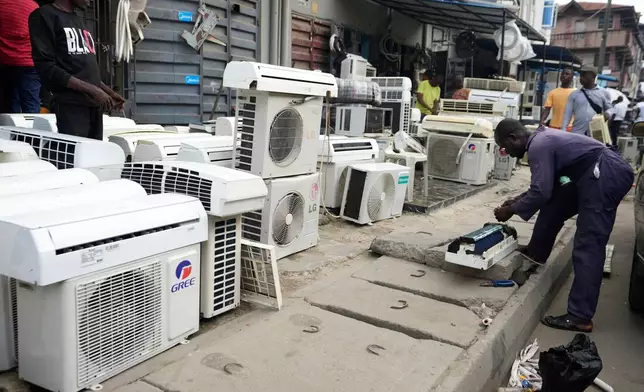
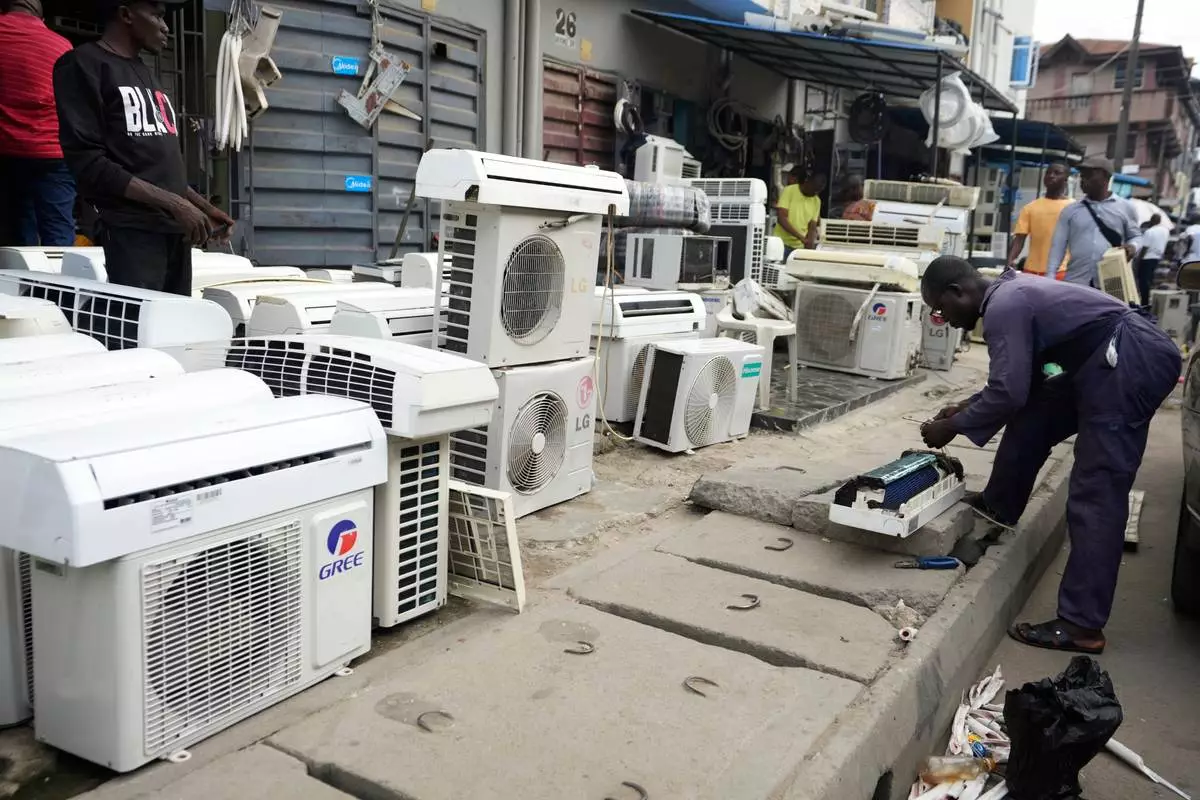
FILE - A man repairs air conditioners on the street in Lagos, Nigeria, July 15, 2024. (AP Photo/Sunday Alamba, File)
FILE - A man repairs air conditioners on the street in Lagos, Nigeria, July 15, 2024. (AP Photo/Sunday Alamba, File)

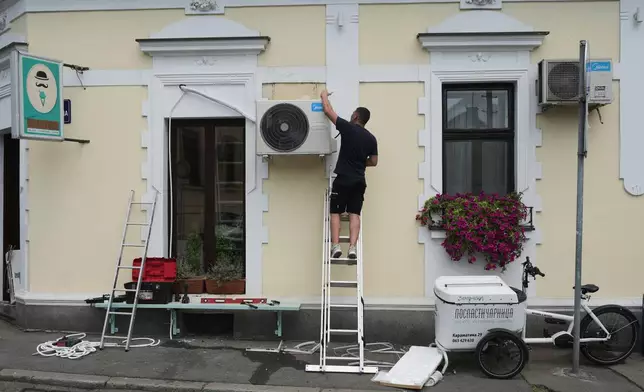
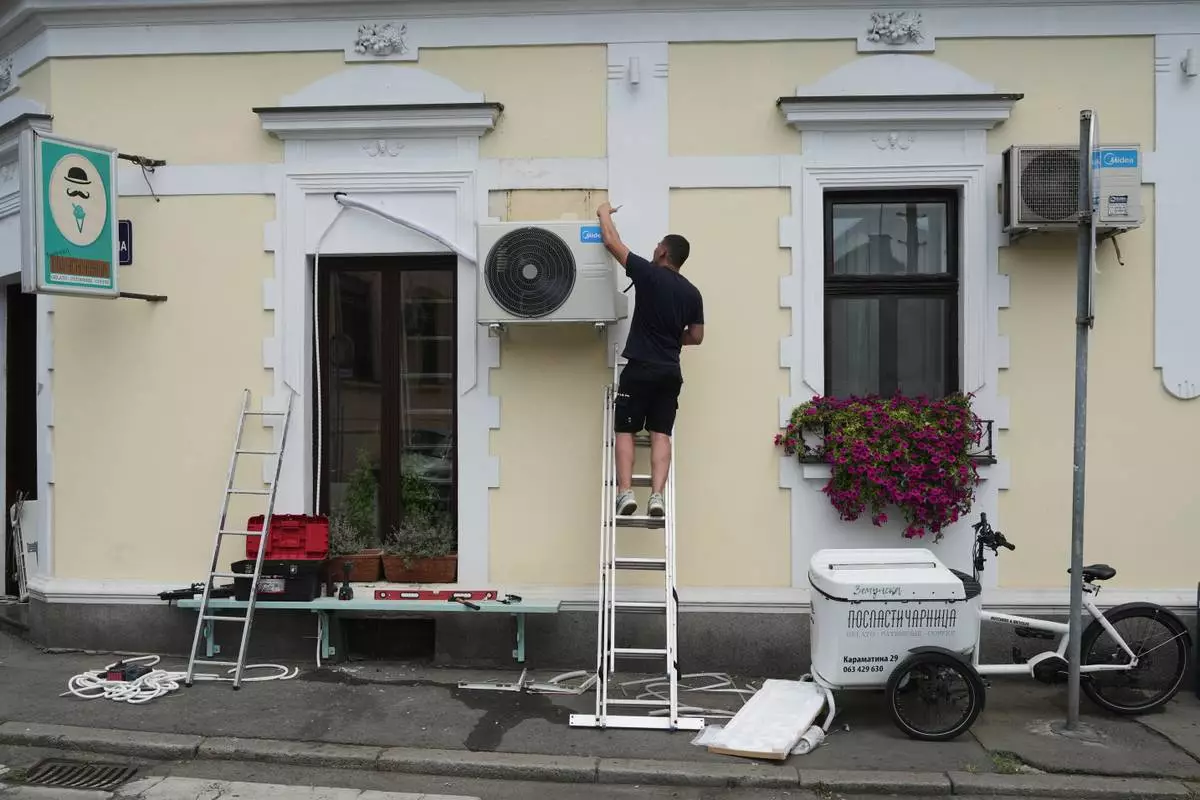
FILE - An worker installs a new air conditioning unit during a hot summer day in Belgrade, Serbia, June 30, 2026. (AP Photo/Darko Vojinovic, File)

FILE - An worker installs a new air conditioning unit during a hot summer day in Belgrade, Serbia, June 30, 2026. (AP Photo/Darko Vojinovic, File)

FILE - Jenny Sakellariou uses a hand fan while men play backgammon in an air-conditioned cooling center operated by the Athens municipality throughout a heat wave in Athens, Greece, Aug. 24, 2026. (AP Photo/Thanassis Stavrakis, File)
FILE - Jenny Sakellariou uses a hand fan while men play backgammon in an air-conditioned cooling center operated by the Athens municipality throughout a heat wave in Athens, Greece, Aug. 24, 2026. (AP Photo/Thanassis Stavrakis, File)

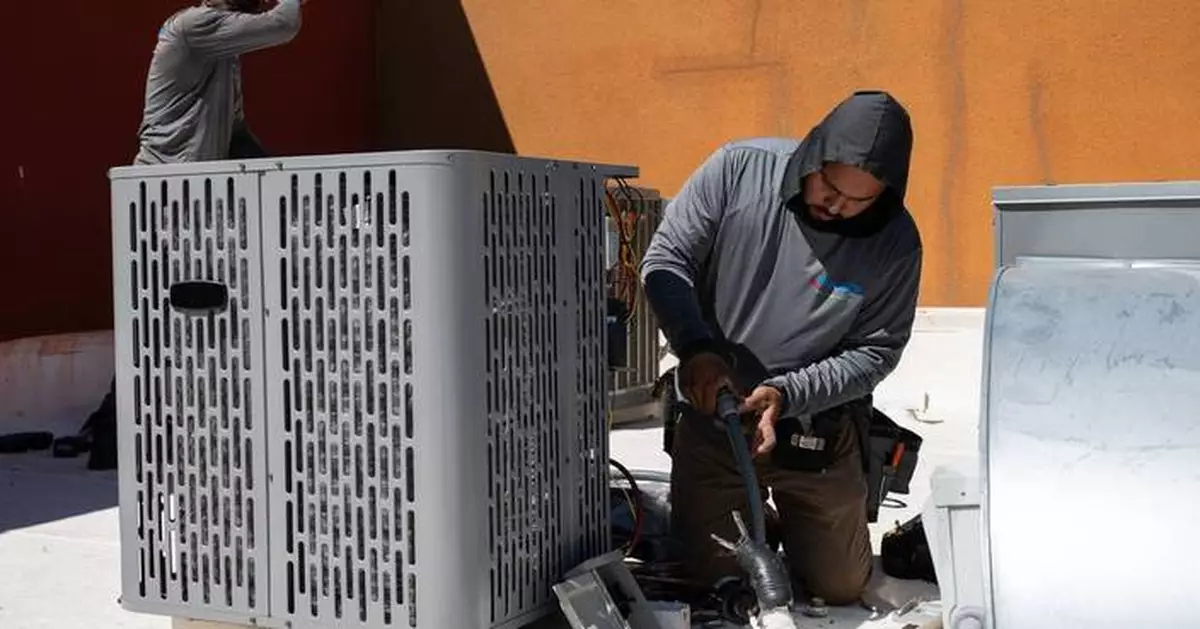
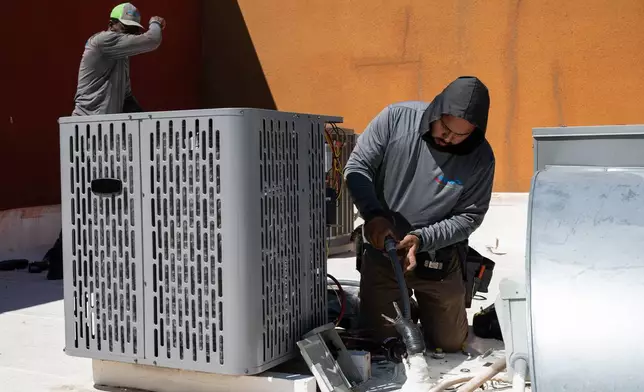
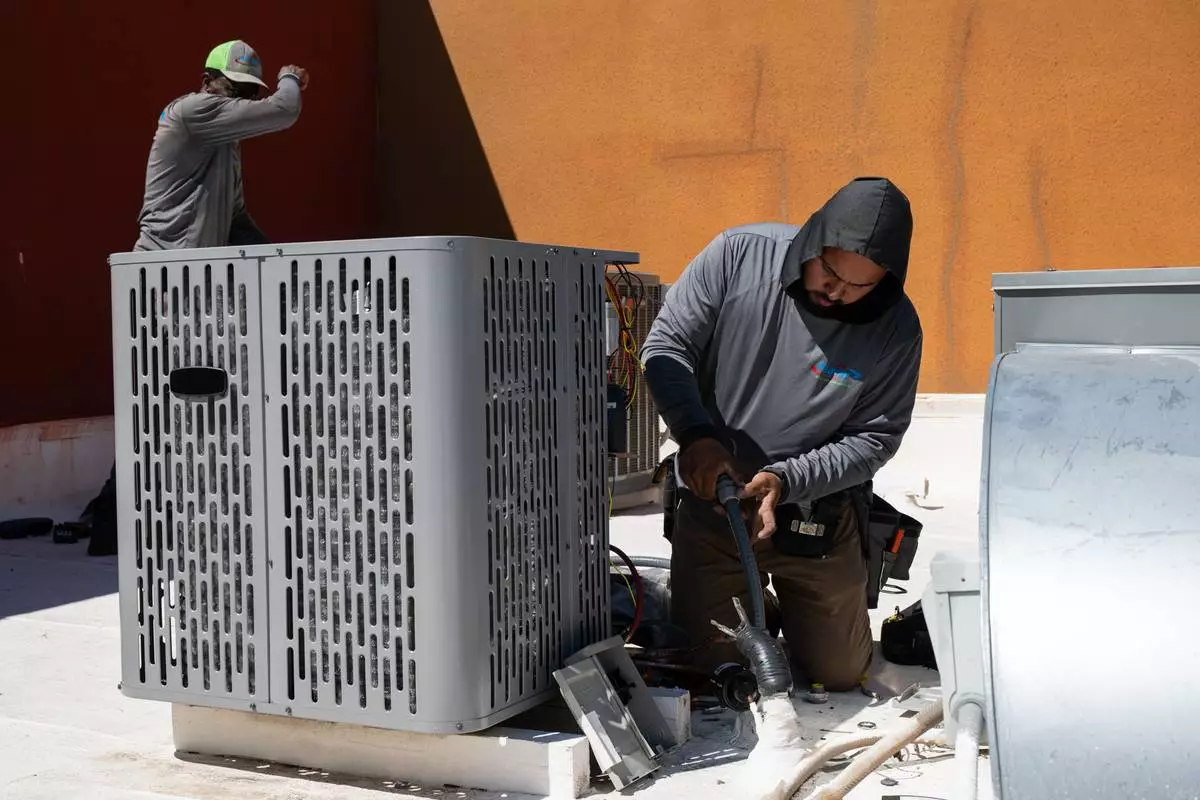
FILE - Sonel Telemaque, left, wipes sweat from his brow while installing a new air conditioning unit alongside Brian Hermosillo during record-breaking heat, March 19, 2026, in Tempe, Ariz. (AP Photo/Caitlin O'Hara, File)

FILE - Sonel Telemaque, left, wipes sweat from his brow while installing a new air conditioning unit alongside Brian Hermosillo during record-breaking heat, March 19, 2026, in Tempe, Ariz. (AP Photo/Caitlin O'Hara, File)

It’s also more of a problem than ever. Because most of the electricity for cooling comes from the burning of fossil fuels, the U.N. projects the amount of heat-trapping gas spewed into the atmosphere from air conditioning use to rise from 4.5 billion to 7.2 billion tons in the next 25 years or so. That 7.2 billion tons is almost as much as the carbon pollution from the United States and Europe now.

“Everyone knows air conditioning works, but air conditioning from a climate change perspective is not an ideal,” said Kai Chen, an epidemiology professor at the Yale School of Public Health who was the senior author on the new study. “It leads to more carbon emissions ... then it accelerates the climate warming problem.”

Because of a global energy crunch triggered by the war in Iran, eight countries — Bangladesh, Cambodia, Jordan, Malaysia, the Philippines, the Seychelles, Singapore and Sri Lanka — have limited how cool air conditioning can be in offices or even mandated one day a week for public offices to switch it off, according to the IEA. In 2025 the Indian government proposed limits on how cool air conditioners can go.

Experts from 75 countries and 250 cities are trying to walk the tightrope of creating more cooling to reduce deaths from the rising heat, but without worsening climate change. The Global Cooling Pledge will meet in September in Singapore.

One measurement experts use to tally accumulated heat as related to potential air conditioning use is something called “cooling degree days,” a calculation of how much energy is needed to cool buildings when it’s hot outside. The number of cooling degree days in the United States has increased by 28% since 1990, with 2024 setting a record, according to the U.S. Energy Information Administration. Through May, 2026 has been on pace to beat 2024 for the most cooling degree days, EIA data shows.

In Europe, the number of cooling degree days has more than doubled since 1990, and air conditioning use there has jumped up by 44%. Meanwhile, usage has tripled in India and more than doubled in Southeast Asia, the IEA reported.

In the new study, Chen and his team went through 30 million U.S. death records over an 11-year time span, used county-by-county calculations for levels when heat becomes dangerous and calculated how many lives air conditioning saved during extreme heat. The most lives saved were in Arizona, Florida, Texas, Louisiana and southern parts of Nevada, Alabama and Mississippi. More than a dozen northern states, from Washington to Maine, had fewer than 10 lives a year saved, according to the study.

Chen said the study concluded that “the essential role” of air conditioning saved on average 5,267 lives a year. But it also found that has to be balanced with “overuse.” He pointed to offices — like his — which are cooled so much that many workers wear sweaters even in the summer. More than half the cases researchers looked at could be considered overuse, he said.

Many places use 75 degrees (24 degrees Celsius) as a reasonable limit for air conditioning, Chen said.

He also said the study found that using more air conditioning than needed doesn’t save more lives, but it does worsen climate change.

Air conditioning in cities adds extra warmth to the urban heat island effect, as anyone who walks by air conditioning units knows because that’s where waste heat is expelled outdoors, Chen said. And the added power use increases traditional soot and smog air pollution.

It’s also an issue of fairness since many of the world’s most vulnerable populations don’t have access to or can’t afford air conditioning, according to both Chen and U.N. officials.

Lily Riahi, head of the cooling buildings and energy unit at UNEP, said that in this year's heat waves, “many families had to choose between paying for medicines or running their air conditioner.”

“In a warming world, thermal comfort should not be a luxury,” UNEP chief heat officer Eleni Myrivili said. “It’s becoming a prerequisite for health, dignity and increasingly survival.”

Riahi said the goal is not less cooling but rather “smarter and more equitable cooling,” and she pointed to Singapore as an example for effective solutions.

“Singapore is a country I think has really tackled cooling from a very comprehensive perspective, looking at individual adaptation measures, early warning systems, passive measures in the city in terms of urban greenery, which saves them, I think, $35 million in energy costs per year,” Riahi said. Officials there also require new and old buildings to have more efficient cooling and ventilation systems.

Singapore has lowered temperatures in some places by 14 degrees (8 degrees Celsius), Riahi said.

But sometimes it can get so hot and humid in places that even green solutions aren't enough and air conditioning will be needed, Riahi said.

Until it's too hot and humid, fans and a low level of air conditioning work, Chen said.

The Associated Press’ climate and environmental coverage receives financial support from multiple private foundations. AP is solely responsible for all content. Find AP’s standards for working with philanthropies, a list of supporters and funded coverage areas at AP.org.
FILE - A man repairs air conditioners on the street in Lagos, Nigeria, July 15, 2024. (AP Photo/Sunday Alamba, File)
FILE - A man repairs air conditioners on the street in Lagos, Nigeria, July 15, 2024. (AP Photo/Sunday Alamba, File)

FILE - An worker installs a new air conditioning unit during a hot summer day in Belgrade, Serbia, June 30, 2026. (AP Photo/Darko Vojinovic, File)

FILE - An worker installs a new air conditioning unit during a hot summer day in Belgrade, Serbia, June 30, 2026. (AP Photo/Darko Vojinovic, File)

FILE - Jenny Sakellariou uses a hand fan while men play backgammon in an air-conditioned cooling center operated by the Athens municipality throughout a heat wave in Athens, Greece, Aug. 24, 2026. (AP Photo/Thanassis Stavrakis, File)
FILE - Jenny Sakellariou uses a hand fan while men play backgammon in an air-conditioned cooling center operated by the Athens municipality throughout a heat wave in Athens, Greece, Aug. 24, 2026. (AP Photo/Thanassis Stavrakis, File)

FILE - Sonel Telemaque, left, wipes sweat from his brow while installing a new air conditioning unit alongside Brian Hermosillo during record-breaking heat, March 19, 2026, in Tempe, Ariz. (AP Photo/Caitlin O'Hara, File)
FILE - Sonel Telemaque, left, wipes sweat from his brow while installing a new air conditioning unit alongside Brian Hermosillo during record-breaking heat, March 19, 2026, in Tempe, Ariz. (AP Photo/Caitlin O'Hara, File)

LAS VEGAS (AP) — When Vice President JD Vance stepped on stage in Michigan on Monday, it was MAGA Inc. writing the check for the campaign event. It was a rare bit of spending in a battleground state from a powerful political organization that has mostly been missing in action this year.

With just over two months to go before the midterm elections, President Donald Trump is still sitting on most of his colossal war chest, and he's been growing his money pile instead of spending it.

Even though the president and his team insist they'll open their wallet soon, frustrations are growing as Republicans try to maintain control of Congress despite headwinds partially of Trump's own creation. While the president remains the party's best asset in turning out its base, he is historically unpopular, with low marks on his handling of the economy and the ongoing war in Iran that most Americans say was not worth fighting.

The ticking clock narrows Republicans' options because time on the airwaves gets more limited and more expensive as the election draws near.

“Hope springs eternal,” said Republican donor Dan Eberhart, one of many who have been left wondering about the president’s plans.

Texas is a particular issue, especially after Trump helped scandal-plagued state Attorney General Ken Paxton beat incumbent Sen. John Cornyn, turning what was supposed to be a safe Republican seat into a potential toss up.

Democratic nominee James Talarico has dramatically outraised Paxton, bringing in more than $68.5 million to Paxton’s $9 million. Talarico had more than $21.5 million cash on hand at the end of June, versus Paxton’s $1.75 million.

“We need help from the president,” Sen. John Kennedy, a Louisiana Republican, told Fox News over the weekend. “I’m hoping that the president is going to spend $100 or $200 million in Texas, but he hasn’t committed to it yet.”

MAGA Inc. had more than $403 million at the end of July, according to the latest campaign finance filings, having brought in another $3 million over the course of the month and having spent practically nothing. That's more cash than any of the major party committees.

Its only major outlay so far has been in South Carolina, where the group invested nearly $830,000 on a last-minute get-out-the-vote push to help Sen. Darline Graham win the Republican nomination to succeed her late brother Lindsey Graham. The sum included about $774,000 on get-out-the-vote phone calls and $53,500 on text messages.

In the meantime, Trump has continued to raise money.

He headlined a Republican National Committee fundraiser in Texas last Thursday and participated in several MAGA Inc. meetings and a dinner at his golf course in Virginia on Saturday.

The group announced last week that it is planning to hold a series of rallies in battleground states, which started Monday with the Michigan event headlined by Vance.

MAGA Inc. will be spending in competitive races, according to an operative familiar with the group's plans who spoke on condition of anonymity to discuss the yet-to-be-announced investments.

That is expected to include ads highlighting the president and his accomplishments, which he has pushed to focus on despite his low approval ratings, a strategy first reported by The Atlantic.

Some Republican campaign vendors such as advertisers, direct mail companies and canvassing firms were told in August by MAGA Inc. leaders to be ready for action. But they have not been made aware of a comprehensive plan, according to people with knowledge of the situation who requested anonymity to discuss private deliberations.

The delays come with consequences. Advertising rates are much higher at this late date in the campaign than they were in the spring when other organizations reserved airtime.

Indeed, some Republican strategists familiar with the status of the president’s still-developing plans said it is almost certainly too late for outside groups to even purchase advertising in key markets in Texas, where MAGA Inc. was asked by Senate Republican leadership to commit resources.

MAGA Inc. has been testing ads for Paxton, including one criticizing Talarico over rural hospital policy, but the ad has yet to air. People familiar with conversations said it might run online or on digital channels instead of on television.

While super PACs have traditionally spent big on television buys, the group also has other options.

Because the runoff campaign was so brief, the MAGA Inc. team worked to appeal directly to voters who feel loyal to Trump but are less likely to vote in non-presidential elections. Aides have discussed a similar approach in Texas, focused on outreach such as neighborhood canvassing, phone calls and mail specifically targeting those low-propensity voters, according to people with knowledge of the discussions.

Some Republican operatives who otherwise worry about limited time believe such an effort could make a difference as long as MAGA Inc. commits a significant amount of money to the effort.

The president and his team have said the money is coming soon.

“Of course,” Trump said when recently asked by Punchbowl News. “I’m going to help Republicans.”

James Blair, the former White House deputy chief of staff who left to run Trump's midterm operation, has also said money is on its way.

“The president is going to expend substantial resources to win the midterms,” he said in June on “The Sean Spicer Show.” “He cares deeply about the party winning, and anything he can do to support that he’s going to do and is already doing."

But Trump also has incentives to keep much of the money he has amassed.

As a lame-duck president constitutionally barred from running for a third term, maintaining a commanding sum in the bank would help him to continue to wield power. He proved this cycle that he is extremely adept at ousting members he opposes, and Republican candidates could continue traveling to Mar-a-Lago to seek his blessing in the years ahead.

As Trump told Punchbowl News about his campaign cash, “I can spend it on pretty much anything I want."

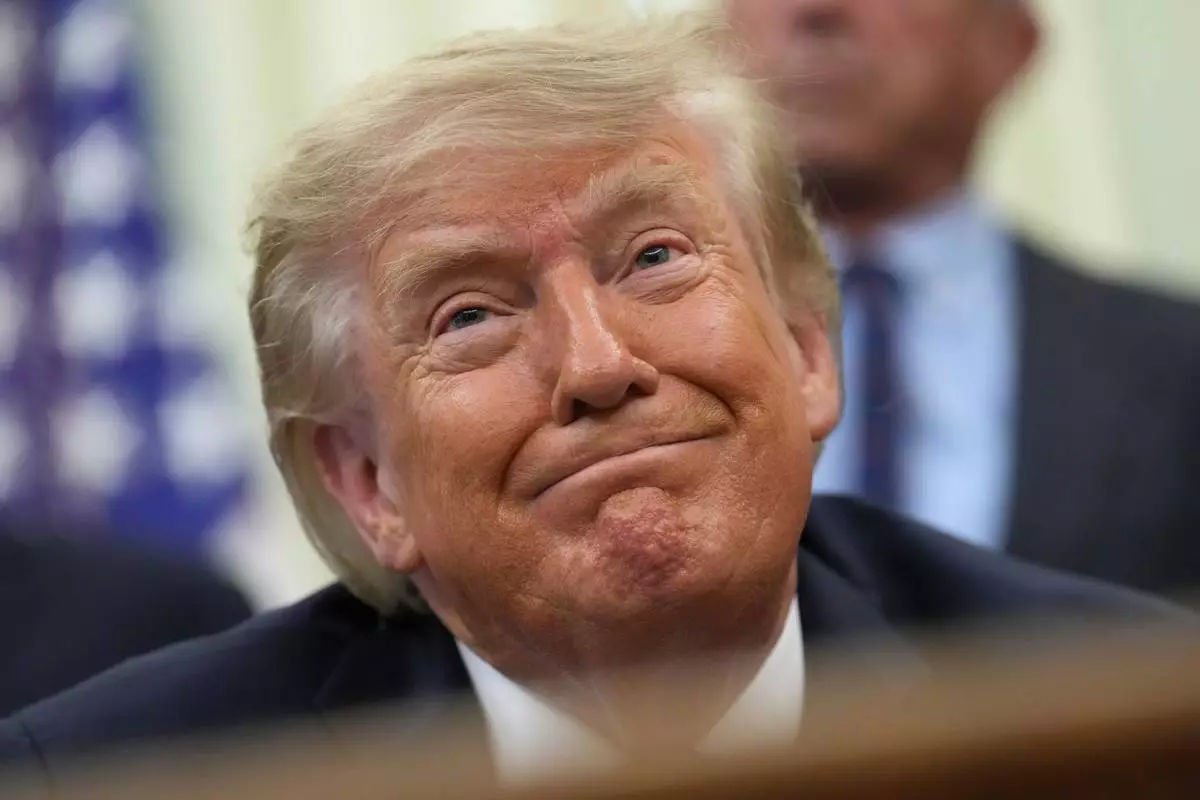
President Donald Trump smiles during an event about drug prices, in the Oval Office of the White House, Monday, Aug. 31, 2026, in Washington. (AP Photo/Jacquelyn Martin)

President Donald Trump smiles during an event about drug prices, in the Oval Office of the White House, Monday, Aug. 31, 2026, in Washington. (AP Photo/Jacquelyn Martin)

Recommended Articles