Jurors began deliberating Monday in the trial of Duane “Keffe D” Davis, who is accused of orchestrating the killing of rapper Tupac Shakur.
The deliberations, which follow closing arguments earlier Monday, come after nine days of testimony from detectives, former gang associates and documentarians. The trial has revisited the night nearly 30 years ago when Shakur was shot while on his way to perform at a club in Las Vegas.
Davis is the only person ever charged in Shakur’s 1996 death after he previously said he was in the Cadillac when it pulled up beside Shakur and gunfire erupted. Prosecutors argue Davis orchestrated the shooting, but his attorney argues there is no physical evidence connecting his client to the crime.
Here's the Latest on the trial:
For weeks, Jessica Martin has been living at a Las Vegas hotel after traveling from her home in central California to attend the trial. She has been in court every day since opening statements and plans to stay until the verdict is read.
Martin said she hopes to turn what she has learned from the trial and the people she has met into something that honors Shakur’s legacy, possibly a book or a short video.
“It’s been great to see all the support, not only from the fans, but his family is here every day,” she said. “For me to be present here, it’s like a blessing for me.”
Martin said Shakur’s legacy extends far beyond his music.
“He was a poet, an artist,” she said. Had he survived the shooting, she believes, “he would’ve changed the world. He would’ve had a bigger impact than he already has, and he continues to have an impact on people every day.”
The judge tells four of the 16-person jury panel that they are alternates, and still can’t talk about the case. The remaining 12 make up the jury. They leave the courtroom to begin deliberations.
She asks attorneys to make sure the court has numbers where they can be reached in case the jurors have questions. They will be contacted when deliberations are over.
She then puts the court into recess, and the wait for a verdict begins.
“Now he’s trying to beat 12 of you,” says DiGiacomo, wrapping up his final arguments.
“Mr. Davis is trying to escape responsibility for a crime” that he’s admitted to multiple times, says DiGiacomo.
“At the end of the day, hold him accountable,” he tells the jury.
Closing arguments are finished.
DiGiacomo asks jurors if they really think a guy “dumb enough to write this book” is smart enough to keep a lie straight for several years.
“The argument is apparently we have to have a surveillance camera that shows him in the car, he has to be caught immediately thereafter in the car,” says DiGiacomo.
He tells jurors to read the book if they want.
“It’s absolutely ridiculous,” says DiGiacomo.
The surveillance videos in use at the casino the day of the shooting weren’t sophisticated like today’s systems, he said. He said they didn’t catch Davis on camera because casino workers were focusing on other things.
No one testified that the fight in the Lakewood mall led to the renovation, DiGiacomo says, just that it happened after the fight.
He says it’s not surprising that there was no police report generated for a group of teens fighting in a mall.
Chief Deputy District Attorney Marc DiGiacomo tells the jury there is plenty of evidence in the case.
He reminds jurors that Davis’ deal in his earlier criminal case meant that his statements in the 2008 interview were required to be kept confidential. The state of Nevada had to get federal permission to be able to use those statements, DiGiacomo says.
“It is a slam-dunk, absolutely no defense to murder, case,” says DiGiacomo.
“We are confident you are going to come back with a verdict of not guilty,” says Sanft, because “it’s the only verdict that makes sense.”
Sanft holds up a paperback copy of Davis’ book, and reads the disclaimer inside.
“We assume no responsibility for errors, inaccuracies,” Sanft reads.
He says Davis’ nickname is spelled “Keithy D,” and notes that it’s spelled “Keffe D” in the book “Compton Street Legend.”
That shows Davis never read the book, Sanft says.
Sanft rejected the prosecution’s claim that Davis was a “shot caller” for the South Side Crips.
“You have no evidence that Davis ever ordered a hit on anyone,” Sanft tells jurors.
Sanft targeted the credibility of prosecutors’ witness Reggie Wright Jr., a former Compton Police Department officer who headed security for Knight’s Death Row Records.
Wright testified that he was responsible for Shakur’s security, which was increased after Shakur released “Hit Em Up.” On the night of the shooting, only one person was guarding Shakur.
Sanft said Wright exposed Shakur and Knight to potential harm.
Sanft replayed testimony of former Las Vegas officers who were doing security at Knight’s residence on Sept. 7, 1996. They testified that they saw a white or cream-colored Cadillac enter and exit Knight’s property with Shakur and Knight’s caravan of vehicles.
The other people who were allegedly in the Cadillac at the time of the shooting were never arrested.
In fact, they have all since died – and none of them died by gang retaliation, Sanft says.
That includes the alleged driver, Terry “Bubble Up” Brown, who died the most recently in 2015.
Why weren’t they arrested or killed by a rival gang? “Because they weren’t in the car,” Sanft says.
There are lots of potential witnesses who were never brought in to testify, Sanft says, including Knight.
It’s not that Knight couldn’t be found – he’s in prison right now – but he was still never called as a witness, Sanft says.
He named several others who weren’t called to the stand, including rapper Foxy Brown and a detective involved in the case.
Sanft continues to try to highlight what he says are holes in the prosecution’s case.
“What actual proof do you have” that Davis was even in Las Vegas, Sanft asked jurors.
Jurors weren’t shown anything like receipts, surveillance videos or phone records showing Davis was in Las Vegas, Sanft says.
There’s not even proof that Anderson was in the car at the time of the shooting, Sanft says.
Sanft highlighted inconsistencies with what his own client has said.
Davis had claimed he heard people shout, “Tupac, Tupac” and saw Shakur hanging out the window, waving to his fans. Sanft played clips of witnesses who testified that they did not see that.
Sanft also argued that his client would never have been able to see Shakur hanging out the window, based on the position of where each vehicle was.
Sanft compared the case to documentaries and movies about the Titanic, cautioning the jury against confusing facts with fiction.
A historical fact is that the Titanic was a ship that went down at sea, Sanft said. But there’s no evidence that “Jack and Rose,” the main characters in the movie, “Titanic,” actually existed, he says.
Prosecutors had witnesses testify about a fight between members of the rival gangs that allegedly happened at a mall a couple of weeks before the shooting.
But the defense attorney told jurors there was no proof that the incident at the Lakewood Mall occurred. There was no police report of the fight, which supposedly caused enough damage that one business had to renovate, Sanft said.
During the trial, witnesses testified to an altercation at the Lakewood Mall between members of the South Side Crips and Mob Piru. The witnesses said that fight led to the later beating of Anderson in Las Vegas.
“Do not presume anything,” Sanft told jurors. “Look for the facts that support statements.”
He showed jurors portions of the book, including one line that read: “Them jumping on my nephew gave us the ultimate green light to do something to their asses.”
Countering the defense’s main argument that Davis is lying, Palal said jurors never heard from any witness who said Davis was lying.
Palal played back testimony from former detective Daryn Dupree, who said he thought Davis was telling the truth because Davis wouldn’t have pinned the shooting on Davis’ nephew if it weren’t true.
Sanft painted a picture of “dirty cops” involved in the case, arguing investigators were riddled with unethical behavior.
He said investigators told Davis which attorney he should hire, and he played audio clips of former law enforcement officer testifying he had to keep his case files locked in his desk to avoid the leaking of files.
He also criticized former LAPD detective Greg Kading for “taking” case files with him when he left his position.
Minutes into the defense’s closing arguments, a court official in the overflow courtroom announced that a seat had opened in the main courtroom. Several spectators rushed to enter their names into a raffle for the seat.
The official spun a raffle drum and drew the name of a member of the media. The other spectators in the overflow room congratulated him and applauded.
Sanft said the evidence that prosecutors have is “incomplete.”
He said there were missing reports in the Las Vegas Metropolitan Police Department’s investigation case file, and noted that the officer tasked with keeping the file felt he had to keep it under lock and key.
Sanft said the integrity of Las Vegas Metropolitan Police Department’s investigation was compromised. He also highlighted corruption in the Compton Police Department.
Palal wrapped up his closing arguments asking jurors to find Davis guilty of first-degree murder.
Davis has told “anybody who would listen” that he is responsible for Shakur’s murder, Palal said.
He showed jurors portions of the book, including one line that read: “Them jumping on my nephew gave us the ultimate green light to do something to their asses.”
Countering defense’s main argument that Davis is lying, Palal said jurors never heard from any witness who said Davis was lying.
Palal played back testimony from former detective Daryn Dupree, who said he thought Davis was telling the truth because Davis wouldn’t have pinned the shooting on Davis’ nephew if it weren’t true.
Davis told the truth during a 2008 interview with federal law enforcement because he was required to under a deal that would allow him to avoid life in prison in a different investigation, Palal said.
In fact, he took steps to correct investigators when they had something wrong in their narrative of the shooting, Palal said.
Davis was trying to “thread a needle,” Palal said, by being accurate enough and consistent enough to qualify for the deal, while avoiding implicating himself in Shakur’s murder. But he didn’t succeed, Palal said.
The prosecutor pointed out that Davis described details about the moments after the murder that weren’t previously publicized, like the direction another car in Shakur’s entourage went after the shooting.
Las Vegas resident Heather Collins, who watched the closing arguments from the overflow courtroom, says the case has been part of the fabric of the city for as long as she can remember.
Collins said she feels sympathy for Duane “Keffe D” Davis because he’s “not in good health” but believes the justice system should determine responsibility.
“If I was on the jury, I probably would’ve been like, ‘He didn’t actually kill him. He was just a part of it,’” Collins said.
Seeing Shakur’s family members in the courthouse has been particularly striking, she said.
“I can only imagine what they went through 30 years ago,” she said.
Palal reminded jurors of the four statements Davis previously made that were the focus of the trial: the 2008 proffer interview with federal law enforcement, the 2009 interview with Las Vegas police, the 2017 Death Row Chronicles interview, and Davis’ 2019 memoir, “Compton Street Legend.”
Davis was incentivized to tell the truth in the 2008 proffer interview as a deal to get out of a life sentence in prison, Palal said. Davis would push back and correct investigators when given something that wasn’t true, Palal said.
Palal said Davis’ statement does not make sense as a lie and argued that Davis could have said he was just a witness rather than make himself legally liable for the murder.
Palal showed a slide show with photos of Davis, replayed surveillance footage from the MGM showing Anderson, and clips of recorded interviews.
He reiterated what witnesses said about the rivalary between the South Side Crips and the Mob Piru, and how that rivalry evolved to include Bad Boy Records and Death Row Records.
And Palal talked about the aftermath of the shooting: A gang war that led to multiple people getting shot, including the death of a young girl.
“It’s not a war between two random gangs,” Palal said.
There were more than 50 gangs in the region at the time, but Mob Piru –- the gang in which Shakur and Knight were involved –- and South Side Crips were central to the gang war, Palal said.
Judge Carli Kierny is reading the instructions that jurors must keep in mind while they decide if Davis is guilty or not.
Many of the instructions detail the difference between first- and second-degree murder. First-degree murder requires a finding of premeditation and deliberation, Kierny says.
For instance, first-degree murder can apply to cases where a jury finds that a defendant specifically intended for a coconspirator to kill someone. Second degree murder can apply in cases where a jury determines that a death caused by a co-conspirator was the foreseeable result of a defendant’s actions.
There are 16 people on the jury panel, but only 12 of them will ultimately be tasked with deciding Davis’ guilt or innocence. Four people will be identified as alternate jurors after the closing arguments are done.
Having alternate jurors available helps to ensure the case doesn’t end in a mistrial if a juror gets sick or can’t serve for some other reason.
More than two dozen people filled an overflow courtroom Monday morning, where spectators who could not fit in the main courtroom watched the proceedings on a video feed.
Signs bearing the case title, “State of Nevada v. Duane Davis,” and red arrows throughout the courthouse drew the attention of curious onlookers, who wondered who Davis is.
A packed courtroom filled with fans, media, and family has arrived for closing statements. Shakur’s family sat in the front row as they have throughout the trial and said hello to family friends who sat behind them. Prosecutors and the defense chatted breezily before the session started.
Davis walked into the courtroom wearing a black suit and tie.
Throughout the nine days of testimony, jurors asked witnesses questions after attorneys were finished asking their own.
One juror asked a former Las Vegas detective if he was able to confirm whether Davis was actually in the white Cadillac the night Shakur was shot in Las Vegas. With a former FBI agent, a juror asked if anyone in the FBI had verified the information Davis gave in a law enforcement interview.
The questions show how jurors are taking into consideration whether Davis’ words are enough to convict him, or if there is alternative physical evidence.
Earlier in the trial, Ingrid Stokes testified that she and her friends were heading home from Las Vegas when they encountered Shakur and Knight, who were friends with a woman in Stokes’ group.
Knight invited them to a nightclub, she said, and they decided to meet them there.
The car Stokes was riding in was one lane over and a car length ahead of Knight’s vehicle, when they heard gunshots.
Stokes said they drove off in fear and almost hit a white four-door vehicle in the process.
When they returned to the scene, police made them sit on the sidewalk and treated them like suspects, she said. Stokes was scared to be seen in public talking about the case, worried about poor treatment from law enforcement and the potential for retribution.
“Snitches get stitches,” she said.
Shakur’s siblings, “Mopreme” Shakur and Sekyiwa “Set” Shakur, and other family members sat in the front row of the courtroom as both prosecution and defense presented their evidence throughout the trial.
Most days, they sat quietly, looking ahead at the witnesses or television screens as prosecutors played Davis’ previous statements. They left the courtroom ahead of prosecutors’ showing jurors Shakur’s autopsy photos, grisly images of the late rapper and the wounds he sustained.
Mopreme Shakur previously told The Associated Press the trial would be retraumatizing for the family, but that they’d sit through it in hopes the musician would see justice.
Dr. Lisa Gavin, a forensic pathologist and medical examiner for Clark County, Nevada, described Shakur’s injuries and explained his cause of death during earlier testimony in the trial.
Shakur’s cousin Zayd Akinyela said he wanted to stay in court to learn more.
“I feel like the details, especially for people that are close to him, honestly for me helps, helps the grief process. I think we’ve been waiting 30 years to grieve properly,” Akinyela told The Associated Press outside the courtroom. “A lot of people don’t get to grieve until they understand what happened to their loved one and how it happened.” He added, “That’s why I wanted to stay and just see for my own personal closure.”
Seeing the photos of Shakur’s body made him feel “Very angry, very angry, to say the least, very sad,” Akinyela said.
Shakur remains a cultural icon. He is considered one of the most influential and versatile rappers of all time and had a burgeoning film career as an actor. He died as his popularity was peaking at age 25, and his legend has only grown in the years since.
Zayd Akinyela, Shakur’s cousin, said, “I’m very spiritual, so just seeing the body doesn’t affect me the same way as it might some people. I do believe that his spirit is still around and still lives on through his family and through his legacy.”
The story of the drive-by shooting has long gripped the hip-hop community, partly because no one was charged until Davis was indicted in 2023.
The other three men riding in the Cadillac have all died in the years since.
Retired Las Vegas police officer Garry Dale was the first of the witnesses the prosecution called.
He testified that he and another officer stopped Knight and Shakur’s car for missing a license plate, warned them and let them go.
About 10 minutes later, the officers responded to a shooting call and found EMTs pulling Shakur from the car. Dale said Knight had been grazed by bullets, but told the officers to take care of Shakur.
Dale jumped in the ambulance and asked Shakur who shot him. The retired officer said that Shakur said something like “no, we’ll take care of it.”
On the night of Sept. 7, 1996, Shakur was in the passenger seat of a black BMW that Knight was driving when a white Cadillac pulled up on their right side and gunfire erupted. Knight was wounded but survived. Shakur died a week later at the age of 25.
That night, three others were with Davis in the Cadillac, but none of them faced charges in Shakur’s killing before they died.
Here’s what we know about who was in both vehicles from authorities, court records, grand jury testimony, interviews and Davis’ 2019 tell-all memoir, “Compton Street Legend.”
Tupac Shakur: Shakur is considered one of the most influential rappers of all time. He had five No. 1 albums, was nominated for six Grammy Awards and was inducted into the Rock & Roll Hall of Fame in 2017.
Marion “Suge” Knight: Knight founded Death Row Records, a Los Angeles-based music label that represented Shakur at the time of his death.
Orlando “Baby Lane” Anderson: Law enforcement authorities long suspected that Anderson was the gunman. He was 22 at the time. Though Davis was his uncle and 12 years older, he described their relationship as that of brothers, friends and even father-son.
Deandrae “Freaky” Smith: Also known as “Big Dre,” Smith was in the back seat of the car that night, sitting next to Anderson. Although authorities have said they believe Anderson pulled the trigger, the grand jury testimony challenged that theory.
Terry “Bubble Up” Brown: Brown was driving the Cadillac from which the shots were fired.
A prosecutor said during the trial that while few have been willing to speak about the 1996 killing of Shakur, Davis is the “one person who has a hard time being silent.”
“Let’s be clear, Duane Davis did not pull the trigger. But he did plan the shooting in retaliation of the beating of his nephew,” Chief Deputy District Attorney Binu Palal told jurors at the start of Davis’ Las Vegas trial.
“Remarkably, you will learn that from Duane Davis himself.”
Davis, 63, could get life in prison if he’s convicted of murder with a deadly weapon with the intent to promote, further or assist a criminal gang. He has pleaded not guilty. His lawyer in the defense opening called the prosecution’s narrative “fiction.”
Davis co-authored “Compton Street Legend,” a book about the shooting and Davis’ time in the Crips gang.
His attorneys unsuccessfully fought to block the use of the book in the trial. They argued it was fictionalized, and that because it had a co-author, it’s impossible to know which portions Davis wrote.
The memoir says Shakur and his entourage “crossed the line” when they beat up Davis’ nephew at a Las Vegas casino. Prosecutors have alleged Davis’ anger over the beating is part of what motivated the shooting, though they have decided to focus more on Davis’ documentary and police interviews rather than his book.
Davis, wearing a blue suit and tie, sat quietly with his hands folded on the table in front of him, occasionally nodding along as his attorney gave his opening, and often scanned the room during testimony to see who was in the gallery.
“What they are telling you, they are representing as fact, when it’s really fiction,” Michael Sanft said. “There’s no facts.”
He said Davis wasn’t previously charged because law enforcement knew that he was “full of crap.”
The defense attorney also pointed to missing documents in the original investigation and distrust between police departments.
He called one detective’s work “biased,” “sloppy” and “incomplete.”
Sanft said outside court that he thought the 30 years that had elapsed would help Davis.
“The length of time is going to be a huge problem for people trying to recall things, to remember things,” the lawyer said. “That’s just not how it works.”
Asked about the oddity of calling his client “full of crap” and similar things, he said, “We all have a family member who’s like that.”
In a 2008 interview with a federal task force investigating the killing of Shakur’s rival, the Notorious B.I.G., Davis instead talked about the Shakur shooting. He described handing a gun to the men in the backseat of a white Cadillac that fired on a black BMW with Shakur and Marion “Suge” Knight inside.
As prosecutors played audio of Davis explaining the moment Shakur was shot, members of Shakur’s family, including his stepbrother Maurice “Mopreme” Shakur, stared ahead and listened intently from the audience.
Palal told jurors Davis held onto a visceral hatred for Shakur for decades that drove him to speak.
He said the defendant talked to the FBI in 1998 and again in 1999, admitting he had been in Las Vegas at the time of the shooting.
In 2009, he admitted to his role in the killing in an interview with Las Vegas police, Palal said.
“And now 30 years later, we’re going to ask you to finally hold Duane Davis accountable,” Palal said.
He also showed jurors the 2019 memoir that Davis co-authored, “Compton Street Legend,” that the prosecution will use and that the defense fought to keep out of the trial, along with several of the defendant’s interviews.
Prosecutors say Davis called the shots for the attack on Shakur nearly three decades ago.
Davis’ defense attorney says the prosecution’s narrative is fiction, and that there isn’t enough evidence to justify a conviction.
The prosecution will likely rely on Davis’ own prior statements in police interviews and documentaries to drive home their closing arguments. In multiple interviews, Davis said he handed the gun to the back seat of the car just before the fatal shots were fired.
But Davis’ defense attorney has told jurors that Davis’ statements were nothing more than untrue braggadocio and that he made the claims to make money.
On trial is Duane “Keffe D” Davis, a self-proclaimed former leader of the South Side Compton Crips. Davis is not accused of pulling the trigger that killed Shakur, but rather of orchestrating the shooting and providing the gun.
If the jury finds him guilty of murder, he could receive life in prison. The jury will not make recommendations on the sentencing, which will be determined by the judge at a later date.
Davis’ attorneys said the 63-year-old left the narcotics trade in 2009 and worked a steady job before illness forced him to retire in 2014.
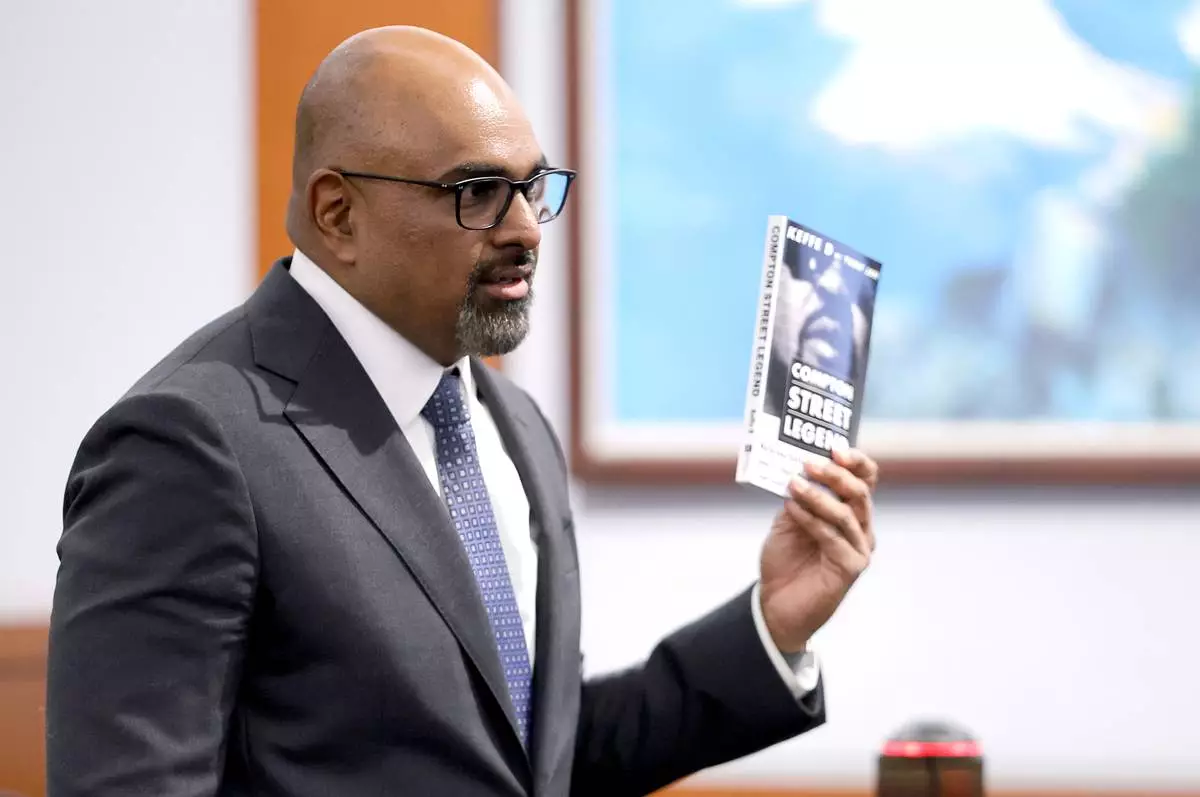
Chief Deputy District Attorney Binu Palal holds a copy of Duane Davis' book "Compton Street Legends" during closing arguments in the Duane Davis murder trial, related to the 1996 killing of rapper Tupac Shakur, in Clark County District Court at the Regional Justice Center in Las Vegas, Monday, Aug. 31, 2026. (Steve Marcus/Pool Photo via AP)
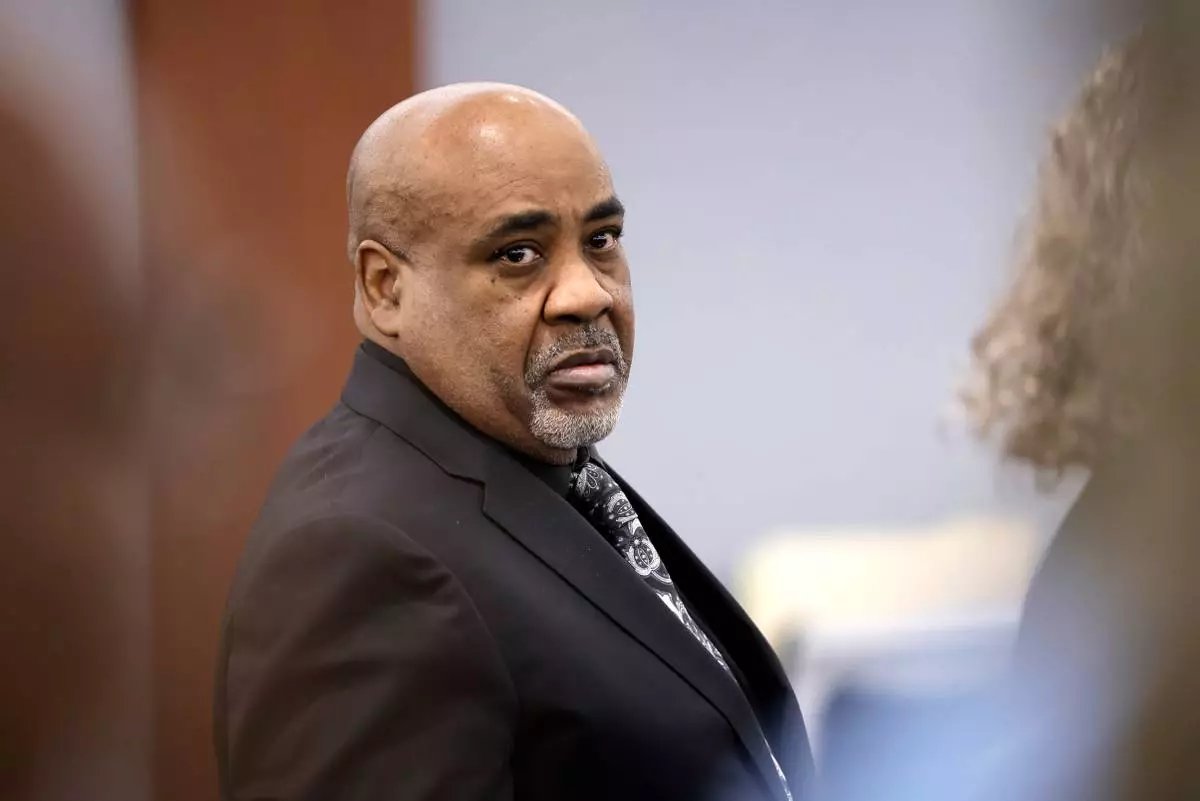
Duane Davis stands during a break in closing arguments during his murder trial, related to the 1996 killing of rapper Tupac Shakur, in Clark County District Court at the Regional Justice Center in Las Vegas, Monday, Aug. 31, 2026. (Steve Marcus/Pool Photo via AP)
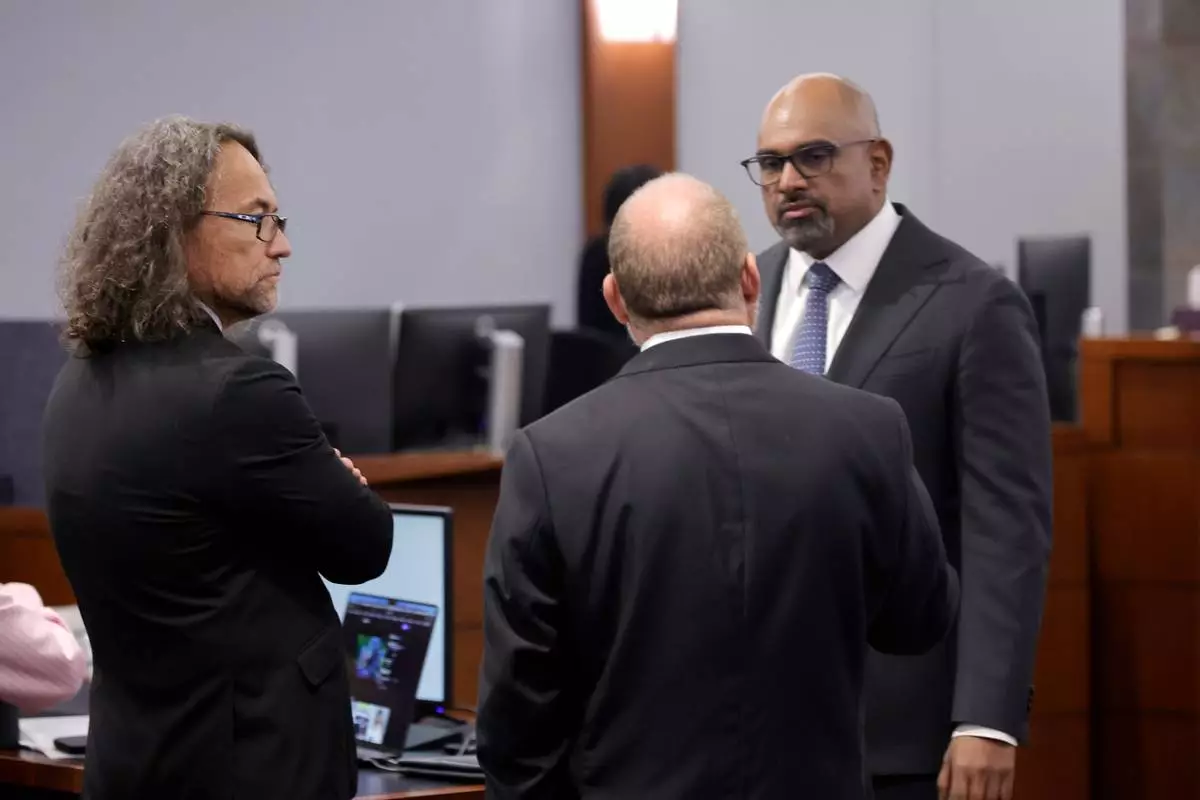
Defense attorney Michael Sanft, left, and Chief Deputy District Attorneys Marc DiGiacomo, center, and Binu Palal confer in the courtroom before closing arguments in the Duane Davis murder trial, related to the 1996 killing of rapper Tupac Shakur, in Clark County District Court at the Regional Justice Center in Las Vegas, Monday, Aug. 31, 2026. (Steve Marcus/Pool Photo via AP)
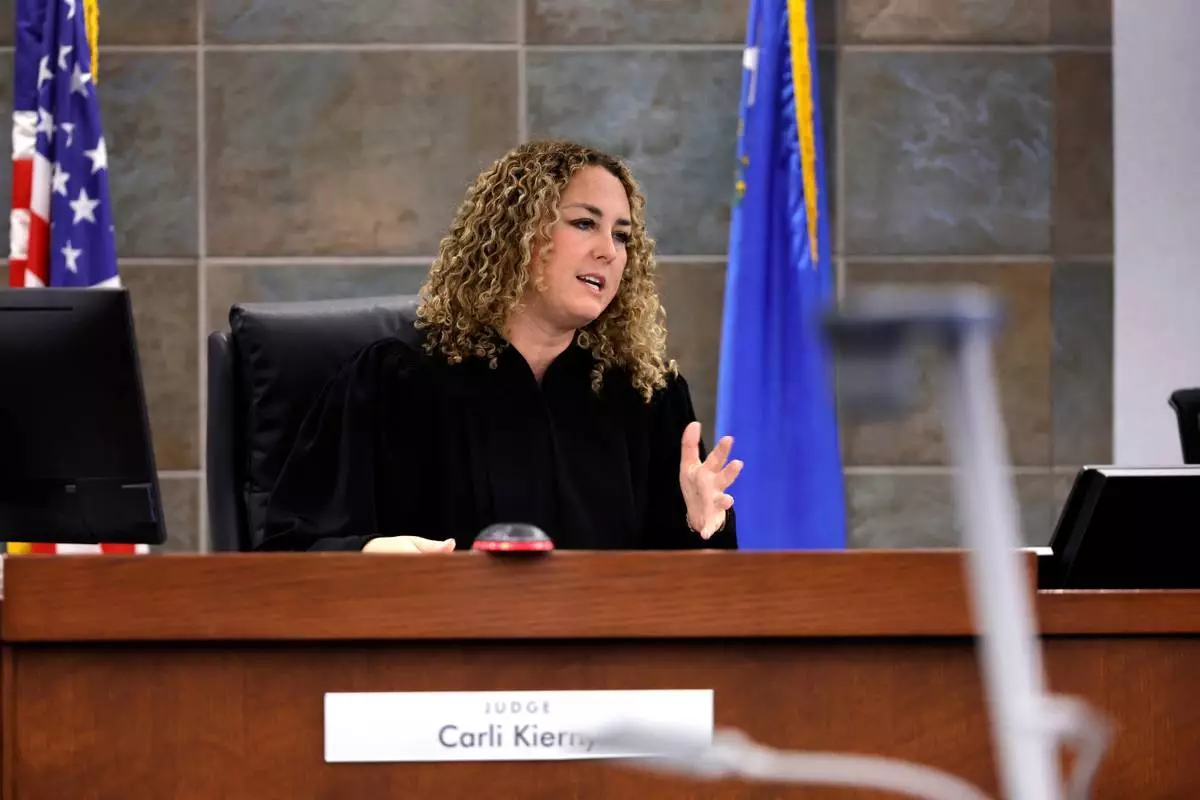
District Court Judge Carli Kierny prepares to read jury instructions before closing arguments in the Duane Davis murder trial, related to the 1996 killing of rapper Tupac Shakur, in Clark County District Court at the Regional Justice Center in Las Vegas, Monday, Aug. 31, 2026. (Steve Marcus/Pool Photo via AP)
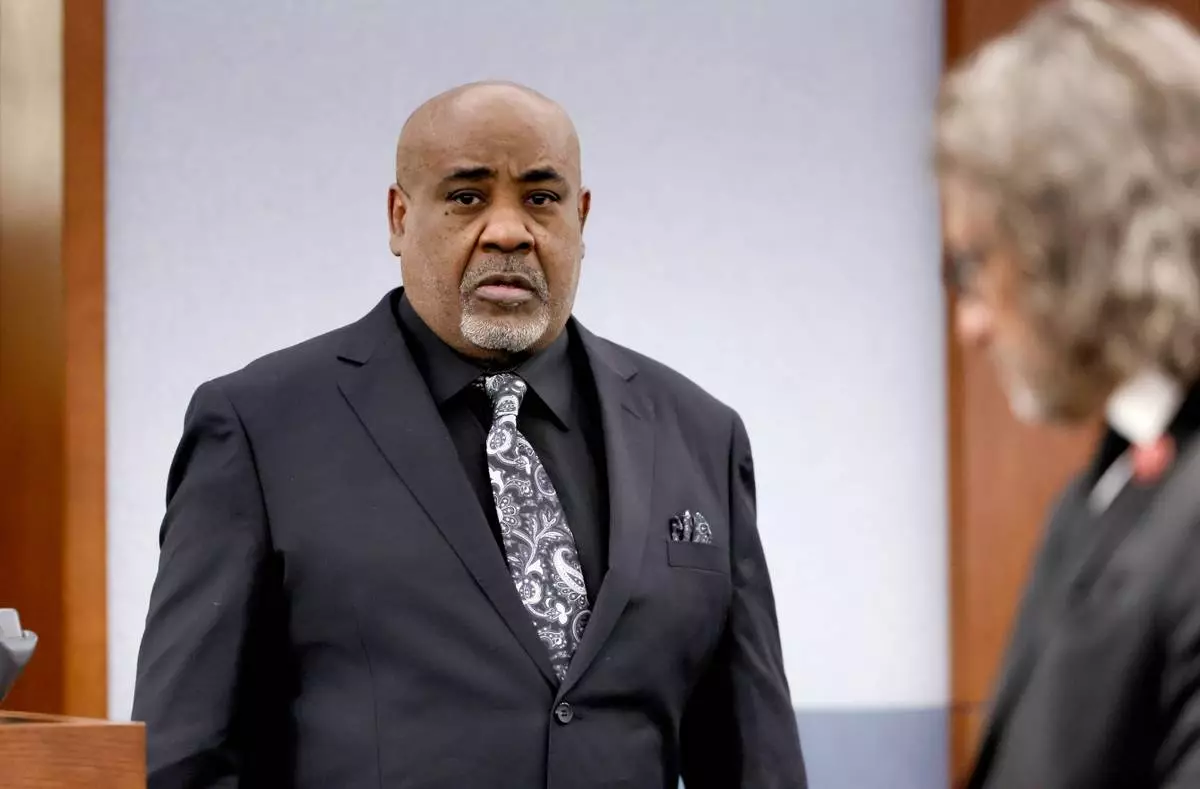
Duane Davis enters the courtroom before closing arguments in his murder trial, related to the 1996 killing of rapper Tupac Shakur, in Clark County District Court at the Regional Justice Center in Las Vegas, Monday, Aug. 31, 2026.. (Steve Marcus/Pool Photo via AP)
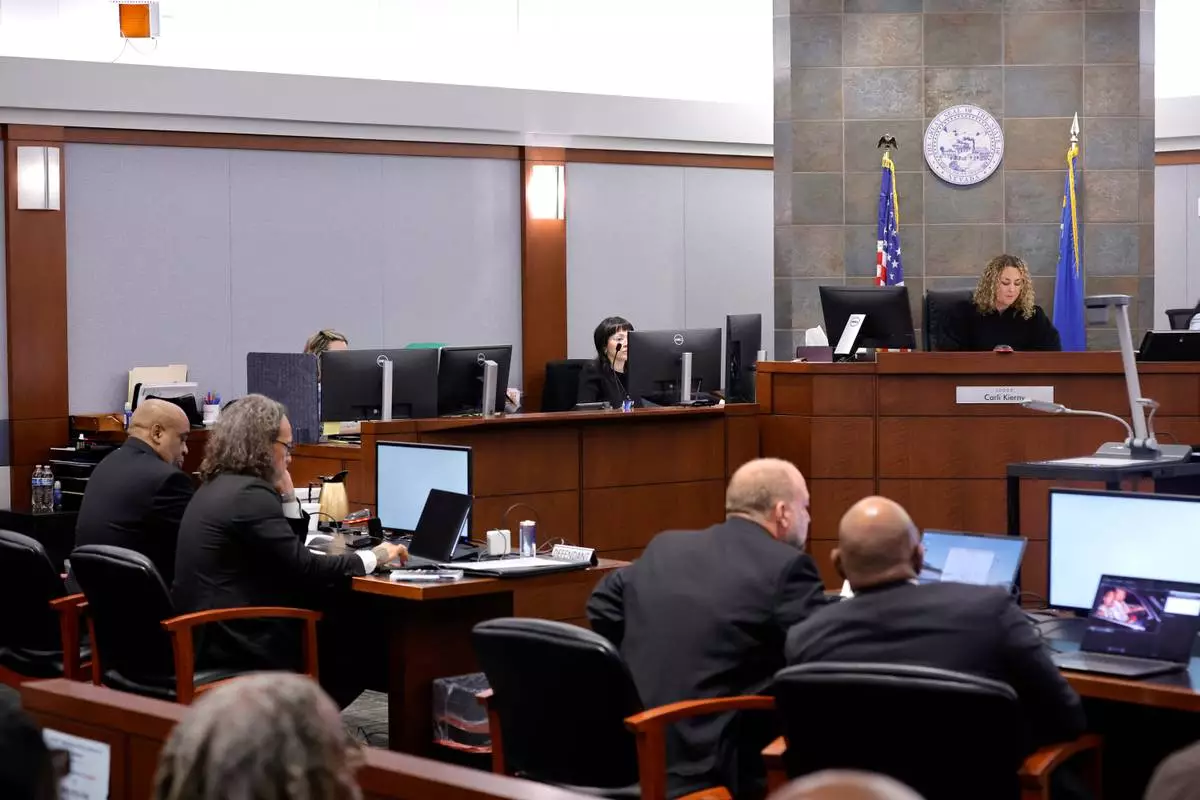
District Court Judge Carli Kierny, top right, reads jury instructions before closing arguments in the Duane Davis murder trial, related to the 1996 killing of rapper Tupac Shakur, in Clark County District Court at the Regional Justice Center in Las Vegas, Monday, Aug. 31, 2026. (Steve Marcus/Pool Photo via AP)
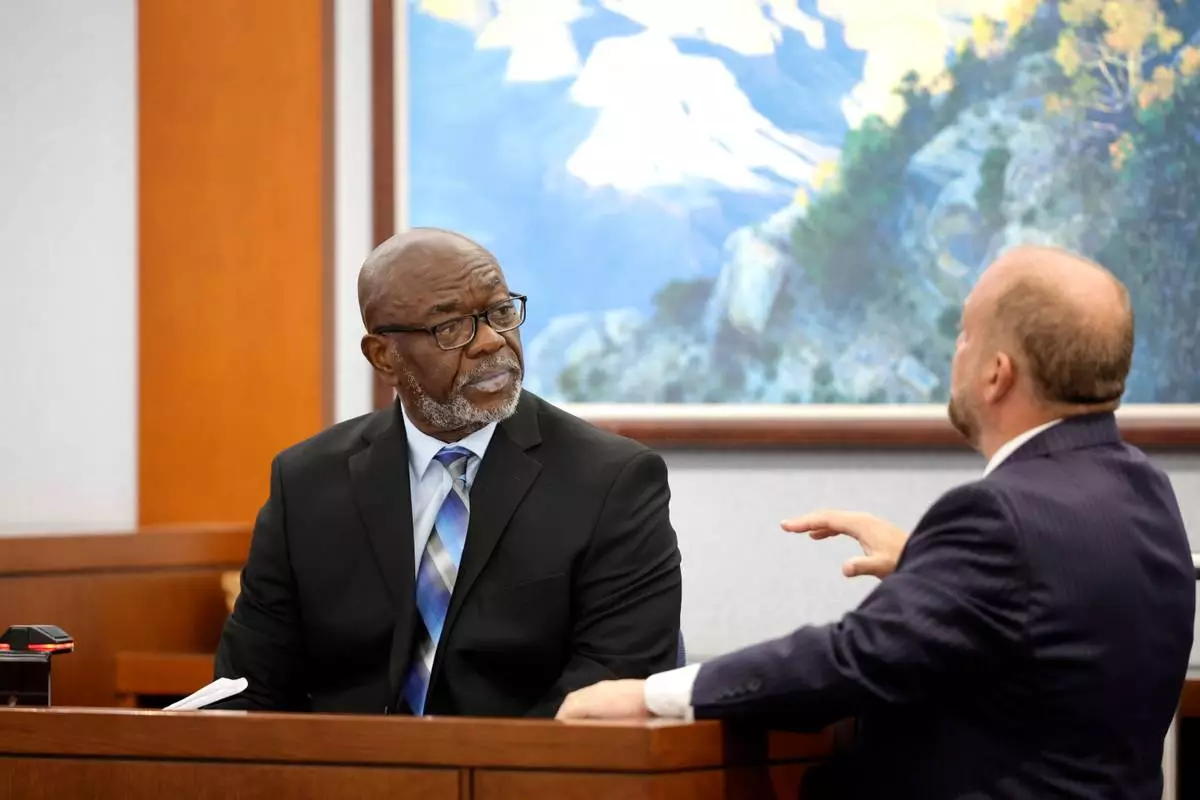
Former Las Vegas Metro Police officer Charlie Mangrum listens to Chief Deputy District Attorney Marc DiGiacomo during the Duane Davis trial, related to the 1996 killing of rapper Tupac Shakur, in Clark County District Court at the Regional Justice Center in Las Vegas on Thursday, Aug. 27, 2026. (Steve Marcus/Las Vegas Sun via AP, Pool)
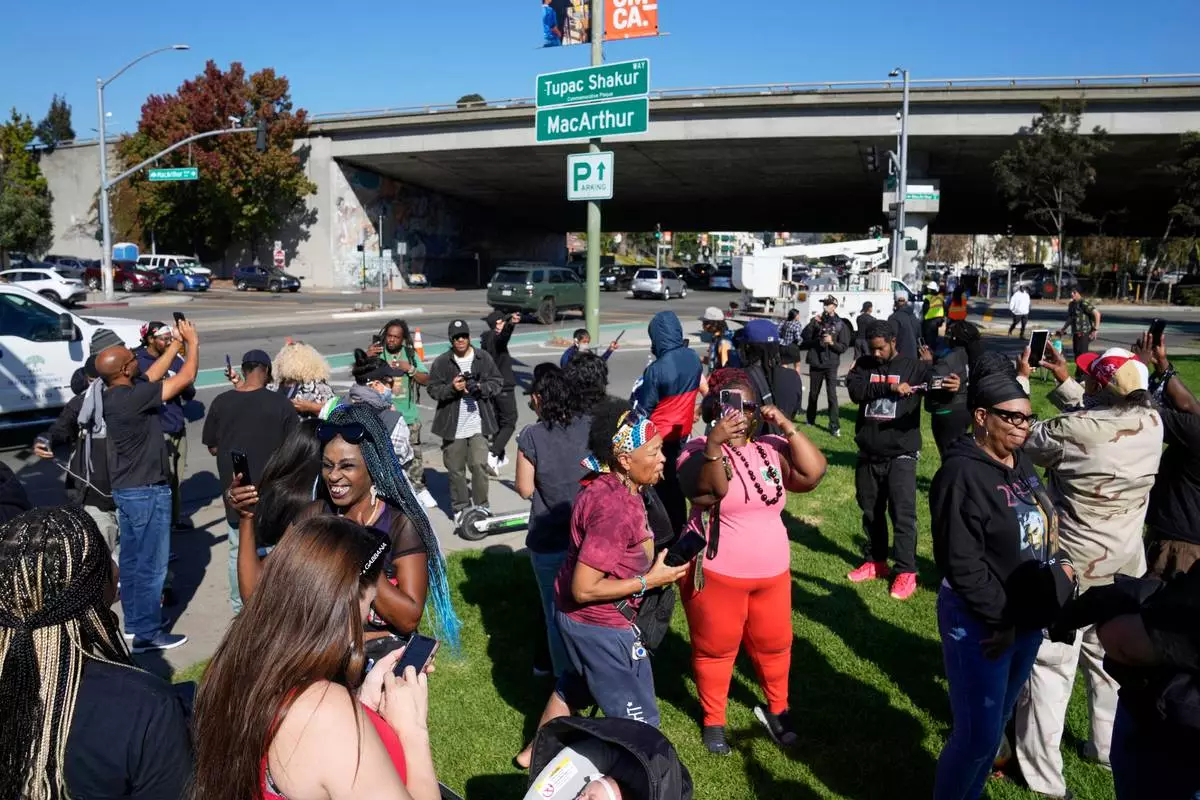
FILE - People take pictures and gather beneath a new sign during a street renaming ceremony for Tupac Shakur in Oakland, Calif., Nov. 3, 2023. (AP Photo/Eric Risberg, File)
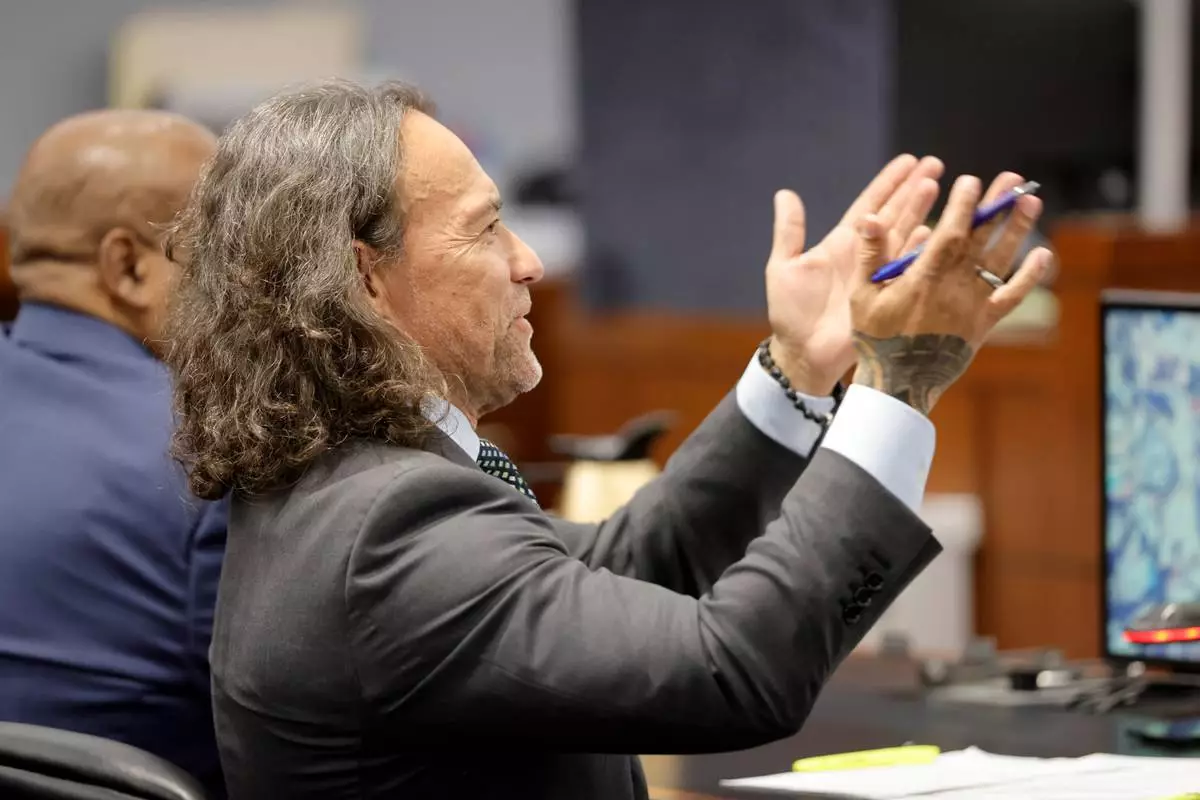
Defense attorney Michael Sanft reacts after making an objection during the Duane Davis trial, related to the 1996 killing of rapper Tupac Shakur, in Clark County District Court at the Regional Justice Center in Las Vegas on Thursday, Aug. 27, 2026. (Steve Marcus/Las Vegas Sun via AP, Pool)
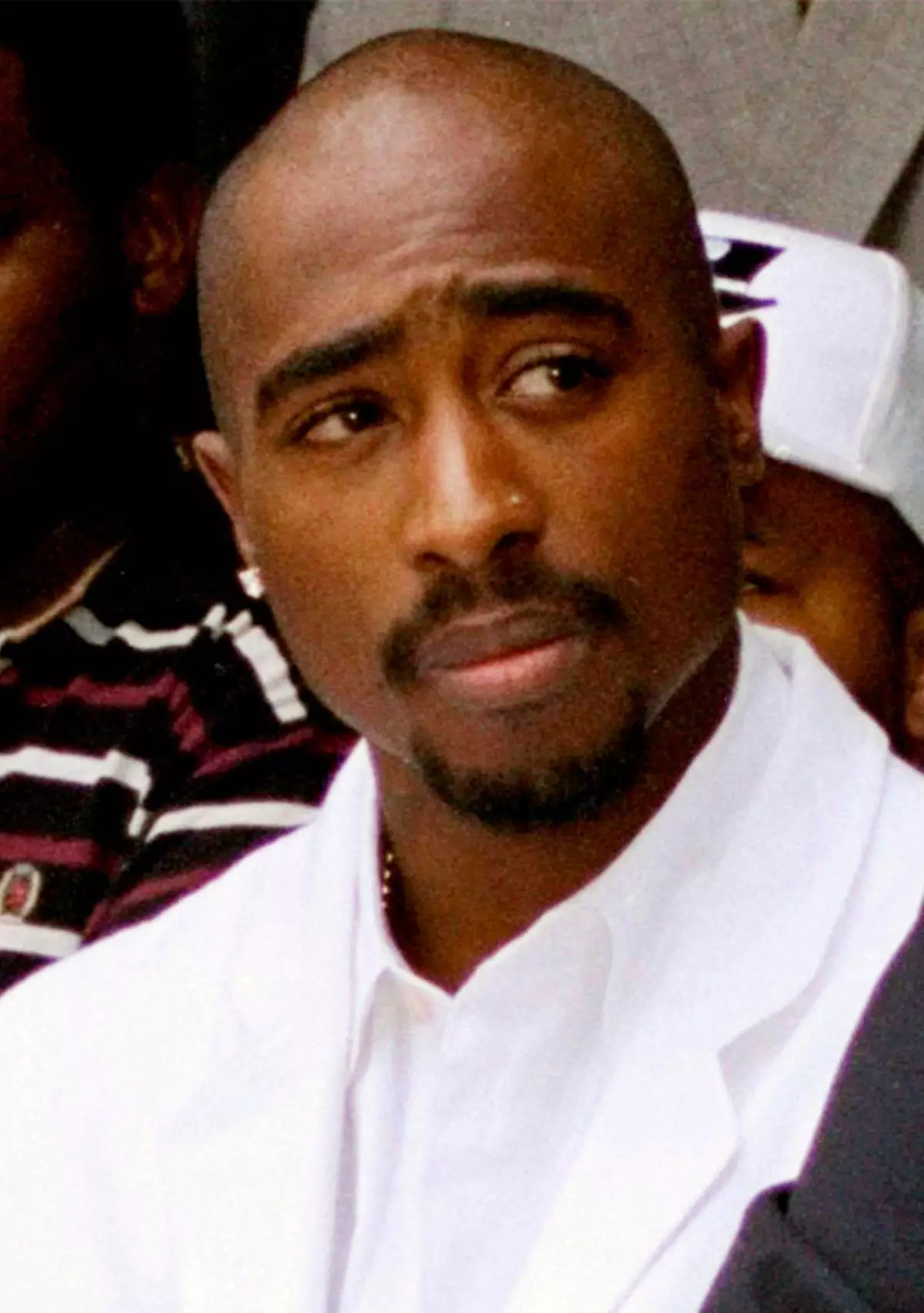
FILE - Rapper Tupac Shakur attends a voter registration event in South Central Los Angeles, Aug. 15, 1996. (AP Photo/Frank Wiese, File)
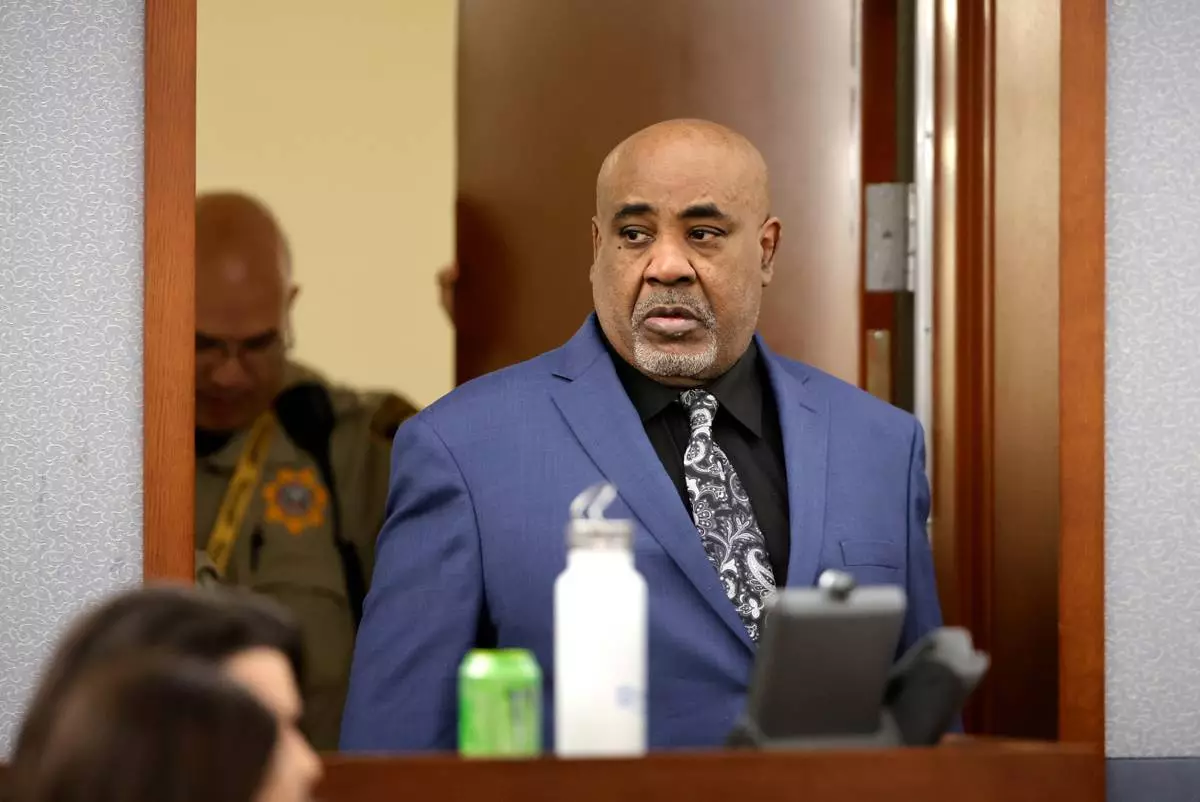
Duane Davis enters the courtoom during his trial, related to the 1996 killing of rapper Tupac Shakur, in Clark County District Court at the Regional Justice Center in Las Vegas on Thursday, Aug. 27, 2026. (Steve Marcus/Las Vegas Sun via AP, Pool)