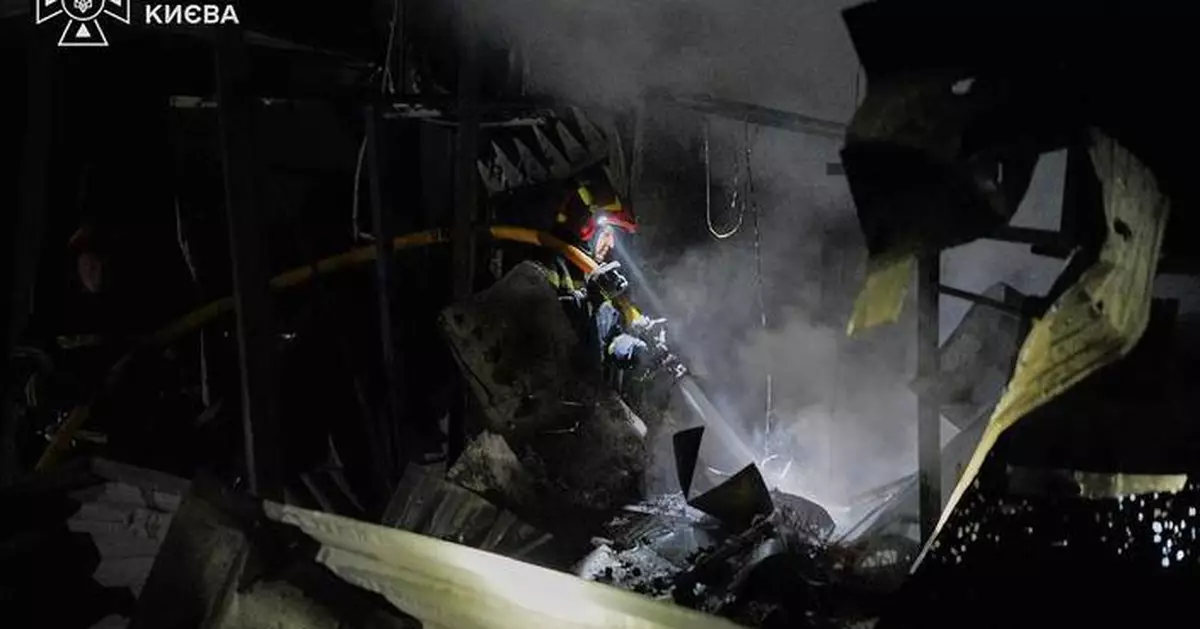
KYIV, Ukraine (AP) — Russia bombarded the Ukrainian capital for more than 12 hours overnight and into Tuesday, killing at least a dozen people in another aerial onslaught that authorities said was aimed at menacing civilians.
The strikes marked an unprecedented sixth straight day of heavy Russian attacks on Kyiv since Russia launched the full-scale invasion of its neighbor more than 4½ years ago. The consecutive aerial assaults are designed to grind down civilians by disrupting daily life, Ukrainian officials have said.
Click to Gallery

Locals watch as firefighters work after a Russian drone attack struck a residential building in Kyiv, Tuesday, Sept. 1, 2026. (AP Photo/Francisco Seco)
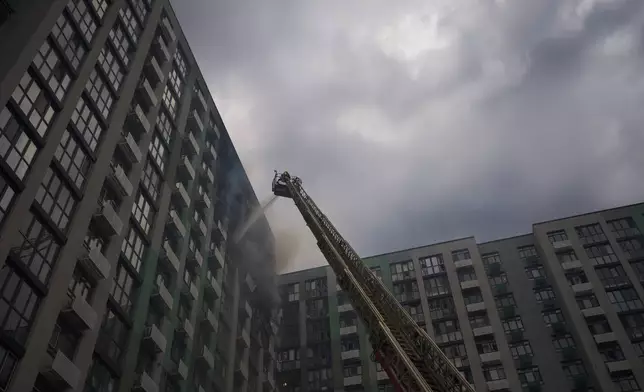
Firefighters work after a Russian drone attack struck a residential building in Kyiv, Tuesday, Sept. 1, 2026. (AP Photo/Francisco Seco)

Firefighters work after a Russian drone attack struck a residential building in Kyiv, Tuesday, Sept. 1, 2026. (AP Photo/Francisco Seco)

Locals watch as firefighters work after a Russian drone attack struck a residential building in Kyiv, Tuesday, Sept. 1, 2026. (AP Photo/Francisco Seco)

Locals watch as firefighters work after a Russian drone attack struck a residential building in Kyiv, Tuesday, Sept. 1, 2026. (AP Photo/Francisco Seco)
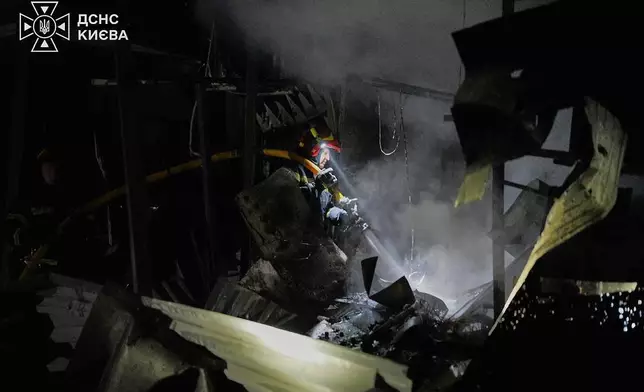
In this photo provided by the Ukrainian Emergency Service, firefighters put out a fire following a Russian missile attack in Kyiv, Ukraine, Tuesday, Sept. 1, 2026. (Ukrainian Emergency Service via AP)
The cruise and ballistic missiles, jet-powered drones, glide bombs and artillery salvos targeted Kyiv as well as eight other regions. The strikes wounded more than a dozen people, including three children, just as millions of Ukrainian schoolchildren returned to classes Tuesday to start their fifth school year since the invasion.
The European Union’s top diplomat said Russia’s army is struggling to make progress on the front line and wants to scare off Ukraine’s Western backers with its air campaign.
“Russia’s war is becoming more ruthless and destructive, but it’s unfortunately not closer to ending,” EU foreign policy chief Kaja Kallas said at a meeting of the bloc’s defense ministers in Ireland. “Russia’s army is bogged down on the ground, and that is why they are killing civilians from the skies.”
The latest attack struck civilian infrastructure and residential buildings in several districts of Kyiv, authorities said, with eight people killed in the city itself and four others in the surrounding region.
Six employees of state-owned railway company Ukrzaliznytsia were among those killed in Kyiv when a ballistic missile hit a depot and other property, company Chairman Oleksandr Pertsovskyi said in a social media post.
Ukrainian President Volodymyr Zelenskyy said the dead included an Indian citizen.
Nearly 350 emergency workers were deployed in Kyiv and the surrounding region, Zelenskyy said.
The Russian Defense Ministry said its forces carried out a “massive strike” on Ukraine with “precision-guided weapons” and long-range drones. The assault targeted facilities that manufacture and store weapons as well as military-related infrastructure, it said.
Ukraine’s air force said the attack began at 6 p.m. Monday, using ballistic, cruise and anti-radar missiles, as well as 218 drones and decoys. About a third of the drones were jet-powered, making them much harder to intercept than propeller-driven versions.
The main Russian targets were in the Kyiv and southern Odesa regions, the air force said in a statement.
The attack on the Odesa region on the Black Sea damaged civilian infrastructure and wounded one person, regional head Oleh Kiper said.
Two residential buildings were damaged, while a fire broke out at a textile factory. Russian forces also struck the Orlivka international ferry crossing on the border with Romania, he said.
Russia also shelled the northern Zhytomyr region, starting fires at an industrial facility and a warehouse, Ukraine’s Emergency Service said.
In the capital, first responders worked to clear rubble from damaged apartment buildings and free trapped residents.
Meanwhile, the Russian Defense Ministry said Tuesday that its air defenses overnight intercepted 516 Ukrainian drones over 18 Russian regions, as well as the illegally annexed Crimean Peninsula and the Black Sea.
In the Leningrad region, the drone attack sparked a fire in the port of Ust-Luga, Gov. Alexander Drozdenko said, as Ukraine extended its campaign to hurt Russia's oil sector, which is a mainstay of the economy.
Ust-Luga is one of Russia’s largest oil and gas export terminals, more than 800 kilometers (500 miles) away from Ukraine. It has been repeatedly targeted by Ukrainian drone attacks this year.
Hours later, Zelenskyy warned foreign airlines that the skies over Russia are not safe anymore.
“Although the Russian authorities are not properly informing people about this, Russian airspace will effectively be closing. The war started by Russia is closing its skies,” Zelenskyy said in a video address. “For now, the skies over Russia are for drones — not for civilian aviation.”
Russian President Vladimir Putin described Zelenskyy's statement as “an application for state terrorism.”
“I’d like to point out that they’re asking us to resume negotiations. They’re asking for personal meetings,” he said at a late-night news conference on the sidelines of the Shanghai Cooperation Organization summit in Kyrgyzstan. “We don’t negotiate with terrorists.”
He also described Ukrainian drones as a challenge for Russia. “The main challenge is, of course, drones, and in all environments: underwater, at sea, on land and in the air. This is a challenge for us, a serious one. We are meeting it.”
Putin also addressed reports that the Ukrainian military had used British-made drones to strike targets inside Russia. Asked whether the Kremlin would hit British military facilities if British weapons continue to be used against Russia, he told reporters with a small smile that such information was “a military secret.”
In other developments Tuesday, the German government blamed Russia for an attempted attack at Leipzig/Halle Airport last month using a drone laden with explosives. German leaders announced that they would shut down a Russian consulate, among other measures against Moscow.
The drone was found near a Ukrainian plane on Aug. 4, and the device was defused. Moscow has been widely accused by Western officials of running a campaign of sabotage and disruption across Europe with the aim of undermining support for Ukraine and destabilizing European nations.
Russian Foreign Ministry spokesperson Maria Zakharova rejected Germany's claims, calling them a “far-fetched and contrived pretext” for Berlin to escalate tensions and arguing that “no convincing or serious evidence has been presented whatsoever,” Russian state news agency Tass reported.
Putin also rejected Germany's accusations, telling the news conference that Berlin was making a mistake that he described as “counter to the interests of the German people.”
Associated Press Writer Lorne Cook in Brussels contributed to this report.
Follow the AP’s coverage of the war at https://apnews.com/hub/russia-ukraine
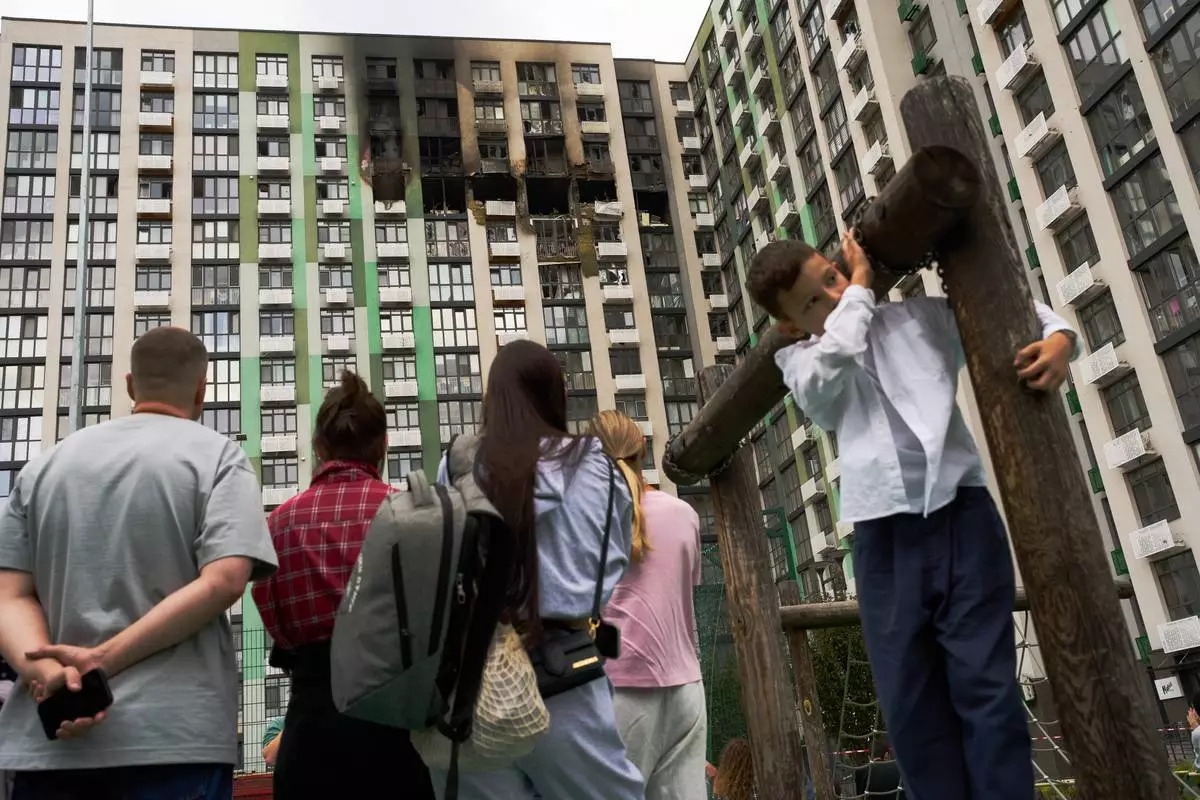
Locals watch as firefighters work after a Russian drone attack struck a residential building in Kyiv, Tuesday, Sept. 1, 2026. (AP Photo/Francisco Seco)
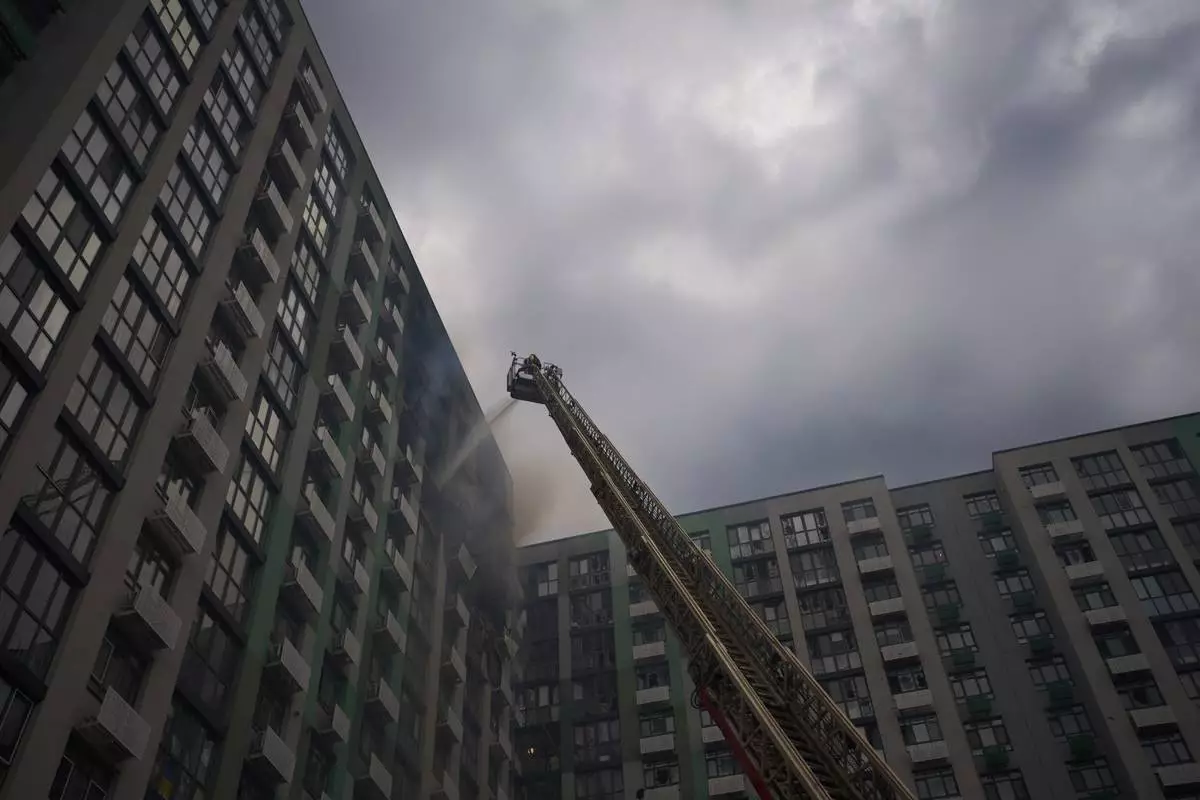
Firefighters work after a Russian drone attack struck a residential building in Kyiv, Tuesday, Sept. 1, 2026. (AP Photo/Francisco Seco)
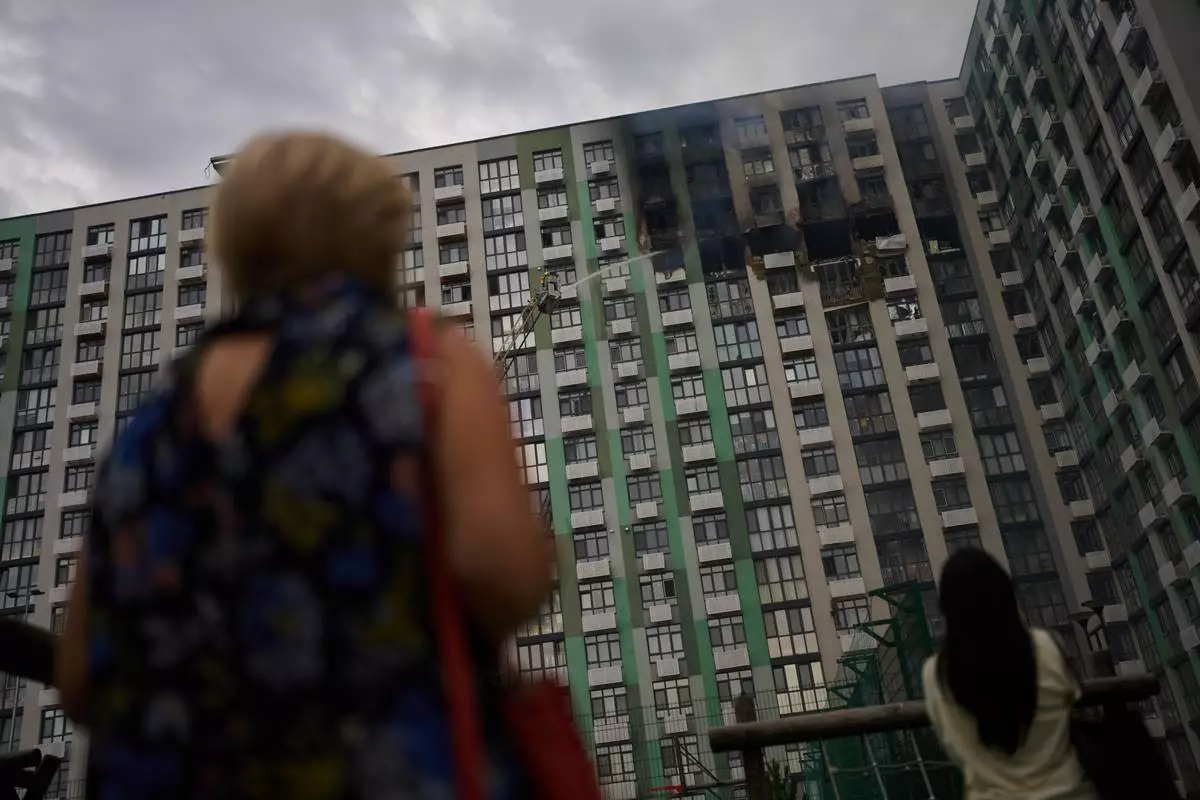
Firefighters work after a Russian drone attack struck a residential building in Kyiv, Tuesday, Sept. 1, 2026. (AP Photo/Francisco Seco)

Locals watch as firefighters work after a Russian drone attack struck a residential building in Kyiv, Tuesday, Sept. 1, 2026. (AP Photo/Francisco Seco)

Locals watch as firefighters work after a Russian drone attack struck a residential building in Kyiv, Tuesday, Sept. 1, 2026. (AP Photo/Francisco Seco)
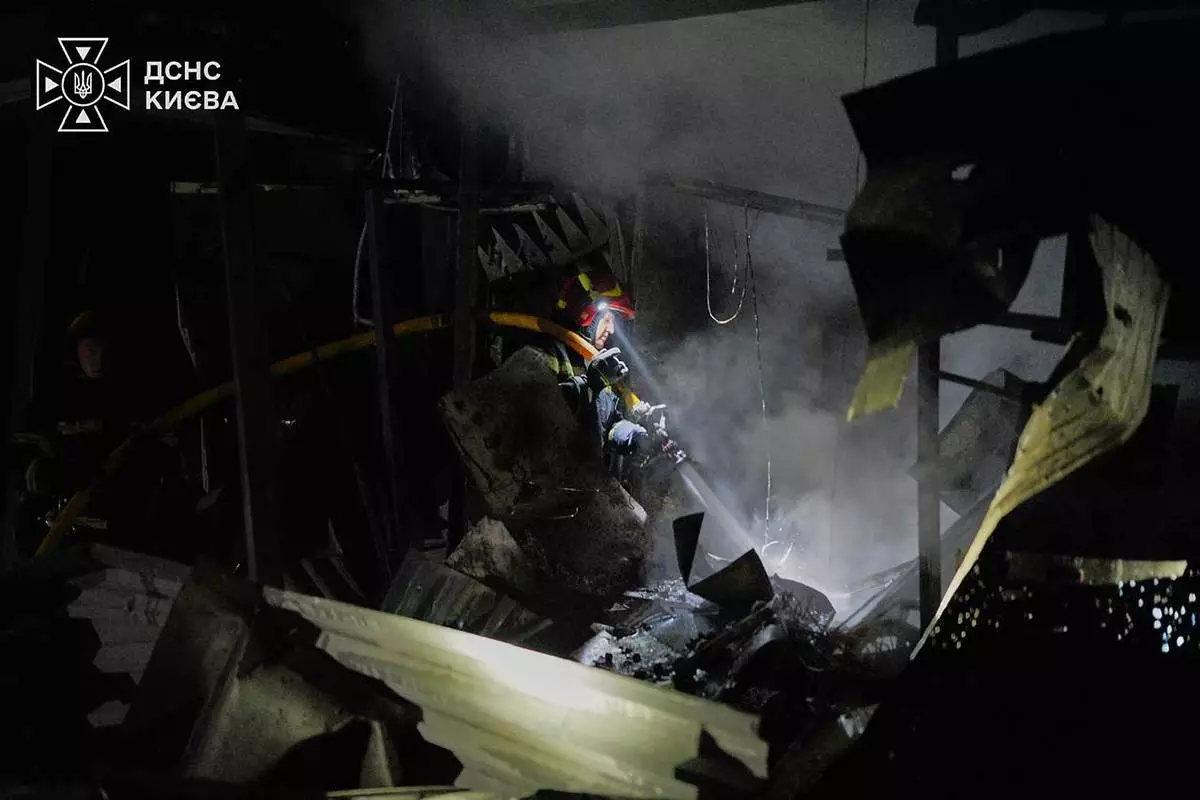
In this photo provided by the Ukrainian Emergency Service, firefighters put out a fire following a Russian missile attack in Kyiv, Ukraine, Tuesday, Sept. 1, 2026. (Ukrainian Emergency Service via AP)