NEW YORK--(BUSINESS WIRE)--Sep 1, 2026--
Locala today announced the global launch of Adaptive Advertising, a new framework designed to connect changing market realities with media strategy and execution.
This press release features multimedia. View the full release here: https://www.businesswire.com/news/home/20260901655767/en/
The approach builds on Locala’s expertise in understanding how brands perform differently across markets, combining consumer behavior, competitive pressure, digital activity and real-world business signals to inform media decisions.
“Adaptive Advertising defines the next chapter of Locala,” said Christophe Collet, CEO of Locala. “Our opportunity is to turn a deep understanding of markets into better advertising decisions at scale, helping leading brands manage complexity without sacrificing relevance.”
From automation to adaptation
Agentic AI creates an opportunity to move beyond automating existing advertising workflows and make strategies operational that were previously too complex to execute at scale.
A retailer with 1,800 locations, for example, may need different budgets, channels, audiences or messages based on local sales, visitation and competition. Historically, operating that level of variation at scale required simplification.
Agents change that constraint.
Rather than using AI only to optimize execution within a predefined media plan, Adaptive Advertising uses market and business intelligence to adapt strategy-level decisions across investment, audiences, channels, frequency and messaging.
“The promise of agentic AI is not simply to help advertisers do the same things faster,” said Grant Gudgel, CMO of Locala. “It is to make better strategies operational, connecting intelligence, decision-making and execution so media can continuously respond to what is happening in each market.”
The operating layer for Adaptive Advertising
Locala’s platform connects market intelligence, planning, omnichannel activation and measurement.
Its Planning Agents bridge the planning and activation worlds, turning market insights into actionable audiences, strategies and media decisions that can be carried across DSPs and activation environments.
“Adaptive Advertising enables us to better support our clients by delivering strategies that are even more closely aligned with their business challenges and the realities of their markets,” concludes Sandrine Préfaut, Managing Director, Europe at Locala.
Adaptive Advertising is available through Managed Services, Direct Activation and Platform Partnerships, giving brands and agencies multiple ways to access Locala’s intelligence, planning and activation capabilities.
Locala will continue expanding the platform through new agents, planning capabilities, integrations and measurement tools, with the Adaptive Advertising framework guiding future innovation.
The world moves. Advertising should adapt.
About Locala
Locala is the operating layer for Adaptive Advertising, using AI agents to turn market intelligence into smarter planning, activation and measurement across markets.
Founded in 2011, Locala works with leading brands in 50+ countries. With 200+ employees across nine global offices, Locala combines international scale with privacy-by-design technology.
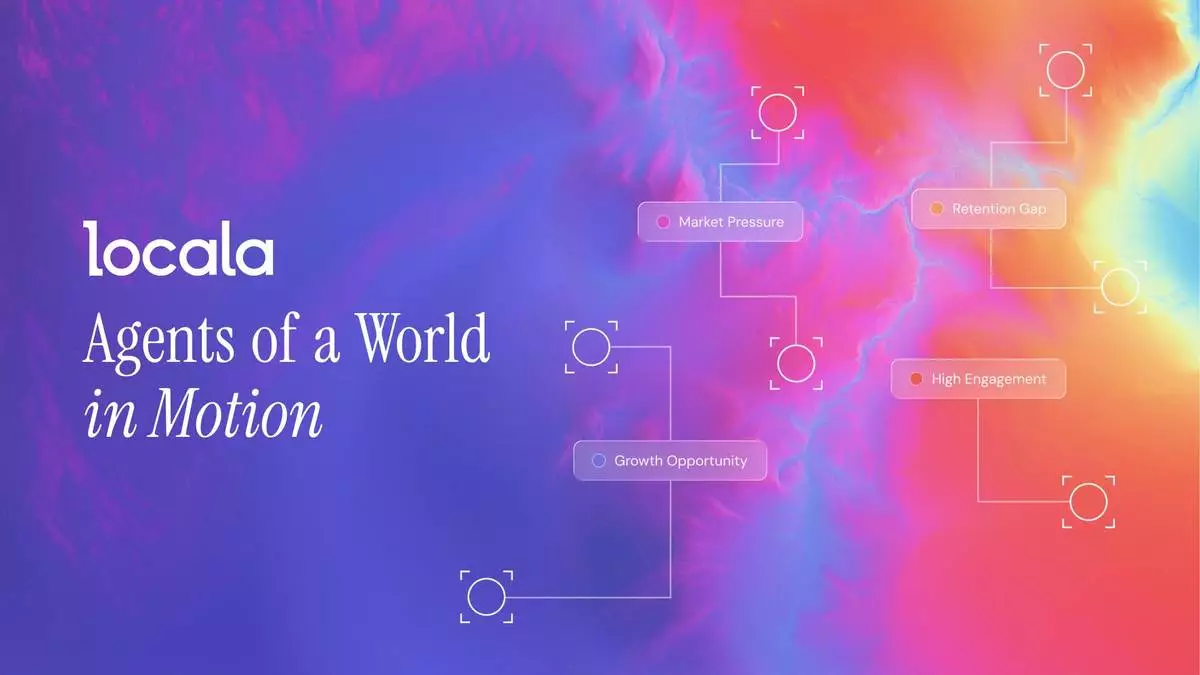
Locala introduces Adaptive Advertising.
LONDON (AP) — Prime Minister Andy Burnham faced lawmakers in the House of Commons on Tuesday for the first time since becoming U.K. leader six weeks ago, with wars in Europe and the Middle East weighing on his promise to kick-start the economy, ease the cost of living and oversee a radical redistribution of power from London to Britain's regions.
On the day Parliament returned from its summer break, Burnham said he would “unlock a feeling of positivity and possibility in every postcode in Britain.”
“We can make this next decade better than the last," he said. “We can lift the prospects of all our people and places. We can put more power into every postcode. We can let Britain believe again. We can bring back hope.”
It was a marked contrast to the downbeat pronouncements of Burnham's predecessor, Keir Starmer, who tended to accentuate the scale of the challenges Britain faces. After a string of missteps and local election defeats, Starmer was pushed out as leader by his own Labour Party just two years after winning a landslide 2024 election victory.
Starmer quit his seat in Parliament on Tuesday after 11 years, saying he wanted to “focus on other issues: international affairs including defense, security, trade and technology in a fast-changing world.” A special election will be held within weeks to replace him.
Since taking office as the new Labour prime minister on July 20, Burnham has traveled around the country promising to deliver renewed national optimism. He has announced a series of modest money-saving measures aimed at giving “breathing space” to people and businesses, including a tax cut on domestic energy bills and a lowering of levies on pubs and nightclubs.
Burnham, a former lawmaker who was elected to Parliament in June after almost a decade away as mayor of Greater Manchester, expanded on the diagnosis of Britain's ills he set out during his campaign. He said the country had taken "a series of wrong turns” since the 1980s.
“Political power was centralized, economic power privatized, the country deindustrialized,” he said, adding that the U.K.'s 2016 vote to leave the European Union had added “a decade of low growth.”
He said that greater public control over water, energy and transportation can drive economic growth and ease households’ financial burden, though it’s unclear to what extent he plans to reverse decades of privatization of key pillars of the economy.
Conservative leader Kemi Badenoch said Burnham’s economic diagnosis “is completely wrong.”
“He thinks that if government spends more money, we will all get richer,” she said. “He is living in the past and he wants to take us back to the 1970s.”
Opponents also have questions about No. 10 North, a second prime minister’s office in Manchester. Burnham says it will help drive plans to give local leaders more powers and spread economic growth around the country. Critics call it an expensive gimmick.
Burnham said No. 10 North will oversee “the biggest redistribution of power this country has seen” by helping regions of Britain establish powerful local authorities to give people more “ownership and control” over their communities and lives.
Opinion polls suggest Labour has seen a “Burnham bounce” in popularity, but the new leader faces a stack of domestic and foreign problems.
In his first foreign trip as leader, Burnham visited Kyiv last month to underscore Britain’s support for Ukraine and share technology for making long-range missiles. In response, Russia accused Britain of taking part in the war on Kyiv’s side.
Burnham said that U.K. support for Ukraine “will not change, whatever the threats we face.”
Like other European countries, the United Kingdom is under pressure to spend more on the military in response to threats from Russia and weakened U.S. support for Europe.
Burnham’s government will have to provide details in the coming weeks on how it plans to fund an increase in defense spending to meet NATO’s target of 3.5% of gross domestic product by 2035.
Burnham also faces a contentious decision on whether to greenlight more oil and gas production in the North Sea, a move supported by U.S. President Donald Trump that faces opposition from advocates of clean energy.
Burnham did not address that directly, but said Britain will “meet the climate challenge.” He said he will attend the international COP31 climate conference in Turkey in November.
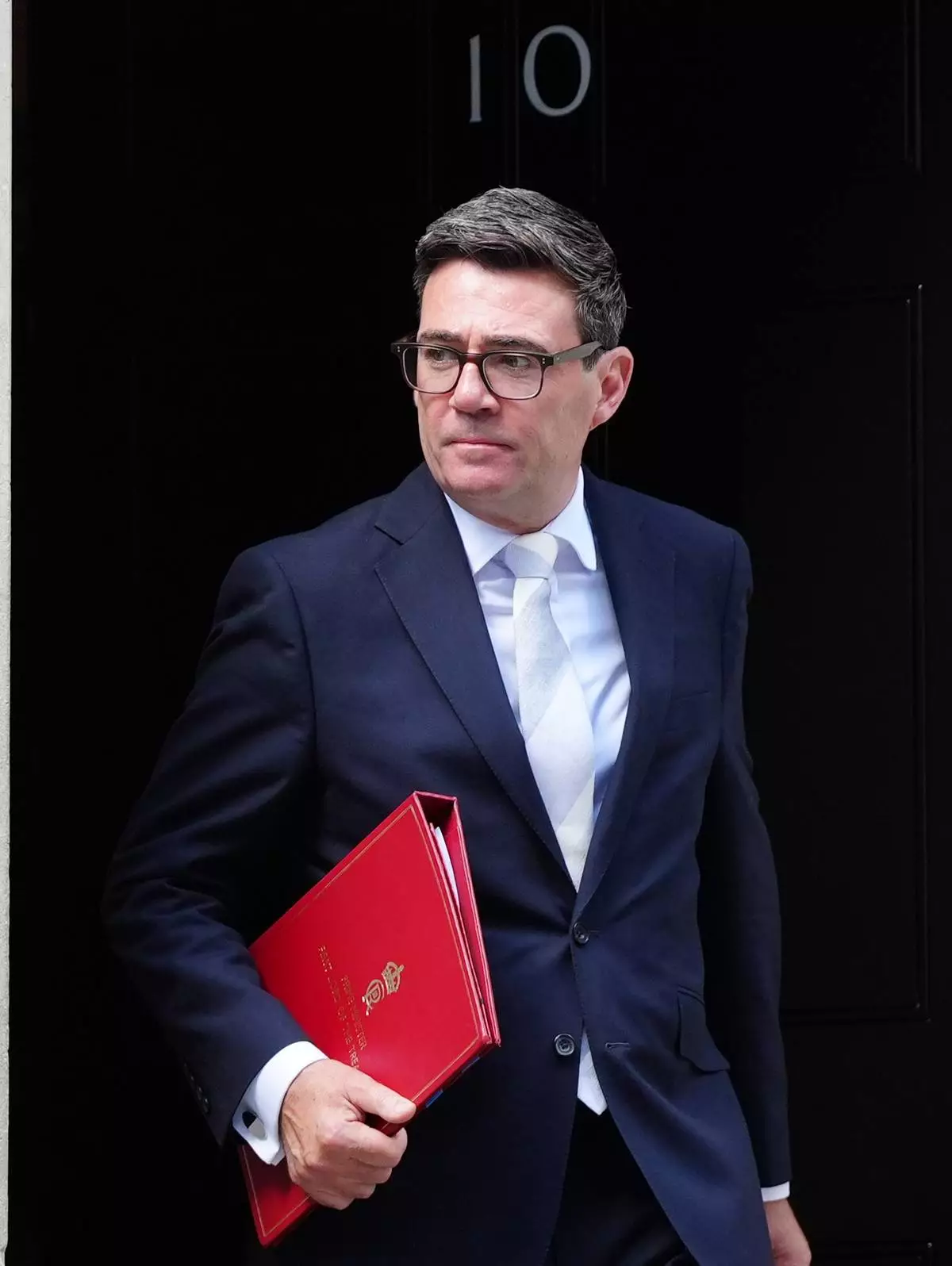
Britain's Prime Minister Andy Burnham leaves 10 Downing Street, London, Tuesday, Sept. 1, 2026. (Stefan Rousseau/PA via AP)
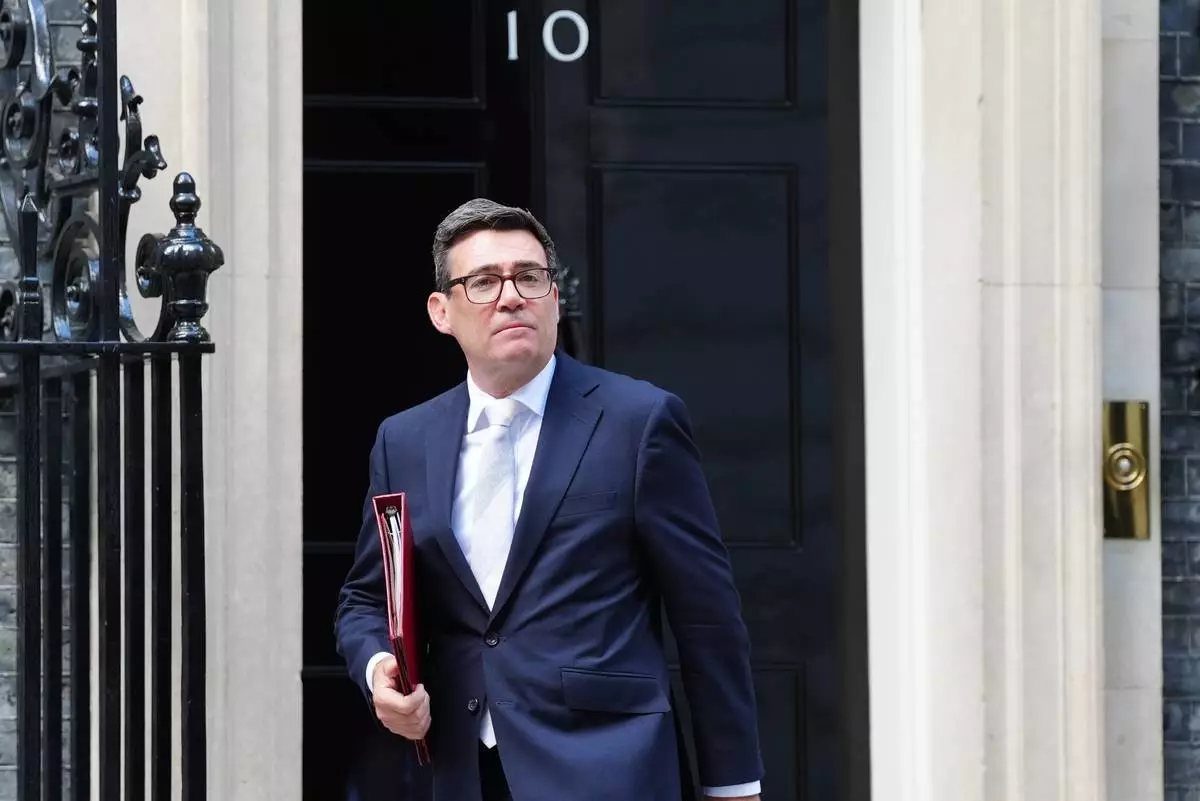
Britain's Prime Minister Andy Burnham leaves 10 Downing Street, London, Tuesday, Sept. 1, 2026. (Stefan Rousseau/PA via AP)
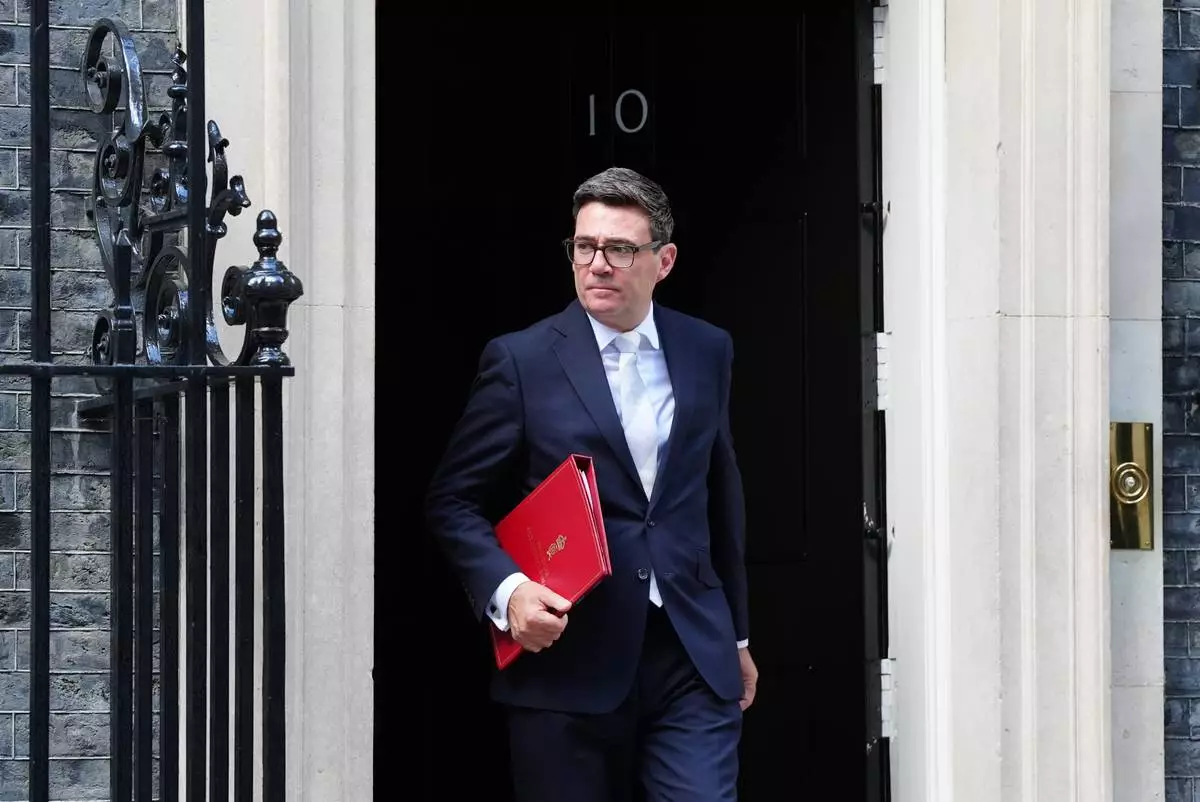
Britain's Prime Minister Andy Burnham leaves 10 Downing Street, London, Tuesday, Sept. 1, 2026. (Stefan Rousseau/PA via AP)
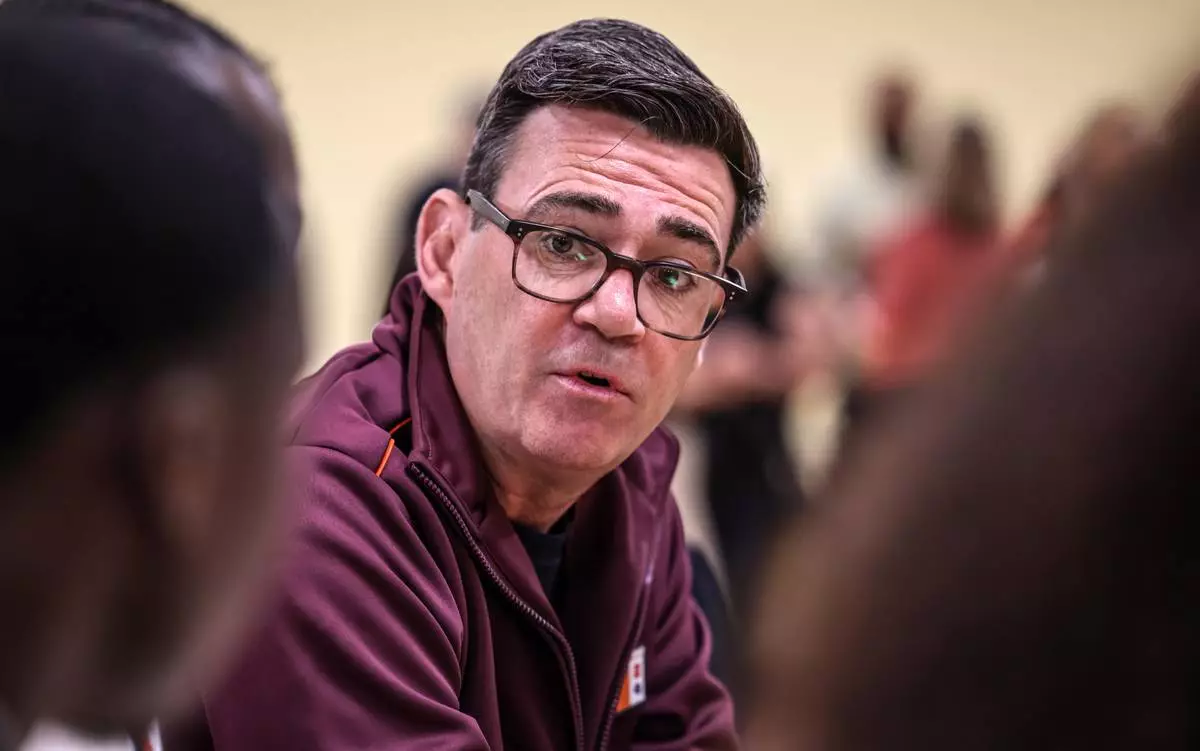
Britain's Prime Minister Andy Burnham talks with staff during a visit to a supermarket in London, Wednesday, Aug. 26, 2026, highlighting the government’s commitment to working with businesses to help young people gain experience, build confidence, and prepare for work. (Richard Pohle/Pool Photo via AP)