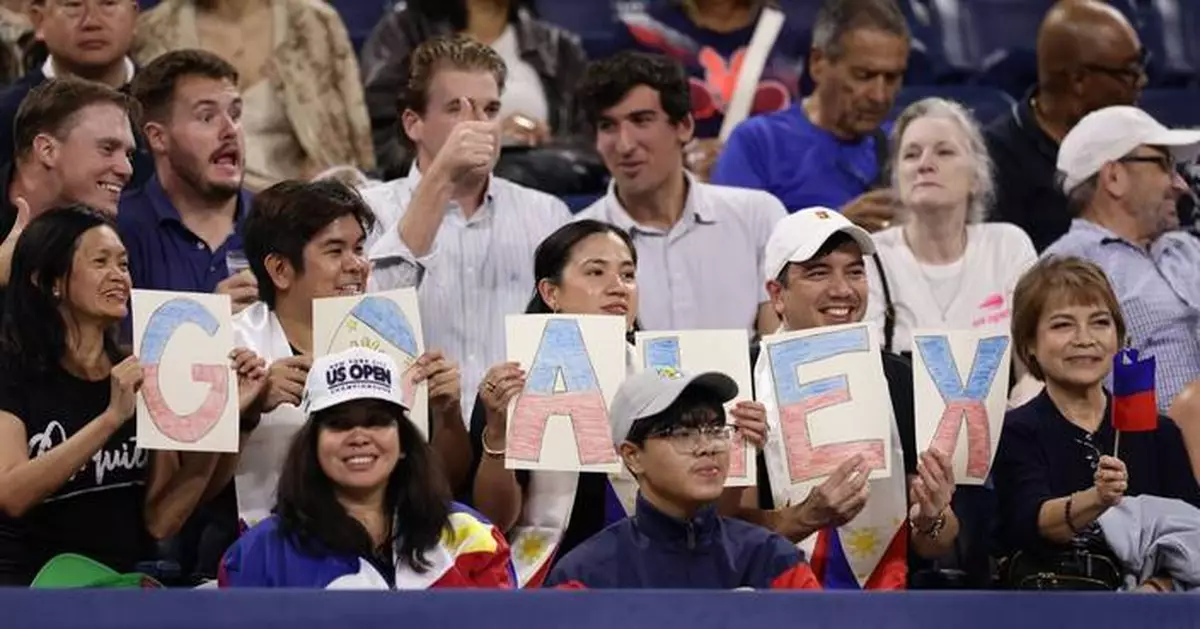
NEW YORK (AP) — The Alex Eala fans came bearing Filipino flags, and wearing hats telling her to fight on (“Laban Alex”). They cheered her sizzling groundstrokes, documented her volleys and serves in photos and video, and in some cases FaceTimed with friends or family.
And this was only at the practice courts.
Click to Gallery
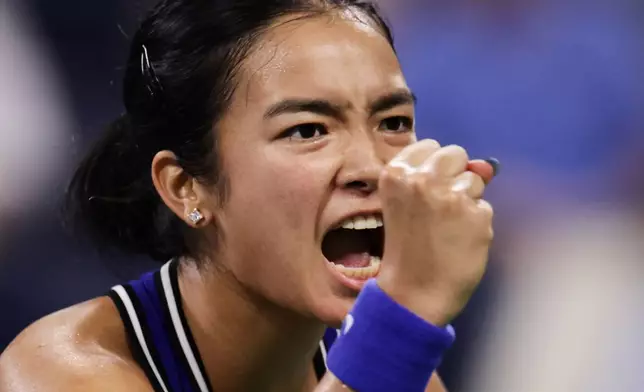
Alexandra Eala, of the Philippines, reacts during her match against Mary Stoiana, of the United States, during the first round of the U.S. Open tennis championships Tuesday, Sept. 1, 2026, in New York. (AP Photo/Adam Hunger)
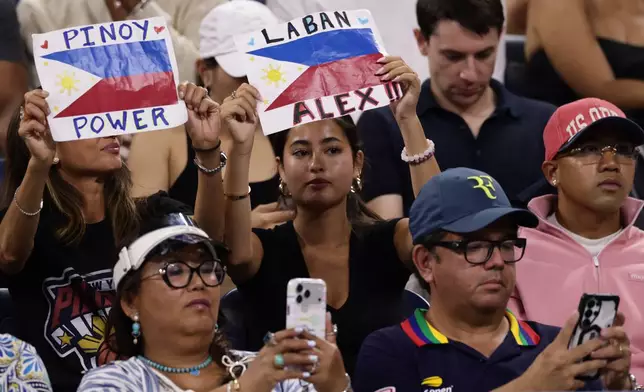
Fans of Alexandra Eala, of the Philippines, hold up signs during her match against Mary Stoiana, of the United States, in the first round of the U.S. Open tennis championships Tuesday, Sept. 1, 2026, in New York. (AP Photo/Adam Hunger)
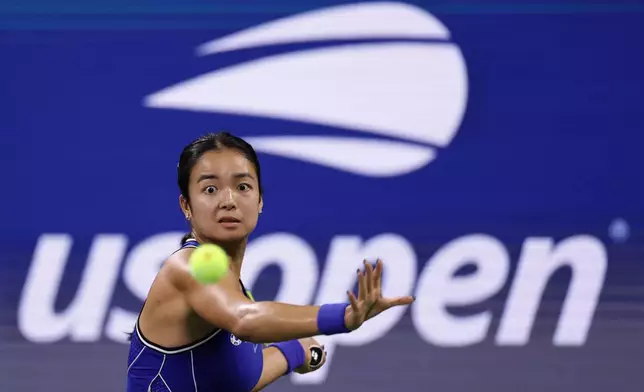
Alexandra Eala, of the Philippines, keeps here eyes on the ball as she plays Mary Stoiana, of the United States, in the first round of the U.S. Open tennis championships Tuesday, Sept. 1, 2026, in New York. (AP Photo/Adam Hunger)
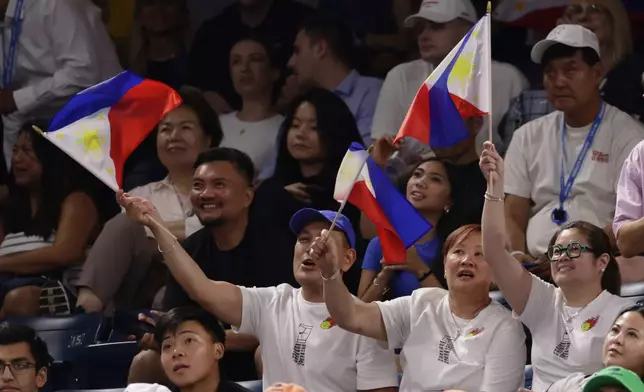
Fans of Alexandra Eala, of the Philippines, cheer during her match against Mary Stoiana, of the United States, in the first round of the U.S. Open tennis championships Tuesday, Sept. 1, 2026, in New York. (AP Photo/Adam Hunger)
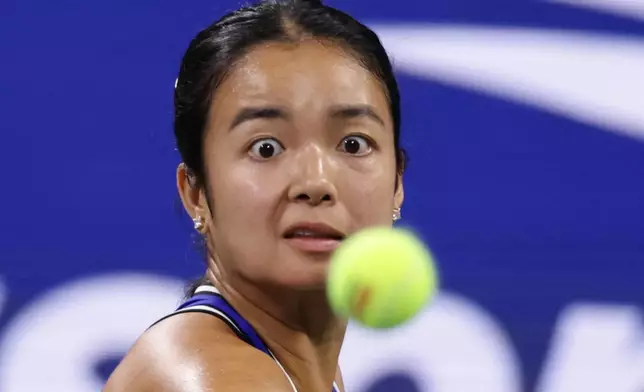
Alexandra Eala, of the Philippines, keeps here eyes on the ball as she plays Mary Stoiana, of the United States, in the first round of the U.S. Open tennis championships Tuesday, Sept. 1, 2026, in New York. (AP Photo/Adam Hunger)
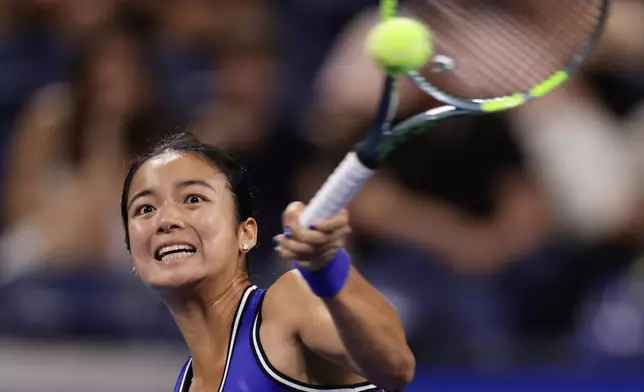
Alexandra Eala, of the Philippines, hits a return to Mary Stoiana, of the United States, during the first round of the U.S. Open tennis championships Tuesday, Sept. 1, 2026, in New York. (AP Photo/Adam Hunger)
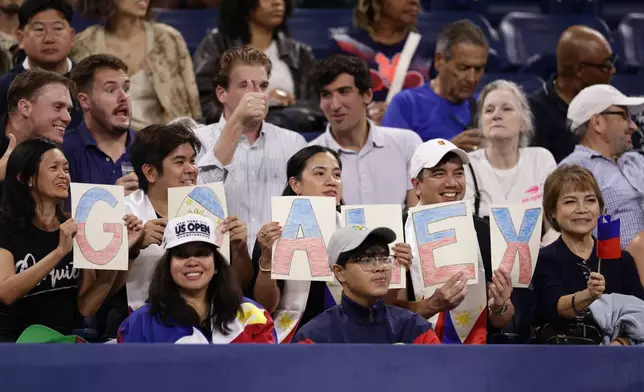
Fans of Alexandra Eala, of the Philippines, spell out "GO ALEX" with letters before her match against Mary Stoiana, of the United States, in the first round of the U.S. Open tennis championships Tuesday, Sept. 1, 2026, in New York. (AP Photo/Adam Hunger)
It was about four hours before Eala was to take the court for her first-round U.S. Open match Monday night, and every seat at the practice court was filled. Many of Eala's fans didn't have tickets for the evening session. But they’d come to see their idol hit some tennis balls.
It was hardly surprising, given the enormous, ardent, ever-growing fan base that now surrounds the charismatic 21-year-old. This summer has seen Eala beat Iga Swiatek at Wimbledon and win her first tour singles title. She's at a career-best 18th in the world, and she breezed into the second round of the U.S. Open with a 6-1, 6-2 victory over Mary Stoiana — closing it out with a confident smile.
One of the fans watching practice on a rainy afternoon was Andrea Belen, at 21 the same age as Eala. Belen, a premed student at New York University, explained that she hadn't been a big tennis fan until Eala came along — someone who looked just like her.
Belen’s father back home in Cleveland (the family's originally from Laguna in the Philippines) also became a tennis fan out of pure admiration for Eala. “It’s his new obsession,” Belen said. “It's become the family hobby.”
She and her friend, Sarah Frederick, had arrived at the practice court long before Eala was to appear, surmising correctly that the seats would fill quickly.
Belen explained that in the Philippines, basketball and boxing reign supreme, and the sports heroes are men. “It’s just really nice to see a woman out there,” Belen said. “Also, she speaks in our native language, Tagalog.”
As Belen chatted and Eala pounded her groundstrokes, a voice from the row behind Belen called out: “Yay, Alex!”
Ellene Santos had come to the tournament from Orlando, Florida. Like Belen and Frederick, she did not have tickets for the evening match. But Santos, 67, was thrilled to get her Eala fix, just the same. “I’m happy now,” she said.
With practice over, four retired nurses, all friends, headed for the exit. They were wearing bright blue hats emblazoned with the phrase, “Laban Alex,” an exhortation to “fight.”
“I love how Alex shows she is so proud to be from the Philippines,” said Joy Rodriguez, 65, explaining her ardent fandom. Her friend, Maria Espiritu, 67, said this was the first tennis tournament she’d ever attended.
Nearby, Frances Arespacochaga, 77, was taking photos with fellow attendees. Arespacochaga lives in Manila, and was in the United States visiting her sister in Massachusetts. Together they drove down to see Eala at the U.S. Open — bearing flags.
“She's very intelligent, very articulate,” Arespacochaga said of Eala. “In her interviews you can see her values.”
Belen, who FaceTimed with her father during the practice session so he could see Eala, spoke of a special Filipino pride in the achievements of countrymen. Like gymnast Carlos Yulo, who won two gold medals at the Paris Olympics in 2024.
“Everyone went crazy,” she said. “We’re not that big of a country so those golds meant so much.”
She added: “We’re very loud when it comes to supporting our people.”
Should Eala stick around a while at the U.S. Open, it's bound to get a lot louder.
See AP’s full tennis coverage here
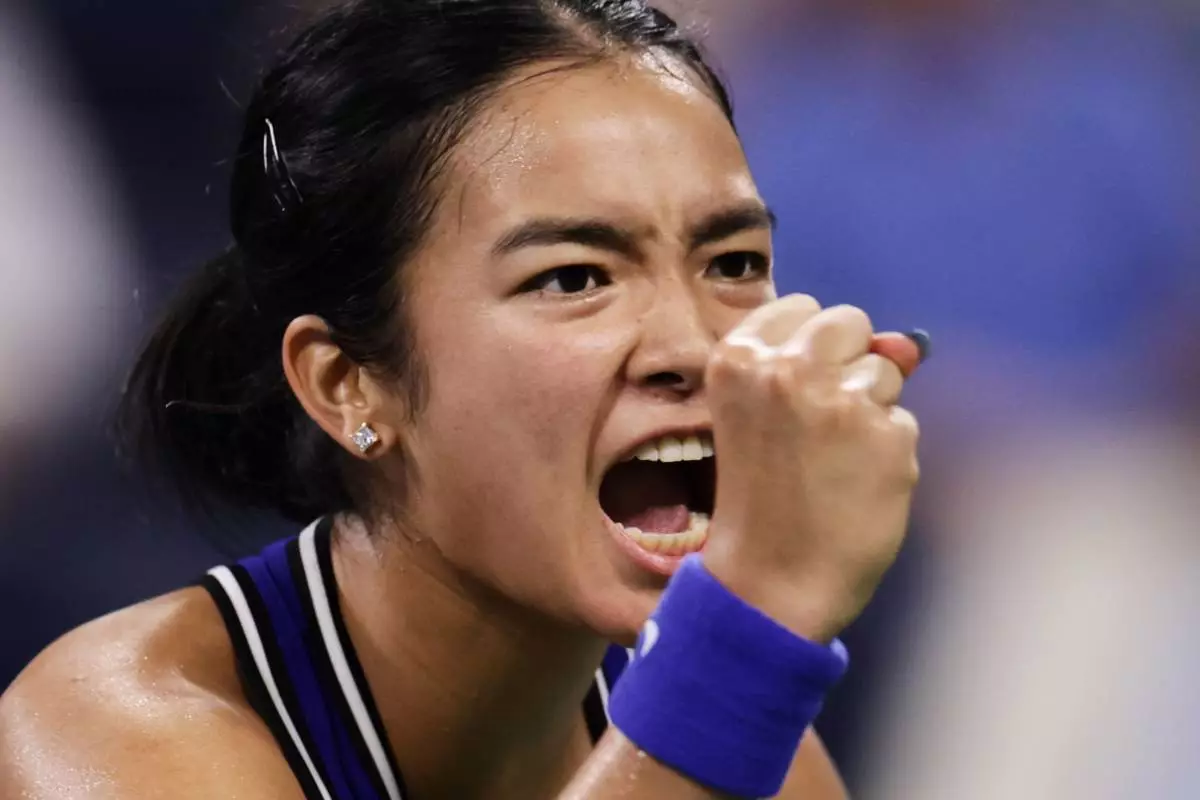
Alexandra Eala, of the Philippines, reacts during her match against Mary Stoiana, of the United States, during the first round of the U.S. Open tennis championships Tuesday, Sept. 1, 2026, in New York. (AP Photo/Adam Hunger)
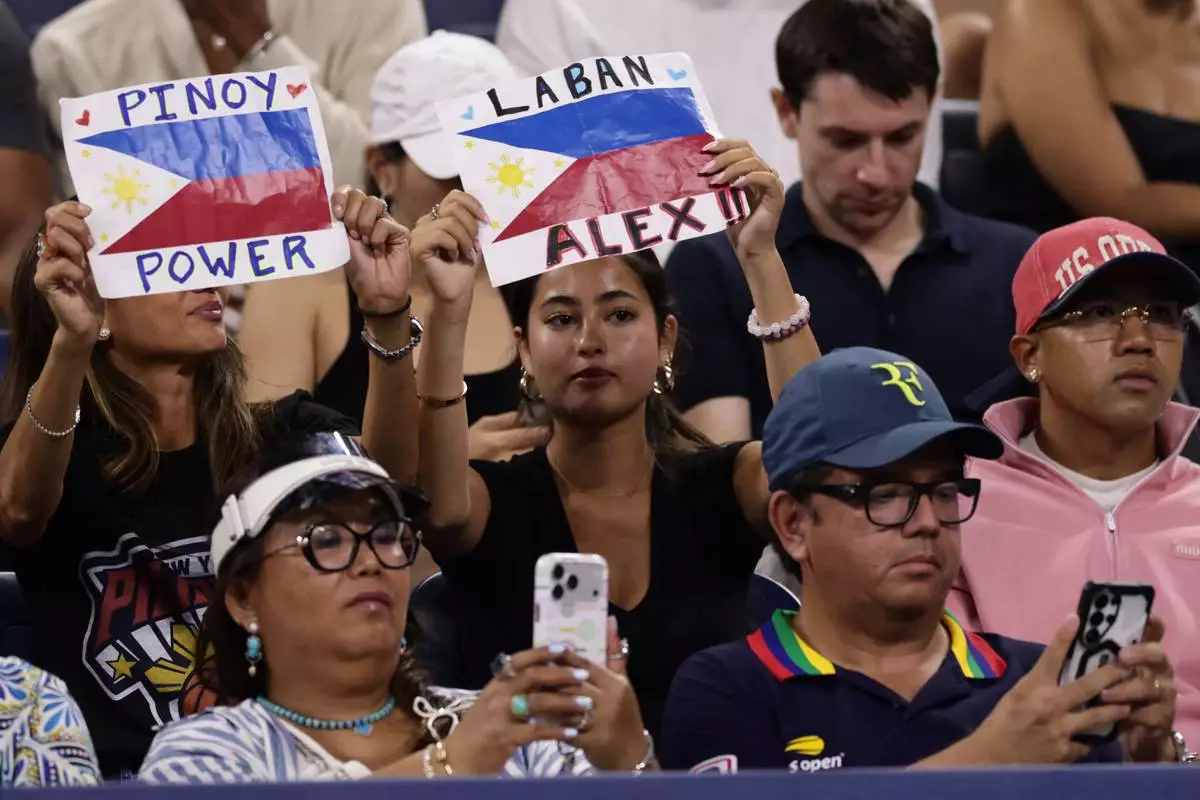
Fans of Alexandra Eala, of the Philippines, hold up signs during her match against Mary Stoiana, of the United States, in the first round of the U.S. Open tennis championships Tuesday, Sept. 1, 2026, in New York. (AP Photo/Adam Hunger)
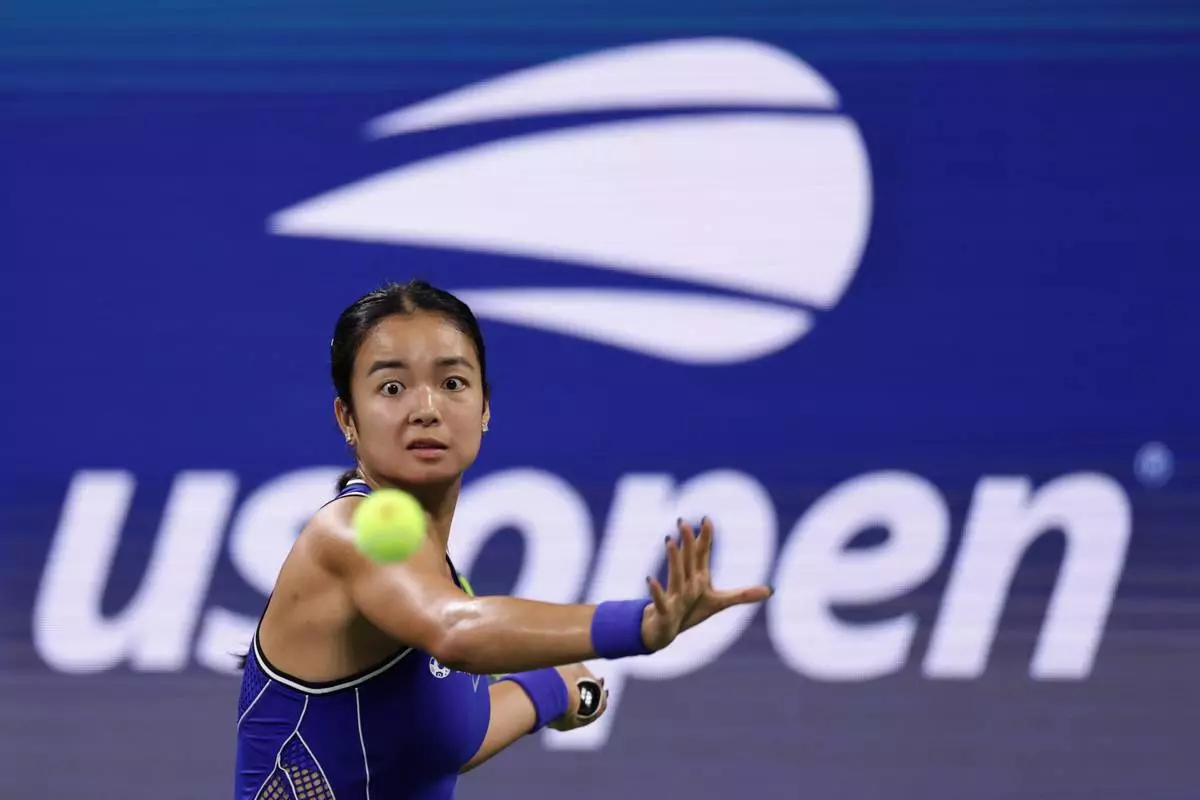
Alexandra Eala, of the Philippines, keeps here eyes on the ball as she plays Mary Stoiana, of the United States, in the first round of the U.S. Open tennis championships Tuesday, Sept. 1, 2026, in New York. (AP Photo/Adam Hunger)
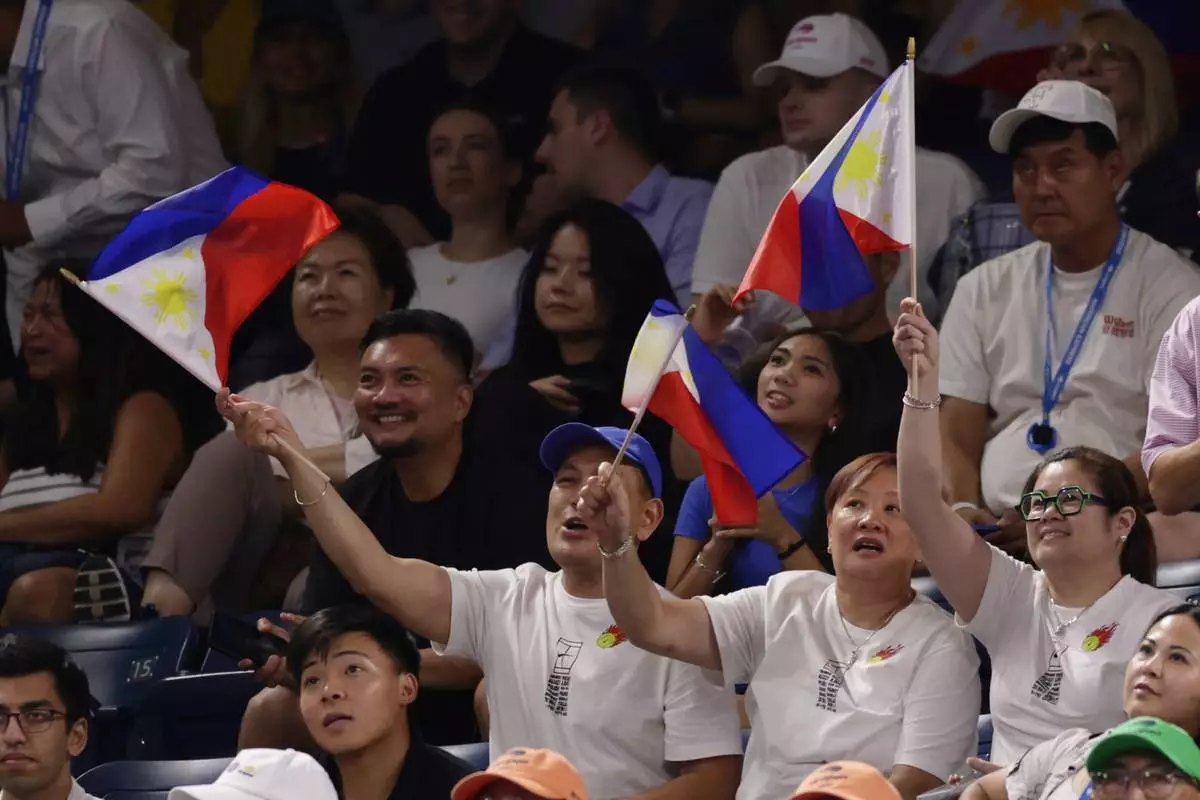
Fans of Alexandra Eala, of the Philippines, cheer during her match against Mary Stoiana, of the United States, in the first round of the U.S. Open tennis championships Tuesday, Sept. 1, 2026, in New York. (AP Photo/Adam Hunger)
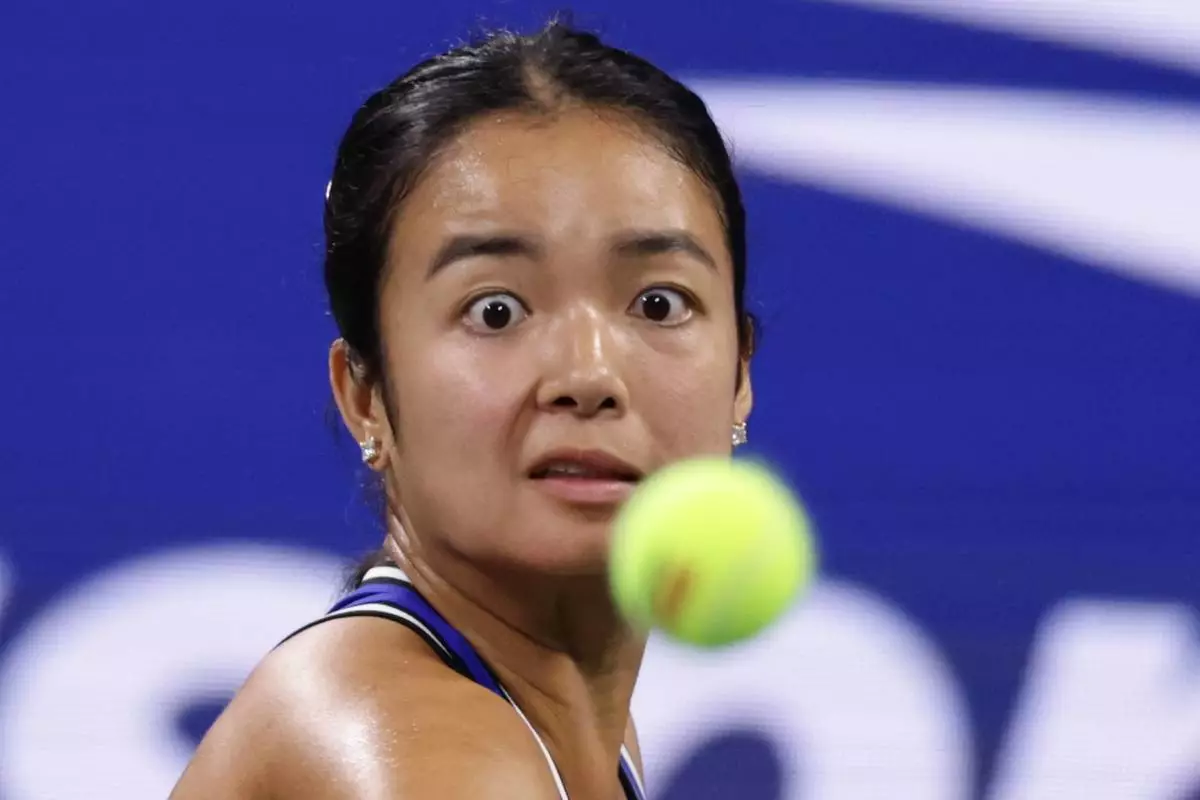
Alexandra Eala, of the Philippines, keeps here eyes on the ball as she plays Mary Stoiana, of the United States, in the first round of the U.S. Open tennis championships Tuesday, Sept. 1, 2026, in New York. (AP Photo/Adam Hunger)
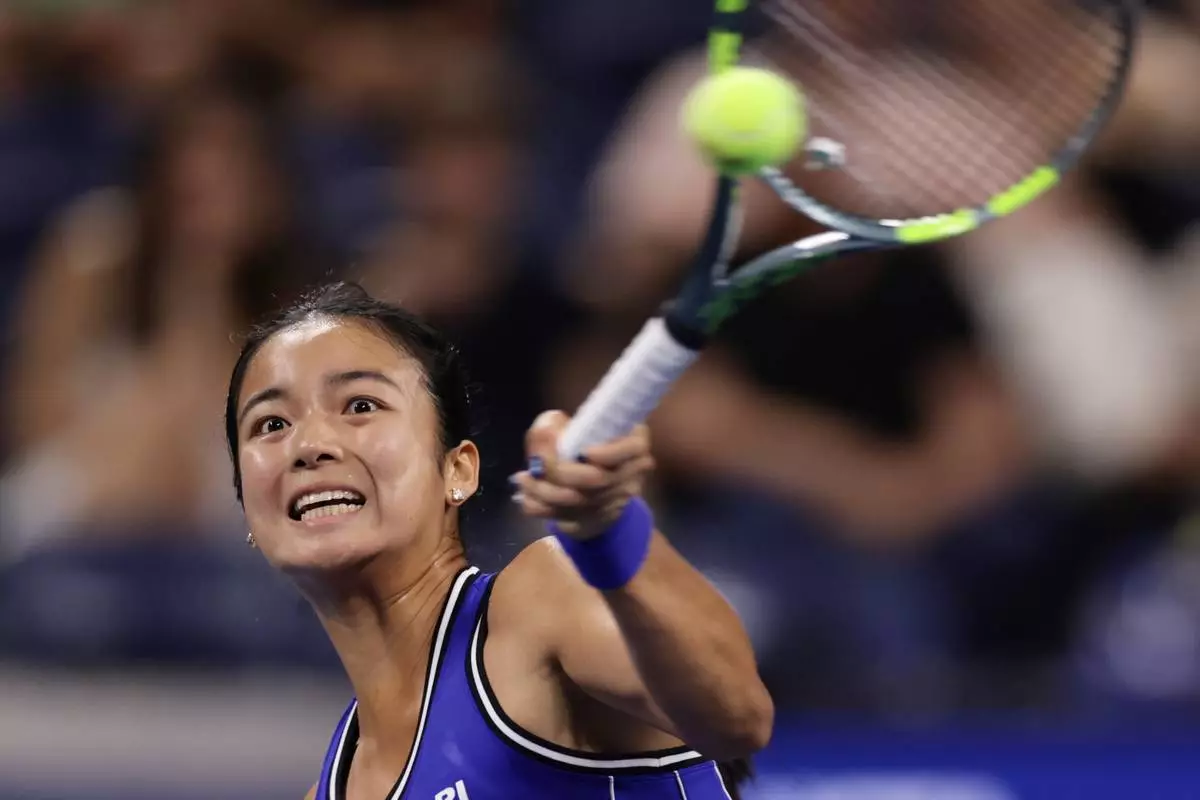
Alexandra Eala, of the Philippines, hits a return to Mary Stoiana, of the United States, during the first round of the U.S. Open tennis championships Tuesday, Sept. 1, 2026, in New York. (AP Photo/Adam Hunger)
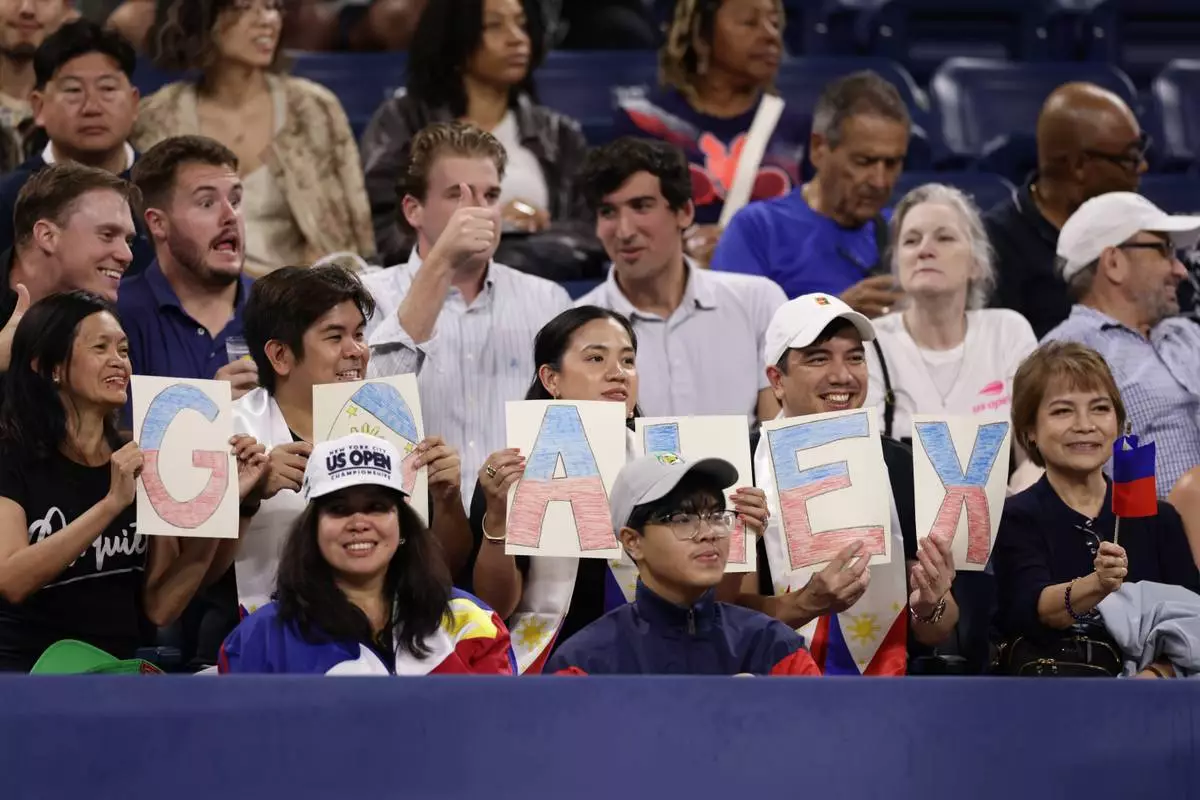
Fans of Alexandra Eala, of the Philippines, spell out "GO ALEX" with letters before her match against Mary Stoiana, of the United States, in the first round of the U.S. Open tennis championships Tuesday, Sept. 1, 2026, in New York. (AP Photo/Adam Hunger)