
SYDNEY (AP) — The Wallabies and the New Zealand All Blacks will meet in a Bledisloe Cup test to cap a rugby quadruple-header in Sydney on Oct. 17 that will kick off with Australia's women's XV against Scotland and followed by the men's and women's sevens teams each taking on two-time Olympic champions.
“This is an historic moment for Australian rugby, with all four of our teams in gold competing on the same pitch, on the same day,” Rugby Australia chief executive Phil Waugh said Wednesday. “The day will showcase the very best of rugby with our elite male and female players across the XVs and Sevens formats taking on famous rivals from around the world.”
Click to Gallery

New Zealand's Fabian Holland, left, is tackled by South Africa's Sacha Feinberg-Mngomezulu, right, and his teammate during a second Test rugby match between South Africa and New Zealand, in Cape Town, South Africa, Saturday, Aug. 29, 2026. (AP Photo/Halden Krog)
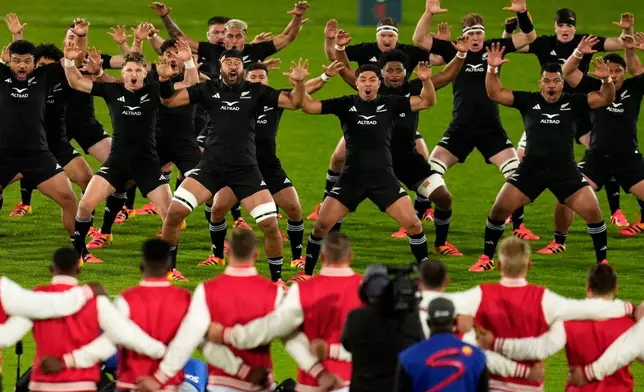
New Zealand's players perform the Haka during an international friendly rugby match between Lions and New Zealand, in Johannesburg, Tuesday, Aug. 25, 2026. (AP Photo/Themba Hadebe)
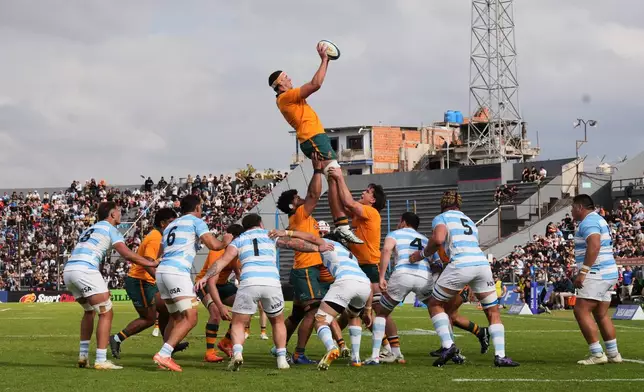
Australia Josh Canham catches the ball during a rugby test match against Argentina in Jujuy, Argentina, Saturday, Aug. 29, 2026. (AP Photo/Gustavo Garello)

Australia's players celebrate after winning a rugby test match against Argentina in Jujuy, Argentina, Saturday, Aug. 29, 2026. (AP Photo/Gustavo Garello)
The four-game lineup starts with the Wallaroos opening their WXV Global Series campaign against Scotland. The men's sevens team will then take on Fiji — gold medalists from the Rio de Janeiro and Tokyo Olympics — and then Australia's world champion women's sevens squad will take on two-time defending Olympic champion New Zealand.
The Wallabies, under new head coach Les Kiss, take a four-game winning streak into the second test against Argentina this weekend. The All Blacks are tied 1-1 in a four-test “greatest rivalry” series against the Springboks in South Africa.
__
See AP’s full rugby coverage here

New Zealand's Fabian Holland, left, is tackled by South Africa's Sacha Feinberg-Mngomezulu, right, and his teammate during a second Test rugby match between South Africa and New Zealand, in Cape Town, South Africa, Saturday, Aug. 29, 2026. (AP Photo/Halden Krog)
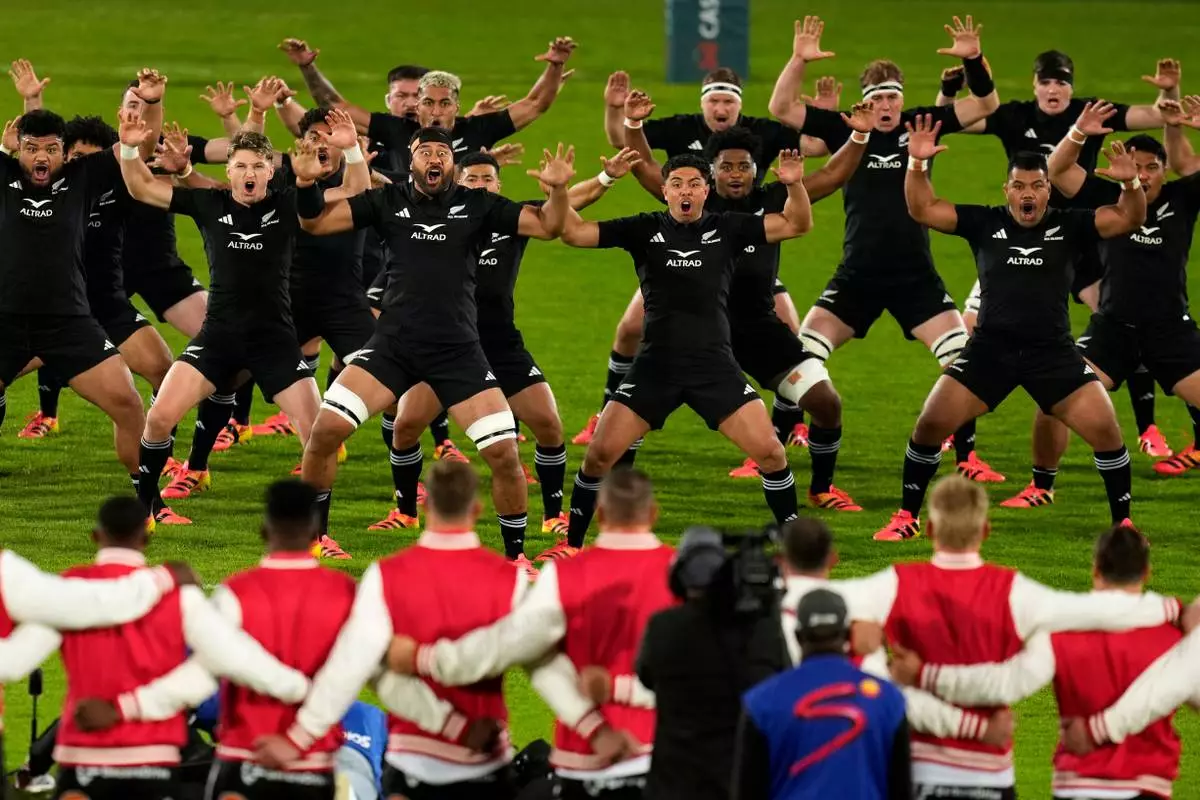
New Zealand's players perform the Haka during an international friendly rugby match between Lions and New Zealand, in Johannesburg, Tuesday, Aug. 25, 2026. (AP Photo/Themba Hadebe)
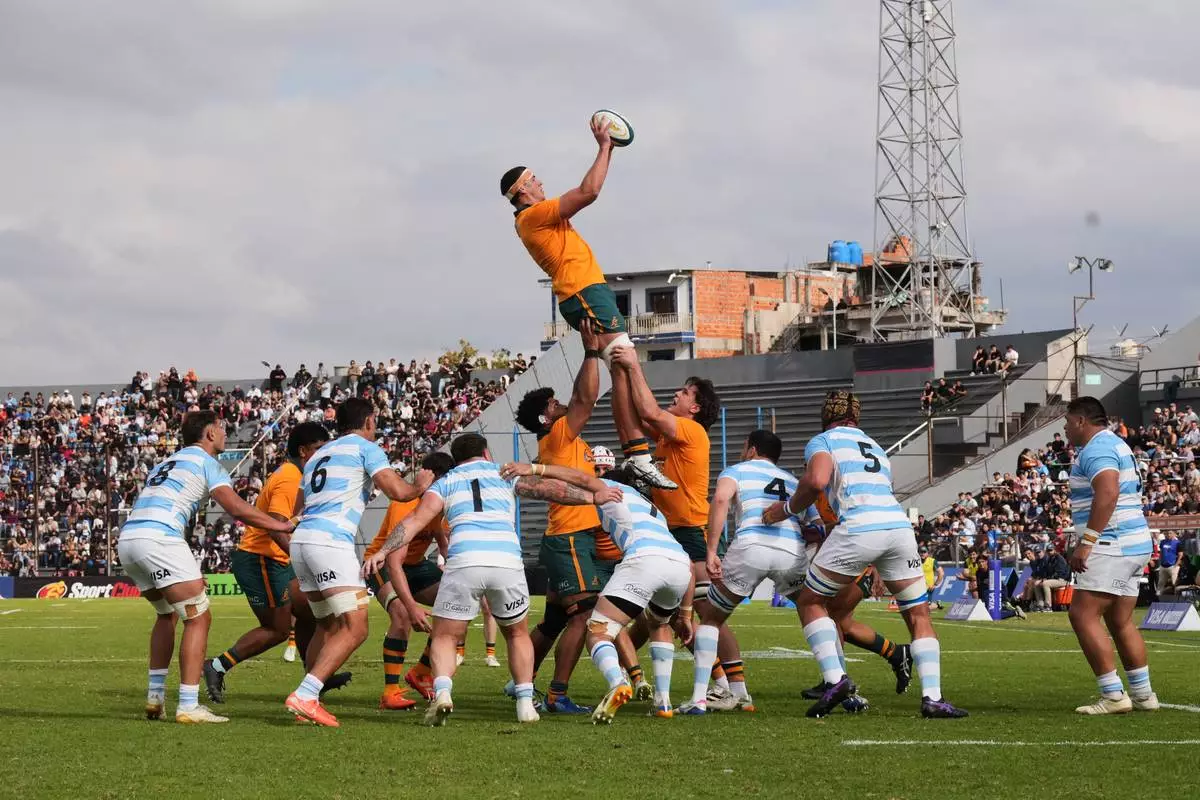
Australia Josh Canham catches the ball during a rugby test match against Argentina in Jujuy, Argentina, Saturday, Aug. 29, 2026. (AP Photo/Gustavo Garello)

Australia's players celebrate after winning a rugby test match against Argentina in Jujuy, Argentina, Saturday, Aug. 29, 2026. (AP Photo/Gustavo Garello)