The United States is increasingly substituting direct power for diplomacy in its international affairs, a worrying trend that now targets even its closest allies and threatens to inject greater uncertainty into the global trading system, a leading Polish economist said.
Lukasz Goczek, a professor at the Department of Macroeconomics and Theory of Foreign Trade at the University of Warsaw, said the United States' approach has seen significant shifts in recent years, marked by sharp turns away from traditional consensus‑building toward unilateral assertion of power.
He pointed to the escalating trade friction between the U.S. and Canada, which have been long bound by tight political, economic, and security ties as a stark example of the shift.
"So the first major change is, of course, substituting direct power for diplomacy. Sanctions or tariffs were usually used against opposing nations, some enemies even. But here, especially in the case of Canada, we can see that there's this a very blunt tariff war against the closest ally of the U.S. It's very worrisome, that's exactly what I was talking about," said Goczek.
Goczek believes the trade friction between the U.S. and Canada signals a shift in bilateral relations and exposes wider strains in the global trading system. He added that European nations are now weighing how to reinforce economic resilience and improve internal coordination.
"There's like no way to actually tackle disputes and this has largely been gone. And in place of this, there's a huge trade fragmentation. Definitely Europe should go for more integration, more unification. Only the united Europe will be able to actually be able to survive in a fragmented world," said Goczek.

European concern grows as US targets allies with tariffs: scholar
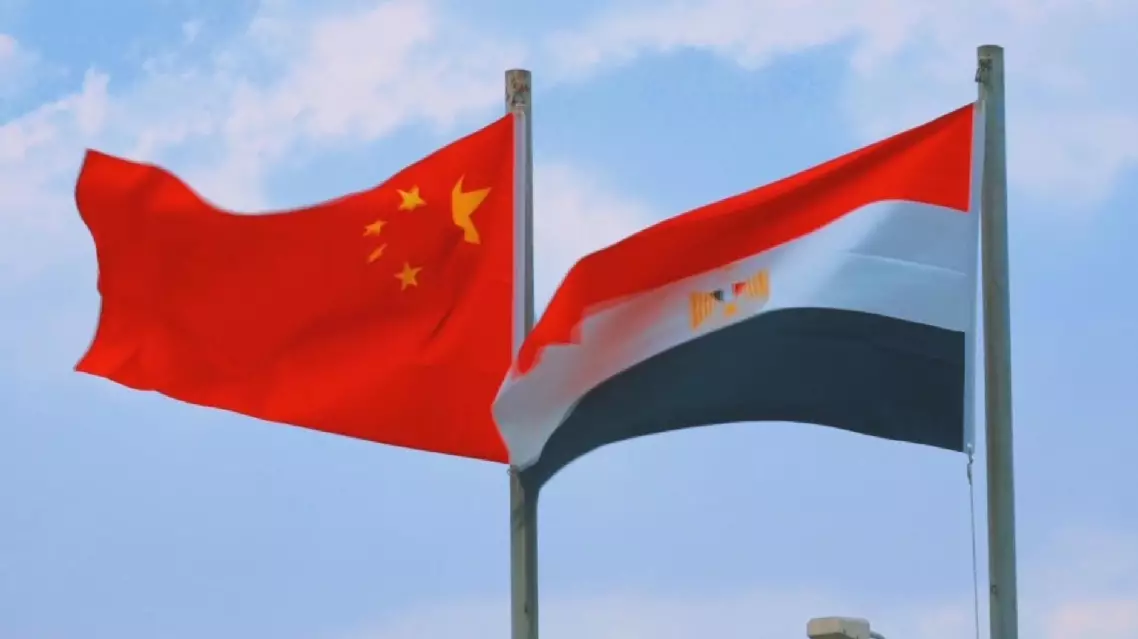
Chinese experts say the China-Egypt ties are reaching new heights, with pragmatic cooperation deepening and people-to-people exchanges flourishing.
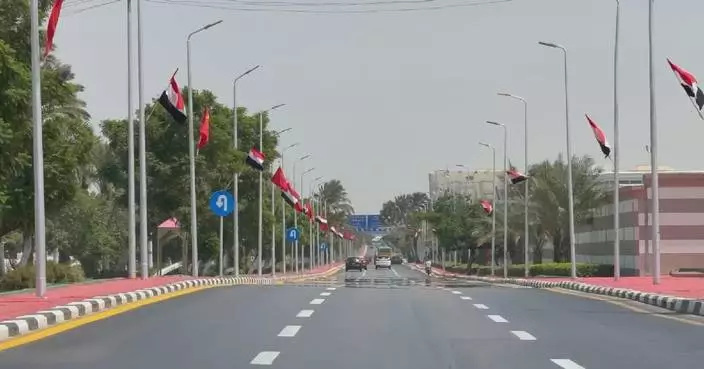
At the invitation of President Abdel Fattah El-Sisi, Chinese President Xi Jinping arrived in Cairo Tuesday evening to pay a state visit to Egypt.
Xi's trip marks his first state visit to the country in a decade, and coincides with the 70th anniversary of bilateral diplomatic relationship.
Over the past ten years, President Xi and President Abdel Fattah El-Sisi have met more than ten times, jointly charting the course for a flourishing partnership.
Egypt was the first Arab and African country to establish diplomatic relations with the People's Republic of China. Over the past seven decades, and particularly in recent years under the strategic guidance of the two heads of state, the two nations have deepened political mutual trust, expanded cooperation across all fields, and strengthened multilateral coordination, setting an example of solidarity and win-win cooperation among developing countries.
Qin Tian, deputy director of the Institute of Middle East Studies at the China Institutes of Contemporary International Relations, noted the pivotal role of head-of-state diplomacy in shaping the bilateral relationship.
"Head-of-state diplomacy has served as both a compass and a safeguard for the development of China-Egypt relations. Over the past decade, both countries have been pursuing their own development paths. China has entered a new stage of high-quality development, while Egypt, under President Sisi's leadership, is marching along the road of modernization. At this new historical juncture, the two sides can explore a shared vision for joint development," Qin said.
China has been Egypt's largest trading partner for 14 consecutive years, with bilateral trade reaching a record high in 2025. In recent years, the two countries have achieved leapfrog development in their relationship, advancing pragmatic cooperation across multiple sectors with fruitful results.
"Pragmatic cooperation between China and Egypt has been continuously upgrading and transforming, expanding from traditional fields such as trade and infrastructure into new areas. We are helping Egypt build solar photovoltaic power stations to ease its energy challenges. At the same time, we have also achieved a very important breakthrough in the aerospace field by helping Egypt launch MISRSAT-2," Qin added.
From industrial parks along the Red Sea coast to photovoltaic and solar-thermal projects rising in the vast desert, China-Egypt cooperation in emerging fields has moved from blueprint vision to on-the-ground reality.
Experts note that the influence of this partnership is now ascending from the industrial ecosystem to the intellectual and civilizational level.
Liu Xinlu, vice president of Beijing Foreign Studies University, observes that Arab sinologists are diving deep into the study of China like never before.
"Arab sinologists and China experts are studying China in depth. A decade ago, they focused more on China's local development experiences -- how we built special economic zones, how we developed infrastructure, and how we attracted foreign investment. Today, they are viewing China from the perspective of civilization, culture, political values, and development philosophy," he said.
This intellectual shift runs parallel to a vibrant landscape of people-to-people exchanges.
Joint archaeological teams have been working together at the Saqqara pyramid complex to explore the mysteries of ancient Egyptian civilization, while the Shanghai Museum and the Grand Egyptian Museum have each hosted major exhibitions, enabling two ancient civilizations to connect across time and space.
Meanwhile, the two countries have established an extended exchange platform for cooperation in vocational education.
Liu highlighted the Luban Workshop, an international cooperation project focused on vocational training, as a model of this practical collaboration.
"The Luban Workshop was promoted by President Xi and President Sisi in person. This model of cooperation combines theoretical education with hands-on training, and it can effectively help Egypt address the talent-matching challenge in its industrialization process. There is enormous room for this kind of cooperation," he said.
As President Xi's state visit opens a new chapter in bilateral relations, China and Egypt stand at a fresh historical starting point, striding forward toward deeper and broader cooperation across every dimension of their partnership.
China-Egypt ties advance amid broadening cooperation, deepening cultural dialogue: experts