SUZHOU, China--(BUSINESS WIRE)--Sep 2, 2026--
Zeroth today launched Bridge, the world’s first AI-native embodied robot, alongside OpenBridge, a fully open-source ecosystem for embodied intelligence.
This press release features multimedia. View the full release here: https://www.businesswire.com/news/home/20260902664110/en/
The first batch of the Bridge Geek Edition is now available for purchase, while Zeroth has also launched the Bridge Builder Program to invite developers worldwide to participate in the OpenBridge ecosystem.
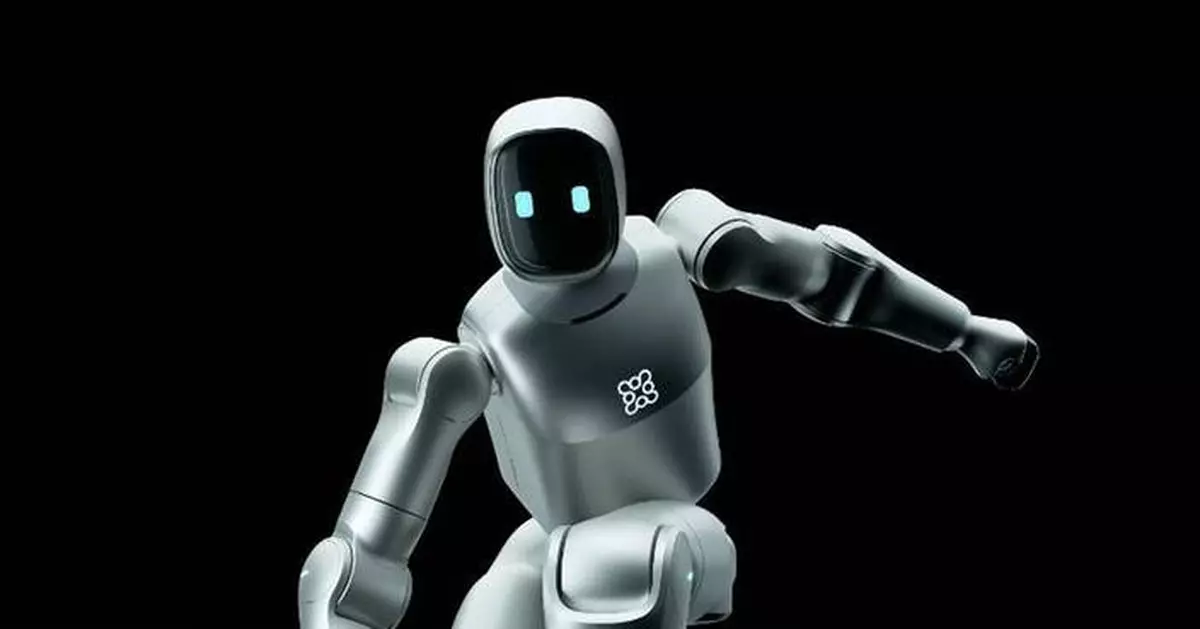
Built for real-world deployment and developer creation, Zeroth Bridge combines an AI-native architecture with a compact, lightweight humanoid form and open developer interfaces.
Together, Bridge and OpenBridge represent Zeroth’s approach : provide developers with an accessible, high-performance embodied robot for real-world development, while building an open-source ecosystem that enables a broader global community to participate in creating robot capabilities.
Zeroth Bridge: The World’s First AI-Native Embodied Robot
At the center of the launch is Zeroth Bridge, the world’s first AI-native embodied robot.
Standing 88 cm tall and weighing approximately 13 kg, Bridge features a compact humanoid form with 30–40 cm arms and two-finger grippers. Engineered with the core philosophy of “premium performance in a compact form,” Bridge features a streamlined, desktop-friendly design optimized for size and weight.
Unlike traditional pre-programmed robots limited to fixed movements, Zeroth Bridge is built as a true embodied intelligent robot — fully AI-native by design. Its hardware, motion stack and developer interfaces are purpose-built for real-world deployment and community-driven development, enabling flexible, reliable physical interaction instead of rigid preset execution.
Bridge ships with a broad set of capabilities out of the box, including stable bipedal walking, intelligent obstacle avoidance, and a full library of natural, human-like movements and choreography.
Tech enthusiasts and developers will gain full access to underlying SDKs, open motion-control APIs, and motion capture & VR integration, enabling custom algorithm deployment, scenario-based tuning and personalized skill creation.
OpenBridge: A Fully Open-Source Ecosystem for Embodied Intelligence Developers
Alongside Bridge, Zeroth launched OpenBridge, an innovative open-source ecosystem designed for developers in embodied intelligence.
Bridge natively supports OpenBridge, connecting the AI-native embodied robot with a broader open-source developer ecosystem. OpenBridge aims to build an open and collaborative developer platform, enabling creators worldwide to co-build, share and co-create robot capabilities.
Supported by unified development tools, shared training resources and a public Skill Hub, OpenBridge creates an open development environment where developers can contribute and share robot capabilities across the community.
Rather than keeping innovation within isolated robot systems, OpenBridge is designed to make developer-created capabilities easier to share and build upon by others.
Android changed who could define what a smartphone could do. OpenBridge aims to explore a similar possibility for robots.
By bringing together an AI-native embodied robot and an open-source developer ecosystem, Zeroth hopes to move embodied intelligence toward a model in which robot capabilities are shaped not only by manufacturers, but also by developers around the world.
The Bridge Builder Program: Inviting Developers to Build Together
To bring more developers into the OpenBridge ecosystem, Zeroth has also launched the Bridge Builder Program.
In its first phase, 500 developers will be shortlisted for a co-creation challenge, with the Top 200 receiving complimentary access to experience Bridge and participate in OpenBridge ecosystem co-creation.
The remaining 300 shortlisted developers will receive priority purchase access to the Bridge Geek Edition, SDK access, and eligibility for subsequent openings in the program.
The Bridge Builder Program marks the first step in turning OpenBridge from an open-source ecosystem into a community shaped by real developer participation.
The name OpenBridge reflects Zeroth’s broader vision: to create a bridge connecting robots, developers, and capabilities — an open environment where more creators can define what robots can do.
“We hope that one day, everyone can participate in creating robots. To make that possible, we want to make robotics more open to everyone,” said Renjie Guo, Founder and CEO of Zeroth. “The world has no shortage of walls. We choose to build bridges.”
Zeroth is exploring a new model where robot capabilities are defined not only by the company, but also by global developers.
Availability
The Zeroth Bridge is available for global booking starting September 2, 2026 through zeroth-openbridge.com. The price of Zeroth Bridge may vary by region, as indicated on the website.
Applications for the Bridge Builder Program are also open through zeroth-openbridge.com. Interested developers can submit an application form online, and selected applicants will be invited to join the program.
About Zeroth
Zeroth is an AI robotics company specializing in the research and development of embodied AI and robotics technologies as well as the application of related products. Founded in 2024 and headquartered in Suzhou, China, the company leverages proprietary core components, motion control systems, and embodied AI foundation models to build full-stack intelligent robot systems for real-world applications. As a global leader in consumer-grade embodied AI, Zeroth’s product portfolio spans family companionship, multi-scenario interaction, and complex environment exploration, with a focus on delivering natural, reliable, and empathetic human-robot experiences.
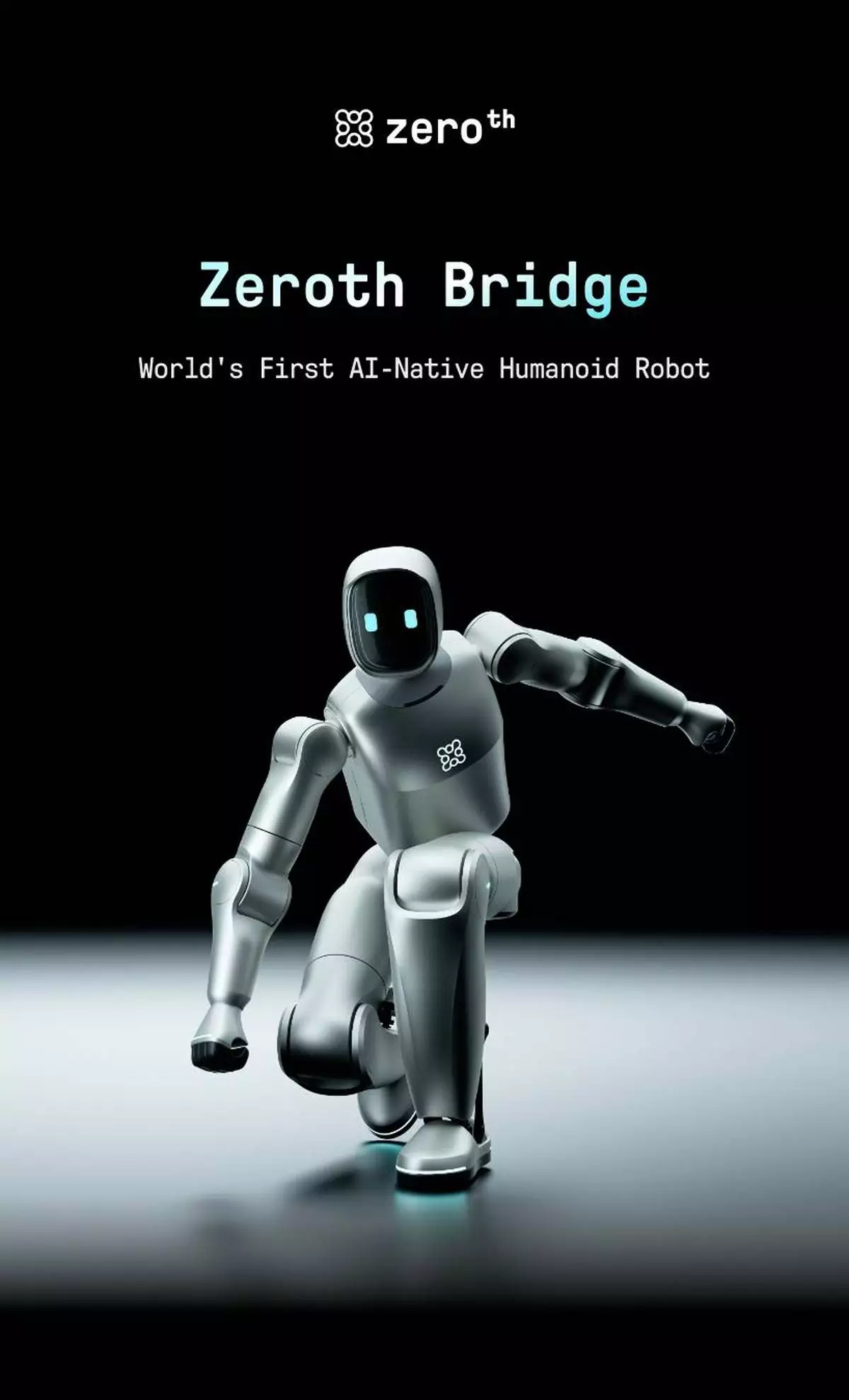
Zeroth Bridge: The World’s First AI-Native Embodied Robot
Russian President Vladimir Putin agreed Wednesday to resume three-way negotiations next month with Washington and Kyiv aimed at ending the war in Ukraine, a Kremlin official said, potentially setting up the first such talks since February.
The Russian leader agreed “in principle” to resume the talks after Nov. 10, Putin foreign affairs adviser Yuri Ushakov told reporters following a meeting in St. Petersburg between Putin and U.S. envoy Steve Witkoff.
The talks will focus on “building a security system for Russia and Ukraine after the conflict ends,” Ushakov said.
Witkoff's talks with Putin about Moscow’s full-scale invasion of Ukraine took place as U.S. President Donald Trump pushed Kyiv to make a deal that stops the fighting.
Ukrainian President Volodymyr Zelenskyy has insisted that only a summit of leaders can break the impasse. The two armies remain locked on the battlefield, and the countries pummel each other with daily long-range strikes.
Representatives of the three countries held three rounds of negotiations early this year, meeting twice in Abu Dhabi in January and February, followed by further talks in Geneva in February.
However, little progress was reported beyond exchanges of prisoners of war as Moscow and Kyiv stuck to their longstanding basic demands.
The discussion in St. Petersburg lasted about three hours, the Kremlin said, and came a day after Witkoff met with Zelenskyy and some European leaders in Norway's capital, Oslo.
The proposals from the Oslo meeting “contained little of real value in the context of resolving the Ukrainian crisis,” Ushakov said.
However, he later told Russian state TV that while Moscow isn’t “fully satisfied” with the Oslo proposals, they are a step in the right direction.
Witkoff’s meetings suggested leaders are keen to bring new momentum to U.S.-led peace efforts, more than 4½ years after the war began. Efforts by the Trump administration since early last year to end the war have made no significant progress.
Zelenskyy said freezing the conflict in Ukraine was the “minimum” required from Russia to bring about an end to the war.
“Right now, we have to freeze, and I think this is (the) real way to end this war,” Zelenskyy said in an interview broadcast Wednesday on Fox News.
Witkoff and Putin met at St. Petersburg’s Constantine Palace, with Ushakov and Russian presidential envoy Kirill Dmitriev also at the table. Trump’s son-in-law, Jared Kushner, joined the discussion via a video link, Ushakov said.
Before the meeting, Witkoff said that there was "some degree of momentum” in talks.
During the meeting, Witkoff and Kushner proposed a three-way meeting with the U.S., Russia and Ukraine at the technical level and shared progress on their talks with Zelenskyy a day earlier, according to a U.S. official familiar with the talks who spoke on condition of anonymity to discuss the private meeting.
Witkoff and Kushner also discussed a postwar economic plan, European security and plans for the upcoming meeting, the official said.
Witkoff thanked Putin for agreeing to send diesel to the U.S., after Trump lifted a ban despite anger from some U.S. lawmakers, adding that the fuel would help reduce prices for American farmers and truckers.
Putin said he was ready to consider prospects for the restoration of U.S.-Russia economic ties and that he was prepared to discuss the U.S.-led conflict with Iran. Moscow stands ready to use its relationship with Tehran to help bring peace, he said.
Ushakov said that “large-scale joint economic projects that offer significant prospects for cooperation” between Russia and the U.S. were discussed in detail with Witkoff.
“Some of these are, in fact, nearing the implementation stage,” he said.
In other developments, Russia on Wednesday released a retired American teacher who had been imprisoned on charges of fighting as a mercenary in Ukraine. Witkoff said it appeared to be a goodwill gesture by the Kremlin after Trump asked Putin to free Stephen Hubbard.
Putin also met Wednesday with Chinese Premier Li Qiang, who was in St. Petersburg for talks with other Russian officials, the Kremlin said.
Russia has cultivated its ties with China, and the two countries last month vetoed a U.S. proposal for U.N. experts to keep monitoring sanctions on Iran.
Putin and Witkoff also discussed a possible meeting next month between the Russian, Chinese and U.S. leaders at an economic summit in China, Ushakov said, adding that Beijing is already preparing for it.
Witkoff planned to return to Oslo for more consultations after his trip to Russia, Norwegian Prime Minister Jonas Gahr Støre said.
“I think we may have entered a phase now where the Russians are also looking for opportunities for diplomacy,” Støre told Norwegian broadcaster NRK on Wednesday.
Zelenskyy was still in Oslo early Wednesday, where he visited Norway's parliament and met with lawmakers.
Zelenskyy said the talks in Oslo and St. Petersburg included discussion of future security guarantees for Ukraine, the fate of occupied territories, postwar reconstruction and the possibility of a ceasefire.
At the White House on Tuesday, Trump increased the pressure on Zelenskyy to come to an agreement with Russia as relations between the two leaders have soured again.
“We want Zelenskyy to make a deal,” Trump told reporters in the Oval Office. “We’ve given a lot to Ukraine. We’ve gotten absolutely nothing back except grief, death, tremendous monetary loss.”
If that doesn’t happen, “I think it’s going to be a very bad thing,” Trump said.
Amid fears that Washington was turning its back on Ukraine, Zelenskyy said Kyiv is once again receiving early warnings from its partners about incoming Russian missiles, after recent strikes that he said occurred without enough notice from allies.
Overnight Russian attacks in Kyiv left three people dead and 12 wounded, while 10 residential buildings were damaged, the city’s military administration said.
Energy facilities were targeted in Kyiv and three other cities in Russian attacks early Wednesday, Ukrainian Prime Minister Serhii Koretskyi said. Outside the eastern city of Kharkiv, two people died and 11 others were wounded when drones exploded in a residential area, he said.
The Russian Defense Ministry said that overnight its forces struck a warehouse, an electrical substation and a bulk carrier at sea that was headed to the Ukrainian port of Odesa.
The Russian Defense Ministry reported Wednesday that its air defenses intercepted 373 Ukrainian drones over multiple Russian regions overnight, as well as the illegally annexed Crimean Peninsula and the Black Sea.
Follow the AP’s coverage of the war in Ukraine at https://apnews.com/hub/russia-ukraine
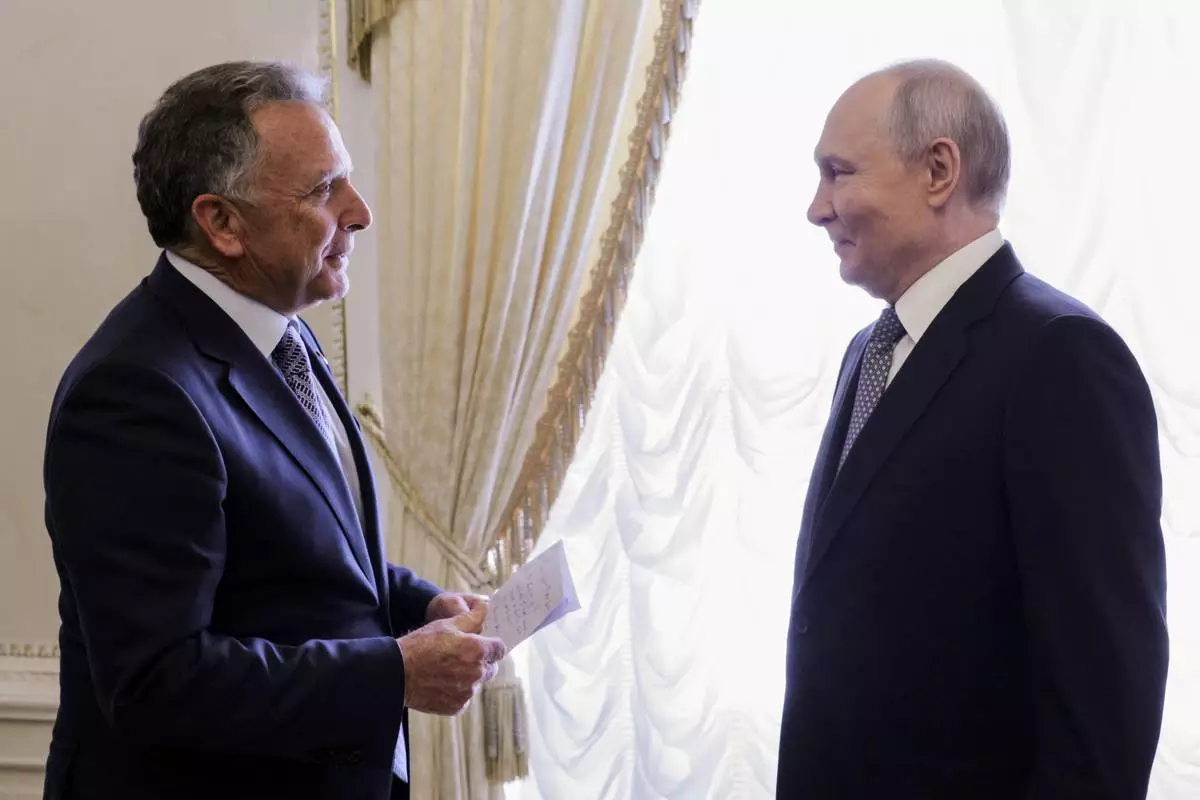
U.S. President Donald Trump's special envoy Steve Witkoff, left, holds a paper while speaking to Russian President Vladimir Putin at the Konstantin Palace in Strelnya, outside St. Petersburg, Russia, on Wednesday, Oct. 21, 2026. (Gavriil Grigorov, Sputnik, Kremlin Pool Photo via AP)
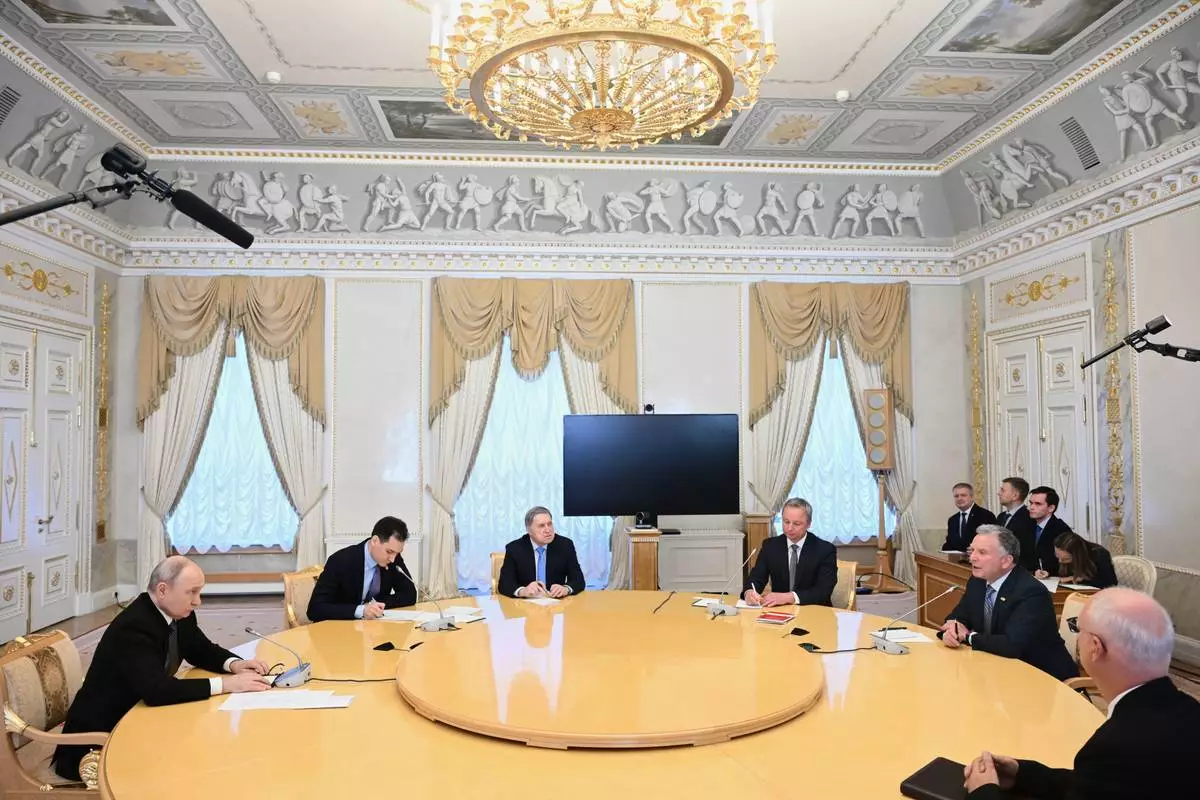
Russian President Vladimir Putin, left, and U.S. President Donald Trump's special envoy Steve Witkoff, second right, attend the talks, as Russian Presidential Envoy Kirill Dmitriev, right back to a camera, and Kremlin foreign policy adviser Yuri Ushakov, third left, sit near at the Konstantin Palace in Strelnya, outside St. Petersburg, Russia, on Wednesday, Oct. 21, 2026. (Kristina Solovyova, Sputnik, Kremlin Pool Photo via AP)
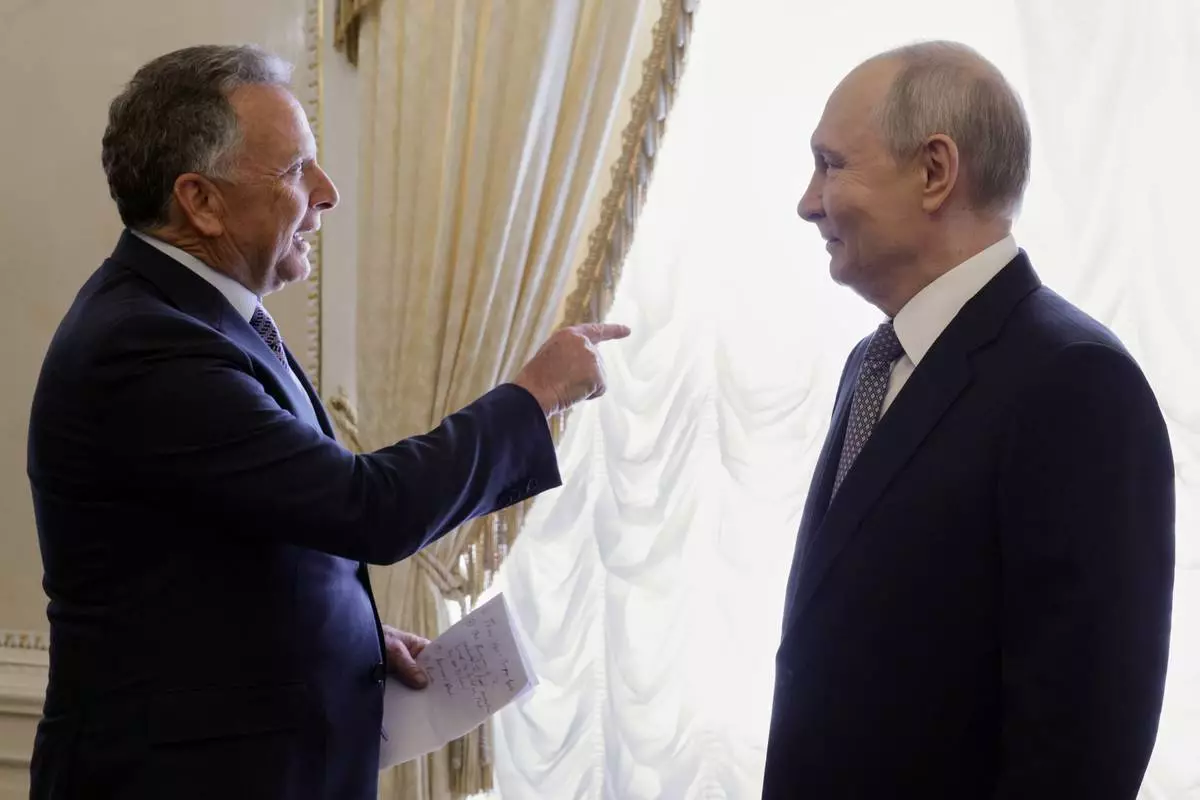
U.S. President Donald Trump's special envoy Steve Witkoff, left, gestures during his meeting with Russian President Vladimir Putin at the Konstantin Palace in Strelnya, outside St. Petersburg, Russia, on Wednesday, Oct. 21, 2026. (Gavriil Grigorov, Sputnik, Kremlin Pool Photo via AP)
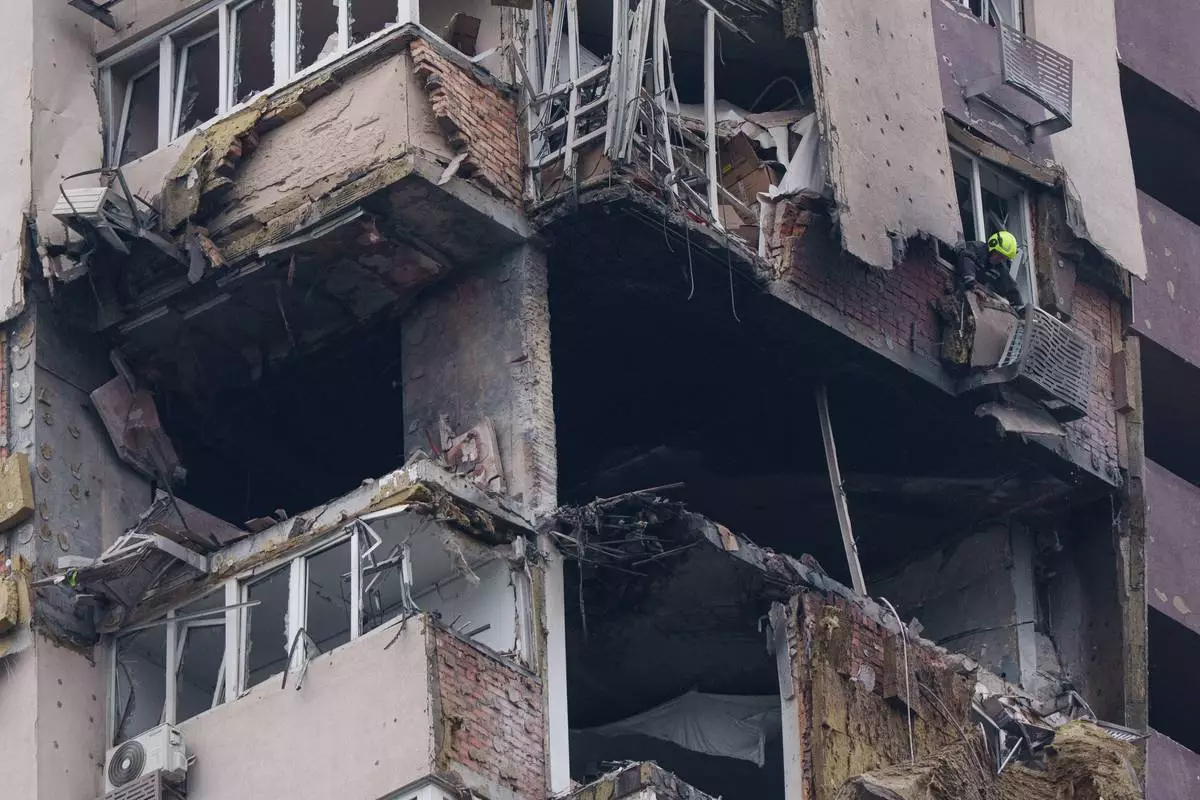
A rescue worker clears the rubble from a multi-story residential building damaged in a Russian drone strike in Kyiv, Ukraine, Wednesday, Oct. 21, 2026. (AP Photo/Evgeniy Maloletka)
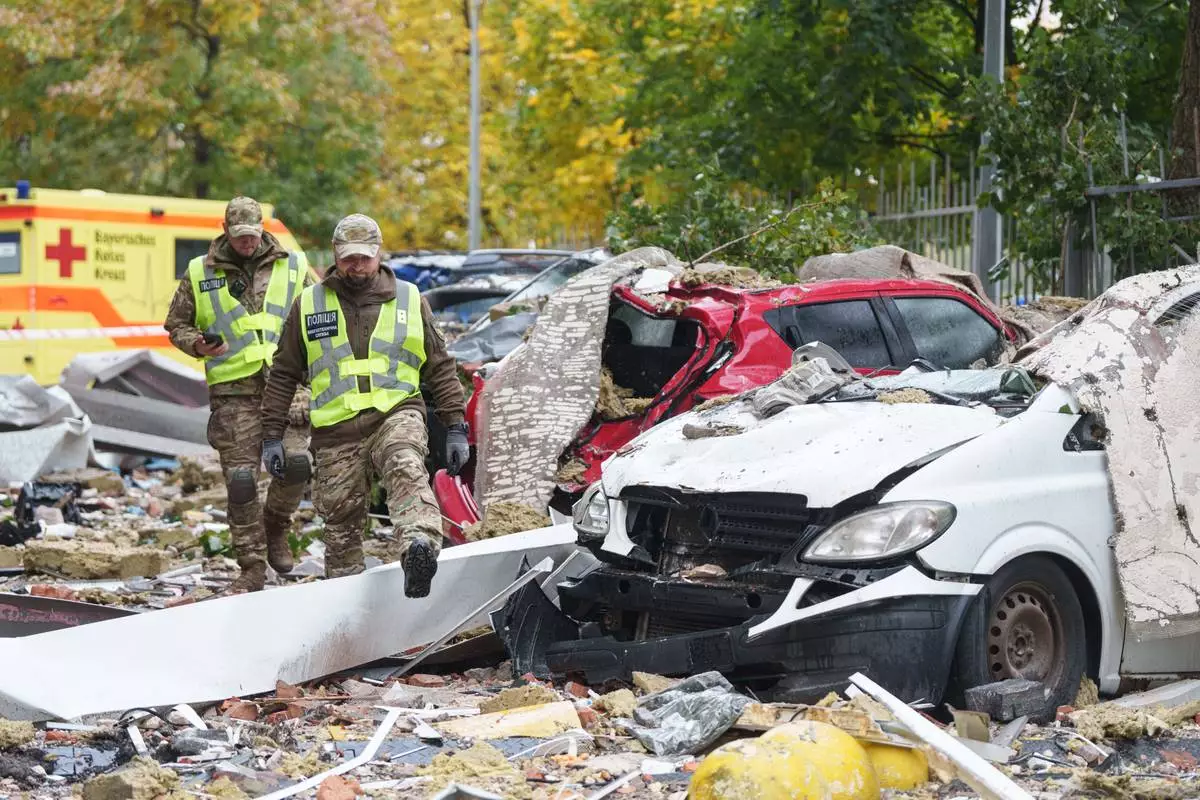
Policemen walk in front of destroyed cars in the yard of a multi-storey residential building damaged by a Russian drone strike on Kyiv, Ukraine, Wednesday, Oct. 21, 2026. (AP Photo/Evgeniy Maloletka)
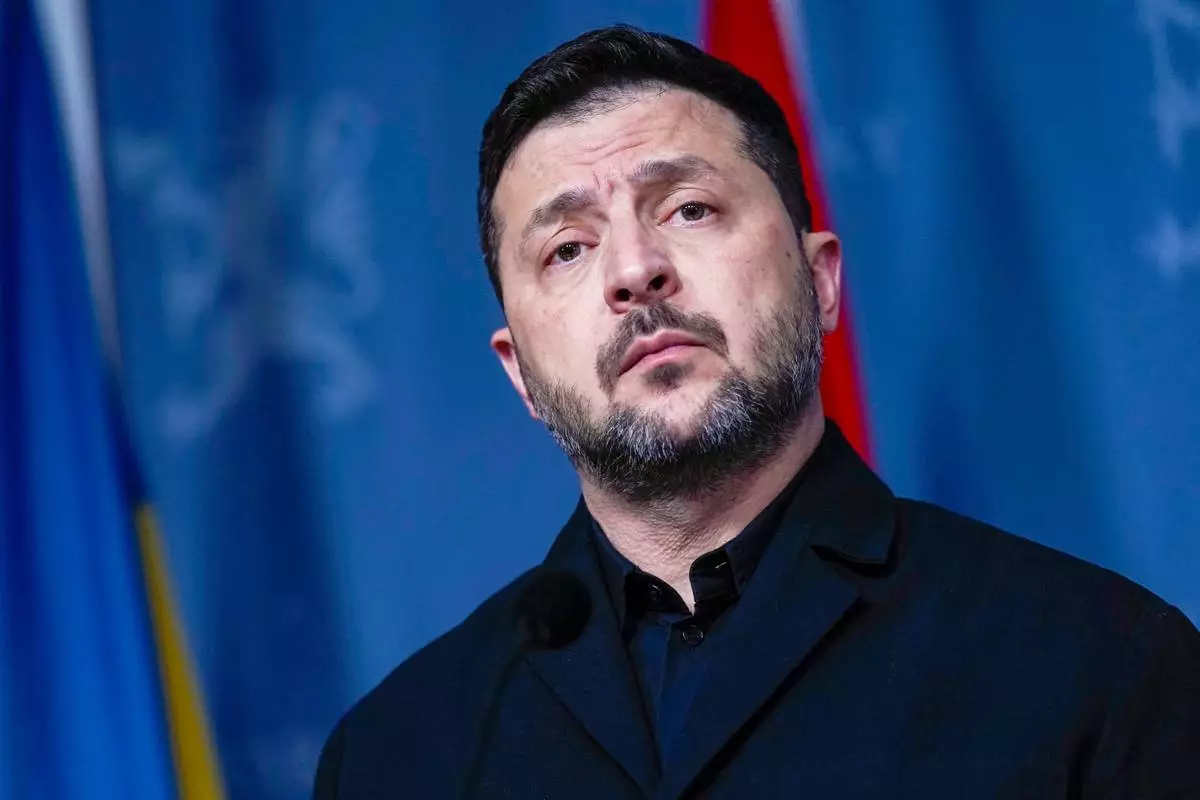
Ukrainian President Volodymyr Zelensky speaks during a press conference on Tuesday, Oct. 20, 2026 in Oslo, Norway. (Lise Åserud/NTB Scanpix via AP)
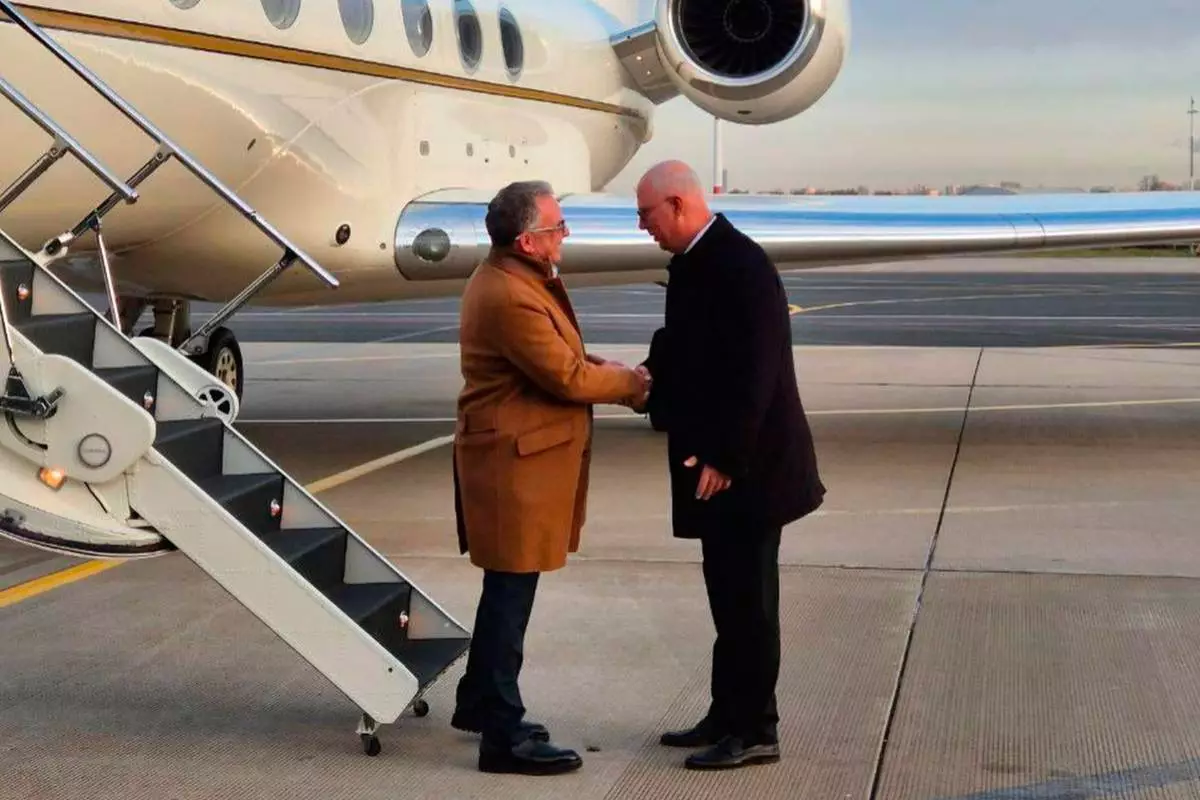
Russian presidential envoy Kirill Dmitriev, right, greets U.S. special envoy Steve Witkoff at the international airport outside St. Petersburg, Russia, Wednesday, Oct. 21, 2026. (TASS Photo via AP)