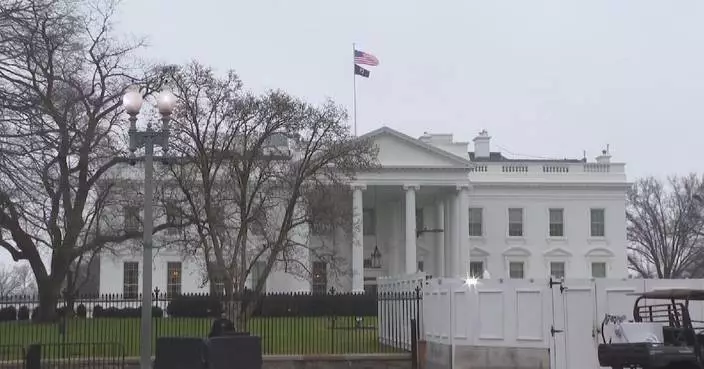
China has never deliberately pursued a trade surplus, nor does it intend to gain trade advantages through currency depreciation, Pan Gongsheng, governor of the People’s Bank of China (PBOC), said this week at a G20 meeting.
Pan warned in a speech at the second meeting of G20 Finance Ministers and Central Bank Governors in Asheville, North Carolina, that rising trade frictions, protectionism and unpredictable policy environments have been major drivers of global imbalances in recent years.
He urged all G20 members to uphold multilateralism, make full use of global financial cooperation platforms and strengthen macroeconomic policy coordination to jointly address global risks and challenges.
To resolve global imbalances, Pan called on all countries to advance structural reforms, with countries in deficit cutting their fiscal deficits and raising domestic savings, and countries in surplus moderately boosting consumption and investment.
He stressed that a commitment should be made over the medium term, with clear policy plans firmly implemented.
He noted that economic growth remains the fundamental solution to developing countries' debt challenges. Pan reiterated China's commitment to expanding domestic demand and advancing high-level opening-up, offering global markets new opportunities through its vast consumer base and contributing to a new dynamic equilibrium in the world economy.
Pan also said China has no need or intention to gain trade advantages through currency depreciation. With the upgrading of its export structure and wider use of hedging tools and renminbi settlement, Chinese trade’s sensitivity to exchange rates has declined significantly, he said.
China operates a managed floating exchange rate system that lets market forces play a decisive role while guarding against "herd behavior" and irrational expectations, Pan added.
The PBOC will maintain a moderately accommodative monetary policy to support stable growth and smooth market operations, he said.

China has never deliberately pursued trade surplus: central bank governor
China's civil aviation industry started winter-spring season on Sunday, with 216 domestic and foreign airlines planning to offer 116,000 passenger and cargo flights per week, said the Civil Aviation Administration of China (CAAC).
Running from Oct 25 to March 27 next year, the winter-spring season will see around 94,000 flights operated by 61 domestic airlines, with 34 domestic airlines planning to open 288 new domestic routes.
"In the new season, we plan to open 21 new routes, with a focus on increasing frequencies and launching new routes to popular ice-and-snow tourism areas such as the three northeastern provinces (of Liaoning, Jilin, and Heilongjiang) and Xinjiang, as well as traditional popular tourism and warm-weather destinations in south China and southwest China," said Gao Lingyun, deputy general manager of the Network Revenue Department of China Eastern Airlines' Marketing Division.
In terms of international flights, 191 airlines plan to arrange 21,812 flights per week, reaching 85 foreign countries. Passenger services will cover 84 countries with 16,654 weekly flights.
Passenger flights to Central Asia, South Asia, North America, Europe, Southeast Asia, and Latin America will all increase year on year, with flight volumes to 17 countries, including Kazakhstan, India, Canada, and Belgium, growing by more than 40 percent.
"We will continue to restore and expand our international route network. In the new season, we will soon launch the first route from China to Iceland. In addition, we will focus on optimizing our southbound route network and increase capacity in the Australia-New Zealand market, as well as key Southeast Asian markets including Singapore, Malaysia and Vietnam," said Zhou Yeting, senior deputy manager of Network Planning and Flight Planning at Air China.
The aviation market for inbound tourism is also growing notably, with planned frequencies on 16 premium inbound tourism routes, including Moscow-Haikou, Ulan Bator-Beijing and Busan-Zhangjiajie, rising 45.9 percent year on year.
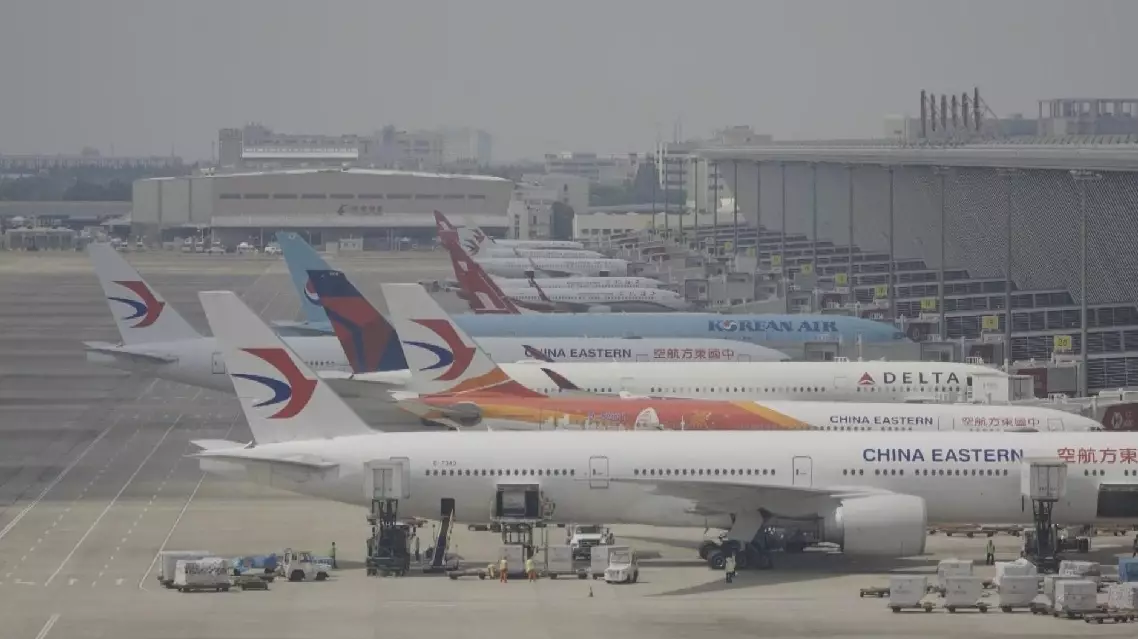
China's civil aviation starts winter-spring season with 116,000 domestic, int'l flights planned per week