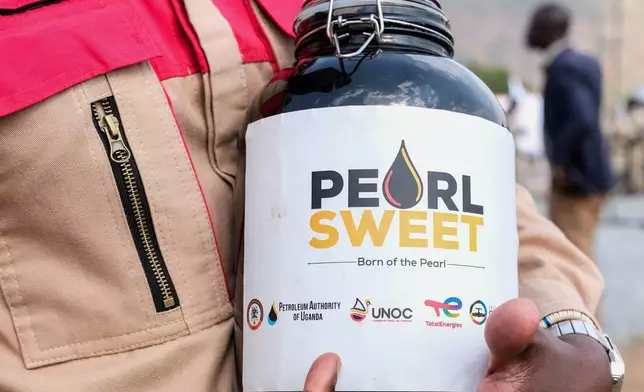
MBALE, Uganda (AP) — Ugandan authorities on Wednesday named the country’s prospective crude oil blend “Pearl Sweet,” marking a milestone as the East African country gears up for commercial production by the end of the year.
Officials announced the name at a remote oil infrastructure site, celebrating Uganda’s emergence as an oil producer.
Click to Gallery
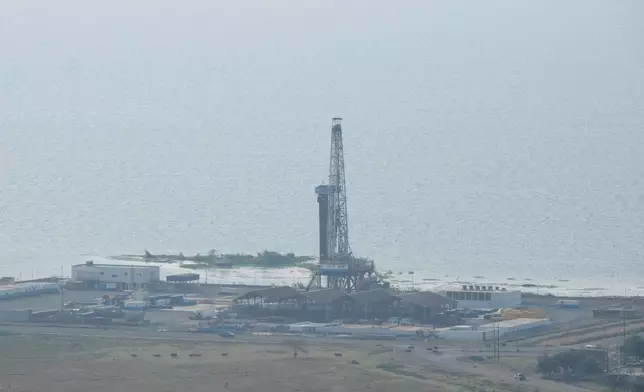
A view of the central processing unit at the Kingfisher oil field, operated by China National Offshore Oil Corporation (CNOOC), near Hoima, Uganda, Wednesday, Sept. 2, 2026. (AP Photo/Hajarah Nalwadda)
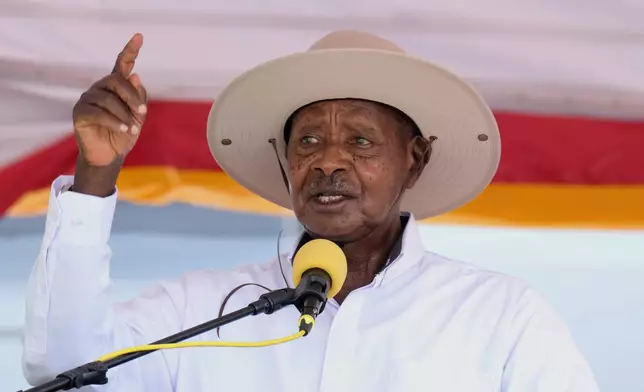
Ugandan President Yoweri Museveni speaks during a crude oil naming ceremony at the Kingfisher oil field on the shores of Lake Albert, operated by China National Offshore Oil Corporation (CNOOC), near Hoima, Uganda, Wednesday, Sept. 2, 2026. (AP Photo/Hajarah Nalwadda)
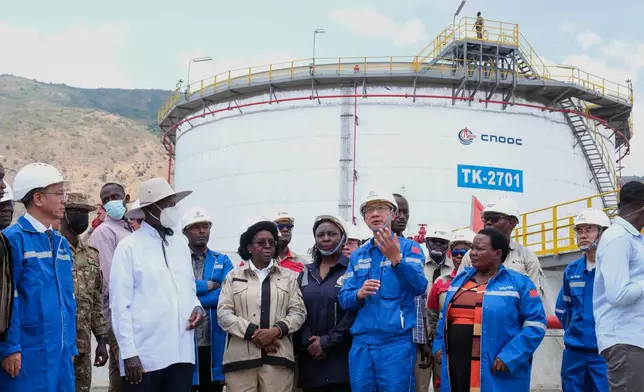
CNOOC President Dr. Liu Xiangdong, center, talks to Ugandan President Yoweri Museveni during a tour of the central processing unit at the Kingfisher oil field near Hoima, Uganda, Wednesday, Sept. 2, 2026. (AP Photo/Hajarah Nalwadda)
A view of the central processing unit at the Kingfisher oil field, operated by China National Offshore Oil Corporation (CNOOC), near Hoima, Uganda, Wednesday, Sept. 2, 2026. (AP Photo/Hajarah Nalwadda)
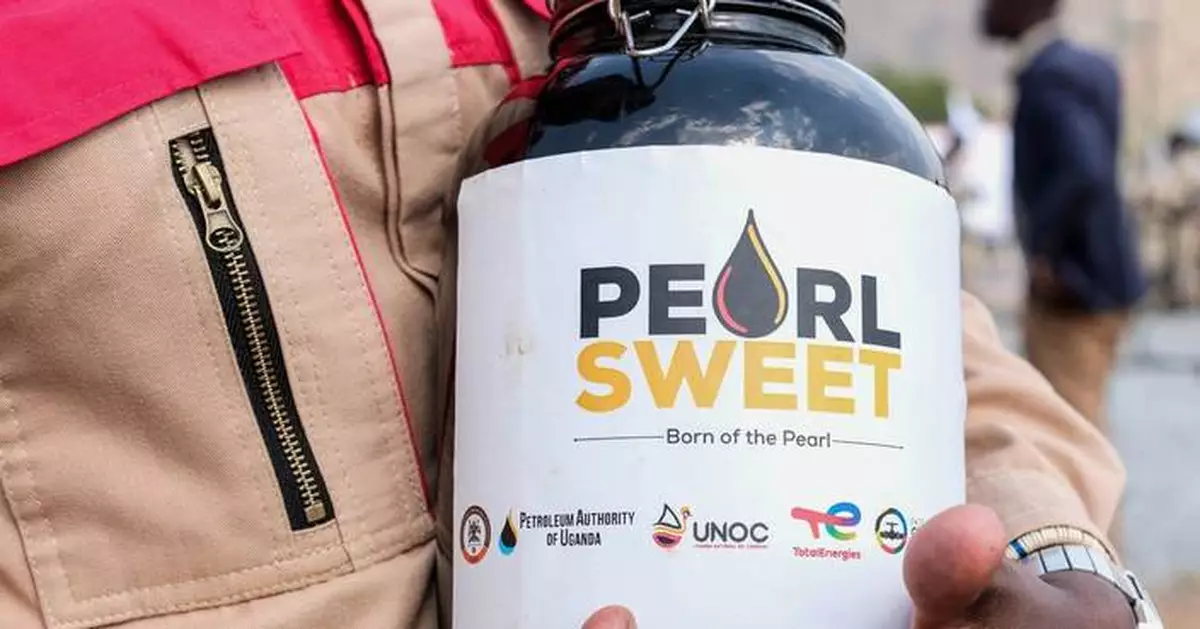
A worker holds a container with a crude oil sample at the Kingfisher oil field, operated by China National Offshore Oil Corporation (CNOOC), near Hoima, Uganda, Wednesday, Sept. 2, 2026. (AP Photo/Hajarah Nalwadda)
The name chosen for Uganda’s crude oil blend is a nod to Winston Churchill’s description of Uganda in the last century as “the pearl of Africa,” and officials said the “sweet” in the nomenclature reflects the crude blend’s low sulfur content.
“The name combines national identity with a commercial description,” the Ministry of Energy said in a statement. “Naming supports future crude marketing activities and engagement with potential buyers.”
Uganda is estimated to have recoverable oil reserves of roughly 1.6 billion barrels. The investors are French oil company TotalEnergies, which owns the largest stake, and China National Offshore Oil Corporation, or CNOOC. The Ugandan people, through the Uganda National Oil Company, own 15% of the projects.
"This marks an important milestone in our journey to develop Uganda’s oil and gas resources for value addition and economic transformation," Ugandan President Yoweri Museveni said. "Through refining, petrochemical industries and the use of associated gas for electricity generation, we shall maximize the value of our resources here at home and reduce dependence on imported petroleum products.”
Production is expected to plateau at about 230,000 barrels per day, with blended crude exports emerging from separate projects by CNOOC and TotalEnergies.
Wednesday’s event in Kikuube, the site of a CNOOC project known as Kingfisher, signals progress despite legal and other setbacks since the discovery two decades ago of commercially viable quantities of crude deposits.
The oil development projects are linked to the controversial construction of a heated pipeline linking Uganda’s oil fields near Lake Albert to a port in Tanzania. Environmentalists and others have opposed the pipeline, saying it runs afoul of the Paris Climate Agreement.
Most efforts by climate watchdogs seeking to stop Uganda’s oil projects have focused on TotalEnergies, which has been sued in France at least twice by groups and individuals alleging food and land rights violations.
Oil wells are being drilled within western Uganda’s Murchison Falls National Park, where the Nile River plummets 130 feet (40 meters) through a gap just 20 feet (6 meters) wide and the surrounding wilderness is home to hippos, egrets, giraffes and antelope. The pipeline is to pass through forest reserves and game parks, running alongside Lake Victoria, a source of fresh water for 40 million people.
That ecological fragility is one reason why some activists oppose the project despite assurances from TotalEnergies that the pipeline’s state-of-the-art design will ensure safety for decades.
Ugandan officials expressed anger toward opposition to the pipeline, saying climate campaigns verged on interference in the internal affairs of a sovereign country. They say oil wealth can lift millions out of poverty.
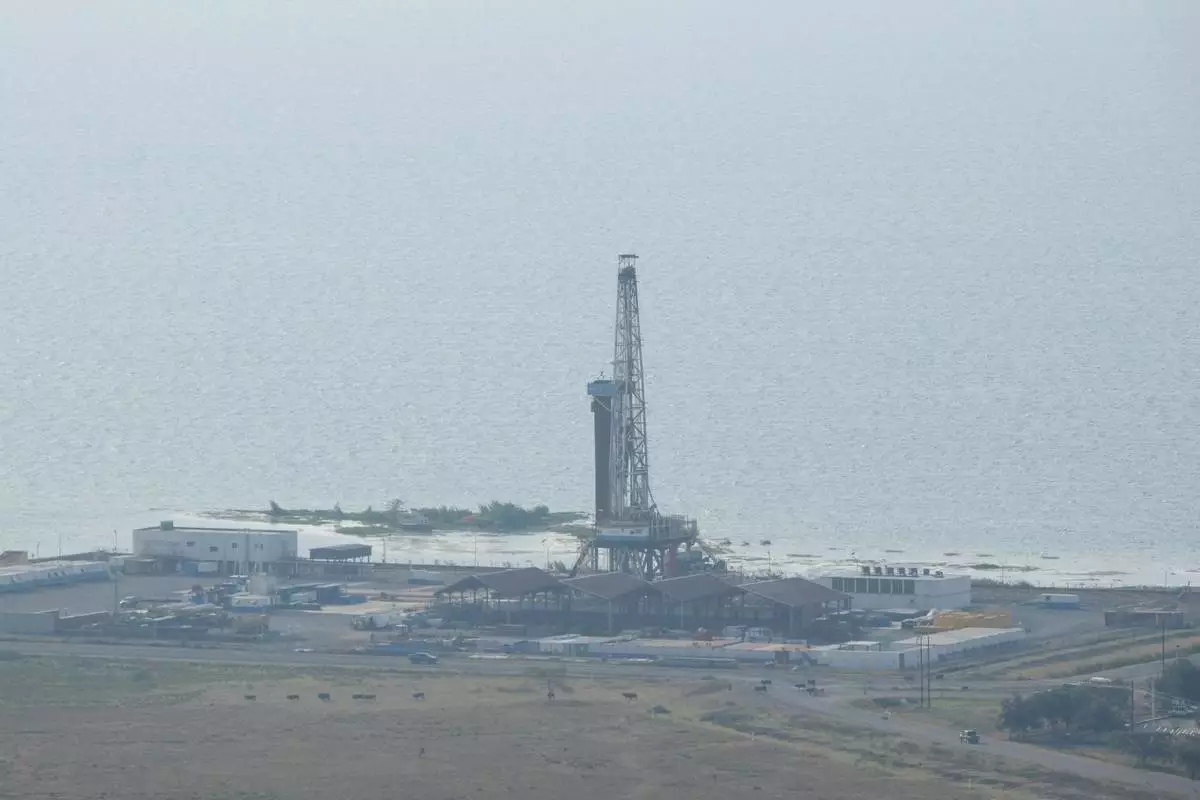
A view of the central processing unit at the Kingfisher oil field, operated by China National Offshore Oil Corporation (CNOOC), near Hoima, Uganda, Wednesday, Sept. 2, 2026. (AP Photo/Hajarah Nalwadda)
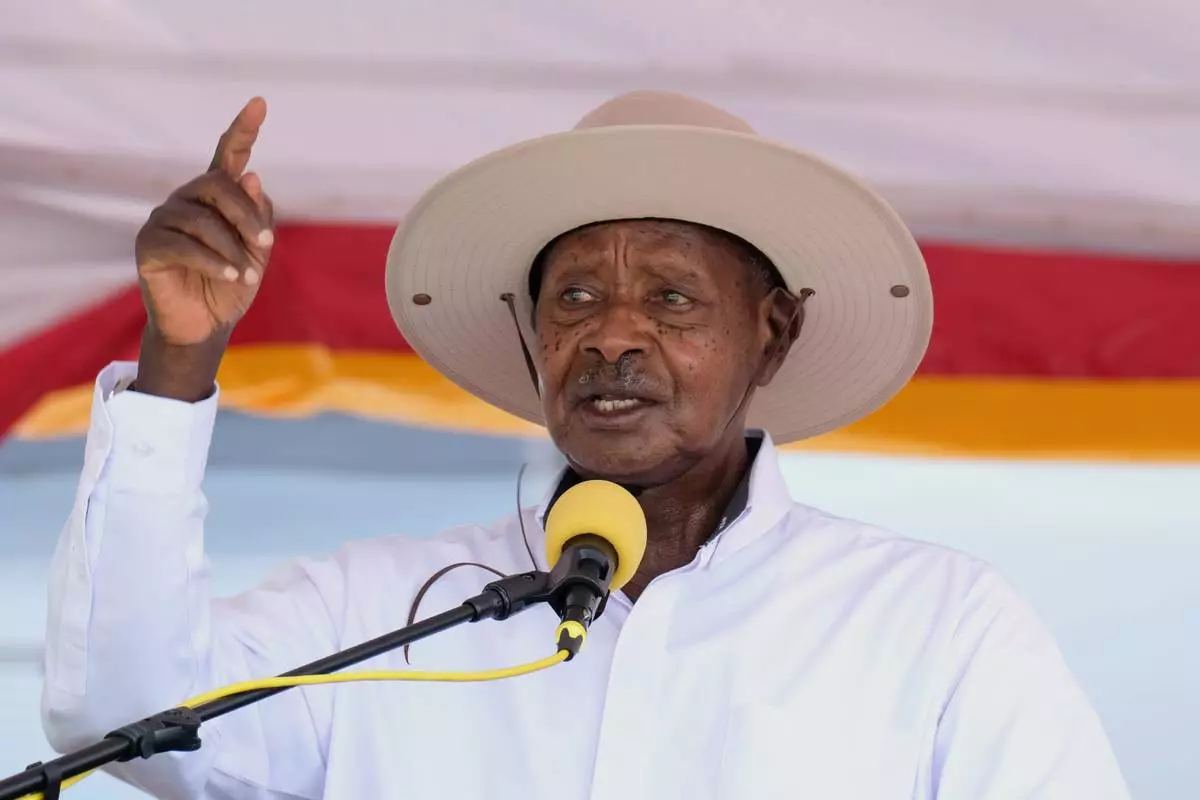
Ugandan President Yoweri Museveni speaks during a crude oil naming ceremony at the Kingfisher oil field on the shores of Lake Albert, operated by China National Offshore Oil Corporation (CNOOC), near Hoima, Uganda, Wednesday, Sept. 2, 2026. (AP Photo/Hajarah Nalwadda)
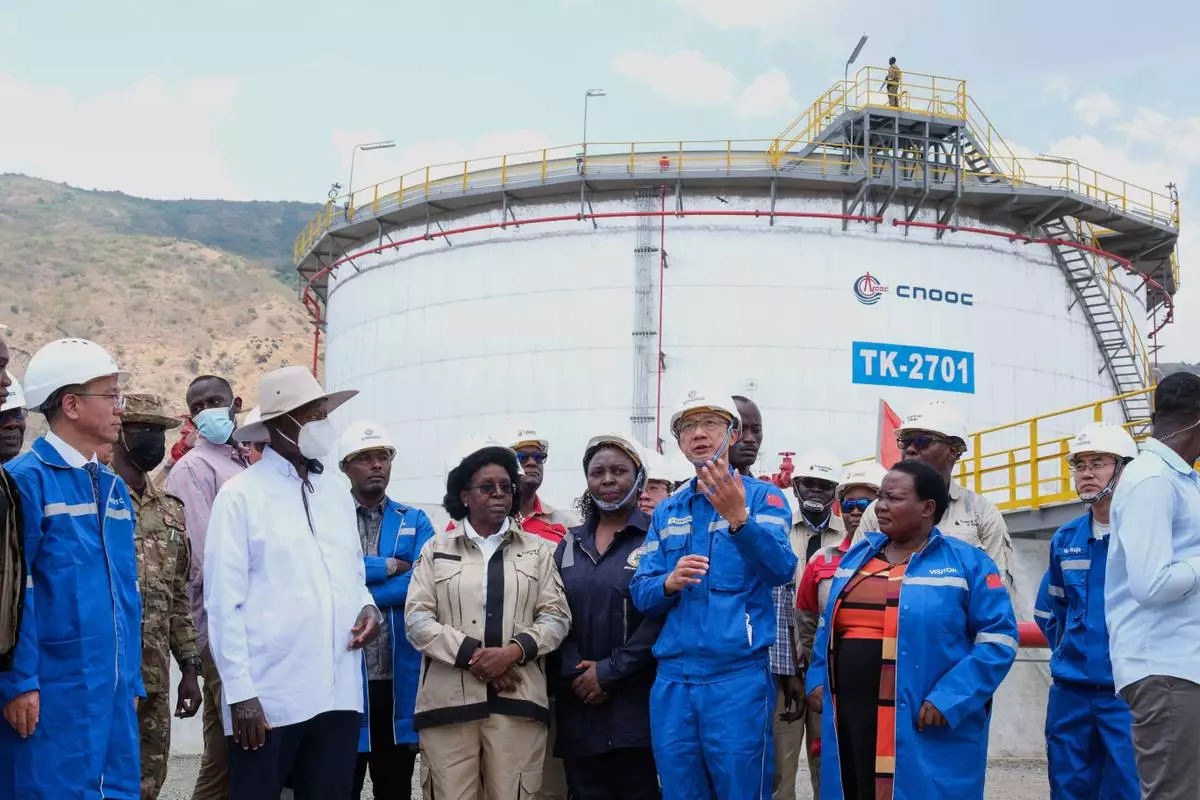
CNOOC President Dr. Liu Xiangdong, center, talks to Ugandan President Yoweri Museveni during a tour of the central processing unit at the Kingfisher oil field near Hoima, Uganda, Wednesday, Sept. 2, 2026. (AP Photo/Hajarah Nalwadda)
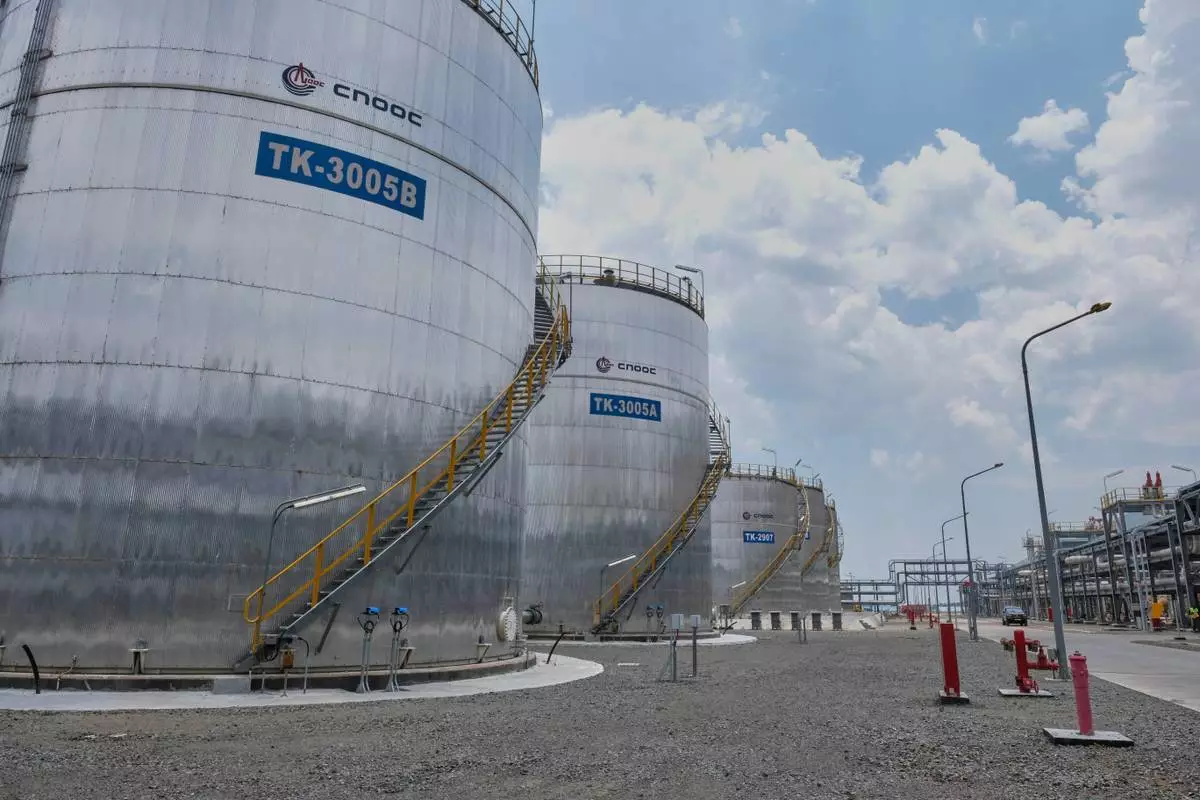
A view of the central processing unit at the Kingfisher oil field, operated by China National Offshore Oil Corporation (CNOOC), near Hoima, Uganda, Wednesday, Sept. 2, 2026. (AP Photo/Hajarah Nalwadda)
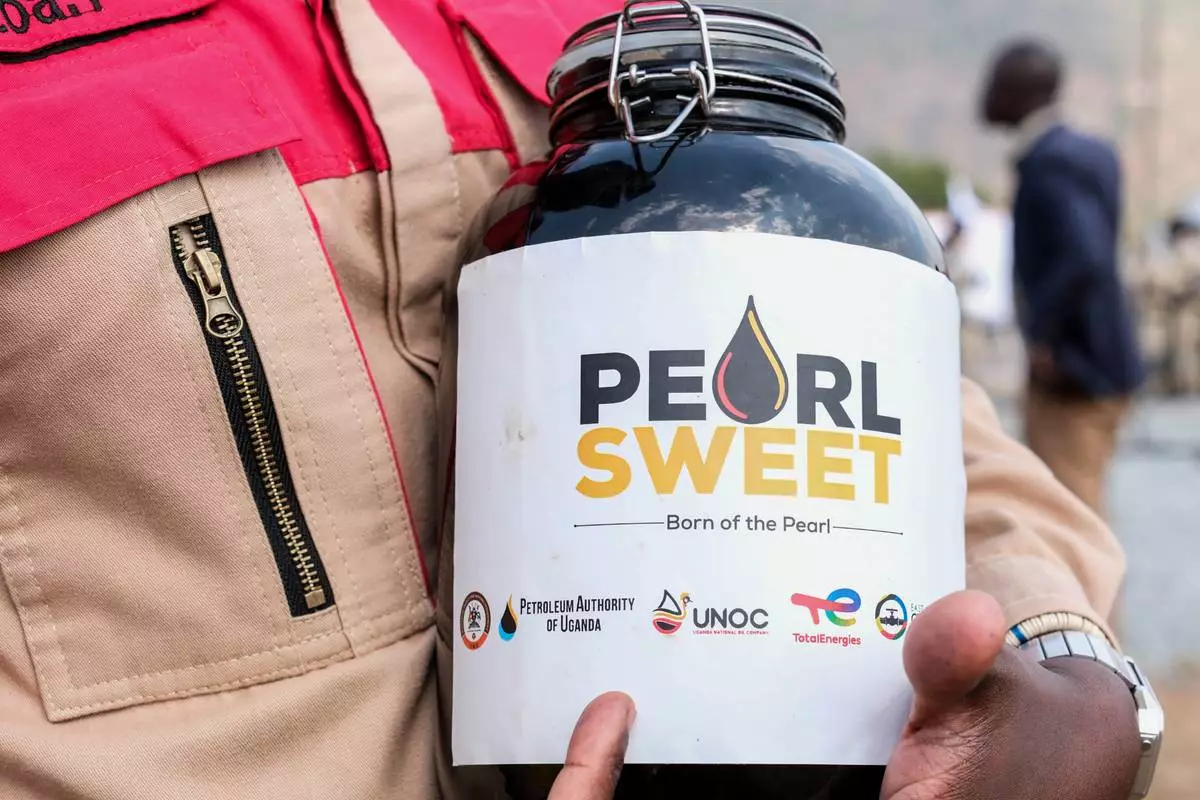
A worker holds a container with a crude oil sample at the Kingfisher oil field, operated by China National Offshore Oil Corporation (CNOOC), near Hoima, Uganda, Wednesday, Sept. 2, 2026. (AP Photo/Hajarah Nalwadda)
NEW YORK (AP) — Gloria Steinem, the celebrated author and activist who became one of the most visible symbols and potent voices of the U.S. women’s movement and a fierce advocate for feminist causes throughout her life, has died. She was 92.
With her trademark streaked hair parted down the middle and large aviator glasses, Steinem, a co-founder of Ms. Magazine, was a hugely recognizable presence wherever she went. And she went everywhere: Much of her life as an advocate was spent on the road, speaking at college campuses and community centers, at rallies and marches.
She died Wednesday at her home in New York City, according to her and her foundation’s social media pages.
“Gloria’s greatest gift was her ability to listen to others, to make others feel seen and heard,” the posts said. “Her words, actions, and example gave people permission to be their truest selves. Gloria lived true to her independent spirit, always with curiosity and a great sense of humor.”
Steinem enjoyed writing and spending time in the community in recent years, the posts said. She also hosted talking circles for hundreds of people in her home. She died just before a planned memoir was to be released this fall.
“You can’t do it on the phone or on the web,” she told The Associated Press in a 2015 interview. “You have to be there with all five senses. It should be obvious that people can’t empathize with each other unless we’re in the same room.”
She began her career as a journalist, notably one who reported, in 1963, on degrading conditions in Hugh Hefner’s Playboy empire, an undercover assignment she came to later regret. She credits a meeting six years later, where women spoke out boldly in favor of abortion rights, with changing her career path.
“That speak-out was the beginning of activism for me,” Steinem, who had undergone a secret illegal abortion herself at age 22, told the AP in an email in 2022, reflecting on the reversal of Roe v Wade. “Either our control over our own bodies is equal, regardless of sex or race, or we’re not living in a democracy.”
Though she soon became a known activist, those who watched Steinem denounce discrimination for so many years likely never suspected that she’d had to overcome a deep fear of public speaking. She would have simply stuck to writing, she said, if only editors at the time had been willing to let her write about the women’s movement.
But they weren’t interested, she told the AP in 2015. “So I ended up going out and speaking, which was my nightmare,” she said. “I mean, I was terrified. But I’m grateful, even though I still get scared even now.”
Time hardly slowed Steinem down; well into her 80s she was traveling the globe and speaking out on issues of importance to her. These included everything from genital mutilation to Korean reconciliation, but it was equality for women that took precedence. “Being a feminist means that you see the world as whole instead of half,” she once said. “It shouldn’t need a name, and one day it won’t.”
As the years went on, Steinem’s visibility endured. At 83, she sat in the front row of her first fashion show, guest of designer Prabal Gurung. A few days after her 85th birthday, she was leading a women’s “talking circle” at an off-Broadway play celebrating her life, where one by one, women in the audience — many fighting tears — rose to thank her and tell their own stories of discrimination. In 2020, her life was the subject of a feature film, “The Glorias, A Life on The Road,” based on her 2015 memoir and starring Julianne Moore.
And at 91, she collaborated on a picture book with Liberian peace activist and Nobel laureate Leymah Gbowee aimed at inspiring young people to change the world. “Rise, Girl, Rise: Our Sister-Friend Journey. Together for All” was published in February 2026.
The constant visibility came with a price; even into her older years, Steinem expressed frustration that despite her accomplishments, she was often described as beautiful or glamorous (A 1992 Vanity Fair profile even noted her “spectacular racehorse legs.”) It was a label she said unfairly detracted from her message.
“Nobody ever called me beautiful until I was publicly a feminist, and that was in my mid-30s,” she told AP in a 2011 interview. “It was clear that label was being assigned to me. The most hurtful part is that you work very hard, and people say it’s because of your looks.”
Of course, Steinem also had to deal with hostility. Sometimes it came from surprising places. Appearing on Larry King’s talk show on CNN in 1990, she was visibly stunned when a female caller greeted her cheerfully, then told her to “rot in hell” because she had ruined “the beautiful American family.”
But by then, she noted, at least people were taking feminists seriously. That wasn’t the case in 1972 when she co-founded Ms. Magazine and many commentators — especially male — dismissed it as ridiculous, predicting an early demise. (The magazine continues to this day, published by the Feminist Majority Foundation.)
Among Steinem’s detractors was President Richard Nixon, who was caught on an Oval Office tape ridiculing both her and the “Ms.” title. The ridicule was mutual: In a 1972 National Press Club speech, Steinem called Nixon “the most sexually insecure chief of state since Napoleon.”
It was just one example of Steinem’s trademark wit. Before she married at 66, she often explained her singlehood by saying “I can’t mate in captivity.” Laughter, she wrote, was “the only free emotion — the only one that can’t be compelled.”
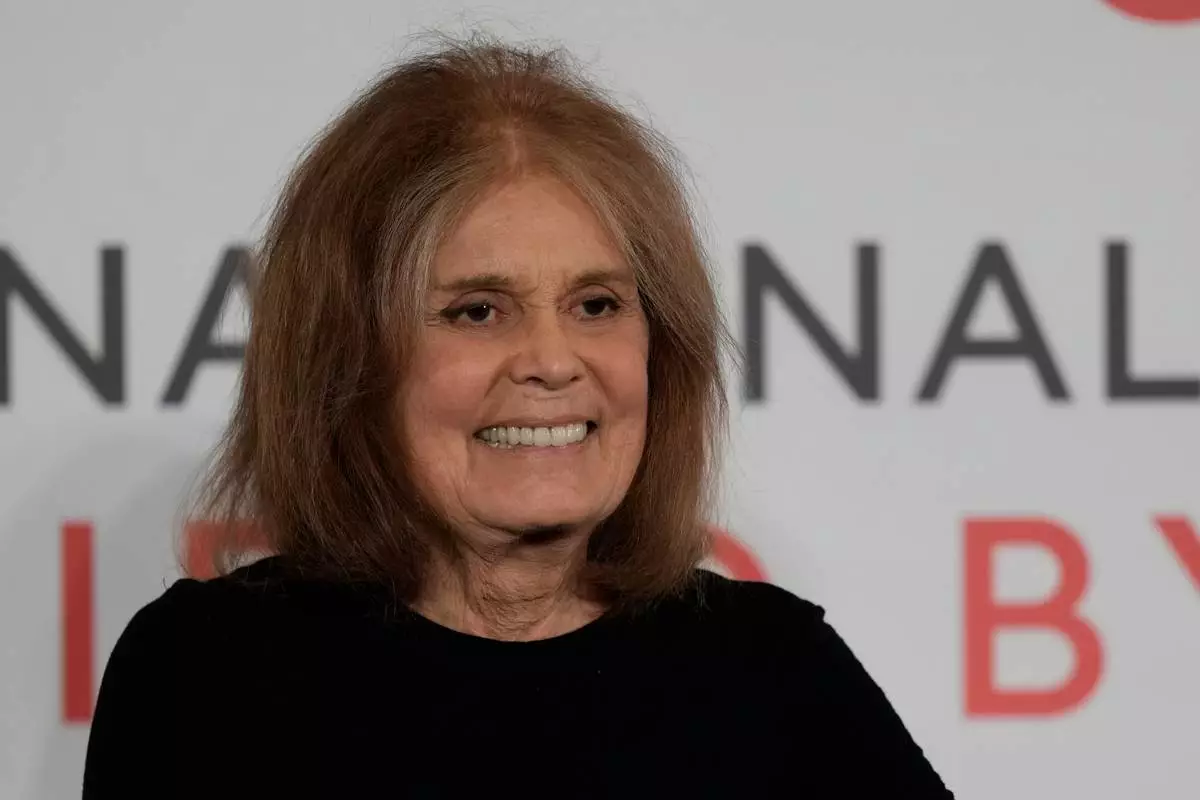
Gloria Steinem, Journalist and Activist talks during the Forbes 30/50 Summit at the Louvre Museum in Abu Dhabi, United Arab Emirates, Wednesday, March 8, 2023. (AP Photo/Kamran Jebreili)
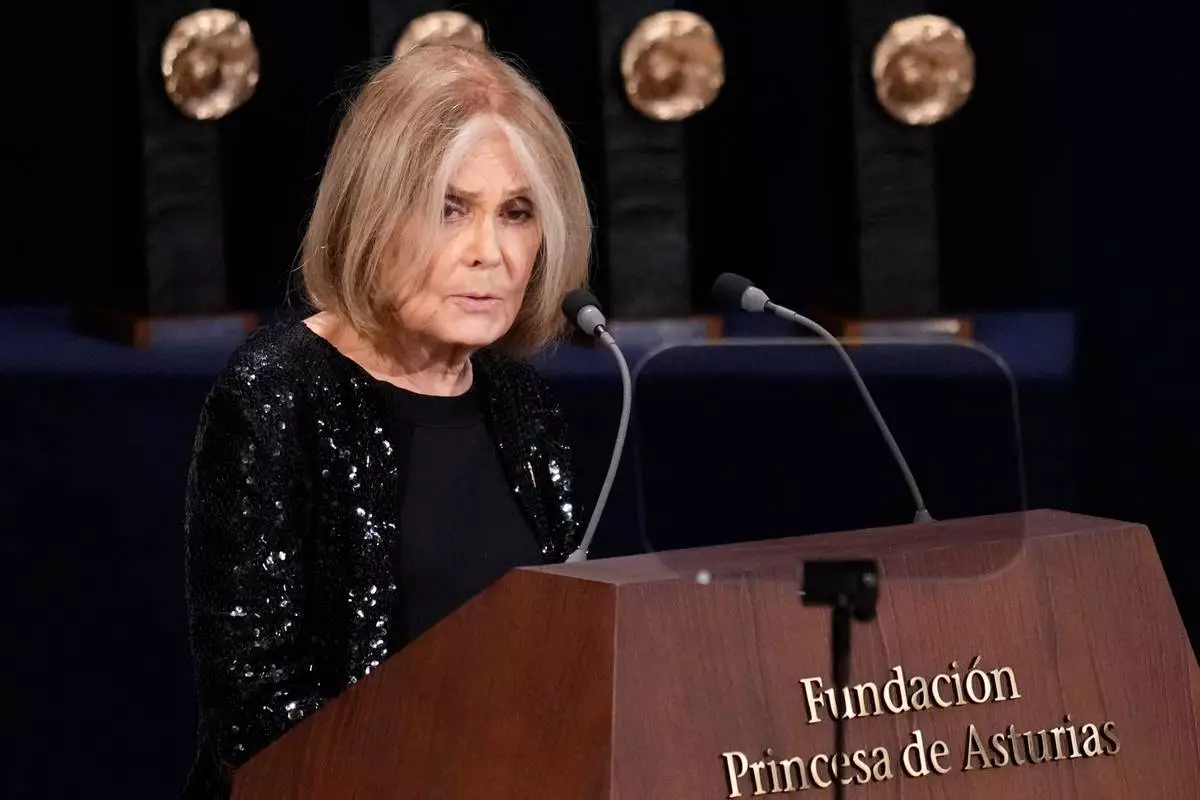
FILE - Gloria Steinem speaks during the 2021 Princess of Asturias Awards ceremony in Oviedo, northern Spain, Oct. 22, 2021. (AP Photo/Manu Fernandez, File)