Two new books on the regional history and religious development of northwest China's Xinjiang Uygur Autonomous Region were released in Beijing on Wednesday, drawing on extensive historical records to refute misconceptions and distortions concerning the far western region of China.
Consisting of seven chapters, one of the two books is on Xinjiang's history. It provides a comprehensive and systematic account of the region's historical development from ancient times to the present.
Also comprising seven chapters, the other book is on Xinjiang's religious development. It systematically traces the evolution of religions in the region from prehistoric times to the new era of socialism with Chinese characteristics while documenting the rise and decline of various religions.
The significance of the two books lies in their use of historical evidence to demonstrate that Xinjiang has been an inseparable part of China since ancient times, the ethnic groups in Xinjiang are members of a closely connected Chinese nation, and the cultures of those different ethnic groups form an integral part of Chinese culture, according to the books' editorial team.
"The books cover the real Xinjiang, including its history and its relationship with the rest of China, and the ties between ethnic groups in Xinjiang and the rest of the Chinese nation, as well as the relations between Xinjiang's regional culture and overall Chinese nation's culture," said Tian Weijiang, former vice president of the Xinjiang Regional Academy of Social Sciences.
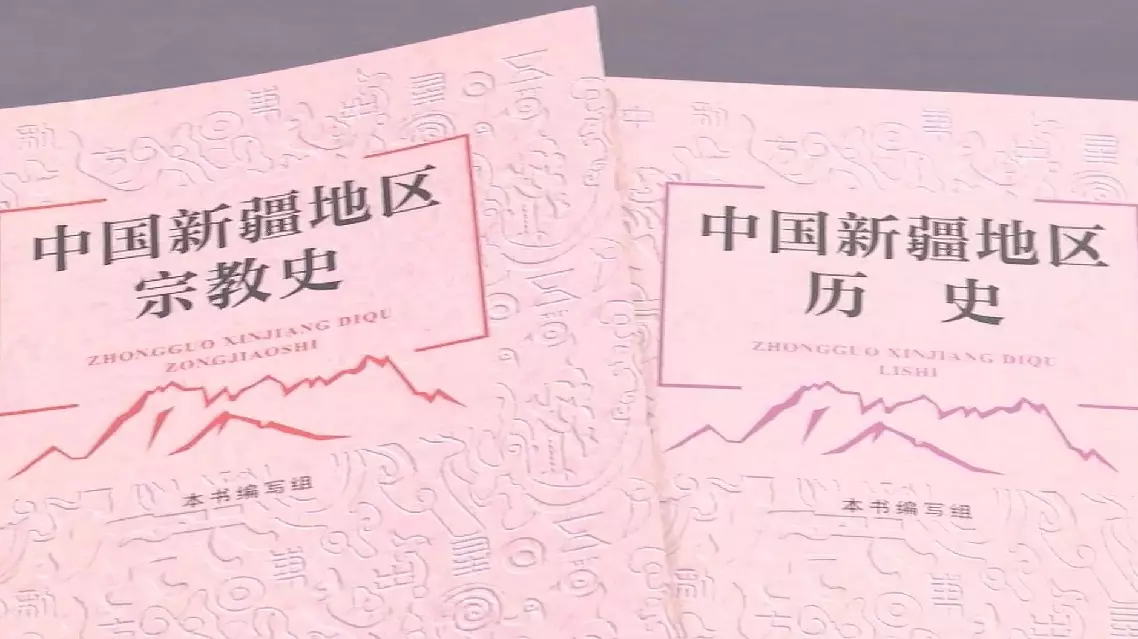
Books on Xinjiang's history, religion released in Beijing
Egypt's former Minister of Antiquities, Mamdouh Al Damaty, has hailed the state visit of Chinese President Xi Jinping as a significant step forward in bilateral cultural exchanges, noting that the trip has not only reinvigorated bilateral cooperation in heritage and archaeology but also underscored China's active role in bolstering Egypt's capacity for documenting and preserving its ancient discoveries.
Xi landed in Cairo on Tuesday for a state visit to Egypt. During the visit, Xi held talks with Egyptian President Abdel Fattah El-Sisi. The two heads of state jointly witnessed the signing of multiple cooperation documents on Belt and Road cooperation, artificial intelligence, economic and trade, and industrial and supply chain cooperation.
"This is a very important visit. China has a very high standing, not just on the political and economic fronts globally, but also on the cultural and civilizational level, much like Egypt. Therefore, Sino-Egyptian relations need to be strengthened even further, with more cultural and civilizational exchanges in addition to economic cooperation," Mamdouh said in a recent interview.
Egypt, cradle of one of the world's most ancient civilizations, has held a special appeal for Xi. During the 2016 visit to Egypt, Xi traveled to Luxor, an ancient city nestled on the banks of the Nile, widely described as one of the world's largest open-air museums.
"There was extensive cooperation between us and sharing of experiences and know-how. During my term, we had the Year of Culture between Egypt and China. During his visit in 2016, I had the pleasure of accompanying his excellency President Xi on a tour of the Karnak Temple and Luxor in Egypt. He was very interested in Egyptian civilization. His questions and remarks showed passion and very good knowledge of Egyptian culture and history," Mamdouh said.
China began participating in archaeological fieldwork in Egypt in 2018, bringing advanced expertise to help unravel enduring mysteries of ancient Egyptian civilization. Working closely with Egyptian counterparts, Chinese teams have unearthed numerous artifacts and features, but the most notable achievement remains the discovery of the Southern Sacred Lake at the Montu Temple complex near Karnak.
"This type of cooperation started in 2018. One of the excavation teams is working in the Temple of Montu in the north of Karnak Temple, which is a very important location rich in monuments. There used to be a French excavation teams before, but now this team has been doing very well there and in three locations by introducing the latest technology. The real contribution of the latest technology is not the excavation itself but, more crucially, introducing technology in 3D documentation, archiving and digitization of discoveries. This is a revolutionary step in the antiquities sector," he said.
Looking ahead to future cooperation between the two countries, Mamdouh said he looks forward to the full implementation of the 2025 bilateral agreement on heritage protection and anti-smuggling efforts, and praised President Xi's visit as a testament to China's leadership in advancing such initiatives.
"In my field, for instance, China and Egypt signed an agreement in 2025 on the protection and management of world cultural heritage, as well as on combating the smuggling and illicit trade of cultural relics, heritage items, and ancient artifacts. It would be wonderful to see this agreement implemented and put into action. I believe the Chinese President's visit has demonstrated leadership in advancing such initiatives," Mamdouh said.
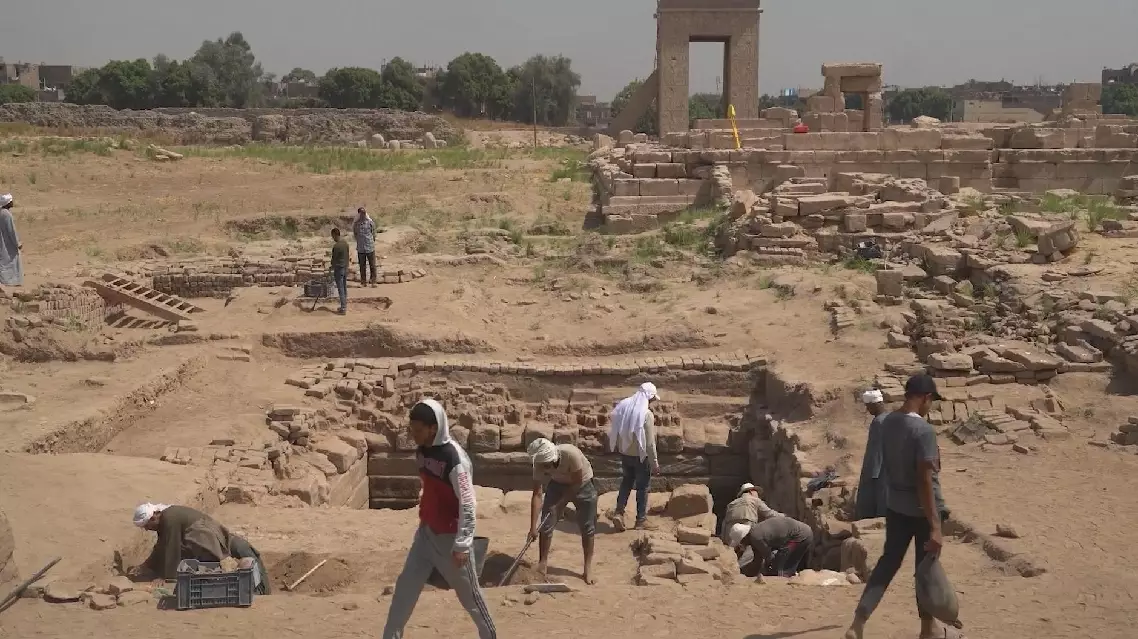
China, Egypt need to continue promoting cultural cooperation: former Egyptian minister